A bath mat spends most of its life doing one of two things: getting stepped on with wet feet, or sitting in a heap on the floor because there is nowhere else for a rug that size to go. It cannot be balled up on a hook the way a hand towel can, and unlike a rug anywhere else in the house, it gets soaked through several times a day and has to dry out before whatever is under it, rubber, PVC, or a woven non-slip backing, turns into a breeding ground. In a small bathroom, where the floor is already the only place to stand, bath mat and rug storage is really two problems: where the mat lives while it is in use, and where the spare goes when it is not.
Nine ideas below, starting with the one step that determines whether any of the others actually work.
1. Dry it flat or draped before it goes anywhere else
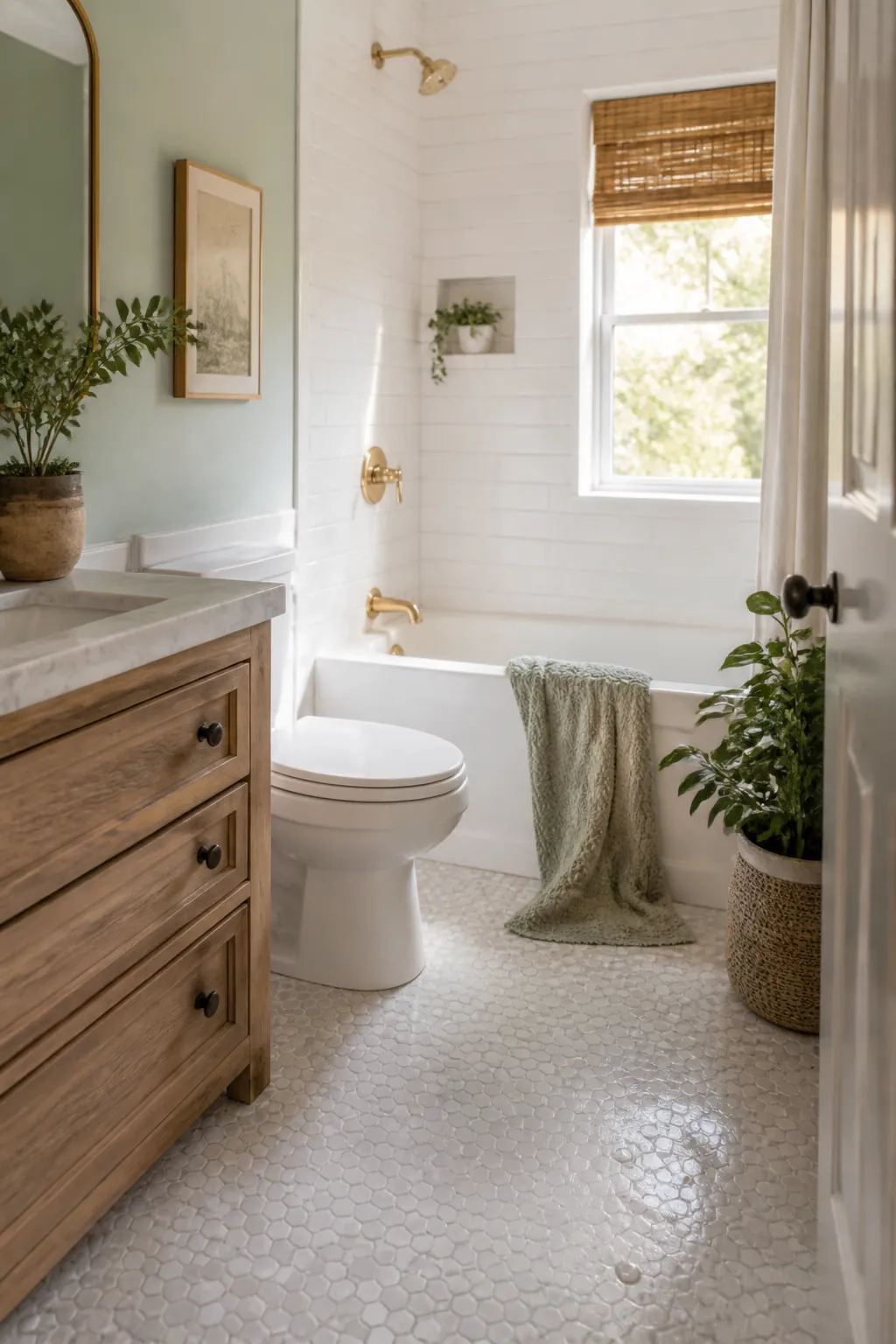
Nothing about storage matters if the mat goes into it still damp. A rubber or PVC backing pressed against tile or against itself traps moisture with nowhere to evaporate, and in a warm, humid bathroom that combination can start smelling within a single day.
Right after a shower, drape the mat over the tub edge, a shower rod, or a bar rather than leaving it flat on the floor. Flat contact with tile keeps the underside wet for hours after the top feels dry, since the water has nowhere to go but sideways. A few minutes of draping buys the airflow that a mat lying flat never gets.
2. Give the everyday mat a wall bar, not a heap by the tub
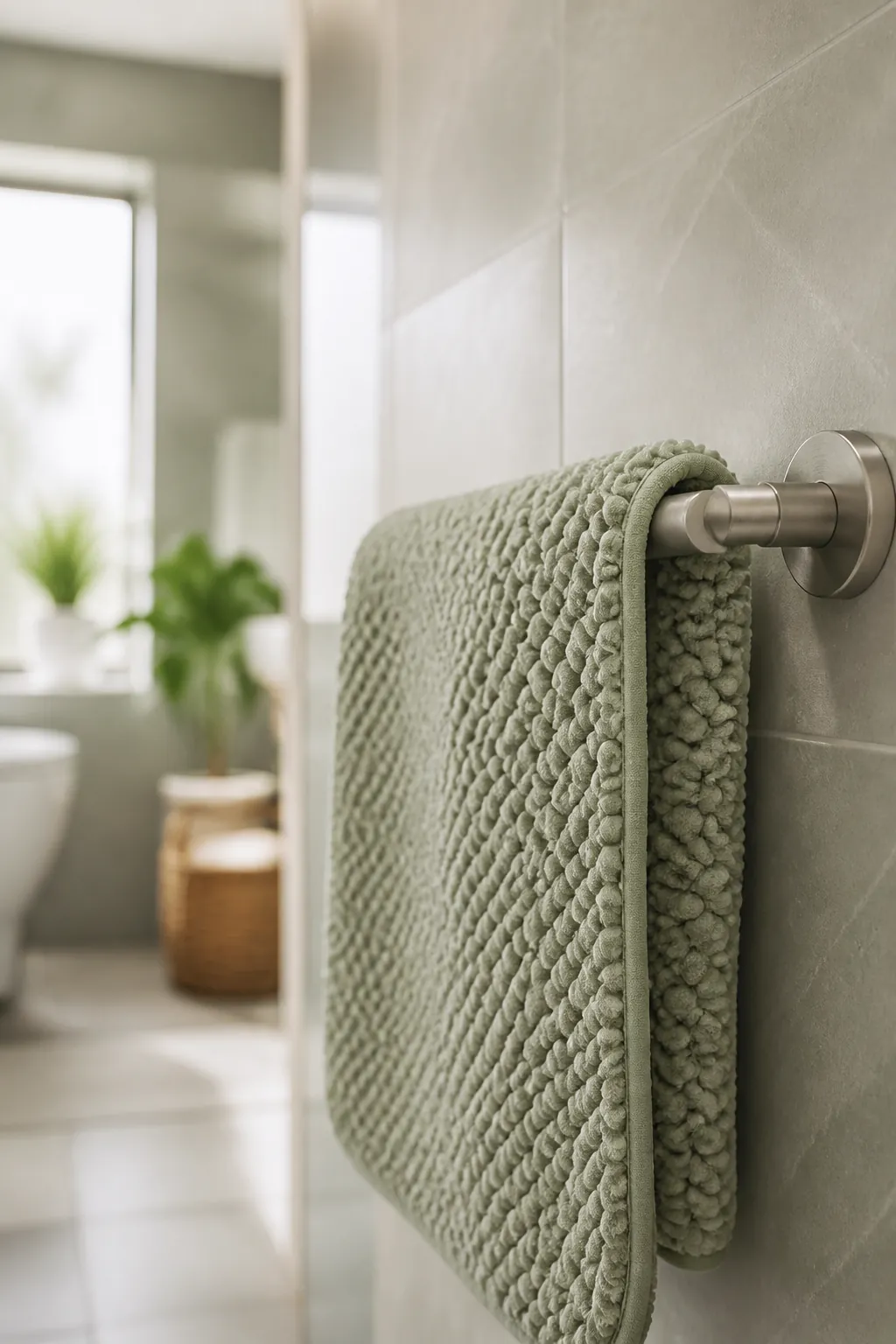
Once the mat is dry, it still needs a spot that is not the floor, because a mat left flat between uses restarts the same trapped-moisture problem overnight.
A short wall bar mounted a couple of inches proud of the tile, rather than a hook the mat gets bunched onto, keeps both sides open to the room. Mount it at least an inch and a half off the wall. Anything tighter presses the pile flat against the surface behind it, which is the same dead-air problem as leaving the mat on the floor, just moved a few feet up.
If drilling into tile is off the table, an adhesive-mount bar rated for bathroom humidity gets the same inch-and-a-half standoff without a hole to patch at move-out, as long as you give the adhesive a full day to cure before hanging anything on it.
3. Roll spares instead of folding them
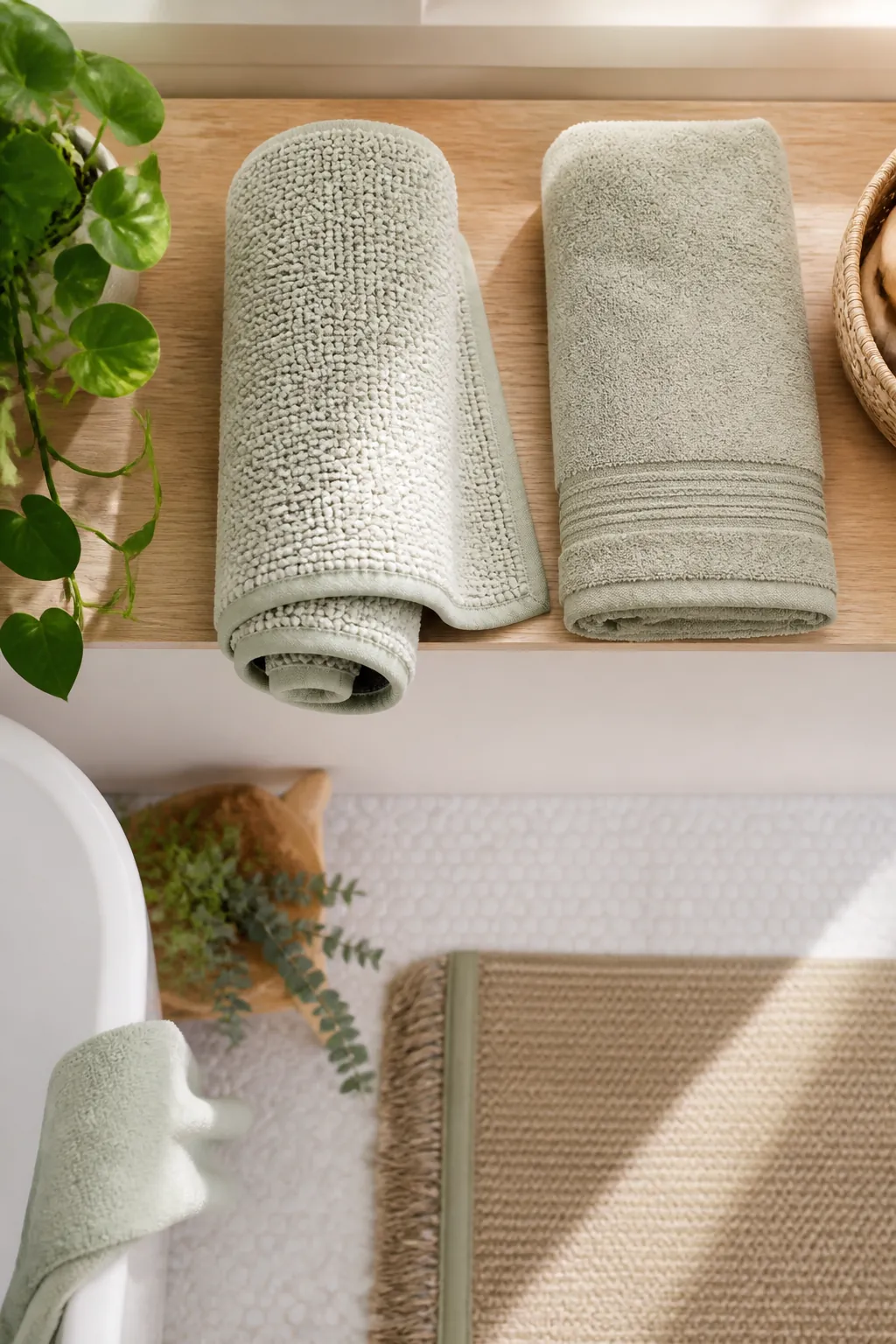
A folded rug creases at the fold line every time, and a rubber or PVC backing does not bounce back from that the way fabric does. Left folded under the weight of other linens for a few weeks, the crease becomes a permanent crack, and a cracked backing sheds bits of rubber and loses the grip that made it non-slip in the first place.
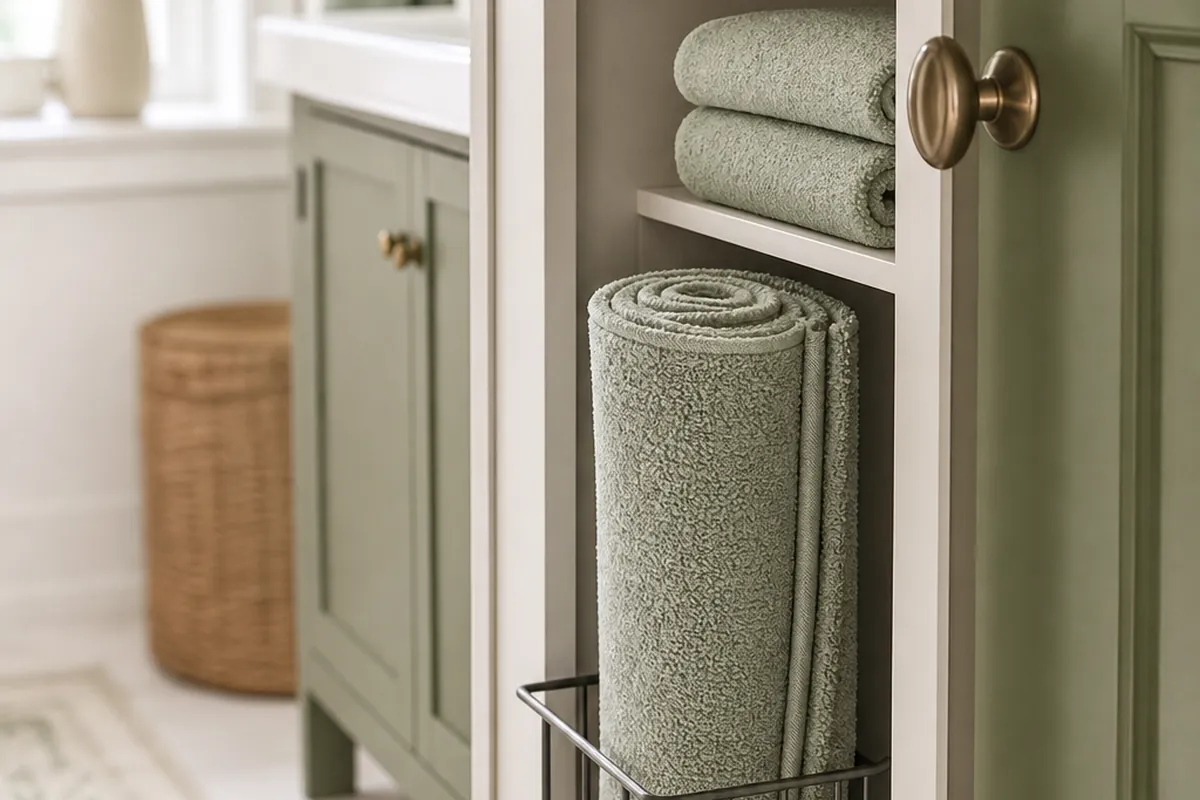
Rolling avoids both problems. Roll the mat loosely with the backing facing in, so the fibers are on the outside where they can still breathe a little even while stored. A tight roll is nearly as bad as a fold, since it compresses the backing the same way over a smaller area.
4. Store rolled spares on a slim rolling cart, not a shelf
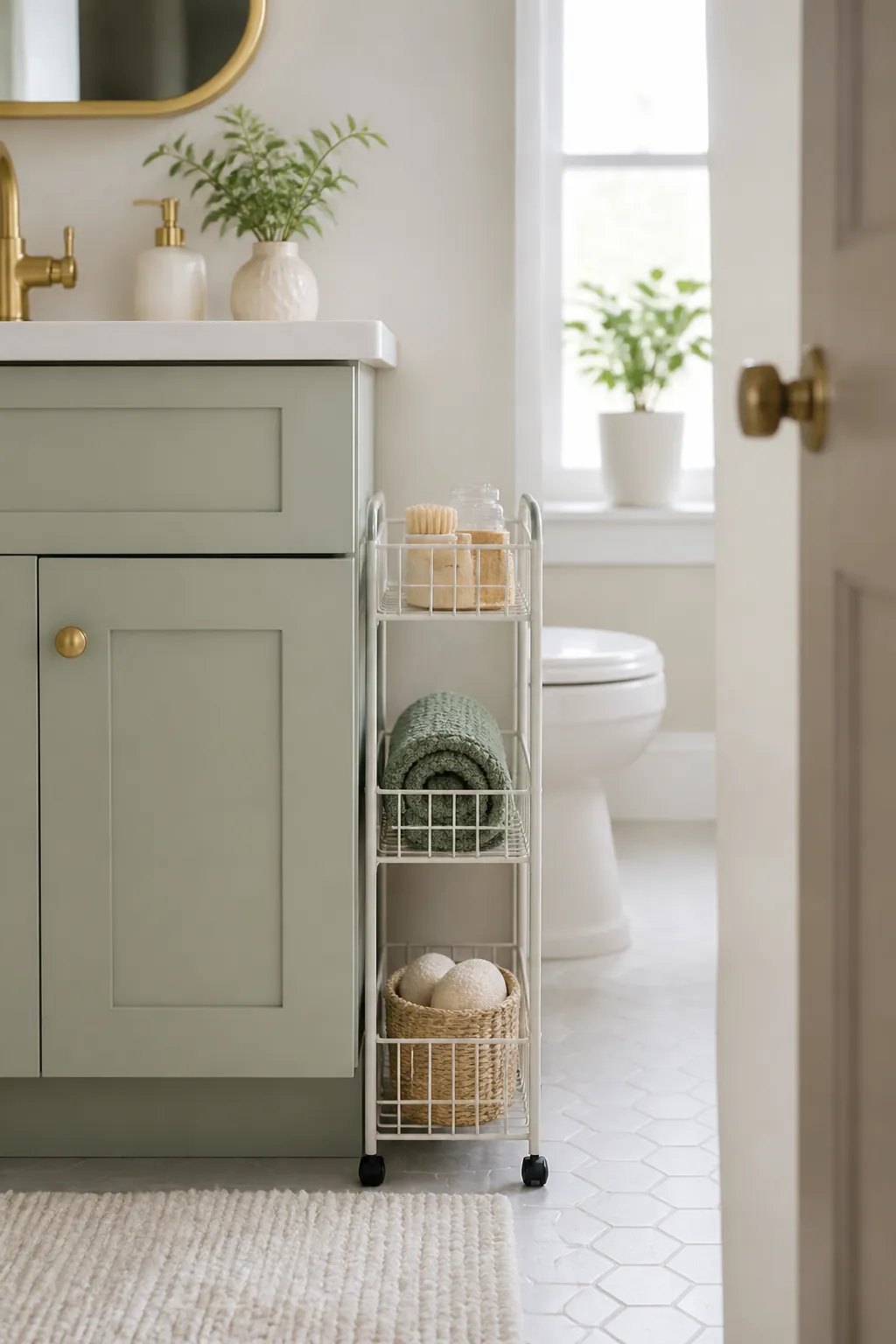
A slim rolling laundry cart solves the airflow problem that a shelf or a closed bin cannot. Its open wire tiers let air move around a rolled mat from every side, instead of trapping whatever moisture is left against a solid shelf underneath.
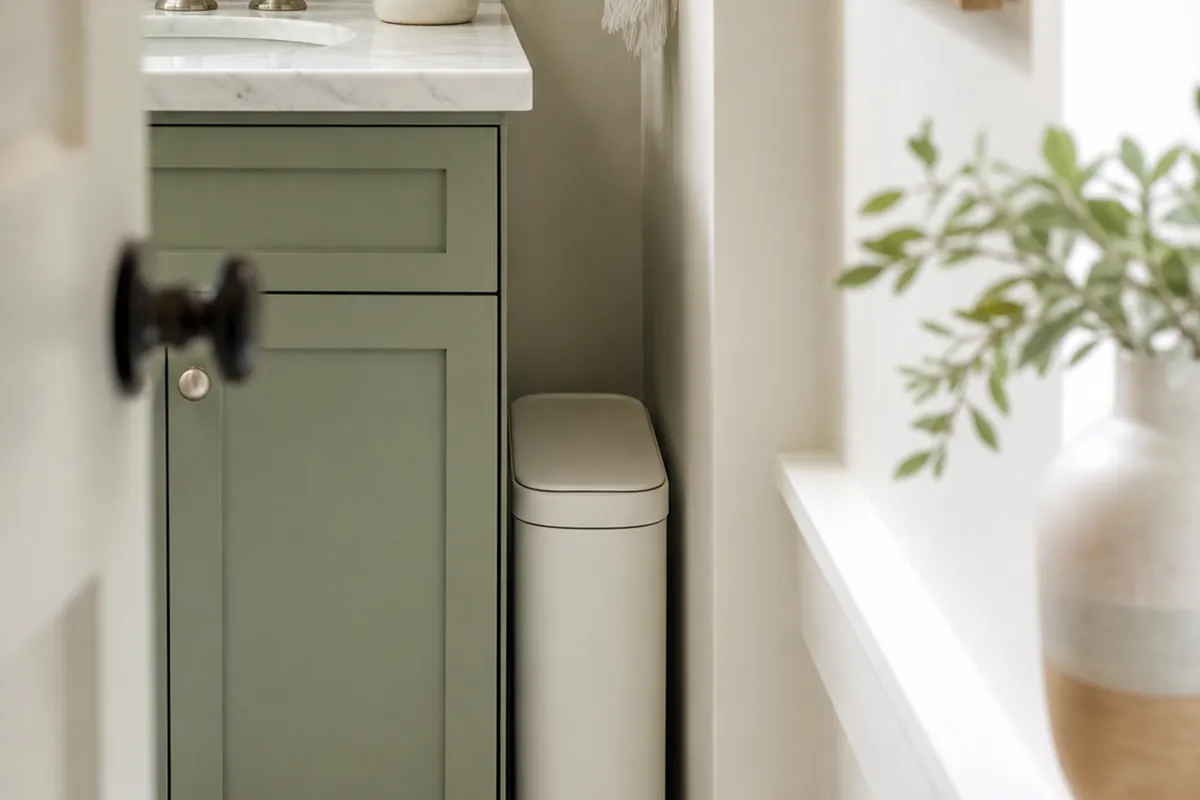
Most small bathrooms have a gap of ten to fourteen inches somewhere beside the vanity or the toilet, and a slim cart is built for exactly that width. Because it rolls, you can pull it clear of the wall on laundry day instead of reaching blind into a gap, and it moves with you at the end of a lease with nothing to patch.
5. Let an over-the-door rack dry and store the backup at once
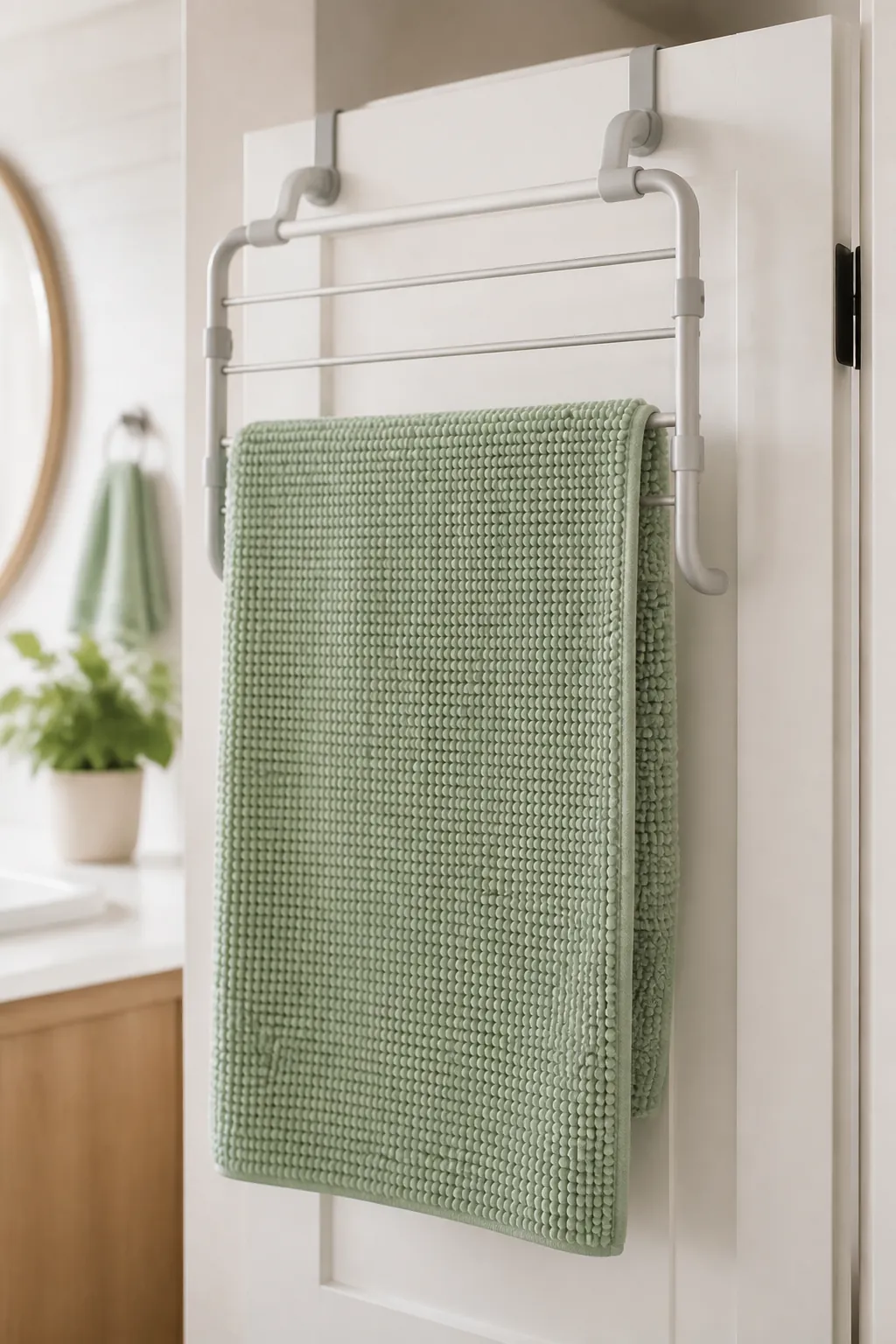
An over-the-door drying rack does two jobs with one fitting. Hang a spare mat over it after washing, and it dries fully open rather than folded, then it can just stay there as the storage spot rather than getting moved once it dries.
Check two things before hanging it. Measure the gap above the door itself, since a bracket that is too thick stops the door closing flush in a tight frame, and confirm the rack’s arms clear the tub or vanity when the door swings open, or the whole setup becomes something you fight past every morning.
6. Reserve a pull-out bin under the sink for what is not in rotation
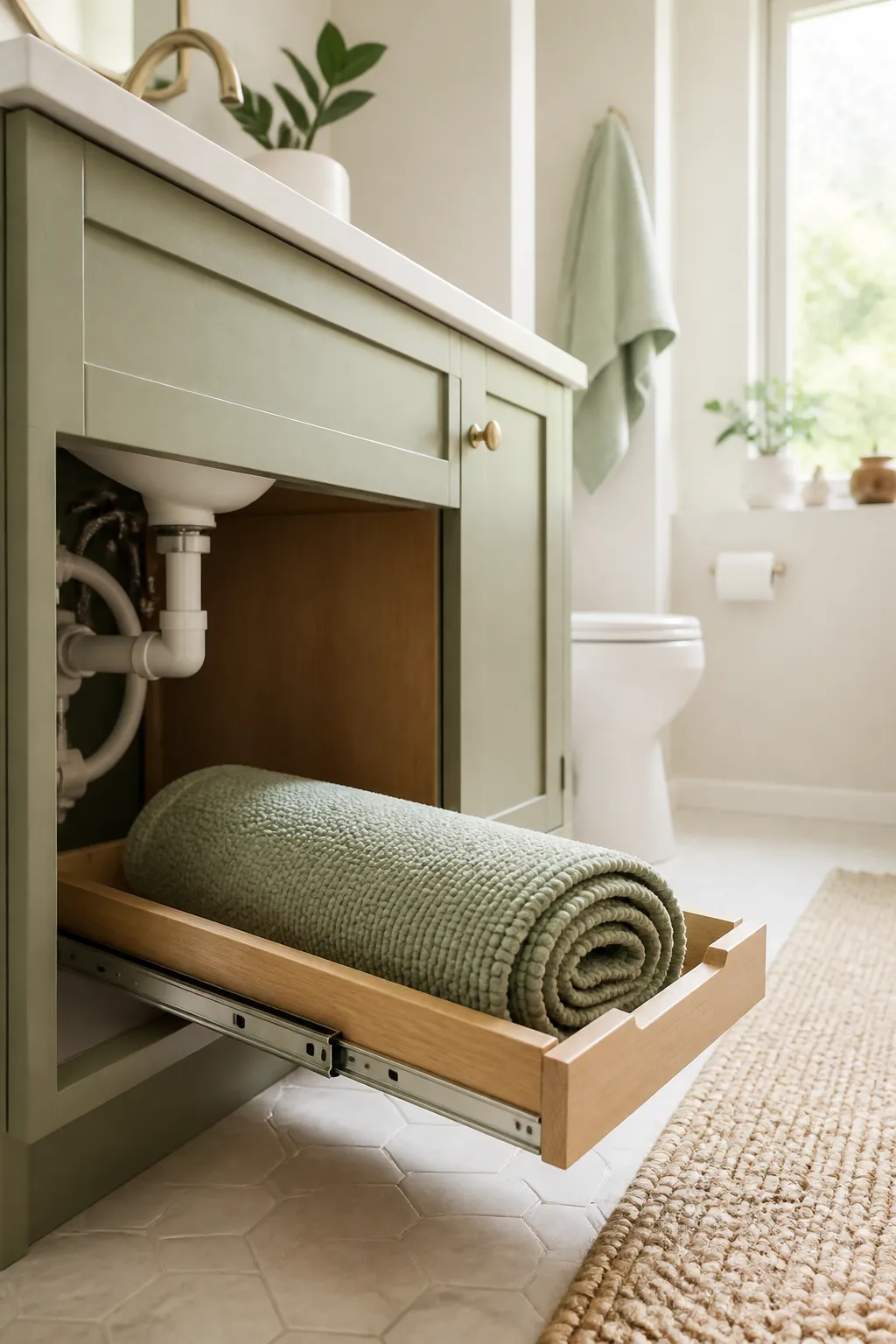
The cabinet under the sink works for a mat only once it is completely, provably dry, not merely dry to the touch. A pull-out under-sink organizer gives that spare its own tray rather than letting it sit against cleaning bottles and whatever else lives down there, and you can slide it out fully instead of reaching into the back of a dark cabinet.
Use this for the mat you keep for guests or for a second bathroom, not for the one in daily rotation. A cabinet with the door closed gets no air movement at all, so anything short of bone dry going in comes out smelling like the inside of a gym bag.
7. Match the material to how you plan to store it
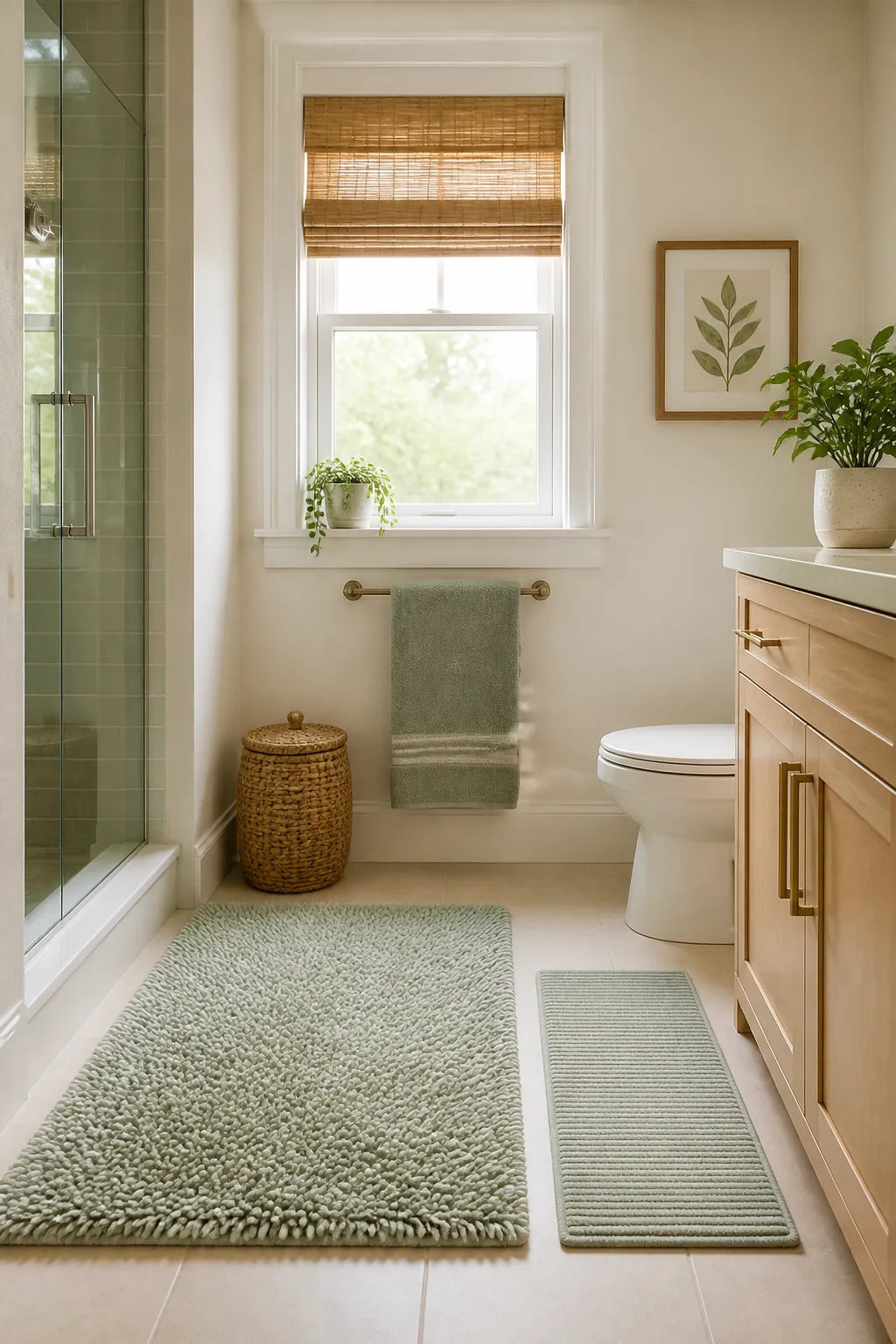
A thick chenille or cotton bath rug looks better underfoot than a thin microfiber one, but it can take four to six hours to air dry fully, against roughly one to two hours for a low-pile microfiber mat, and it never compresses down to the size a rolling cart or an over-the-door rack handles well.
If storage space is the real constraint in the room, buy the mat that matches it. A low-pile microfiber or a ribbed cotton mat rolls to about a third the bulk of a plush one and dries fast enough to go straight from the rack back into daily use, which matters more in a small bathroom than an extra half inch of plush underfoot.
8. Keep only two mats in circulation
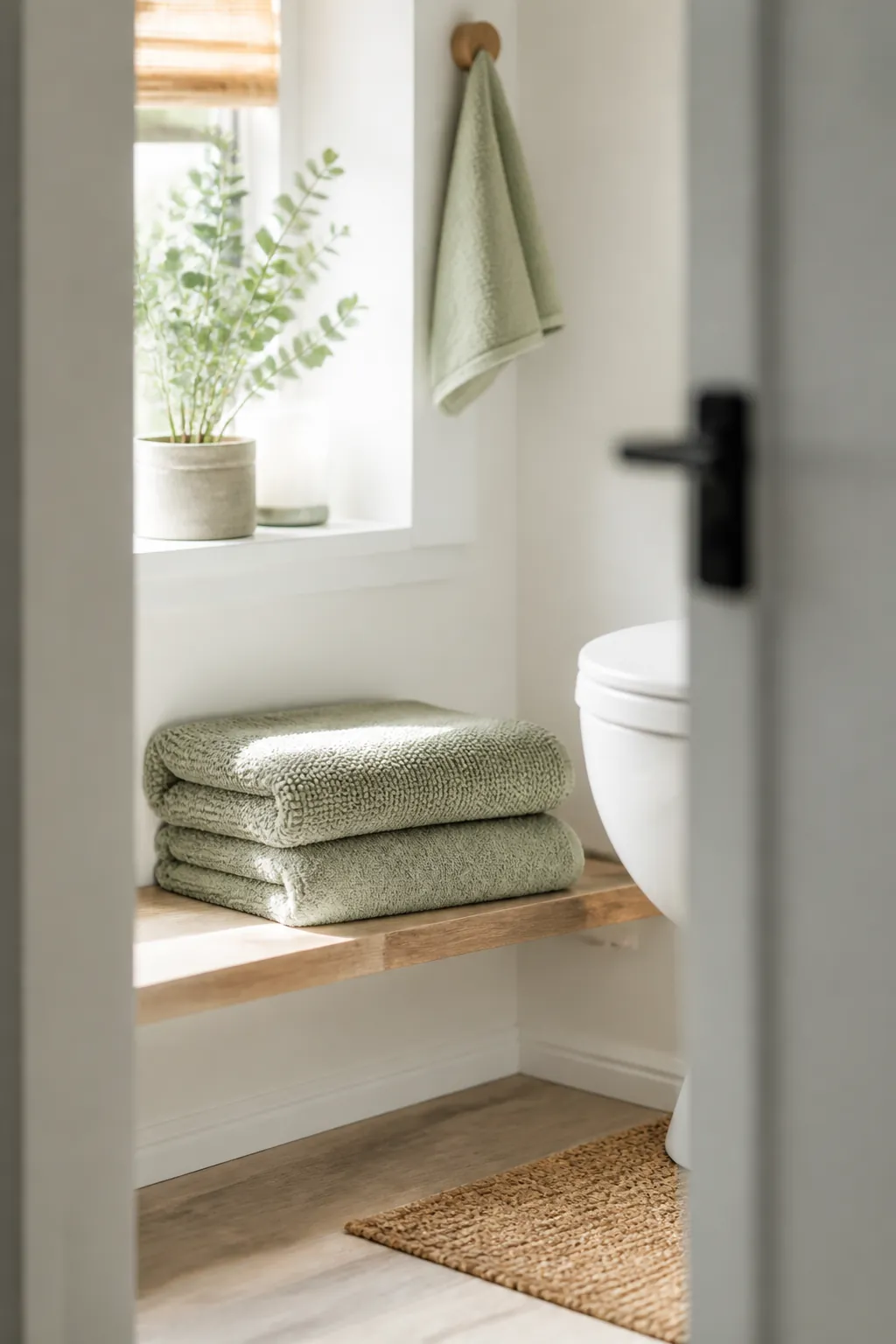
One mat in use and one clean spare is the working set for most bathrooms, the same rule that works for towels and for the same reason. Every extra mat in rotation needs its own drying spot, and a small bathroom only has one or two of those to offer.
Seasonal mats, a set bought for a bathroom you no longer decorate that way, or three near-identical bath rugs from past purchases belong in a bedroom closet or a linen closet elsewhere in the home, not competing for the one bar in this room.
9. Check the rubber backing before long-term storage
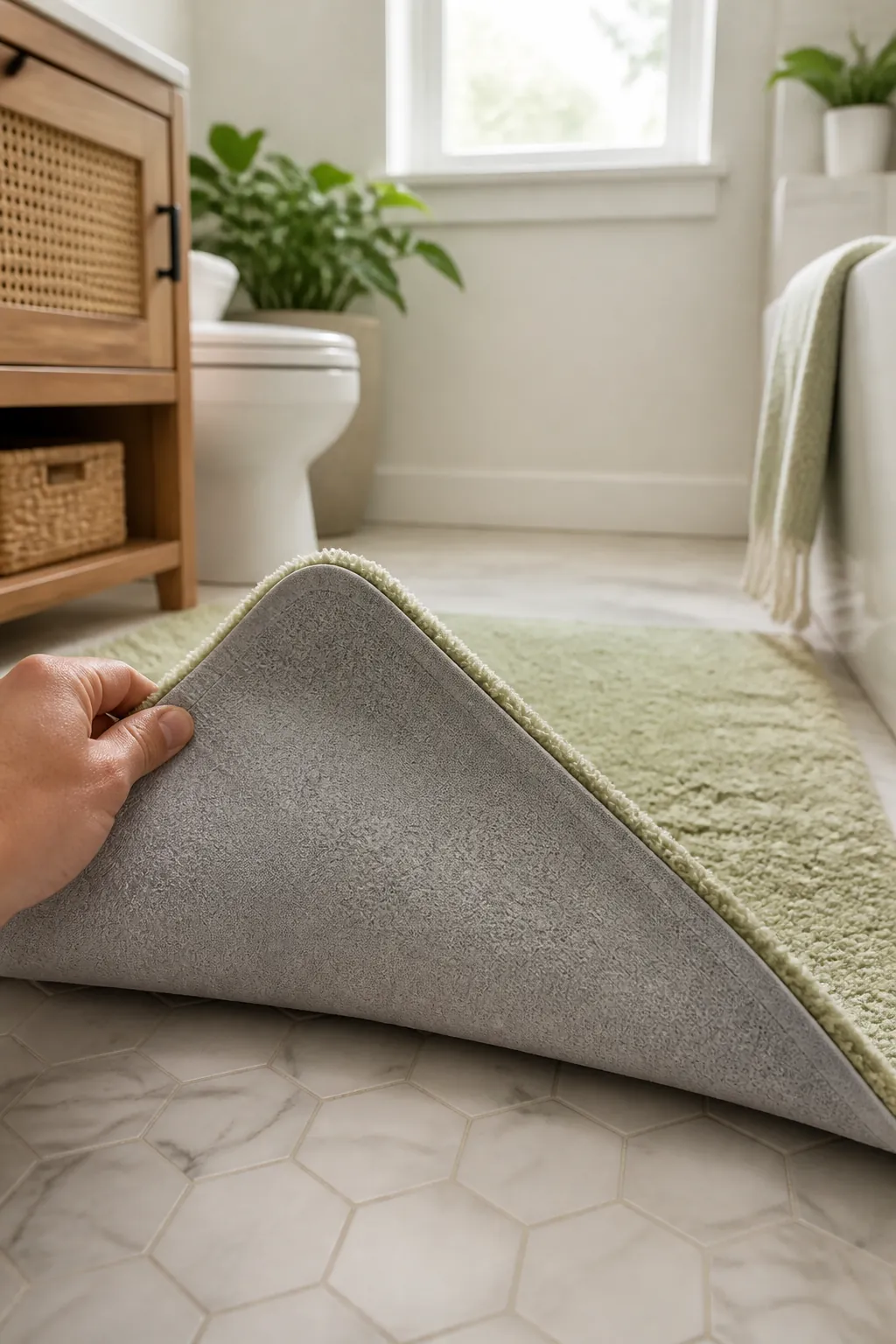
A rug pulled out of a closet, an attic, or a garage after months away needs a look before it goes back on the floor. Rubber and PVC backings degrade in heat, and a space that gets warm over summer can leave a backing chalky, tacky, or starting to flake at the edges.
Run a hand across the underside before you use it. A backing that feels sticky or leaves residue on your fingers has lost the grip it was bought for, and a mat that no longer grips the floor is a slip risk in exactly the room where a slip does the most damage. Replace it rather than putting a degraded mat back down and hoping.
Where to start
Fix the drying first: drape the daily mat instead of leaving it flat, and mount its bar with enough clearance that both sides stay open to the air. For the spares, roll rather than fold and give them somewhere ventilated, a slim rolling cart if the mat might still be a little damp, the pull-out bin under the sink only once it genuinely is not.
None of it holds if a rug goes into storage assuming it is dry when it is only dry on top. Check before you roll, check again before you unroll months later, and the mat count in this room stays exactly at two.