Bath time ends and the toys stay exactly where they landed: bobbing in the last inch of water, wedged against the drain, or piled in a soggy heap on the corner of the tub. In a small bathroom there is nowhere to put them except back in, which means they never fully dry and the tub never fully looks clean.
The fix is not a bigger basket. It is getting every toy off the wet surface and into something that drains, sized to a collection you can actually keep track of. Nine ways to do that below.
1. Get toys off the floor of the tub between baths
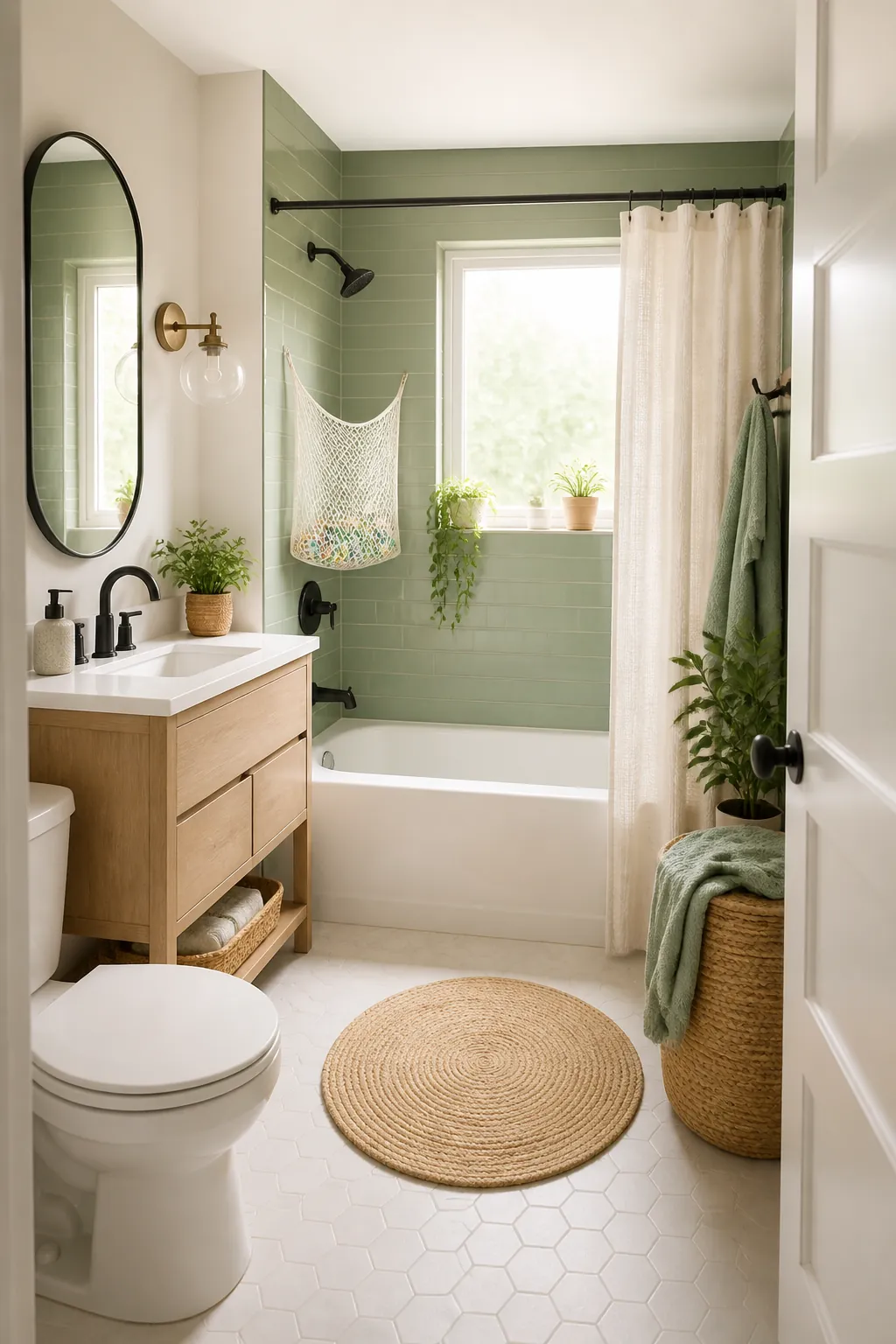
A pile of ducks and cups sitting in the last inch of drain water is the single biggest reason bath toys smell sour. Water sits underneath them, the tub floor never dries, and the pile is usually the first thing a foot lands on the next morning.
The rule that fixes this costs nothing: toys come out of the tub the moment the water goes, not at the next bath. Everything below is a way of giving them somewhere to go that is not the floor.
2. Hang a mesh net in the corner so they actually dry
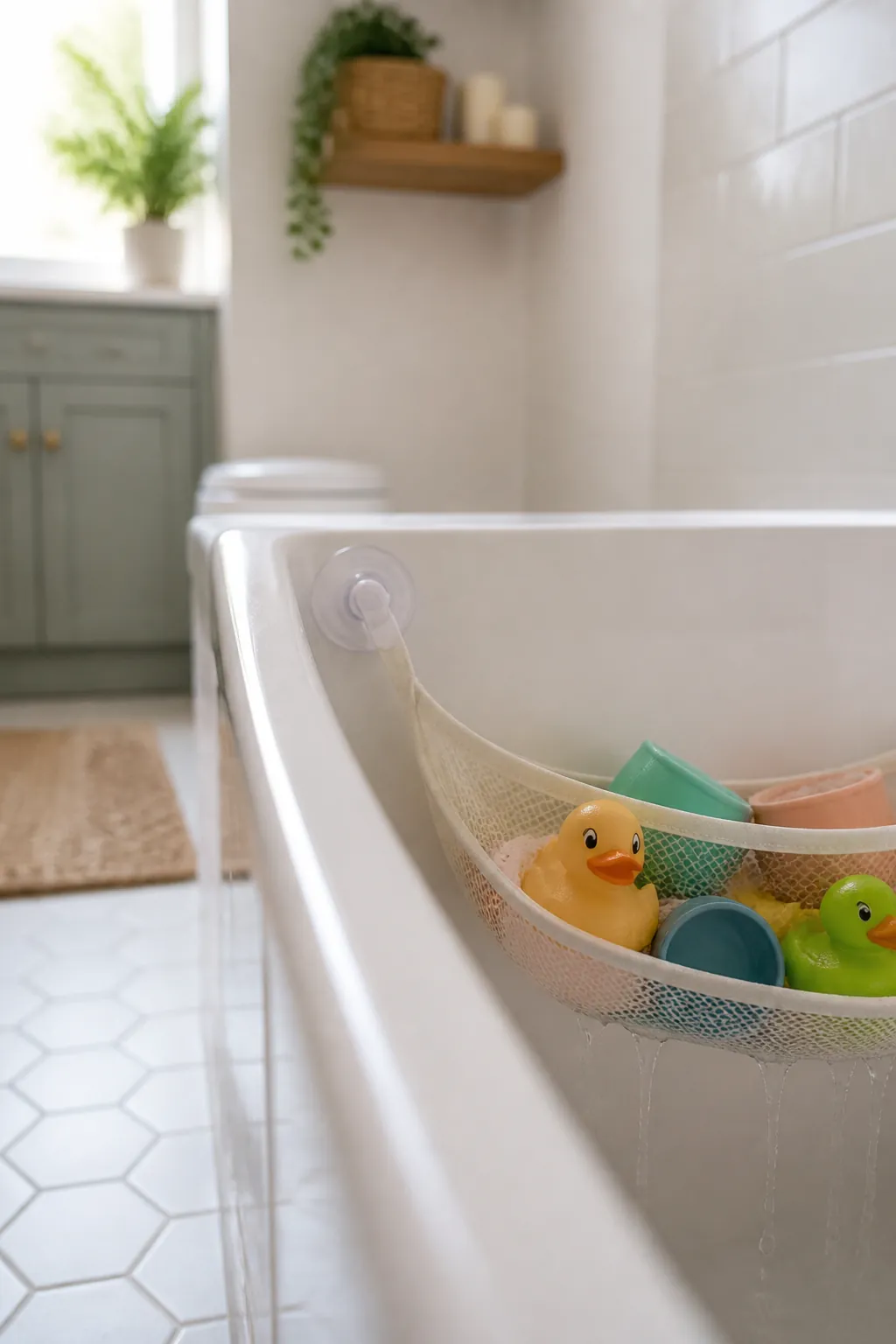
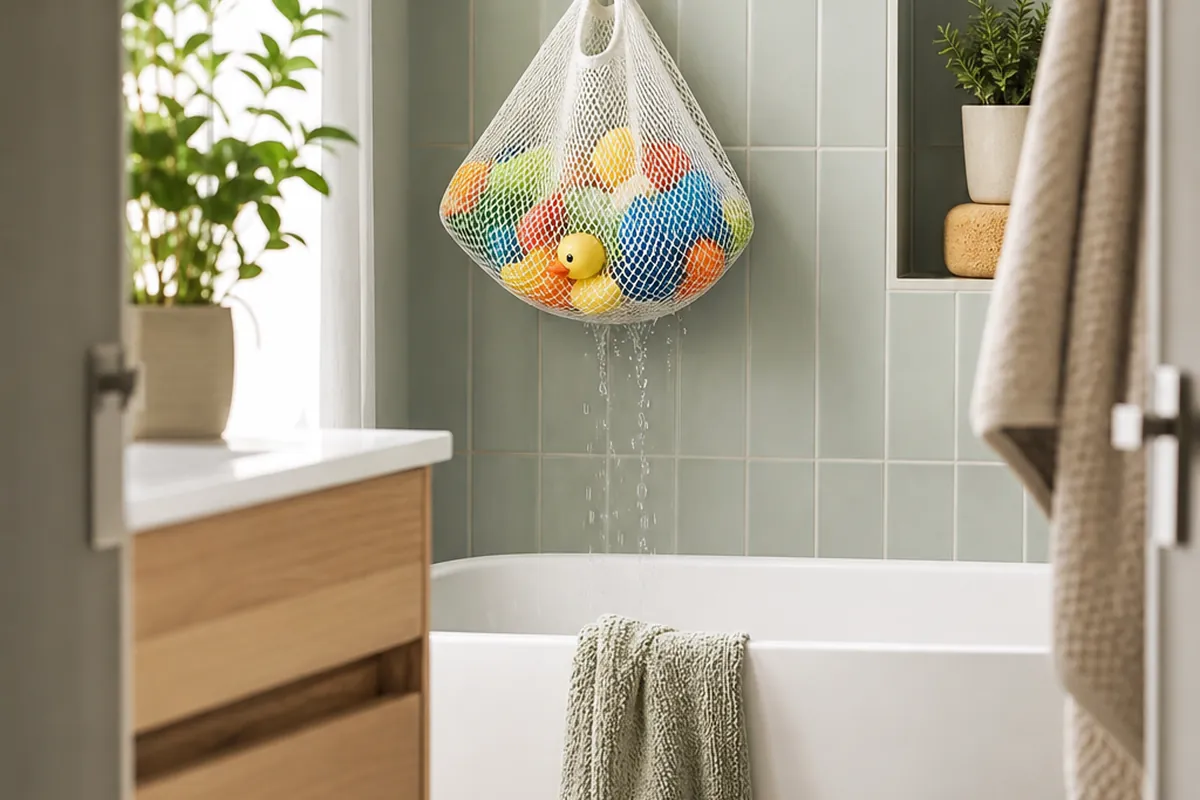
A toy hammock corner net fixes to the tile with suction cups and sags into a scoop shape that holds toys above the water while it drains straight back into the tub instead of onto the floor. That drainage is the entire point: a wet toy left in a closed bag or a solid bin stays wet for days, and a net does not let it.
Fit it low enough that a child can reach and load it themselves, and give it real clearance from the tile, at least four inches, so water dripping off the bottom lands in the tub and not down the wall. Suction cups need smooth, dry, non-porous tile to hold, which rules out grout lines and anything textured.
3. Corral toys with a low suction caddy instead of a floor pile
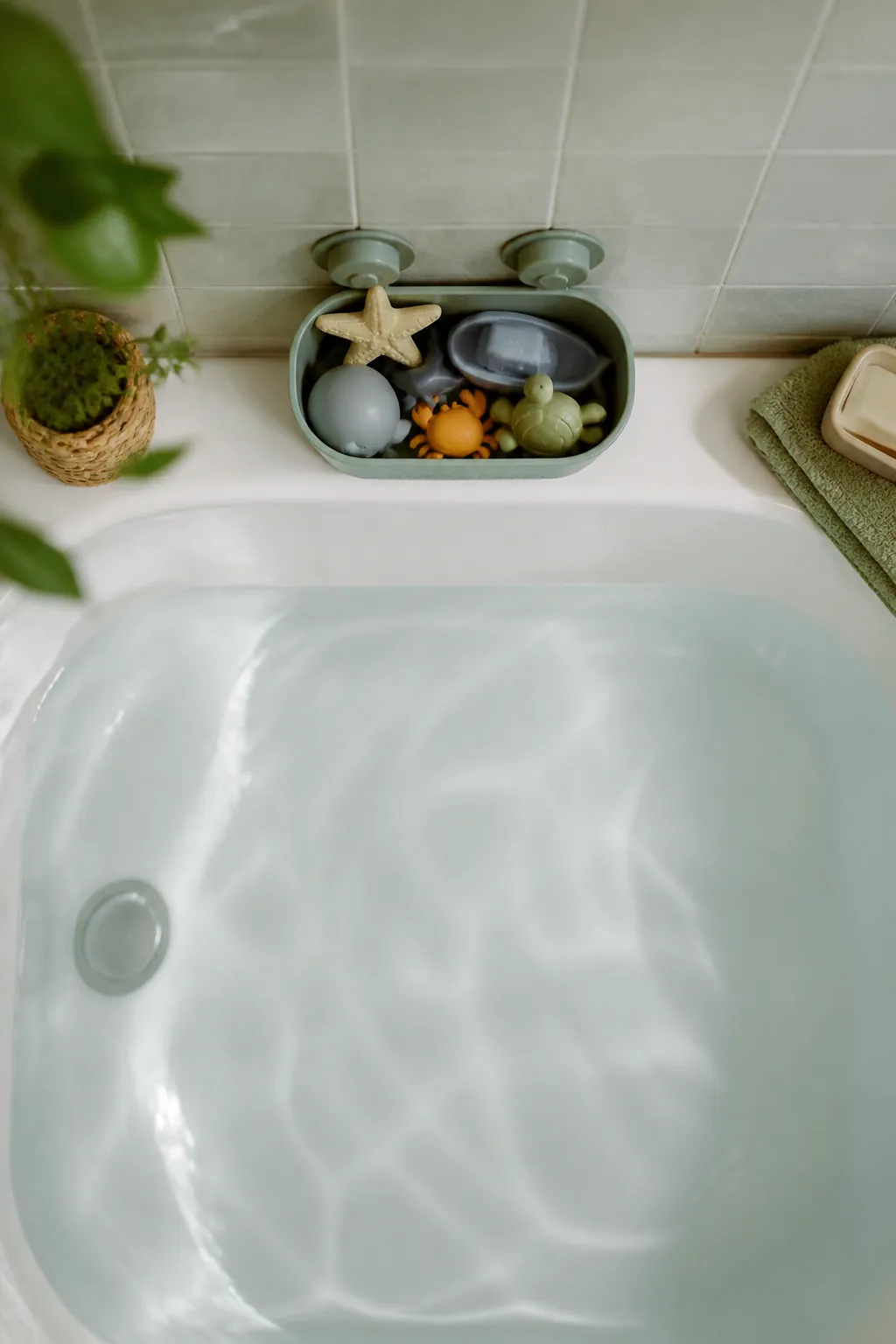
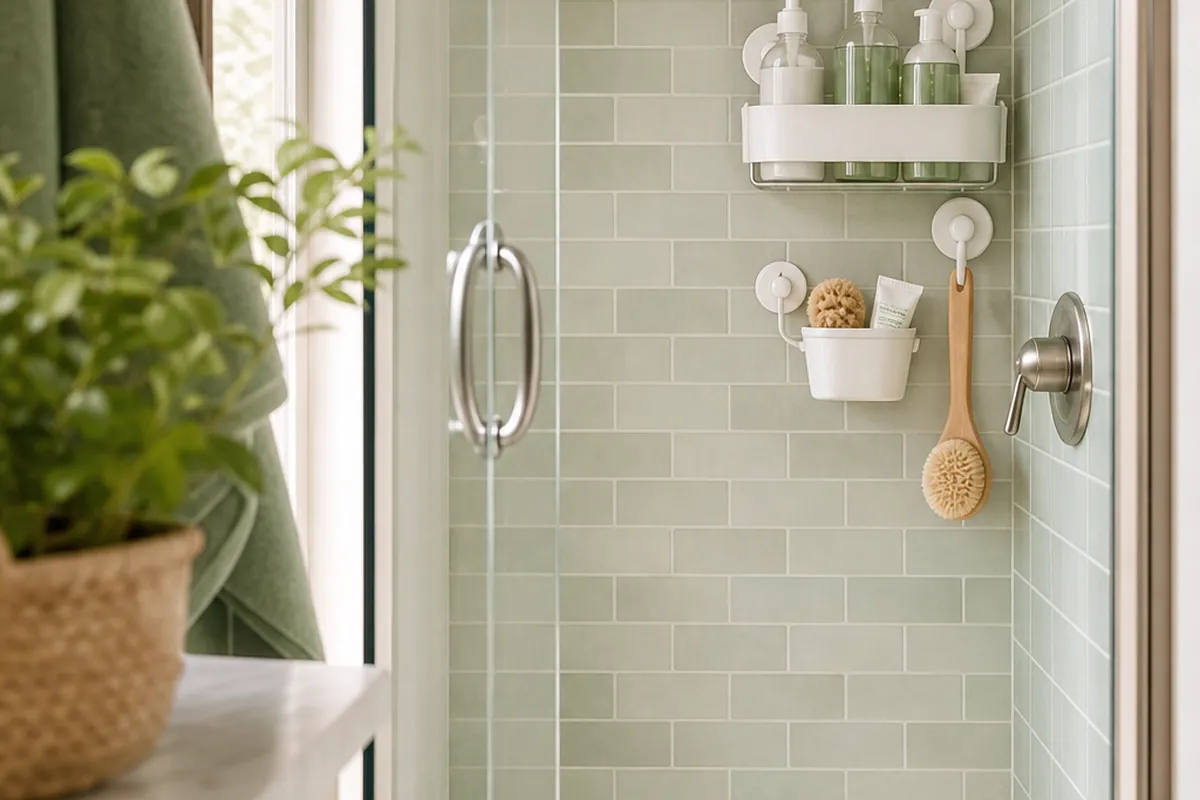
For a smaller collection, or for the toys a toddler actually wants within arm’s reach during the bath, a suction-cup shower caddy mounted just above the waterline works as a shallow toy corral rather than a shampoo shelf.
Mount it low, not at the chest height a shower caddy usually gets, since the point here is a child reaching in while sitting down. Check the suction rating before loading it: most household suction discs are rated for two to three pounds each, and a caddy with four cups holding a dozen waterlogged toys can exceed that fast. If it is sagging at one corner, it is already failing and will come down in the night.
4. Watch for squirters, since a hole is where the mold grows
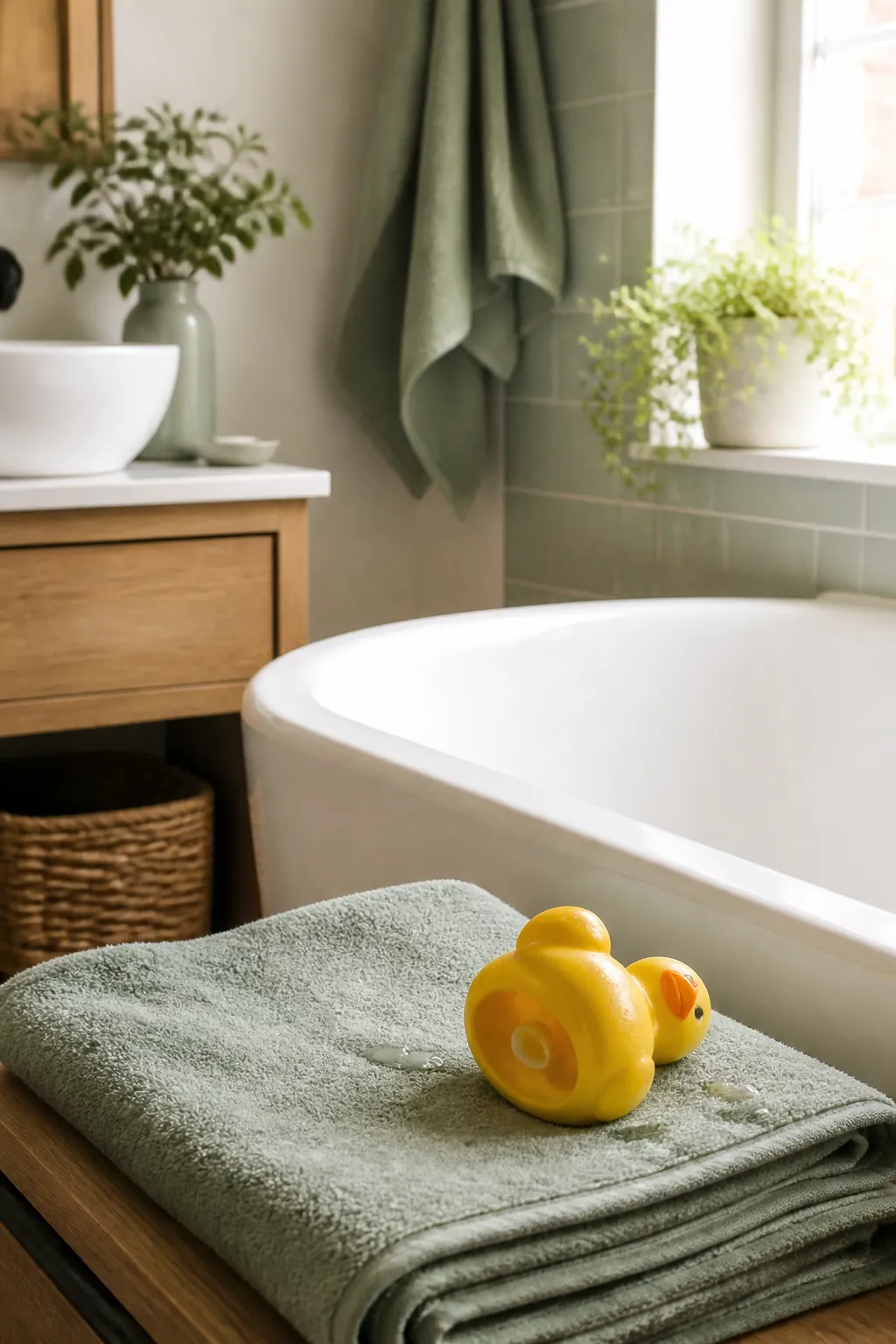
The single worst offender in any bath toy collection is the classic rubber squeeze toy with one small hole. Water gets pulled in every time a child squeezes and releases it, and almost none of that water comes back out, because the hole is too small and the inside has no airflow.
Left like that, mold grows inside where nobody can see it, and it shows up as black flecks squirting out weeks later. If a toy has a hole and no way to open it up, squeeze it dry over the tub after every single bath, or retire it. No net or caddy fixes a toy that traps water inside its own body, since the problem is inside the toy, not outside it.
5. Use the tub’s dead corner instead of the middle
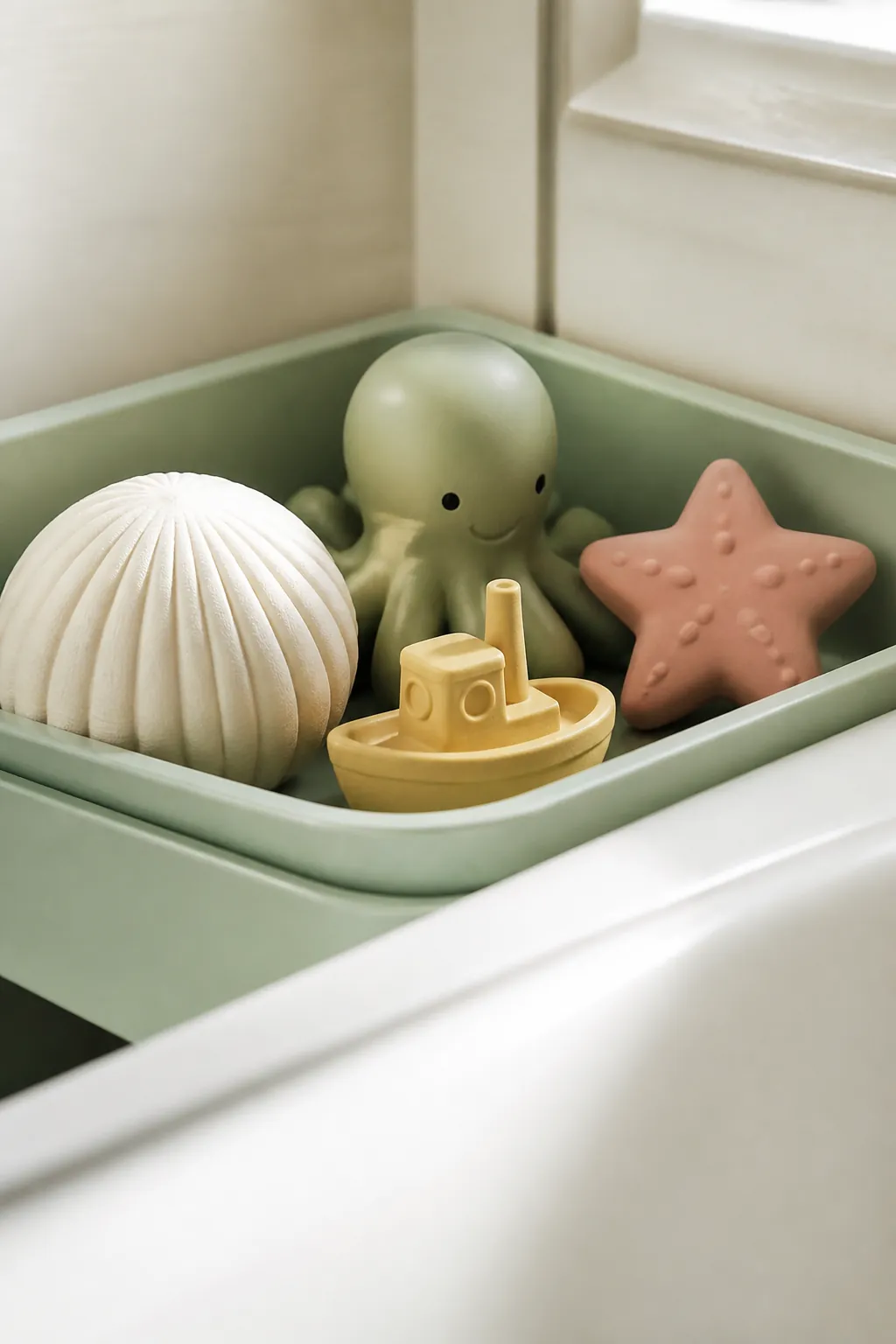
Most tubs have at least one corner where the two ends of the rim meet at an angle, and it is dead space for anything except toys, since nothing else sits there without sliding.
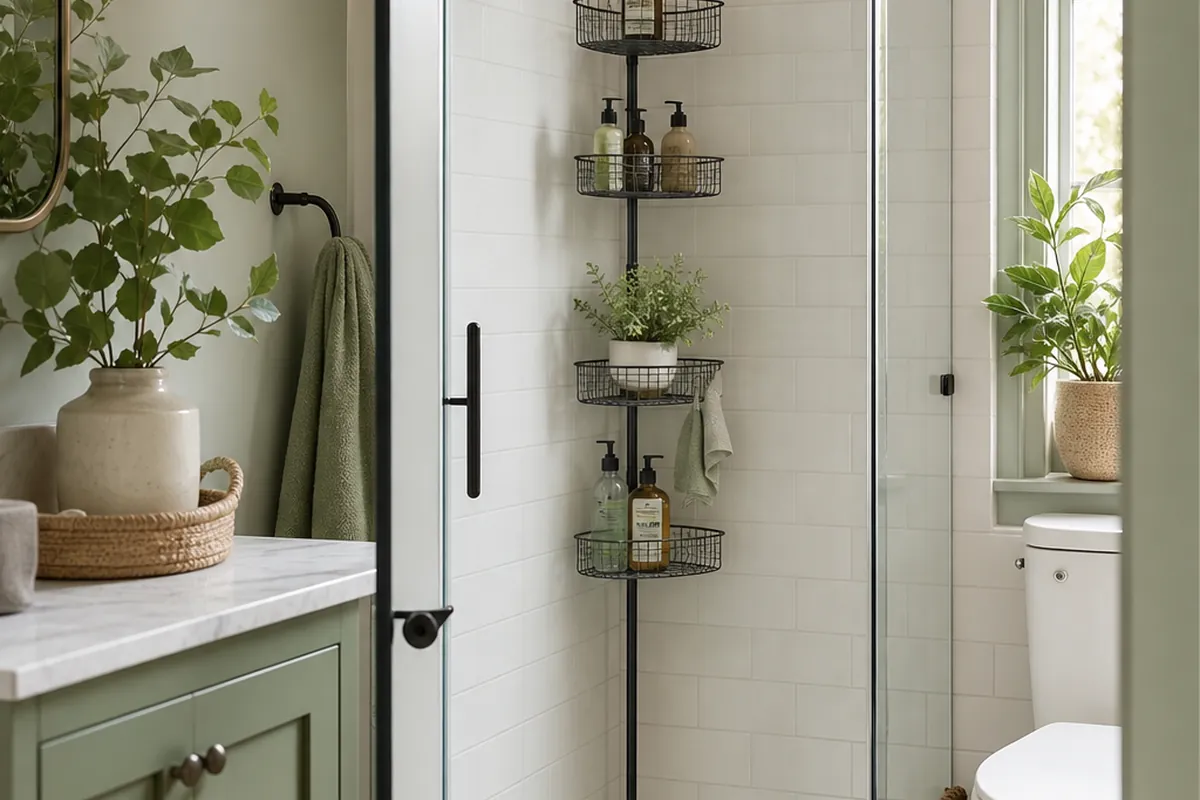
A small suction basket or the same corner net from step two fits that triangle better than a shelf ever would, because a straight shelf either overhangs the tub or does not reach the wall at all. If your bathroom has a corner shower caddy already fitted for shampoo, a second small one lower down for toys costs one more suction disc and no extra wall space.
6. Keep the collection small enough to fit anywhere
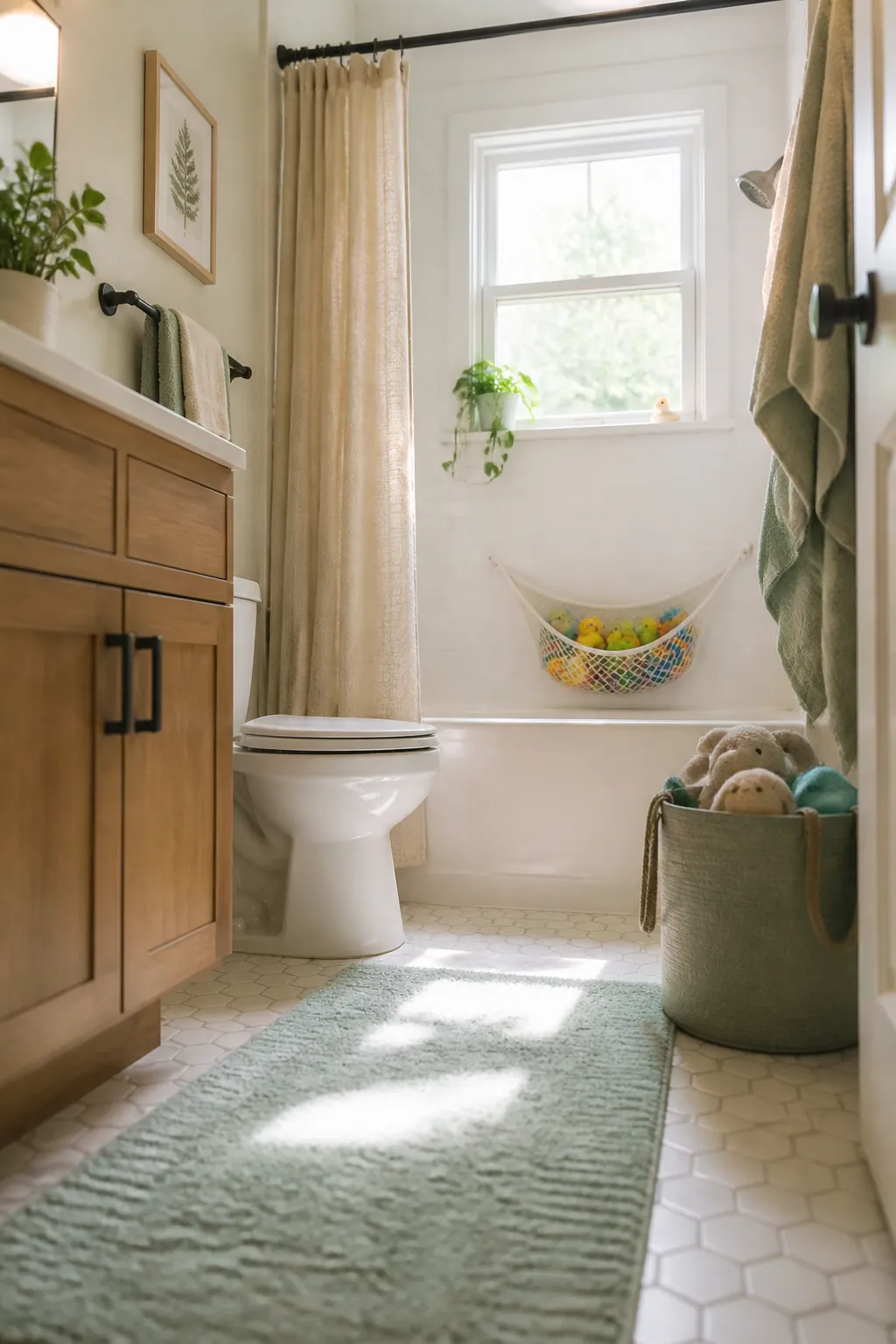
None of the fixes above work if there are forty toys competing for one net. The honest number for most families is ten to fifteen in active rotation, which is roughly what a single mesh net or a mid-size caddy can hold without anything sitting crushed at the bottom.
Toys stop draining once they are stacked three deep, and a net packed that tight behaves like a solid bag: water pools in the lowest layer and stays there. If yours is always overloaded, the fix is fewer toys in the bathroom, not a bigger net.
7. Store the overflow dry, outside the bathroom
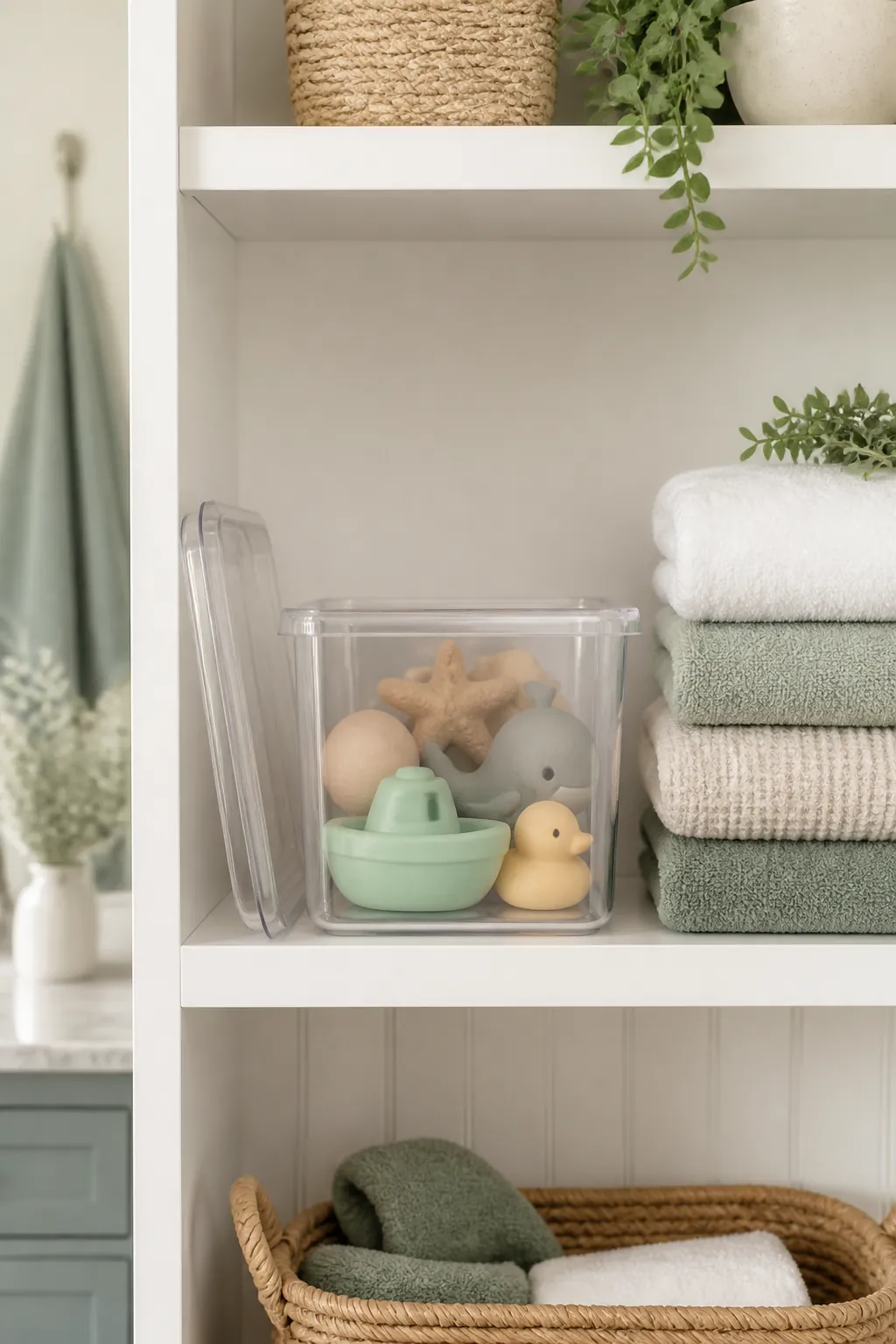
A bathroom is the worst room in the house to store anything long term, because it is the most humid. Toys that are not in weekly use should not live there at all.
A set of clear stackable toy bins with lids in a bedroom closet or hall cabinet holds the spares completely dry, and because they stack, they do not eat floor space the way a single big toy box would. Only move toys into the bin once they are fully dry, never straight from the tub, or the bin becomes the mold problem instead of the tub.
Swap a handful in every couple of weeks. Rotation does more for a small bathroom than any container, because it means the net or caddy in daily use never has to hold the whole collection at once.
8. Give crayons and foam letters their own spot
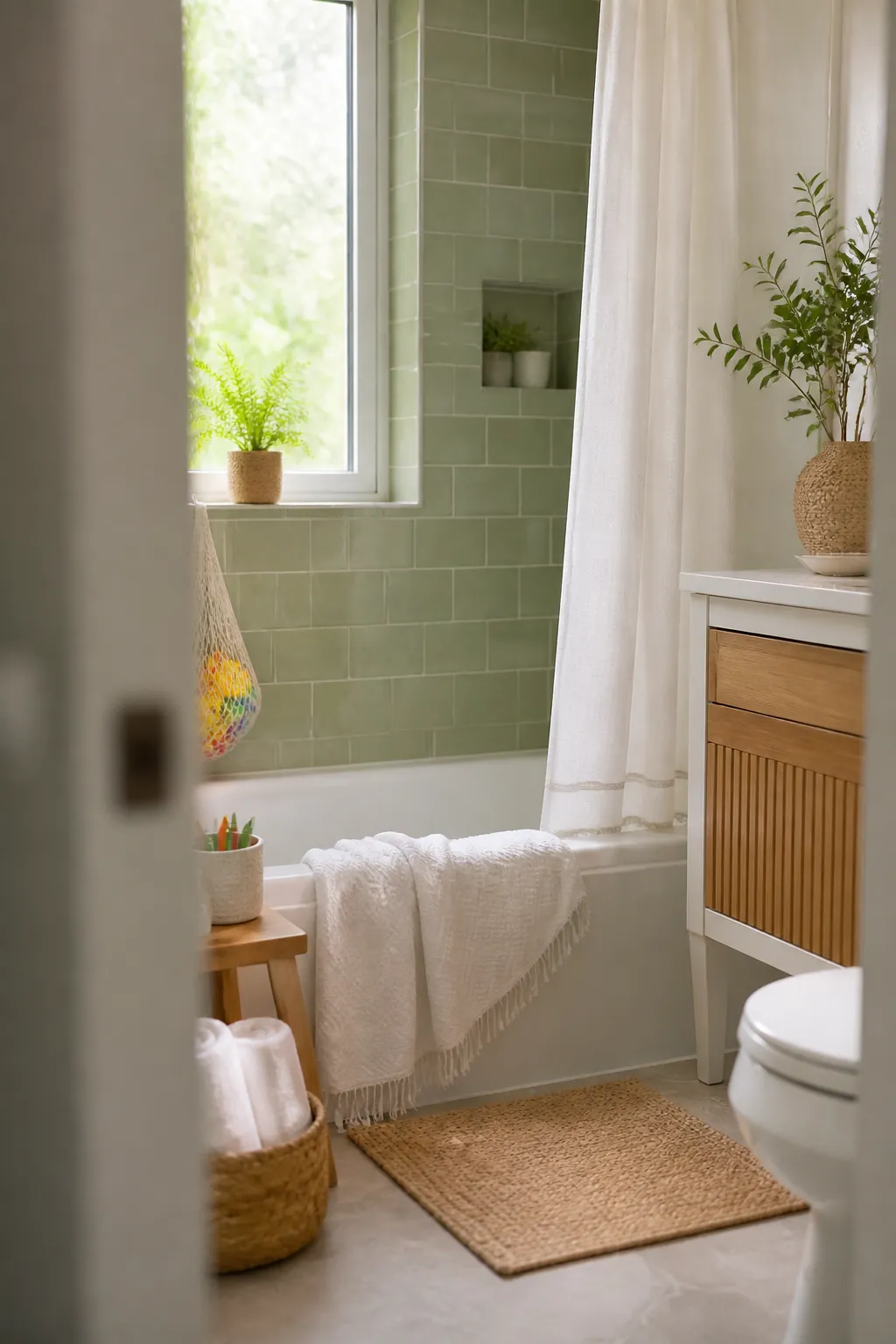
Bath crayons, foam letters and stacking cups do not behave like rubber toys, and lumping them into the same net causes two different failures. Crayons soften and smear if they sit wet against other toys, and foam letters shed color onto anything they touch while damp.
Give them a separate small pocket, either a second compartment in the same net or a dedicated suction cup basket, and let them dry apart from the rubber toys. It is a small change, and it is the difference between crayons that last a term and crayons that turn to mush in three weeks.
9. Match the fixing to the surface you actually have
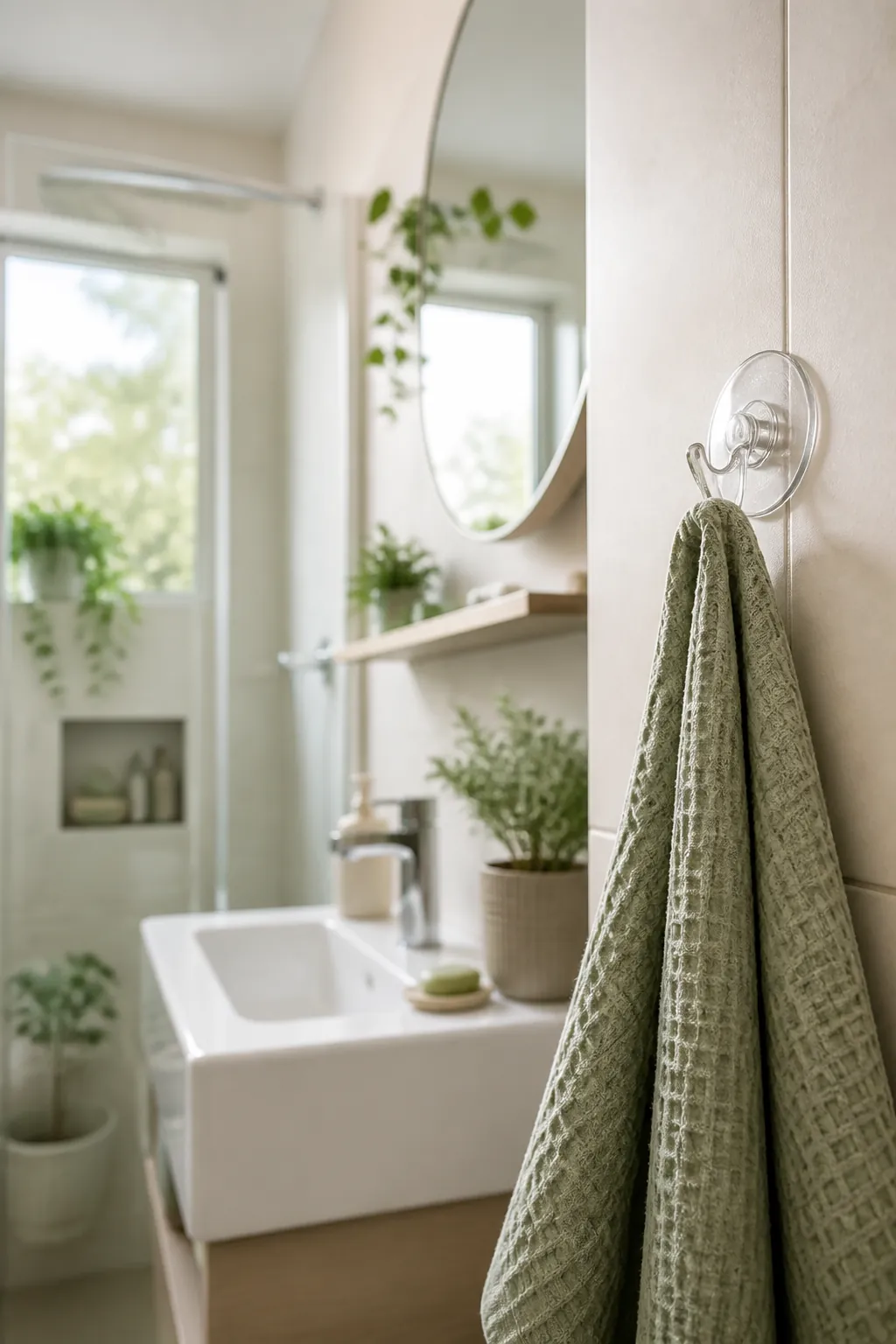
Every option here relies on suction, and suction is picky. It holds on a single smooth tile or a glass bath screen, and it does not hold across a grout line, on textured or riven tile, or on painted plaster around the tub, no matter how long you press it.
Check what surface is actually next to your tub before ordering anything. If the tile is textured or grout-heavy, a freestanding caddy that sits on the edge of the tub itself, weighted or with a wide enough base not to tip, is the more reliable choice, and it needs no wall at all.
Where to start
Start with the corner net or the low caddy, whichever your tile will actually hold, and get toys out of the standing water the moment bath time ends. Squeeze the squirters dry every time, keep the active collection to what one net can hold without crowding, and let the rest sit dry in a lidded bin outside the bathroom until it is their turn again.
None of this needs a drill or a renovation, just somewhere for water to keep moving instead of sitting still inside a pile of plastic. For the rest of a cramped tub-and-shower combo, shower organization ideas for a small bathroom covers where everything else goes.