A bath bomb bought a month ago and never used is usually one of two things by the time you finally reach for it: soft and crumbling at the edges, or already half-fizzed flat from sitting somewhere damp. Bath salts fare no better, going from loose crystals to a single solid brick that needs a spoon to break apart. In most homes the culprit is not age. It is the bathroom itself, the most humid room in the house, which is exactly where these products end up sitting in an open dish because that is where they get used.
Storing bath bombs and bath salts well means treating them less like bathroom decor and more like something that needs to stay dry, the same instinct you would apply to crackers or aspirin. Nine ways to do that in a small bathroom below.
1. Treat humidity as the enemy, not clutter
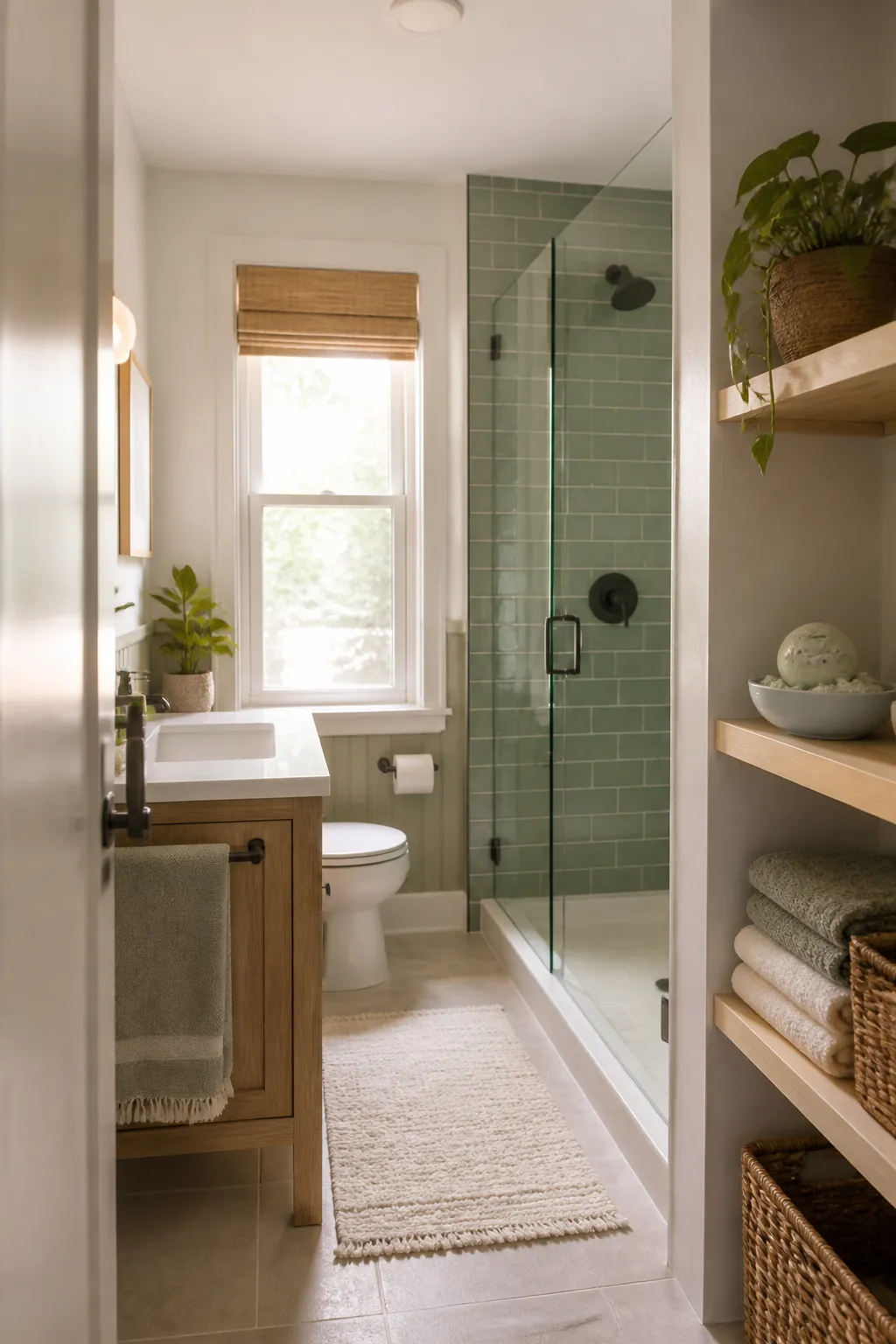
The instinct in a small bathroom is to fight for shelf space and stop there, but a bath bomb sitting in an open basket on an open shelf is losing a slow chemical fight every time the shower runs. Baking soda and citric acid, the two ingredients that make a bomb fizz, react with moisture in the air the same way they react with water in the tub, just at a much slower pace that shows up as softening, cracking, and a flat fizz weeks later than you expected.
That single fact should decide almost everything else in this list. A container with a real seal beats a pretty open dish every time, even in a bathroom too small to spare much cabinet space for either.
2. Keep the daily supply in an airtight container, not an open dish
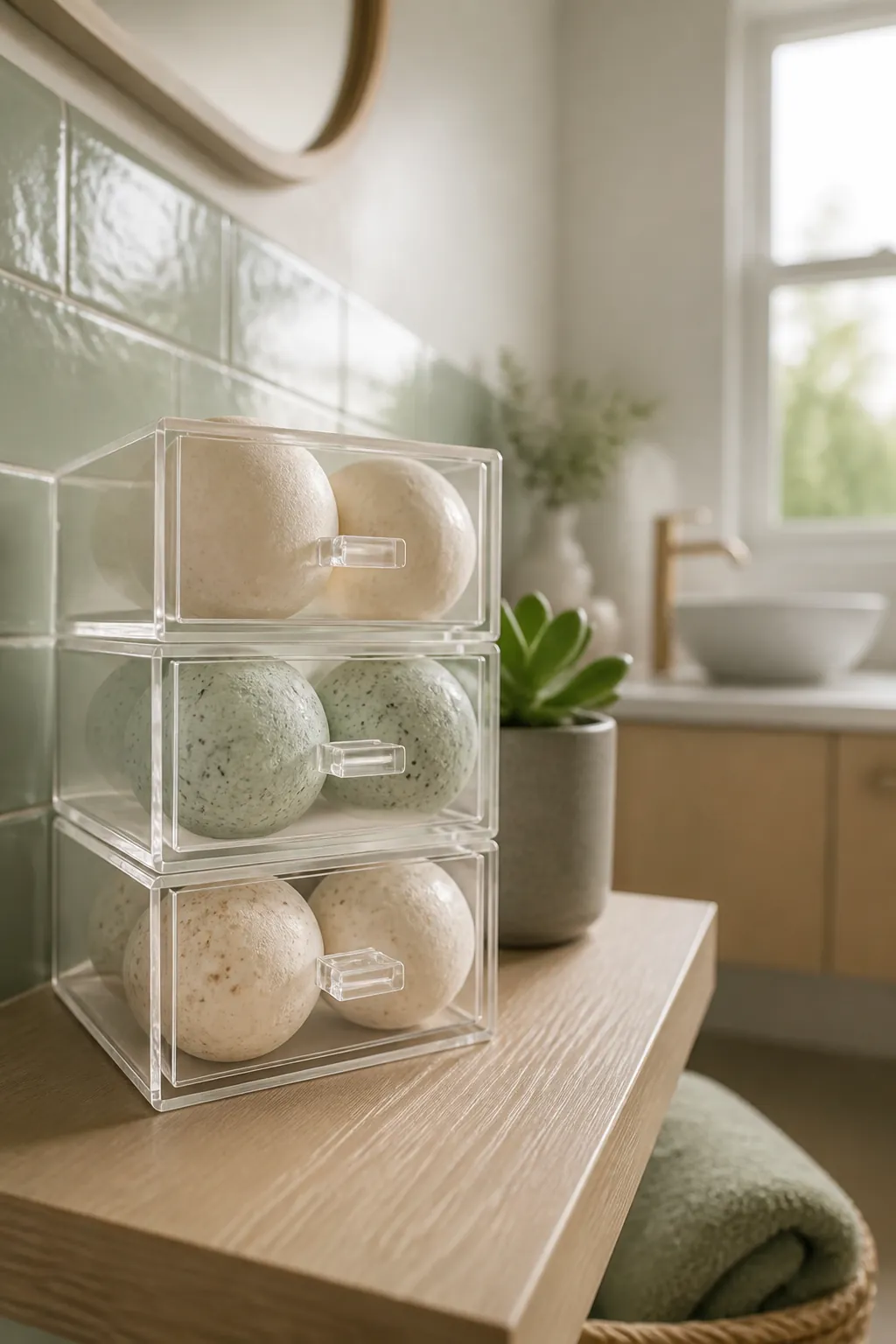
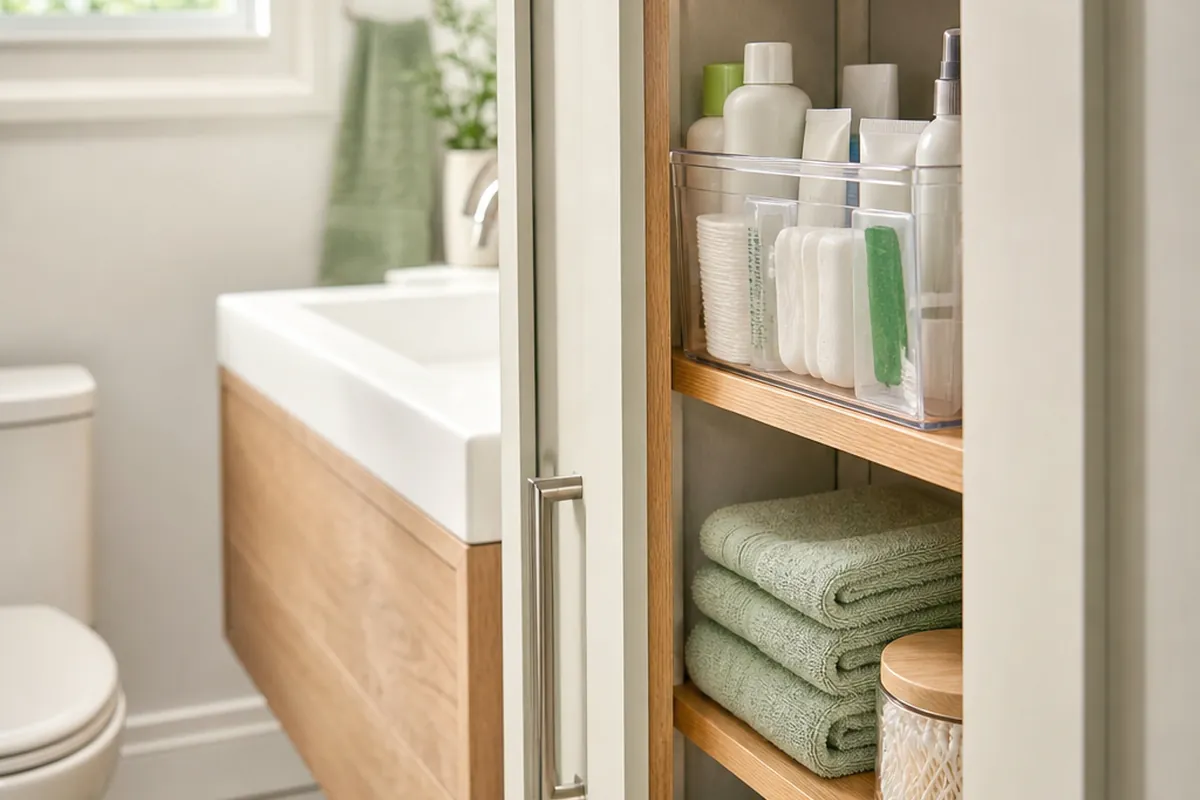
Small clear stackable drawers work well for bath bombs specifically because each drawer closes on its own, so you are not breaking the seal on the whole collection to reach one bomb. Sized right, a single drawer holds four to six bombs without them touching and chipping each other’s edges, which matters more than it sounds like it would since a chipped bomb sheds crumbs into every other product near it.
Stack two or three drawers in a corner of a vanity shelf or the top of a linen tower, and label the front of each with a strip of tape if scents start blurring together. The stacking is what makes this work in a small footprint: three drawers stacked take the same shelf depth as one flat basket, but hold three times the product sealed instead of exposed.
3. Give loose bath salts a lid, not just a container
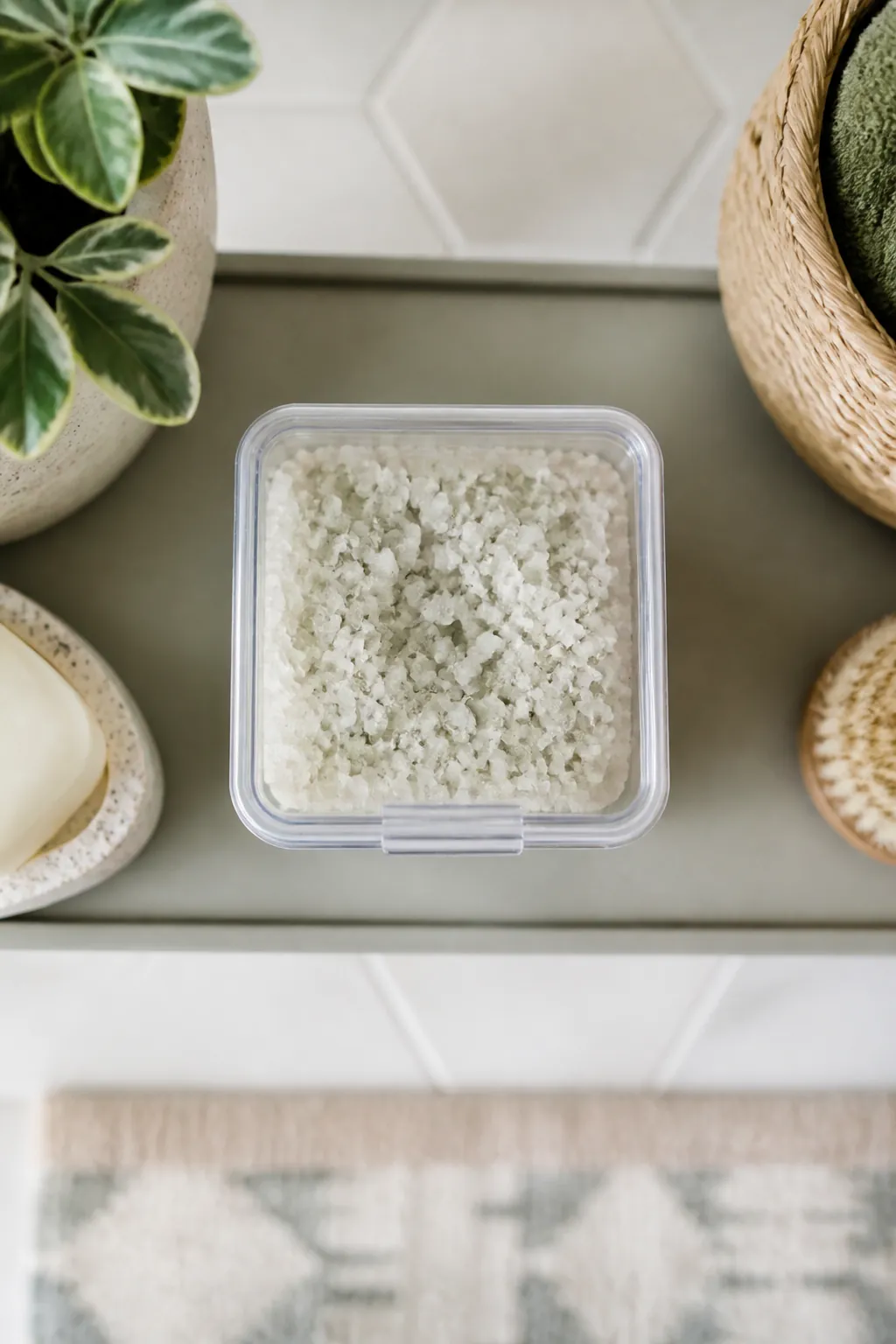
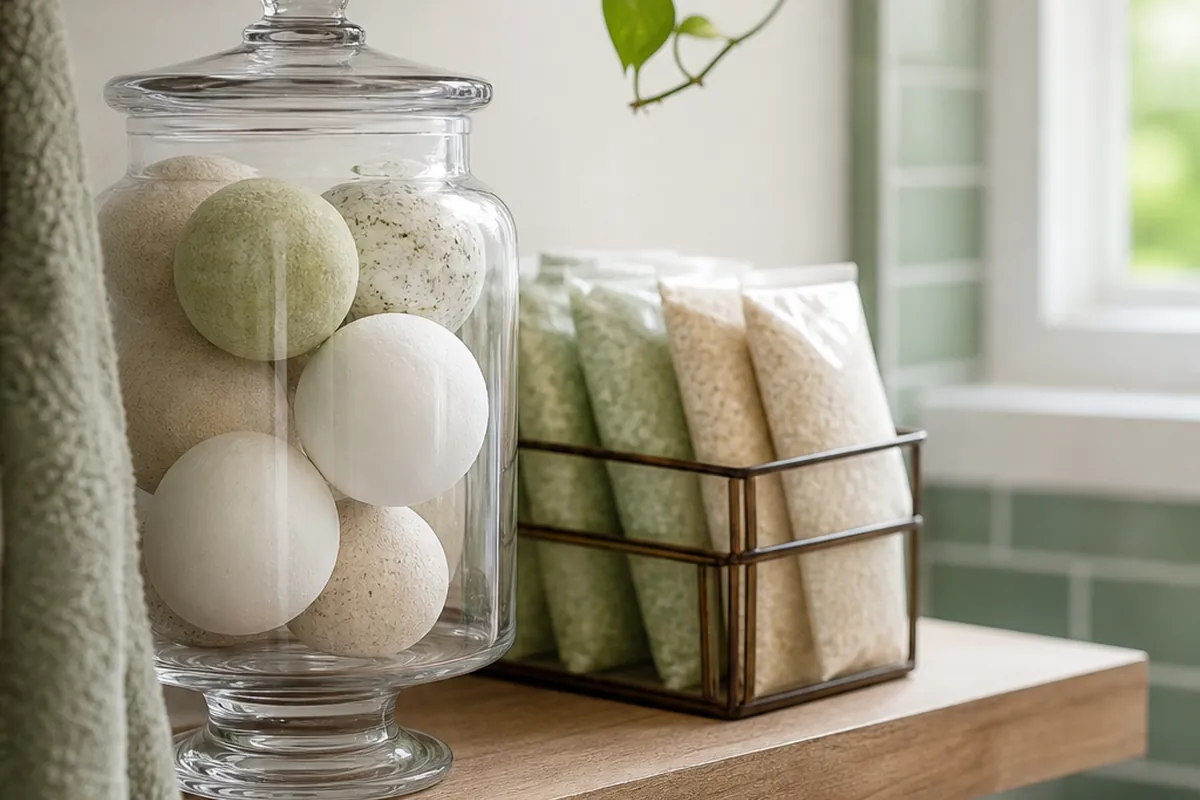
Bath salts are the more fragile of the two when it comes to moisture, because loose crystals have far more surface area exposed to the air than a solid bomb does. A clear stackable food storage bin with a lid was built for pantry staples that clump the same way salts do, which is exactly the problem here. The gasket in the lid matters more than the size of the container, so check that the lid clicks down fully rather than just resting on top.
A jar with a loose-fitting cork or a decorative lid that does not seal looks the part on a shelf, but it lets steam in every time it is opened with wet hands, and salts pull that moisture straight out of the air. Once a batch clumps, breaking it back into usable crystals with a spoon works for a while, but it never fully undoes the damage.
4. Sort by scent or occasion so the lid stays shut
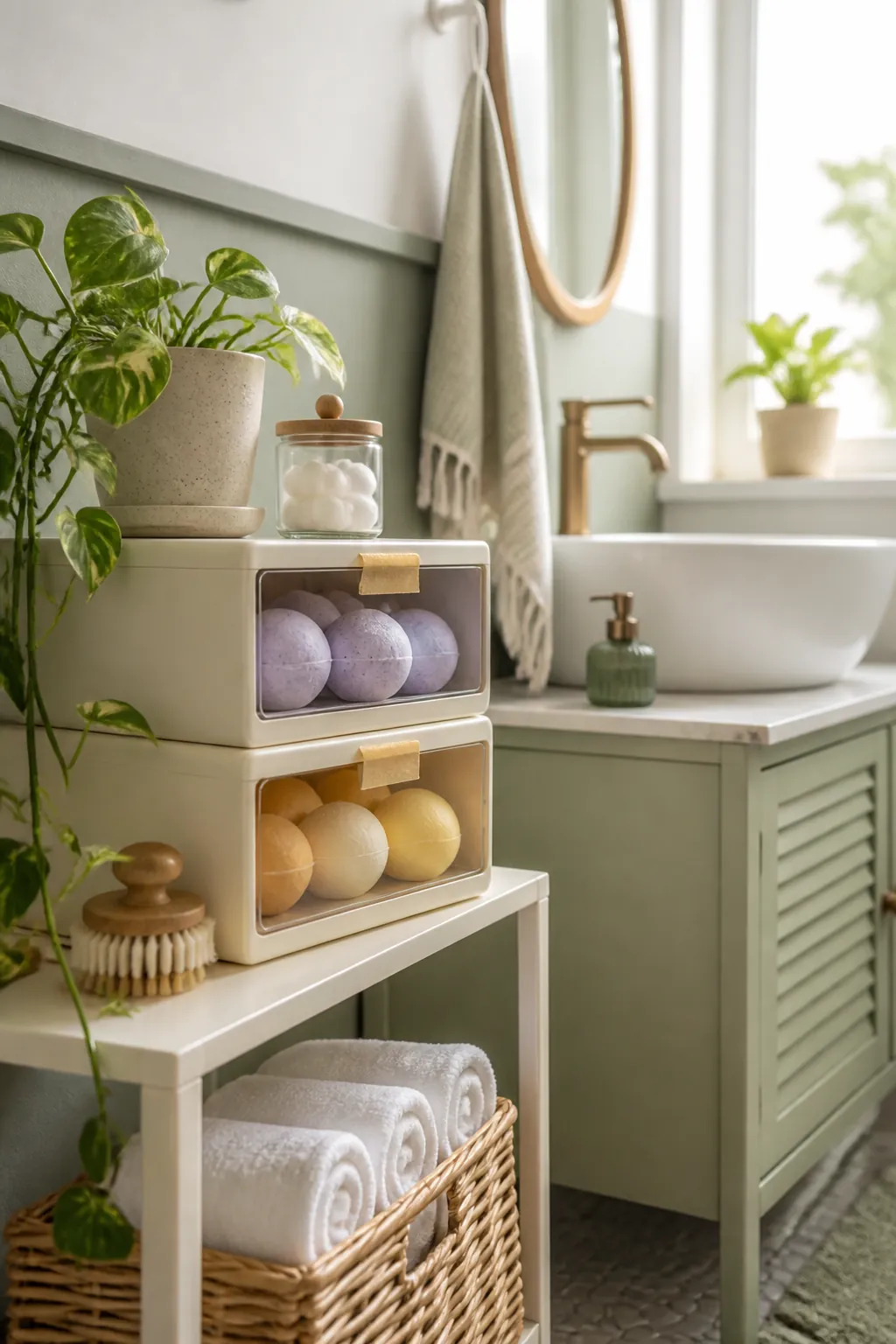
Storage fails fastest when it requires digging, because digging means the lid stays open while you search. Give lavender its own small drawer, citrus its own, and the everyday unscented bombs a third, and a five-second glance replaces a rummage through one mixed bin. This is also where the stackable drawer approach pays off twice: sorted contents and a shorter time with the lid open.
If your collection is small enough that full sorting feels like overkill, at minimum separate the bombs you use weekly from the gift-set extras you are saving for later. The saved ones benefit most from staying sealed, since they sit untouched the longest.
5. Move storage away from the direct steam zone
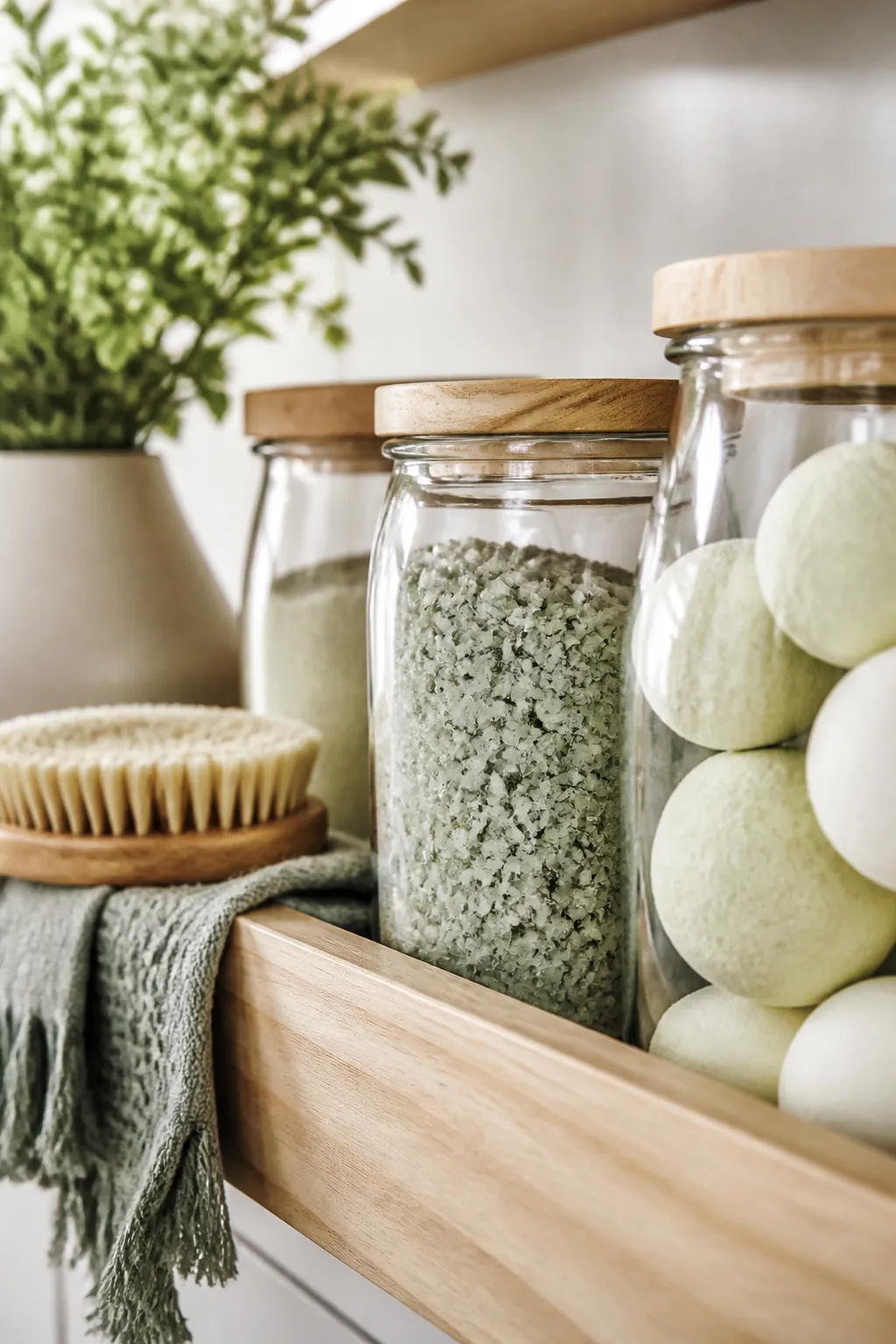
Even a sealed container fares better outside the worst of the steam. A shelf directly above the tub or built into the shower surround sits in the densest, most sustained humidity in the room for the ten to twenty minutes after every shower, and a container opened and closed in that zone lets in more moisture than the same container opened on a drier shelf across the room.
A vanity shelf, a wall cabinet away from the tub, or the top of a linen tower near the door all run measurably drier than anything within arm’s reach of the shower head. If your only available shelf is the steamy one, prioritize sealing over convenience and accept the extra two steps to reach it.
6. Keep the working collection small
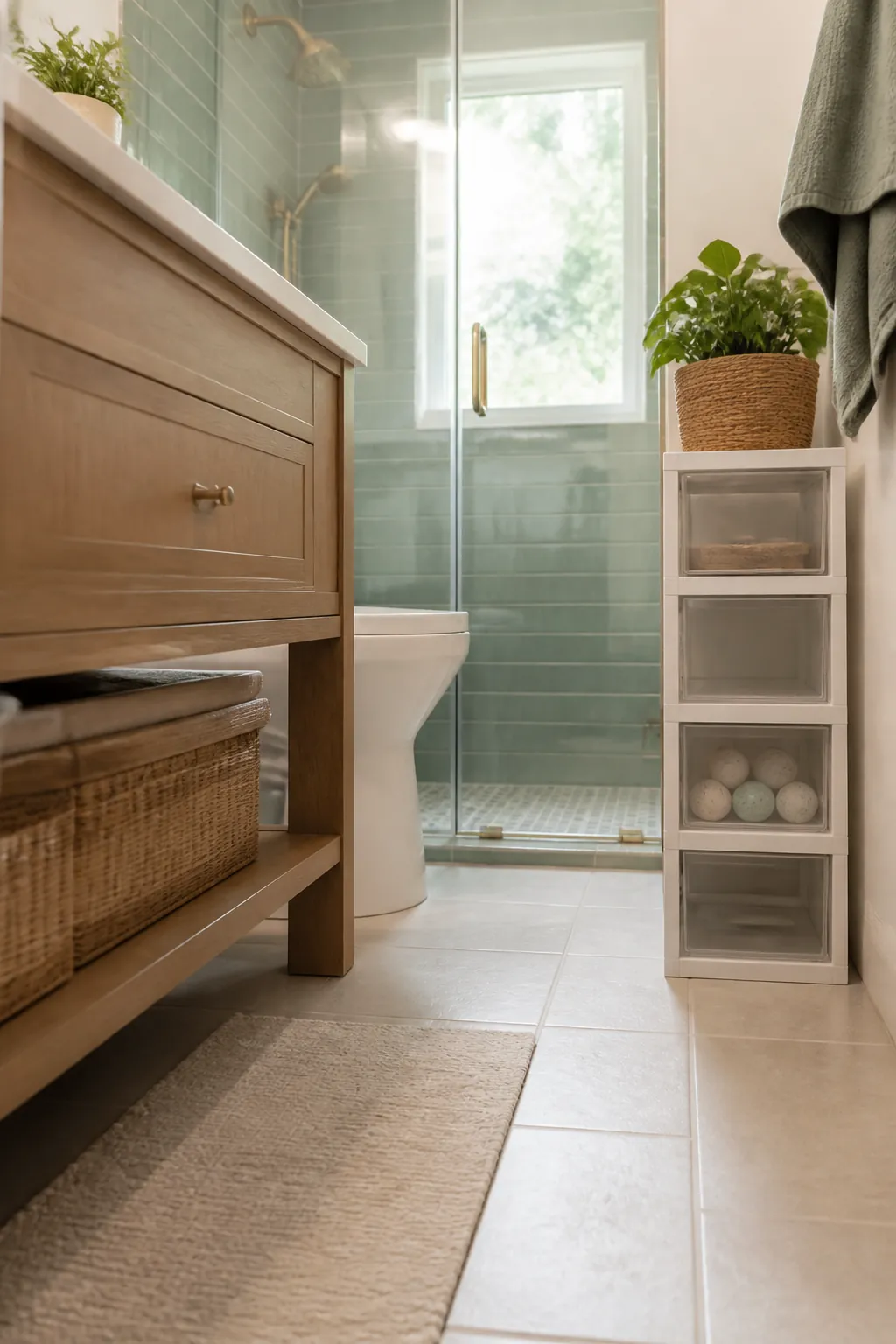
Buying bath bombs in bulk sets feels efficient, but a dozen bombs sitting in rotation means most of them are sitting for months, which is exactly the timeline where a mediocre seal starts to fail. A working collection of four to six, replenished as you use them, spends far less total time in storage than a bulk set bought all at once and worked through slowly.
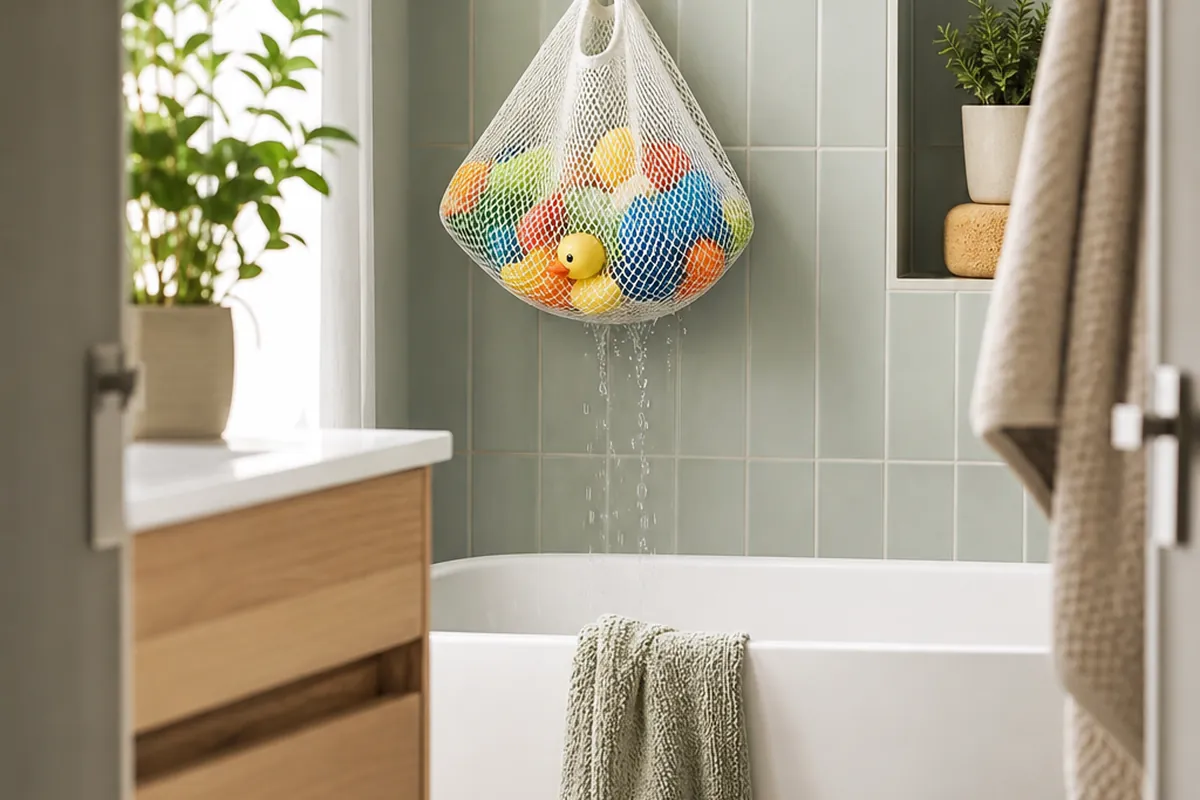
This is the same logic that applies to bath toy collections in a small bathroom: the storage solution only has to be good enough for what is actually in rotation, and a smaller rotation asks less of it.
7. Use a turntable for a mixed shelf of jars and tins
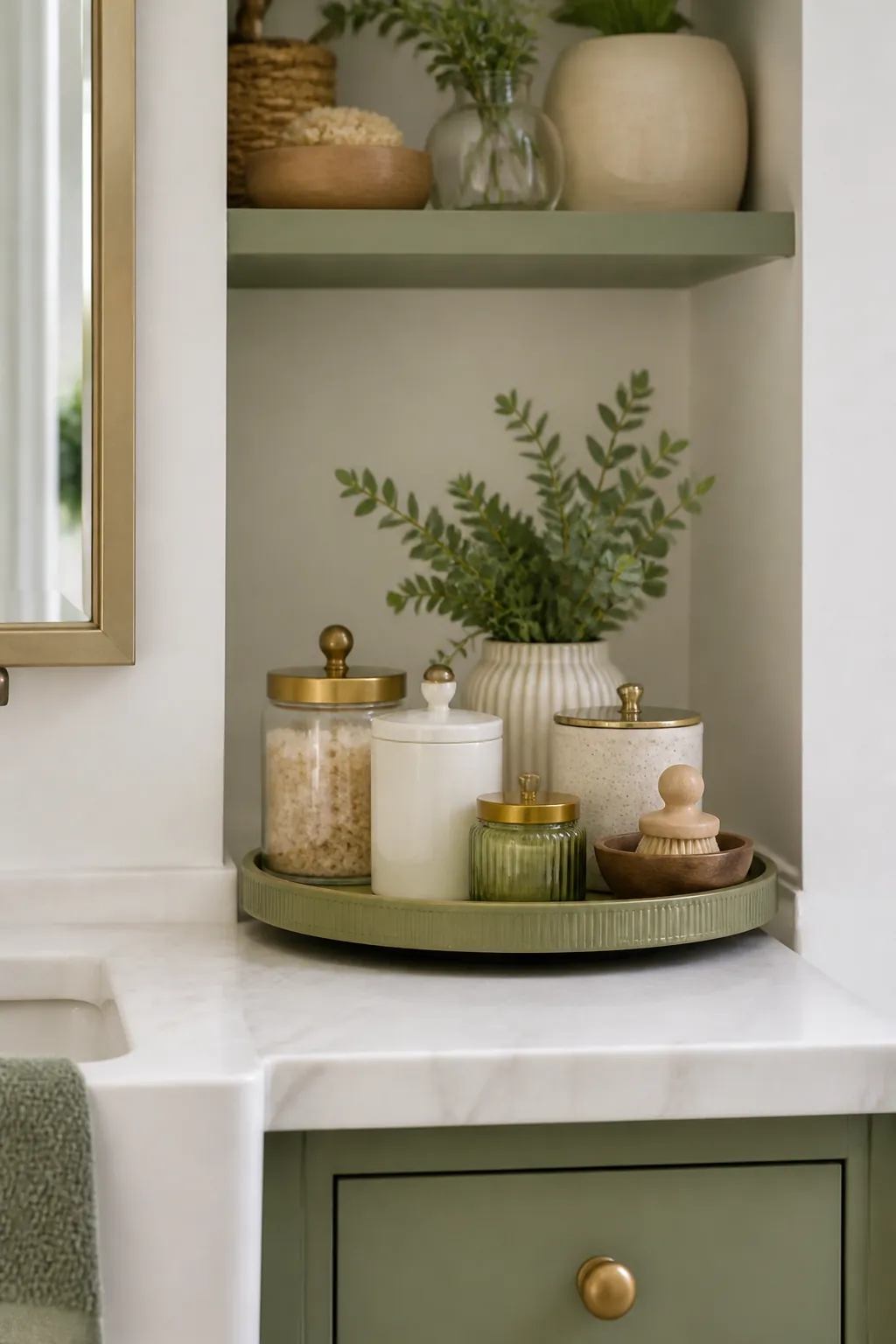
Gift sets rarely arrive in matching containers, so a shelf of bath products often ends up as a mismatched cluster of tins, jars, and boxes. A turntable lazy Susan organizer solves the reach problem that mismatched containers create on a shelf deeper than about eight inches, since nothing at the back gets forgotten or squashed by what is in front of it.
Put the airtight containers from earlier sections on the turntable rather than loose jars, so the spin does not knock lids ajar. A turntable earns its keep fastest on a corner shelf or the back third of a vanity top where reaching straight in means leaning over the sink.
8. Store bombs where small kids cannot see or reach them
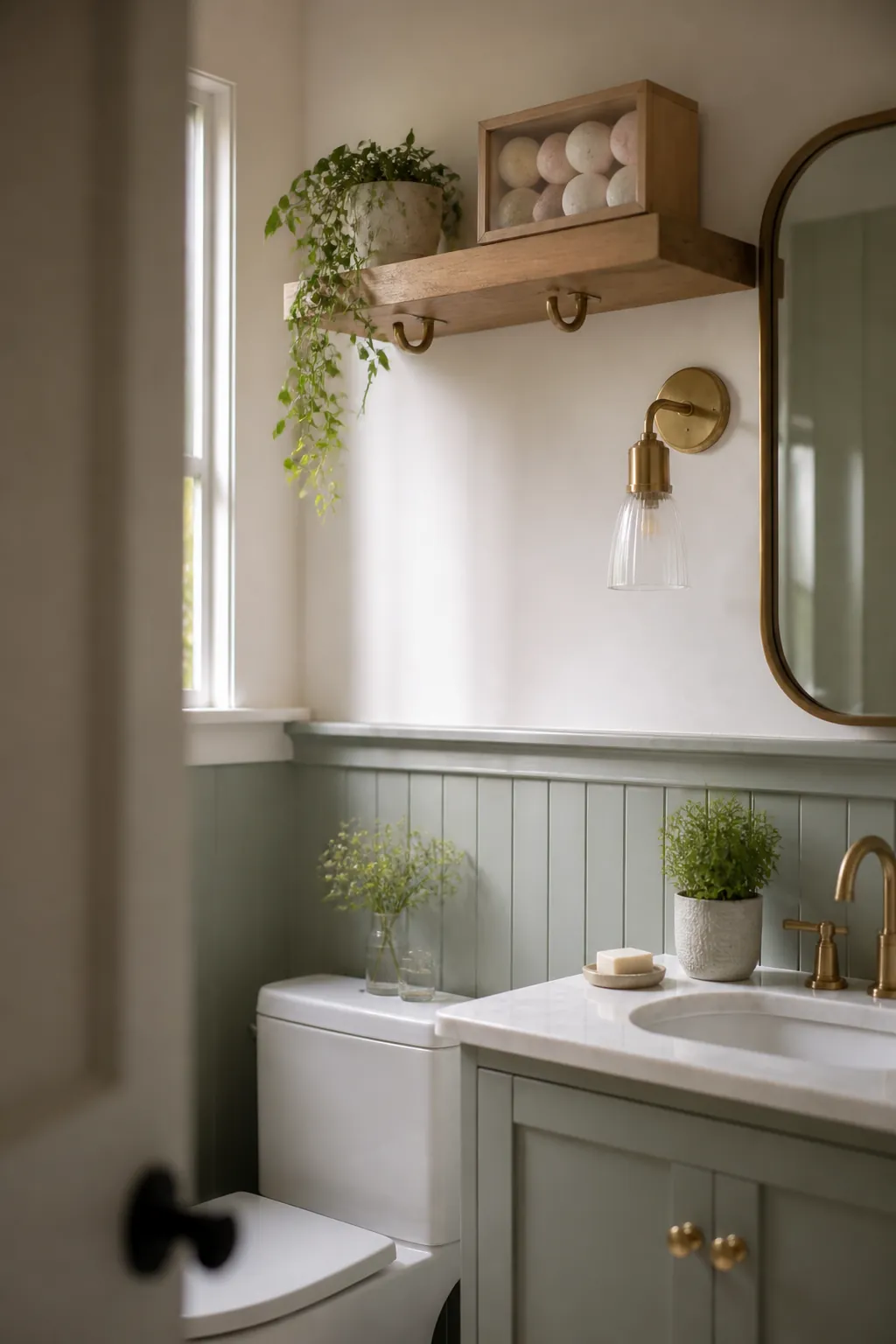
Bath bombs are shaped, colored, and scented closely enough to candy that a toddler will try to eat one, and a low open basket by the tub puts them exactly at a small child’s eye level. Move the working supply to a shelf a young child cannot reach or see into, the same shelf height you would use for a medicine cabinet, rather than the low basket that is easiest for an adult to grab from during bath time.
This is not just a shape issue. Some bath bombs contain glitter, essential oils, or small novelty items molded inside them, none of which belong in a small child’s mouth, and a container that seals also happens to slow down a curious toddler’s hands.
9. Keep gift sets and bulk boxes out of the bathroom entirely
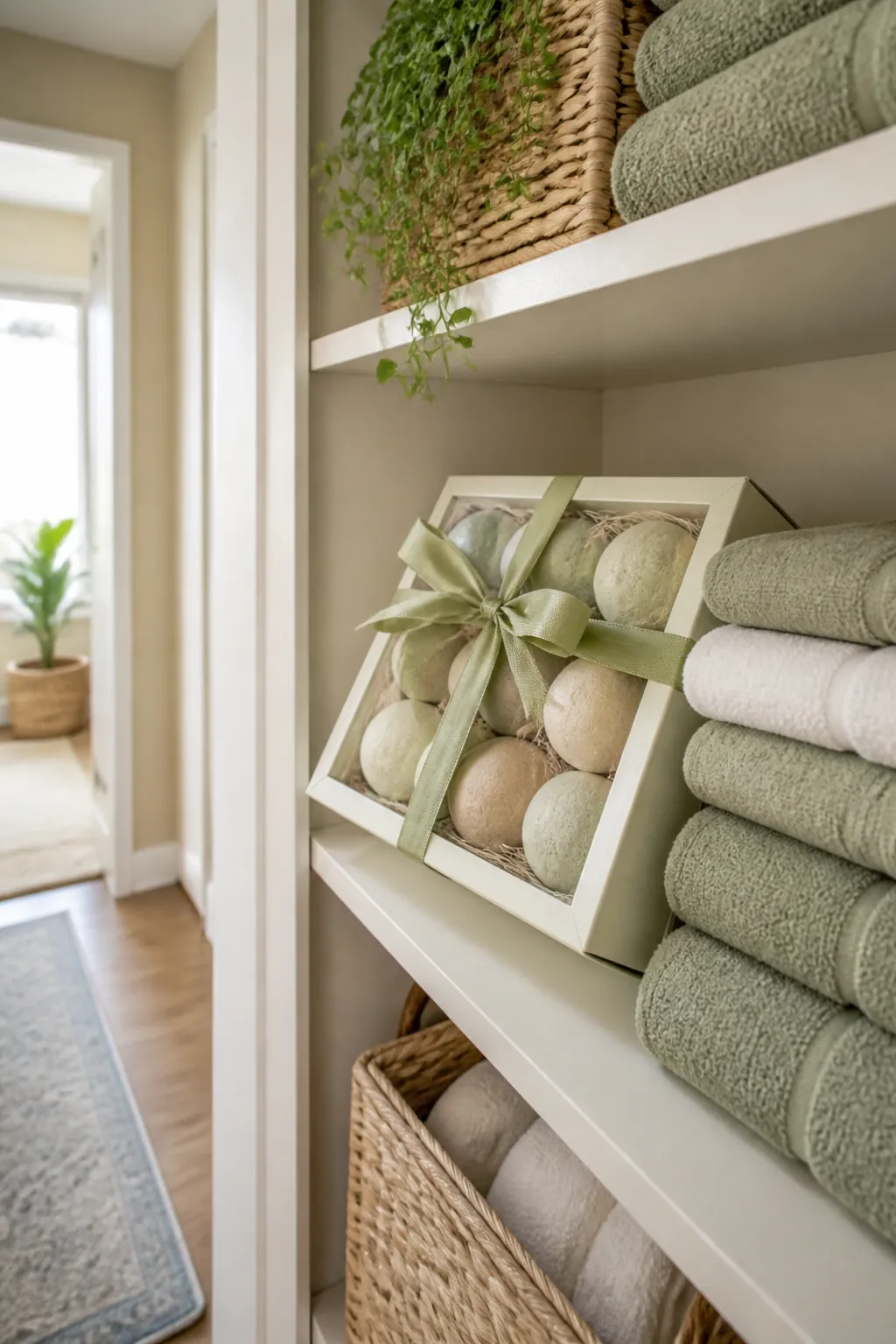
A gift set of a dozen bombs or a large bag of bath salts bought on sale does not need to live in the bathroom at all until you are ready to use it. A linen closet, a bedroom dresser drawer, or a hall cabinet runs drier than any bathroom shelf, sealed or not, and decanting a week or two of supply into the small drawers or lidded bin covered above keeps the bathroom stock small while the bulk stays fresh somewhere better suited to it.
Treat the bathroom as the place where the current rotation lives, not the warehouse for everything you own. That split does more for shelf life than any single container choice on this list.
Where to start
Start with the container, not the shelf. Move whatever bath bombs and salts are sitting in an open dish or a loose bag into something with a real seal, small stackable drawers for bombs, a lidded bin for salts, and only then worry about where that container sits. Keep the working collection small, keep it away from the direct steam of the shower, and keep bulk sets somewhere drier until it is their turn.
None of this needs a renovation or even a drill. It needs a container that actually closes and the discipline to close it, which is the difference between a bath bomb that still fizzes in three months and one that is already crumbling in three weeks. For the rest of what belongs on that same shelf, bathroom storage ideas for a room with no cabinet covers the wider setup around it.