The night before every trip looks the same: digging through the bathroom drawer for travel bottles that are either empty, missing their caps, or still sitting half-used from the last trip because nobody refilled them. A toiletry bag that gets fully unpacked and rebuilt every time isn’t really a system, it’s a chore that happens to repeat, and a small bathroom drawer has no spare inches to store the chaos in between.
The nine ideas below turn that drawer into a setup where the bag stays packed, the backup stock stays sorted, and nothing leaks on the one trip it would actually ruin something.
1. Split the drawer into two zones: the packed kit and the refill stock
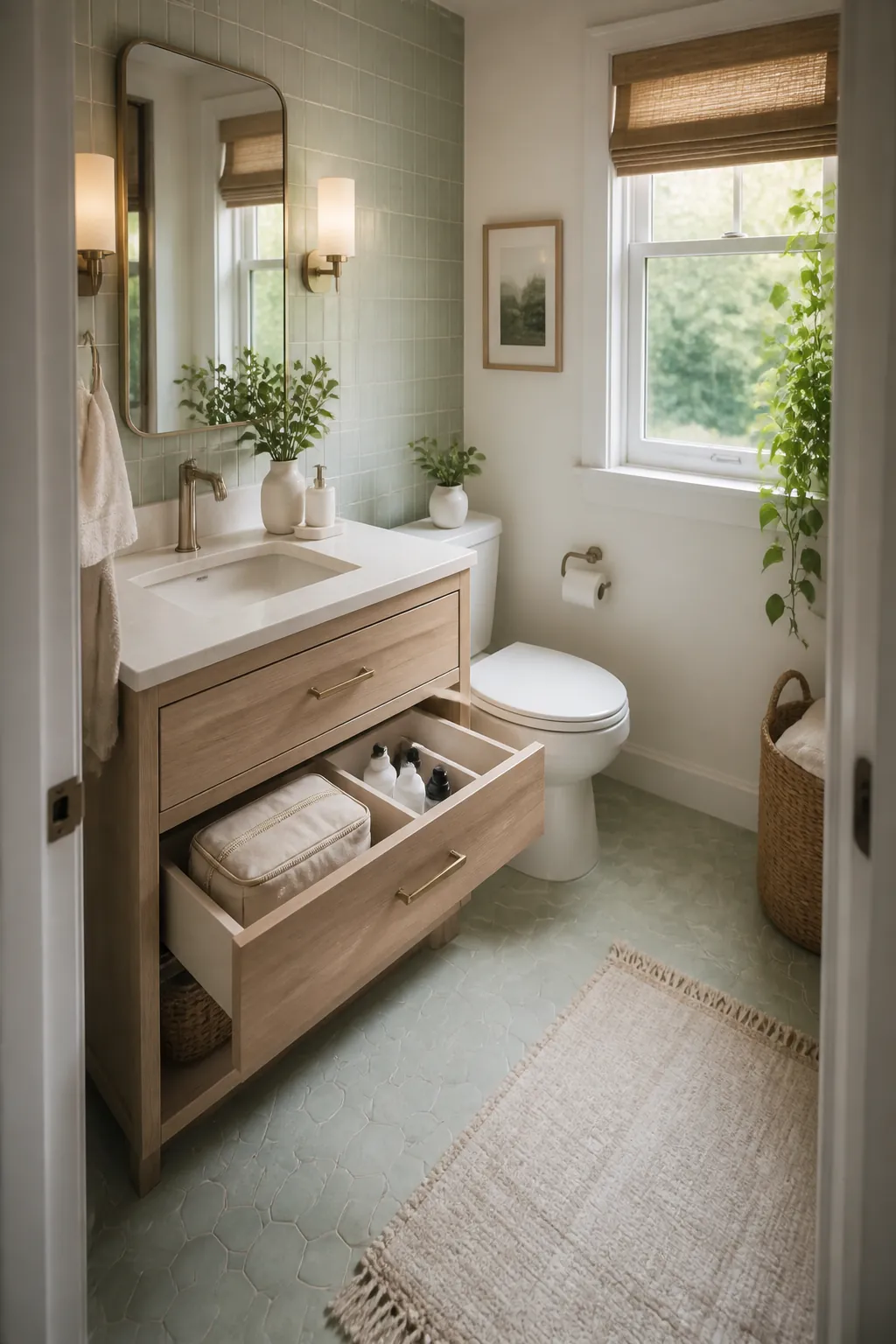
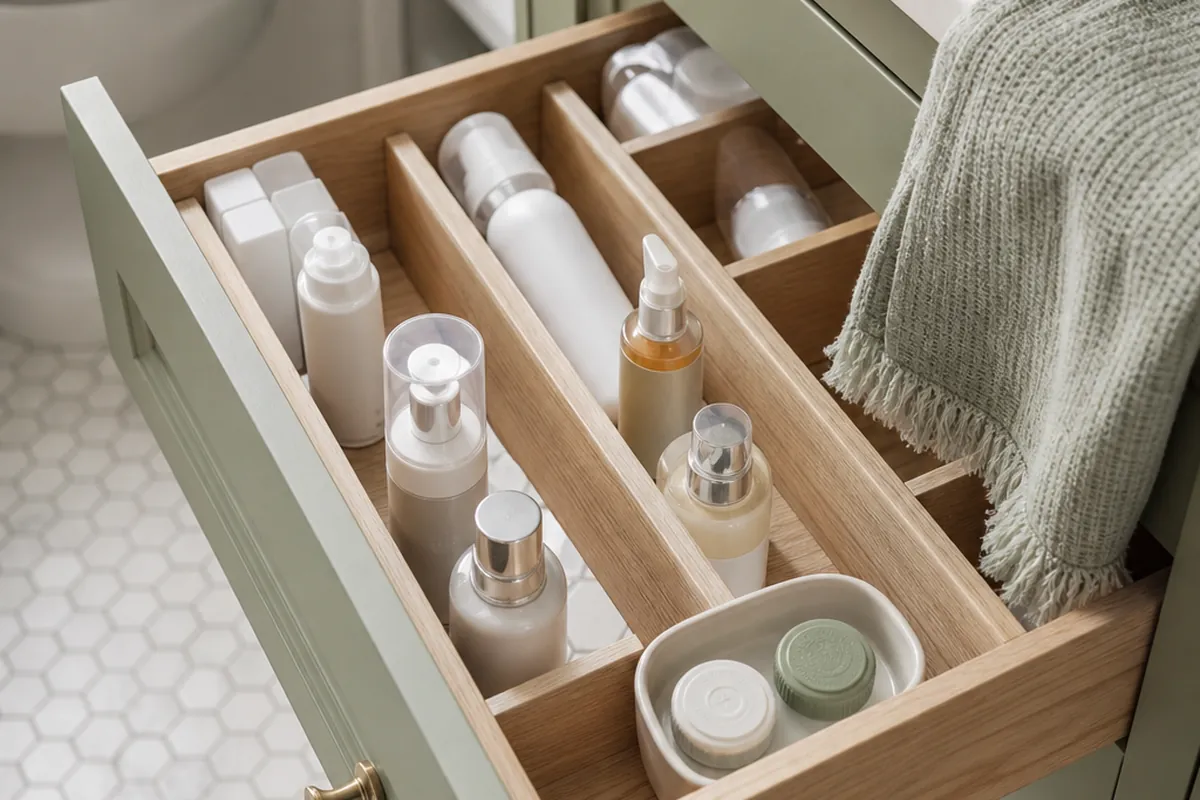
Before buying a single organizer, decide on the split that makes everything else work, the same zoning principle behind any bathroom drawer organization that actually holds up: one section of the drawer holds the toiletry bag that’s always ready to grab, and a separate section holds the backup bottles you refill it from. Mixing the two is what causes the rebuild-every-time problem, because a bag you’ve partly raided for daily use isn’t actually packed, it’s just sitting there looking packed until the morning you need it. Give the ready bag the front-left corner, closest to your hand, and push the refill stock toward the back or a side section you only open on restock day.
2. Stand travel-size bottles upright in a honeycomb divider so leaks and empties show
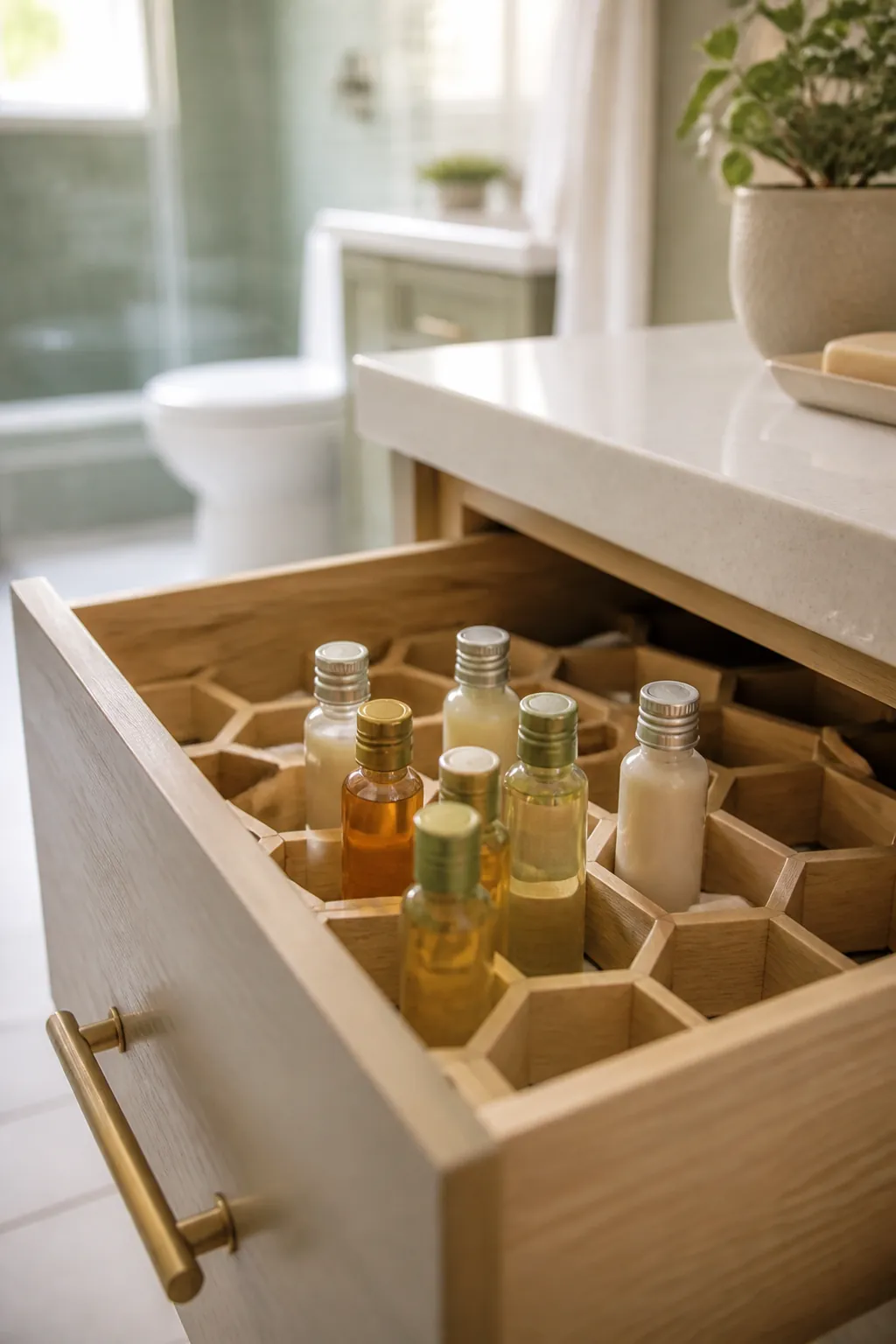
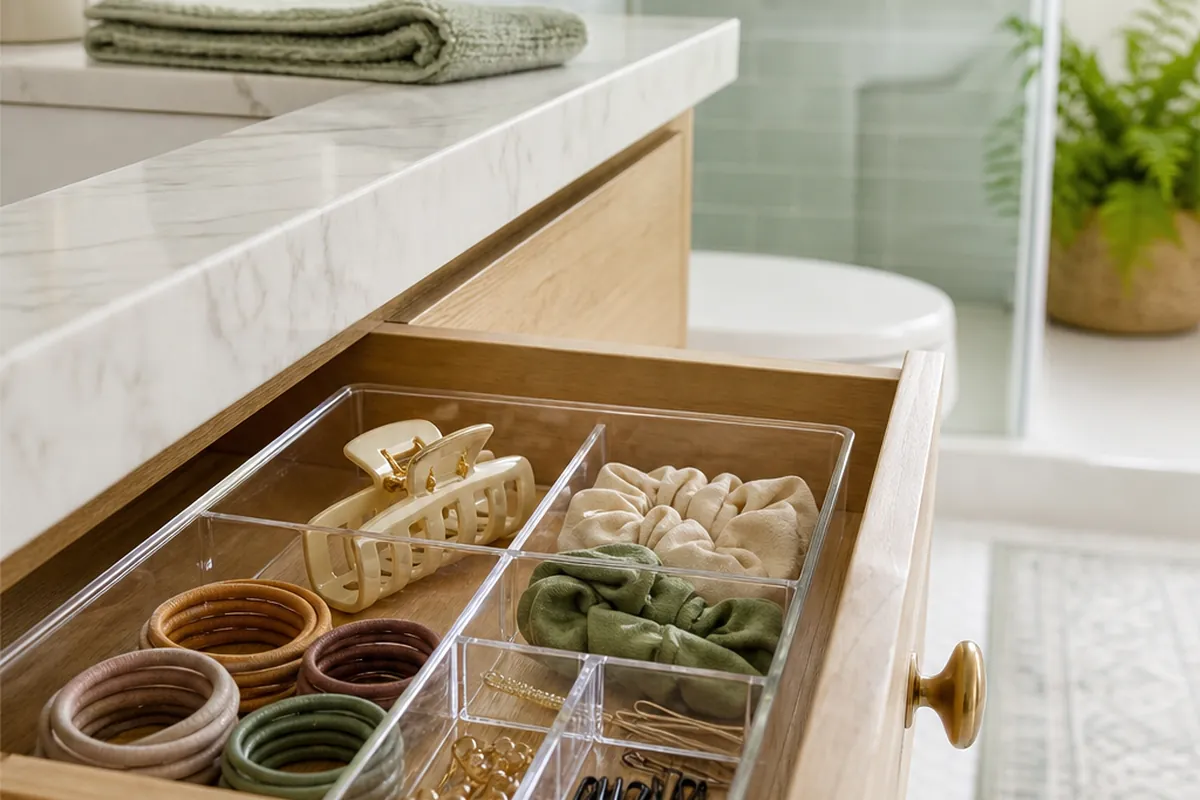
Travel bottles typically run 1 to 3 ounces with a base around 1 to 1.3 inches across, which is exactly the size that rolls and disappears in a flat tray. An adjustable honeycomb drawer divider with cells around 1.4 to 1.6 inches holds that base snug enough to stay vertical through a hard drawer close, and standing bottles upright means you spot a cracked cap or a bottle that’s gone empty at a glance instead of discovering it mid-trip. Group the smallest minis, anything under an inch across, in one row together rather than scattering them among full-size bottles, since a mini leaning against a taller neighbor is how it tips first. The same divider does double duty for hair accessory storage if you’ve already got one holding bobby pins and clips in the drawer next door.
3. Keep one toiletry bag permanently packed, not rebuilt before every trip
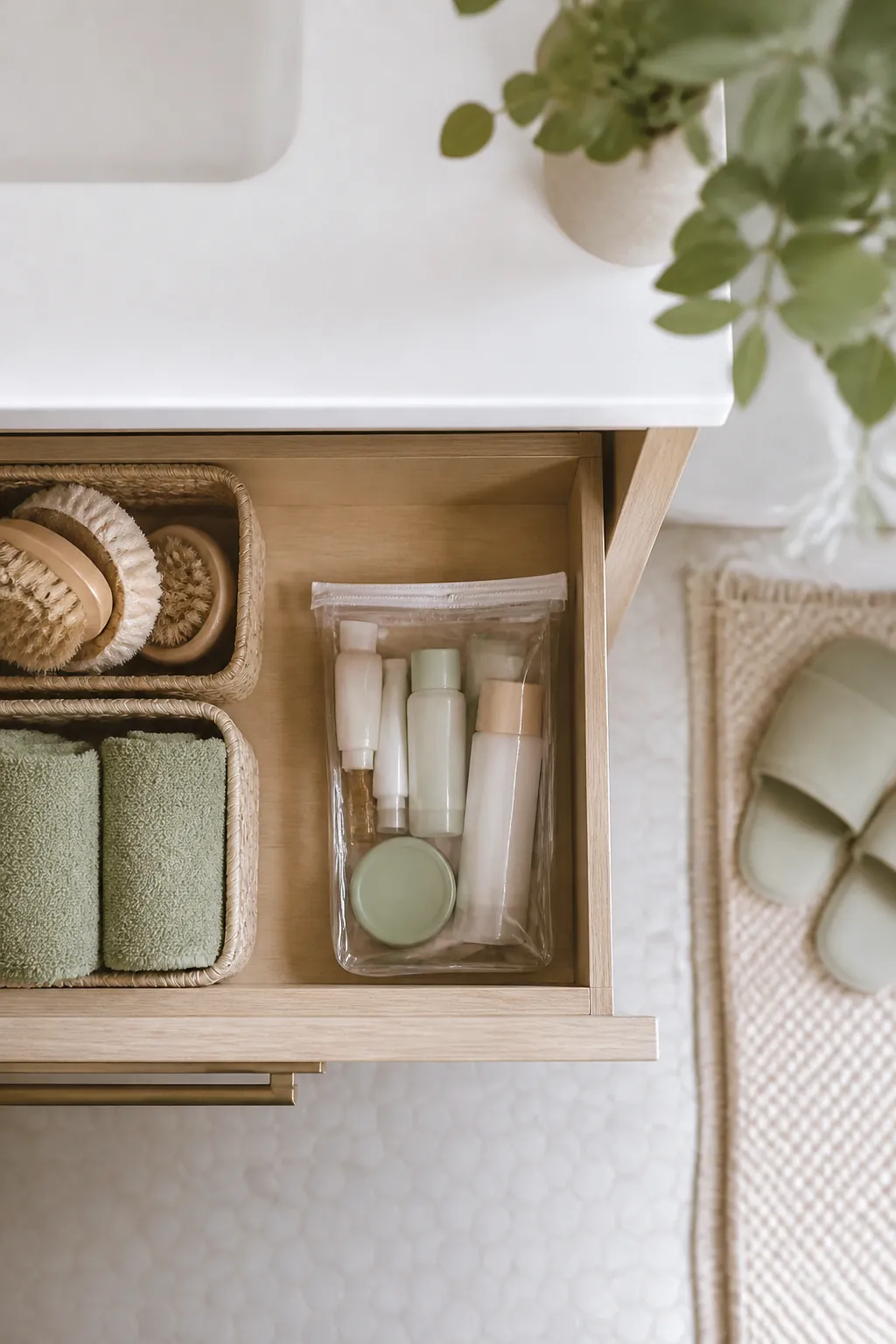
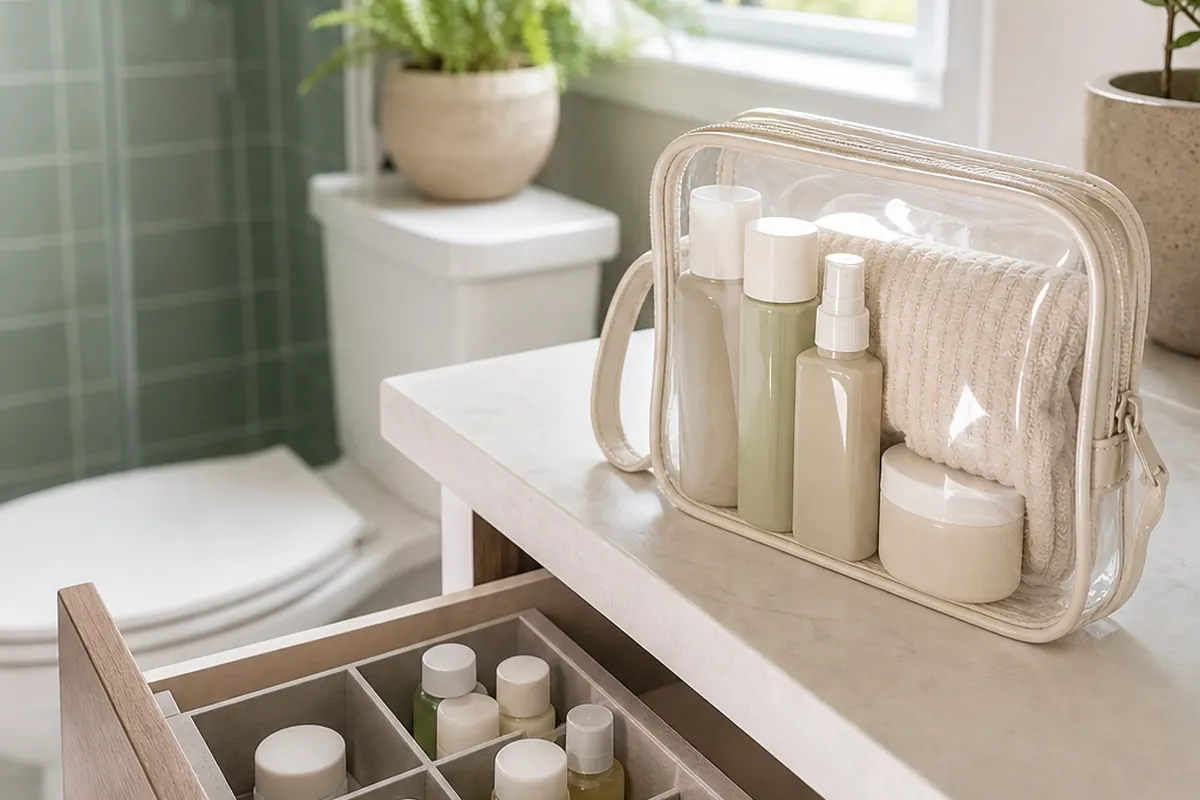
A clear travel toiletry bag, the kind with a zip top and a clear face so TSA can see the contents without you unzipping it, earns its keep by never being fully emptied between trips. Pack it once with everything you actually use, run a mental checklist after each trip to top off what’s low, and store it zipped in its drawer corner rather than tipping the contents into a drawer tray where they scatter. The goal is a bag you can grab in under ten seconds, not a bag you have to reconstruct from loose bottles the night before a flight.
4. Give solid bars their own dry compartment, away from anything liquid
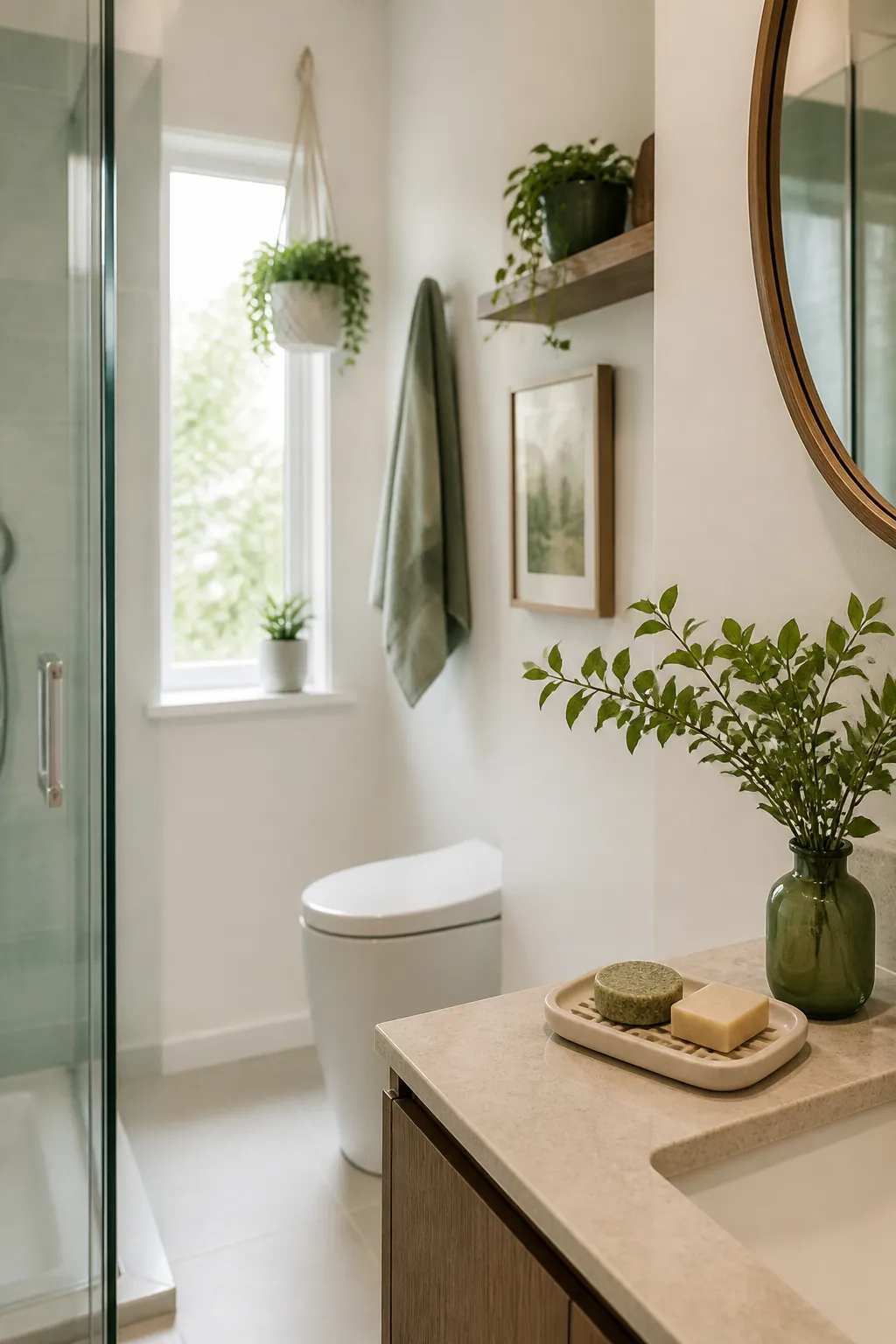
Solid shampoo, conditioner, and soap bars need airflow to dry out between uses, and sealing one into a zip pouch alongside liquid bottles traps moisture against it until it goes soft and slimy at the edges. Keep bars in an open or vented compartment, a small mesh or perforated tin works, and never share that space with anything that could sweat or leak onto it. A bar left sweating in a sealed pouch can turn soft and unusable before a single week-long trip is over, while the same bar kept dry through a vent or mesh compartment outlasts trip after trip, so this is one of the cheapest fixes on the whole list.
5. Check the drawer’s real depth before buying anything taller than it
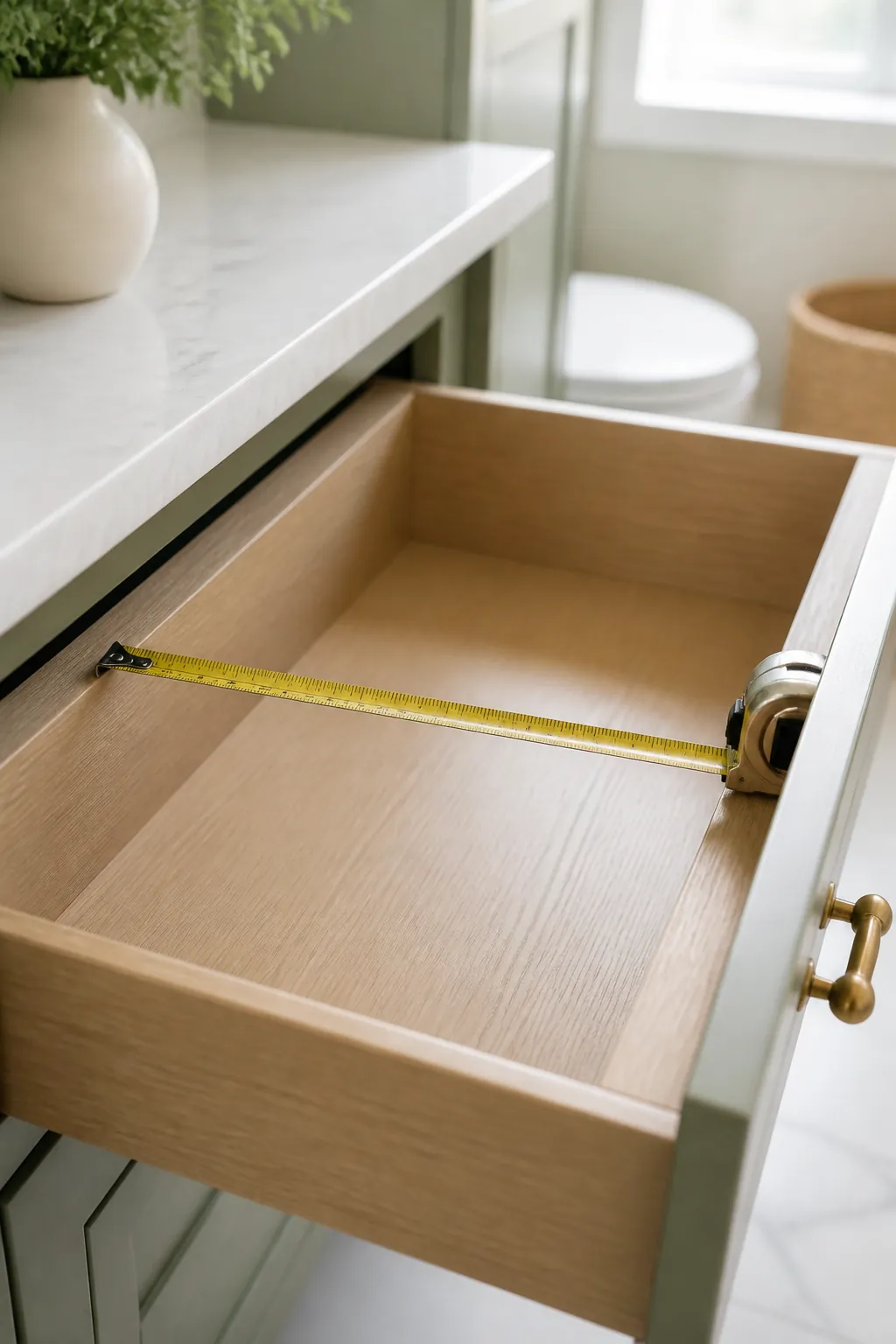
Bathroom vanity drawers commonly run 2.5 to 4 inches deep on the inside, and a standing travel bottle with its cap on can run close to 4 inches tall, which leaves almost no clearance in a shallower drawer. Measure the interior with the drawer fully open, not the cabinet face, since face-frame overlay steals real depth, and subtract a quarter inch for clearance so humidity swelling the wood doesn’t jam the organizer against the drawer above it. If your drawer runs shallow, lay bottles on their side in rows instead of forcing them to stand, label-up, so you can still read what’s inside without lifting each one out.
6. Corral tubes and pumps in a divided tray so they stop rolling
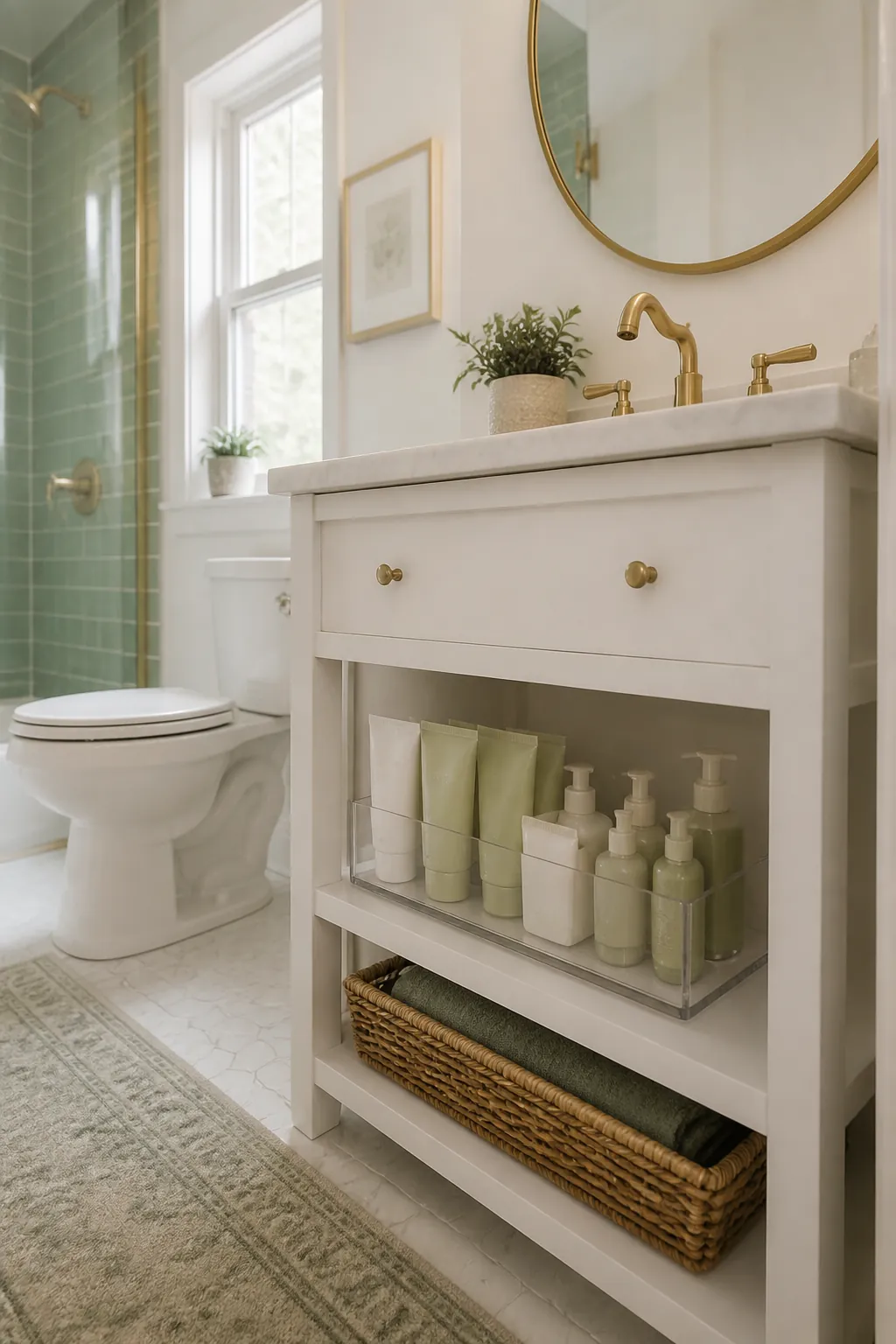
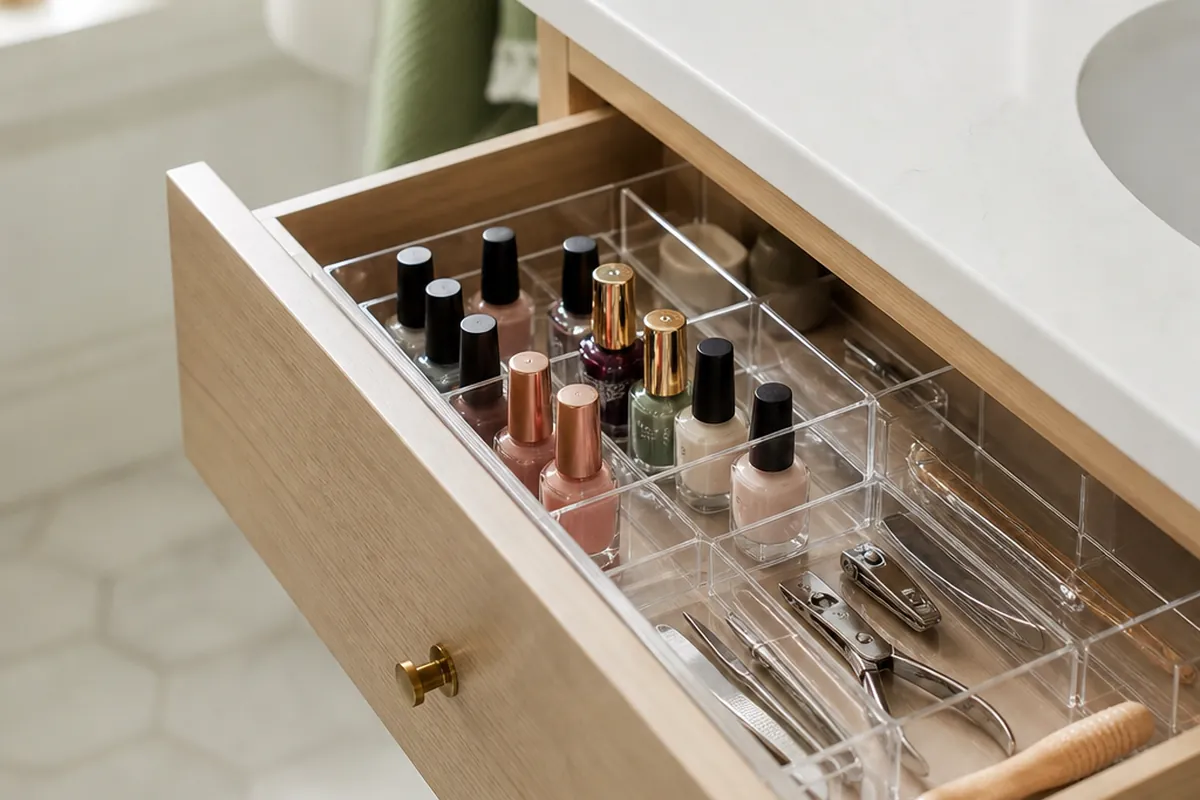
Squeeze tubes and small pump bottles don’t sit still in a honeycomb cell built for round bases, they wedge in sideways or roll into the next slot over. A clear plastic drawer organizer tray set usually includes a few wider rectangular compartments alongside the small squares, and that wider shape is what actually holds a tube flat without letting it migrate across the drawer every time it opens. Lay tubes nozzle-up in their tray so residue drains back down instead of crusting around a cap that’s resting on its side.
7. Split backup bottles into small stackable drawers by category
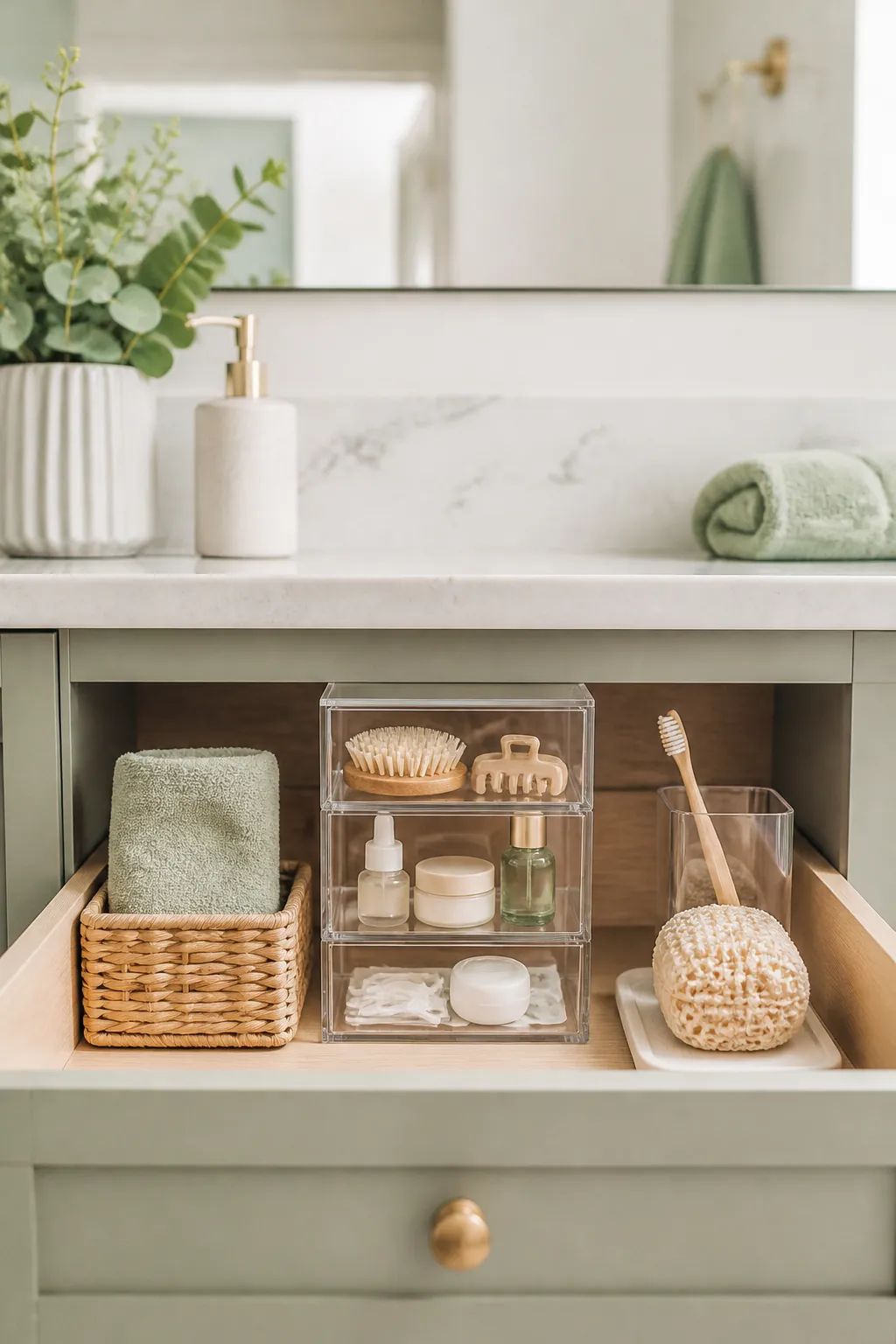
The refill stock behind your packed bag works better split into narrow categories than dumped into one bin, since digging through every backup shampoo to find the one travel conditioner wastes exactly the time this whole system is supposed to save. Small clear stackable drawers split that stock into hair care, skin care, and dental in separate pull-outs, each labeled and each visible without opening the others. Stack two or three in the back section of the drawer rather than spreading backup bottles out flat, since stacking is what lets a narrow drawer hold three categories in the footprint one flat tray would take.
8. Respect TSA’s liquid rules before you pack, not at the airport
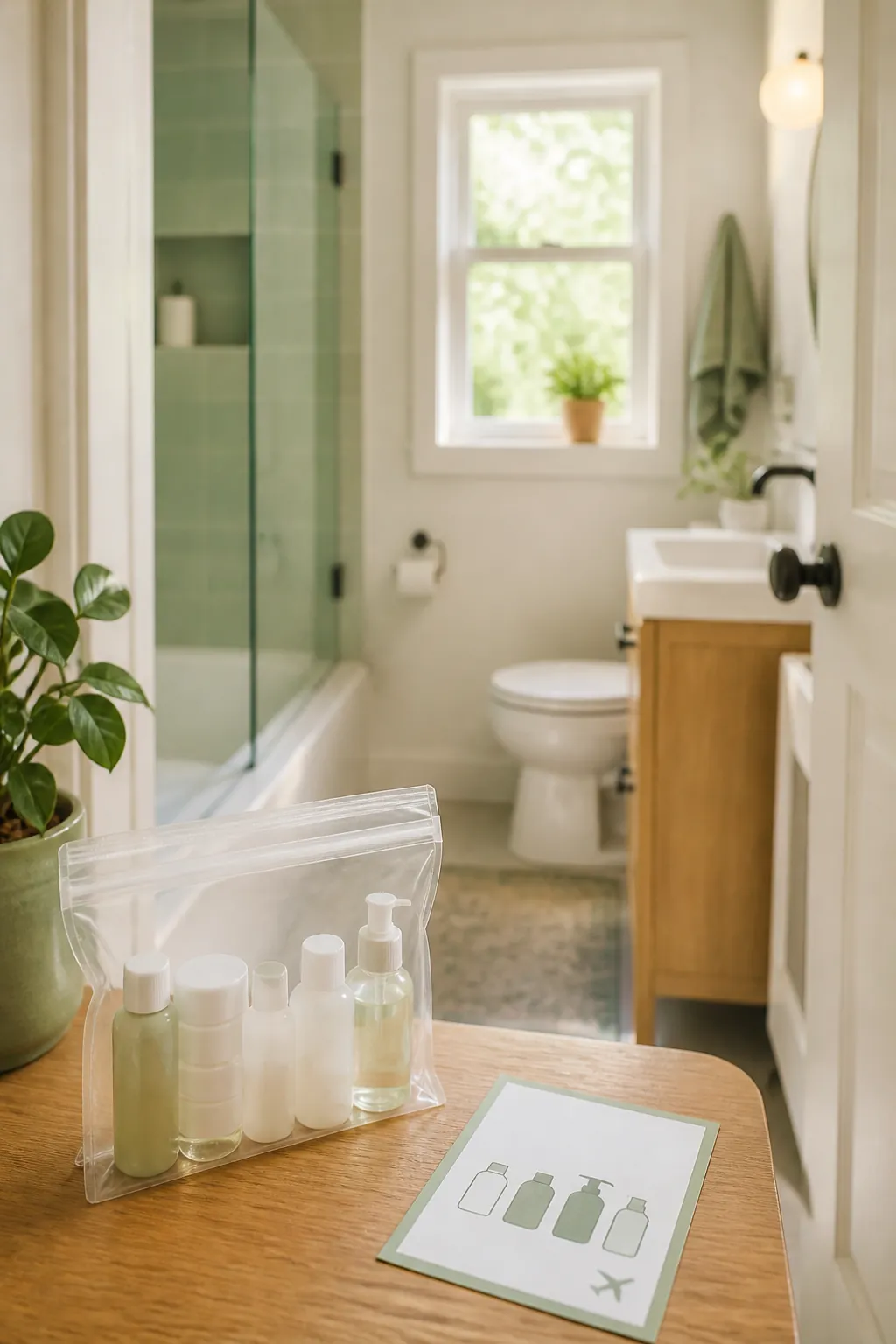
TSA allows containers of 3.4 ounces or 100 milliliters or less in a carry-on, and everything you’re bringing has to fit together inside one quart-size clear bag, one bag per passenger. A bottle labeled 3.5 ounces gets pulled at the checkpoint regardless of how little is actually left inside it, so check the printed size on any new travel bottle before it joins the packed kit, not while you’re standing in a security line. Fill every bottle no more than two-thirds full so trapped air has room to expand as cabin pressure drops, and press flip caps until they audibly click rather than just resting shut. A bottle packed completely full with no air gap is the single most common way a toiletry bag leaks mid-flight, and the fix costs nothing but attention.
9. Restock the kit the day you get home, not the night before the next trip
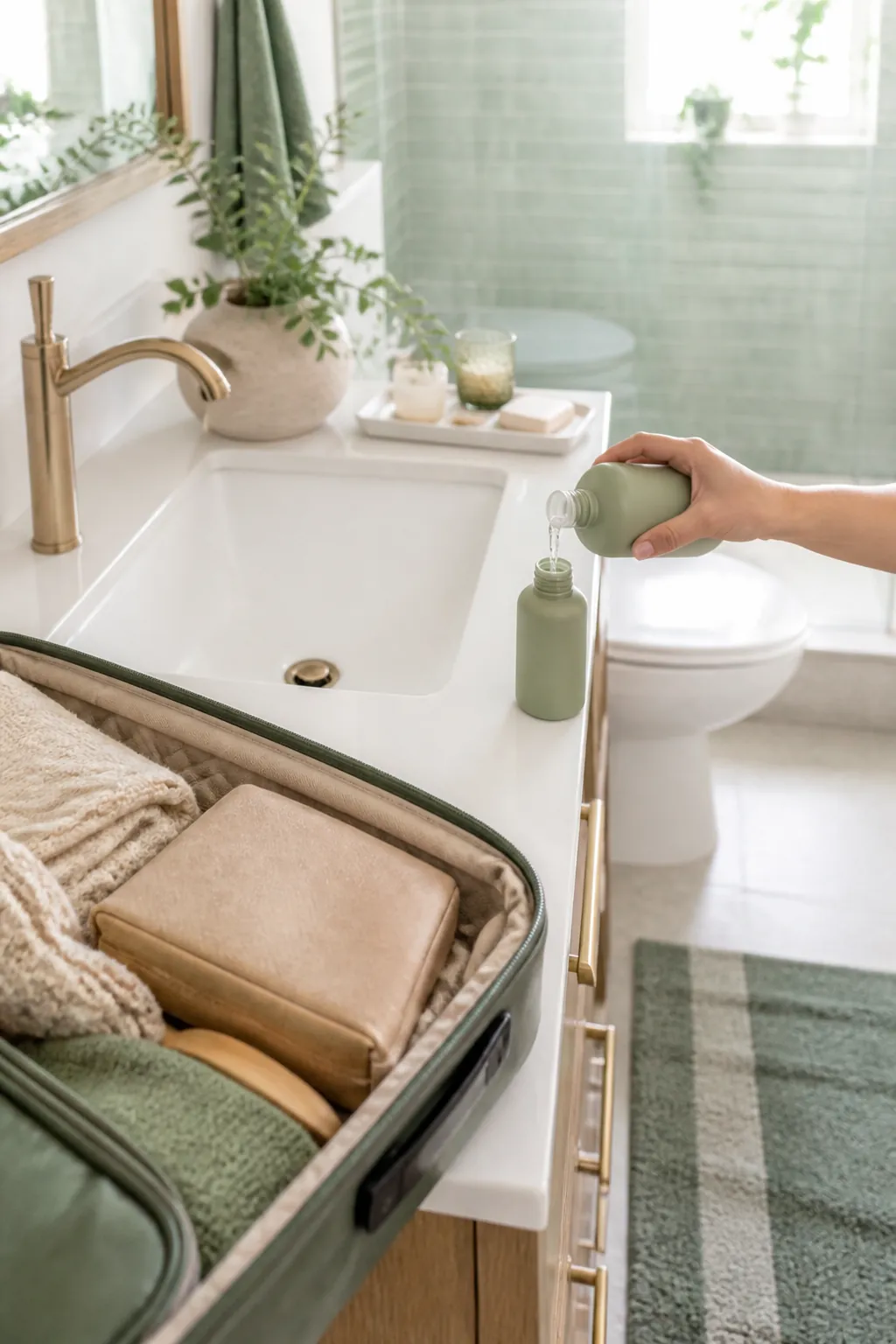
The moment a trip ends and the bag comes out of the suitcase is the best possible time to refill it, because the empty bottles are already in your hand and the gaps are obvious. Top off what’s low straight from the backup drawer, swap out anything that cracked or leaked in transit, and zip the bag back into its corner ready for the next trip instead of setting it aside “to deal with later.” It’s the same moment worth sorting out suitcase storage for, since an unpacked suitcase sitting out invites the same procrastination as an unpacked toiletry bag. Later is always the night before you need to leave, which is exactly the rushed, half-packed moment this whole system exists to avoid.
Where to start
Split the drawer first: a packed bag in its own corner, backup stock behind it, and nothing crossing between the two. Stand full-size travel bottles in a honeycomb divider, give tubes and pumps a wider tray instead of a round cell, and keep solid bars somewhere dry and separate from anything liquid. Measure the drawer’s real depth before buying a single organizer, split the backup stock into small stackable drawers by category, and restock the bag the day you get home instead of the night before the next one. That’s the whole system, and it holds up because it’s built around the one thing that actually breaks a travel kit, treating it like a bag you rebuild instead of a bag you simply maintain.