A bathroom with no cabinet is one of the most frustrating rooms a renter can inherit. You get a pedestal sink with nothing underneath, a mirror bolted flat to the wall, and no obvious home for the toothpaste, the backup toilet paper, or the towels that have to live somewhere. Here’s the reframe that changes everything: bathroom storage with no cabinet is almost entirely a vertical problem. Stop staring at the floor, look at the walls, and the room opens up.
Below, I’ll show you where the space is actually hiding, which products earn their spot, and the small mistakes that make a tight bathroom feel even smaller.
Start by mapping your dead space
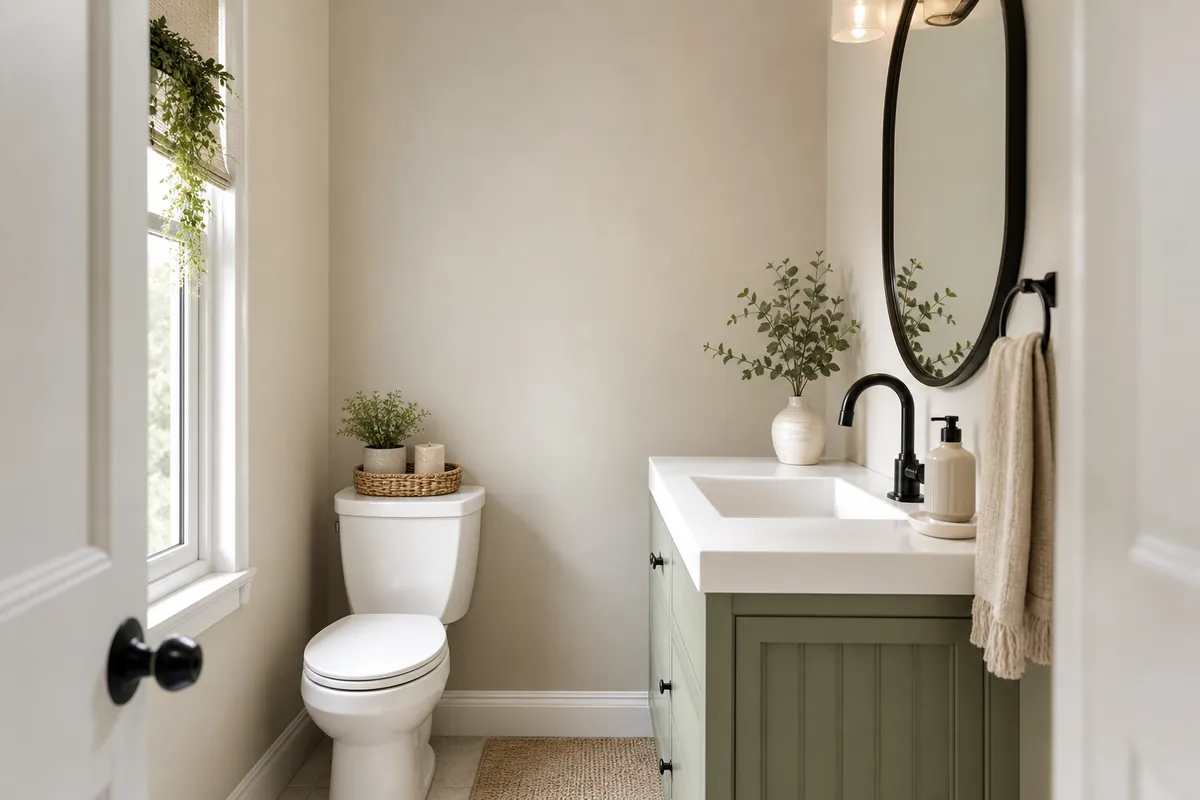
Before you buy anything, spend two minutes finding the space you’re already ignoring. In a cabinet-free bathroom, four zones do the heavy lifting: the wall above the toilet, the wall beside or above the sink, the back of the door, and the shower itself.
The area above the toilet is your single biggest opportunity. It’s usually a blank stretch of wall doing nothing, sitting directly above a fixture you can’t move. Whatever you put there steals zero floor space. That’s the whole game in a small bathroom, storage that hovers instead of storage that sprawls.
Grab a tape measure. Note the wall width above the toilet and the height from the tank lid to the ceiling. You’ll want those numbers before you shop, because the most common regret with over-toilet units is buying one too wide for the wall or too tall for the ceiling.
The best bathroom storage ideas with no cabinet
Go vertical over the toilet
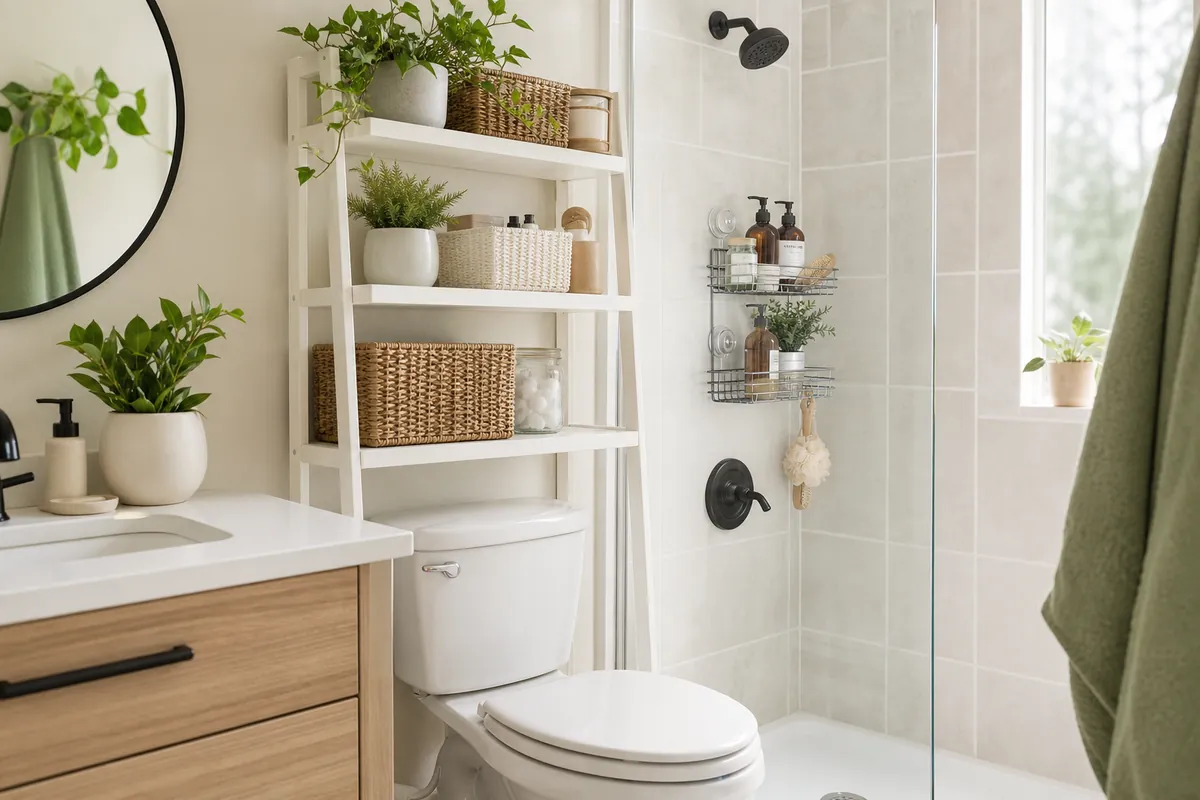
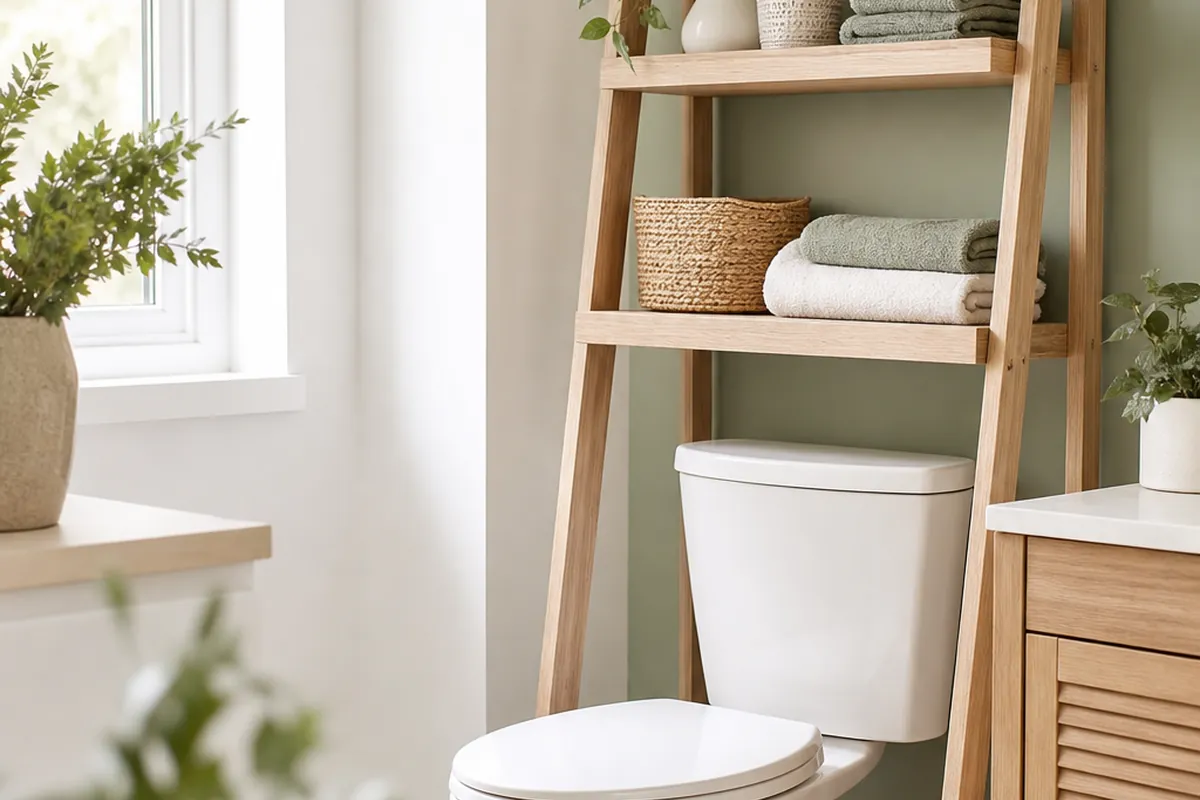
An over-the-toilet storage shelf is the first thing I’d buy for any bathroom with no cabinet. The freestanding ladder style straddles the toilet on two legs, so there’s no drilling, which matters when you rent. You get three or four open shelves rising up the wall, and just like that, there’s a home for folded towels, a basket of extras, a plant, and the daily stuff you want within reach.
Open ladder shelving beats an enclosed cabinet-style unit in a small room for one reason: it reads as air, not as a wall. A big boxy over-toilet cabinet closes in a cramped bathroom. Slim open shelves let light pass through and keep the room breathing.
A few placement notes that make a real difference:
- Keep the bottom shelf high enough to clear the tank lid, so you can still lift it to reach the flush valve.
- Hide the heavy, ugly stuff (backup toilet paper, cleaning bottles) in a lidded basket on a lower shelf, and save the top shelf for one or two nice-looking items. A styled top shelf makes the whole thing look intentional instead of like overflow.
- If the unit only rests against the wall, add a small anti-tip strap or command-style anchor near the top so a bump doesn’t send it forward. Do this even when the instructions don’t insist on it.
Over-the-toilet shelves come in several finishes, white, black metal, and wood-tone among them, so you can match one to whatever fixtures you’re stuck with. That small bit of coordination goes a long way toward making a rental bathroom feel less like a rental.
Claim the shower with a suction caddy
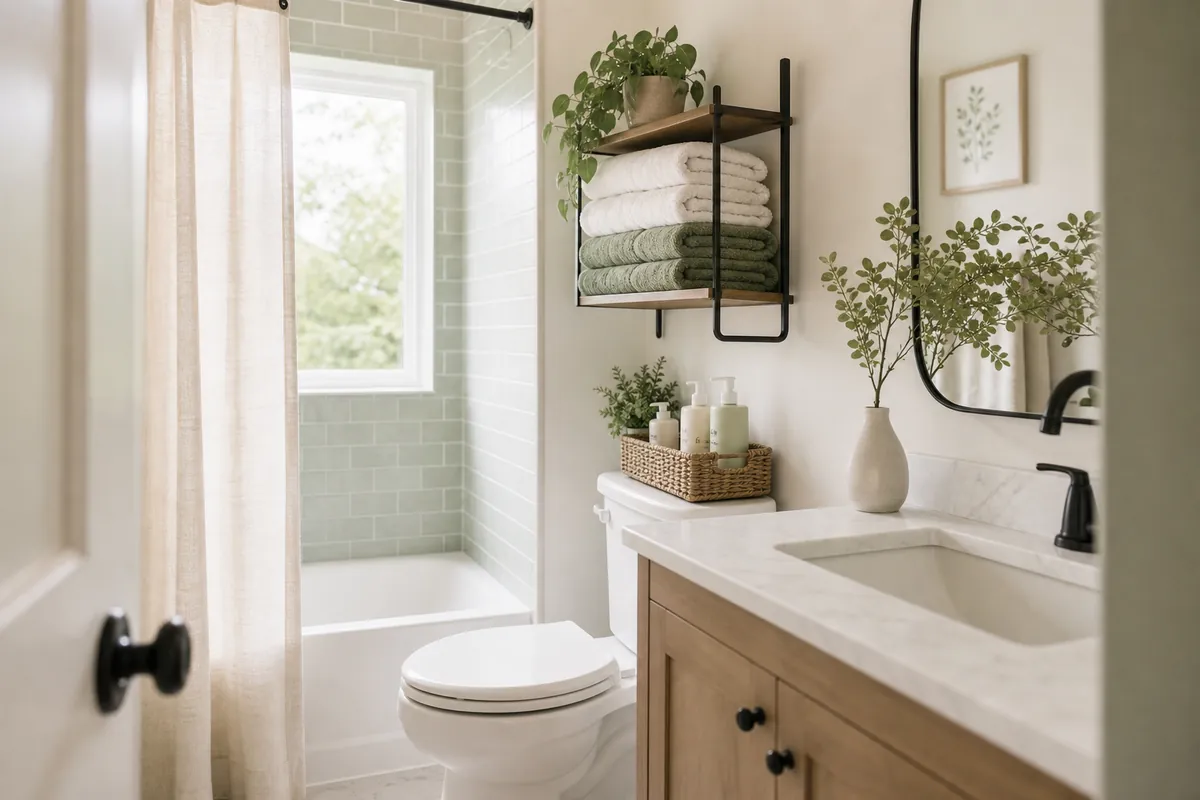
Shower clutter is its own beast, and it’s the one place a shelf won’t reach. A suction-cup shower caddy solves it without a single hole in the tile. Stick it to a smooth wall or the glass, and your shampoo, conditioner, and razor come off the tub ledge where they collect grime and slide around.
Suction caddies earn their bad reputation because people mount them on the wrong surface. They grip clean, smooth, non-porous tile or glass. They will not hold on textured stone, grout lines, or a bumpy fiberglass surround. Wipe the spot down, let it dry completely, then press hard and lock the levers if it has them. Mounted right, a good one holds far more than people expect.
Choose a caddy with a drainage tray or open wire base so water runs off instead of pooling under the bottles. Standing water is what turns a shower shelf into a mildew farm. If your shower walls are textured everywhere, skip suction and hang a caddy from the showerhead arm instead.
Work the wall by the sink
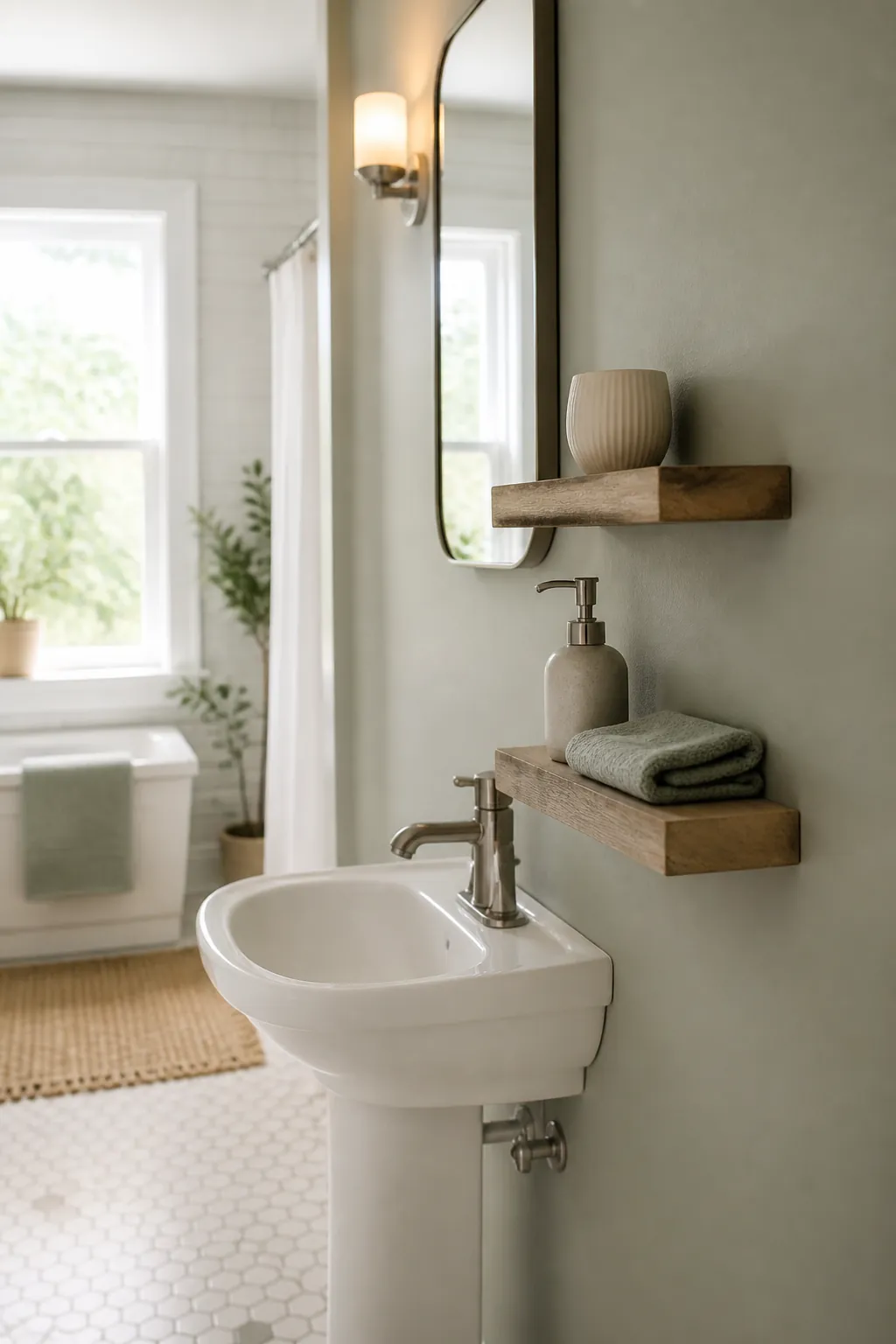
A pedestal sink gives you nothing underneath, so build up and out. A narrow shelf or a couple of floating ledges beside or above the sink hold a cup of toothbrushes, hand soap, and a small tray for rings and daily clutter. Can’t drill? Adhesive-backed shelves and a stick-on toothbrush holder do the same job on a smaller scale.
One quiet trick: mount a magnetic strip low on the wall or along a shelf edge to corral metal items like tweezers, nail clippers, and bobby pins. Those are exactly the little things that roll around every flat surface in a bathroom with no drawers.
Use the back of the door
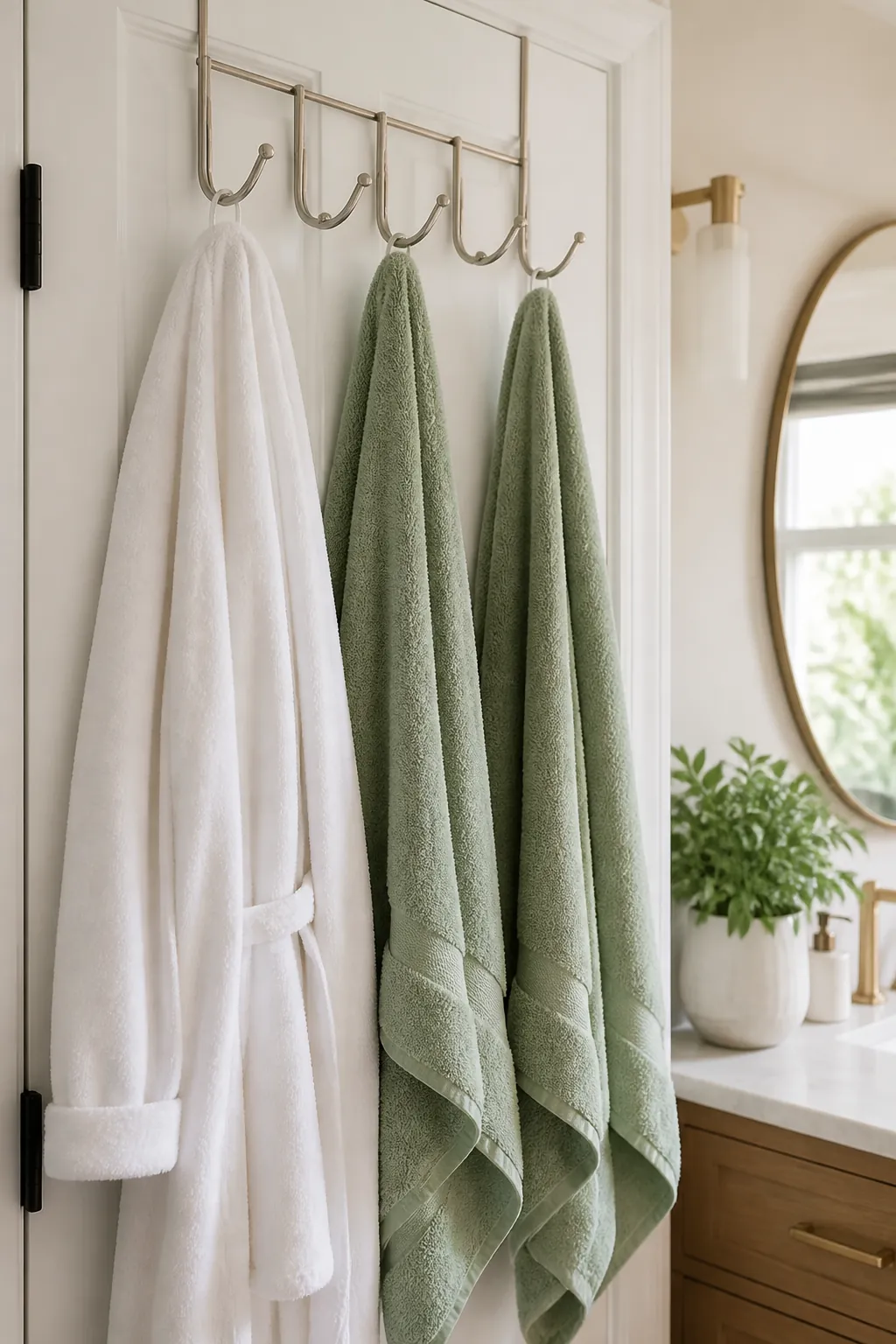
The door is prime real estate almost everyone wastes. An over-the-door hook rack or a slim pocketed organizer holds robes, towels, and hair tools without touching your walls or floor. In a no-cabinet bathroom, this is where I stash the stuff I don’t want on display: the hair dryer, extra hand towels, a caddy of products I only reach for now and then.
If your door swings into the shelving, use an adhesive hook rack on the wall instead. Fighting your own door every morning gets old fast.
Add baskets to tame the open shelves
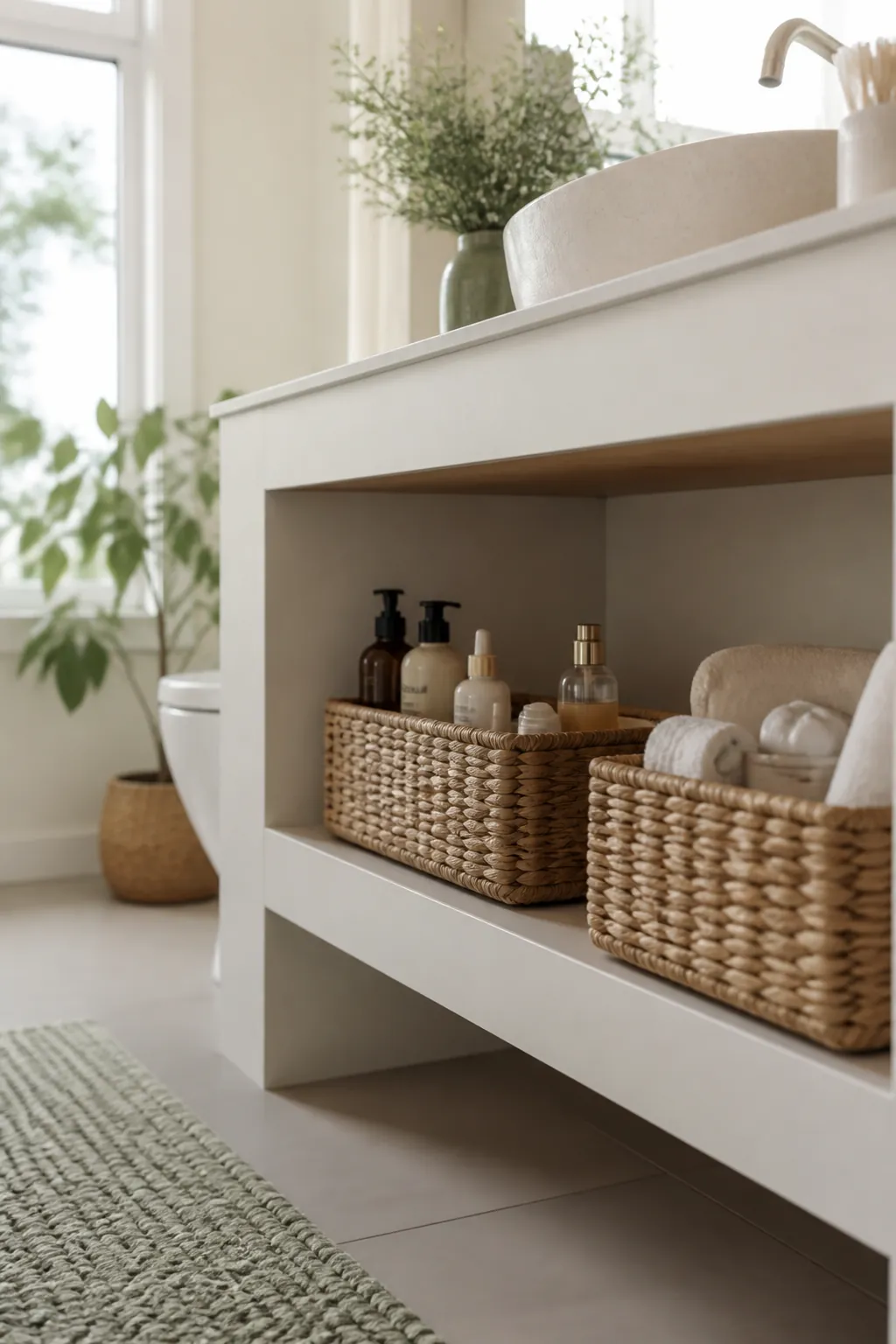
Open storage looks clean until it fills with random bottles. Baskets and bins fix that. Group like with like, all skincare in one, all first-aid in another, and label them if more than one person shares the space. On the over-toilet shelf especially, two or three matching baskets do more for the look of the room than any single pricey item, and they hide the clutter you don’t want guests seeing.
Fabric bins are cheap and soft, so they won’t scratch metal shelving. Woven baskets look warmer. Either way, measure your shelf depth first so the bins fit without hanging off the edge.
Put the system together
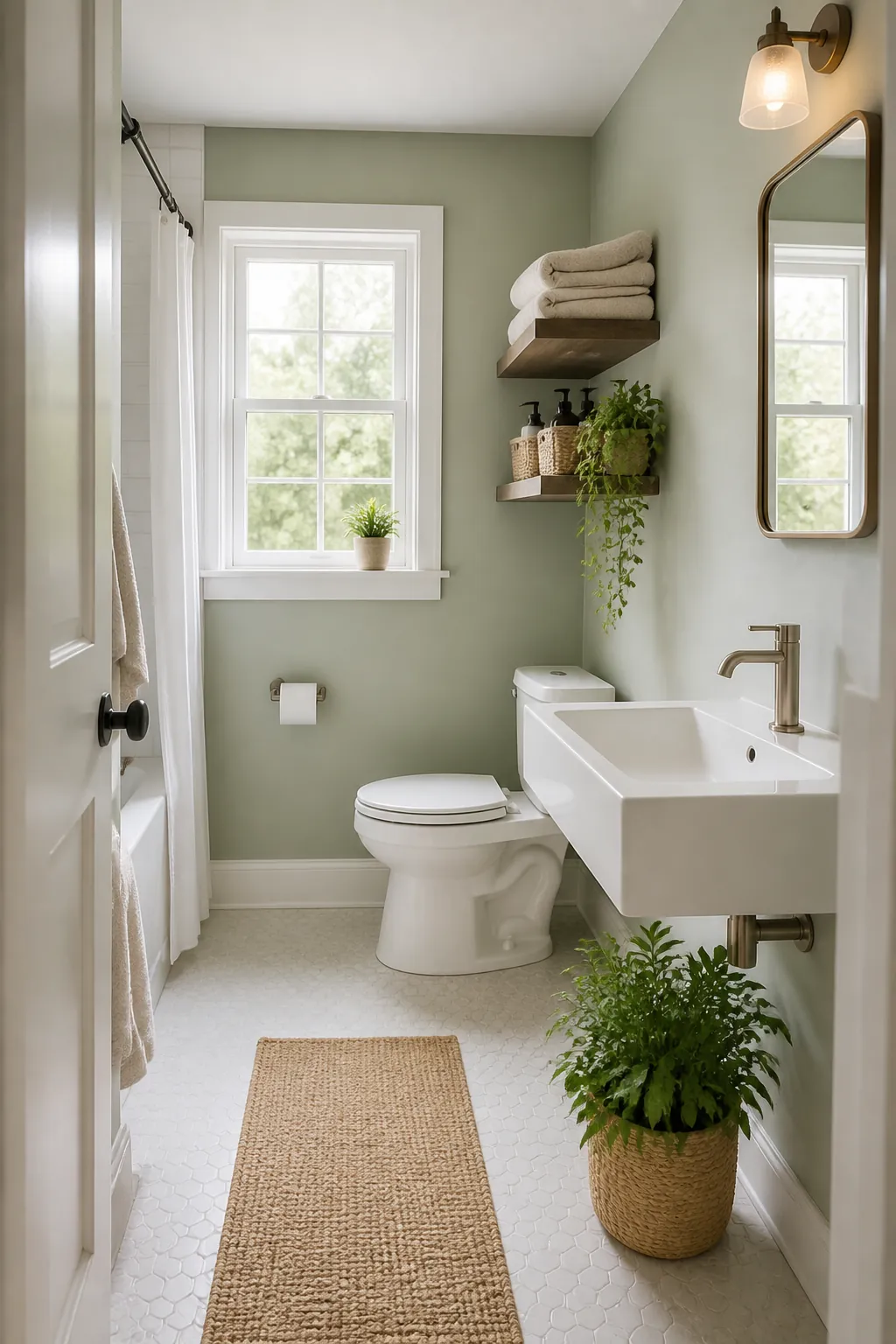
Here’s how the pieces stack up in a real bathroom with no cabinet. The over-toilet ladder shelf becomes your main storage tower: towels and baskets below, one styled top shelf. The suction caddy handles everything wet in the shower. The sink wall takes daily-use items on a small shelf or adhesive holder. The door absorbs the bulky, less pretty overflow.
That’s four zones, none stealing floor space, none requiring a contractor. If you rent, lean on the no-drill options: the ladder shelf, the suction caddy, over-the-door hooks, and adhesive shelving. If you own, or your landlord is relaxed, a few wall-anchored floating shelves add even more.
Working with a genuinely tiny footprint? It’s worth reading up on small bathroom organization ideas for layout tricks, and if towels are your biggest pain point, towel storage for small bathrooms digs into that alone.
Mistakes that make it worse
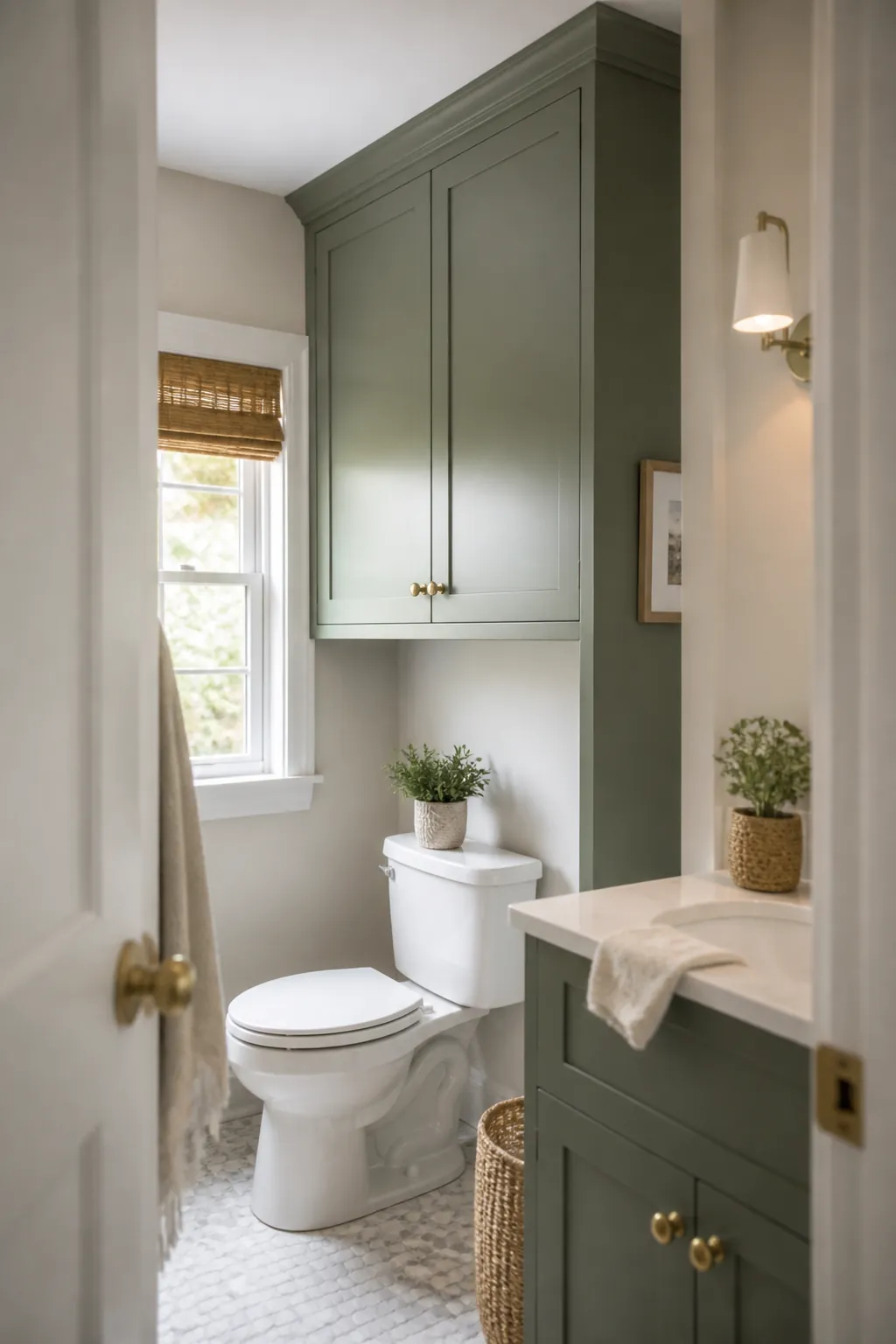
A couple of things I’d steer you away from. Don’t buy a bulky enclosed over-toilet cabinet just because it hides more. In a small room the visual weight isn’t worth it, and open shelving with baskets hides plenty. Don’t overload a suction caddy the day you install it, either. Give the suction a few hours to fully set before loading it, and re-press it every few weeks.
Resist the urge to fill every shelf. A no-cabinet bathroom already feels tight, so a little breathing room on the open shelves is what separates organized from cluttered. Keep the true backstock (the six-pack of toilet paper, the bulk shampoo) elsewhere in the home and store only what you’ll use this month in the bathroom.
Get the vertical zones working and a cabinet-free bathroom stops feeling like a compromise. You end up with storage that’s more accessible and better looking than most builder-grade cabinets ever gave you.