The cough syrup tips into the sink every time you reach for the floss. That is the tiny-bathroom cabinet in one image, and nine times out of ten it is a shelf-spacing problem rather than a volume problem. Real medicine cabinet organization means slicing the tall dead air into usable layers, giving small items something to lean against, and being unsentimental about what earns a spot behind the mirror.
Nine ideas below, ordered the way I would actually tackle them in a bathroom the size of a phone booth. Do the first two even if you ignore everything else, because no riser, drawer, or bin can fix a cabinet that is holding the wrong things.
1. Empty it out: medicine cabinet organization starts on the floor
Pull everything onto a towel on the floor. Not shelf by shelf, all of it at once, because the only way to notice you own four half-squeezed tubes of the same ointment is to see them touching.
Skip category sorting for a minute and ask one question per item: do I reach for this weekly? Yes means it stays behind the mirror. No means it moves somewhere lower and less convenient, like a caddy under the sink or a lidded bin in the linen closet. That single filter does more for a small cabinet than any product on the market, because the space behind the mirror is the most reachable storage in the room and it should hold only what your hands find on autopilot.
Wipe the shelves while they are bare. Rubbing alcohol on a paper towel lifts toothpaste film and the sticky ring under the hairspray faster than spray cleaner, and it flashes off dry before you put anything back.
2. Move the real medication somewhere cool and dry
The unpopular half of this project: a bathroom is one of the worst rooms in your home for pills. Heat and humidity are hard on tablets, capsules, and liquids, and a cabinet mounted a few feet from the shower head runs a sauna cycle twice a day.
Give prescriptions and daily tablets a cool, dry home out of reach of kids. A labeled box on a bedroom closet shelf works. A high kitchen cabinet works too, as long as it is not above the stove or next to the kettle. Leave the mirrored cabinet for grooming, basic first aid, and the things you use every morning. You will usually free an entire shelf doing this, which is the cheapest square footage you will gain all day.
Check dates as you go. Eye drops, sunscreen, and antibiotic ointment are the three that quietly expire and keep getting used anyway. Most pharmacies run a take-back bin for old medication, which is a better ending than the toilet.
3. Double your shelf count with stackable risers
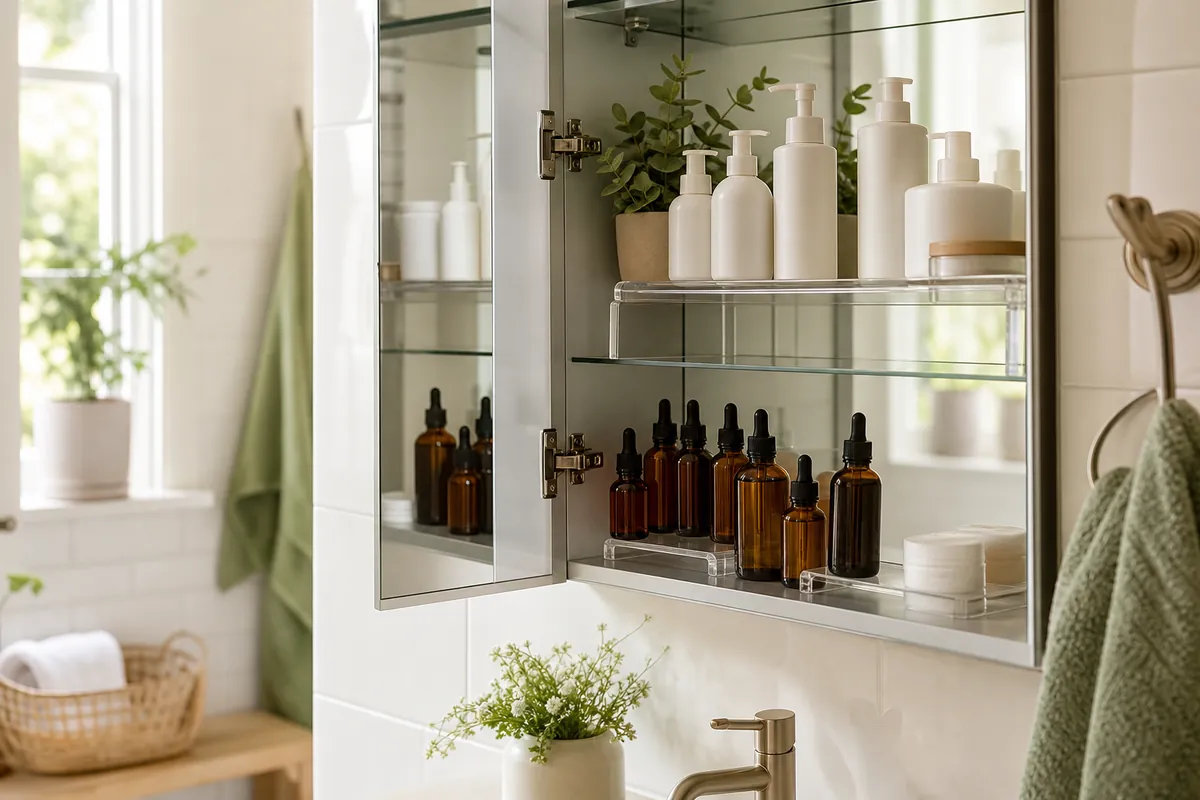
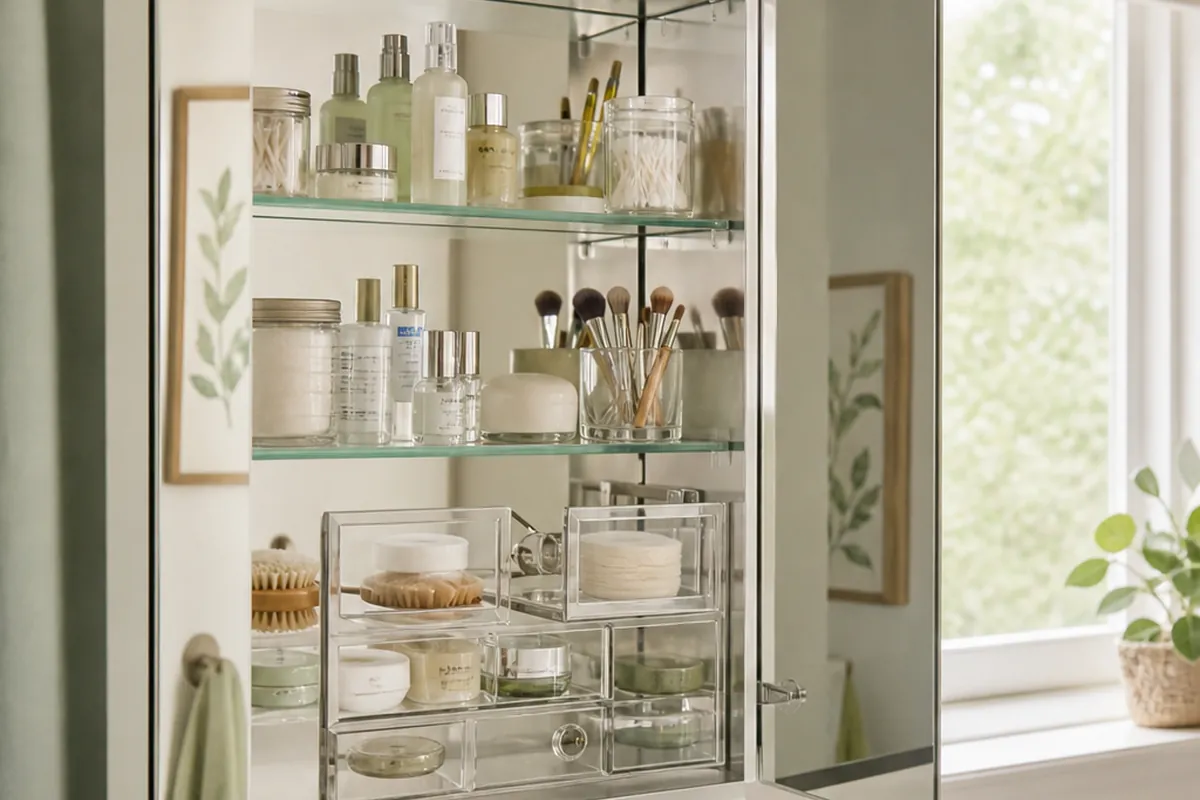
Cabinet manufacturers space shelves for a bottle of mouthwash, then leave you with three inches of air above the lip balm. Stackable medicine cabinet shelves fix that in about a minute: set one on an existing shelf, tuck flat items like cotton swab tubes and razor heads underneath, and put taller pump bottles on the riser deck. One shelf becomes two with no drilling and nothing permanent.
Visibility is the real payoff, not capacity. Anything you have to move something else to see is an item you will forget you own and buy again in three months. Once you can read every label without shifting a single bottle, the duplicates stop arriving.
Two details worth getting right. Measure the interior at its narrowest point, since the door frame lip often steals close to an inch of the width you see when the door is open. Then put risers on the middle and upper shelves where the height surplus is worst; the bottom shelf usually earns its full clearance holding the tall stuff. If you have a choice, pick a riser with wide flat feet over a wire one with thin legs, because narrow feet slide on a glass shelf every time you bump the door shut.
4. Corral the tiny stuff in clear stackable drawers
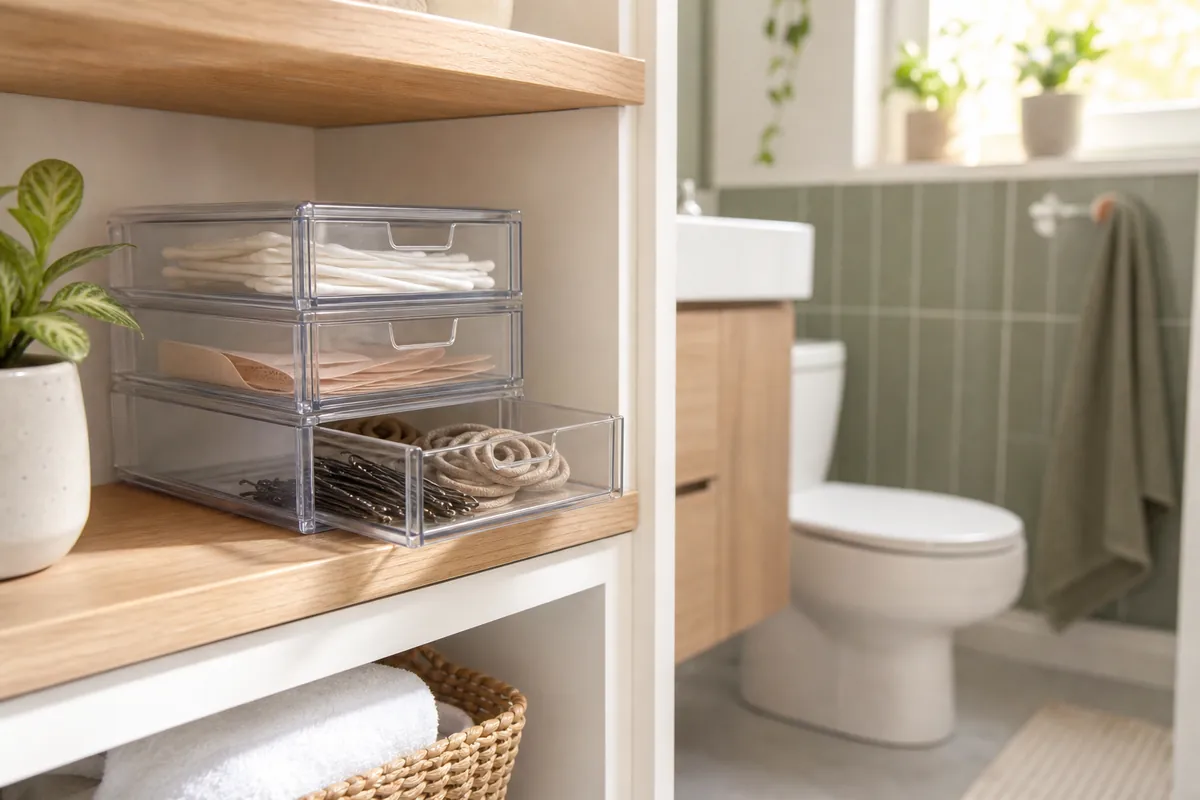
Bobby pins, nail clippers, hair elastics, spare contact cases, safety pins. These are why the cabinet looks chaotic even after you tidy it, and they are too small to stand up and too numerous to line up. Small clear stackable drawers turn a loose handful into a unit you pull open like a filing cabinet.
I would take drawers over open bins on a narrow shelf every time. A drawer stays put when you tug it; an open bin tips forward and dumps its contents in the sink. Clear fronts matter just as much, since a stack of opaque boxes only relocates the mystery.
Keep the categories embarrassingly narrow. “Hair” is too broad to help anyone. “Bobby pins and elastics” is findable in the dark. The same one-category-per-compartment rule carries straight out to the vanity, which is the whole idea behind good bathroom drawer organization.
5. Give the daily lineup a portable tray
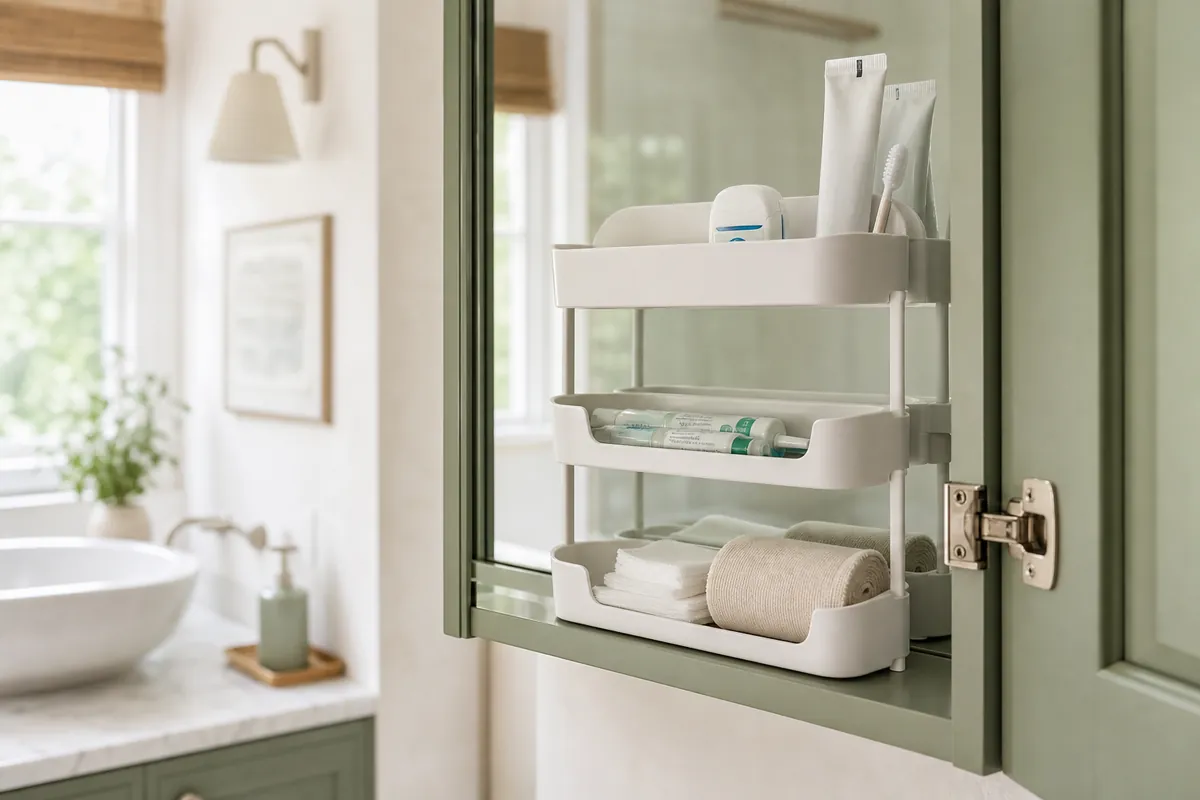
Whatever you touch every single morning should not live loose on a shelf where it gets shoved to the back by whatever came home from the pharmacy last. Load it into a portable 3-tier medicine organizer and park that at eye level. Pull the whole unit out, use what you need, slide it back. Nothing migrates and nothing hides behind anything else.
Two situations make a portable tray worth the shelf space it costs. In a shared bathroom, one tray per person ends the territory negotiation for good. When you are sick, you carry the entire cold-and-flu tier to the couch instead of shuffling back and forth four times.
Make the tiers mean something rather than filling them at random: top for twice-a-day items, middle for weekly, bottom for backups you are keeping within arm’s reach. That vertical hierarchy is the same logic behind smart bathroom counter organization, except tucked behind a mirror where nothing collects dust.
6. Put the inside of the door and side walls to work
The inside face of a medicine cabinet door is usually blank metal or mirror, and almost nobody uses it. A slim magnetic strip mounted inside a steel-bodied door holds tweezers, clippers, and small scissors flat against the surface, out of the shelf shuffle. Check with a fridge magnet first; plenty of cabinet boxes are aluminum or plastic and will not hold a thing.
Non-magnetic cabinet? A single adhesive hook near the top corner takes a loop of hair elastics or a face brush hung by its handle. Stick adhesive to the interior body only, never the visible mirror front, and press it for a full thirty seconds before you hang anything on it. One more caution: whatever goes on the door has to clear the shelf edges when the door swings, so measure that gap before you commit.
7. Stop the tip-over crowd with small bins
Ointment tubes, folded gauze, and slim bandage boxes refuse to stand on their own. Two small bins, one labeled first aid and one dental, keep them upright and let you lift out an entire category with one hand instead of picking through it.
My rule: nothing smaller than a toothbrush gets its own patch of shelf. Either it goes in a container or it goes out of the cabinet. That is the difference between a cabinet that stays neat for a week and one that still looks good next spring.
Resist filling the front two inches of every shelf, too. A small landing strip means you can set the toothpaste down while you reach past it, rather than playing bottle Jenga above an open drain.
That first aid bin is really a starter kit. Once it holds more than the basics, first aid kit storage ideas for a small bathroom cabinet covers building it into something you can carry whole.
8. Label the shelf, not the bottle
Labeling individual products is a waste of tape. Label the location instead. A small tag on the front edge of a shelf or on a drawer front tells everyone where an item returns to, and returning things is the actual failure point in every system that collapses.
Write the label as a category plus a rough limit if overbuying is your weakness: “dental, 4 items.” A number turns a label into a decision. When the fifth thing shows up, you already know something has to leave.
9. Give the overflow a real address
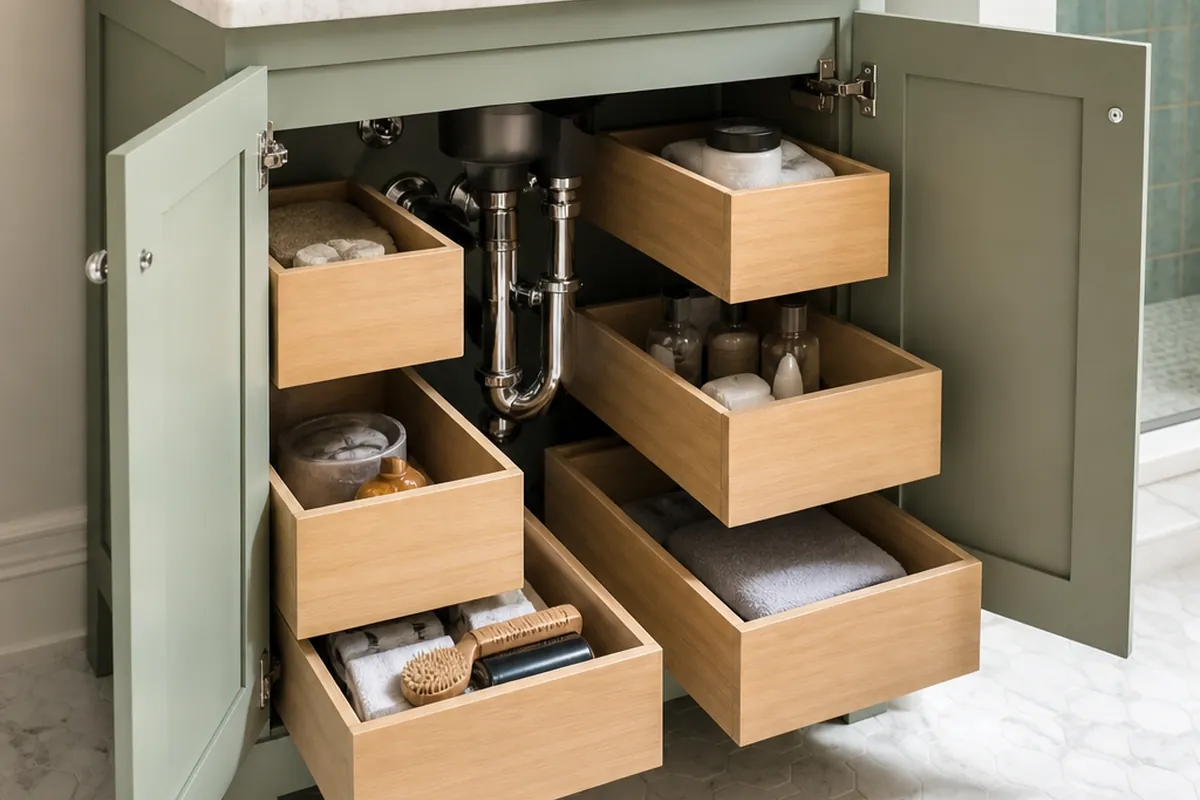
This cabinet only stays organized if the backups have somewhere else to be. Spare toothpaste, refill bottles, and bulk cotton rounds belong in a bin below, which is where a decent under-sink setup earns its keep. If yours is currently a plumbing-shaped void, the fixes in under sink bathroom organizer ideas will give the surplus a home so it stops creeping back up behind the mirror.
No cabinet under the sink at all? A closed basket on a closet shelf or a small rolling cart does the same job. The point is that “overflow” names a specific spot, not the back row of your medicine cabinet.
Medicine cabinet organization that survives past week one
Two habits carry the whole thing. Once a season, pull first aid and skincare forward and check dates, which takes five minutes and stops the slow accumulation of dead bottles. Then make replacement mean replacement: when the new deodorant comes home, the old one hits the bin that day, not the back of a shelf on a technicality.
Building from scratch, the order that works is empty out, relocate real medication, add stackable medicine cabinet shelves to reclaim the vertical air, then fill those new layers with small clear stackable drawers and a portable 3-tier medicine organizer for the daily lineup. Everything after that is refinement.
A tiny cabinet is never going to hold everything, and it should not try. Aim for the twenty or so things you touch most, at a height you can reach without looking, with nothing balanced on top of anything else.