You open the drawer and there it is: a mascara tube rolling into a knot of hair ties, three half-used lip balms, and a razor you keep meaning to toss. Good bathroom drawer organization isn’t about buying more stuff. It’s about giving every little thing a fixed spot so the drawer stops turning into a junk pile every couple of weeks.
The trouble is that a bathroom drawer holds dozens of tiny, oddly shaped items with nothing to pin them down. Open it, close it, and everything shifts a little further into chaos. Stop the shifting and you fix the drawer. Here’s exactly how I’d do it.
Empty It First, Then Be Honest
Dump the whole thing onto a towel. All of it. You can’t organize around clutter you’re pretending isn’t there.
Sort into three piles: keep, toss, and belongs-somewhere-else. Bathroom drawers hoard an astonishing amount of dead weight. Dried-out gel liner. Sample sachets you’ll never open. A comb with three teeth left. Be ruthless, and don’t skip the expired sunscreen or the old prescriptions. Most people shed a good third of their drawer contents right here, and suddenly there’s room to actually see what’s left.
While the drawer is empty, wipe it out. Every single time, there’s toothpaste crust in one corner and stray powder in another.
Group by How You Actually Use Things
Before you buy a single tray, sort your keep pile by moment, not by category. Everything you touch during your morning face routine goes together. Hair stuff clusters. Dental gets its own zone. This matters because you reach for things in sequences, and a drawer that mirrors your routine feels effortless. Grouping by rigid category, all tubes here and all metal there, looks tidy in photos but fights the way you actually move at 7 a.m.
Line the Drawer So Nothing Slides
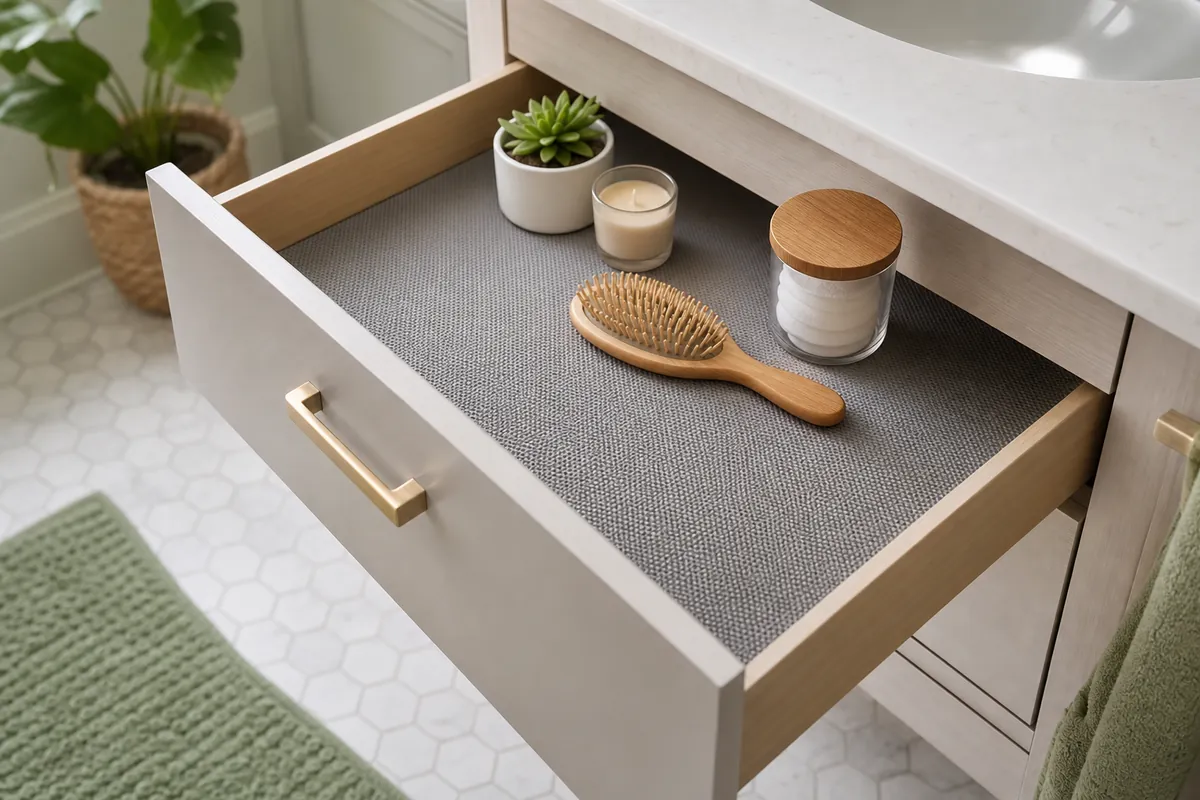
This is the step people skip, and it’s the one that holds the whole system together. A slick drawer bottom lets your trays creep to the back every time you yank the drawer open, and then small items rattle down underneath them. Line it first.
An adhesive drawer liner solves two problems at once. It grips the bottom so trays stay put, and it shields the drawer from water rings, makeup smudges, and toothpaste drips. In a rental, that’s a small kindness to your future self and your deposit. Choose a liner you can wipe clean instead of a felted one that drinks up spills and stains for good. Measure the length and width before you cut, then cut slightly small so the liner lies flat without buckling at the edges.
Worried about residue? Test the adhesive in a back corner first, or pick a peel-and-stick type sold as removable. Most lift cleanly if you go slow and warm the edge a bit with a hair dryer.
Corral the Small Stuff With Clear Trays
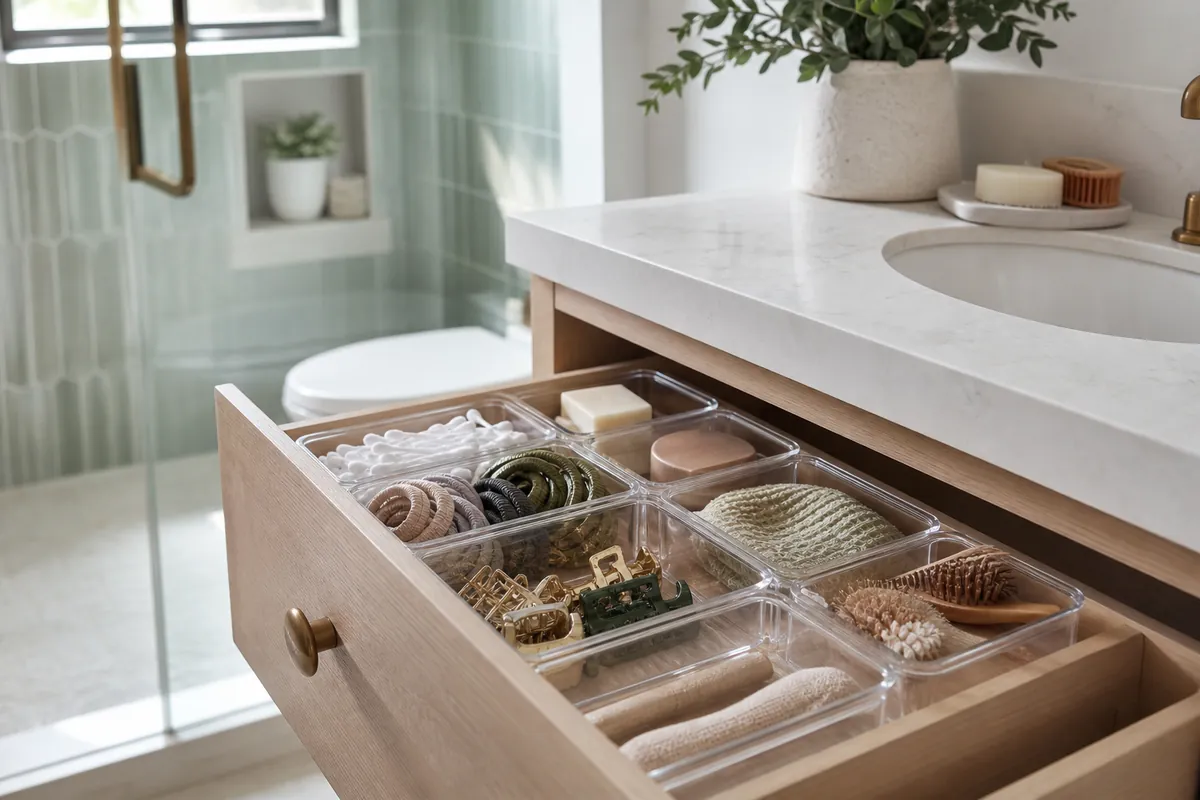
Once the drawer grips, you need containers, and here’s where I’ll get opinionated: go clear, and buy a set of matched sizes.
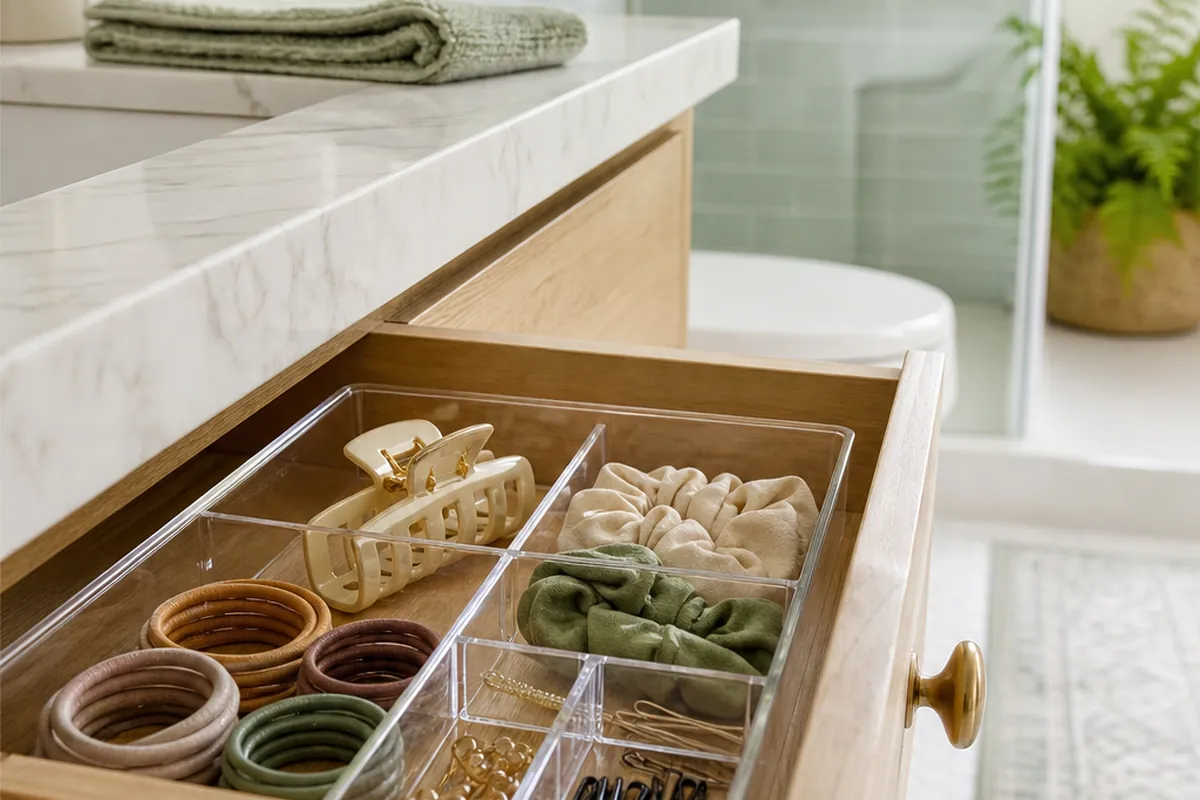
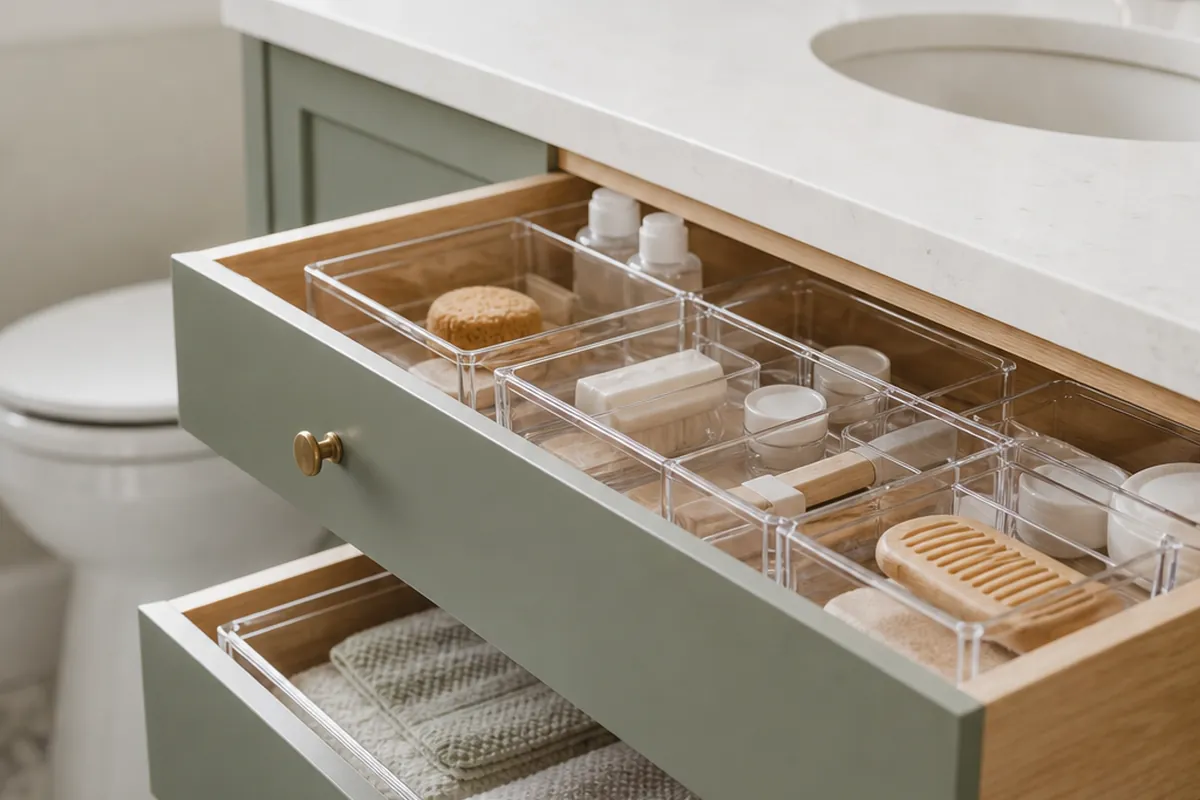
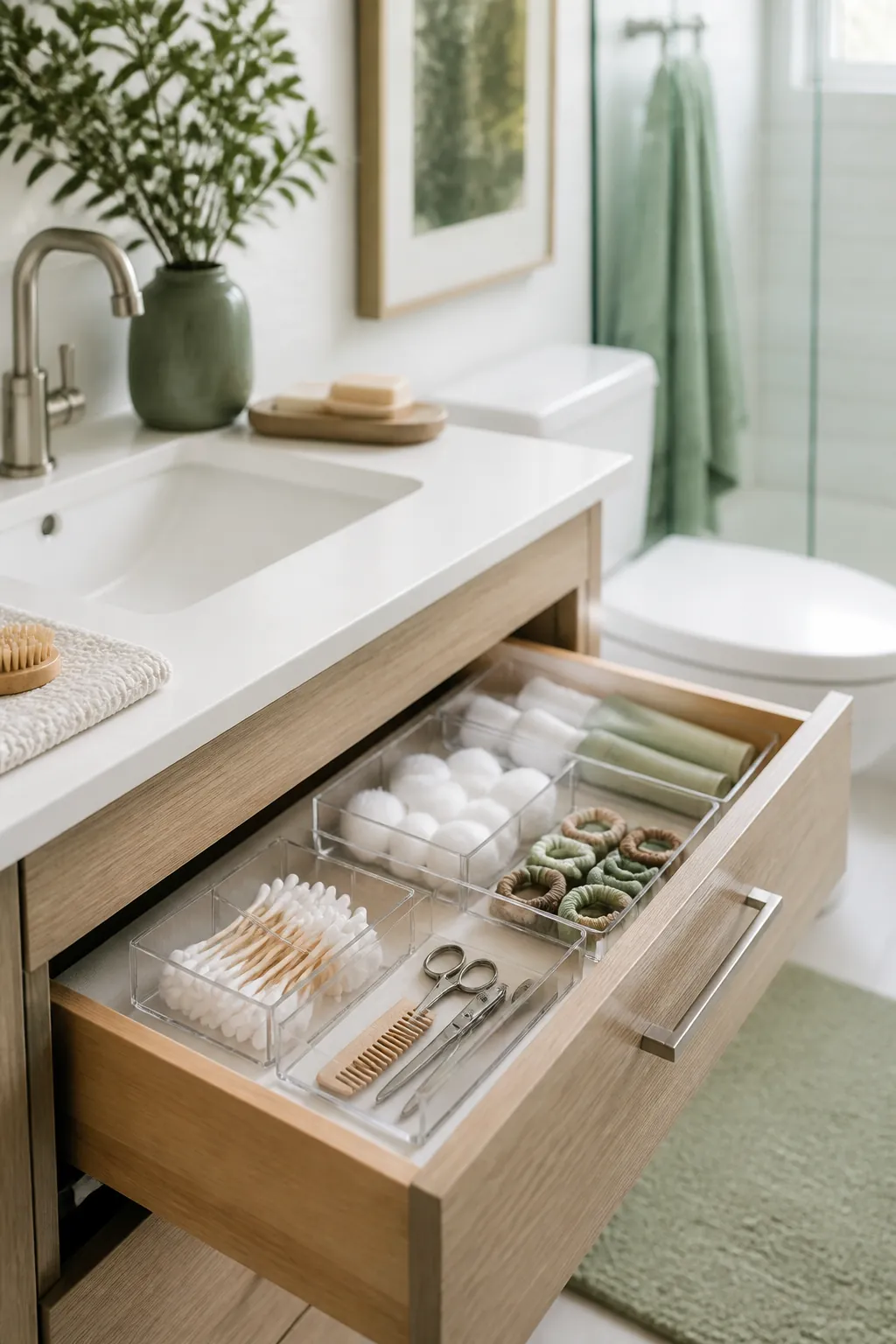
A clear acrylic drawer organizer set is the workhorse. Clear beats opaque for one simple reason, you see everything at a glance. No lifting lids, no shuffling to find the one thing you need. Opaque bins hide exactly the item you’re hunting for, which defeats the entire point. Acrylic also wipes clean, shrugs off steam that would warp cardboard or sag thin fabric, and looks deliberate even when the contents are a little wild.
Why a set and not random containers? Fit. Mismatched bins leave awkward gaps where small things migrate and disappear. A set with a few sizes lets you build a tight grid: long narrow trays for brushes and pencils, small squares for lip products and hair ties, a wider tray for the bottles you grab daily. Fill the drawer footprint so the trays brace each other and can’t drift.
Assign Zones and Load the Trays
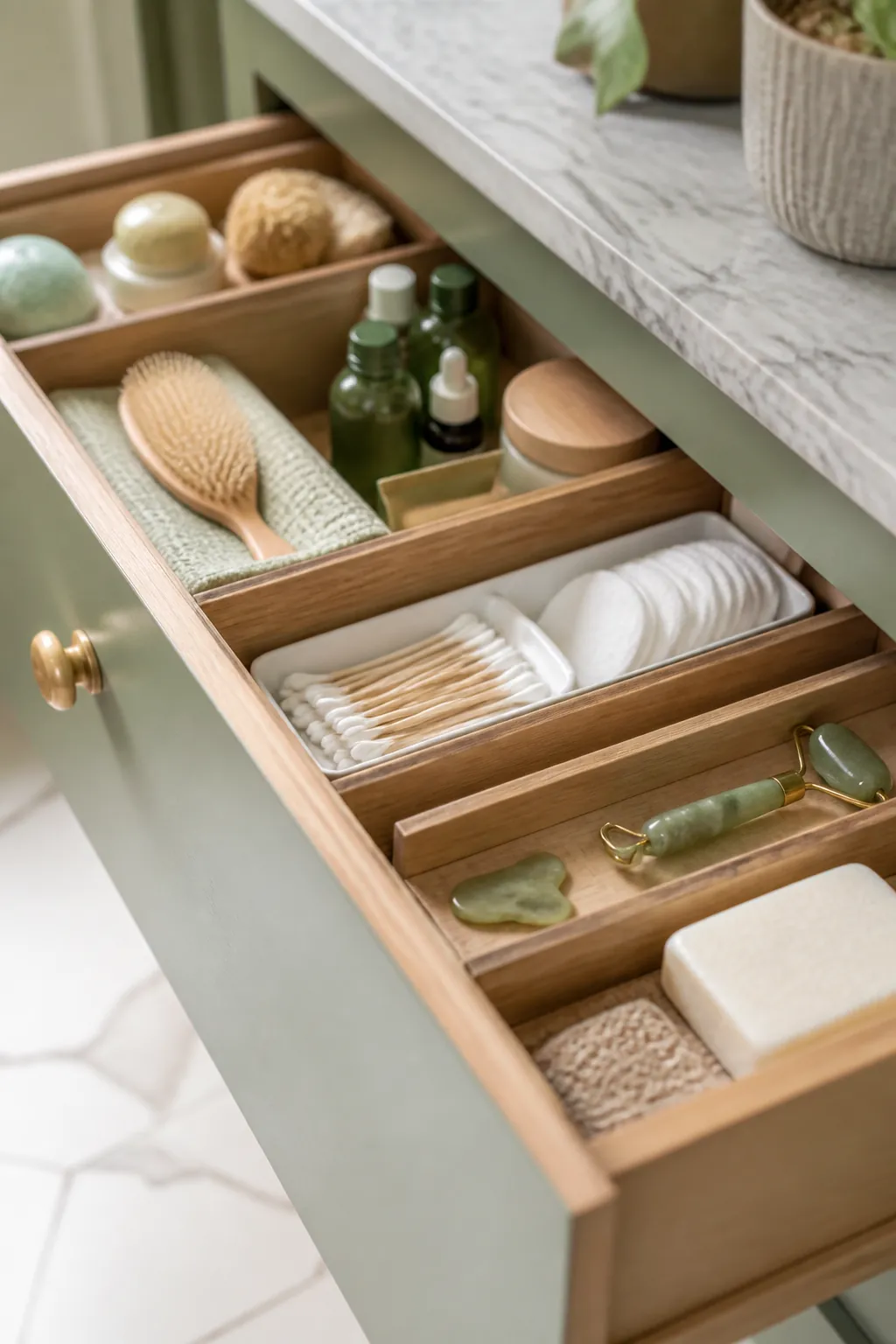
Now drop your grouped piles into the trays, following your routine. The front gets the daily heroes: your everyday moisturizer, the tweezers you actually use, toothbrush head covers. The back holds the occasional stuff, backup floss, the nail file, travel sizes.
Stand things up whenever you can. Lipsticks, liners, and mascaras take far less room upright than sprawled on their sides, and you can read every label instantly. A small square packed with upright tubes is the single most satisfying fix in any bathroom drawer.
Leave one tray deliberately loose as a landing zone for the stray bobby pin or hair tie. If every square is stuffed to the brim, the first new thing you buy breaks the system. A little breathing room is what keeps it going.
Hair ties and clips are the smallest things in the drawer and the first to escape a tray, and hair accessory storage ideas for a small bathroom drawer deals with them on their own.
Match the System to the Drawer You Have
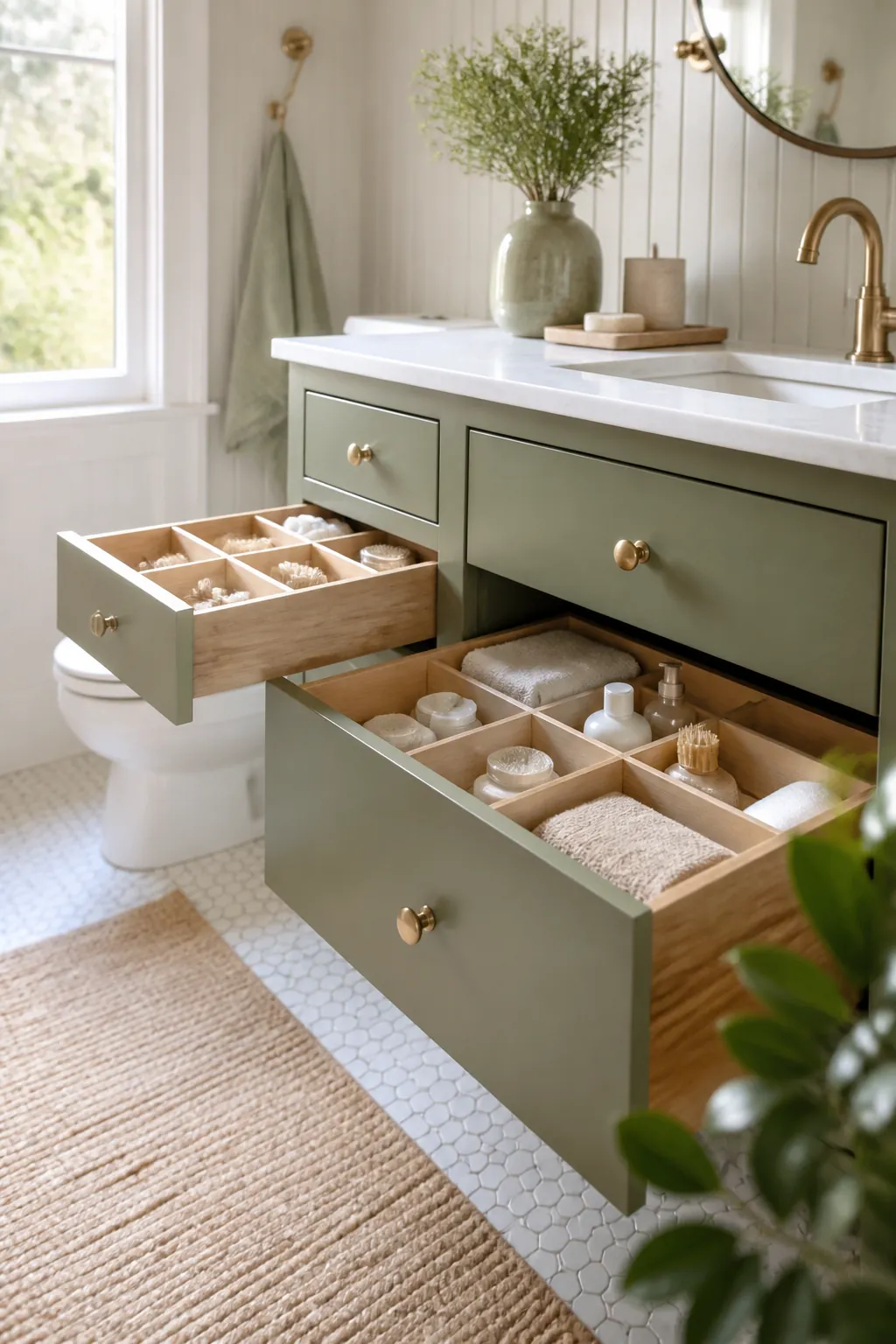
Not all bathroom drawers are built the same, so adjust.
Shallow drawers are the easy win. Low-profile acrylic trays in a grid, everything visible, done.
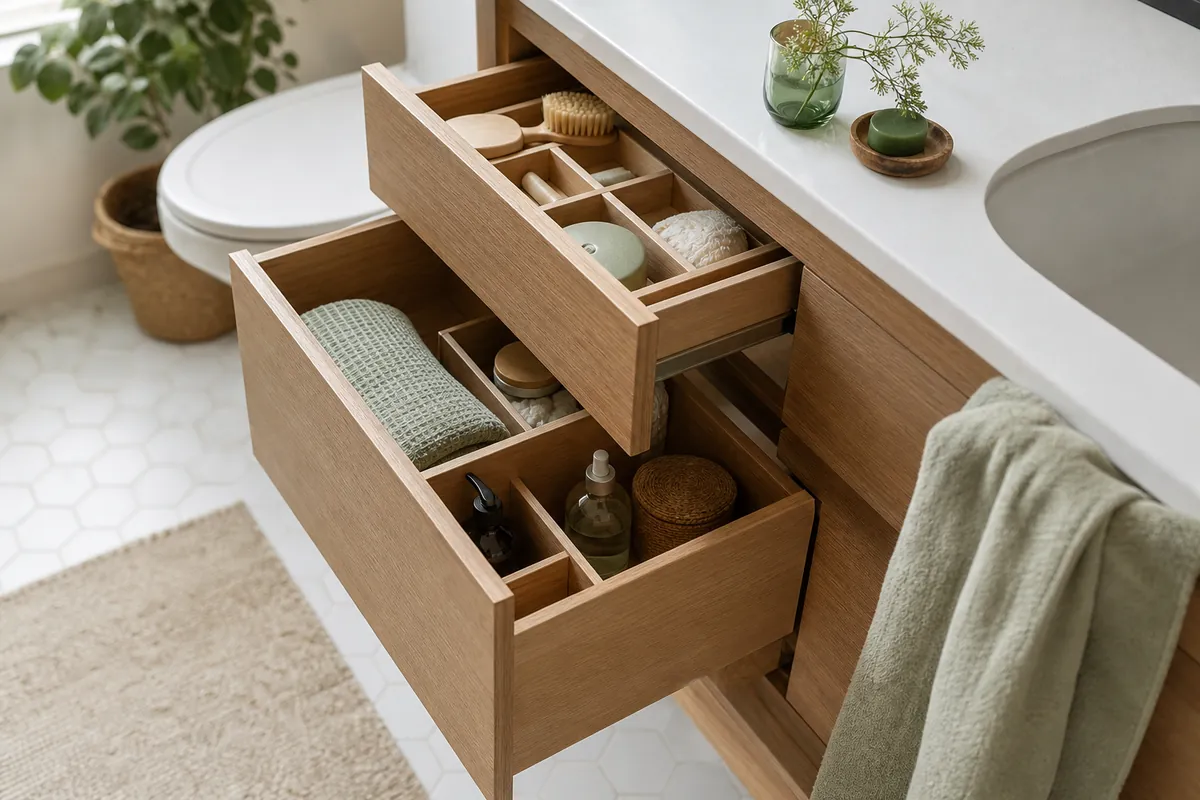
Deep drawers waste their height if you only line the bottom. Use taller bins and store things upright, or add a second shallow tray that rests on a ledge for two layers. Blow dryers, straighteners, and their cords do well stood on end, cord wrapped and tucked, so they quit tangling with everything else.
Skinny drawers in a narrow vanity call for long single-file trays. Line your daily items front to back like books on a shelf.
If you’re short on drawers entirely, the same logic scales to under-sink pull-outs and countertop caddies. For more on squeezing storage out of a tiny footprint, our guide to small bathroom storage ideas covers the vertical space most people ignore, and if the cabinet under the sink is your real problem area, start with organizing under the bathroom sink.
Keep the System From Sliding Back
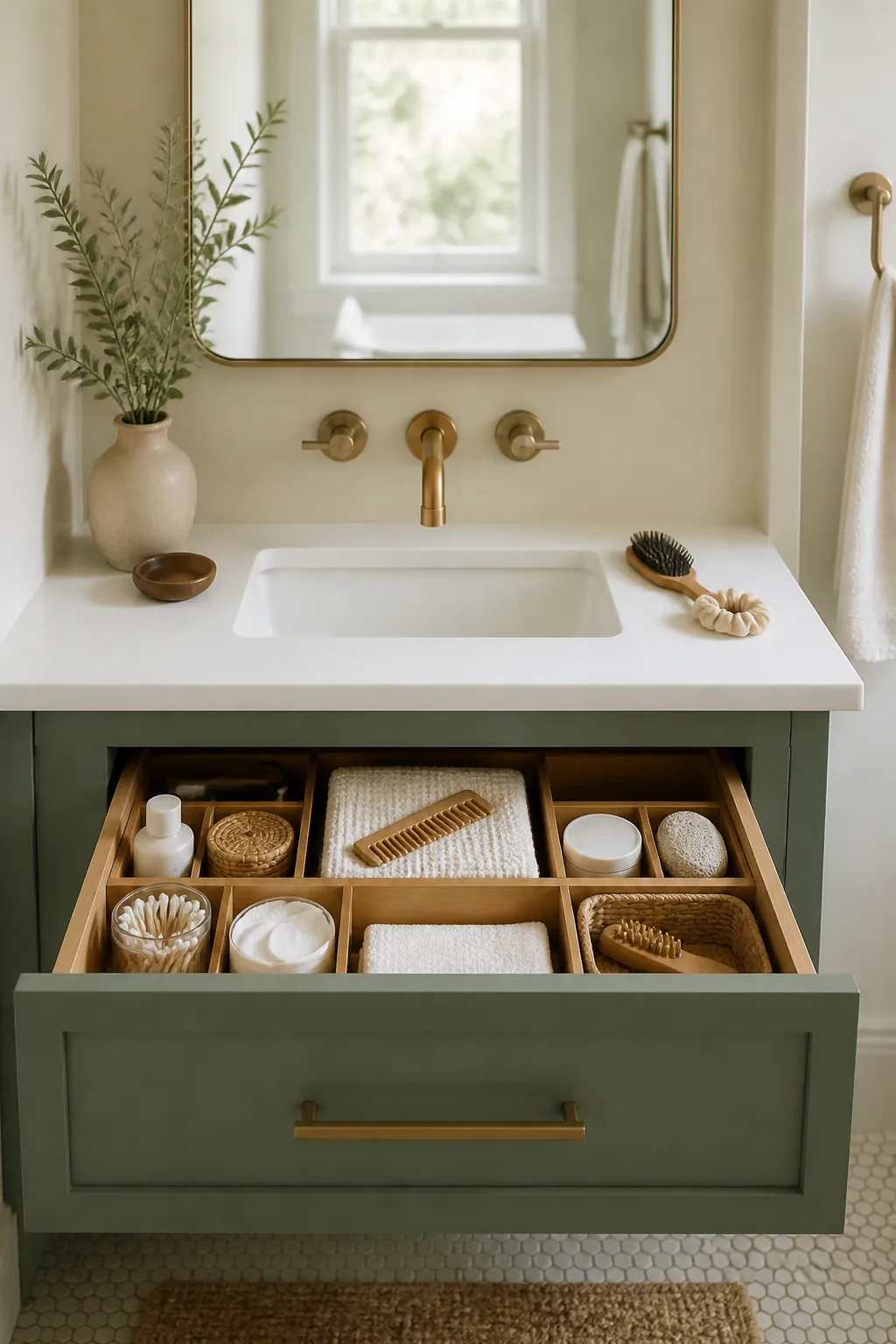
Organizing the drawer once is easy. Keeping it organized is the real skill, and it comes down to two habits.
First, one-in-one-out for consumables. New mascara comes in, the old crusty one goes out that day. Bathroom clutter is almost always duplicate-and-forget: you buy a backup, lose track of the original, and wind up with four of everything. A quick monthly sweep catches it before it compounds.
Second, return things to their tray, not just to the drawer. It costs an extra half second to set the tweezers back in their square instead of chucking them anywhere, and that half second is the difference between a drawer that holds for months and one that’s a disaster by Friday. Clear trays help here too, because an empty slot is an obvious flag that something’s out of place.
Wipe the trays out every few weeks. Powder and product build up fast, and two minutes keeps the whole drawer feeling clean instead of grimy.
A Quick Note on Shared Bathrooms
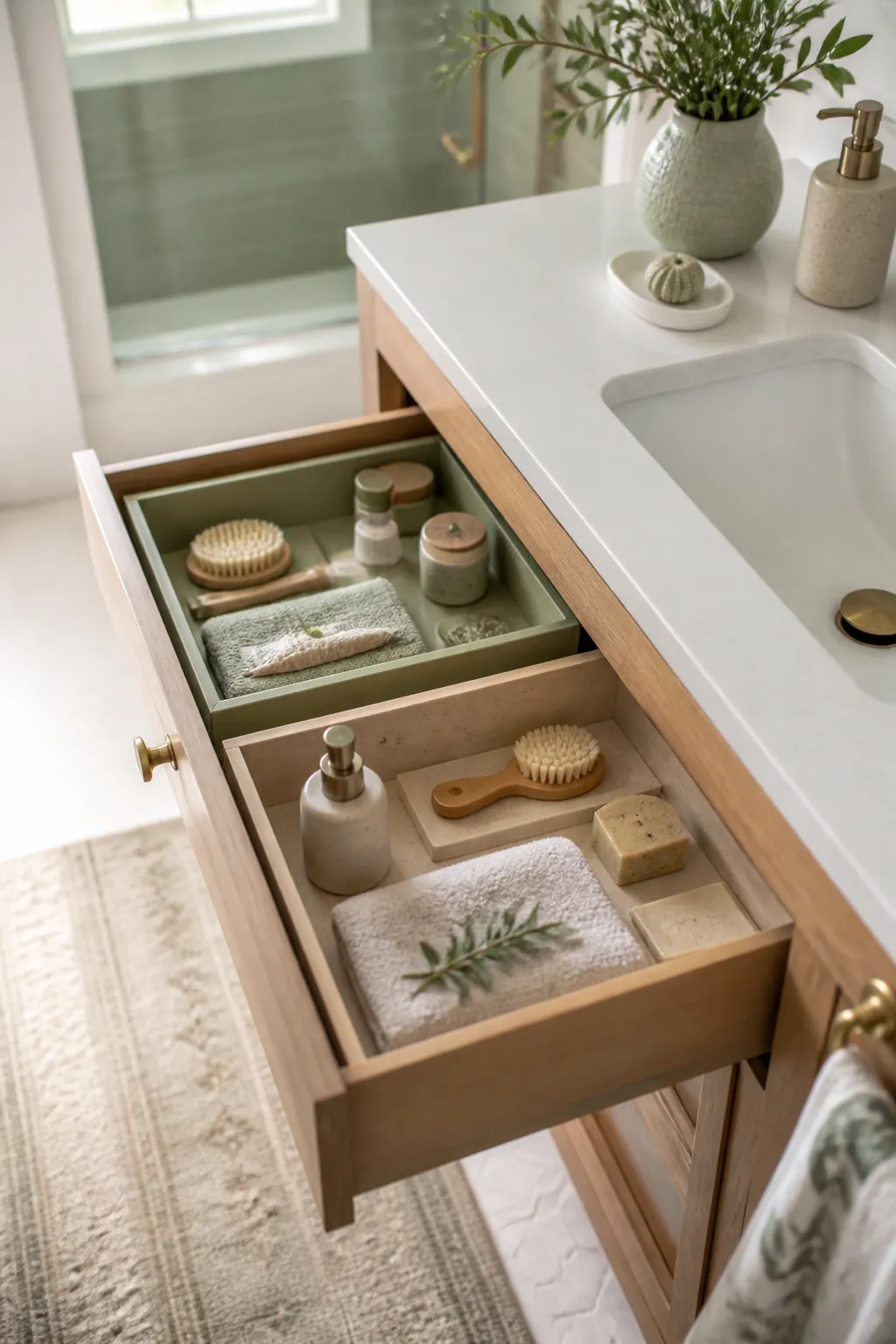
Sharing a bathroom? Give each person their own tray or labeled zone. Shared drawers collapse fastest because nobody feels responsible for the mess. One clear tray per person, plus a communal tray for shared items like nail clippers, kills most of the friction. Kids do better with a single open bin they can dump into than a fussy grid, so lower the bar for the people who won’t maintain a system anyway.
The Short Version
Strong bathroom drawer organization is really three moves in order: purge the dead weight, line the drawer so nothing slides, then divide it with clear acrylic trays sized to your stuff. An adhesive drawer liner anchors everything and keeps the drawer clean, and a clear acrylic drawer organizer set turns a rummage-and-hope drawer into one where you spot what you need in a second. Build it around your actual routine, leave a little breathing room, and put things back in their slot. That’s the whole game.