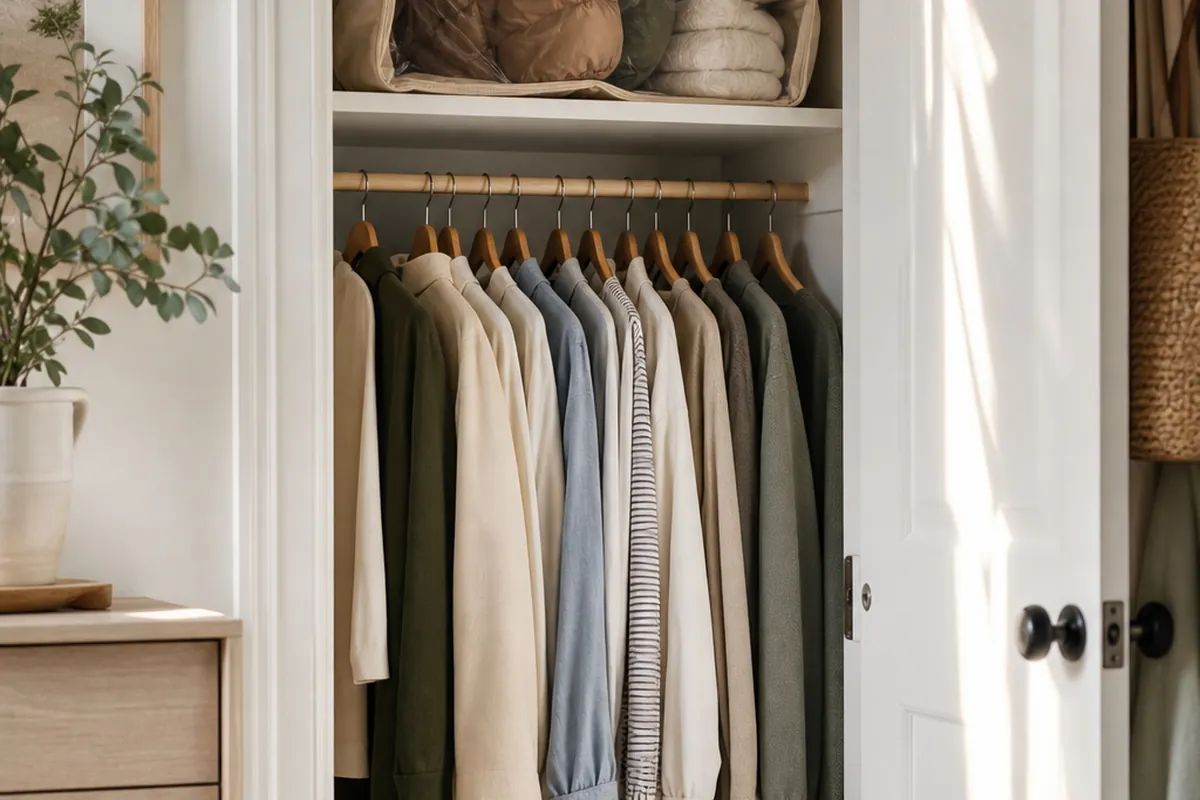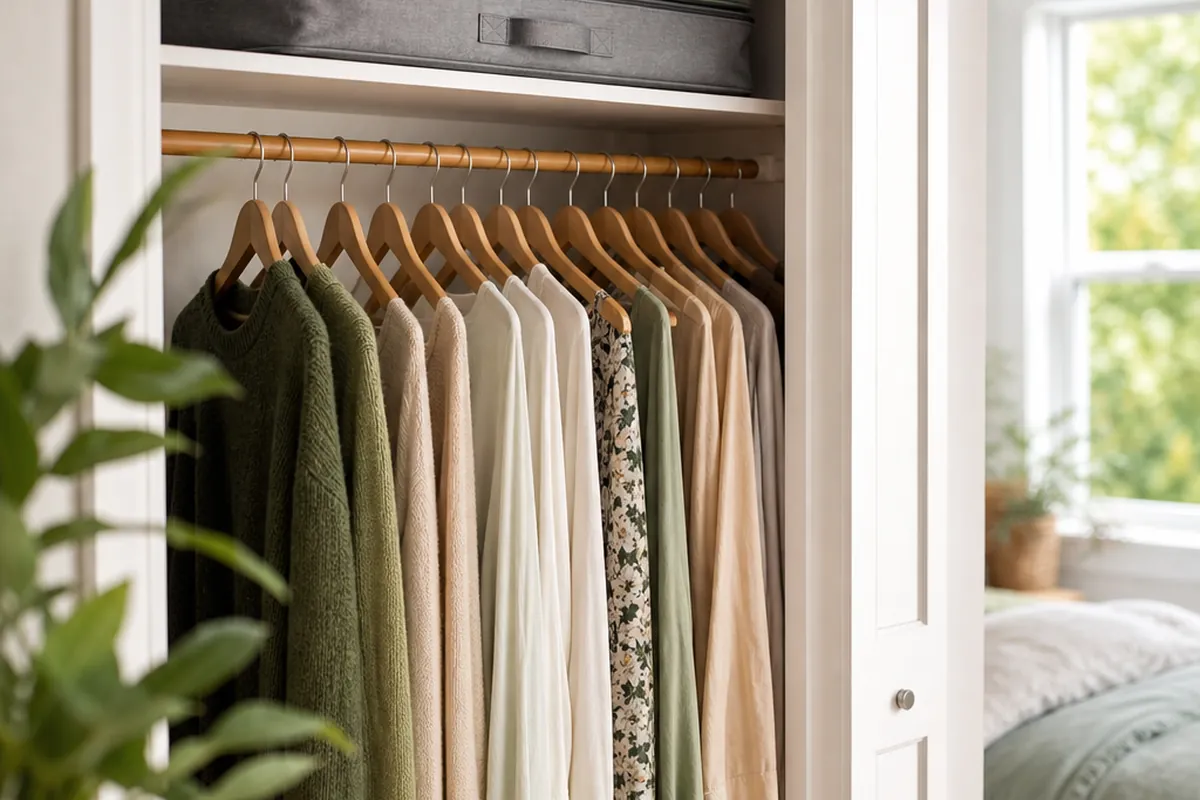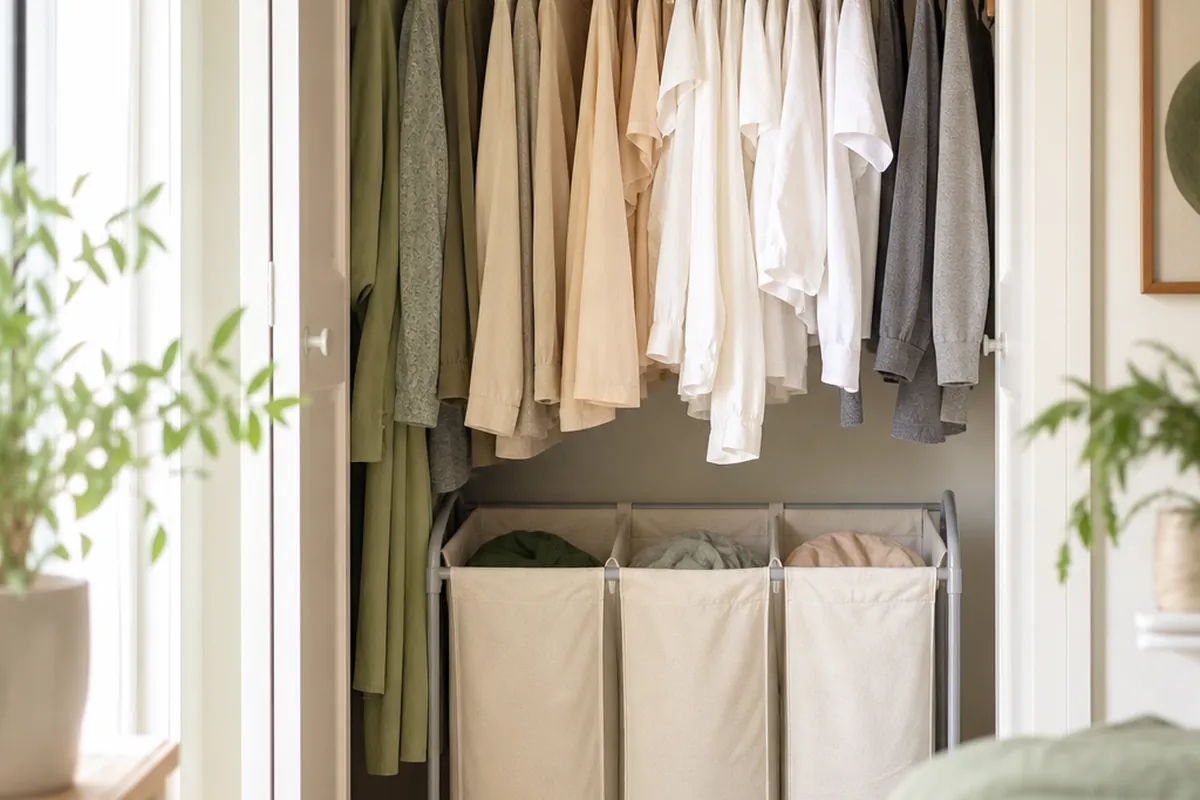
A closet with one rod and four bare walls looks like a design failure. It’s really just a blank canvas. The whole secret to how to organize a small closet without shelves is to quit mourning the missing shelves and start milking the two things you actually have: vertical air and a door. Play those right and you’ll fit more into an empty box than most people cram into a built-in system.
Below are nine ways to build storage where there was none. Every one is renter-friendly, and almost none need a drill.
Claim the vertical column under your clothes
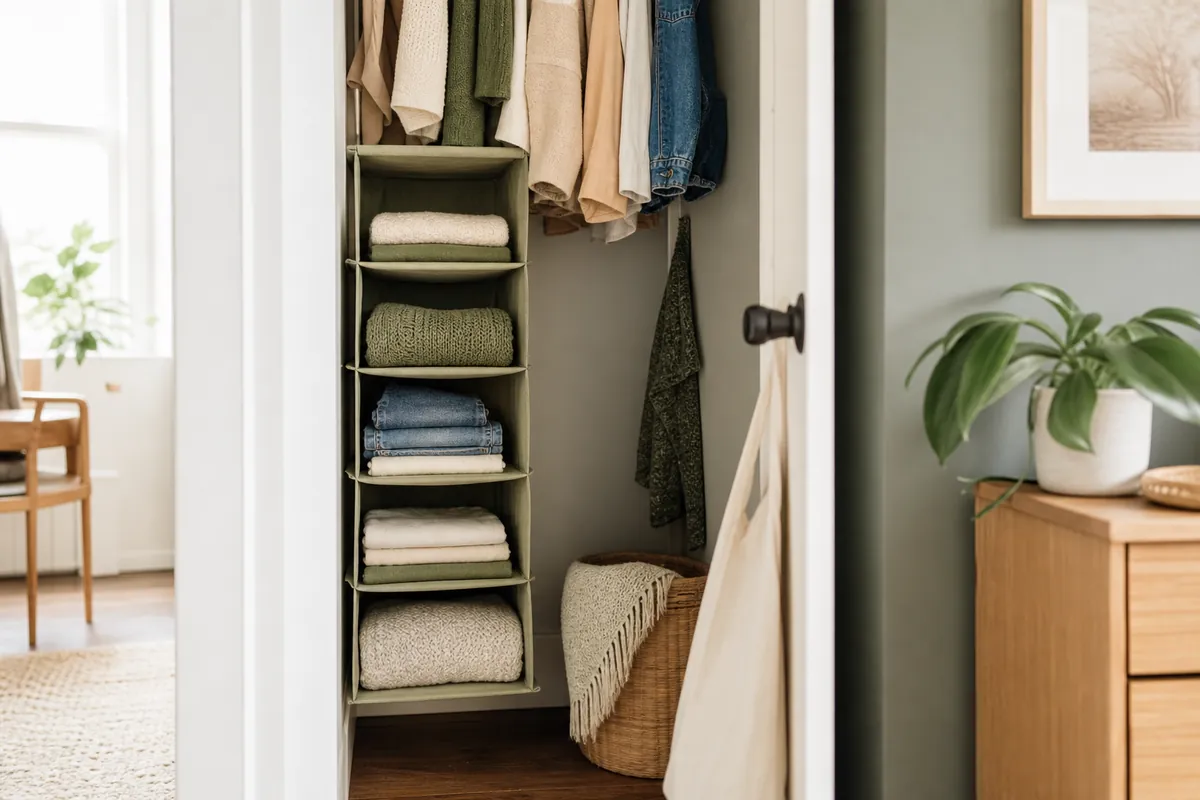
The most wasted zone in a shelfless closet is the drop below your hanging shirts. Short garments leave two, sometimes three feet of dead air above the floor. That column is prime storage, and it’s yours to fill.
1. Hang a fabric shelf tower from the rod
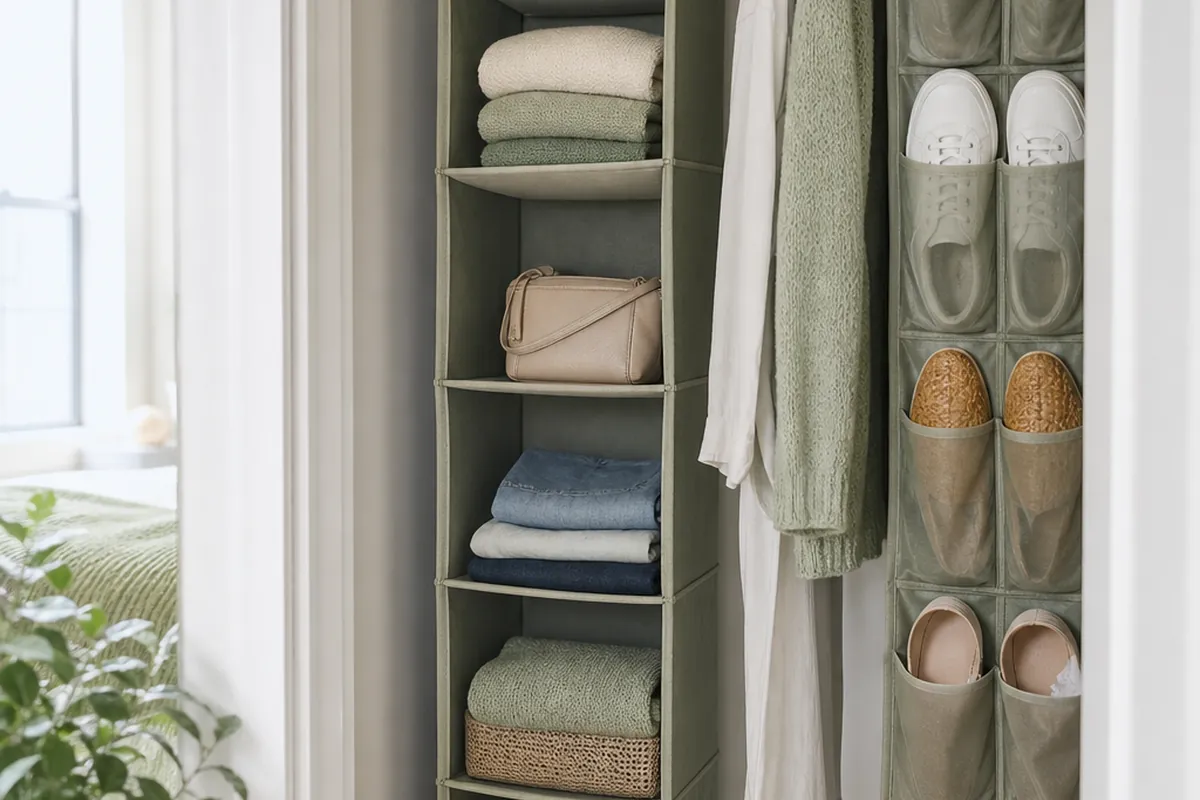
A 6-shelf hanging fabric organizer is the single strongest move when there’s nothing to build on. It clips or wraps around your existing rod and hands you six soft cubbies without a screw. Load it with folded knits, jeans, and sweaters, the things that stretch out or slide off hangers anyway.
Put it at one end of the rod, not the middle, so it doesn’t chew into your hanging span. The fabric walls hold stacks upright, which cures the usual reason floor piles collapse. Before you commit, picture your rod-to-floor drop: these towers tend to run around four feet, so a low rod can leave the bottom cubby puddling on the ground. If that’s you, grab a version with fewer shelves or fold the base up out of the way.
2. Add a second rod on chains or a tension setup
Most small closets have one high rod and a canyon of empty space below it. Hang a short length of second rod from the top one with a cheap chain-and-S-hook kit and you’ve built a double-hang zone for shirts, skirts, and folded pants. I dig into the full method in doubling your closet space without renovating, but even one extra rod section can nearly double what fits.
Keep the doubled stretch to one side and leave the other side full-length for dresses and coats.
Turn the door into a second wall of storage
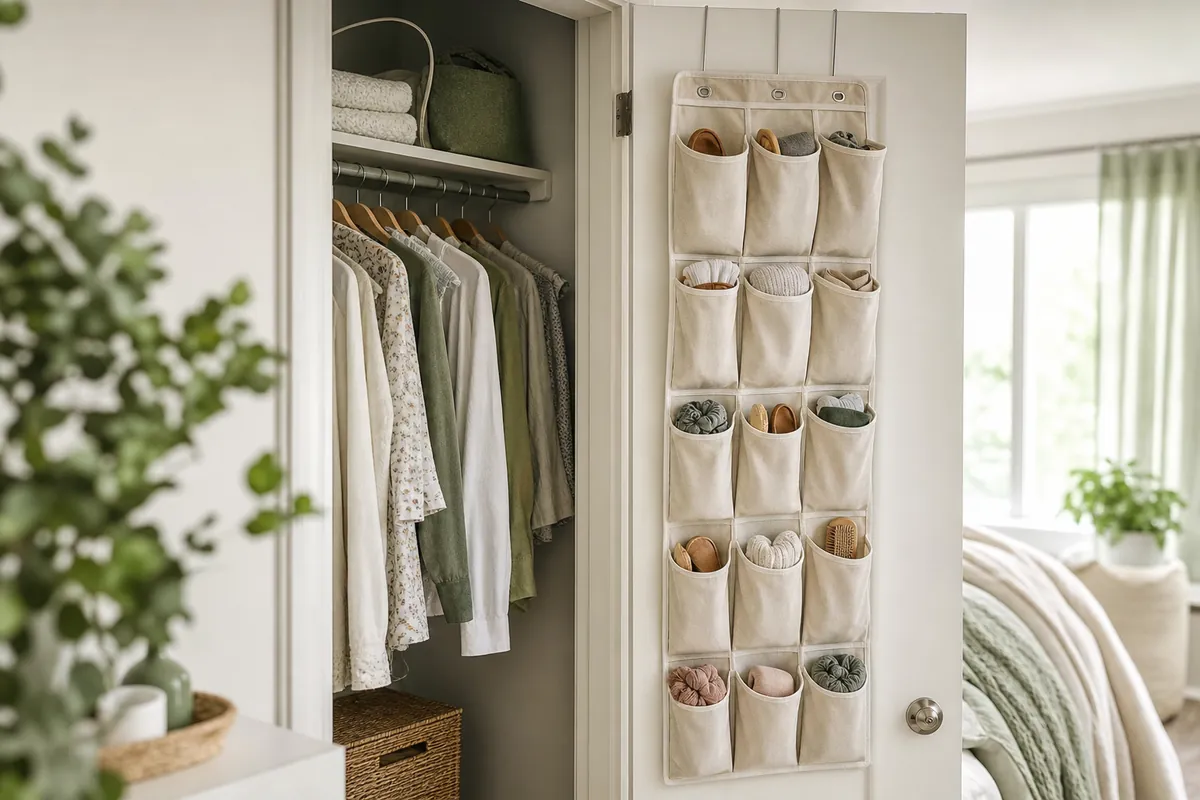
The inside of a closet door is a flat vertical surface doing absolutely nothing. Loaded well, it holds far more than people expect, and it costs zero floor space.
3. Hang a shoe organizer (for shoes and everything but shoes)
A hooked shoe organizer drapes over the top edge of the door with no hardware, and its rows of pockets are shockingly flexible. Shoes, sure. But those pockets also swallow rolled belts, scarves, sunglasses, small clutches, socks balled by pair, hats, and travel-size toiletries.
For real footwear, clear-pocket versions let you spot each pair at a glance, which matters on a rushed morning. If your closet door is louvered or hollow and won’t take the weight, mount the organizer on the back of the bedroom door instead. For footwear-specific tactics, these small-space shoe storage ideas go beyond the door.
4. Give door pockets the awkward small stuff
Every home has a drawer where phone chargers, hair ties, lint rollers, and a spare belt go to die. Assign the top two rows of a door organizer to those orphans so they stop cluttering your hanging space. Group like with like, label each row, and you’ll actually find things instead of excavating.
Build storage on the floor when the walls fail you
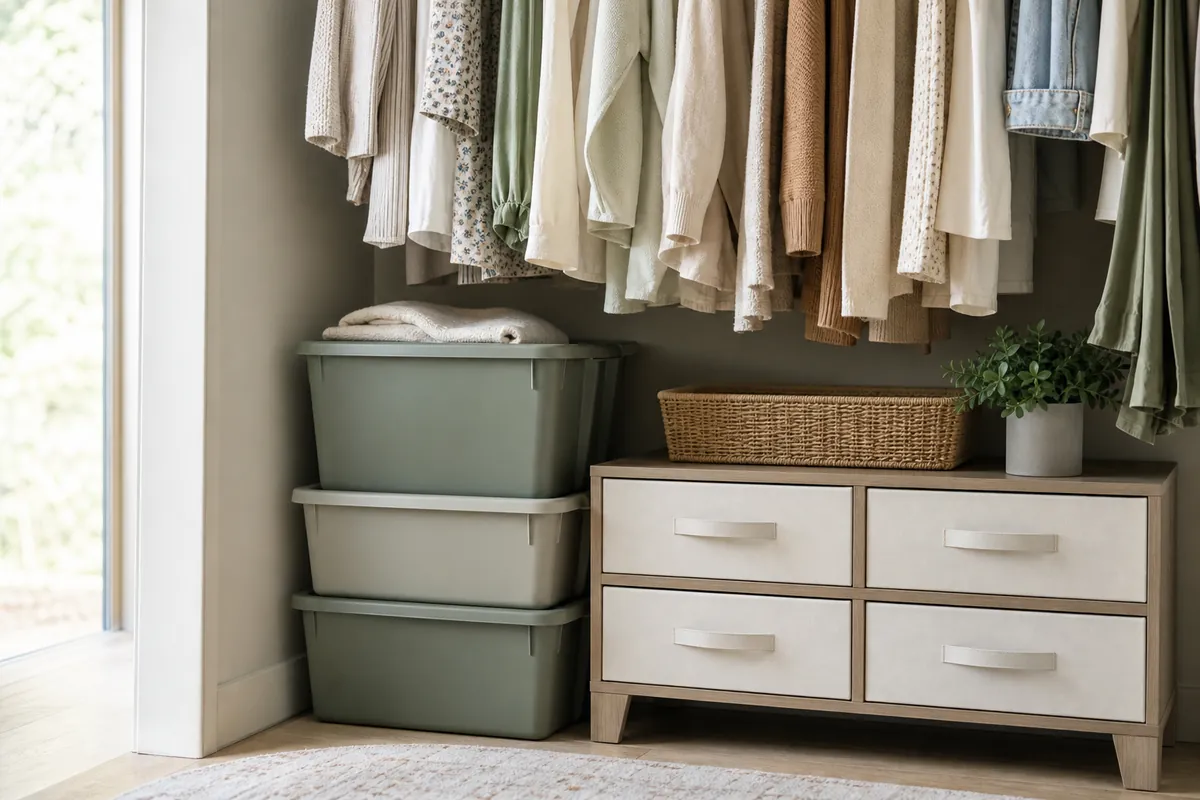
Can’t attach anything and the door’s already loaded? The floor becomes your foundation. Aim for stackable and liftable, never a heap.
5. Stack lidded bins in the back corner
Stackable clear bins with lids convert dead floor space into a filing system for off-season clothes, spare bedding, and shoes you barely wear. Clear beats opaque because you skip the guessing game. Stack two or three high in the back corner, heaviest on the bottom, and keep the front floor open so you can still step inside.
Label the front face of each bin, not the lid, since you’ll read them at eye level.
6. Roll a small drawer cart into the base
A narrow rolling cart with two or three drawers slides under short-hanging clothes and pulls out on demand. This is where underwear, socks, and gym clothes belong, the daily churn that doesn’t deserve a hanger. Because it rolls, you drag it into the room to dig instead of hunching inside the closet.
Measure your door opening first. A cart an inch too wide is dead weight.
Squeeze more from the rod and the space up high
The rod and the shelf-free wall above it hold more than a single row of hangers suggests.
7. Switch to slim hangers and cascading hooks
Bulky plastic and wood hangers burn an inch of rod each. Slim velvet hangers pack tighter and grip clothes so nothing slides to the floor, which buys you real hanging length with zero structural work. Cascading hanger hooks stack five shirts in the footprint of one, perfect for a cramped rod.
This is the cheapest fix here and the one everyone skips. Do it first.
8. Mount a wire basket or tension shelf up high
Above the rod there’s usually a foot or more of forgotten height near the ceiling. A tension-mounted shelf or a wire basket that clips to the rod gives you a landing spot for hats, a folded throw, or a bin of stuff you touch twice a year. Keep it light. Tension mounts sag and drop under real weight, so send bulky-but-airy items up there and nothing dense.
Everyday clothes stay at eye and hip level; the rarely-used gear gets exiled to this top zone.
9. Push overflow under the bed, not into the closet
When the closet truly maxes out, stop forcing it. Off-season clothes don’t need to live where you dress every day. Flat under-bed bins or bags hold an entire season, and shipping them out of the closet frees it for the clothes you actually wear now. I walk through the full system in fitting a whole season under the bed.
Rotate twice a year: winter under the bed in summer, summer under the bed in winter. The closet stays roughly half as crowded all year.
How to organize a small closet without shelves in the right order
Don’t buy everything in one haul. Work this sequence and you’ll spend less while gaining more.
Start by emptying the closet and swapping in slim hangers. You’ll reclaim a startling amount of rod before spending a cent on storage. Next, build the vertical column with a 6-shelf hanging fabric organizer on one end to hold folded clothes and take the strain off your drawers. Then load the door with a hooked shoe organizer for shoes and small odds and ends. Only after all that, if overflow remains, bring in floor bins, a rolling cart, or a high shelf.
The classic blunder is buying bins before decluttering, so you end up carefully storing clothes you never wear. Cull first, store second.
One opinion worth saying flatly: in a rental closet, soft hanging storage beats freestanding furniture nearly every time. It leaves no wall damage, comes down in ten minutes on moving day, and flexes as your wardrobe shifts. Save drawer units and shelving towers for closets that can spare the floor. In a small, shelfless one, the rod and the door are your real infrastructure, so build up and out from those two.