The space under your bed is the most wasted storage real estate in a small apartment. Done right, under bed storage for clothes can swallow an entire off-season wardrobe and hand your closet rods back to the things you actually reach for this week. The catch is building a system you’ll keep up with, not shoving a laundry basket under there and rediscovering it in spring covered in dust.
Seasonal clothing is the perfect candidate because you only touch it twice a year. You pack it away in October, pull it out again in April, and in between it just needs to stay clean, contained, and easy to slide out. Here’s exactly how I’d set it up.
Why under bed storage beats stacking bins in the closet
Rental closets tend to be shallow and short. Stack bins in one and you lose hanging space, block the floor, and end up excavating three containers to reach the one on the bottom. The space under your bed is a wide, flat footprint that’s already sitting empty. It’s horizontal storage instead of vertical, so everything stays at one reachable level instead of buried in a tower.
Two things sabotage under-bed storage: dust and access. Open baskets collect fuzz and pet hair within weeks. Lidless bins turn into a junk drawer, since anything that gets kicked under the bed skirt disappears into them. Solve for both and this becomes the lowest-effort storage in your home.
Measure the clearance first
Before you buy a single container, get on the floor and measure the gap from the floor to the underside of your bed frame. That number decides everything. Beds on short legs might give you barely a hand’s width, while a platform or divan can hide a surprisingly deep cavity. Tight clearance points you toward flat, wide containers or compression bags. Generous clearance lets you use deeper bins and stack softly folded pieces.
Measure the depth too, meaning how far back the space runs, and check whether a center support bar splits the underside into two halves. That bar is what tells you to buy one long container or two shorter ones that slide in from either side.
Rolling bins: the workhorse for shoes and folded clothes
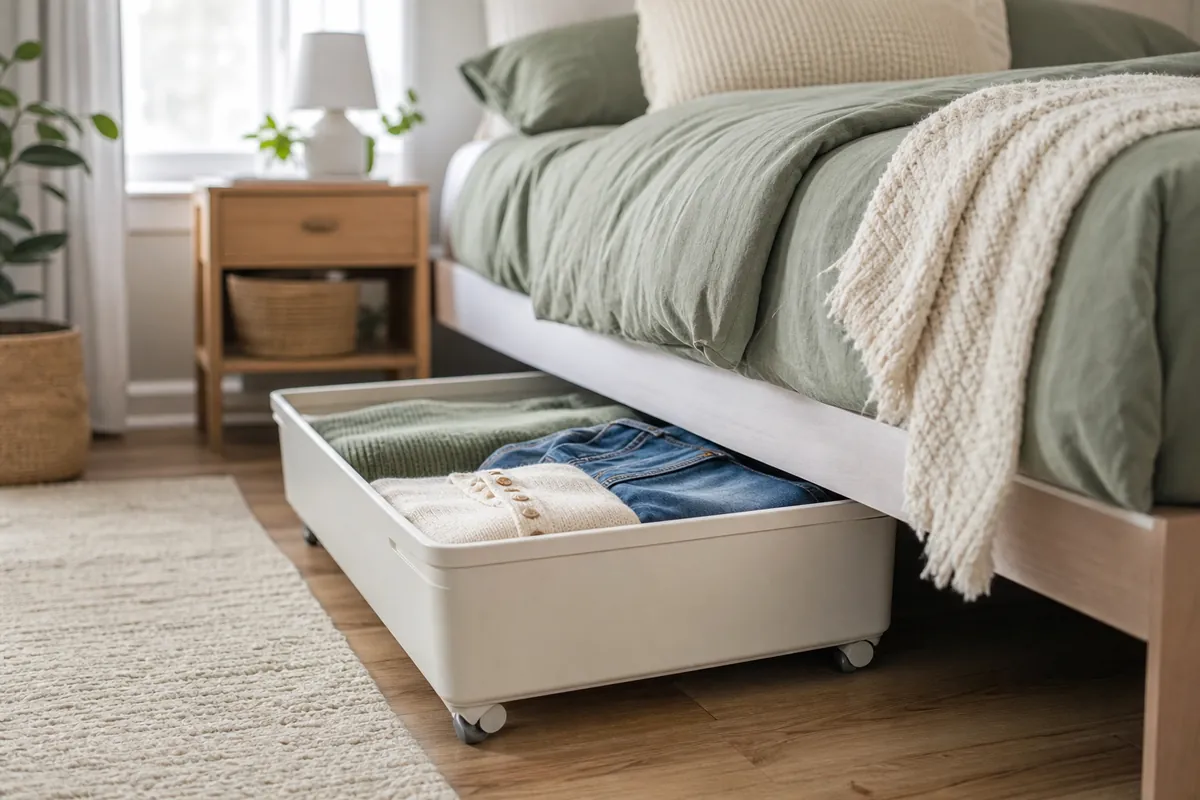
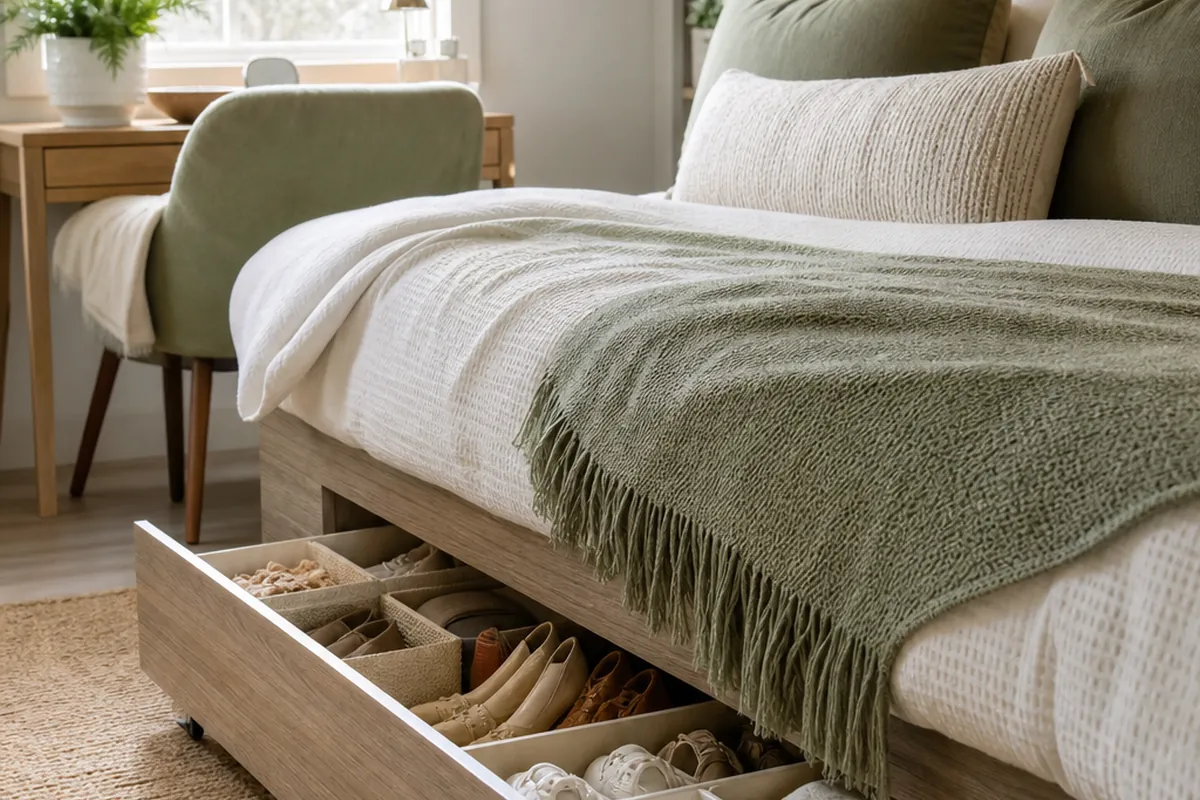
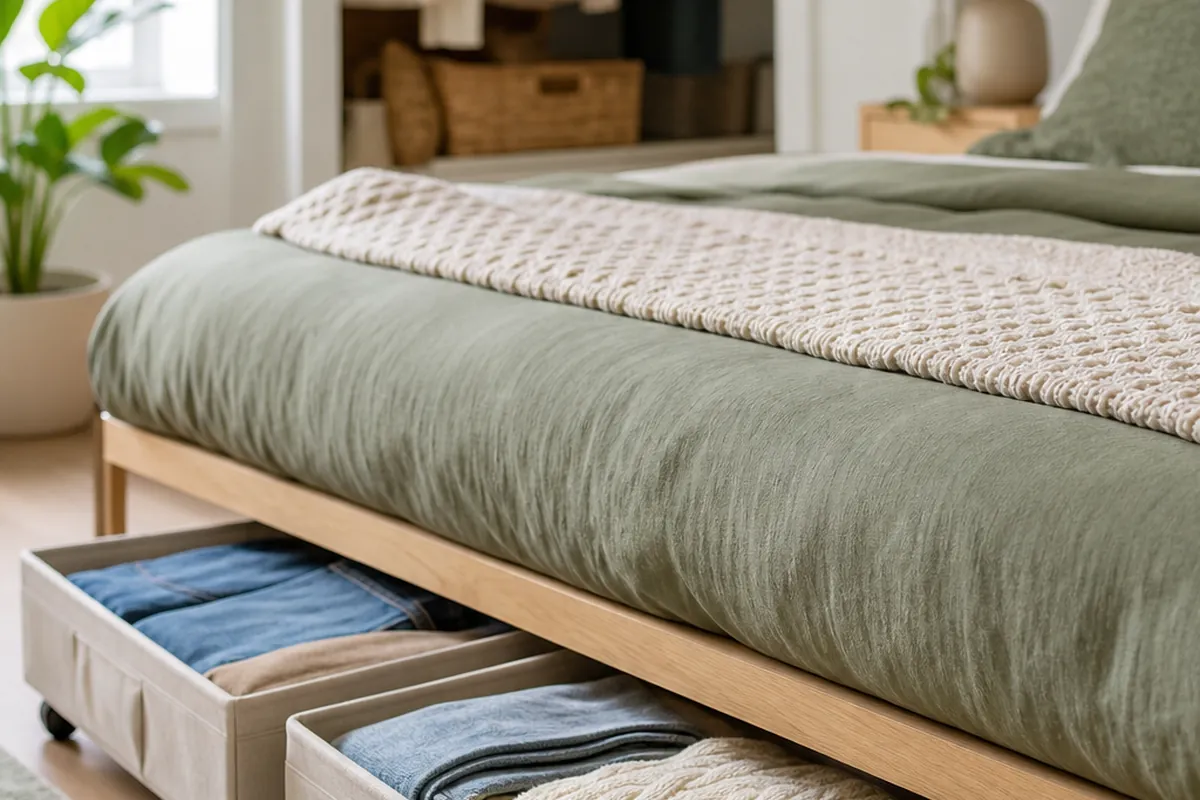
For anything you want to reach without crawling, a set of rolling under-bed storage containers earns its place. The wheels are the entire point. A bin loaded with sweaters or boots is heavy, and dragging it across carpet scuffs the bin and the floor both. Wheels let you pull it out one-handed while standing, grab what you need, and roll it home.
I reach for these specifically for:
- Shoes I rotate seasonally. Sandals in winter, boots in summer. Lay them flat, sole to sole, so nothing gets crushed.
- Folded knits and jeans too bulky for a crammed dresser drawer.
- Bags and accessories with no other home.
Go clear-sided over solid every time. When you can see through the wall of the bin, you skip the guessing game of which one holds the wool socks. If yours are opaque, slap a strip of masking tape on the short end that faces out and write what’s inside. Label the end you’ll actually see, not the top you can’t.
If the bins are standing in for a dresser you do not have, clothes storage ideas for a room with no dresser shows how to split everyday clothes between the bed, the rail and a cube unit.
Buy bins with a lid that latches or at least sits snugly. A loose lid invites dust and pops off when you slide the bin against a wall. Get a matched set, too. Uniform heights slide past each other without catching, and mismatched containers always seem to wedge at the worst angle.
Keep shoes from turning musty
Shoes stored for months pick up a stale smell, leather especially. Make sure they’re clean and bone dry before they go in, then drop a couple of activated charcoal or silica packets in with them. Don’t seal footwear in an airtight bag for the long haul, because leather needs to breathe a little. A vented or loosely lidded rolling bin is the better home.
Vacuum bags: how to fit a whole winter under the bed
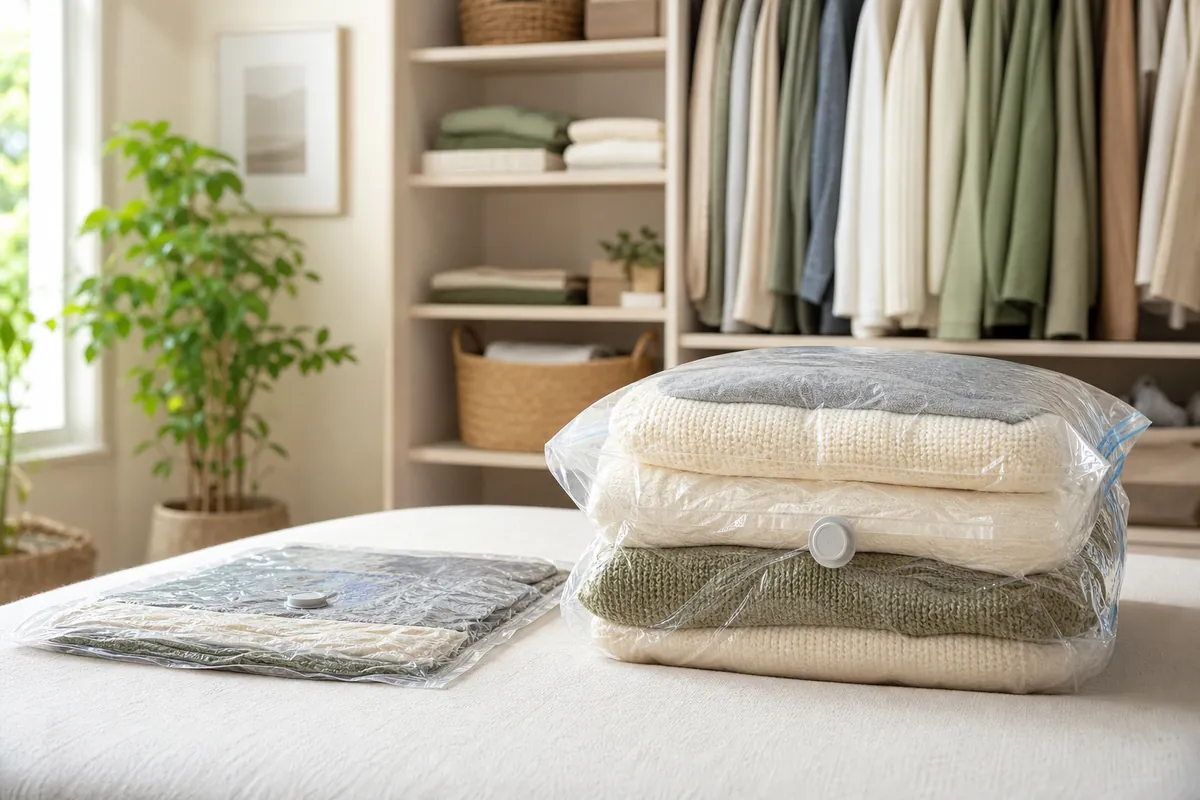
Puffer jackets, comforters, and chunky sweaters devour space. This is where vacuum compression storage bags do what no rigid bin can, shrinking soft goods to a fraction of their loose volume once you pull the air out with your vacuum hose. A queen comforter that fills a bin on its own compresses down to the thickness of a couple of pillows.
The smart move is to run both products together. Compress your bulkiest items in vacuum bags, then load those flattened bags into the rolling bins. Now you’ve got the space savings of compression plus the dust protection and easy access of a wheeled container. On their own, the bags slide awkwardly and snag on the frame. Inside a bin, they behave.
A few rules I follow with compression bags:
- Fold, don’t cram. Lay garments flat and folded before sealing so they compress evenly and come out less wrinkled.
- Don’t overfill. Leave room for the bag to flatten. A stuffed bag won’t seal or compress properly.
- Go easy on the down you love. A single off-season is fine, but storing feathers squished for years flattens the loft for good.
- Everything goes in clean and dry. Sealing in any moisture is how you grow mildew, and it’s the number one mistake people make.
One honest caveat: vacuum bags don’t last forever. The zip seal and valve wear out, and a bag that won’t hold a seal is just an expensive plastic sack. Check the seal each season and toss the ones that have gone soft.
Building the two-season rotation
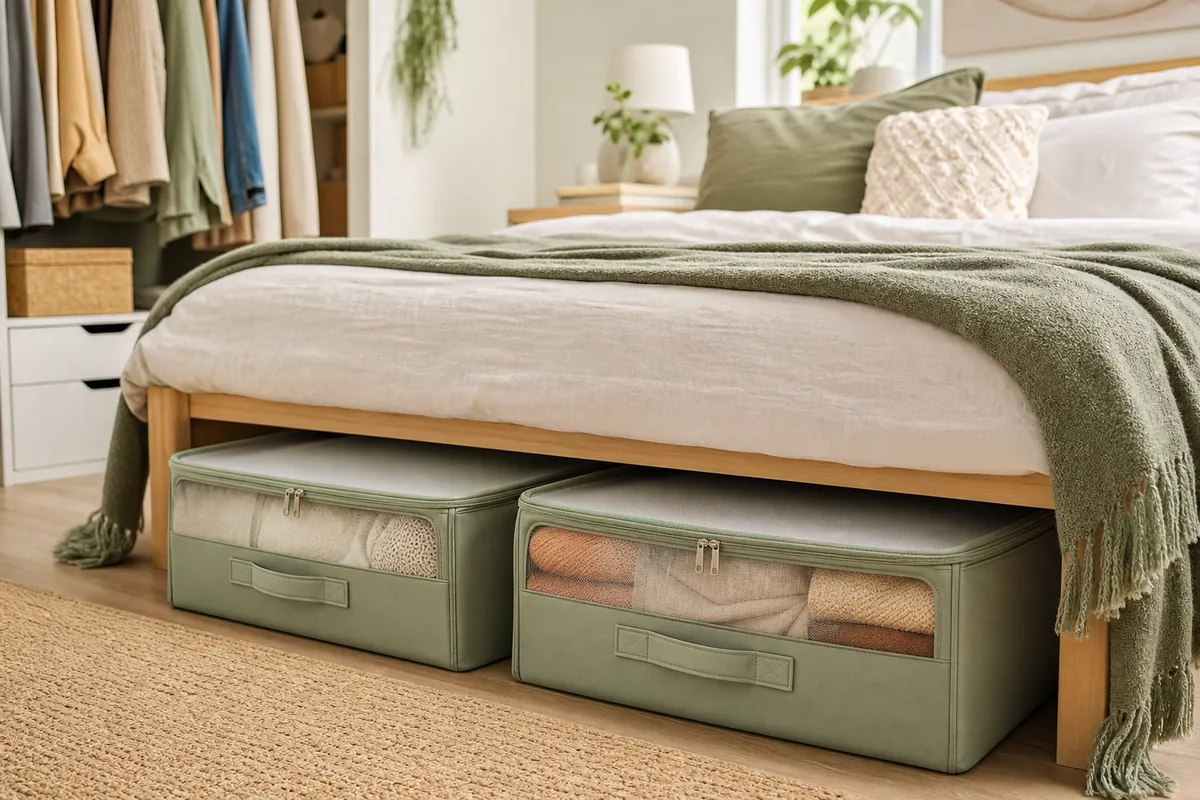
The whole thing only works if switching seasons stays quick. Here’s the routine.
Come spring, you’re pulling summer clothes out and packing winter clothes away. Wash or dry-clean everything before it goes into storage. Nothing dirty goes under the bed, because stains set over months and moths are drawn to food and sweat residue. Compress the bulky winter pieces into vacuum bags, load them and the folded knits into the rolling bins, tuck in a few cedar blocks or lavender sachets, and slide the bins home. Whatever you just pulled out, the sandals and tees and shorts, fills the now-empty dresser and closet.
Come fall, you run it in reverse. Because everything is already sorted by category in labeled bins, the swap takes an evening, not a weekend.
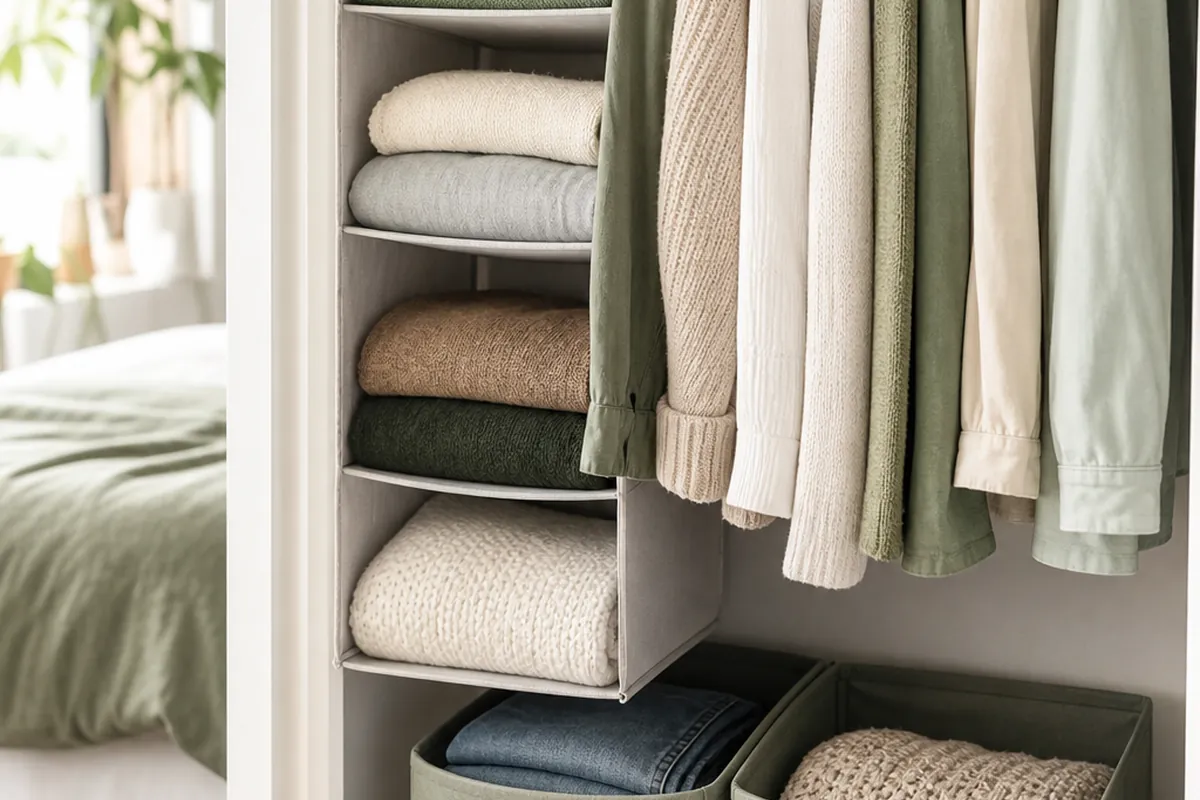
If you’re renting and can’t drill anything, this pairs well with other no-damage tactics for a small closet. Our guide to maximizing a small rental closet covers the vertical side of the equation, and if shoes are your particular headache, the shoe storage ideas for small spaces piece goes deeper than I can here.
When your bed sits flat on the floor
Some frames offer no gap at all. You’ve got two ways out. Bed risers lift the frame a few inches and instantly open a usable cavity, which is often enough for flat rolling bins. Or, if you’re shopping for a new bed anyway, a divan or ottoman-style frame with built-in storage skips the problem entirely. For renters, risers win: cheaper, reversible, and gone the day you move. Just confirm your frame legs actually fit the risers before you buy.
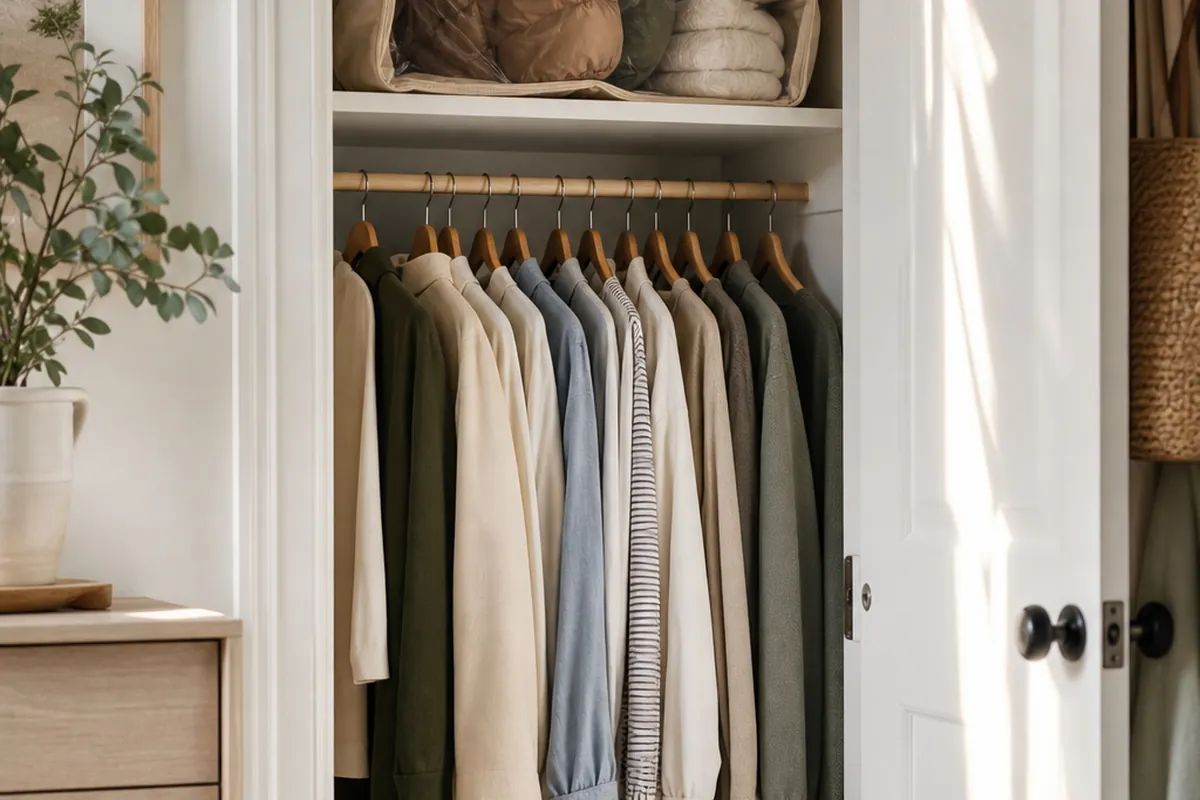
Coats are the awkward part of the rotation because they do not compress well and should not be folded for months. How to store out of season coats in a small closet deals with them separately.
Keep it dust-free and pest-free
Air under the bed barely circulates, which keeps things still but lets dust settle on anything exposed. Lidded rolling bins and sealed vacuum bags both handle that. On hardwood, run the vacuum under the bed twice a year during the seasonal swap so dust bunnies don’t pile up against your bins.
Cedar and lavender are mild pest deterrents, but they fade. Lightly sand cedar blocks each season to reopen the scent. Your real protection is clean clothes in sealed containers. Moths lay eggs in undisturbed wool, and a bin you open and rotate twice a year is far less inviting than a forgotten pile at the back of a closet.
The setup I’d recommend
Outfitting one bed from scratch, I’d buy a matched set of clear rolling under-bed storage containers sized to my clearance, plus a handful of vacuum compression storage bags for the puffiest pieces. Compress the bulk, fold the rest flat, label the ends, and commit to the two-season swap. That’s a whole extra wardrobe’s worth of space you weren’t using, with almost no visual footprint in the room.
Used this way, under bed storage clothes turn dead floor space into the most efficient part of your storage system. It asks just two things of you: keep it clean going in, and make it easy to pull out.