Shoes breed when you aren’t looking. You leave one pair by the door, then a second, and a month later you’re stepping over a heap of sneakers, boots, and flats you forgot you owned. Good shoe storage in a small space isn’t about buying the cleverest gadget. It’s about getting shoes off the floor and into a system you’ll actually keep up with, ideally without drilling a wall full of holes your landlord will charge you for later.
Here are eleven ideas that hold up in real apartments, roughly ordered from the fastest wins to the ones worth a little more effort.
Start by getting honest about how many shoes you keep
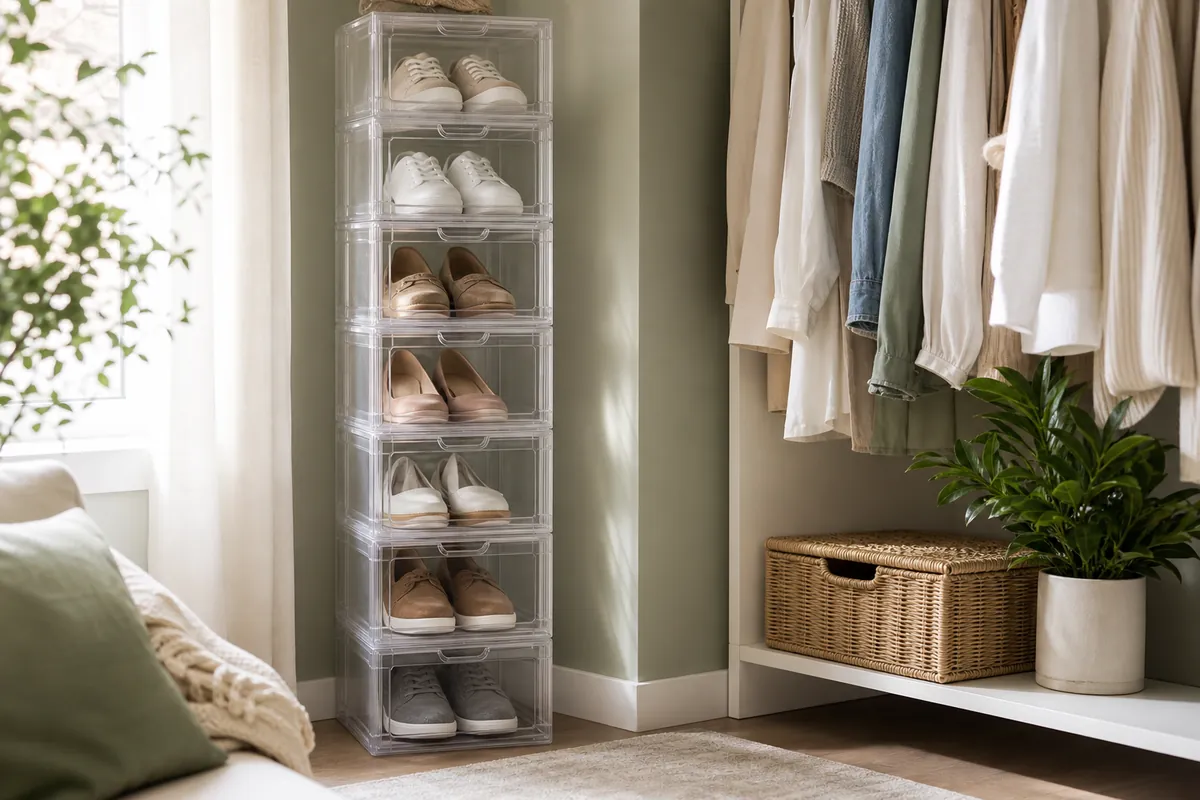
Before you buy a single organizer, pull every pair out and sort them into three piles: daily rotation, seasonal, and “why do I still own these.” Most of us wear the same five or six pairs the vast majority of the time. Those earn the prime, grab-and-go real estate near the door. Everything else can go higher, deeper, or into a closet.
Skip this and your storage buy will fail, guaranteed. You’ll size a rack for the shoes you wish you had instead of the ones actually cluttering your floor. Sort first, measure second, shop last.
Go vertical: the best move for shoe storage in a small space
Floor space is precious and finite. Wall and door space usually sits empty. Nearly every setup below leans on this one principle, so start here.
Stack clear boxes up a wall
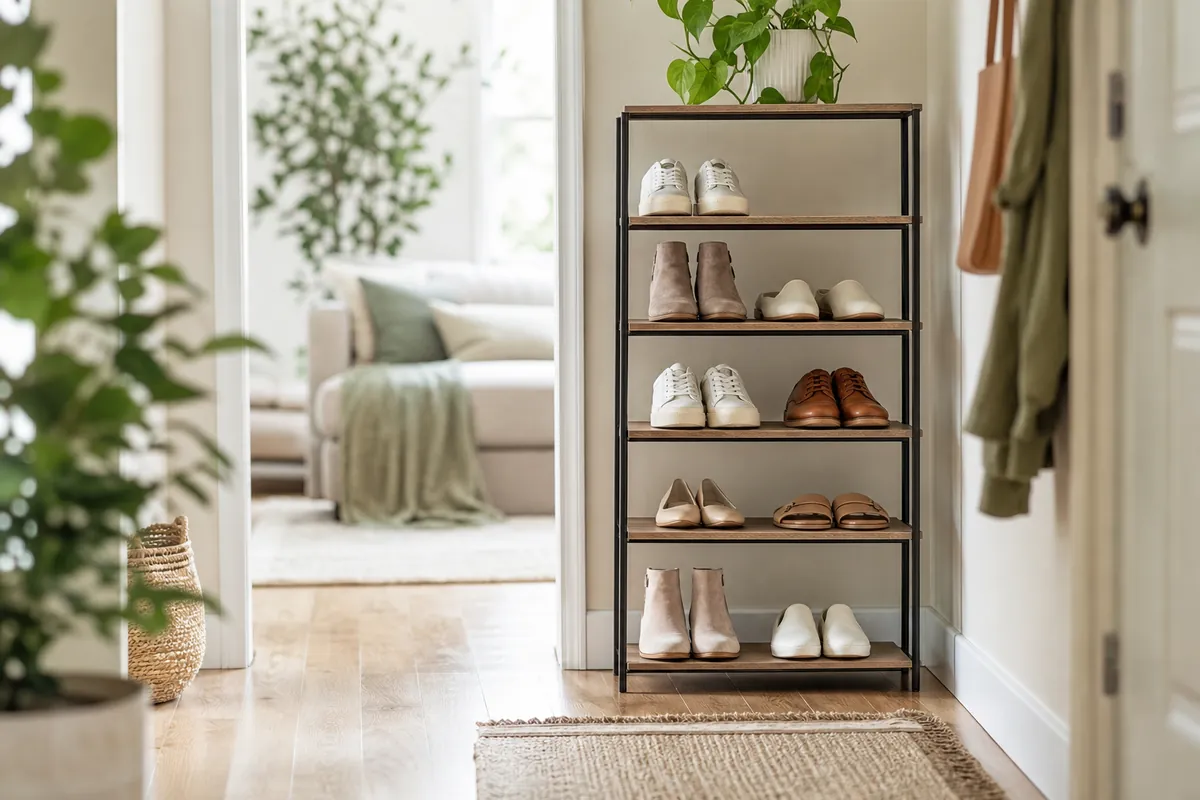
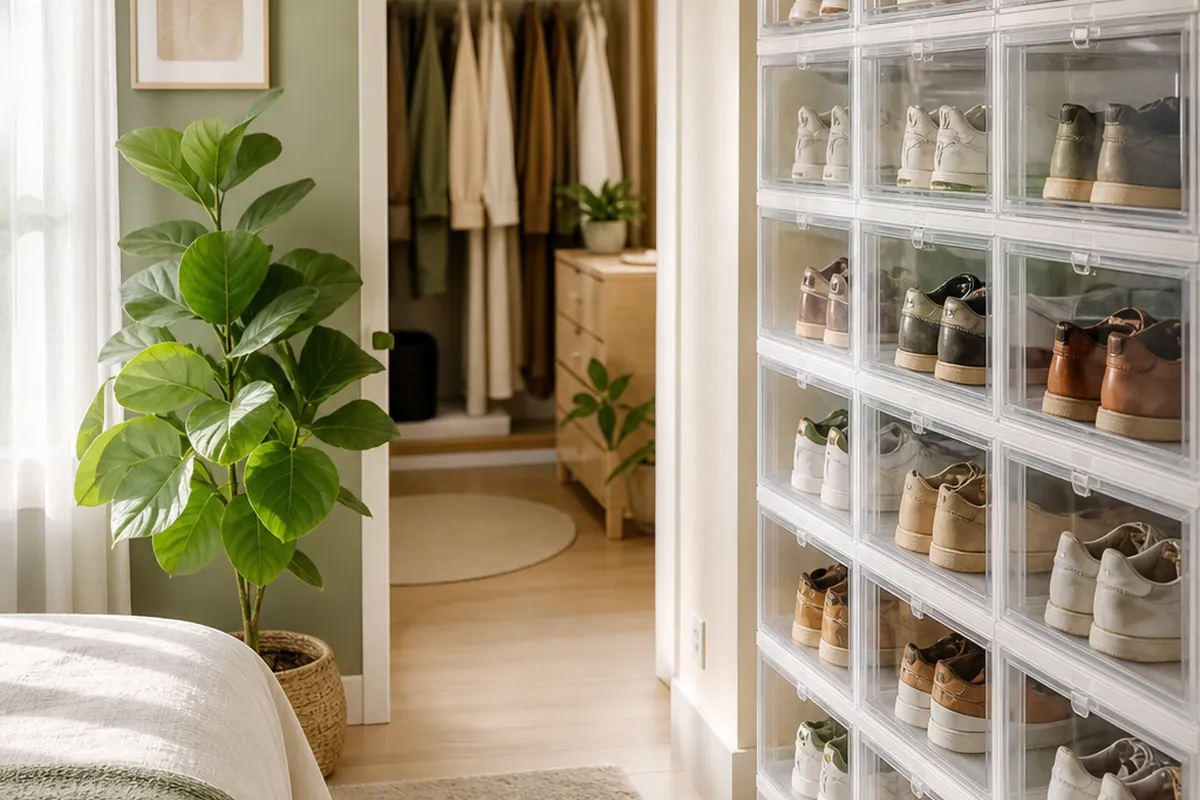
My favorite trick for anyone short on floor room is building a column of clear boxes. A set like the Stackable clear shoe boxes (12-pack) lets you run a tidy stack up a wall or inside a closet, and because they’re see-through, you’re not opening six lids hunting for one loafer. Drop-front or lift-lid styles let you pull a single pair without toppling the tower.
These shine for shoes you reach for less often: heels, dress shoes, seasonal boots. Label the front of each box, and a strip of masking tape and a marker does the job, so the stack stays intuitive months from now. Yes, a wall of matching boxes photographs well, but the real payoff is turning dead vertical space into storage with zero hardware.
Use an over-the-door organizer
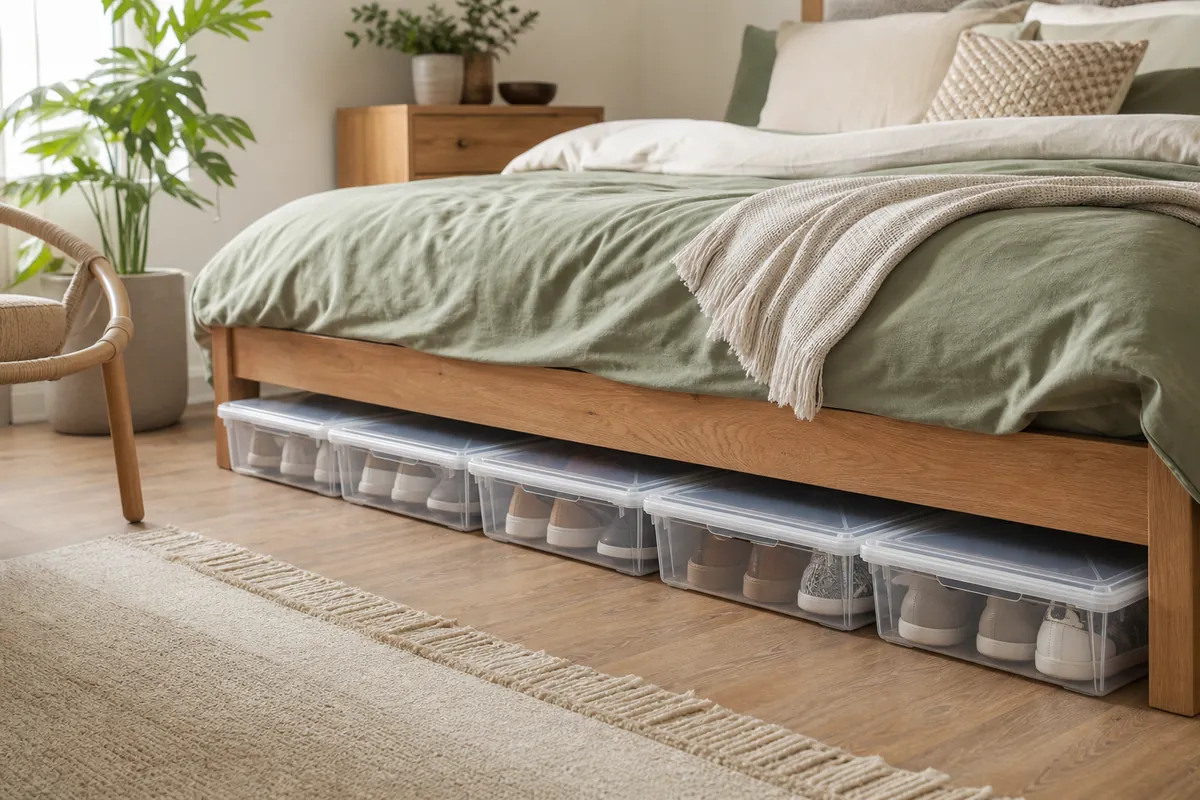
A pocketed over-the-door rack swallows a surprising number of flats, sandals, and sneakers, and it costs you no floor at all. Hang it inside a closet door or on the back of a bedroom door. Skip it for heavy boots, since the pockets sag and stretch, but for lighter everyday shoes it’s one of the highest-value renter moves going.
Pick a narrow rack that fits an entryway
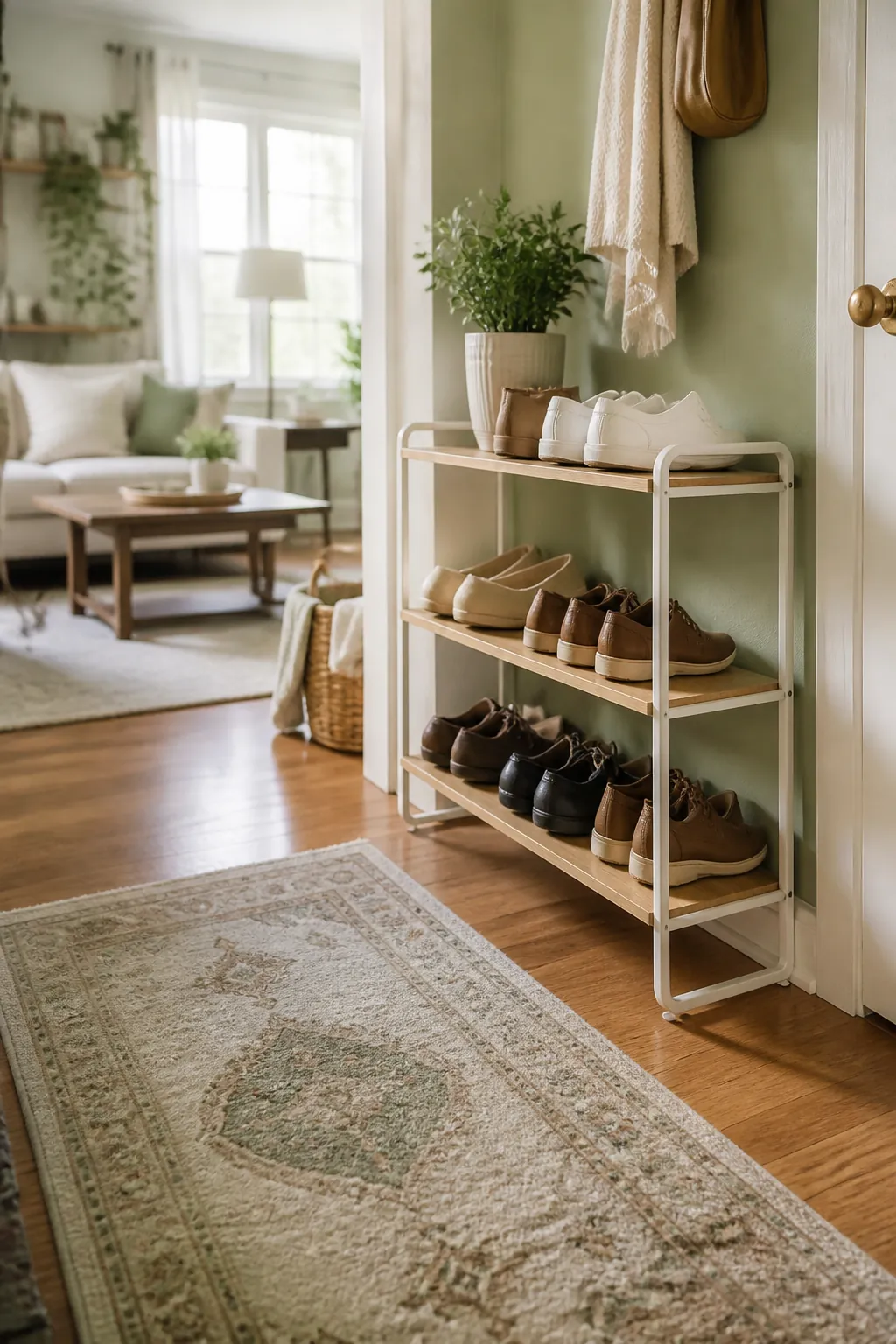
When you want shoes right at the door, a slim freestanding rack earns its spot. The Freestanding shoe rack (narrow) is made for that awkward strip of wall beside a door or the gap between a closet and a corner. Go for two or three tiers tall rather than long and low. In tight quarters, height beats width every time.
A narrow rack also hands you a built-in rule: when it’s full, a pair has to leave the rotation and move to a box. That natural cap is what keeps the entryway from sliding back into chaos. Set a small tray on the bottom tier or underneath for wet or muddy shoes so grit doesn’t track across the room.
Steal the space under your bed
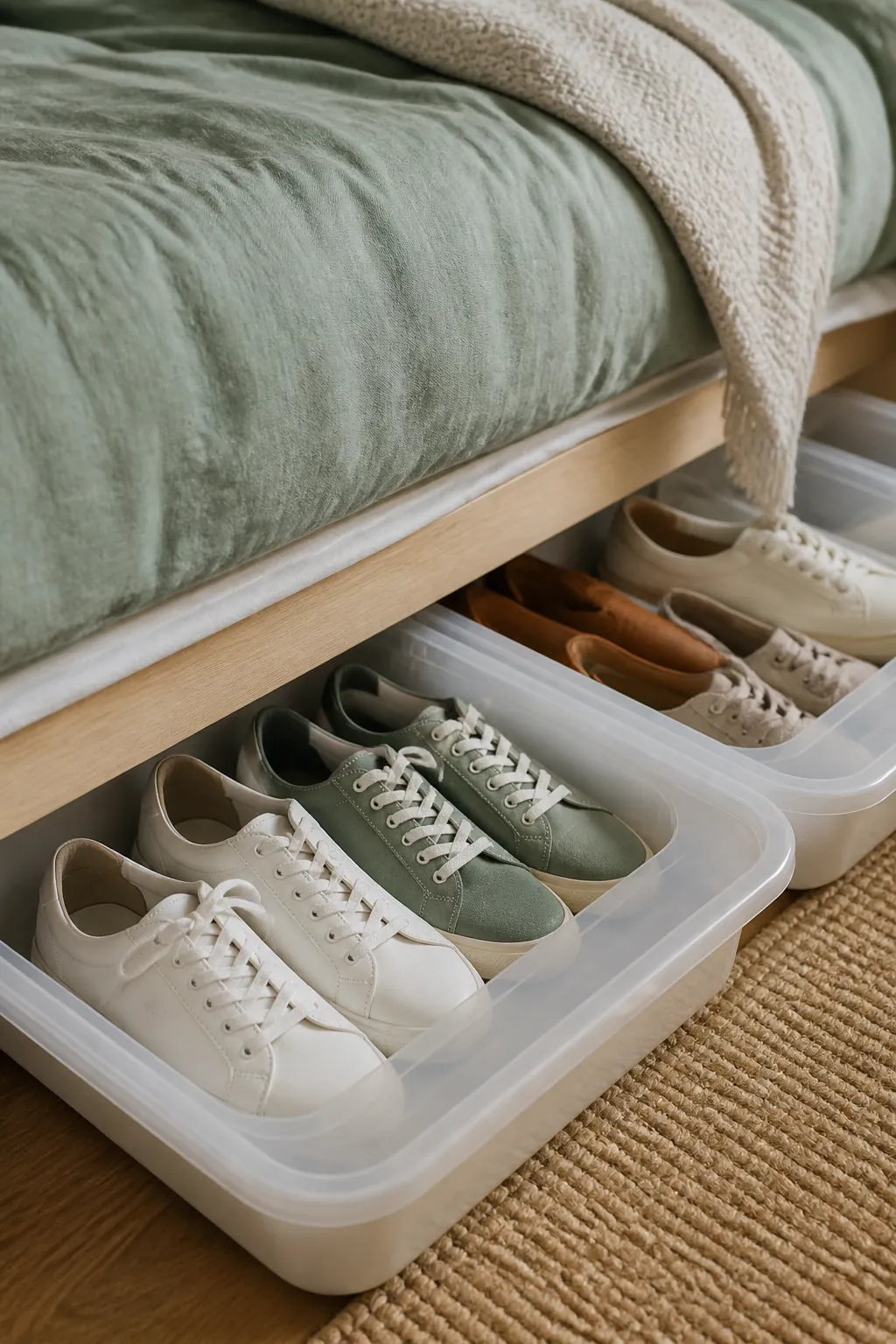
The zone under the bed is the most wasted real estate in most small homes. Flat, shallow bins on wheels slide out easily and hold a full off-season wardrobe of shoes. If your bed sits low, look for slim rolling trays. If you’ve got a taller frame or you’ve popped it up on risers, deeper bins or even the clear boxes from earlier will fit in neat rows.
Stash whatever you aren’t wearing right now down here. Boots go under in summer, sandals go under in winter, and you swap twice a year. The rest of the time, your closet floor stays clear. For more on this, our guide to maximizing under-bed storage digs deeper.
Hang a shoe shelf on the closet rod
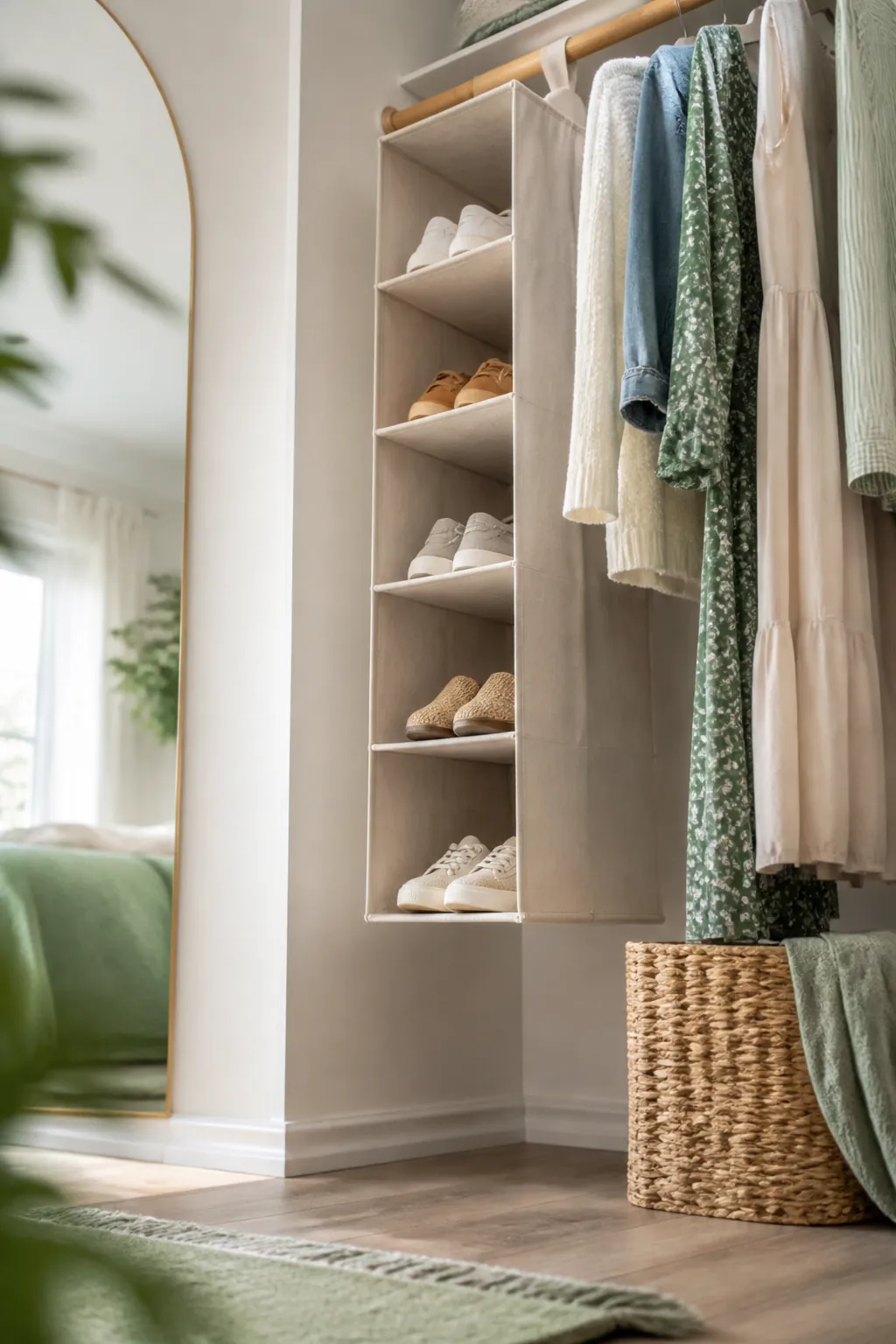
Hanging fabric shelf organizers clip onto your closet rod and give you cubbies without touching a wall. They’re perfect for a reach-in closet where the floor is already spoken for. Reserve the lower cubbies for shoes and the upper ones for folded sweaters or bags, and you’ve turned one rod into a two-job zone.
Put a storage bench by the door
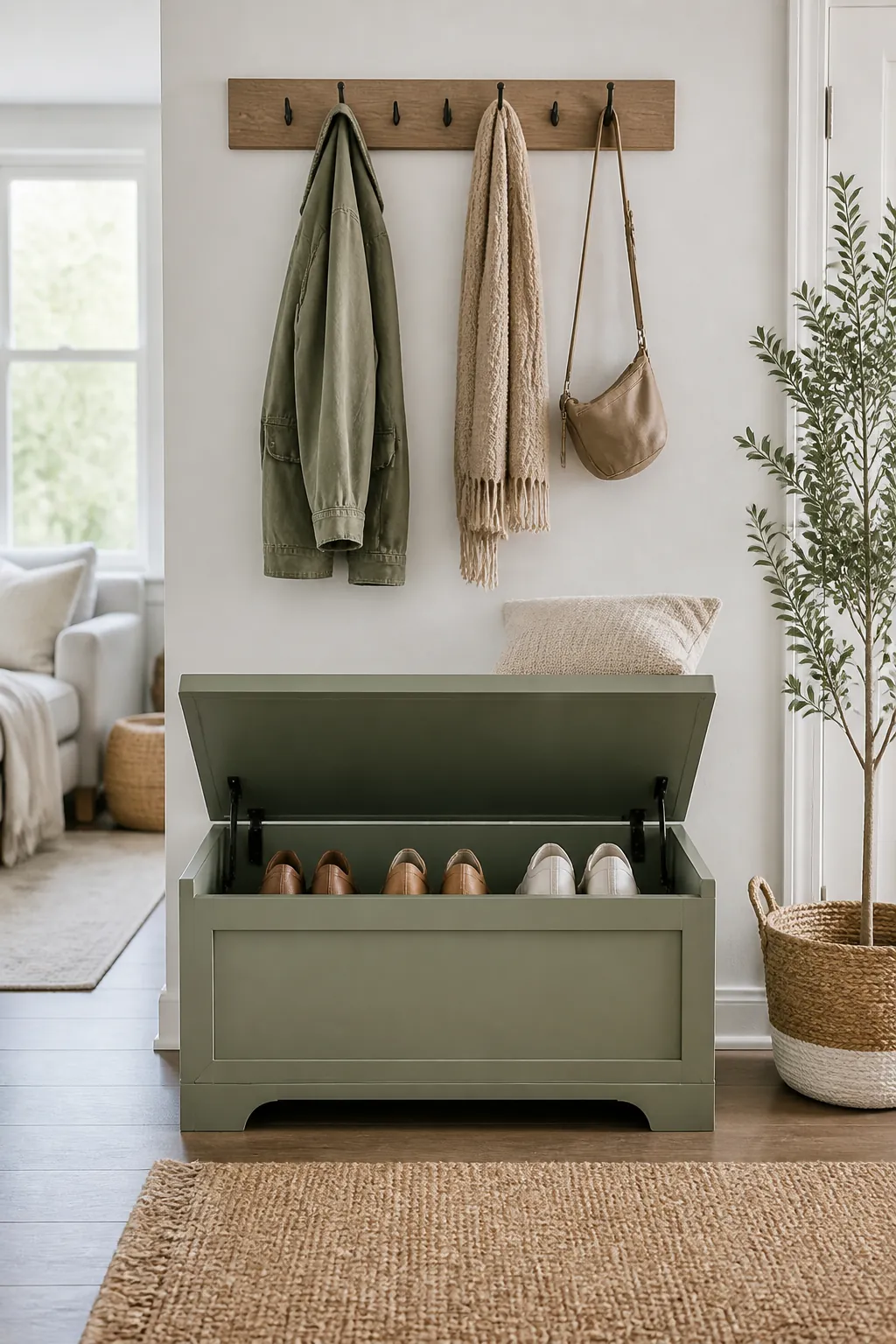
Got room for one piece of furniture at the entry? Make it a storage bench. You get a place to sit while you wrestle on boots, plus a cubby or lift-top underneath for the daily rotation. In a small space, furniture that does two jobs always beats furniture that does one. A bench also sends guests an obvious message: shoes come off, and they go here.
Use the toe-kick and low gaps
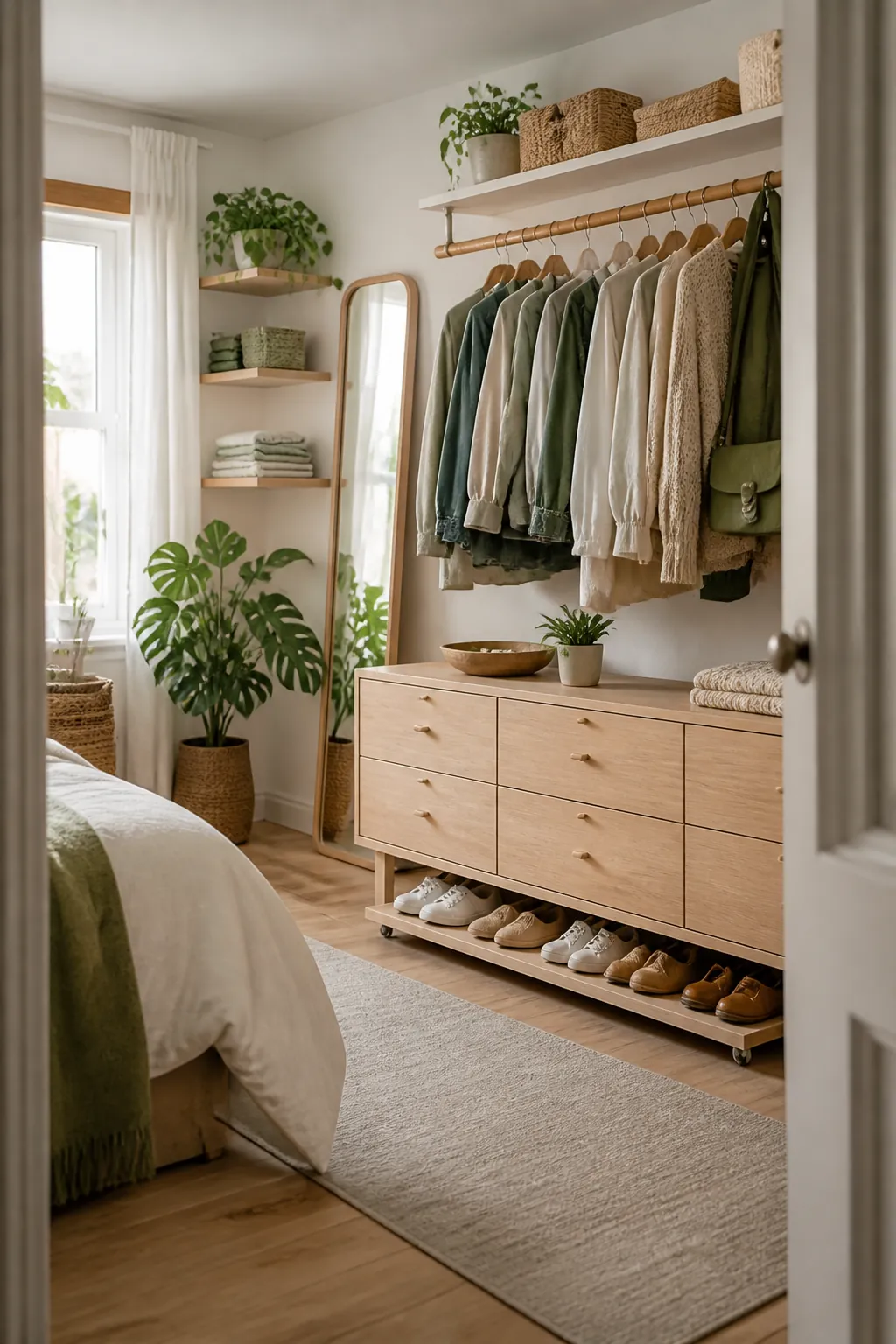
Those few inches of clearance under kitchen cabinets, low dressers, or a console table are quietly usable. Slim rolling trays slide right in. It’s not glamorous, but a pair or two tucked into an otherwise dead gap adds up fast when you’re counting inches.
Work the awkward corners
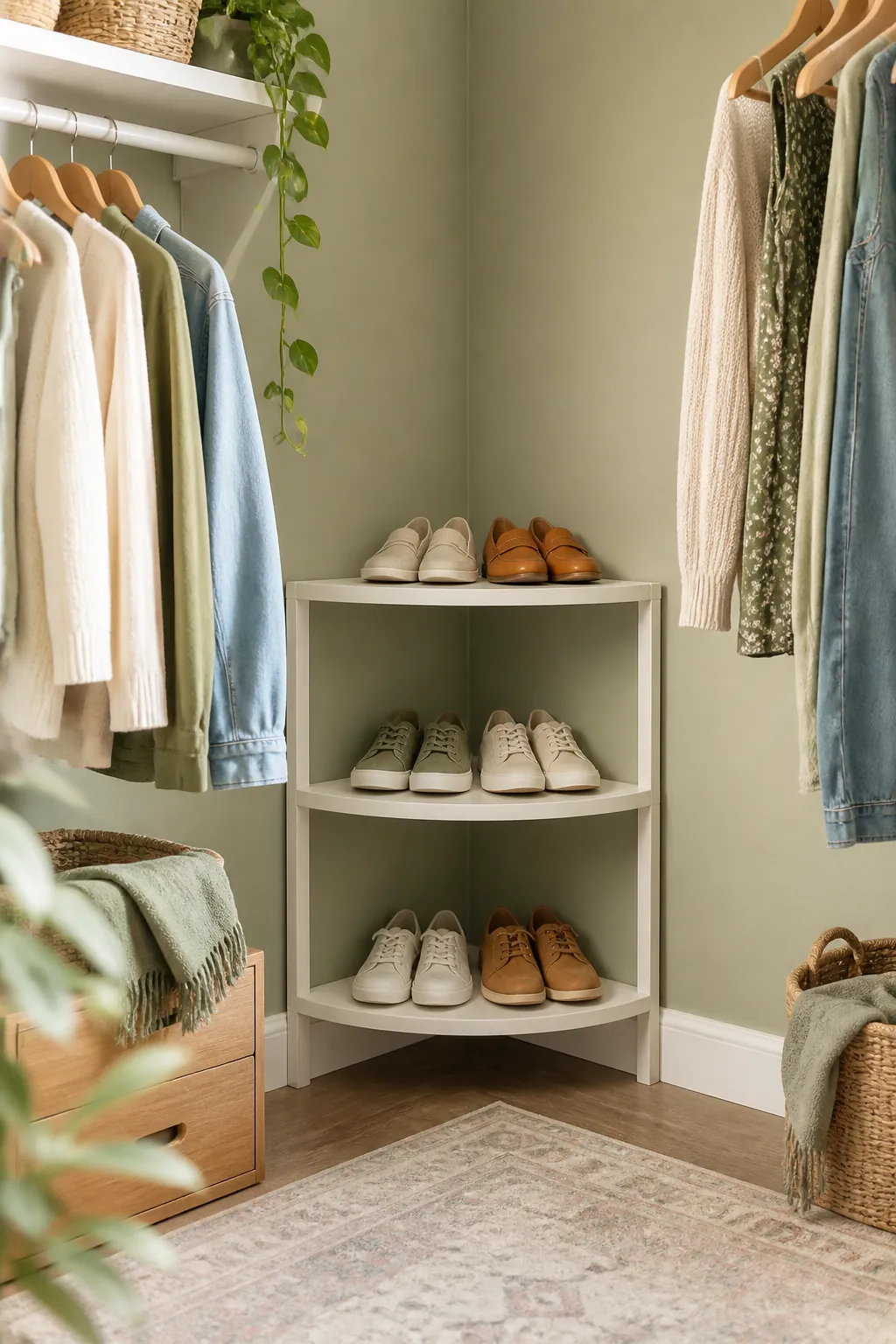
Corners waste more room than people realize. A small corner shelf unit, or a tension rod strung across a closet corner, can hold a stack of clear boxes or a few pairs stood up on their heels. When a rectangular rack won’t fit a spot, a corner solution usually will.
Rotate seasonally so only current shoes are out
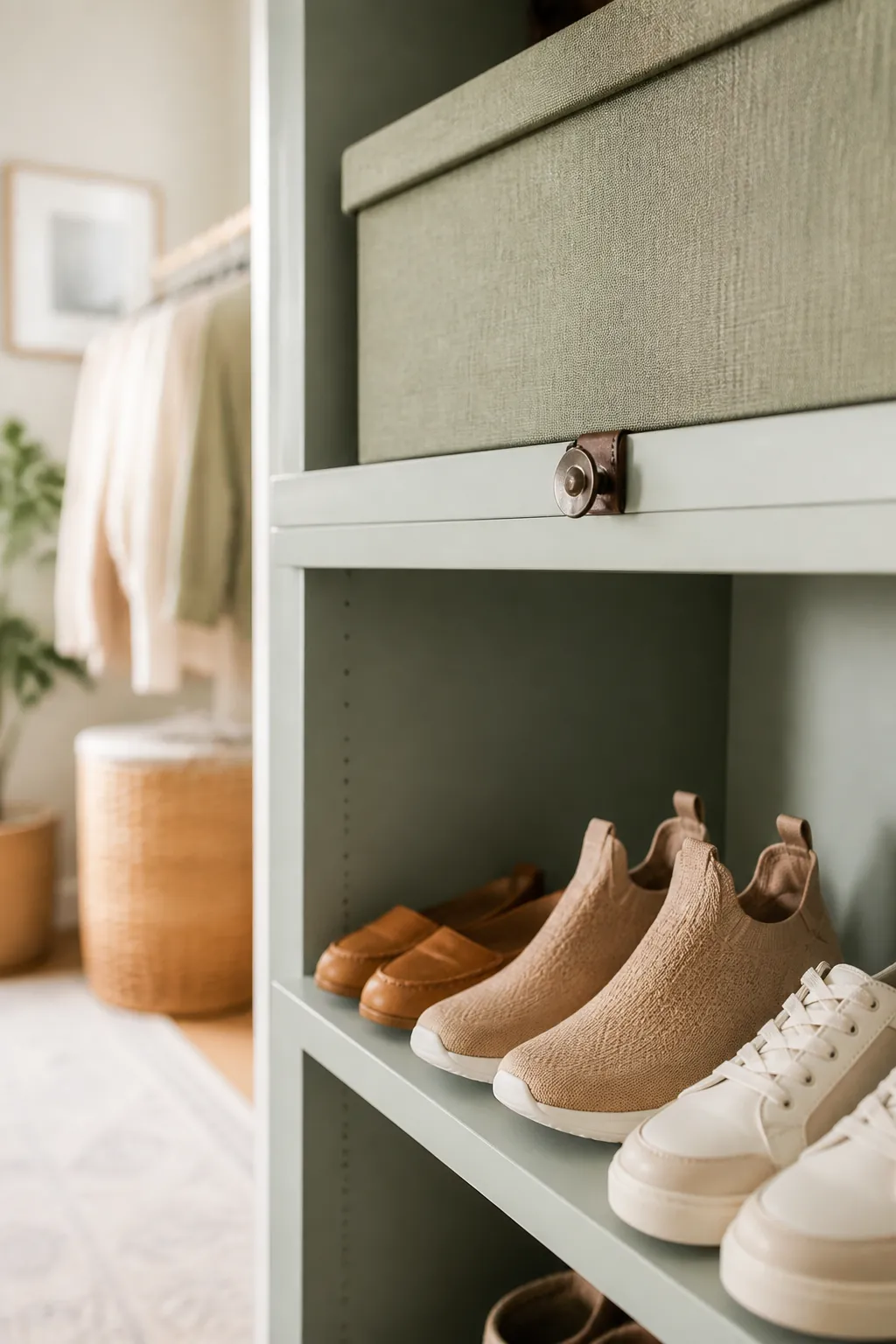
This one’s a habit, not a purchase, and it’s what makes every other idea actually work. Twice a year, swap what’s within reach. Current-season shoes live at the door and in the easy closet cubbies; everything else retreats to labeled clear boxes or under-bed bins. You’ll never dig past snow boots in July again.
Corral flip-flops and slides in a basket
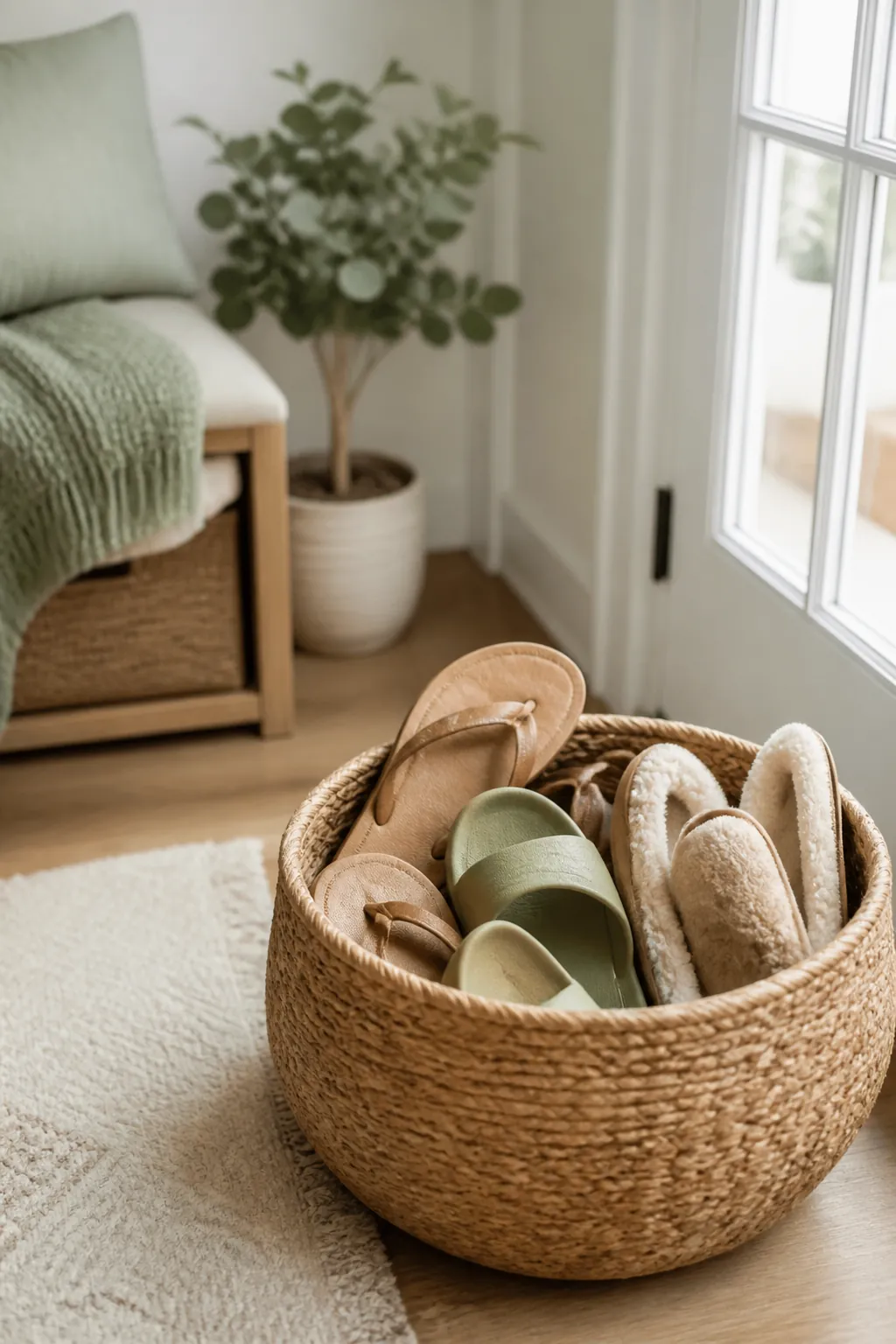
Not every shoe deserves its own slot. Casual, floppy footwear (flip-flops, pool slides, house slippers) does fine tossed into a single basket near the door. Trying to line these up neatly is a losing battle, so give them one container and move on with your life.
Mount a slim ledge shelf for display pairs
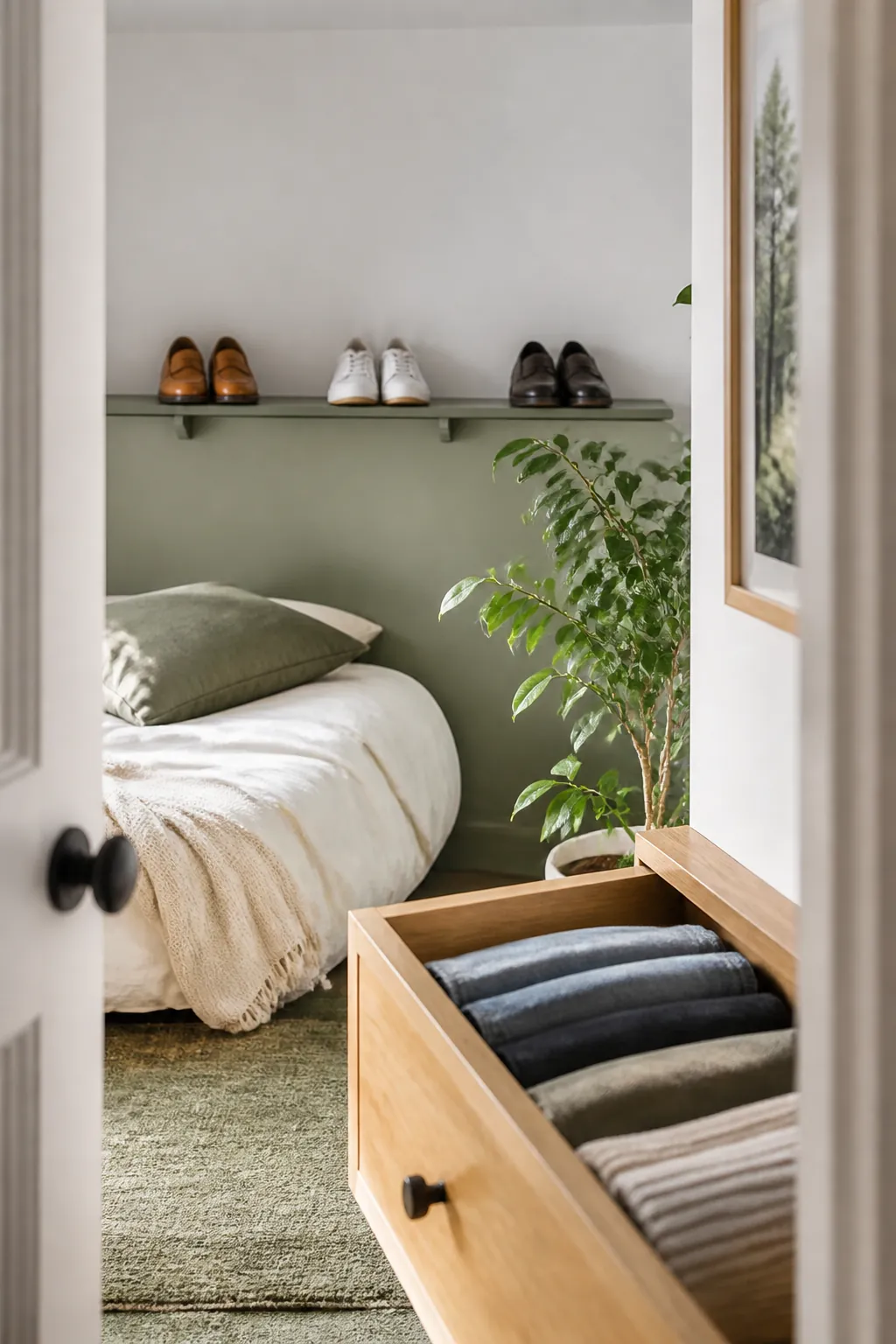
Have a few nice pairs you actually want to see? A narrow picture-ledge shelf mounted high on a wall turns them into a display and frees up the floor. Use removable adhesive strips rated for the weight if you can’t drill, and stick to lightweight shoes. This is a small touch that makes a tight entryway feel intentional instead of crammed. For more on working with a cramped entry, see our small entryway organization guide.
Build a system that actually lasts
The trap with shoe storage in a small space is grabbing a random organizer and hoping it fixes everything. It won’t, because clutter is a flow problem, not just a container problem. Build three tiers instead. A grab zone at the door (the narrow rack or a bench). A middle zone in the closet (hanging shelves or a short stack of clear boxes). And a deep-storage zone under the bed or up a wall for off-season and rarely-worn pairs.
Give every pair a home in one of those tiers, cap the grab zone so it can’t overflow, and rotate with the seasons. Do that, and the pile by your door simply stops coming back. If you want to bring the same layered thinking to the rest of your closet, our renter closet organization tips build straight on this idea.