A tiny kitchen with no counter space is its own special kind of frustrating. You go to chop an onion and there’s a dish rack, a coffee maker, a knife block, and a fruit bowl all fighting over the same eight inches of laminate. Here’s the thing most people get backward: the fix is not buying more organizers to sit ON the counter. It’s getting everything OFF the counter and onto your walls, cabinet doors, and the dead space above the sink.
I’ve watched people try to solve this with yet another countertop caddy, and it never works. A caddy is still counter you can’t cook on. The whole game in a tiny kitchen with no counter space is to push storage up and out so your one horizontal surface stays clear for actual cooking.
Start by clearing the counter completely
Before you buy a single organizer, take everything off the counter and set it on the floor or table. All of it. Now you can see how much usable surface you actually have, and you can be honest about what earns its spot back.
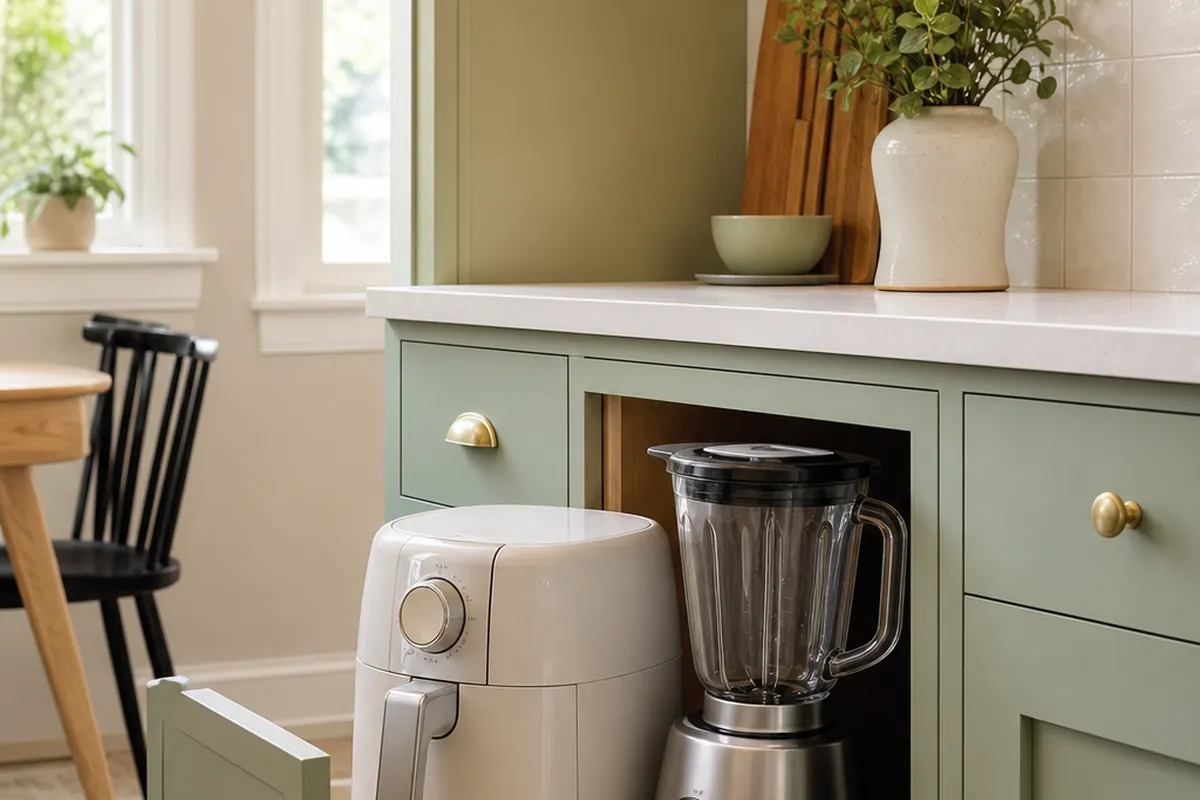
My rule is strict: two things get to live on the counter permanently. The appliance you use every single day (usually a coffee maker or kettle), and nothing else. Salt, oil, the utensil crock, the dish rack, they all need a new home that isn’t flat and in your way.
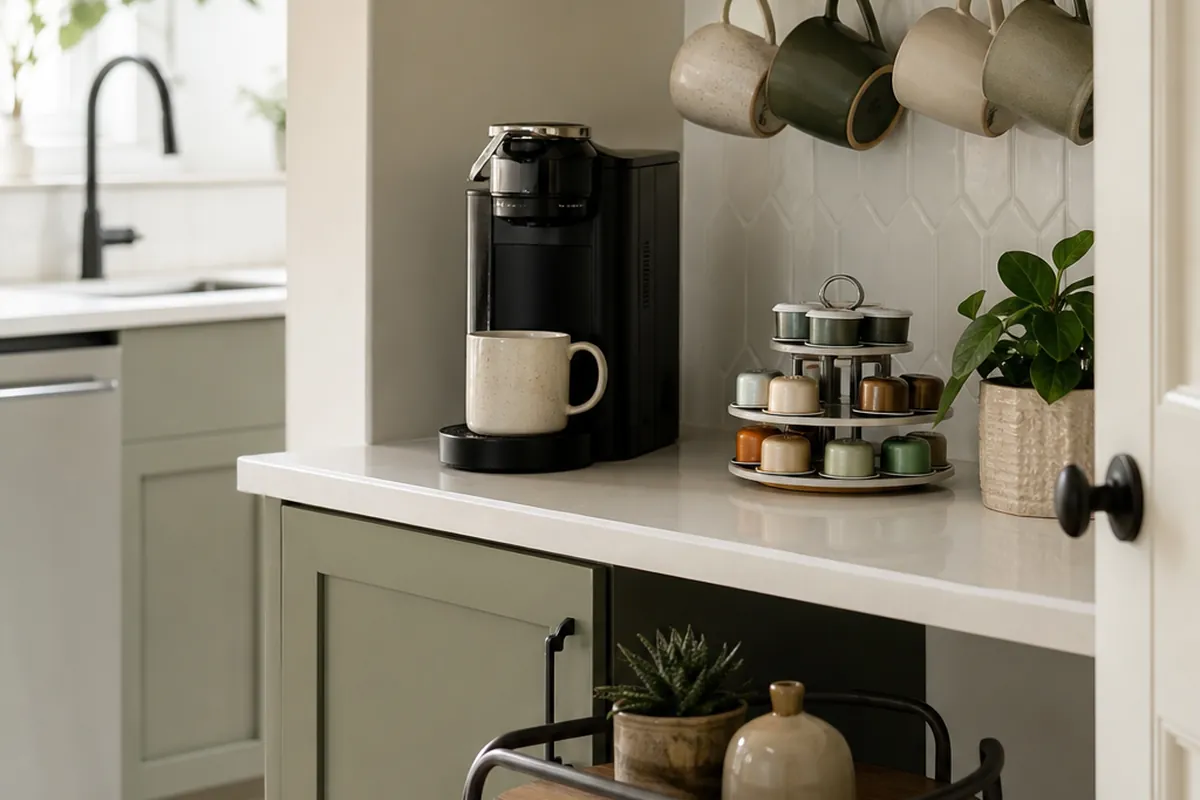
If that daily appliance is the coffee maker, coffee station ideas for a small kitchen counter show how to keep everything that goes with it inside one small footprint.
That sounds harsh, but in a tiny kitchen your counter is your only work surface. Using it for storage is exactly why you never have room to cook. Once it’s bare, everything after this is about finding vertical homes for the pile you just cleared.
Reclaim the space above your sink
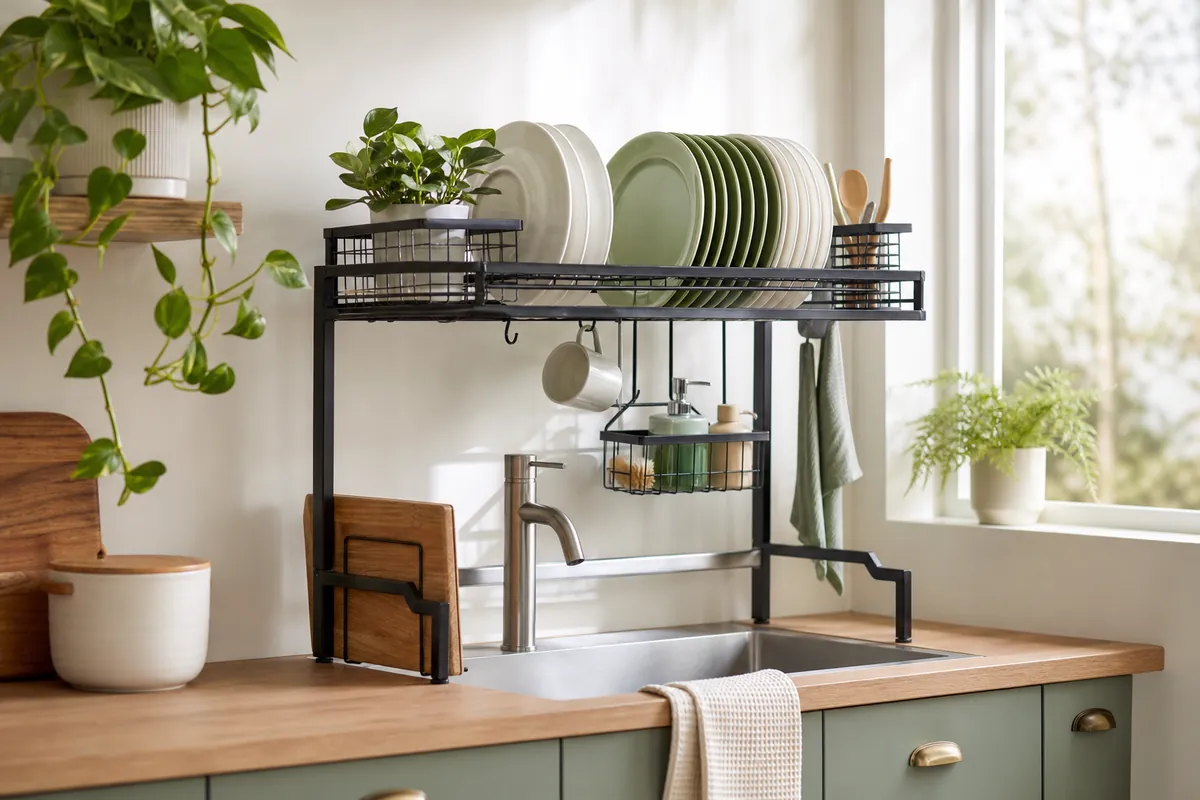
Your sink is the biggest counter thief in a small kitchen, because the dish rack parked beside it claims a permanent chunk of surface. That rack has to go somewhere, and the smartest place is directly over the sink itself.
An over-the-sink dish rack bridges the basin so dishes drip straight down the drain and dry in air that was doing nothing before. You get your counter back and skip the soggy drip tray you’d otherwise have to empty. Some roll up when you’re done and disappear entirely. If you make one change in a tiny kitchen with no counter space, make it this one, because it frees the most usable surface for the least effort.
When you shop, measure the width of your sink opening first. A rack that runs slightly short can rest on the rim, but one that’s too long won’t sit at all. Look for coated wire or silicone where it meets standing water so it doesn’t rust.
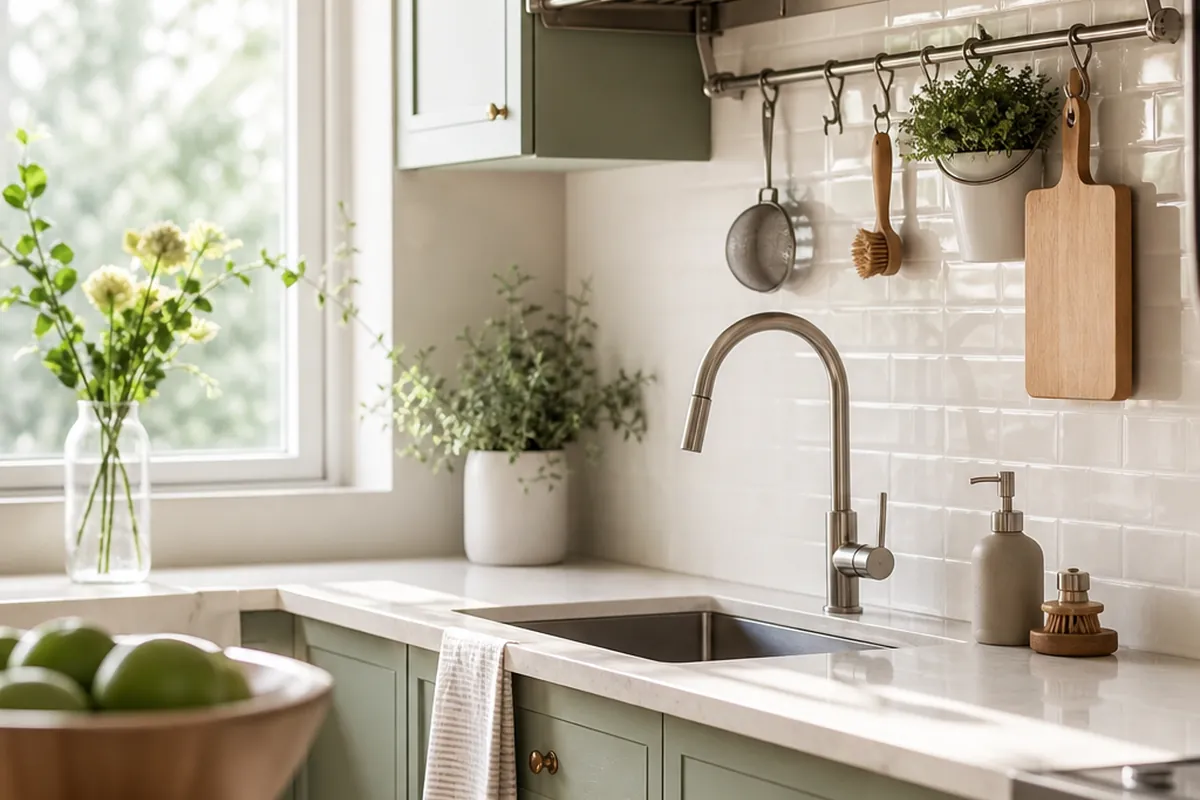
The sink edge itself is a second front, and kitchen sink organization for a tiny kitchen covers getting the sponge, soap and dish brush off the counter beside it.
Put your walls to work
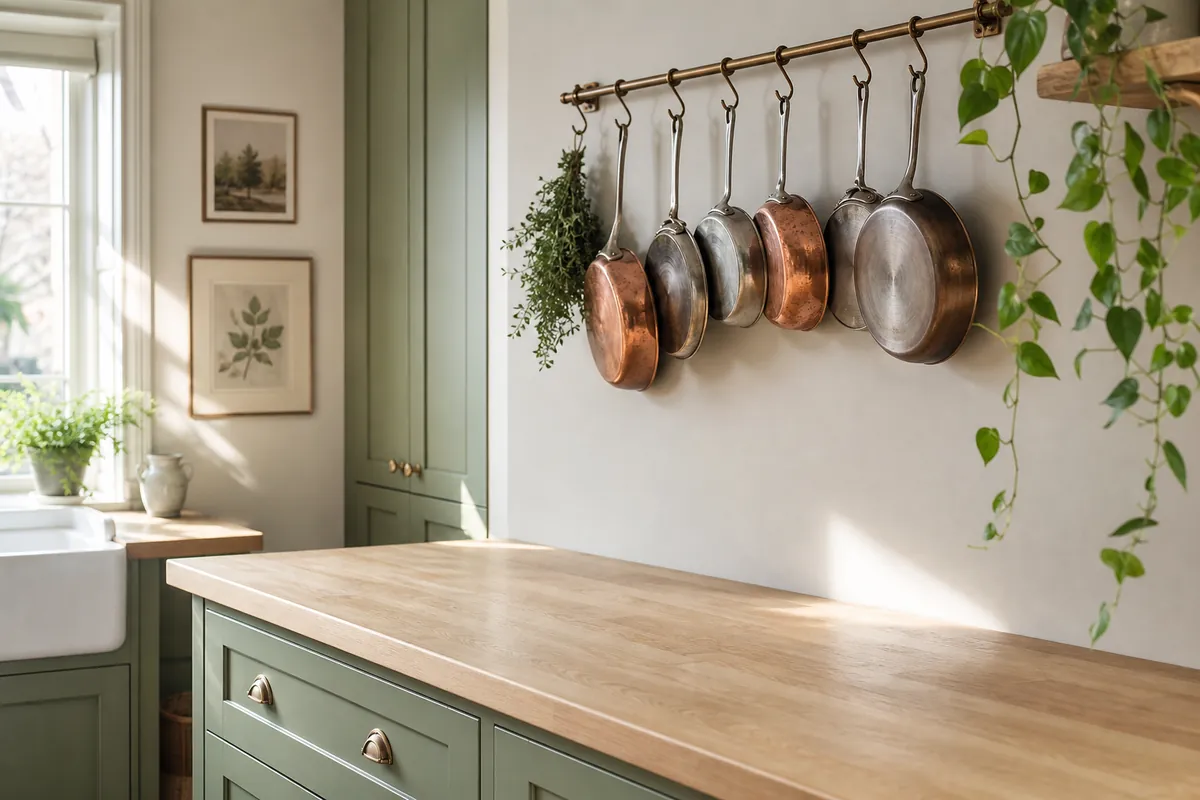
The strip of wall between your upper cabinets and the counter is prime real estate, and in most kitchens it sits completely bare. This is where the bulky stuff goes.
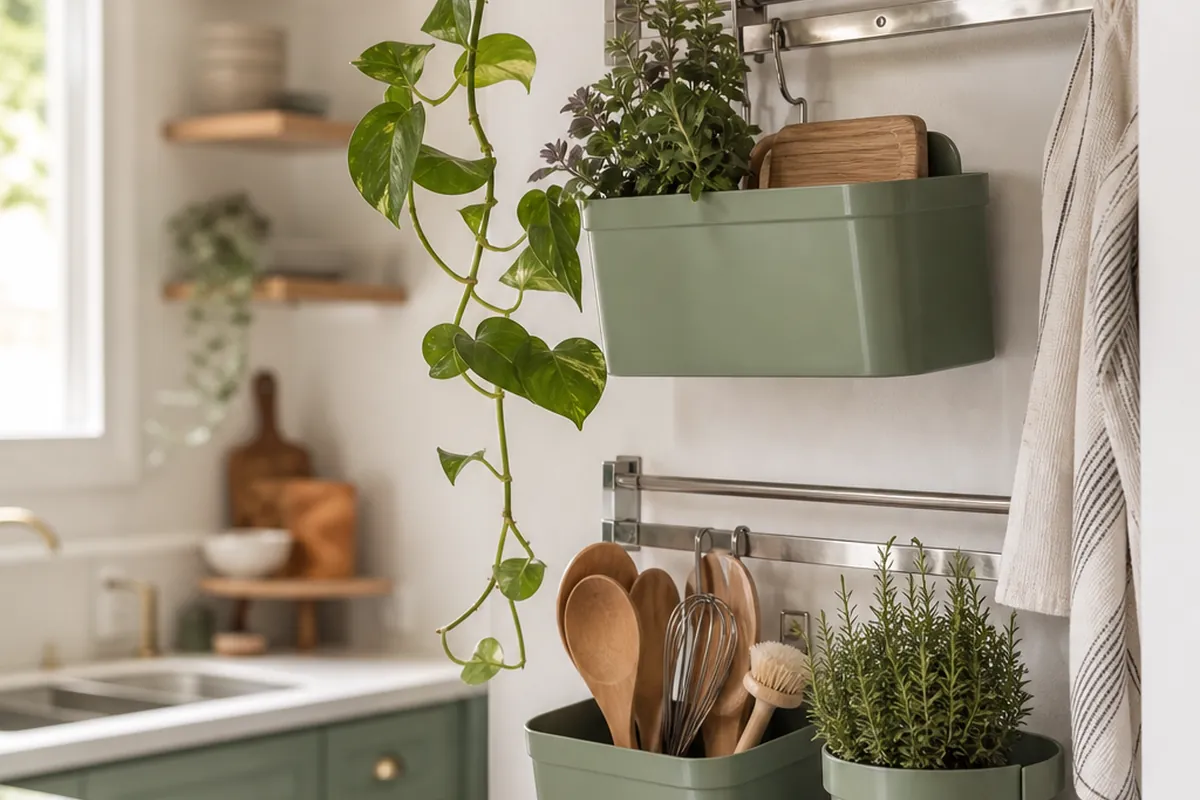
A wall-mounted pot rail with hooks is the workhorse. Hang your most-used pans, a colander, measuring cups, cooking tools, even oven mitts. Pots and pans are the worst offenders in a cramped kitchen because they’re deep and awkward to stack, so moving them onto a rail near the stove frees a whole lower cabinet and keeps them within arm’s reach while you cook.
Mount the rail high enough that the tallest hanging item still clears the counter by a few inches. Renting and can’t drill? Look for a rail with a strong adhesive or tension mount, and keep the load light (utensils and thinner pans, not a cast iron skillet). For gadgets that pair well with wall storage, see our list of space-saving kitchen gadgets every small apartment needs.
Don’t skip the awkward zones
One rail isn’t the finish line. The side of the fridge takes magnetic hooks and slim metal shelves. The end panel of a cabinet run can hold a rail for dish towels. The wall by the stove is perfect for a magnetic knife strip, which finally banishes that bulky knife block from the counter. Every vertical inch you claim is a horizontal inch you get back.
Use the underside of your cabinets
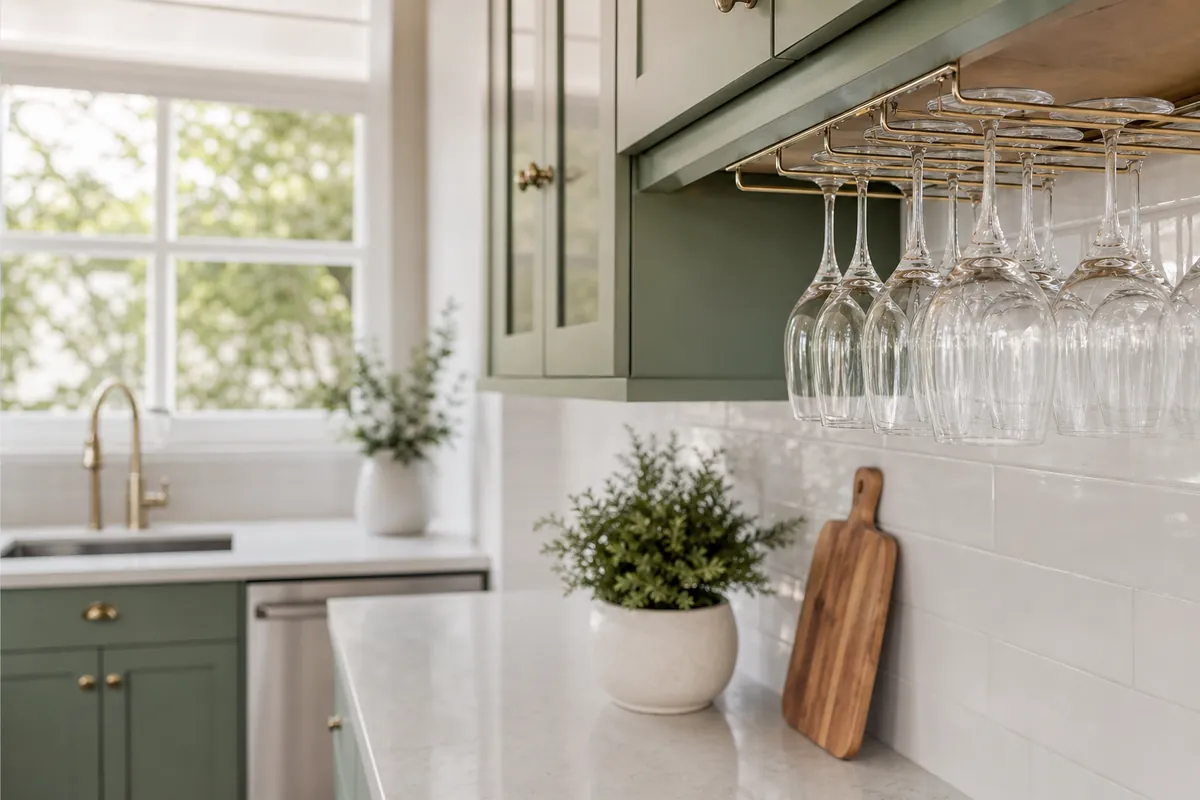
The space beneath your upper cabinets is wasted in nearly every kitchen. It’s shaded, out of the way, and ideal for things that refuse to stack.
An under-cabinet stemware holder slides your wine glasses out of the cabinet and hangs them upside down by the base. That does two useful things at once: it clears a shelf you can now use for plates, and it stops fragile glasses from clinking and chipping. Wine glasses are the classic small-kitchen headache, tall and unstackable, so hanging them recovers more cabinet volume than you’d expect.
That same underside works for mugs on cup hooks, a mounted paper towel holder, or a shallow spice shelf. Just hang everything high enough that it doesn’t block your sightline to the counter below.
Fix the inside of your cabinets and doors
Once the counter is clear, cabinet chaos becomes the next bottleneck. If your cabinets are a mess, stuff creeps back onto the counter simply because it’s easier than digging.
The inside of cabinet doors is free storage almost everyone ignores. Adhesive or over-the-door racks hold spice jars, pot lids (which never stack neatly), cutting boards, and the cleaning bottles under the sink. Getting pot lids onto a door rack alone can free an entire shelf.
Inside the cabinets, shelf risers double your vertical space and pull-out bins rescue the deep lower cabinets where things vanish into the back. Aim for one-motion access: a home you have to fight to reach is a home that gets abandoned in favor of the counter.
Create a fold-away work surface
Here’s the counterintuitive part. Sometimes the answer to no counter space is adding a surface that disappears when you’re done.
A thick cutting board that spans the sink turns your basin into a prep station. A wall-mounted drop-leaf shelf folds flat and gives you somewhere to set a mixing bowl. An over-the-stove board (only with the burners off and cool) covers the grates for extra room. The point is that these surfaces are on-demand, so they don’t hog the kitchen the way a fixed counter organizer would.
Keep it clear with a nightly reset
None of this holds without one habit: a two-minute reset each night. Everything that drifted onto the counter during the day goes back to its hanging home before bed. Dishes onto the over-the-sink rack, utensils back on the pot rail, glasses back under the cabinet.
In a tiny kitchen, clutter compounds fast because there’s no slack to absorb it. One mug left out becomes a pile by the weekend. The reset works precisely because you already gave everything a real home on the walls, so putting it away takes seconds instead of a decision.
The short version
Stop treating your counter as storage. Move the dish rack over the sink, hang your pans and tools on a wall rail, put your glasses under the cabinets, and use door interiors for lids and spices. Add a fold-away surface for prep, then protect all of it with a quick nightly reset. Do that, and even the smallest galley gets a real, usable work surface back.