Two kids, one bedroom the size of a walk-in closet, and a floor that vanishes under toys by 6pm. That is the problem shared kids room organization in a small apartment has to solve, and the usual advice (buy a bigger dresser, add another shelf) falls apart when the room is barely wider than the beds. What actually holds up is giving each child a defined zone, moving storage up off the floor, and making cleanup something a five-year-old can finish alone.
Below I’ll cover how to split the room fairly, where to put storage when there is no wall to spare, and the two products I’d reach for first: a bedside bunk caddy and a rolling cart. None of it involves drilling a wall full of holes, which matters when you rent.
Start by dividing the room, not the stuff
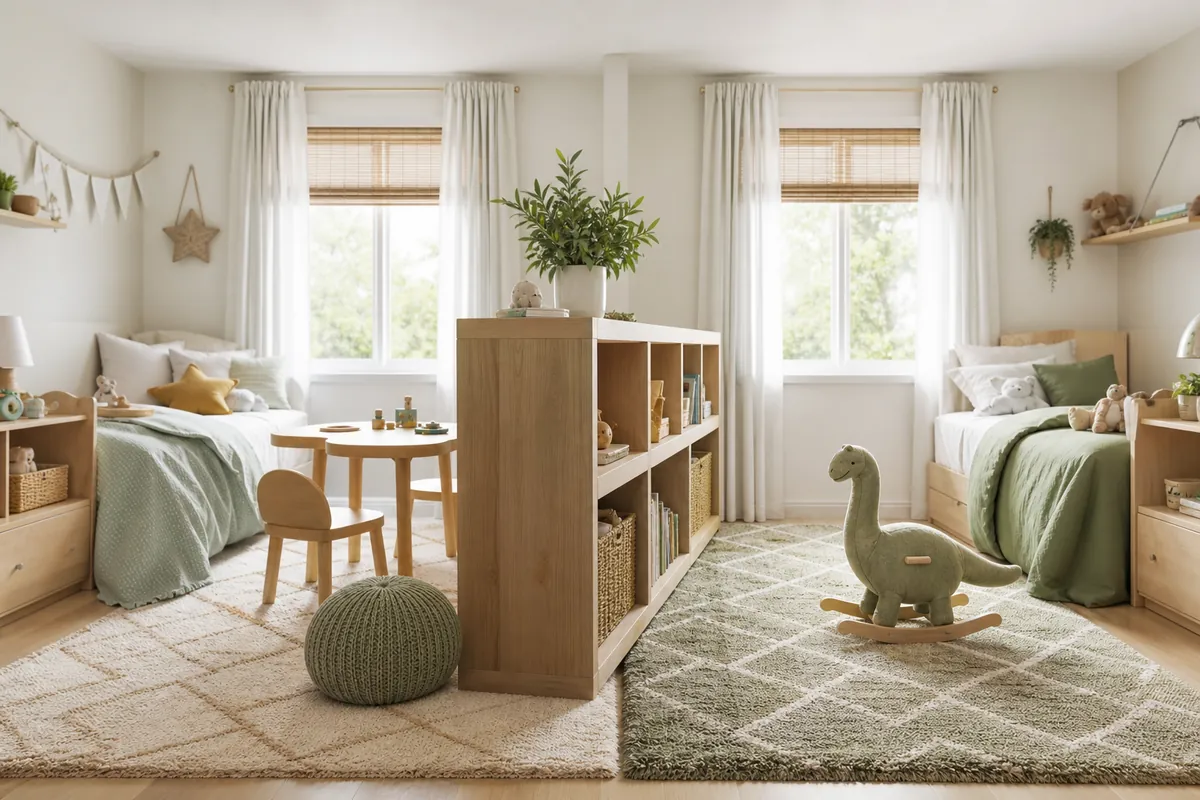
Before you sort a single toy, decide who owns which half of the room. Kids fight less over shared space when the boundaries are obvious, and any system sticks better when each child knows exactly where their things live.
The cleanest split in a tiny room usually follows the beds. With bunks, the top-bunk kid gets the upper zone and one side of storage while the bottom-bunk kid gets the lower zone and the other side. If you have twin beds pushed to opposite walls, draw the line down the middle and let each child claim the wall behind their own bed.
Give each kid a color, not a label they can’t read
Young children can’t sort by written name tags, but they can sort by color in a heartbeat. Assign each kid a color for their bins, hooks, laundry, and toothbrush. Blue goes back to the blue zone, yellow to the yellow zone. This one move does more for daily tidiness than any bin system, because it kills the “whose is this?” argument that stalls every cleanup.
Get storage off the floor and onto the bed
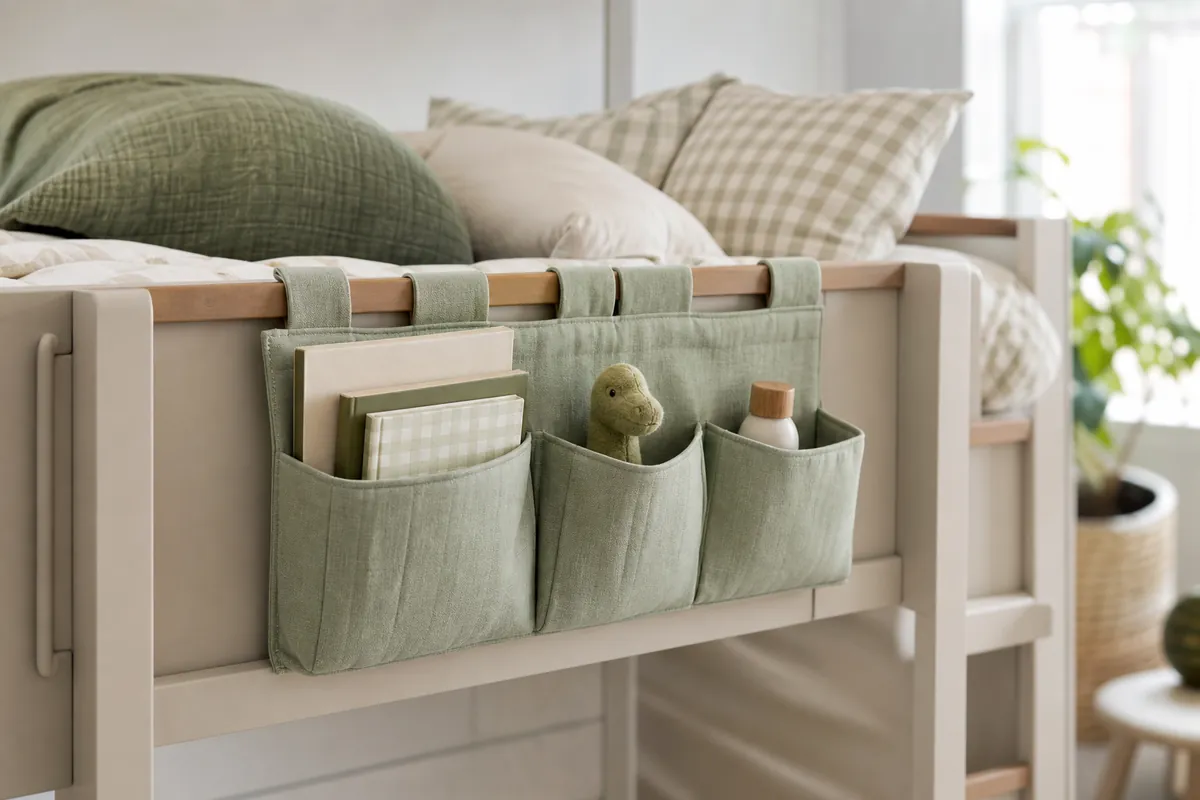
Floor space is the one thing you can’t buy more of in a small apartment, so the goal is to store things on vertical surfaces and on furniture you already own. Bunk beds are the biggest missed opportunity, since the side rails sit there completely unused.
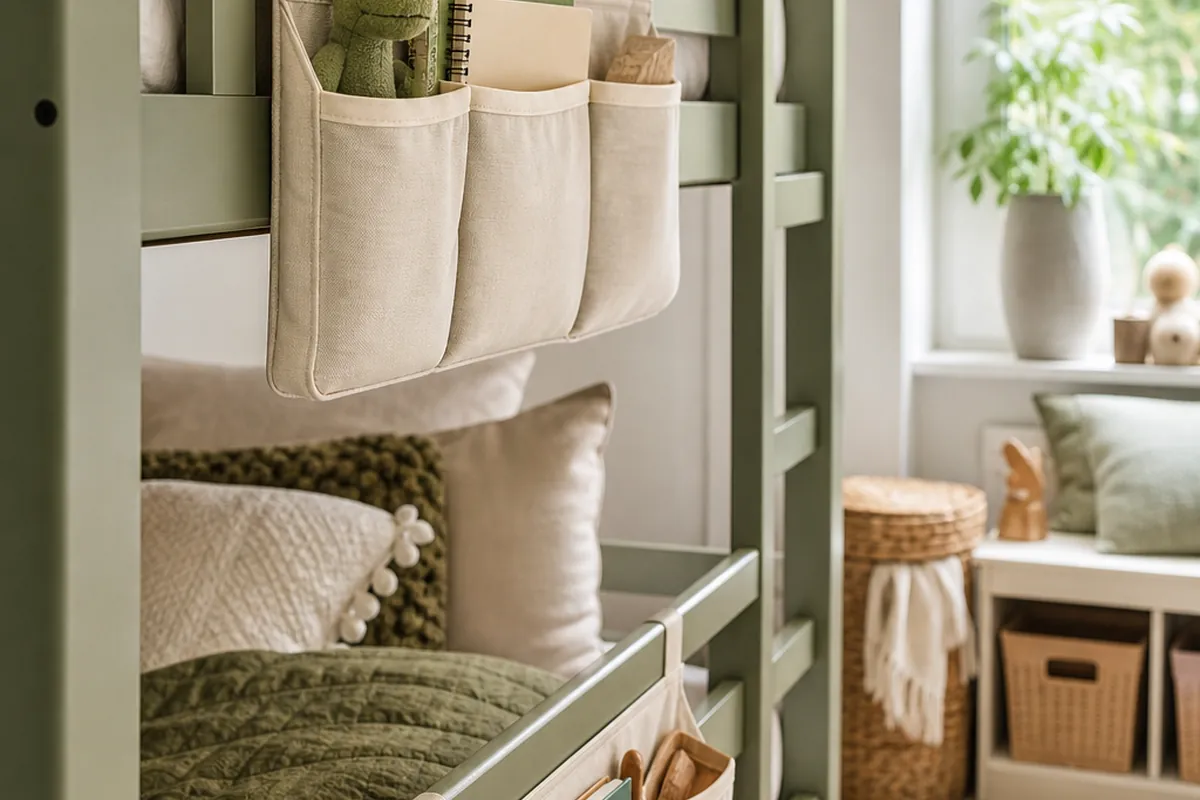
A Bedside bunk caddy organizer hangs over the rail and holds whatever otherwise ends up on the floor or wedged under a pillow: a water bottle, a book, a flashlight, a stuffed animal, glasses, a tissue pack. Each kid gets their own on their own bunk, so the top-bunk child stops climbing down at bedtime to grab things and the bottom-bunk child stops piling books on the mattress. For safety, hang it on the outer rail where it won’t become a foothold, and keep anything with cords or small parts away from a toddler’s reach.
Twin beds work with the same caddy, clipped to the frame or draped over a headboard rail. The idea is to give bedtime items a home that travels with the bed, not the room.
Use one rolling cart that moves where the mess is
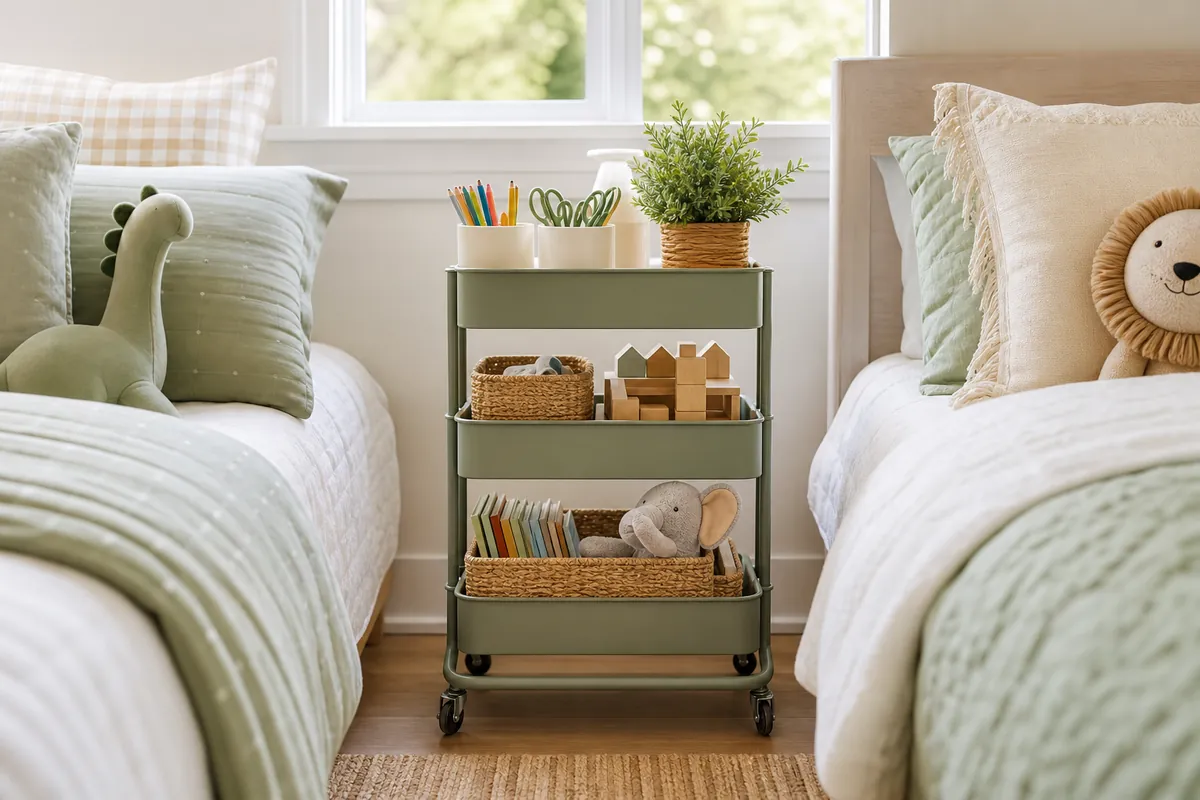
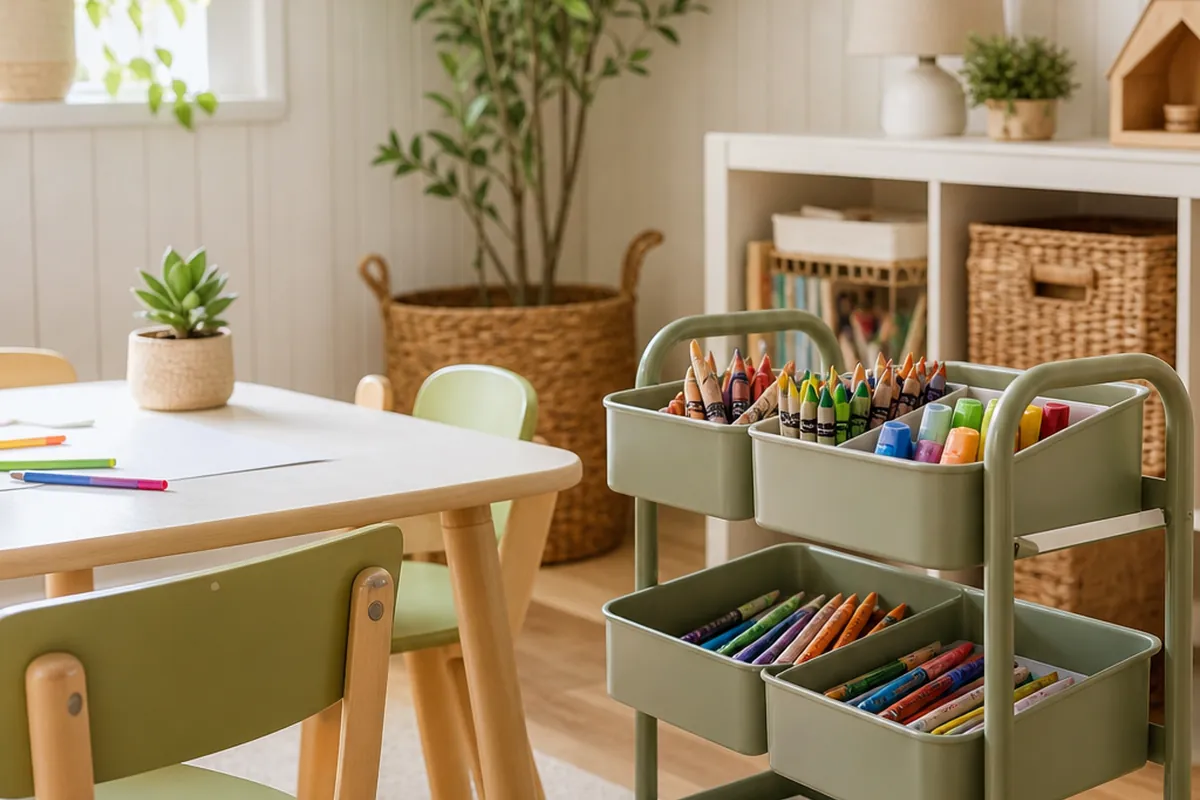
The single most flexible piece of storage for a shared kids room is a Rolling storage cart (kids). Because it rolls, it isn’t chained to one child’s zone or one activity. In the morning it can park by the closet with socks and hair things; during play it rolls to the middle of the floor loaded with art supplies; at bedtime it tucks into a corner or slides partway under a bed.
I’d choose a three-tier cart so you can dedicate each shelf to a purpose: one for shared art and craft supplies, one for each kid’s current favorite toys (front half blue, back half yellow, or one child per cart if you buy two). A cart also fixes the classic small-room headache of nowhere to park a project mid-play. Rather than demanding everything gets cleaned up this second, you roll the half-built LEGO out of the walkway and deal with it later.
Keep the contents lean. An overstuffed cart just becomes a rolling junk drawer. Every few weeks, pull the bottom tier out and edit it, because that is where forgotten toys sink and die.
Match cart height to who’s using it
When both kids are little, a lower cart lets them reach every tier and put things back themselves. If one child is older, park their private or fiddly items (small figurines, a specific card game) on the top tier out of the toddler’s reach, and save the bottom tier for the younger one’s grab-and-go toys.
Tame the toys with a shared-vs-personal split
Toys are where shared rooms go feral, so sort them into two clear buckets: shared toys that live in a common bin anyone can use, and personal toys that stay in each child’s own zone and don’t have to be shared. Kids handle sharing far better once they also own a few things that are truly theirs.
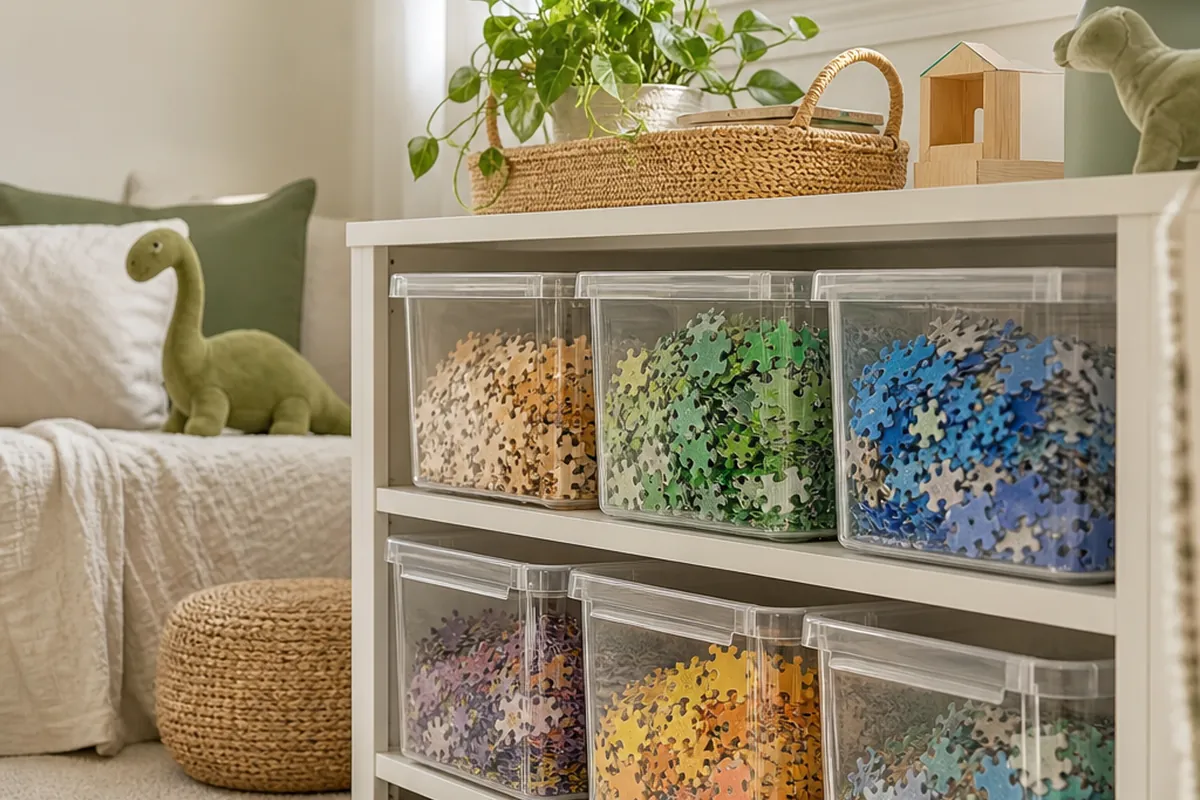
Keep shared toys in open bins low to the ground so cleanup is a toss, not a puzzle. Save lids and stacking for the stuff you rotate out. And genuinely rotate: in a small apartment, half the toys should sit boxed in a closet or under a bed at any given time, swapped out every couple of weeks so the room feels fresh without gaining volume. If your living room is also collecting toys, the same logic applies there, and I go deeper on it in Toy Storage for a Small Living Room: Ideas That Stay Tidy.
Under-bed is your bulk storage
The space beneath the lower bunk or under twin beds is prime for flat, lidded bins on wheels or fabric drawers. Use it for the boring, high-volume stuff: out-of-season clothes, the toy rotation reserve, extra bedding. Label the ends that face out so you aren’t dragging out every bin to find one thing.
Handle clothes without a second dresser
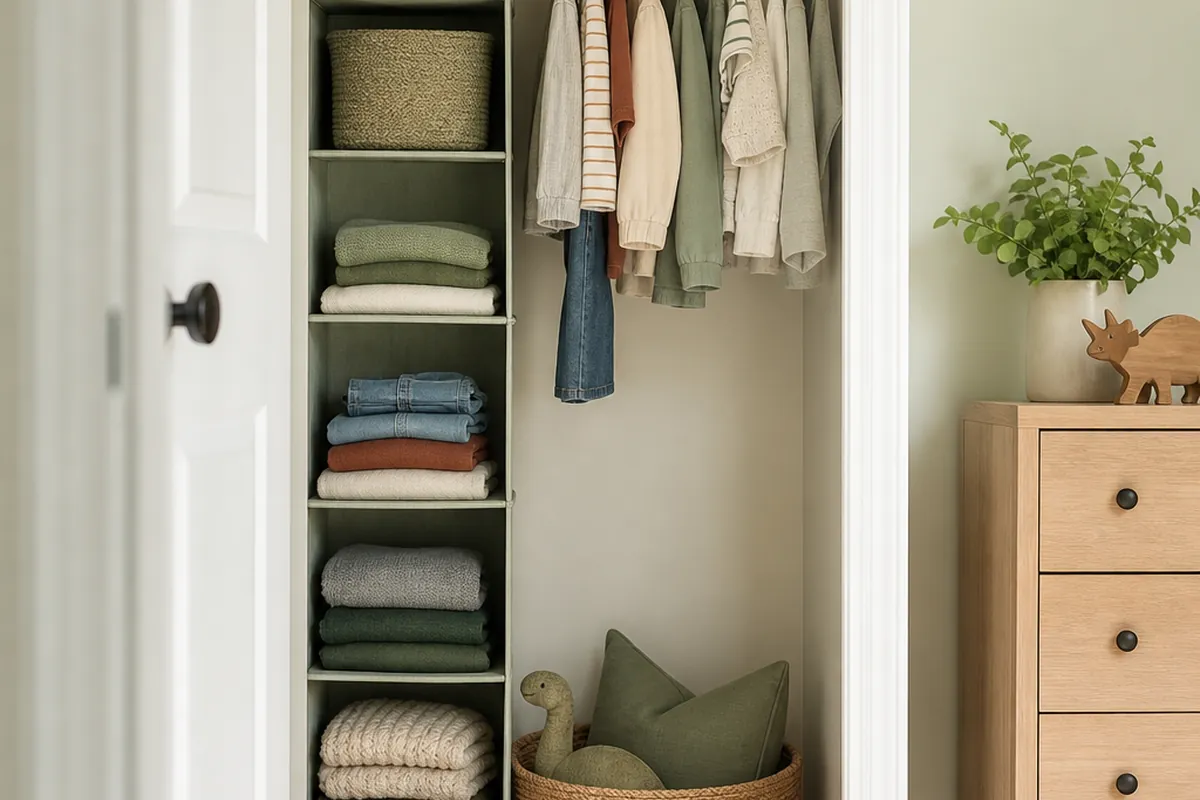
A shared room rarely has floor space for two full dressers, so lean on the closet and vertical storage. Hang a double rod or a low tension rod kids can reach, then give each child a color-coded set of hanging fabric cubbies for folded items. Shoes go in an over-the-door pocket organizer on the closet door, one column of pockets per kid.
For daily wear, a small two-bin laundry setup (one per color and kid) heads off the sock arguments and makes it obvious whose pile is whose on laundry day. If a baby still shares the room, some of the budget bin strategies in Nursery Organization on a Budget: 10 Bins That Work scale up nicely for older siblings too.
Build a cleanup routine kids can actually finish
Systems fail when they depend on an adult doing the final sort every night. Design yours so each kid can reset their own zone in about five minutes.
That means open bins over lids, color coding over labels, and a fixed home for the ten items that cause most of the mess (books, blocks, stuffed animals, art supplies, water bottles). Put on a two-song cleanup playlist and turn it into a race between the blue zone and the yellow zone. Once the bunk caddy holds the bedtime stuff and the rolling cart swallows the art supplies, there is very little left to clean.
Keep surfaces almost empty
Every flat surface in a small shared room fills up fast, so protect them. Treat the top of a dresser, a windowsill, and a made bottom bunk as no-storage zones. The less that lives on surfaces, the bigger the room feels and the faster it resets.
A simple starting setup
Building this from scratch? Here is the order I’d buy in. First, a bunk caddy for each bed so bedtime items stop hitting the floor. Second, one rolling cart to corral shared supplies and roll the mess out of the walkway. After that, under-bed bins for bulk and rotation, then closet cubbies and an over-the-door shoe organizer for clothes.
Divide the room, give each kid a color, get storage up onto the beds and rolling on wheels, and keep half the toys in reserve. Pull that off and even a room barely big enough for two beds stays livable, with each child owning their own space instead of fighting over the shared middle.