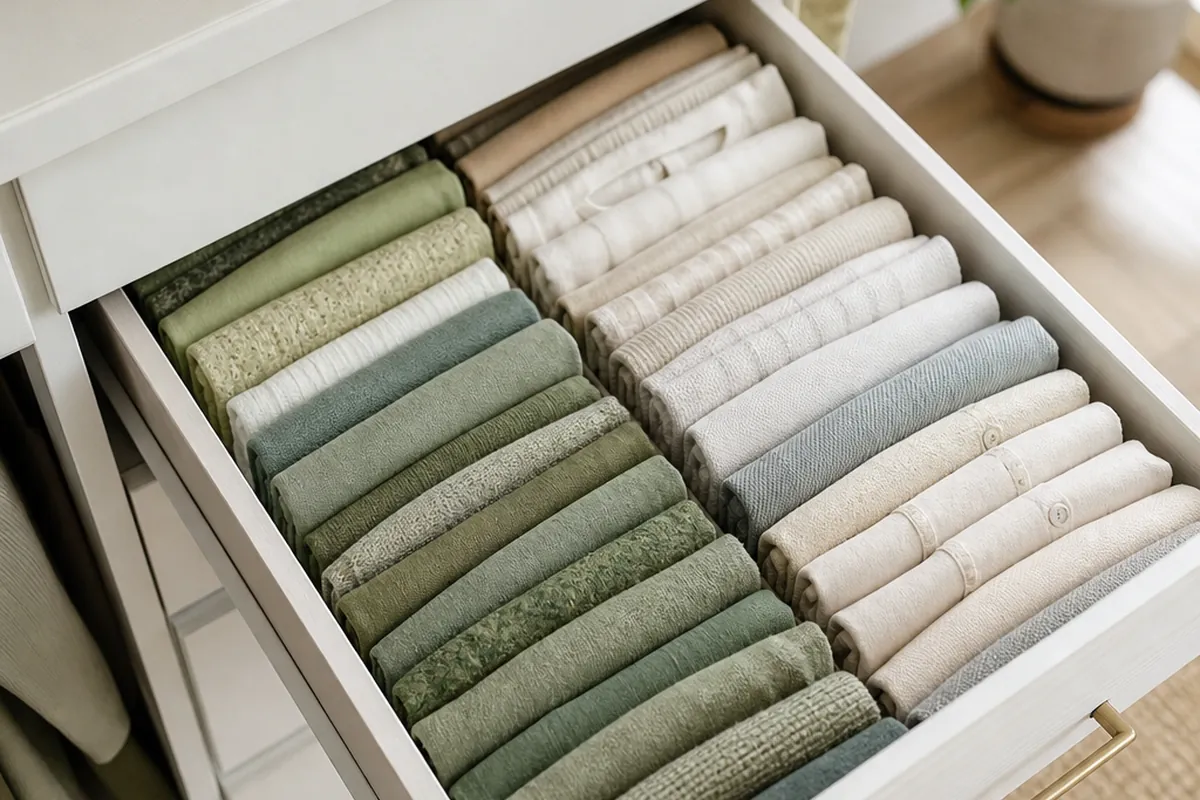
File-folding looks flawless until you open the drawer, grab one shirt, and watch the whole row topple like dominoes. Fixing exactly that is the job of drawer organizers for folding clothes. If you’ve committed to the KonMari method, folding everything into little upright rectangles that stand on their edge, you already know the technique is only half the battle. Gravity wins by Wednesday unless something holds those rows in place.
Here’s the direct answer on what keeps a file-folded drawer looking like the photos: rigid dividers for structured items, plus soft fabric inserts for the loose, floppy stuff. Most drawers want a mix of both. Below I’ll explain which goes where, and why.
Why file-folding needs help staying upright
The genius of KonMari folding is visibility. Every item stands vertically where you can see it, instead of hiding at the bottom of a stack that never gets worn. Trouble is, a folded T-shirt has no backbone. Pull one out and its neighbors flop into the gap, and within a few days you’re back to a drawer of soft lumps.
Dividers work by shrinking the width each row has to span. A folded stack that only bridges four or five inches stays standing far better than one trying to hold itself up across a two-foot drawer. That’s the entire trick. The best drawer organizers for folding clothes simply control that span and give every category a wall to lean against.
You can build those walls two ways: hard dividers you fit across the drawer, or fabric boxes you drop inside it. Here’s how I choose between them.
Bamboo adjustable dividers: the backbone for shirts and jeans
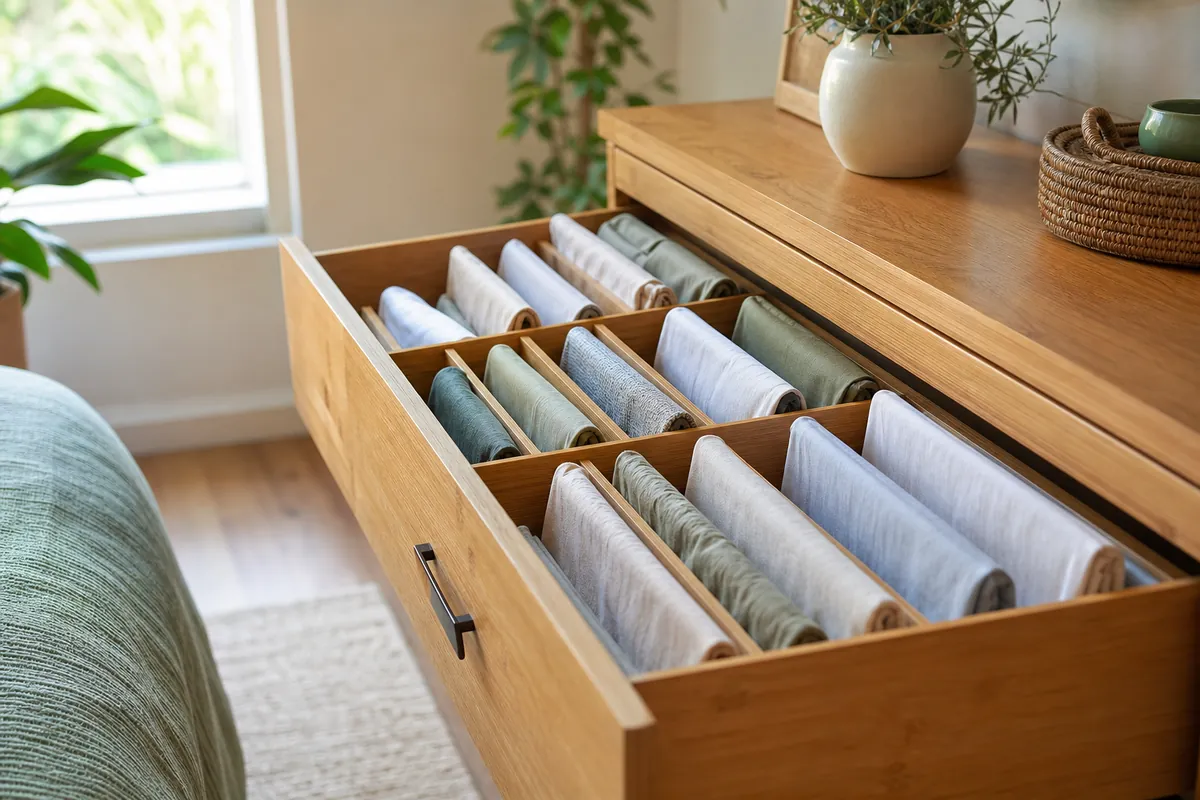
Anything with a bit of structure, think T-shirts, folded jeans, sweaters, and workout tops, calls for spring-loaded bamboo adjustable drawer dividers. They’re the first thing I reach for. Because they tension against the drawer walls, no screws or adhesive is involved, which matters enormously if you rent and can’t drill into your furniture.
What justifies paying more than cheap fixed dividers is control. You set the width to your clothes instead of forcing your clothes to a fixed width. Narrow the channels for tees so each row sits tight and self-supporting, then widen one out for bulky knit sweaters. Matching the spacing to the item is what keeps the file-fold crisp.
A few placement notes I’ve learned the hard way:
- Run dividers front to back, not side to side, so you pull items toward you and drop them back into a lane like files in a cabinet.
- Leave one lane slightly loose. A drawer packed corner to corner is a pain to file into, while a little breathing room lets you slide a folded shirt down without wrestling it.
- Bamboo grips folded cotton better than slick plastic does, so your stacks hold their line against the wood.
The honest downside: tension dividers want solid, flat interior walls. Rounded or ridged sides give the pads less to bite into, and slipping follows. If that’s your dresser, size them snug and treat them as organizers rather than something that survives rough daily abuse.
How many dividers per drawer
For a standard dresser drawer, two dividers making three lanes is the sweet spot for tops: short-sleeve tees in one, long-sleeve in the next, tanks or camisoles in the third. A deep bottom drawer for jeans and sweaters often needs just one divider down the middle, since heavy items stay planted on their own.
Fabric cube inserts: for socks, underwear, and everything floppy
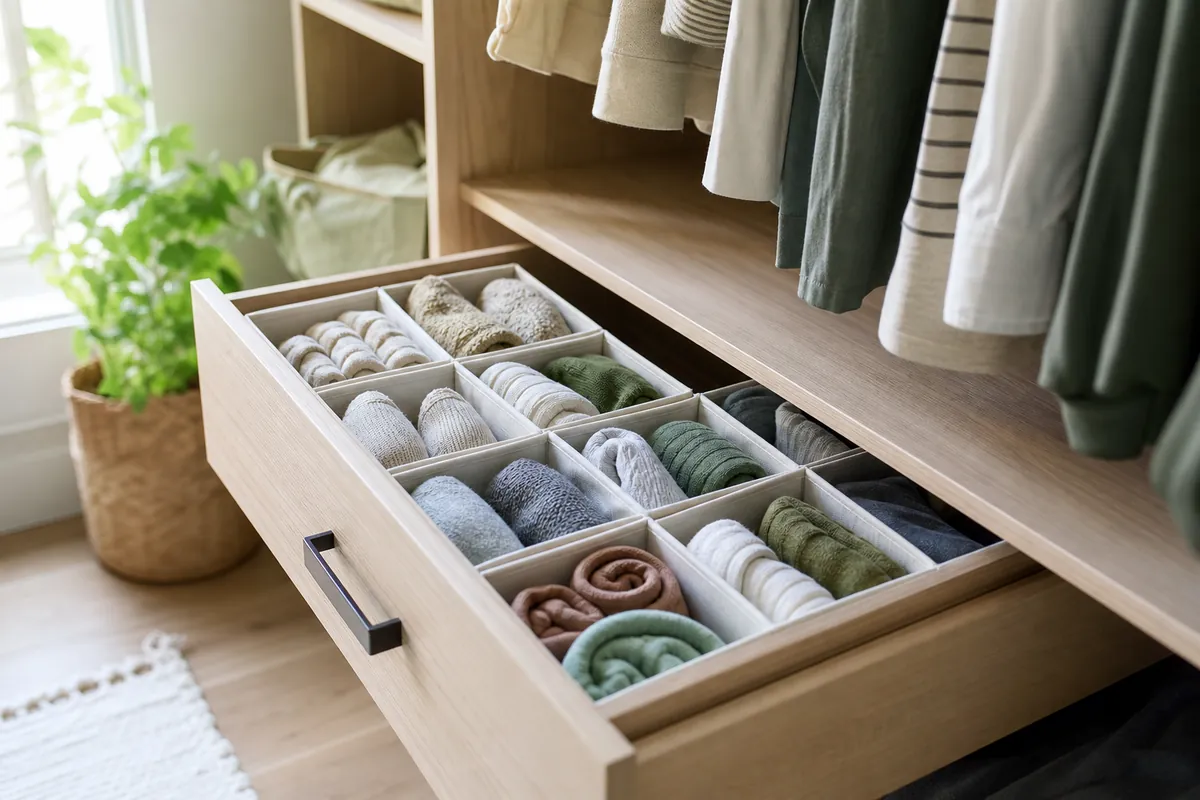
Rigid dividers are the wrong tool for small, formless things. File-fold socks or briefs between two wooden walls and you get a jumble that migrates over the top by morning. A set of fabric drawer cube inserts earns its place here.
These soft, open-top boxes drop into the drawer and create contained compartments, essentially bins within the drawer. Roll socks into one, briefs into another, bras laid front to back in a third. Because each box is enclosed on all four sides, nothing escapes sideways.
I put fabric cubes to work for:
- Underwear and socks, where small enclosed pockets beat open lanes.
- Accessories like scarves, coiled belts, or gloves.
- Baby and kids’ clothes, which are too tiny to ever stack neatly against a hard divider.
Buying them as a matched set matters, because same-size boxes tile cleanly with no awkward gaps. Mismatched bins leave dead space, and dead space is exactly where a rogue pile starts. When you can, pick inserts close to your drawer’s interior height so items don’t sink below the rim and vanish.
Combining both systems in one drawer
My favorite top-drawer setup: fabric cubes across the front for socks and underwear, bamboo dividers behind them creating lanes for folded tees. Enclosed pockets handle the small stuff, open filing lanes handle the folded stuff, all in one drawer. It looks intentional, and it survives being used every single day.
Measure before you commit
The number one reason drawer organizers disappoint is a bad fit. Pull the drawer all the way out and measure the interior width, depth, and height, not the outside of the dresser, because the drawer sides eat an inch or more.
For adjustable dividers, confirm their shortest setting is narrower than your drawer and their longest reaches across it. For fabric cubes, note the usable depth so the boxes don’t stick up and block the drawer from closing. Shallow drawers make low-profile inserts more important than you’d expect.
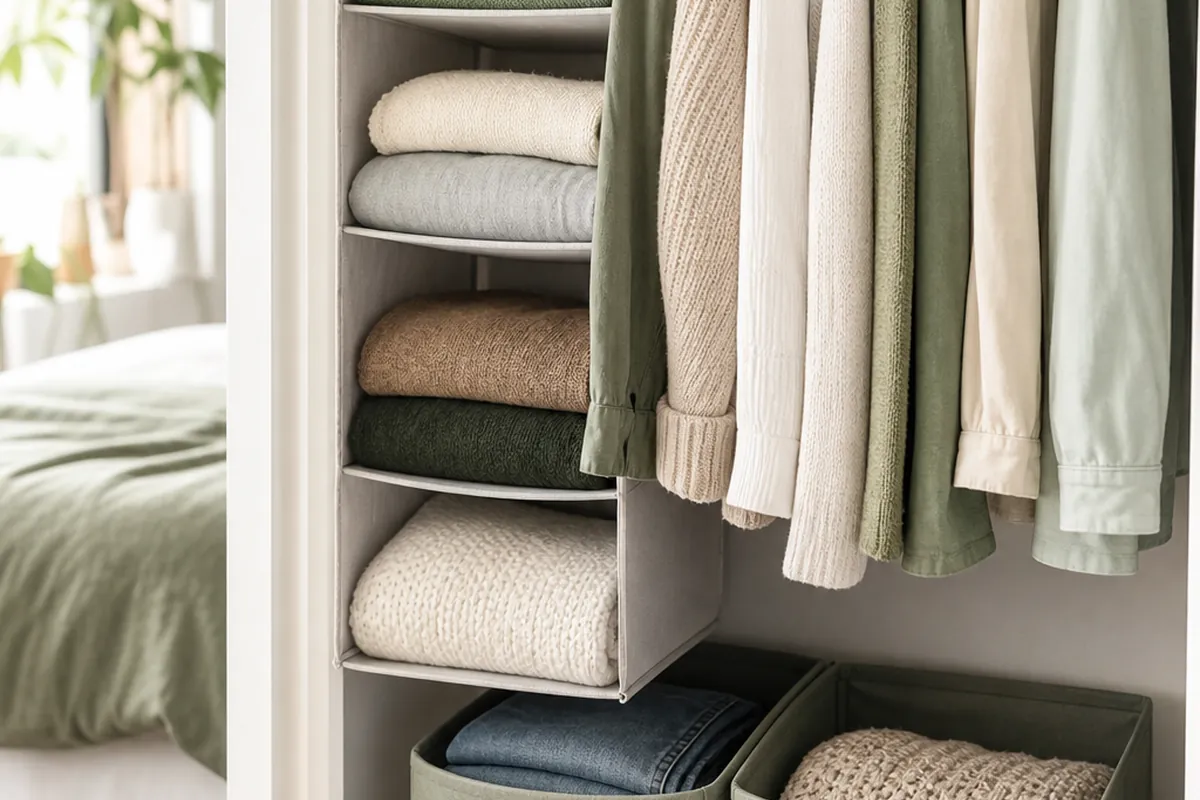
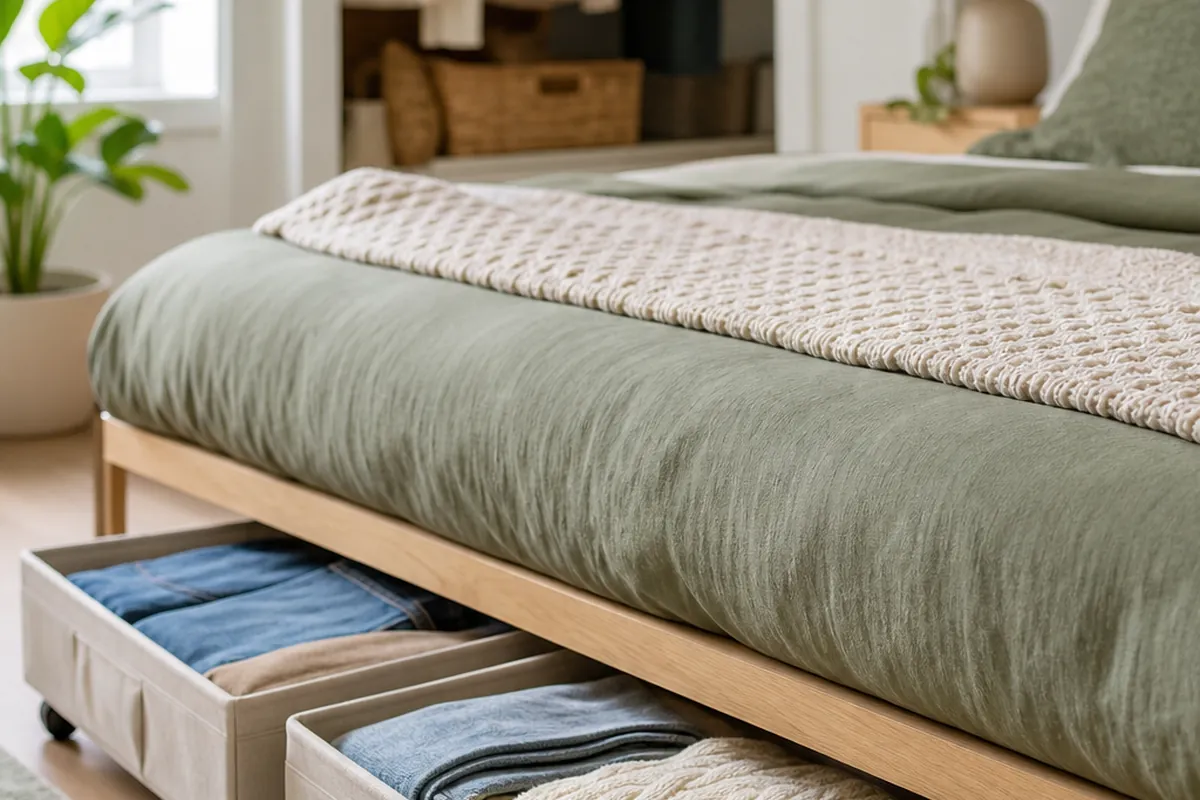
With the drawer out, take a minute to consider what shouldn’t live in there at all. Off-season and bulky pieces usually store better elsewhere, freeing your dresser for the clothes you actually wear now. My guide to under-bed storage that fits a whole season pairs neatly with a freshly organized dresser.
The fold that makes organizers actually work
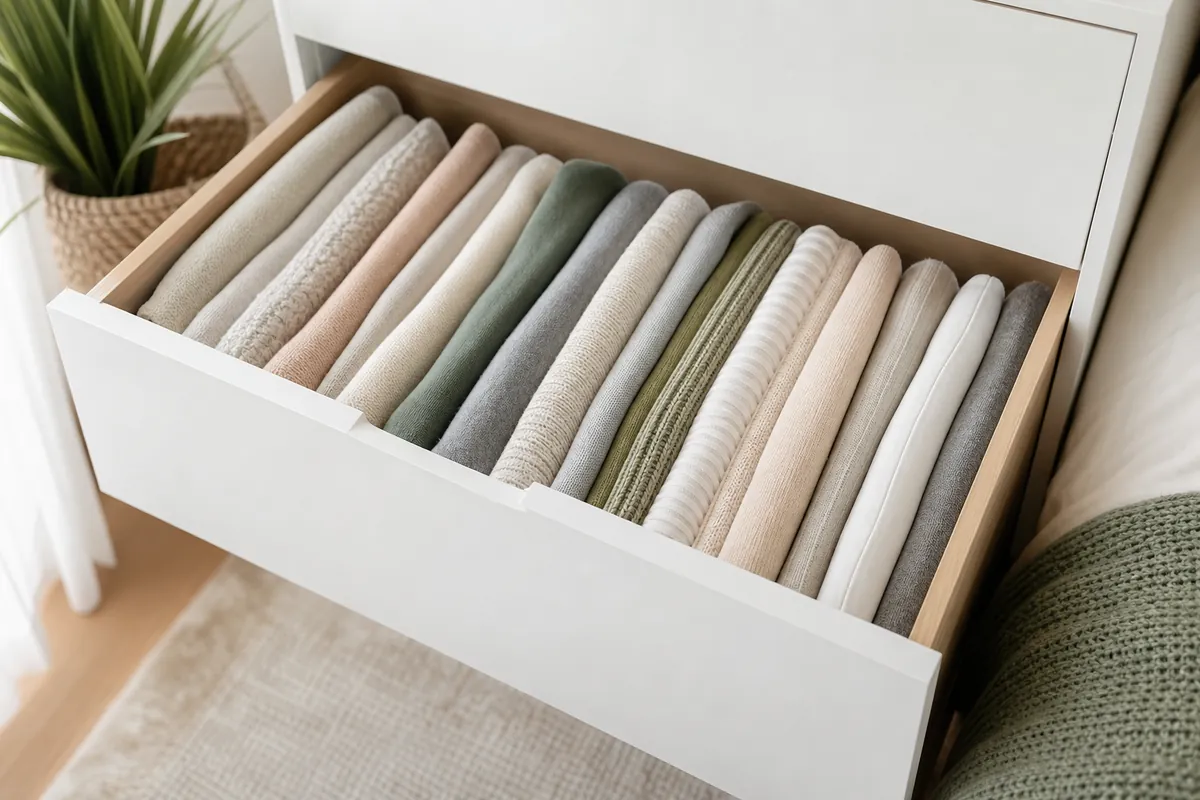
No organizer can rescue a lazy fold. The KonMari file-fold aims for a firm little rectangle that stands on its own before it ever reaches the drawer. For a T-shirt, fold the sides in to make a long strip, then fold that strip into thirds or quarters until it stands like a small book. If it flops over on the counter, it’ll flop in the drawer too, dividers or not.
Keep every folded item at roughly the same height so the row reads as one clean line. That uniformity is what makes a file-folded drawer so satisfying to look at, and it’s what lets you grab one piece without disturbing the rest.
When drawers aren’t the answer
Sometimes the real problem is that you own more clothes than drawer space, and no divider fixes a volume issue. When that’s the case, the solution lives outside the dresser. Renters can pull surprising capacity out of a closet without renovating anything, and I walk through the best moves in doubling closet space as a renter. If your closet has no built-in shelving to work with, these fixes for a small closet without shelves get folded stacks up off the floor.
My honest recommendation
Buy one thing, and make it the bamboo adjustable dividers. They cover the bulk of a dresser, tops, bottoms, and knits, and they adapt as your wardrobe shifts. Add fabric cube inserts the moment your socks and underwear start creeping over the top of everything else, since no rigid divider tames that particular chaos.
Resist the urge to buy a dozen tiny plastic gadgets in mismatched shapes. A dresser looks calmest, and works best, with two systems repeated across every drawer: dividers for the folded rectangles, cubes for the small loose stuff. Set it up once, fold with a firm hand, and the drawer that used to collapse by midweek will hold its shape for months.