The hard part of toy storage in a small living room isn’t finding a place for the toys. It’s finding a place that survives past 6pm, when everything has migrated back onto the rug. If your living room doubles as a playroom, you need storage that hides mess fast, works for kids who can’t reach high shelves, and doesn’t eat the little floor space you have left.
I’ll skip the vague advice. Below is where to put things, what actually contains toys, and which pieces earn their footprint in a room that’s already tight.
Start with how your kid actually plays
Before you buy a single bin, watch where the toys pile up. There’s almost always a zone, a corner by the couch or the strip under the window, where your kid gravitates. Fight that pattern and you’ll lose. Put your main storage right there instead, so cleanup is a two-foot toss and not a march across the room.
Here’s the rule that decides everything else: kids only put toys away in containers they can reach and open without help. Anything with a hinged lid, a latch, or a shelf above waist height quietly becomes your job forever. Open bins win. Low wins. Simple wins.
Sort into loud, medium, and quiet
Group toys by size and noise, not by category. Big loud stuff (blocks, cars, play food) goes in the largest, most accessible bins. Medium things get their own bin. The tiny maddening pieces, doll shoes, Lego, bead kits, go in something with a lid that lives up high, out of the toddler free-for-all. If everything shares one giant toy box, your kid dumps the whole thing to find a single figure, then walks away. Sorting is what keeps the room from exploding.
Toy storage for a small living room: the cube shelf is the workhorse
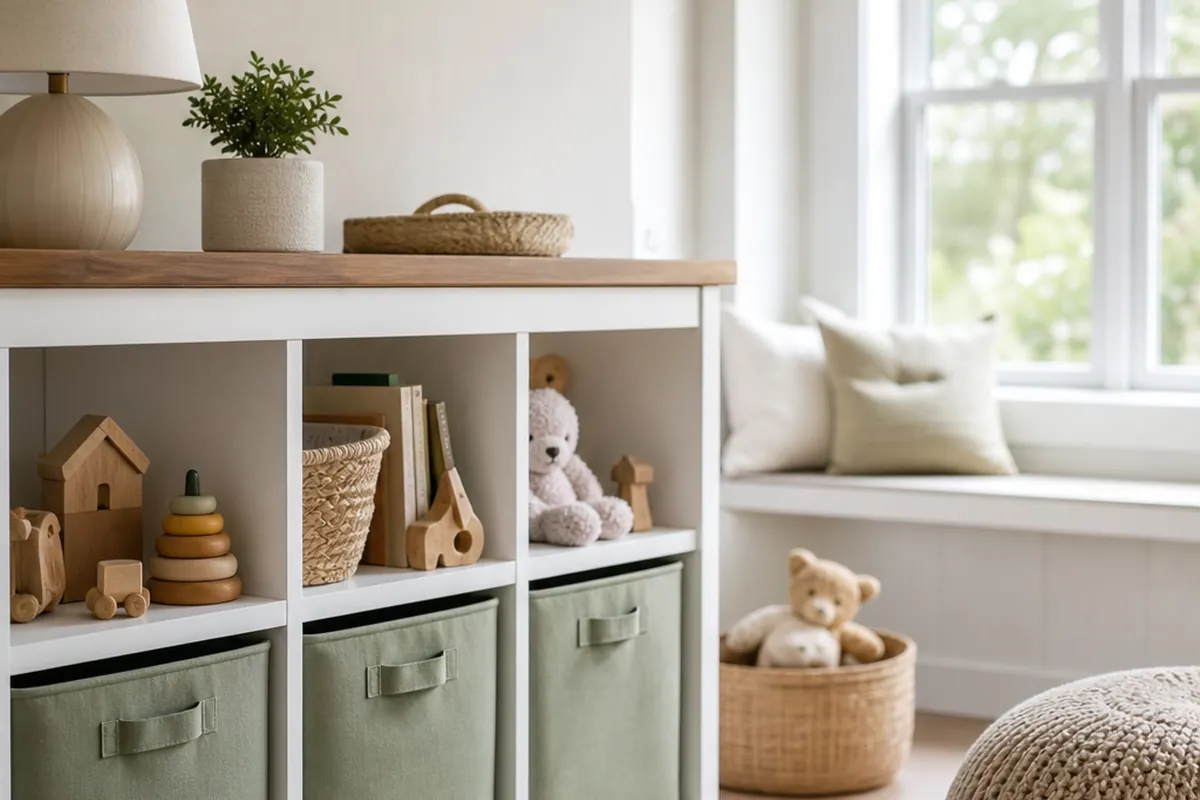
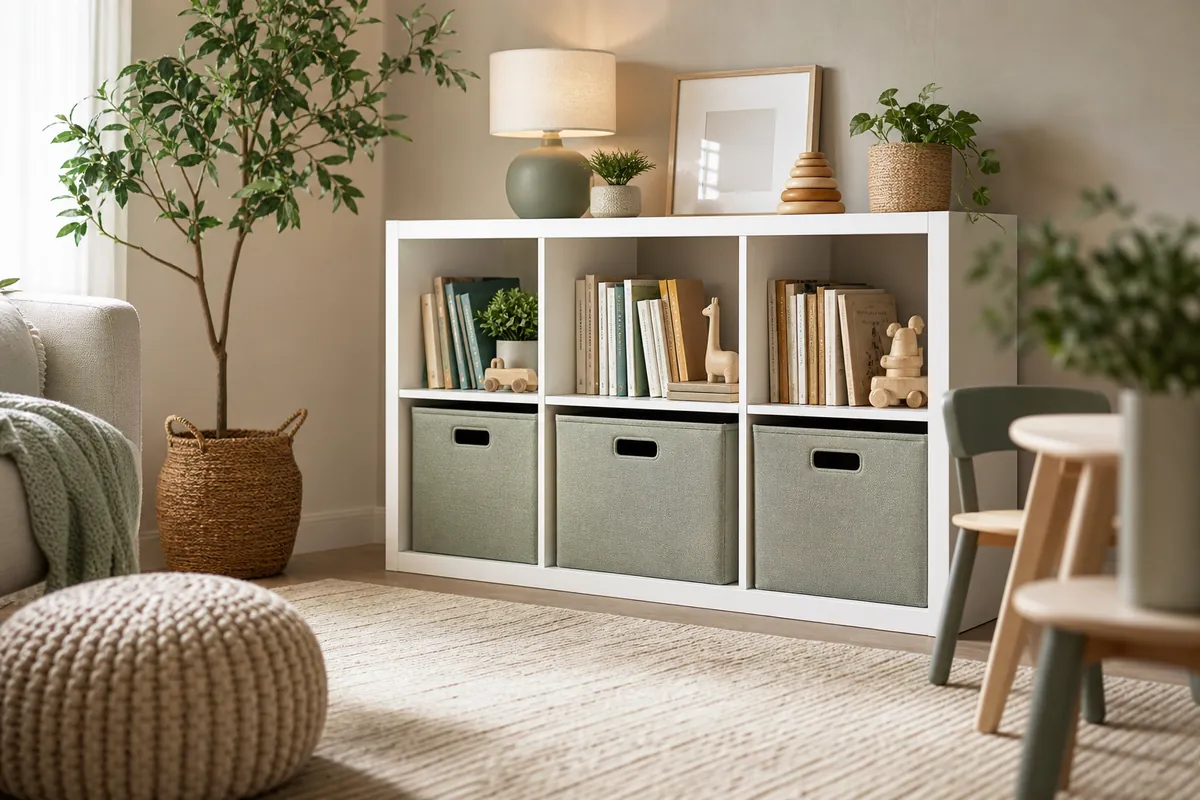
If I could recommend only one piece, it’s a cube storage organizer with fabric bins. It beats a traditional toy box in a small living room for a few concrete reasons.
A cube unit gives you a grid of open compartments, and each cube gets its own soft bin. You can sort by type, one cube for cars, one for stuffies, one for art supplies, instead of one bottomless pit. When guests come over, you don’t tidy. You push the bins flush and the whole thing reads as a bookshelf.
A few things I’d insist on:
- Go horizontal and low if you have toddlers. A 2x4 or 2x2 unit laid landscape puts every bin at kid height and gives you a bench-height surface, or a spot for a lamp on top. Vertical towers look tidy, but the upper cubes become dead storage for anyone under five.
- Anchor it to the wall. A low, wide cube unit is climbable. An anti-tip strap is non-negotiable with kids around, and a cheap one is worth buying if your unit doesn’t include it.
- Treat the fabric bins as grab-and-go. They pull all the way out, so your kid can carry the “car bin” to the rug and dump only that. Cleanup is putting one bin back, not sorting loose toys off the floor.
Leave one or two cubes bin-free for books facing out and a couple of favorite toys on display. A wall of identical fabric squares feels like a warehouse. A little open space makes the corner read as living room again.
Use the corner nobody else is using
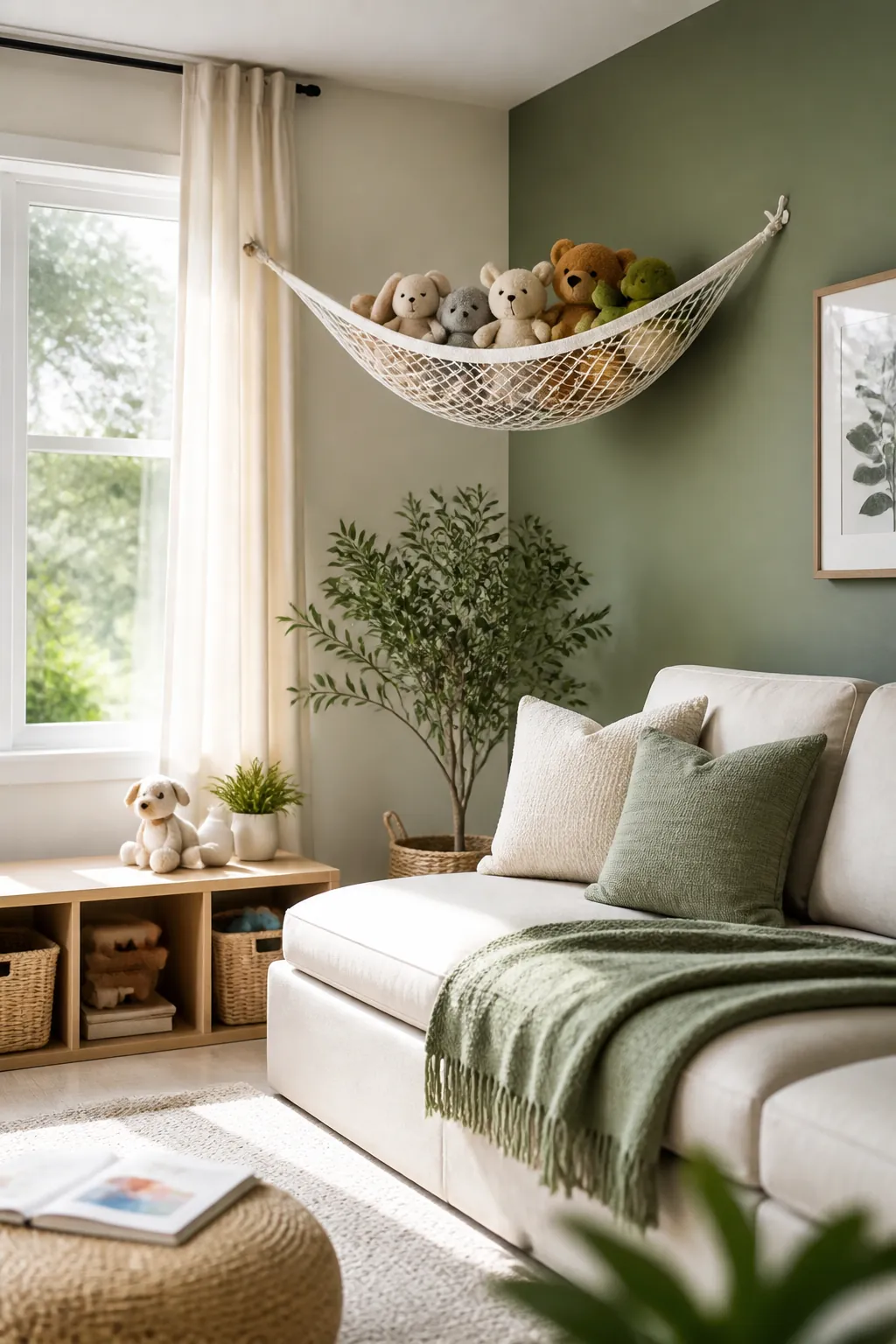
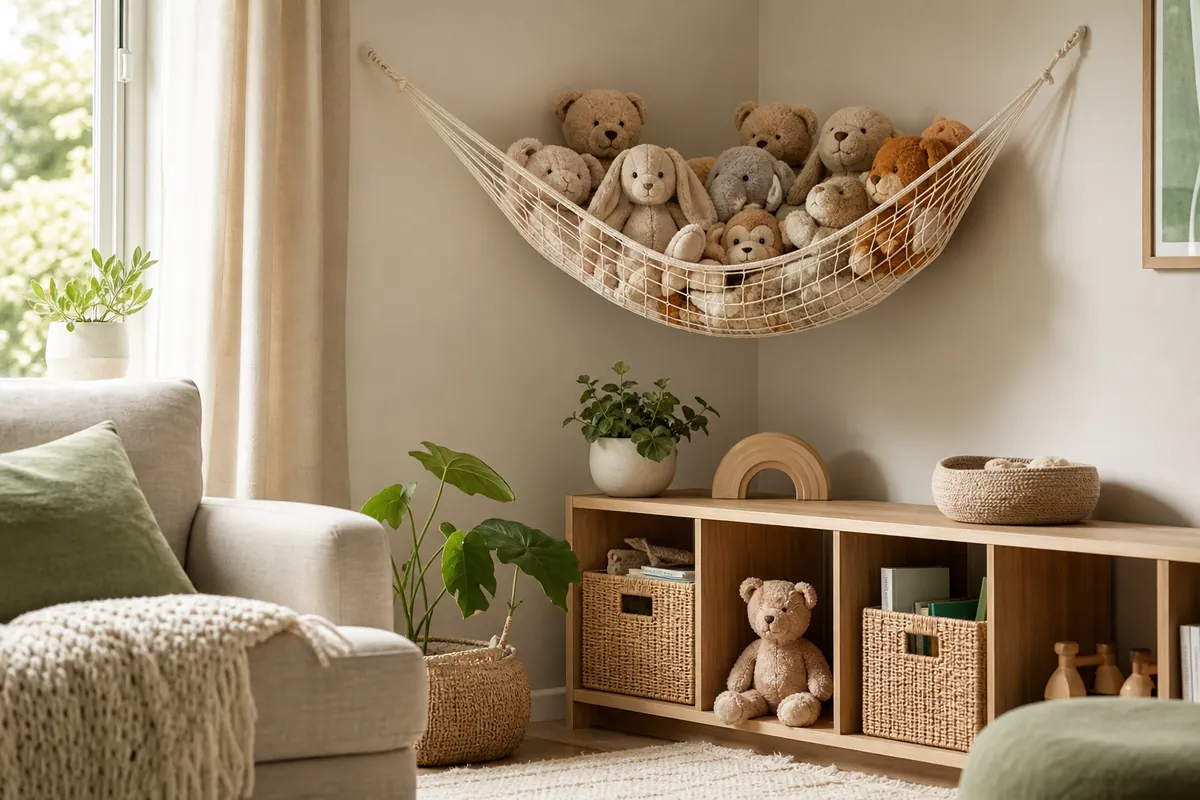
Stuffed animals are the worst offenders in a small space. They’re bulky, light, and they refuse to stack. They also don’t belong in a bin, where they compress into a sad ball and nobody digs to the bottom. Get them off the floor entirely.
A toy hammock corner net, the kind you’ll find on Amazon, strings across an unused corner up near the ceiling and holds a startling volume of plush without taking a single square inch of floor. It’s the highest-return five minutes of installation in this whole list. Mount it above kid reach so the stuffies become a soft, tidy display, and hand them down at bedtime.
Two honest caveats. The net needs solid anchor points (studs or proper drywall anchors), and it’s meant for lightweight plush, not heavy or hard toys that could fall. Hang it above where a child stands or plays, never over a reading nook where something could drop on a head.
Make your existing furniture do double duty
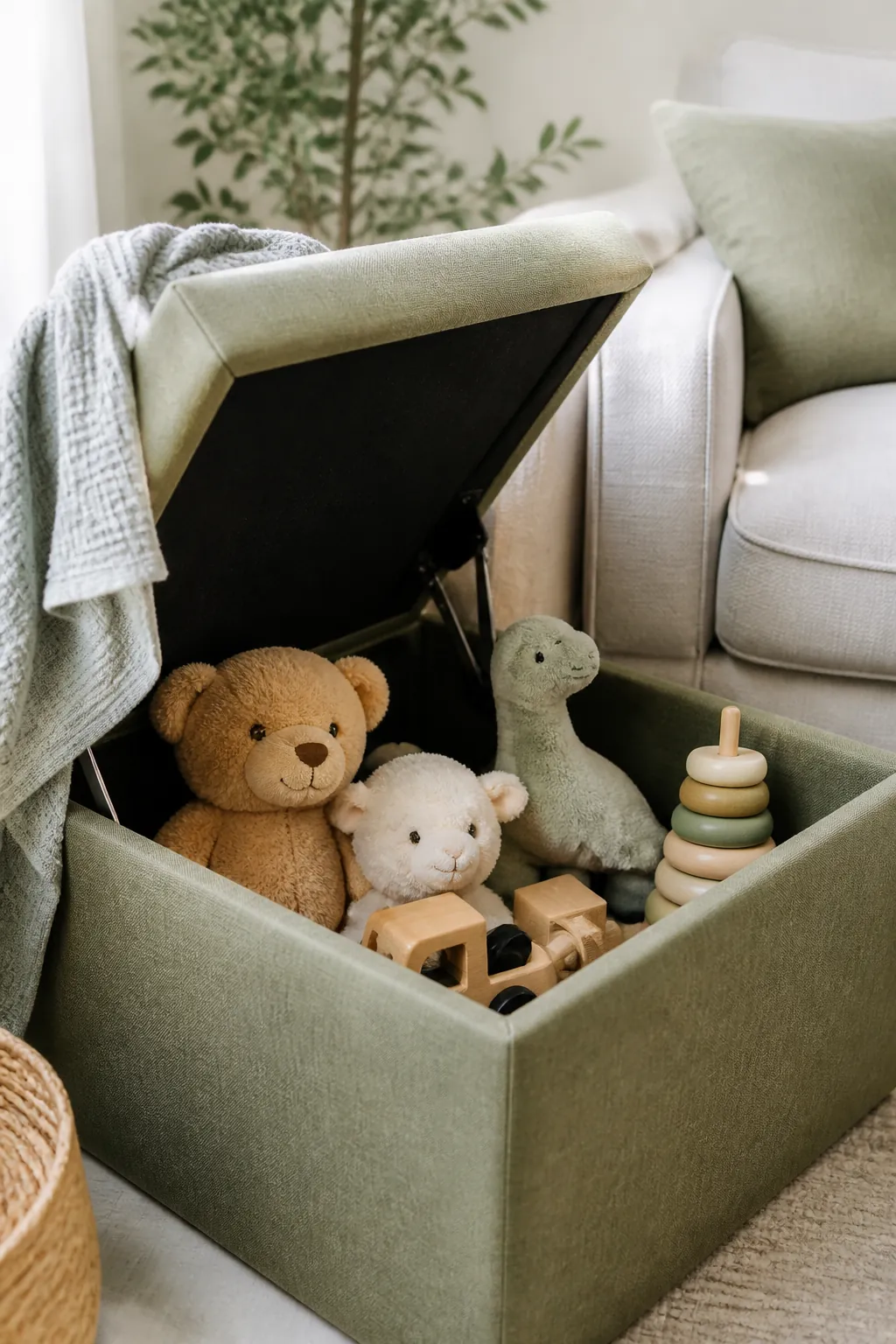
In a small room, every piece should hold toys or it isn’t pulling its weight. Look at what you already own:
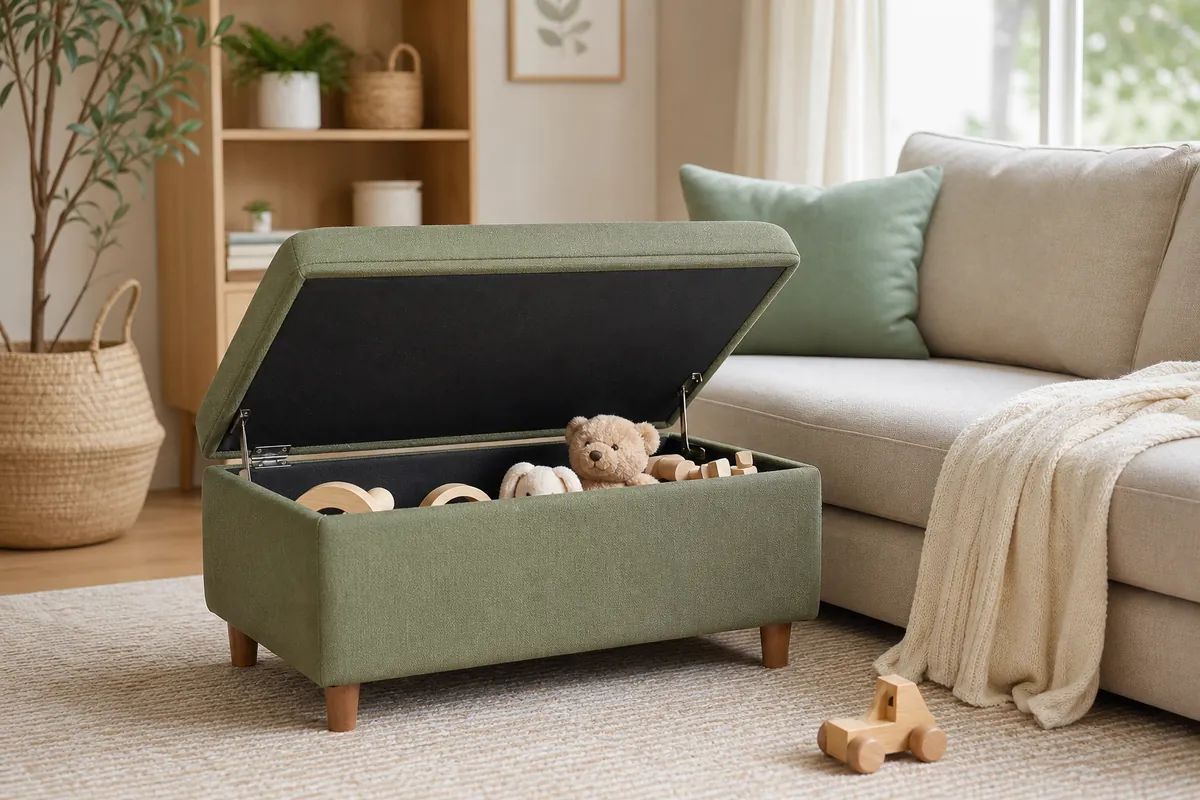
The coffee table. Swap a solid one for a lift-top, or a table with a lower shelf, and slide two shallow bins underneath. That’s prime real estate right where kids play.
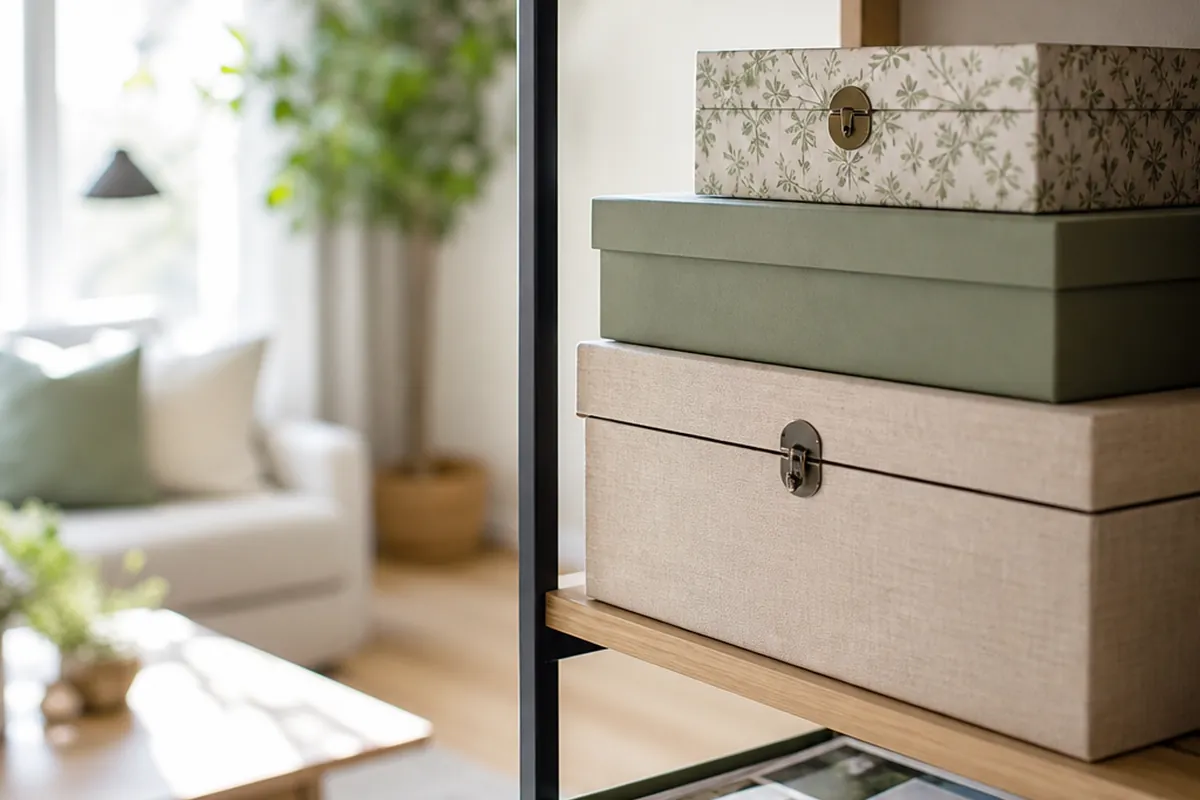
Under the couch. Most sofas have a few inches of clearance. Flat rolling underbed bins slide right under and swallow puzzles, board games, and other flat toys. Out of sight, easy to pull out.
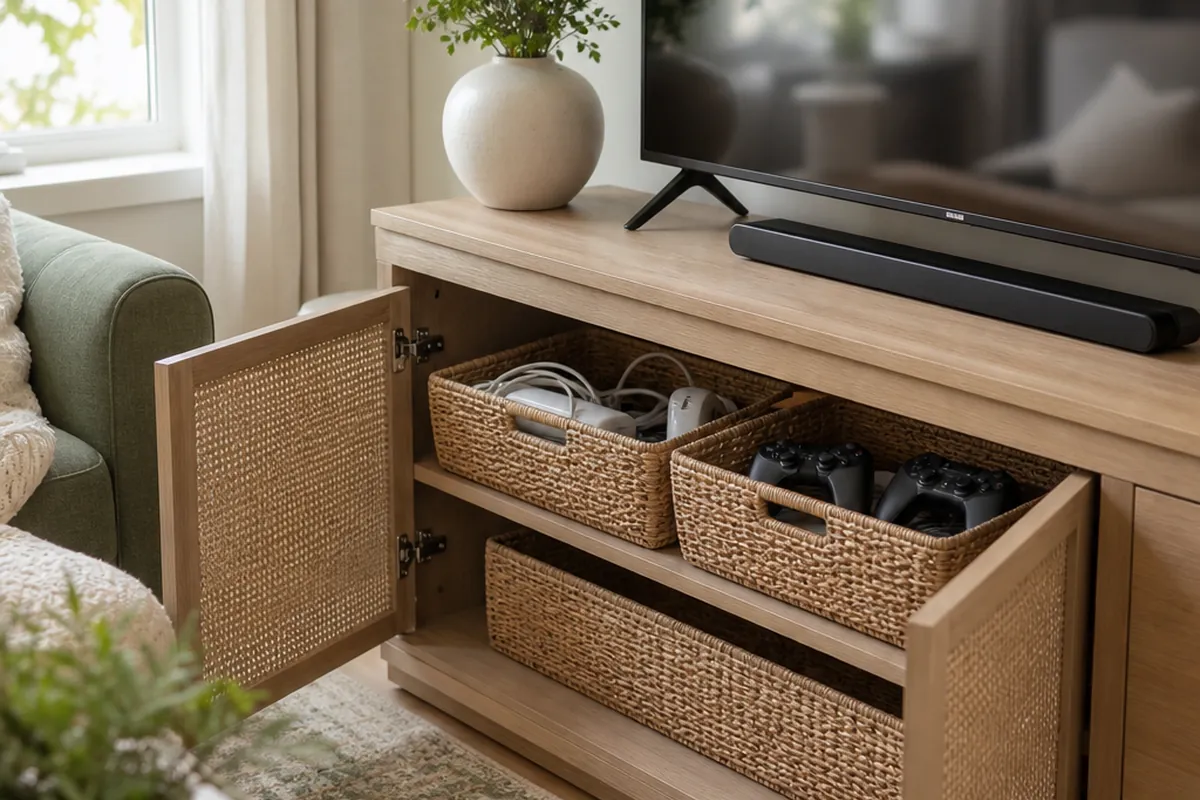
The console or media unit. The cabinet under the TV shouldn’t be hoarding cables and air. Give a shelf or two to toys in matching bins so the play stuff blends into the media wall.
If you’re renting and can’t add much furniture, lean on containers that work with pieces you already own. Our guide to renter-friendly storage that won’t lose your deposit covers the no-drill options worth knowing.
Contain the clutter that spreads
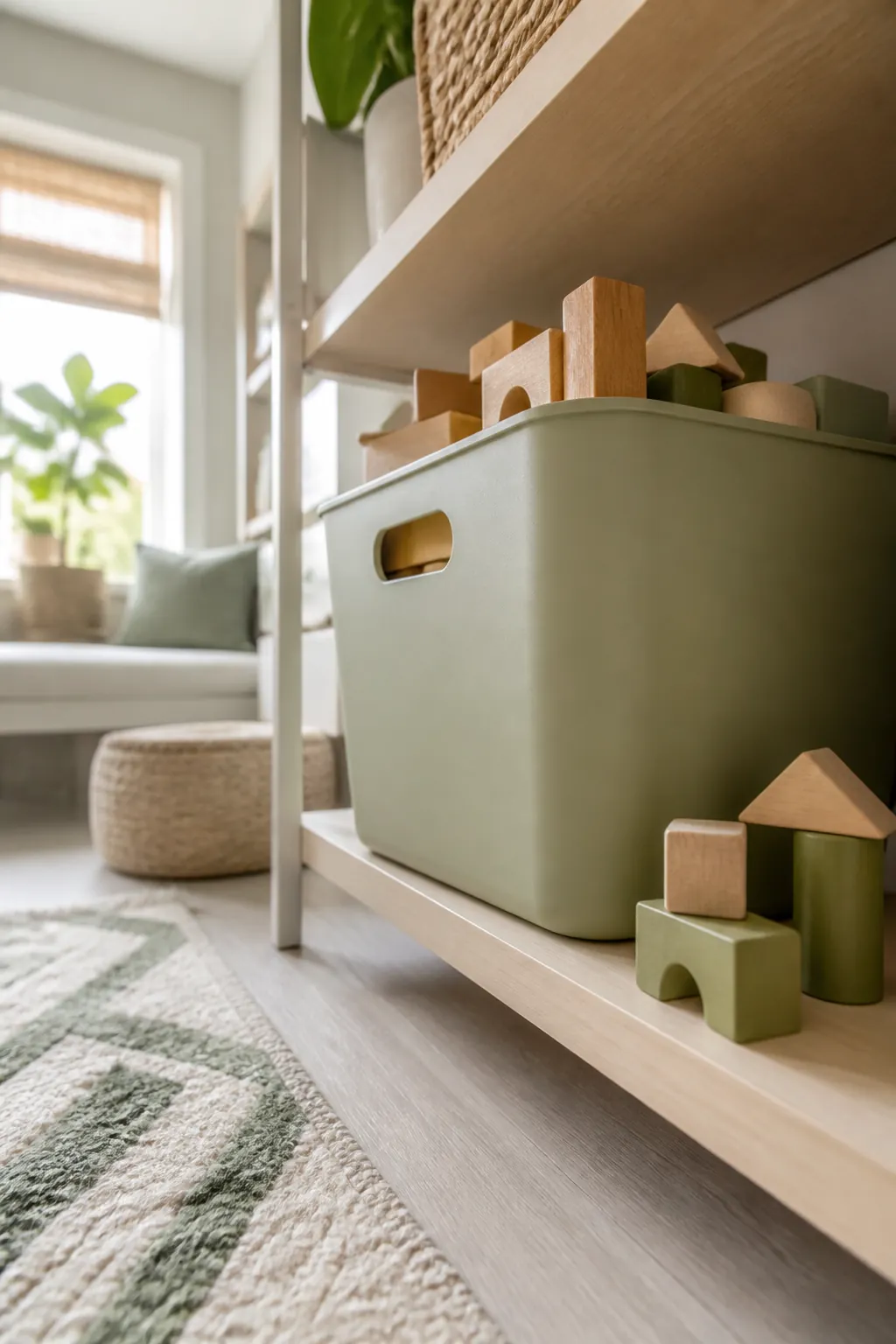
Some toys metastasize: art supplies, tiny building sets, dress-up clothes. They need boundaries or they take over the room.
- One bin per category, and the bin is the limit. When the block bin is full, blocks are full. This is the single best rule for keeping a small room from drowning in plastic. If a new toy comes in and nothing fits, something leaves.
- Label with pictures, not words. For pre-readers, tape a photo of the contents to the front of each fabric bin. Kids sort correctly when they can see where things go, and correct sorting is what keeps the room tidy without you standing over it.
- Keep a “landing” basket by the door. One open basket catches the day’s chaos on the way through. It’s a holding pen, emptied into real homes at night, and it stops the rest of the room from becoming the drop zone.
Puzzles are the worst offenders, since one lost piece ruins the whole thing. Puzzle storage ideas for a small kids’ room has the fixes that keep every piece with its set.
Go vertical without going overboard
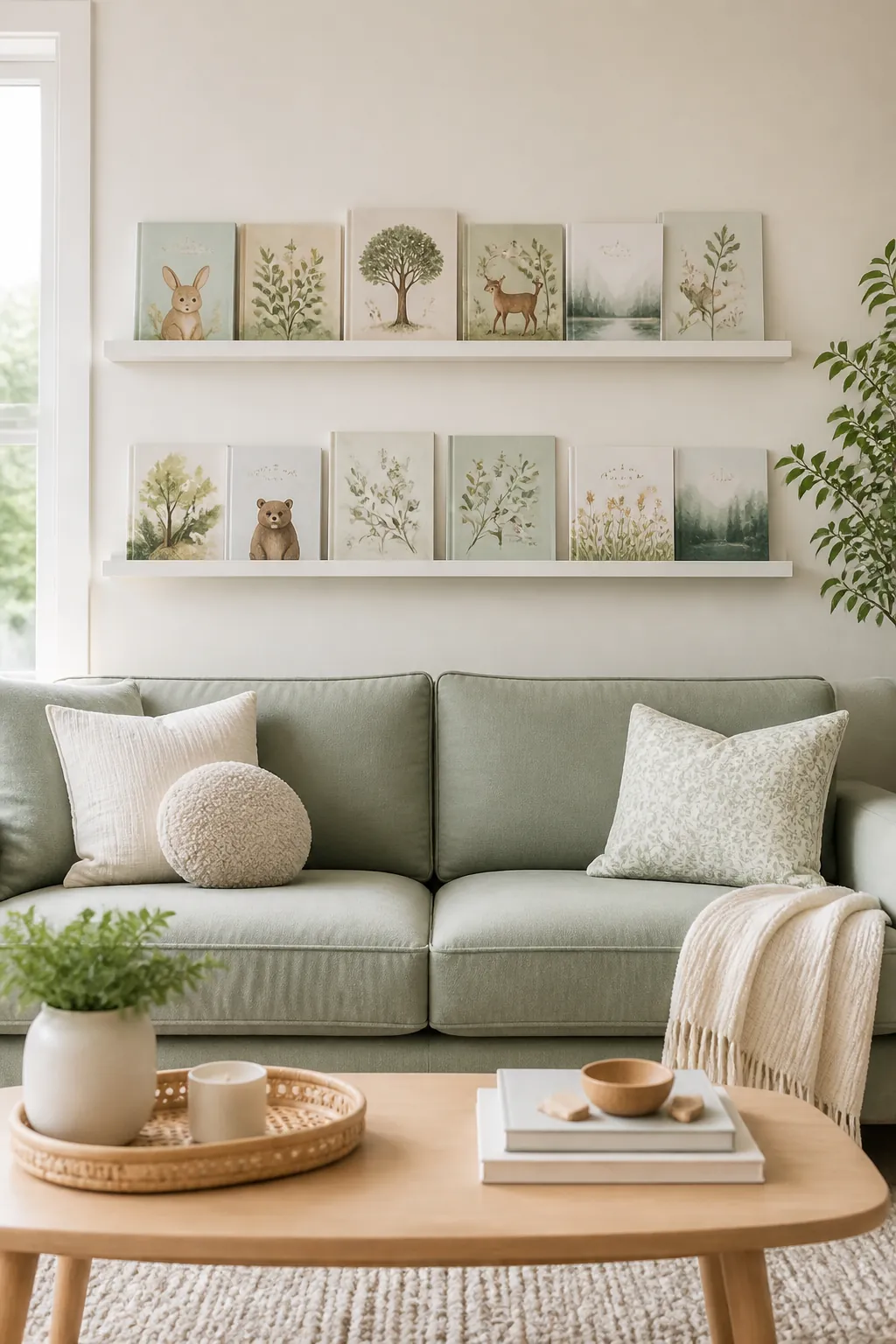
Floor space is the scarce thing in a small living room, so push storage up the walls where you can. A narrow set of wall shelves or picture ledges holds books face-out (kids pick books by cover, not spine) plus a rotating handful of toys. Keep the reachable lower shelves for kid access and the top ones for the small-pieces sets you dole out on purpose.
Resist the urge to cover every wall. A room where every surface is stacked with bins feels stressful even when it’s technically organized. Give the eye some blank wall to rest on. For more on making tall, narrow storage work in a tight footprint, our piece on vertical storage for small spaces breaks down the placements that pay off.
The toy rotation trick that keeps it manageable
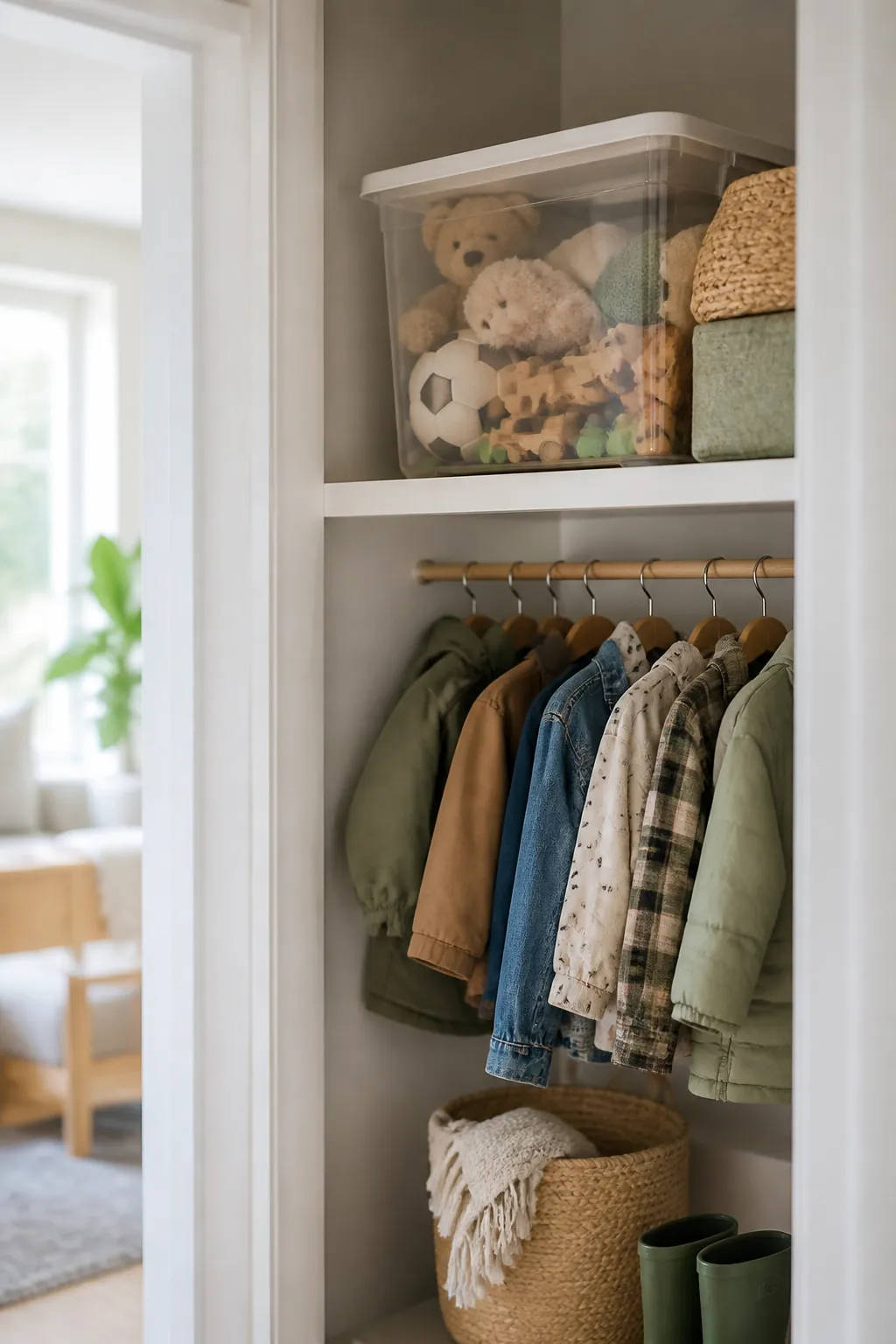
The fastest way to shrink toy clutter is to stop having all the toys out at once. Box up a third to half of the collection and stash it in a closet or on a high shelf. In a few weeks, swap. Kids treat the returned toys like they’re brand new, the visible clutter drops overnight, and your bins actually close.
This is where the cube unit and the corner net earn their keep together. Current toys live in the accessible cubes and on the rotation shelf, plush lives up in the net, and the off-rotation stash sits out of the room entirely. The living room only ever holds what’s in play right now.
Keep the system easy enough to survive real life
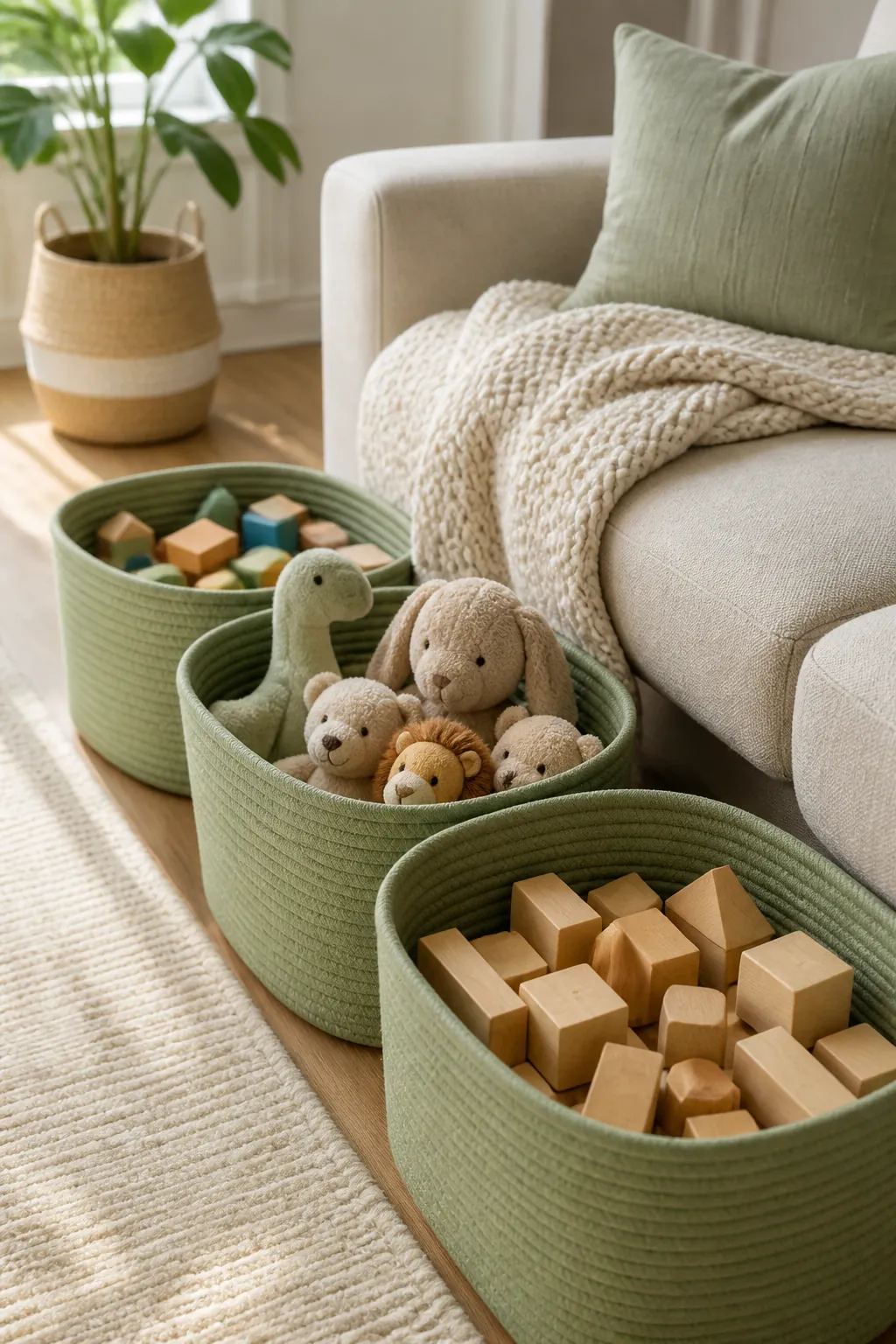
The best toy storage for a small living room is the one your family will actually use at 7pm when everyone’s fried. That means fewer categories, open bins, kid-height access, and a hard limit on how much lives in the room. Set it up so a four-year-old can reset the space in five minutes and you’ve won.
Start with the cube organizer as your anchor, string a corner net for the stuffed-animal problem, and put the furniture you already own to work underneath. Add a rotation habit, and a room that used to look like a toy store going out of business becomes a living room with toys in it, which is all you were ever after.