There is a specific kind of small-bathroom defeat where the spare toilet rolls end up in a supermarket carrier bag behind the door. Everything else in the room has been thought about, and then nine rolls of loo paper arrive and there is simply nowhere for them to be.
The awkwardness is real. Toilet paper is bulky, it looks like exactly what it is, and it needs to be within arm’s reach of the toilet rather than tidied somewhere sensible. Nine ideas below that solve both halves.
1. Keep only a few rolls in the room
The first move is not storage, it is arithmetic. A bathroom does not need to hold a whole multipack, it needs to hold enough that you never run out mid-week.
Three or four spares is the useful number. Everything beyond that belongs somewhere dry and out of the way: a hall closet, the top of an armoire, a bin under the stairs. Bathrooms are humid, and paper stored in steam for weeks goes limp and tears badly, so the bulk is genuinely better off elsewhere.
Once the room only has to hold four rolls rather than twenty-four, almost every idea below becomes possible.
2. Use a slim floor stand beside the toilet
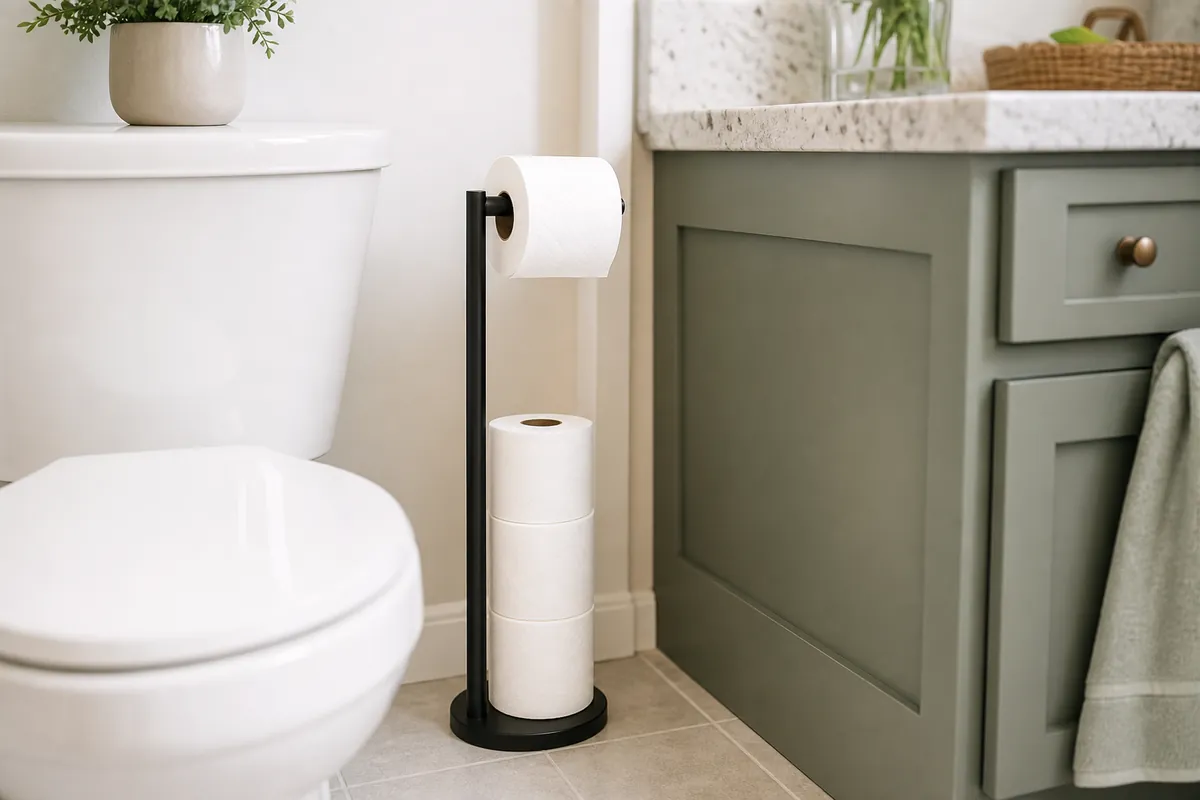
The strip of floor between the toilet and the wall is usually four to eight inches wide, permanently empty, and impossible to use for anything else.
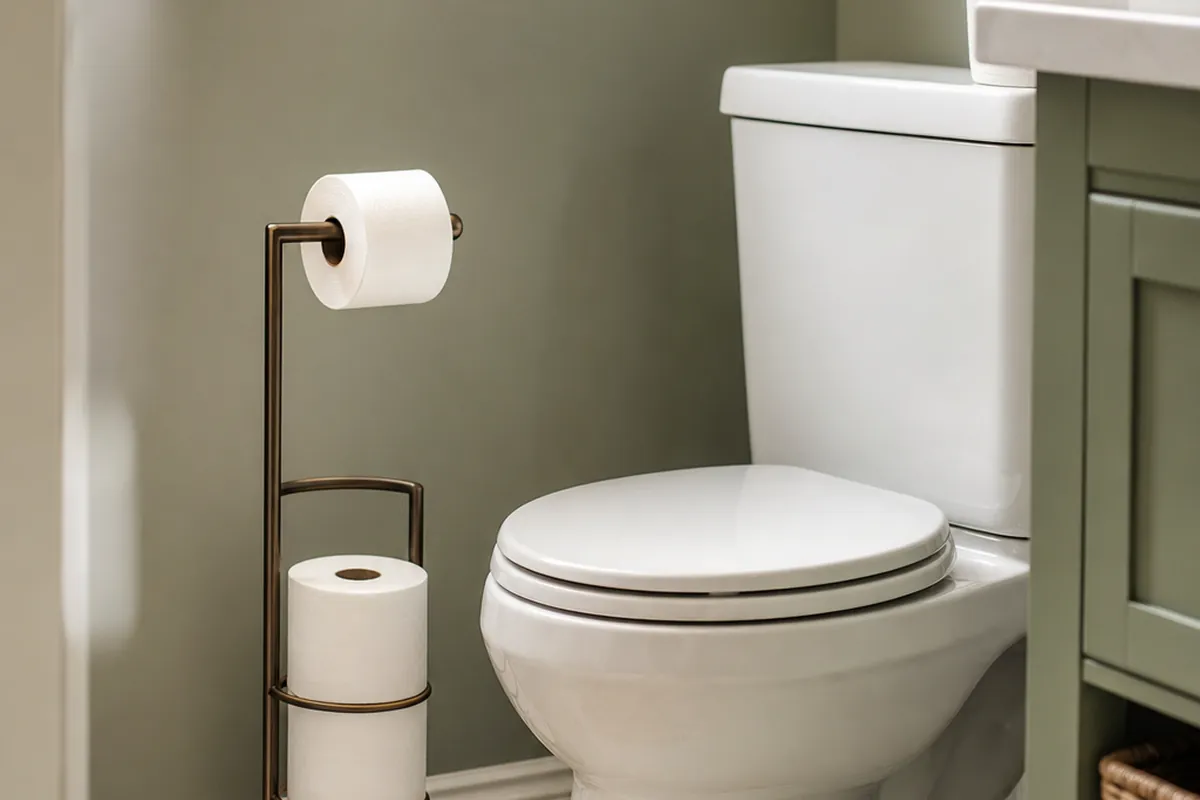
A freestanding toilet paper stand with storage is built for exactly that gap. It holds the roll in use at hand height and stacks the spares below in the same footprint, which means the whole job is done by one narrow object with no drilling.
Measure that gap before buying, including the baseboards, which often steals half an inch. And check the base is weighted or wide enough not to tip, since a top-heavy stand next to a toilet is a nuisance you will resent daily.
3. Put a shelf above the roll holder
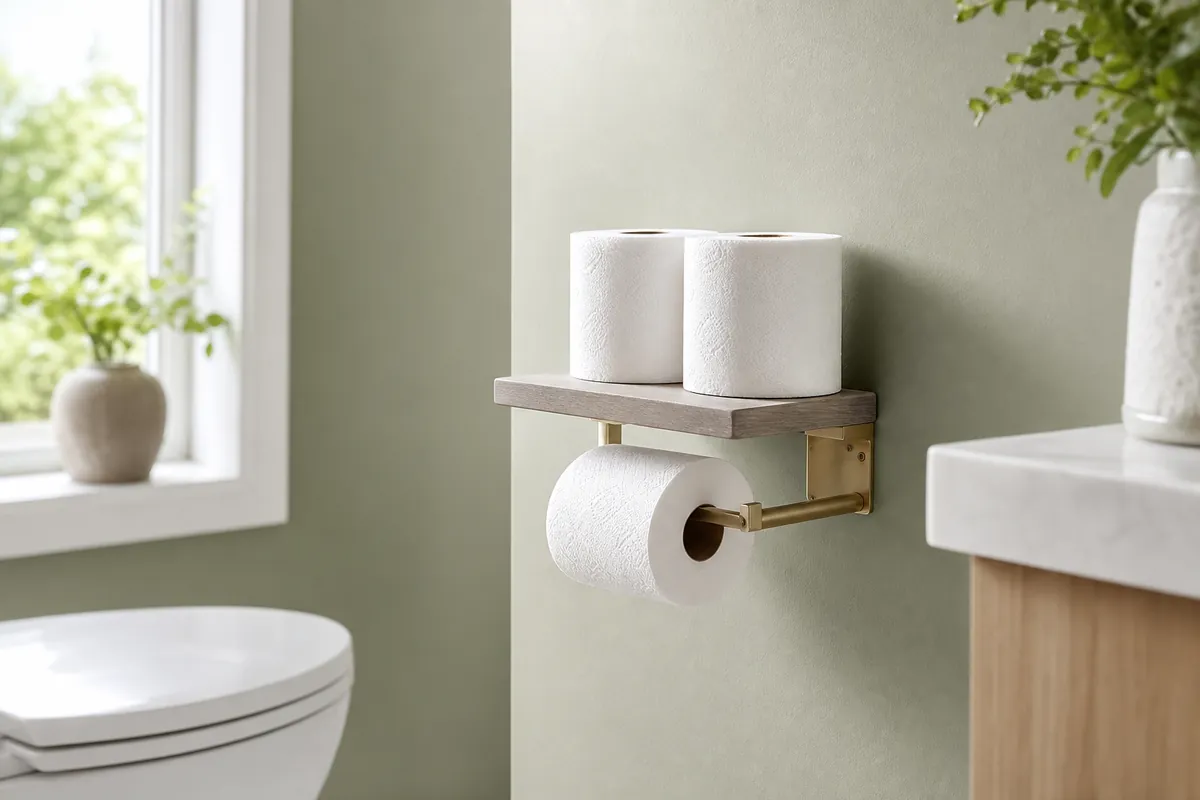
The wall directly above the toilet roll holder is dead space, and it is the most logical place in the room for spares because it is exactly where your hand already goes.
A toilet paper holder with storage shelf combines both jobs in one fitting, so the roll in use hangs underneath and two or three spares sit on the ledge above. One set of screw holes, two functions.
Mount it so the shelf clears your shoulder when seated. The instinct is to place it low for easy reach, which puts the spares exactly where you will knock them off.
4. Hide the spares in a closed basket
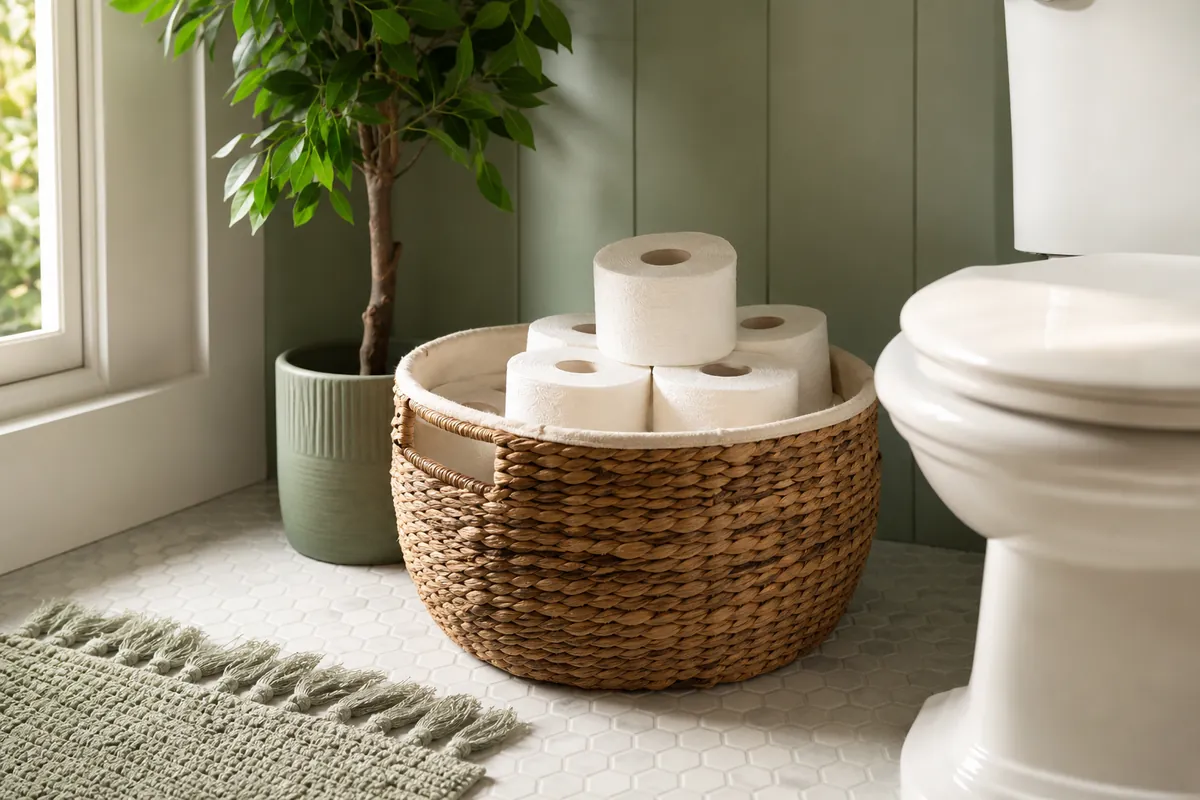
If the rolls being visible is what bothers you, a lidded or deep woven basket solves it without any building work.
A woven storage basket beside the toilet holds four rolls, looks deliberate rather than apologetic, and keeps dust off the paper. Deep and narrow beats wide and shallow here, because a narrow basket fits the gap beside the pan while a wide one blocks the walkway.
Choose a basket with a fabric liner if your floor is ever wet. Bare wicker wicks moisture from a damp floor straight into the bottom roll.
5. Build upward over the cistern
The wall above the cistern is the largest unused surface in most tiny bathrooms, and an over-the-toilet unit turns it into three or four shelves without touching the floor.
Toilet paper is the ideal thing to put there, because it is light, it does not matter if it is on display, and it is directly above where you need it. Put the rolls on the lowest shelf and the decorative or rarely-used things higher up.
This is the single highest-value move in a cramped bathroom, and over-the-toilet storage ideas covers the full range of what fits up there.
6. Stack rolls inside a tall lidded container
For anyone who wants the paper genuinely out of sight, a tall lidded container works surprisingly well, and standard rolls stack neatly in a column.
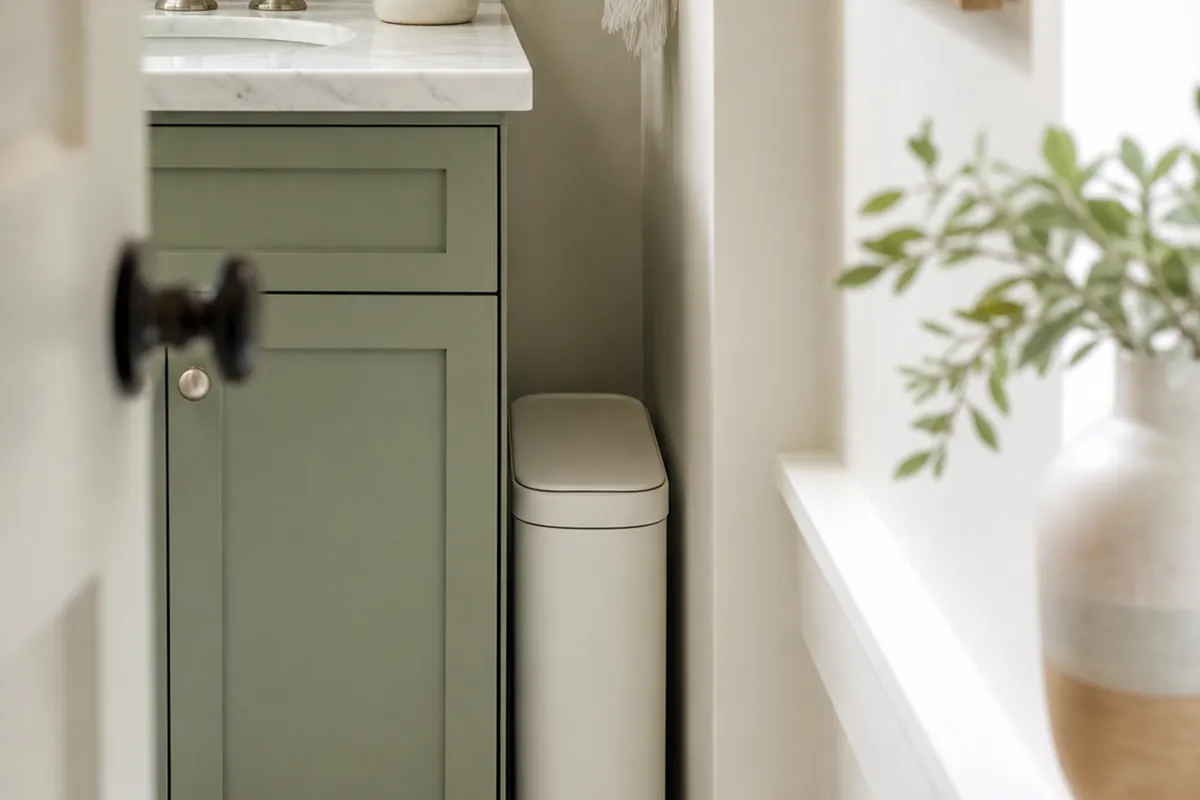
A slim laundry-style bin or a lidded tower in a corner holds six or more rolls and reads as a piece of bathroom furniture rather than storage. The lid keeps dust and steam off, which matters more in a windowless room than people expect.
Do not seal it airtight. A container with no airflow in a humid bathroom holds the moisture in with the paper, which is worse than leaving them open.
7. Use the back of the door for the overflow
If the floor is genuinely full, the door is still empty. A fabric over-the-door organizer with deep pockets holds several rolls flat against the door, out of the way and invisible when the door is open.
It is not the prettiest solution in the room, which is why it suits the overflow rather than the rolls in daily use. Keep one or two spares within reach of the toilet and let the door hold the rest.
8. Turn a corner shelf into the spare stack
Corners are the most wasted area in a small bathroom because nothing rectangular fits them properly. A corner shelf unit turns that triangle into three or four small shelves, and a stack of toilet rolls fits a triangular shelf better than almost anything else.
Two rolls sit neatly on a corner shelf where a box of anything else would overhang. Put them at the lowest level and use the shelves above for the things you want on display.
9. Give the holder a job it can actually do
A lot of toilet paper chaos comes down to a holder that fights you. Rolls that need two hands to change get changed less often, which is how a spare ends up balanced on the cistern permanently.
A holder you can load one-handed makes the whole system self-maintaining, because replacing a finished roll stops being a task. If yours is a recessed or spring-loaded type that jams, replacing it is cheaper than any storage you could buy and it fixes the root cause.
Toilet paper storage that stops looking like a problem
The order that works is the same as everywhere else in a small bathroom: reduce first, then go vertical, then contain what is left. Keep four rolls in the room, use a freestanding toilet paper stand with storage in the gap beside the pan, add a toilet paper holder with storage shelf if the wall allows it, and hide the rest in a woven storage basket.
The bulk of the multipack lives somewhere dry and out of the bathroom entirely, which is the part that makes all of it fit. Once the paper has a home, the rest of the room is easier to sort, and bathroom storage for a room with no cabinet picks up from there.