A small bathroom vanity rarely has room for a trash can that actually fits its floor space, so the can ends up wherever it lands: wedged against the toilet, blocking the cabinet door, or standing in the one spot you need clear to open a drawer. The problem is never that you lack a can. It is that nobody measured the gap it has to live in before buying one. Nine ways to place a trash can, or skip the can altogether, in a bathroom too small to spare the floor.
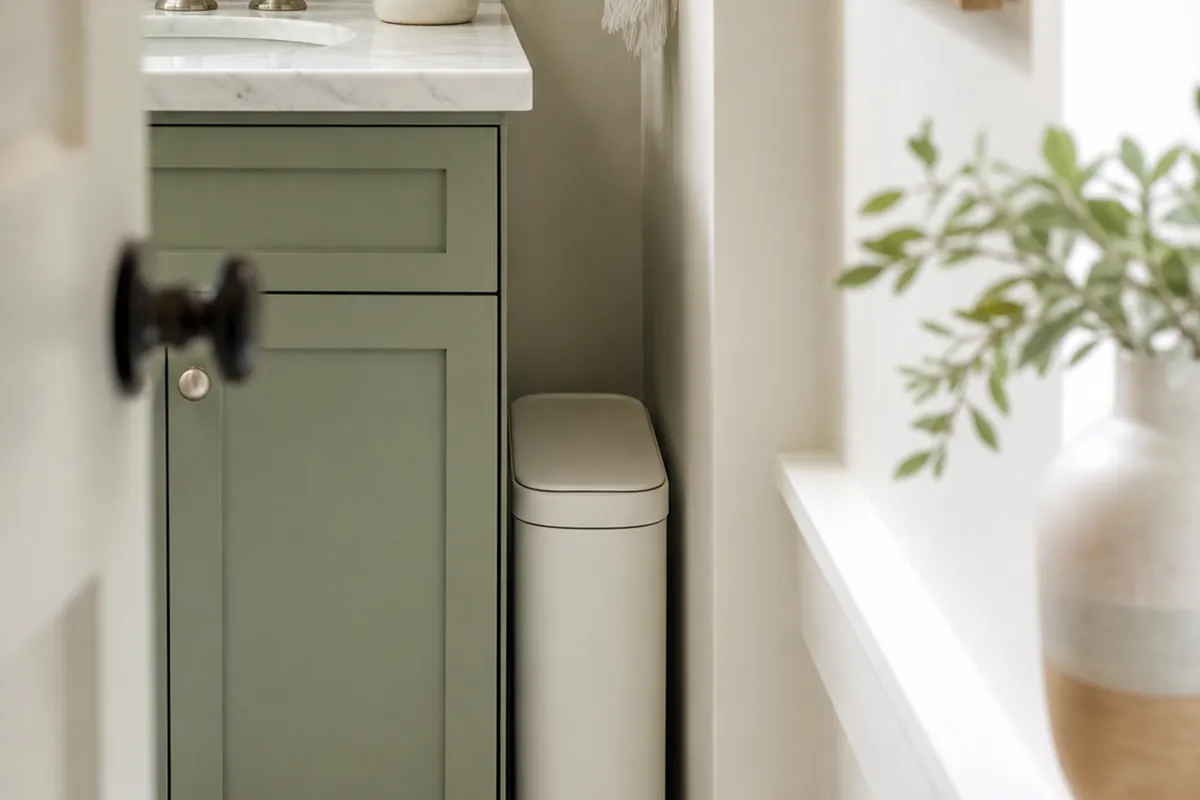
1. Measure the gap before you buy a can
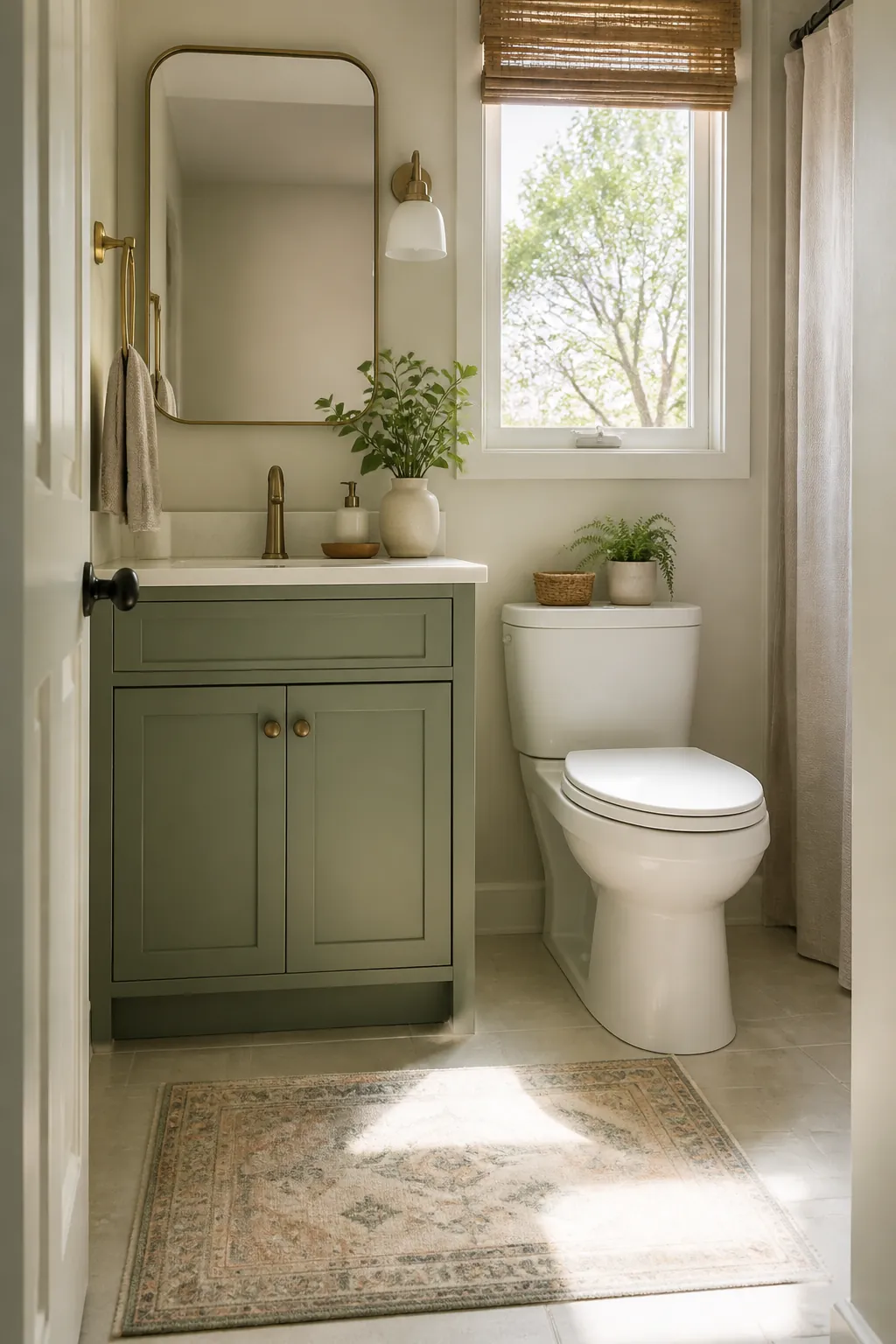
Most trash cans in a small bathroom get returned for the same reason: they were bought to match the room, not the specific gap they have to sit in.
Measure the narrowest point of wherever you plan to put it, not the widest. A gap beside a vanity is rarely a clean rectangle. It usually tapers at the baseboard, and pipework or a cabinet foot can steal another inch at floor level that never shows up when you eyeball the space standing up. Measure at ankle height with a tape, not by looking down at it.
Measure the door swing too, on both the vanity cabinet and the bathroom door itself. A can that fits the floor space perfectly but sits in the arc of a swinging door gets kicked, tipped, or in the way every single time someone uses the room.
2. Skip the can entirely in gaps under four inches
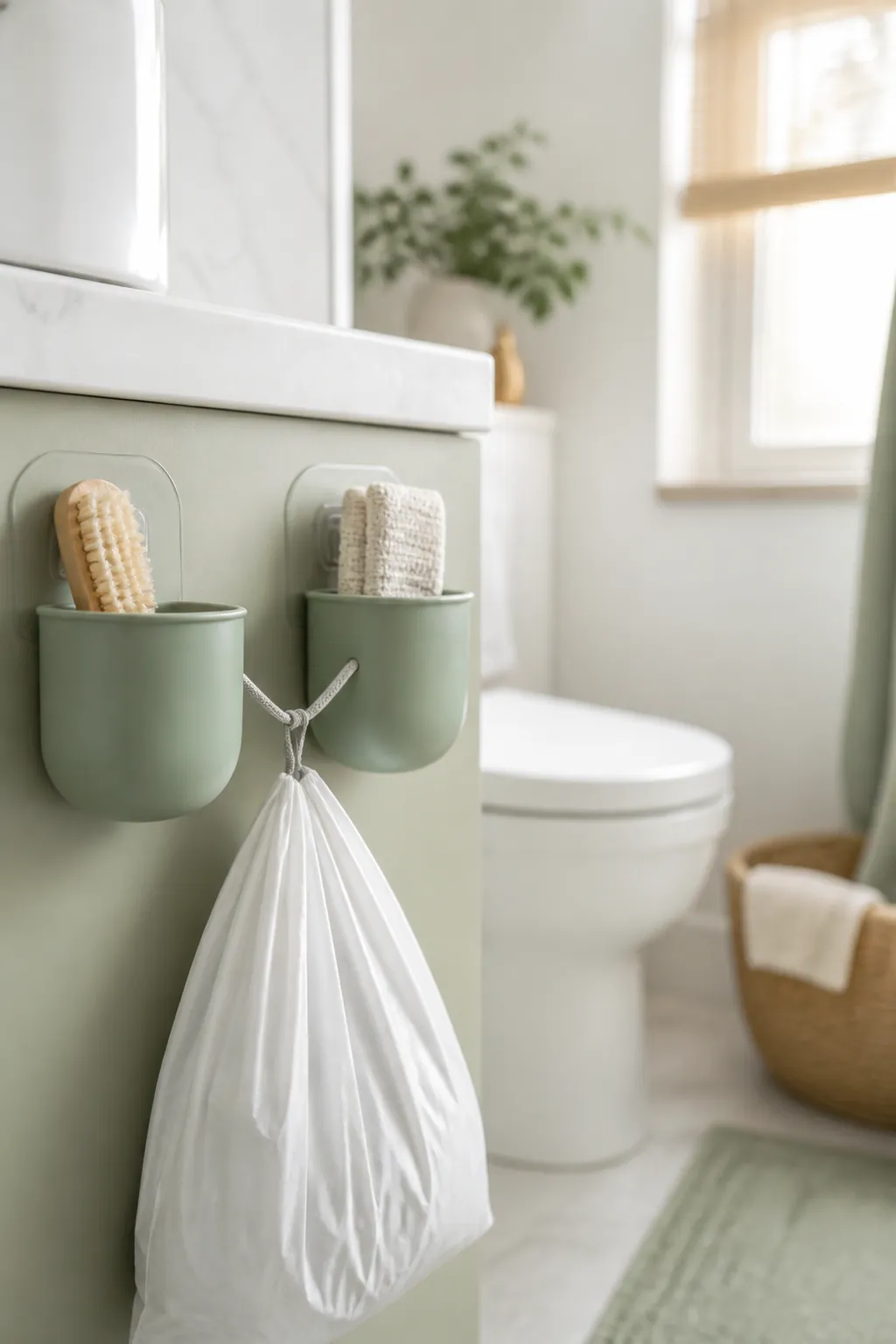
Below about four inches of clearance, no rigid can on the market will fit, and trying to force one in wastes an afternoon of returns.
Adhesive wall storage cups mounted low and a few inches apart give you two anchor points instead of a container. Hook the drawstring loops of a small trash bag over them and the bag hangs open between the two cups, using a slice of wall that a rigid can could never occupy.
The trade-off is capacity. A hung bag holds less than a can of the same footprint because there is no rigid wall pushing it outward, so plan on emptying it a day or two sooner.
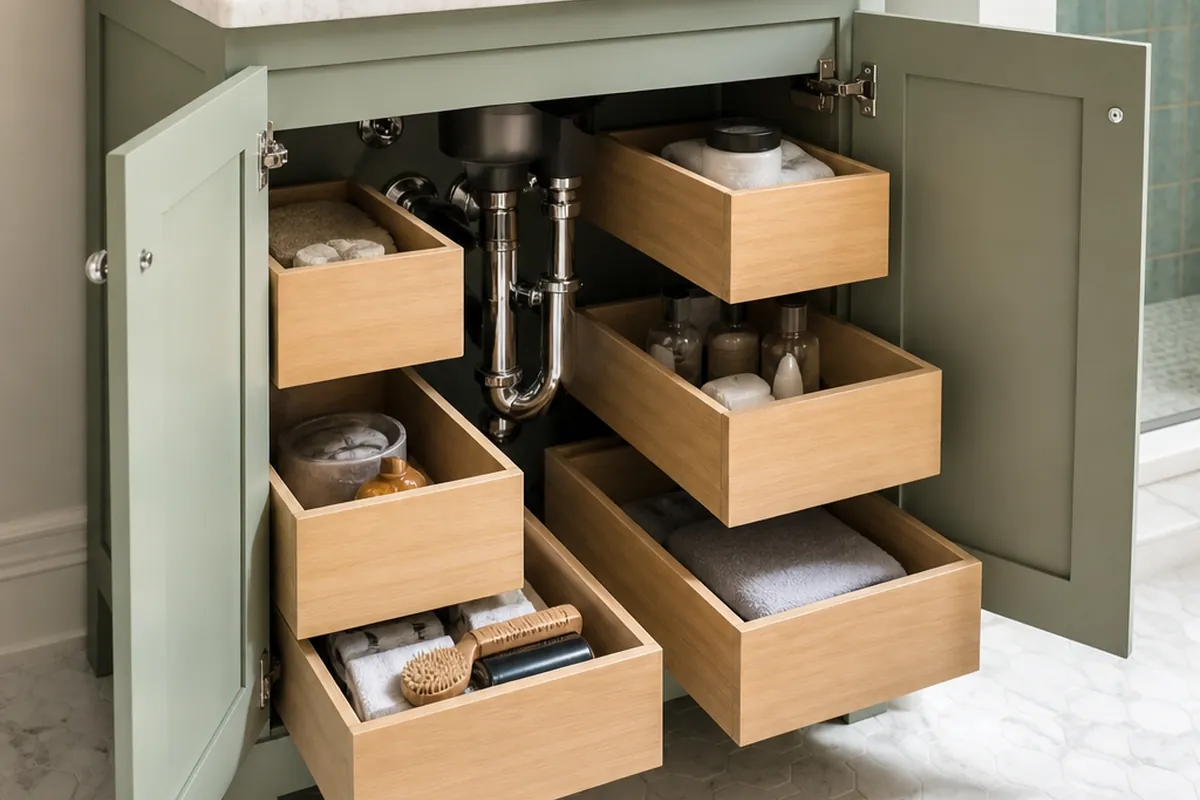
3. Slide a slim can into the under-sink cabinet on a pull-out tray
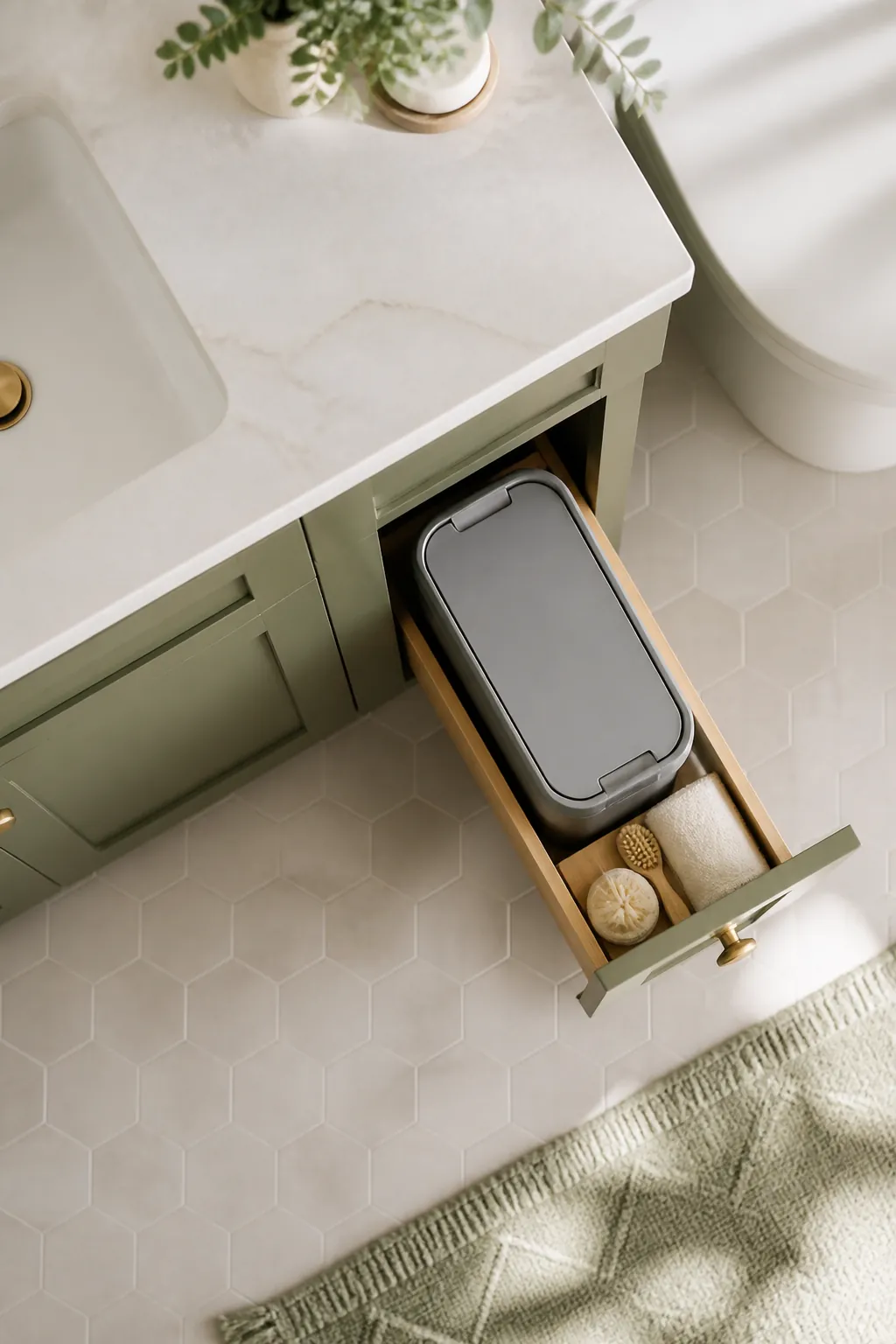
The cabinet under the sink is usually deep enough for a can, but reaching it means crouching and digging past everything else stored there, so people stop using it within a week.
A pull-out under-sink organizer fixes the access problem, not the space problem. Set a slim can on the tray and it glides forward with the drawer action instead of sitting fixed at the back of a dark cabinet. You open the door, pull the tray, and the can is right there instead of somewhere behind the cleaning spray and everything else crowding that cabinet.
Leave the last two inches at the back of the tray empty. That is where the supply line and the shutoff valve usually sit, and a can pushed hard against them makes an emergency shutoff a two-handed excavation instead of a five-second reach.
4. Hang the bag off the back of the bathroom door
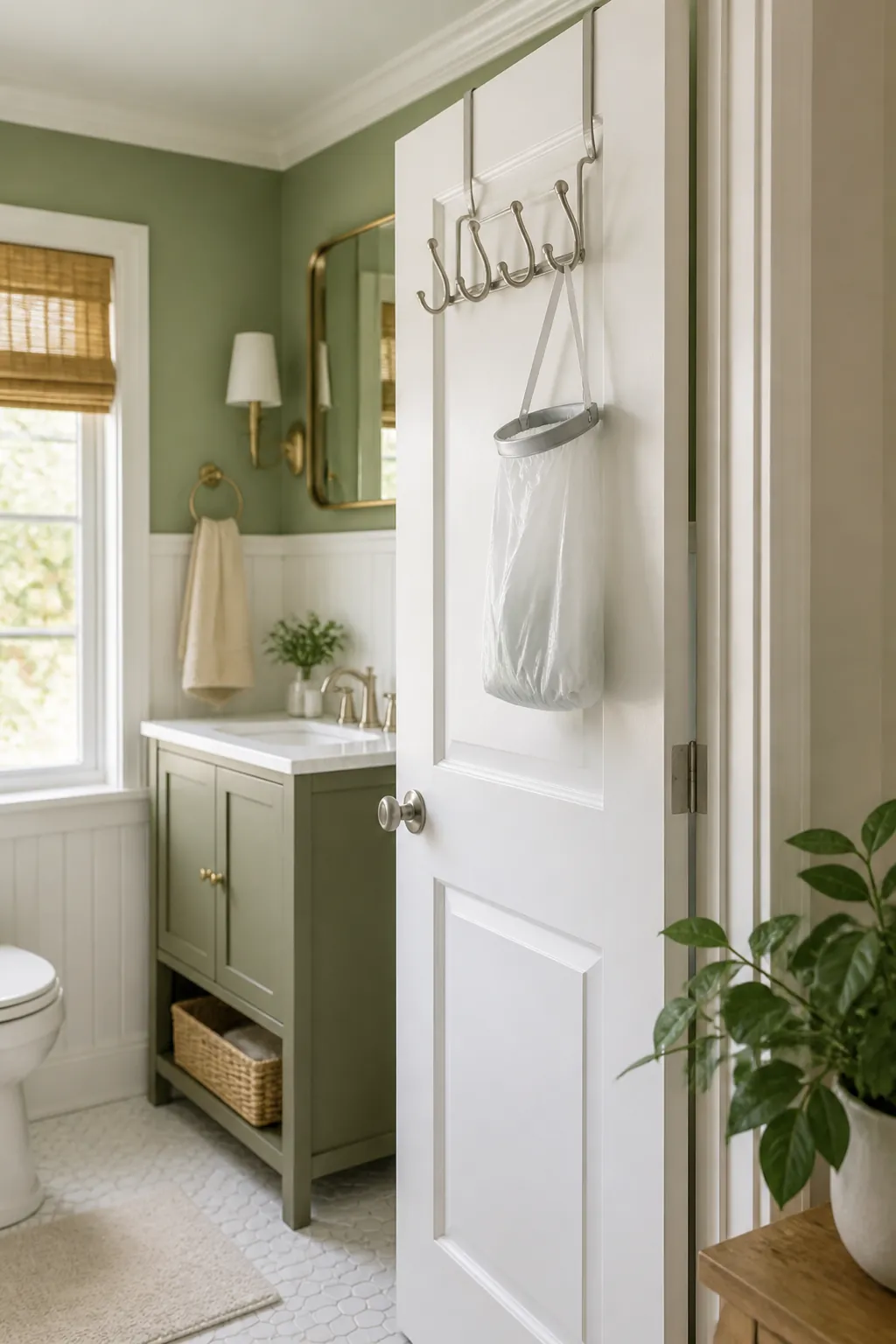
When there is genuinely no floor space and no usable gap beside the vanity, the door is still open real estate, and it costs nothing in either direction.
An over-the-door hook hanger on the back of the bathroom door holds a small liner at a height nobody trips over. It works for guest bathrooms and rentals especially well, since nothing gets drilled and the whole setup lifts off the door frame in seconds when you move out.
Two checks first. Measure the gap above the door itself, because a thick hanger bracket can stop the door closing flush against the frame. And keep whatever hangs there light and shallow, since a heavy, bulging bag on a door hook swings every time the door moves and eventually pulls the hook loose.
5. Use the toe-kick, not just the cabinet above it
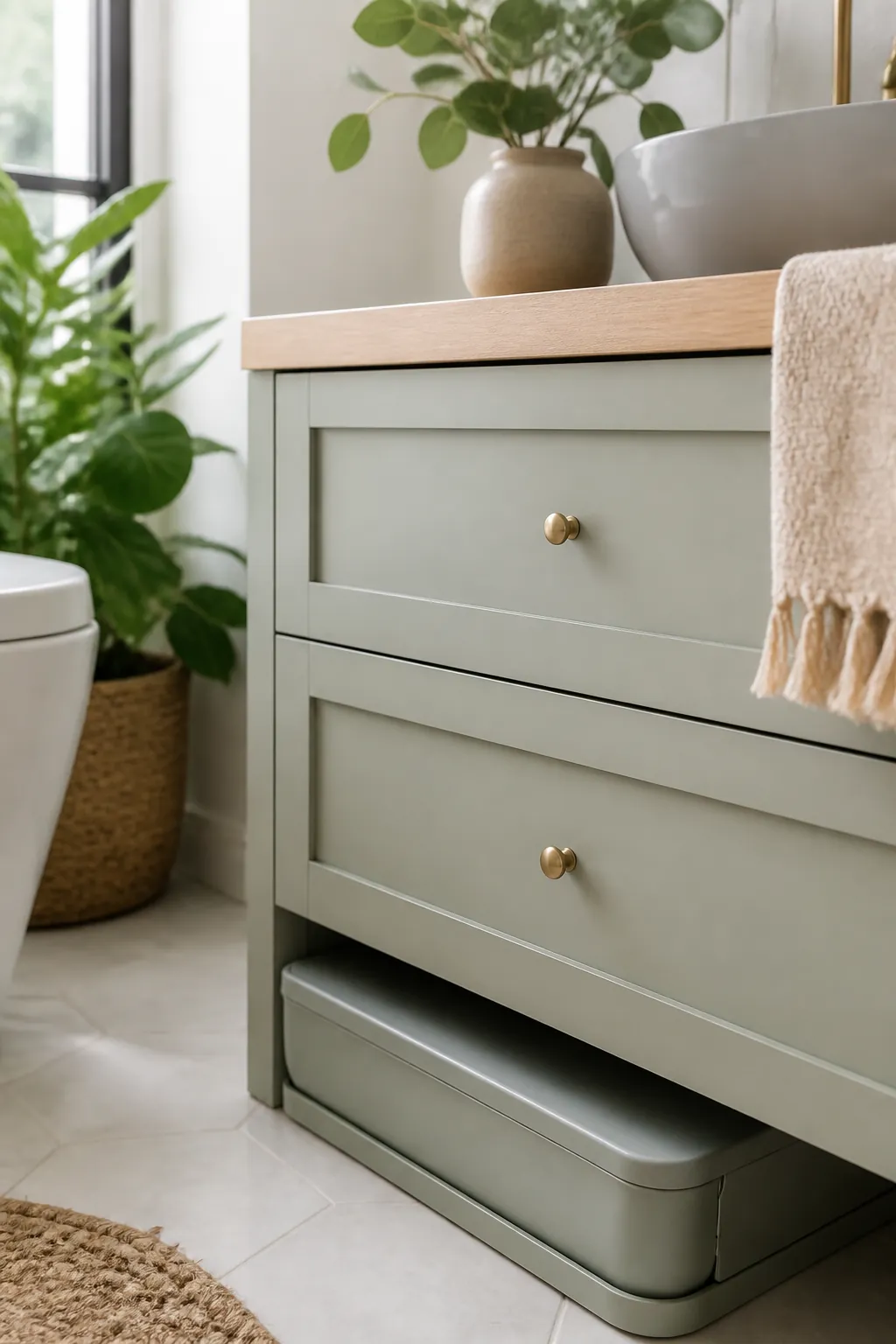
Most vanities have a recessed toe-kick at floor level, usually 3 to 4 inches deep and running the full width of the cabinet, and almost nobody uses it for anything.
A slim, low-profile bin built to slide into that recess sits entirely out of the main cabinet and out of the room’s sightline, visible only as a thin strip at floor level. It will not hold much given the shallow depth, but for something like used dental floss and cotton swab wrappers that is plenty, and it frees the whole under-sink cabinet for things that need more depth.
If your toe-kick has a decorative panel screwed across it, this idea needs that panel removed or hinged, which is a bigger project than most renters want to take on. Skip it if the panel is fixed and move to a gap that does not require altering the cabinet.
6. Corner-fit a triangular can if the room has a dead angle
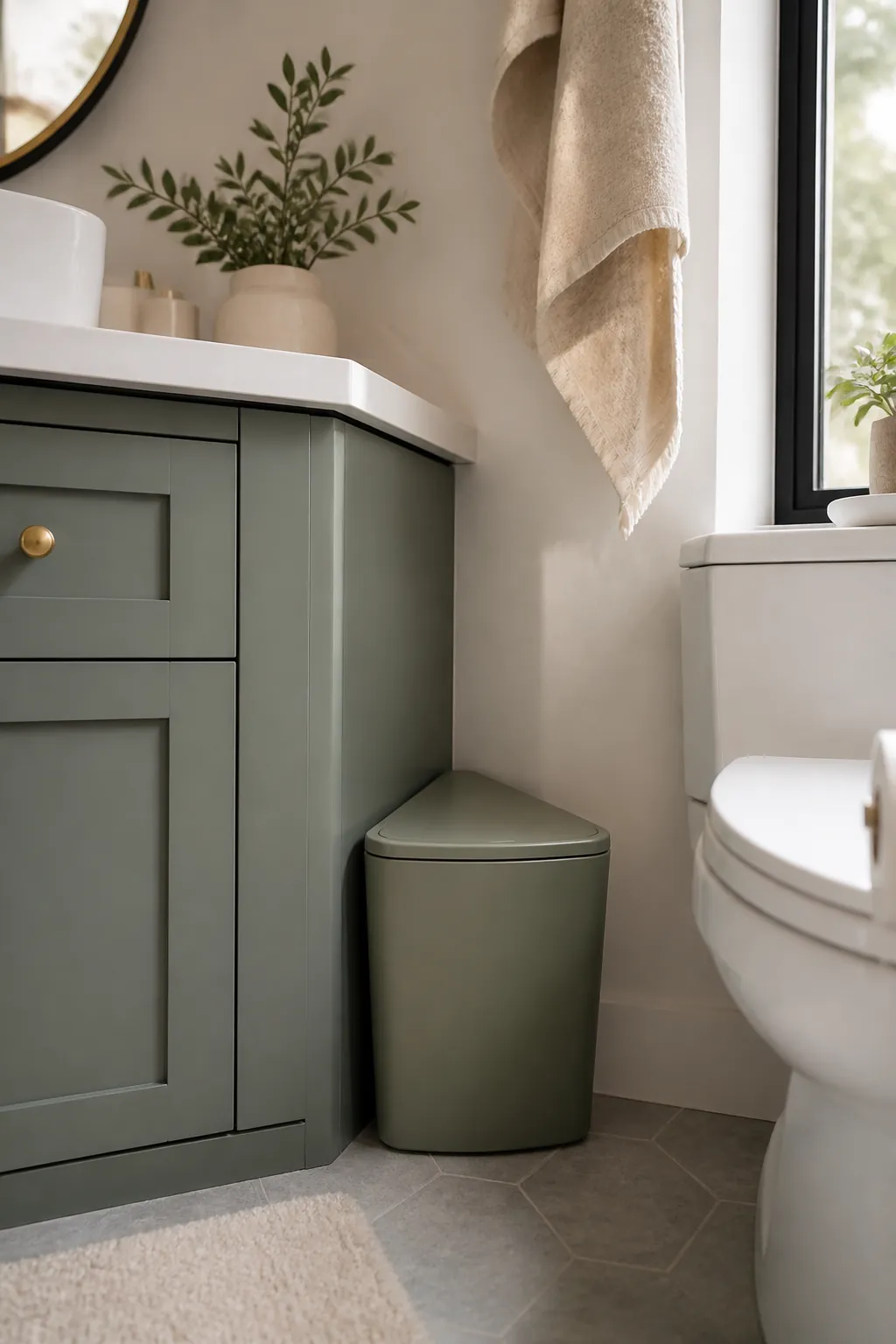
Small bathrooms almost always have one triangular dead zone: beside the toilet, in the angle where a vanity meets a wall, or in the corner behind a door when it is fully open.
A can shaped to fill a corner uses that triangle instead of the rectangle of floor space a round or square can would need. The math works in your favor here because a corner triangle is dead space either way, unused by anything else in the room, so filling it costs nothing as long as the two back edges actually sit flush against both walls instead of propped at an angle wasting the fit you bought it for.
Check the swept path of the toilet lid and the bathroom door before committing to this spot. A can that fits the static corner perfectly but catches a swinging lid or door edge will get knocked over on a schedule, not occasionally.
7. Skip the rigid can and line a small basket instead
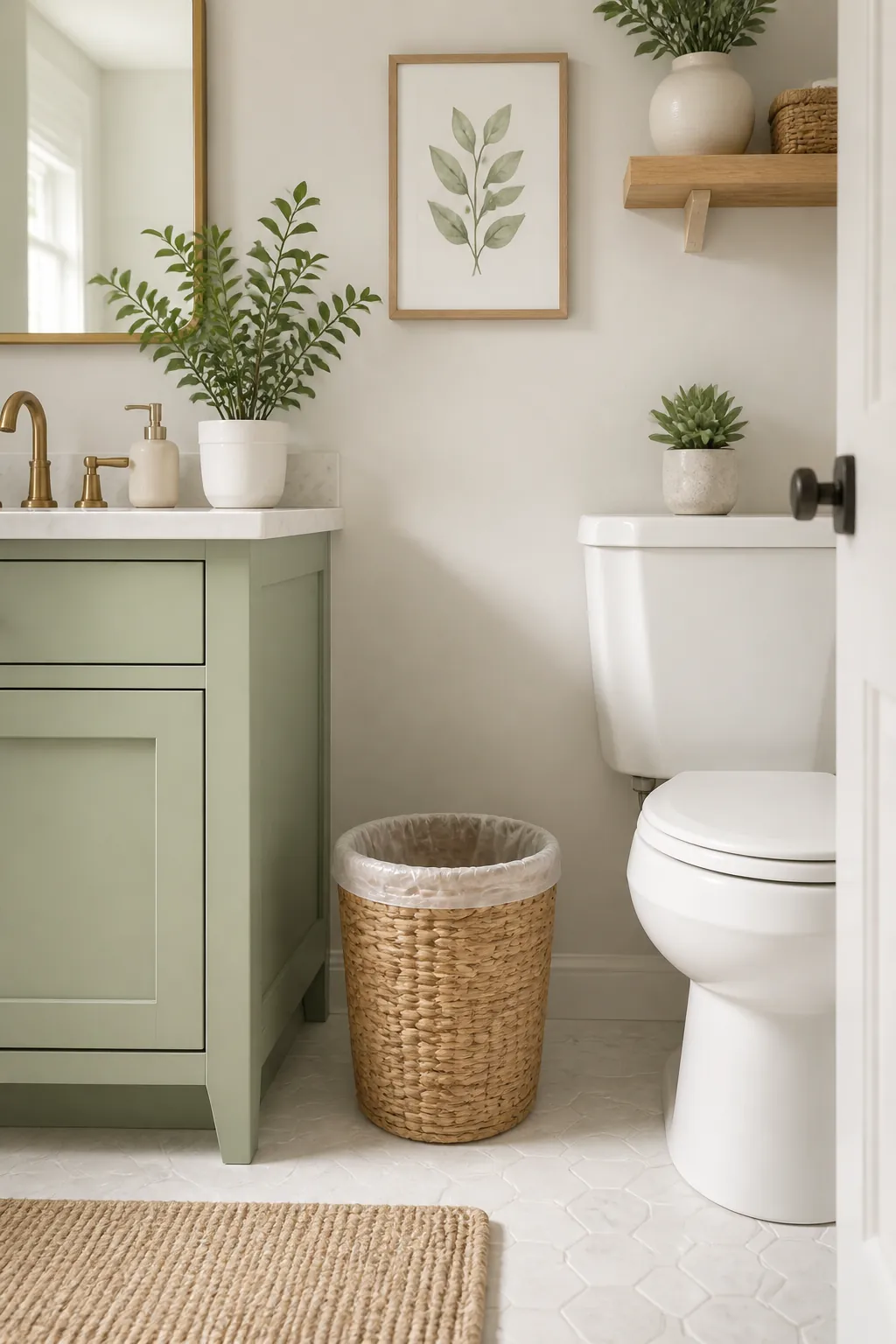
If you already own an open basket that is doing nothing in the bathroom, a liner bag dropped inside it does the job of a trash can without buying another object for the room.
This works best for dry waste only: tissue, packaging, empty containers. Anything damp defeats an open weave basket fast, since liquid finds the gaps a solid-sided can would have blocked, and a toner-soaked cotton round pressed against a woven wall will leave a wet ring on the outside of the basket within a day. If the bathroom generates much wet waste, a basket liner is a stopgap, not a long-term fix, and you will be back to a proper bin within a month.
The upside is zero new spending and a container that already matches the room, which matters more than it sounds like in a bathroom where every surface is on display.
8. Manage the liner so the can does not become the smell source
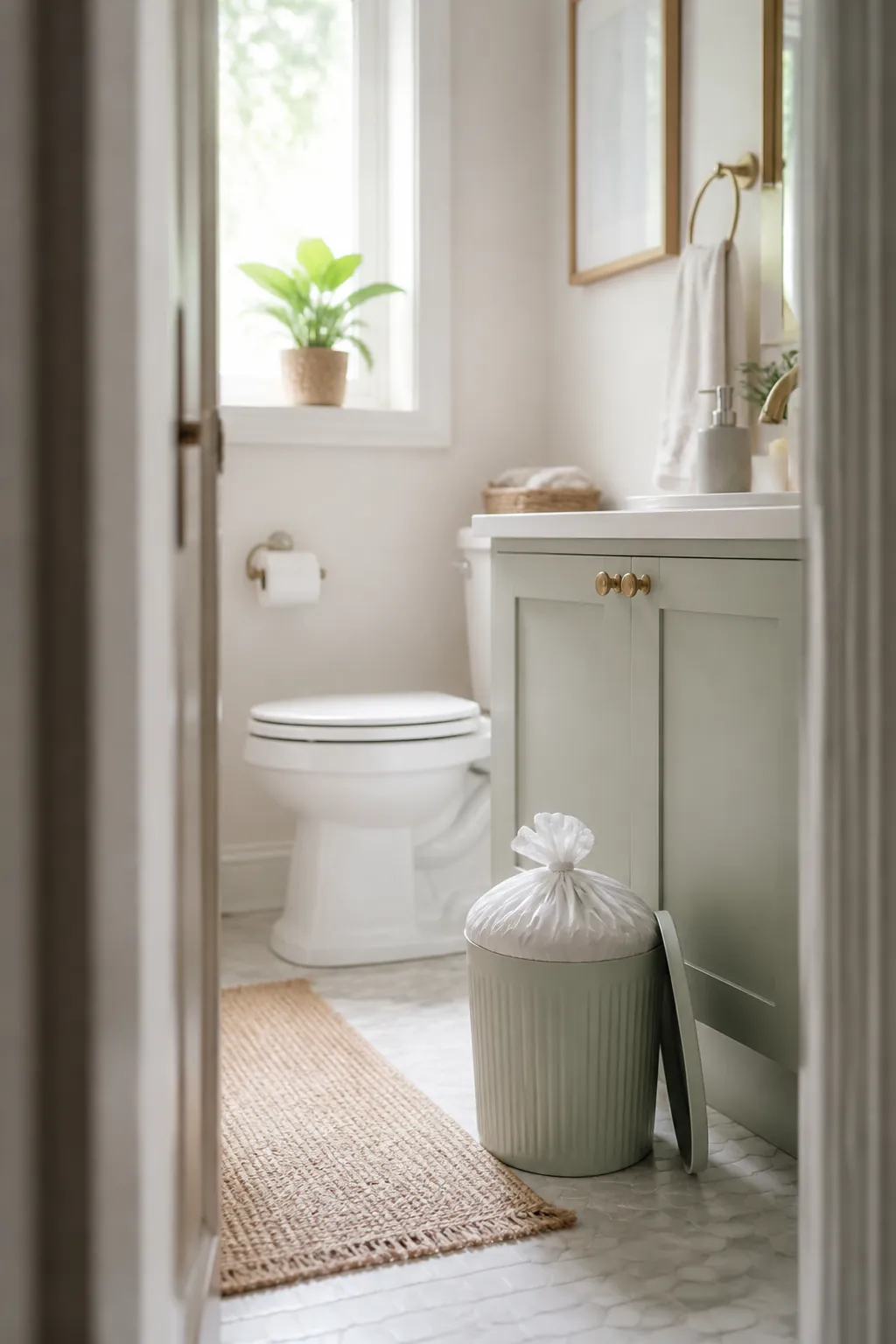
A trash can in a warm, humid bathroom develops odor faster than the same can anywhere else in the house, and the fix is rarely a bigger can.
Use liners sized to the can rather than a generic bag folded down to fit, since folded excess traps air and moisture against the inside wall. Tie the bag off before it is more than two-thirds full instead of waiting until it will not close, because a compressed bag pushed shut at the top is what actually starts to smell. And empty a lidless can more often than a lidded one. The lid is doing real work holding odor in, and without it the can needs a shorter interval to compensate.
9. Know where not to put it
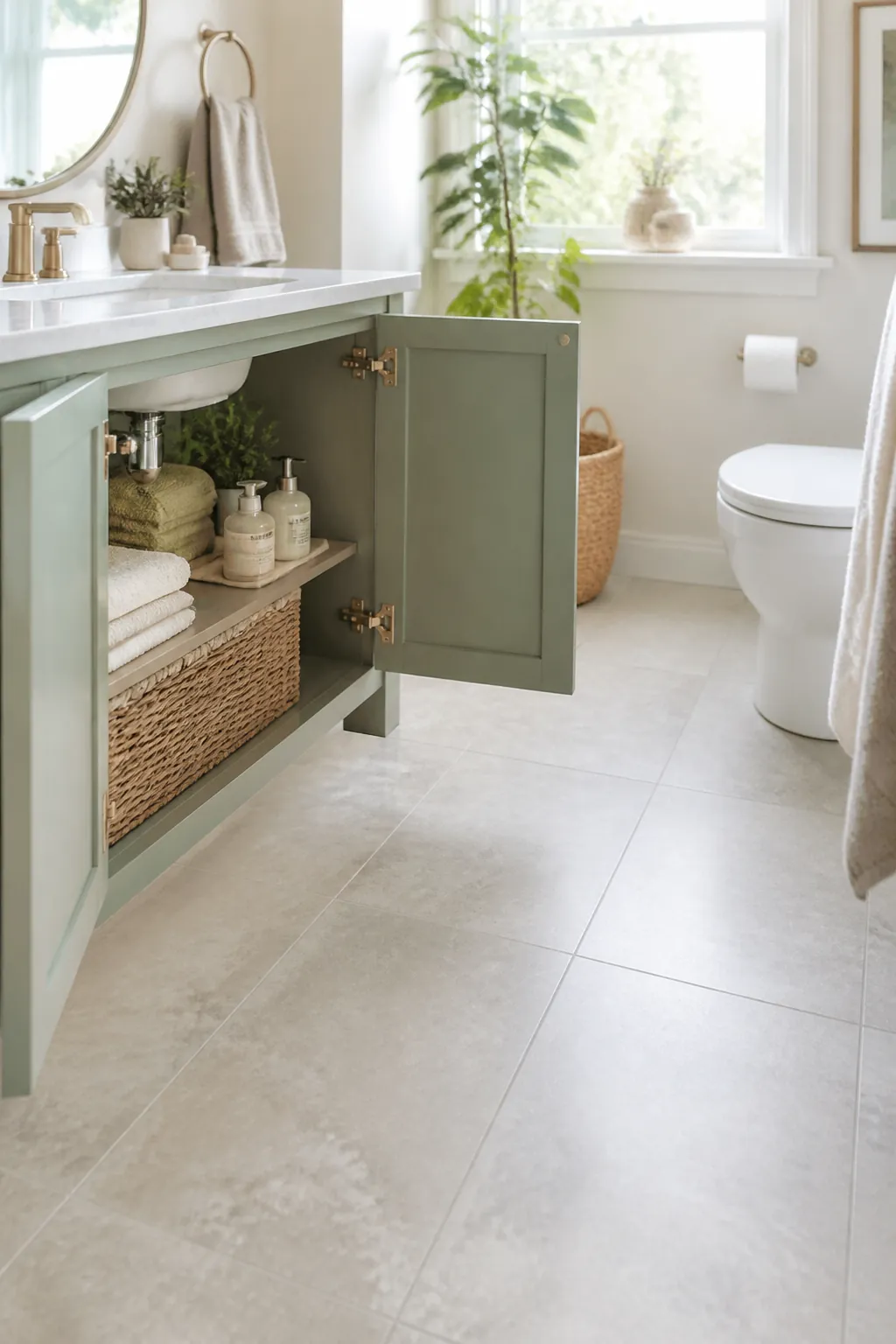
The wrong spot causes more daily friction than having no trash can at all.
Never put a can directly in front of the vanity cabinet door, since you will be shuffling it aside every time you need something from underneath. Never wedge one against the shutoff valves under the sink, for the same reason you leave that area reachable when organizing the rest of the cabinet: you will want fast access to those valves the one day a supply line fails, and a can is not worth the delay. And never place one where the bathroom door has to swing over it, because that is a can you will kick at least once a week until you finally move it somewhere sensible.
Where to start
Measure the actual gap first, at floor level, on both the vanity and the door swing. If you have four inches or more beside the vanity or a workable pull-out tray under the sink, buy a slim can sized to that number rather than to the room. If you have less than that, skip the can and hang a bag instead. Either way, the goal is the same: a trash can that sits in space nothing else was using, reachable without a detour, and out of the path of every door in the room.
None of these ideas need permanent fixtures. Adhesive cups and door hooks come down without a mark, which matters if you are also working through bathroom storage for a room with no cabinet, where every solution has to survive a move-out inspection as well as daily use.