A shower is the hardest place in a home to store anything. It is small, permanently wet, usually tiled in a way that resists fixings, and in a rental it is the one surface you really cannot drill into casually. So bottles end up on the floor of the tray, where they collect water underneath and turn a five minute clean into a chore.
The fix is less about buying a caddy than about being honest that shower storage is expensive. Everything in there has to earn its place, and the things that stay need to hang somewhere that drains.
1. Take everything out and count what you used this week
Empty the shower completely. Then put back only what you have actually used in the last seven days.
Most showers contain two or three bottles in use and another four that are nearly empty, were bought for a purpose that passed, or belong to someone who moved out. Those are not a storage problem, and no caddy will fix them.
This step does more than any product on this list, because shower storage is the smallest and most awkward storage in the house. Anything used monthly belongs in a cabinet.
2. Get everything off the tray floor
Bottles on the floor are the single thing that makes a small shower feel small. They trap water underneath, they are what you kick when you turn round, and in a bath-shower they are a genuine slip hazard.
Whatever else you do, the floor has to end up empty. Everything below is a way of achieving that, and the target is that you can run a cloth round the whole tray without lifting anything.
3. Put a caddy at chest height, on smooth tile only
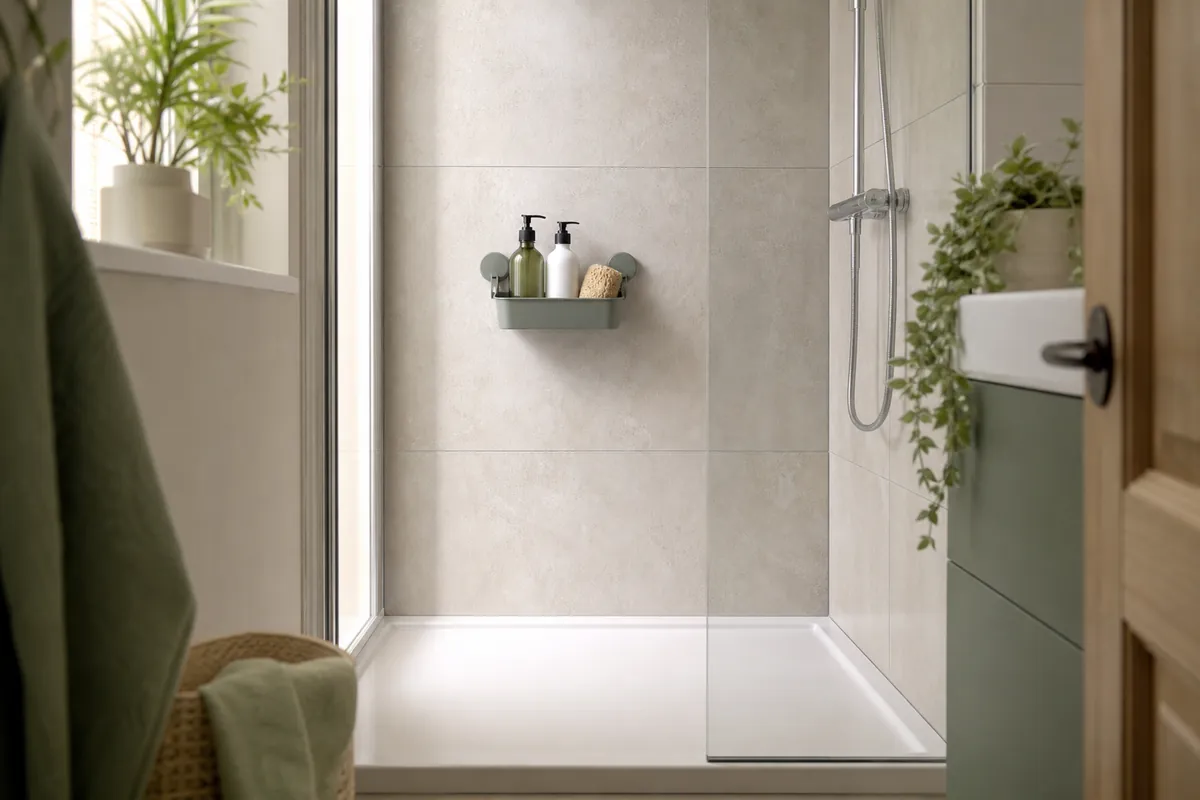
The obvious answer is a caddy, and the reason people give up on them is that they fall down.
A suction-cup shower caddy holds fine, but only on a surface that is smooth, non-porous and dry when you fit it. That means a single large tile or a glass panel. It will not hold across a grout line, on textured or riven tile, or on painted plaster, and no amount of pressing will change that.
Fit it at chest height rather than higher. A caddy above eye level makes you reach over your own head with wet hands, which is how they get pulled off the wall.
4. Use the dry wall just outside the spray
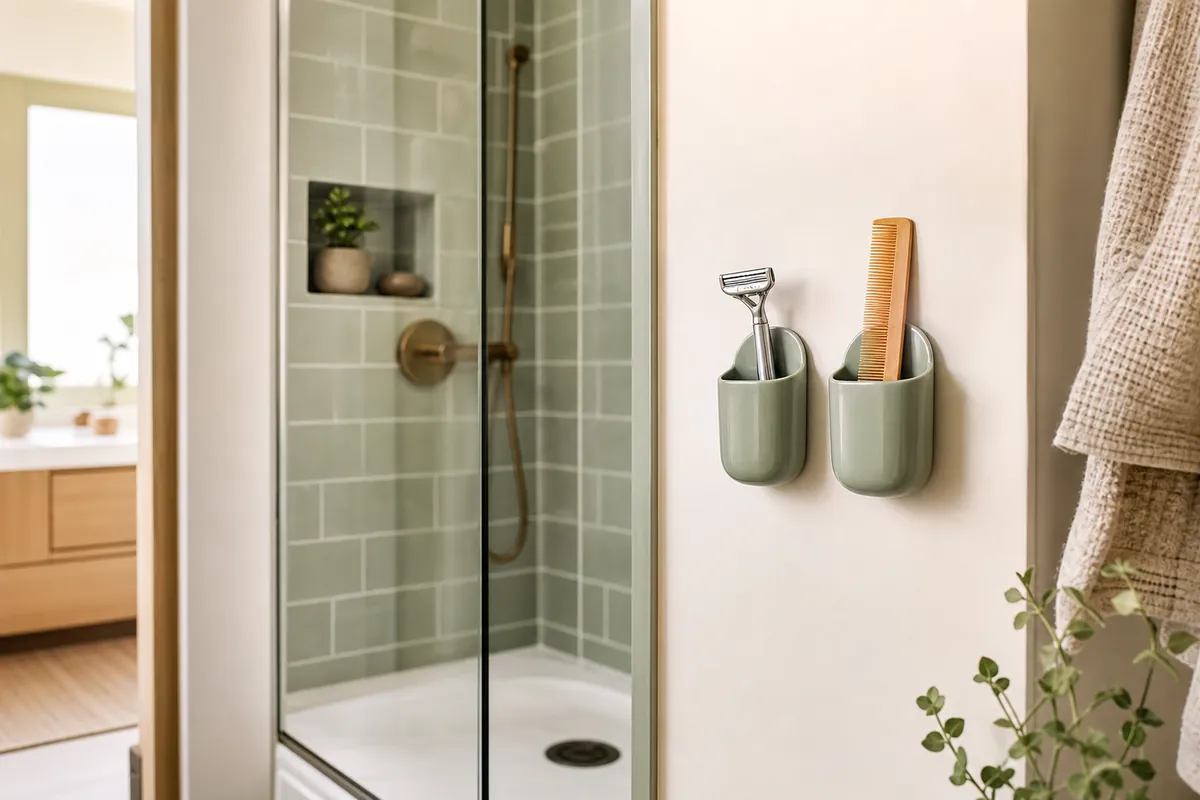
Most bathrooms have a stretch of wall next to the shower that never actually gets wet, and it is almost always empty.
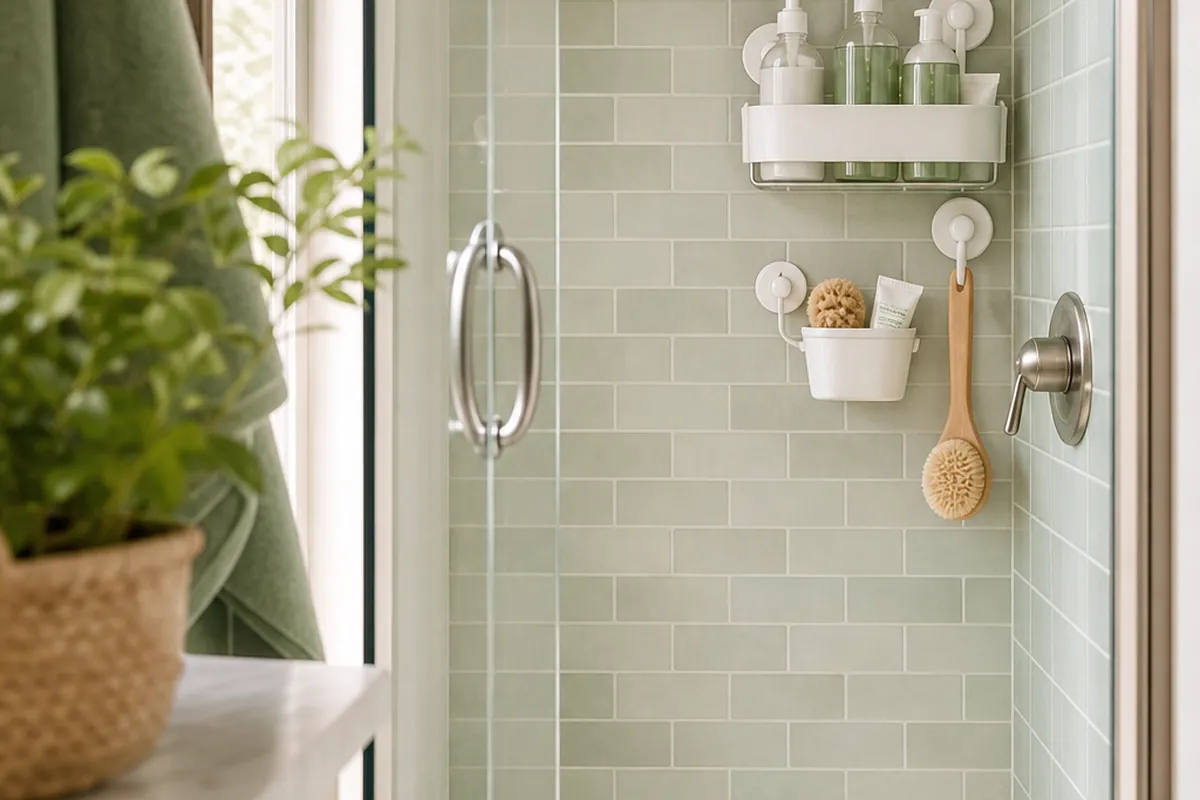
Adhesive wall storage cups work there where they would fail inside the enclosure, and they take the things that do not need to be in the spray at all: a razor, a comb, a face product used at the basin. Moving those out is often what makes the caddy inside fit.
Adhesive needs a clean, dry, non-textured surface and a day to cure before you load it. Fitting one and hanging something on it immediately is why they end up on the floor.
5. Hang the corner rather than filling it
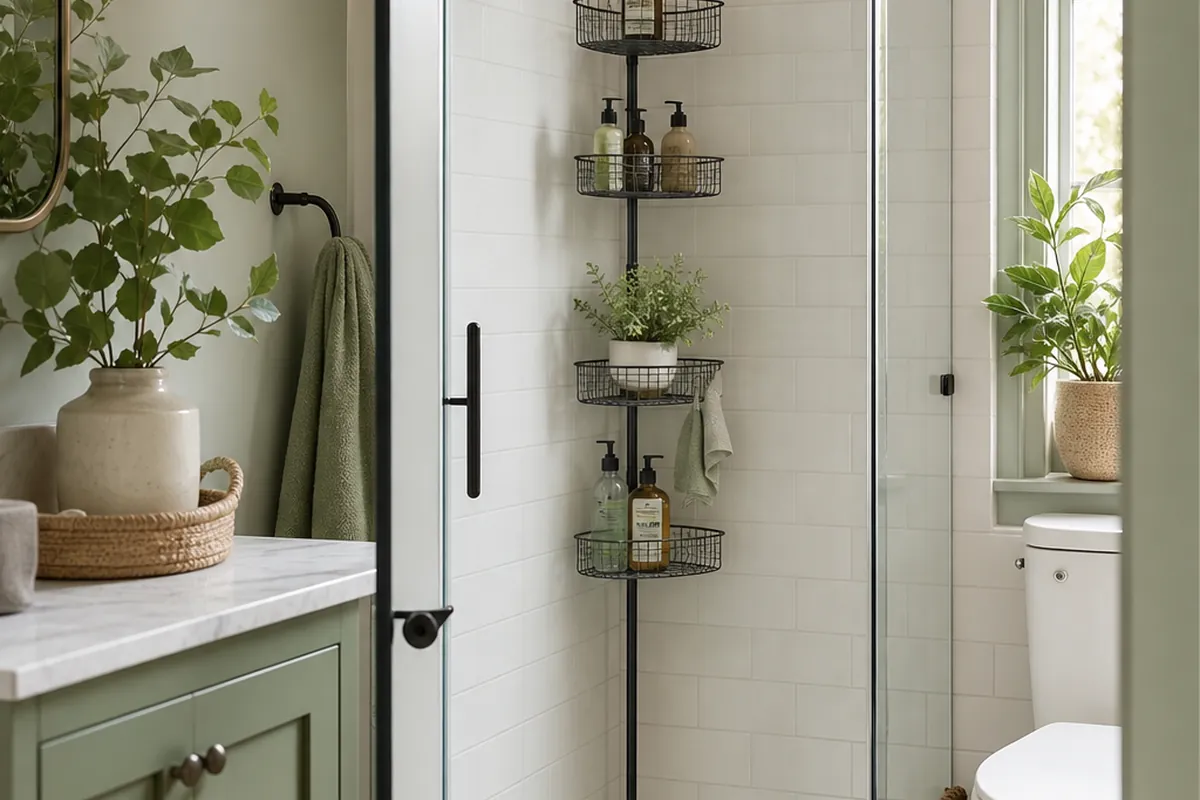
The corner of a shower is the least useful floor space and the most useful vertical space, because two walls meet there and a rod can brace between them.
A tension rod across a corner at head height gives you a rail for anything with a loop or a hook, and it needs no fixings at all. It is the renter friendly version of a corner shelf unit, and unlike a freestanding pole it does not stand in the tray.
6. Give razors and loofahs somewhere to drain
Anything left lying on a wet ledge stays wet, and staying wet is what rusts a razor and shortens the life of a loofah or sponge.
Hang them instead, on a hook, the caddy rail or the tension rod. It costs nothing and it is the difference between replacing a razor because it is blunt and replacing it because it has gone orange. Airflow, not tidiness, is the whole point.
If the tub is also full of bath toys, they need the same treatment or they go slimy. Bath toy storage ideas for a small bathroom covers the draining nets and caddies that work.
7. Decant the two bottles you actually use
If your shower genuinely needs four or five products, the volume is the problem rather than the arrangement.
Refillable dispensers in one size cut the footprint, stop the shelf being a mismatched skyline of shapes, and mean the caddy is sized for what stays rather than for whatever the shop sold. It is optional, and it is the thing that makes a small caddy enough.
8. Keep towels outside the wet zone
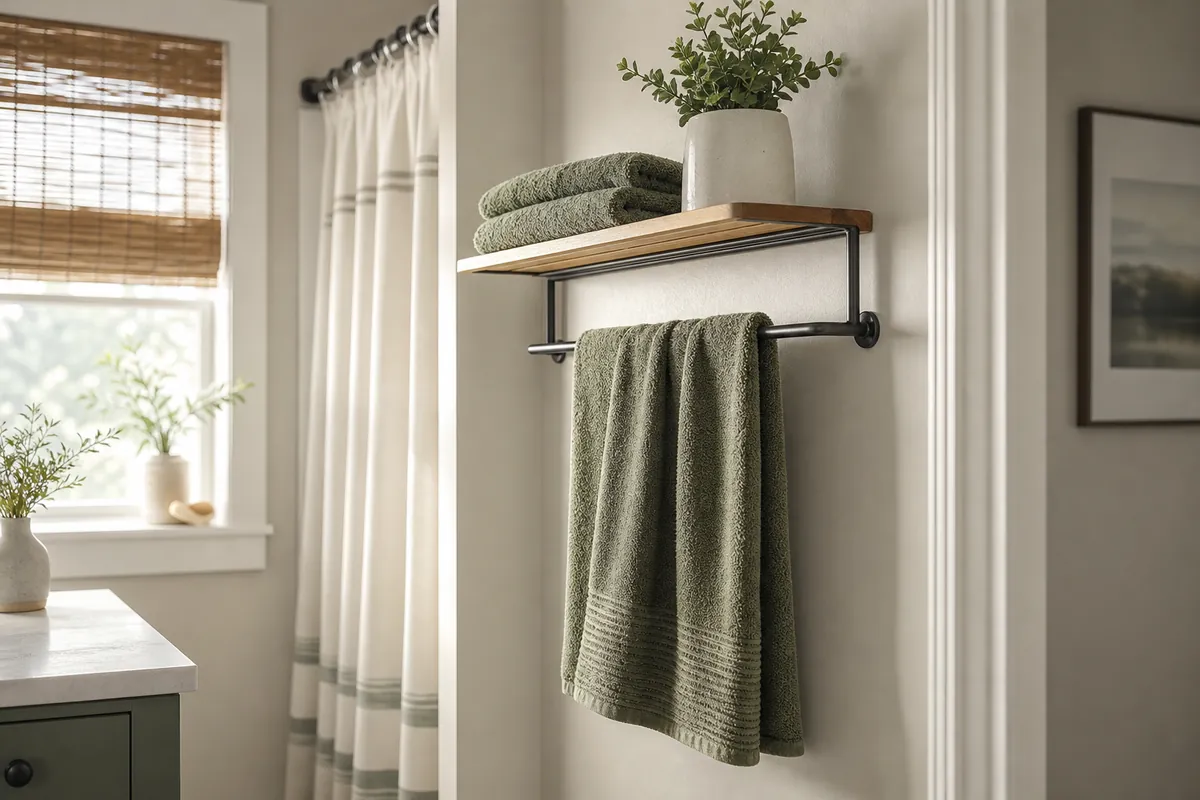
A towel stored inside a shower enclosure never fully dries, and a damp towel in a small bathroom is most of why the room smells the way it does.
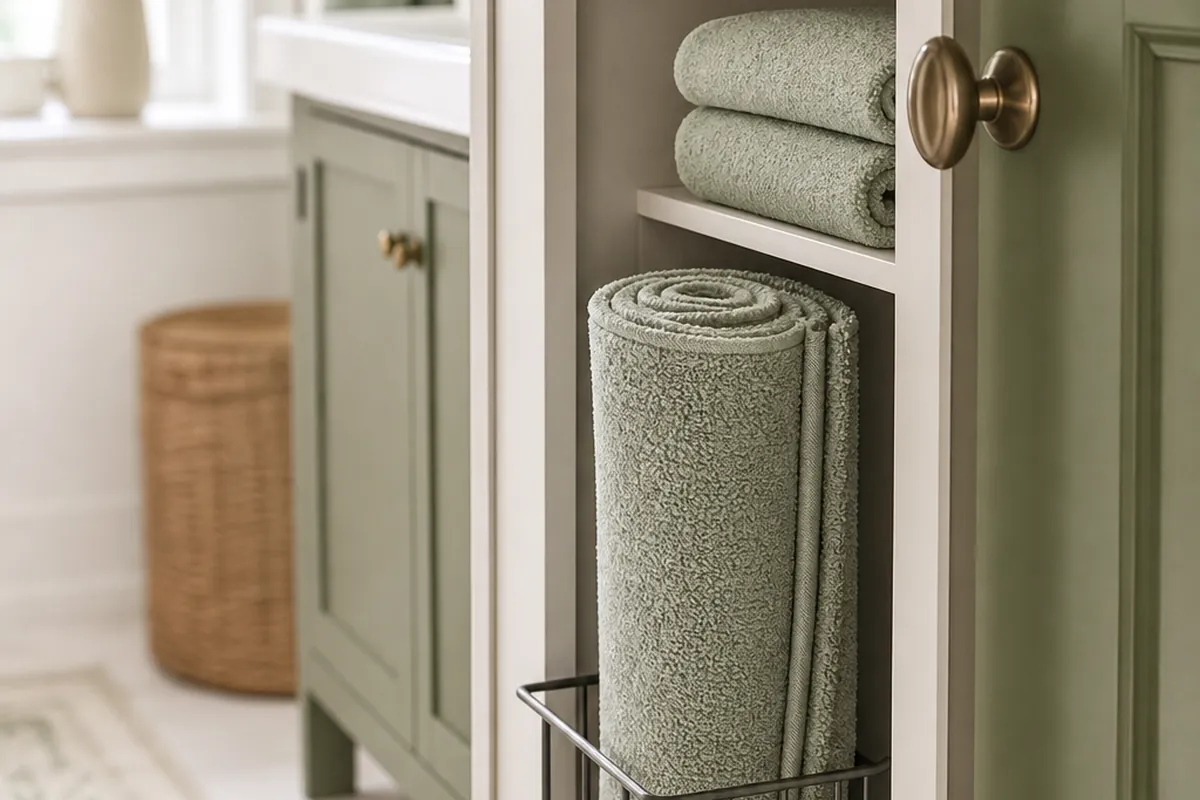
A wall-mounted towel rack with a shelf on the dry wall gives the towel airflow and puts a spare within reach without it living in the spray. The shelf above takes the folded spare, which in a small bathroom is usually homeless. More options are in towel storage for a bathroom with no space.
9. Work out what your walls will actually take before buying
Suction, adhesive and tension each fail on a different surface, and buying the wrong one is the usual reason a shower ends up with nothing on the walls at all.
Suction needs smooth and non-porous. Adhesive needs dry and non-textured, and it is close to permanent once cured. Tension needs two facing surfaces at a fixed distance and a wall solid enough to push against. Check which of the three your shower offers before ordering, because most showers only offer one or two.
10. Give it a thirty second reset
The whole thing holds or fails on whether the tray goes back to empty.
Make it the last thing you do in the shower rather than a job for later: bottles back on the caddy, razor back on its hook, squeegee or a quick rinse down the glass. It takes half a minute while you are already in there and wet, and it is the reason a shower stays organized rather than slowly refilling from the floor up.
Storage that survives being wet
A small shower does not have room for a storage system, so what works is subtraction first and then one or two fixings in places that are actually dry.
Fewer bottles, nothing on the floor, a caddy at chest height on tile that will hold it, and the things that do not need to be in the spray moved just outside it. The rest of the bathroom is a different problem, and bathroom storage for a room with no cabinet covers where all of it goes instead.