Count the blankets in your living room right now. If the answer is five and four of them are draped over the arm of the sofa, that isn’t a decorating failure, it’s a container failure: nothing in the room was built to hold them. The blanket storage ideas below are the ones that survive daily use in a small living room, where every container has to earn its footprint by doing a second job.
Blankets are a nuisance to store because they’re bulky, shapeless, and used constantly. Filing them in a hall closet doesn’t work when somebody reaches for one at eight o’clock every single night. So the goal isn’t hiding them. Give each blanket a home within arm’s reach of the spot where it gets used, and make that home look deliberate.
First, thin the pile (this is the real fix)
Most living rooms are storing three seasons of blankets in one season’s worth of space. Pull everything out and sort into three piles: daily throws, guest blankets, and the ones you keep out of guilt. That scratchy afghan nobody touches occupies the exact volume of the soft one everyone fights over.
Here’s the rule I’d hold you to in a small room: two throws out in the open per seating area, two more in closed storage. Anything past four goes into deep storage or out the door. Once you’re at four, every idea below gets easier, because you’re solving for a small honest amount of fabric instead of a heap that keeps growing.
Fold them the same way every time
Change how you fold before you buy a single container. Fold each blanket into a long strip, then roll it tight from one end like a bedroll. Rolls stack in a basket without slumping, they show you every blanket at once instead of just the top one, and they pull out without collapsing the rest. Flat-folded blankets compress into a brick within a week, and nobody digs to the bottom of a brick.
On open shelving, switch to a file fold: fold to shelf depth, then stand the blanket on its spine. You end up looking at a row of soft spines rather than a leaning tower.
Blanket storage ideas that double as furniture
In a room under roughly twelve feet across, storage that isn’t also furniture is a luxury. These three pay rent twice.
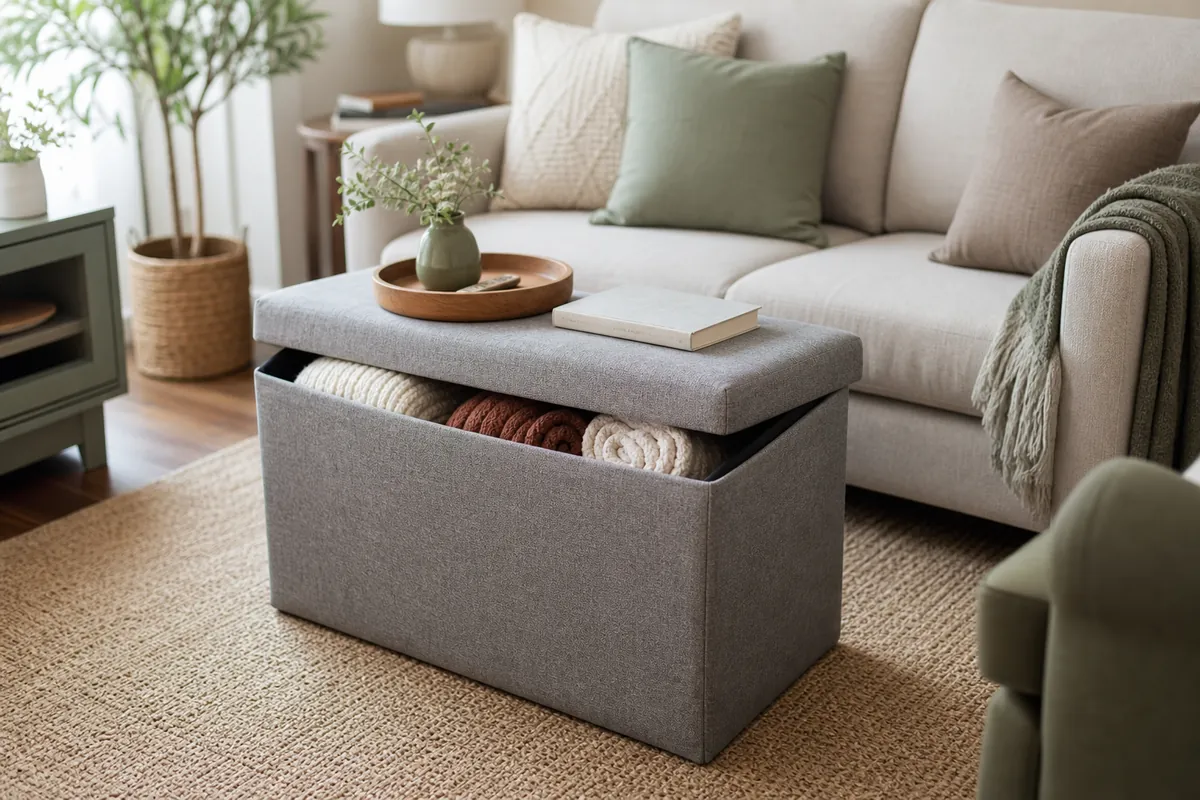
A storage ottoman with a lid
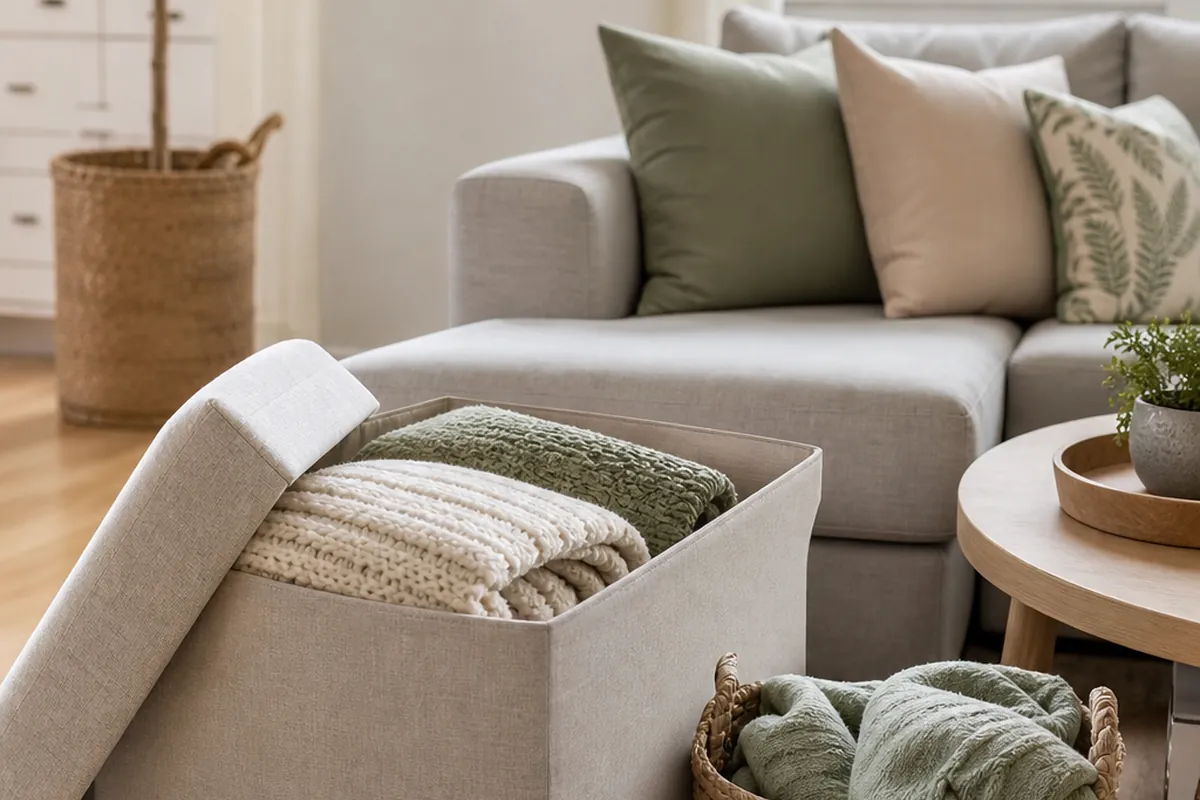
This is my first recommendation almost every time. A storage ottoman with a lid gives you a footrest, extra seating when people show up, a tray surface for drinks, and a blanket box that swallows two or three rolled throws with the lid still closing. Very little else in a small living room does four jobs at once.
Check two things before you buy. The lid first: hinged is more convenient day to day, but a fully removable lid holds noticeably more because you can pack right to the rim, and it sits flat enough to take a tray. Then height. Sit on your sofa, measure from the floor to the top of your knee, and buy at or just under that number so the ottoman works as a footrest instead of jacking your legs up.
Center it in front of the sofa if the floor space allows, or push it against one end of the coffee table if it doesn’t. Nightly throws live here, rolled.
A lift-top coffee table
When the room is too small for both a coffee table and an ottoman, a lift-top coffee table settles the argument. The top raises and slides toward you on a hinge, revealing a shallow well underneath that fits two folded blankets plus the remotes. Depth is the catch, since most of these wells are shallower than a true ottoman box, so measure before you assume a chunky wool throw will fit. The trade-off is worth it if you eat dinner on that table, because a lift-top gives you a raised surface at the same time.
A trunk or bench doing console duty

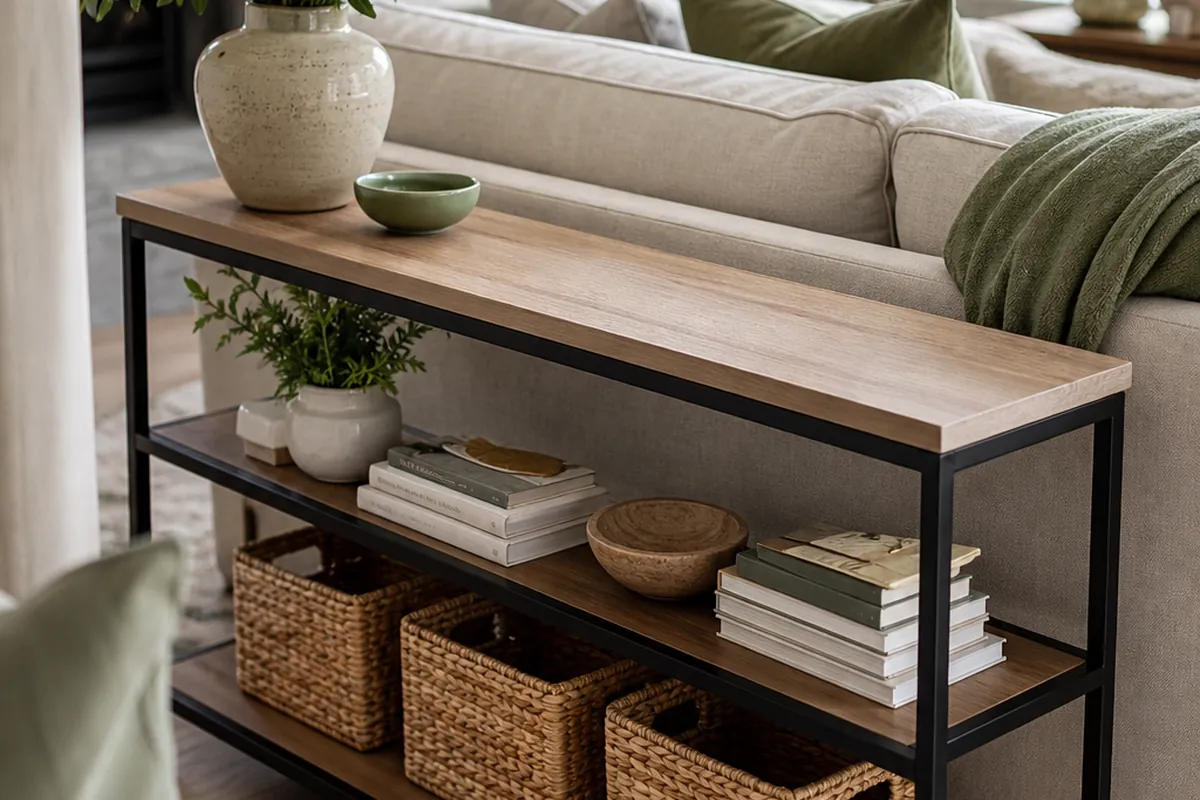
If your sofa floats even a few inches off the wall, or there’s a blank stretch behind a chair, a lidded bench or trunk turns that dead line into storage. Set a lamp and a stack of books on top and it reads as a console, not a box. Guest blankets belong here: reachable in two minutes, invisible for eleven months.
Open storage that looks styled, not stashed
Some blankets have to stay visible or they stop getting used. Open storage works fine as long as the container has structure and a defined edge.
A large woven storage basket beside the sofa
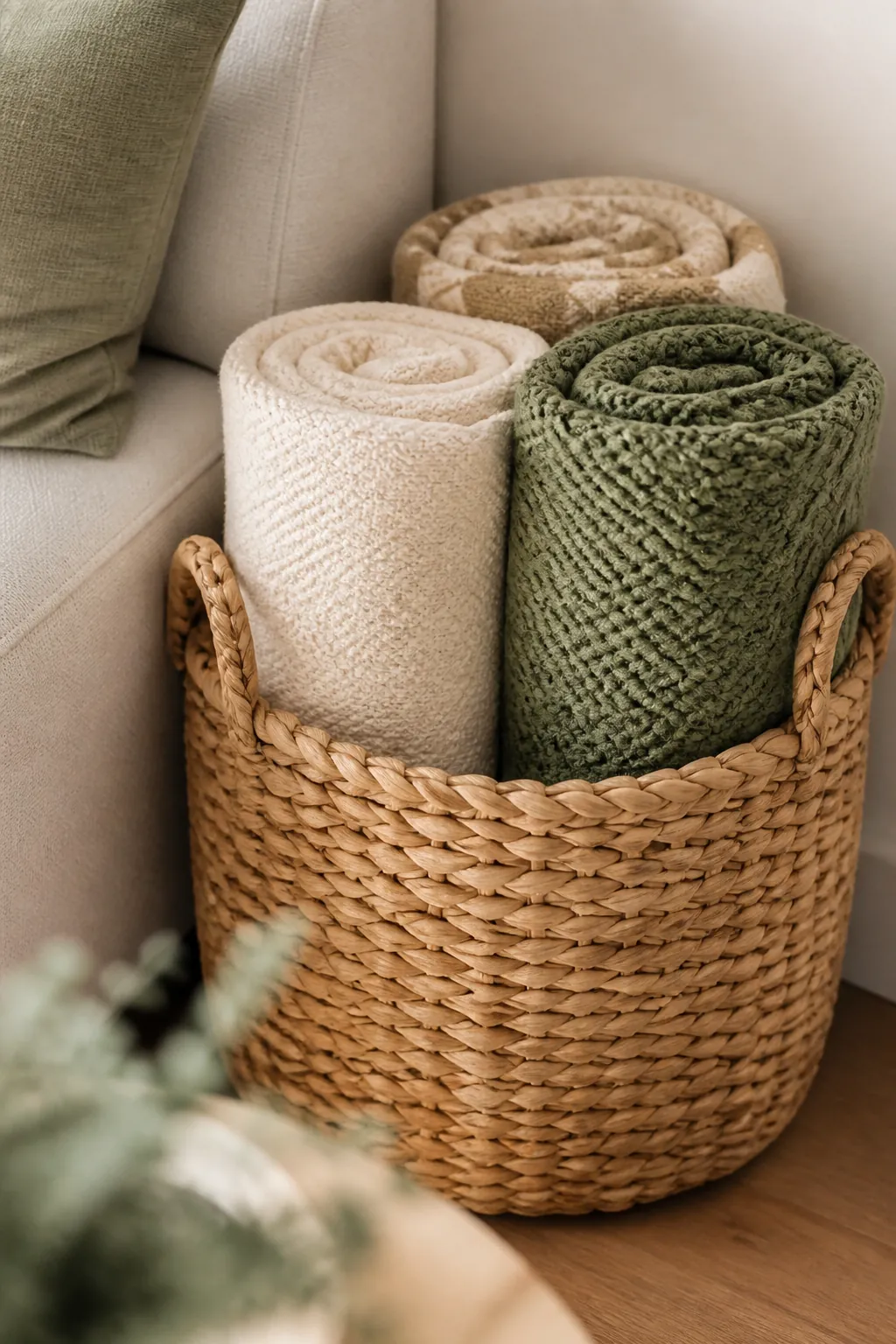
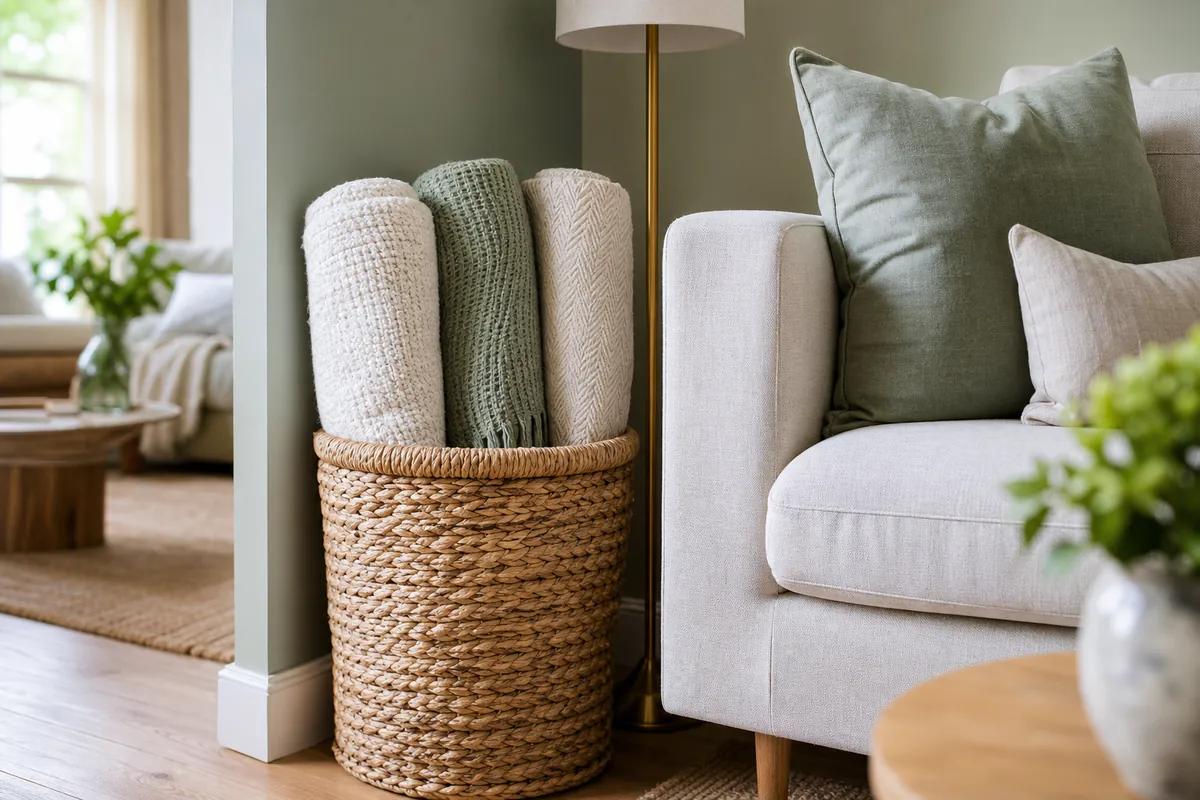
The corner where a sofa meets the wall is usually the highest-value square foot in the room, and a large woven storage basket claims it. It fills an awkward gap, adds texture against upholstery and flat paint, and holds two or three rolled throws without anyone having to fold neatly.
Buy stiffer than feels necessary. Floppy seagrass and soft rope baskets sag the moment they’re half empty, and a sagging basket reads as laundry. Look for a woven rim or a rolled edge that holds its shape with nothing inside. Height beats width here: a taller basket keeps rolled blankets standing upright, while a shallow one lets them flop over the sides within a day.
One trick if your basket is a size too generous: lay the ugliest blanket flat in the bottom as a filler layer and roll the good-looking ones on top.
A blanket ladder on the wall
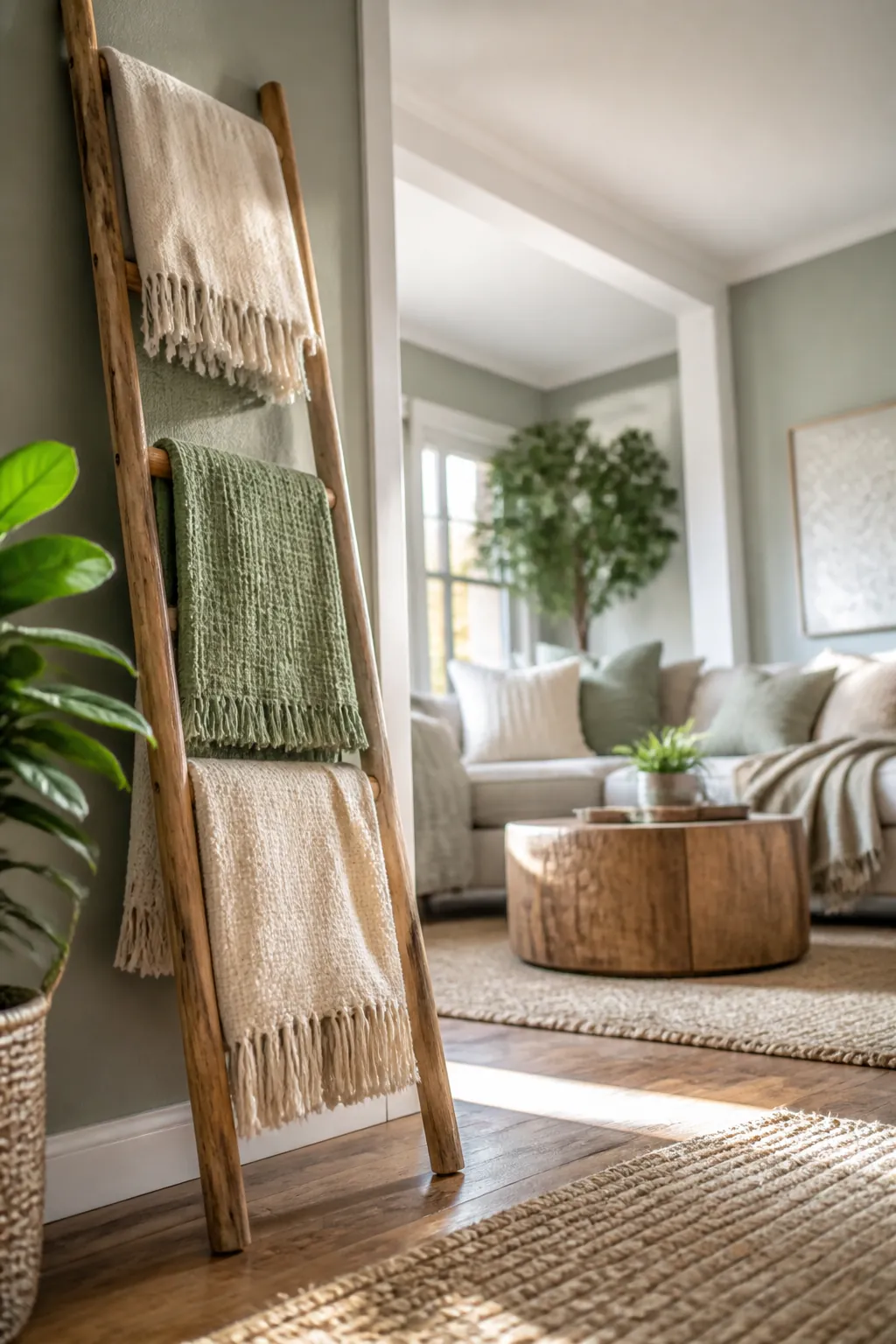
A blanket ladder is the one vertical option that needs no drilling, which makes it a genuinely good renter move. Leaned against the wall it eats maybe a foot of floor depth and airs out two or three throws.
Be honest about your household before you commit. Ladders work for people who re-drape a blanket over a rung when they’re done. If everyone in your house tosses blankets at the sofa arm, that ladder will stand empty and steal floor space, and a basket would serve you better. Lean it beside a chair or in the gap between the sofa and a doorway, and stick felt pads or rubber tips on the feet if you have hard floors so it can’t slide out from under itself.
Drape over a single rung with an even overhang on both sides, and leave the top rung bare. An empty top rung is the difference between a display and a drying rack.
A lidded basket working as a side table
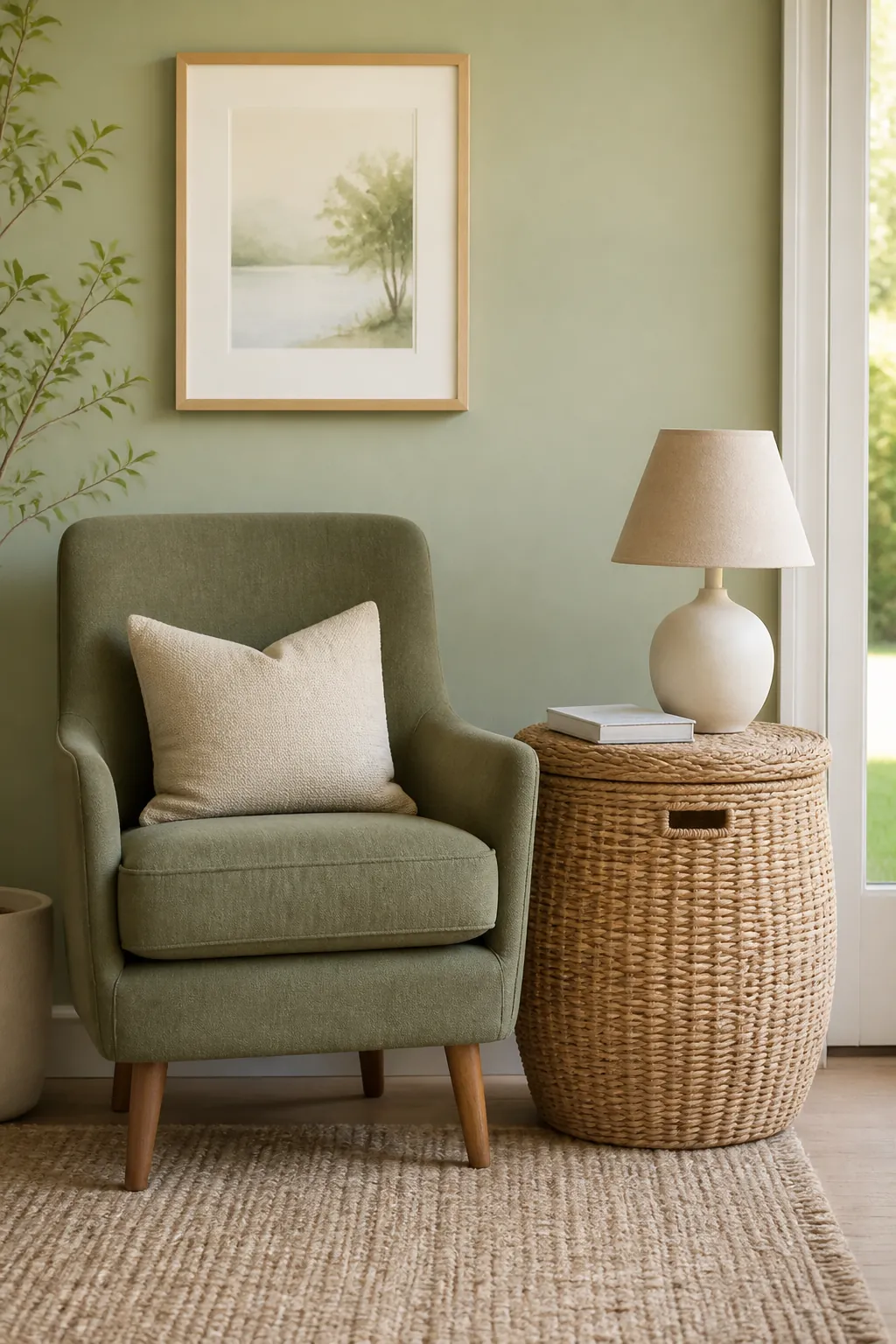
Split the difference between open and closed with a tall lidded basket next to your reading chair. Flat lid, rigid walls, lamp on top. It’s a side table with a blanket inside, and I’d take it over a skinny accent table every time, because a table is just one more surface for mail to breed on.
The draped throw, used on purpose
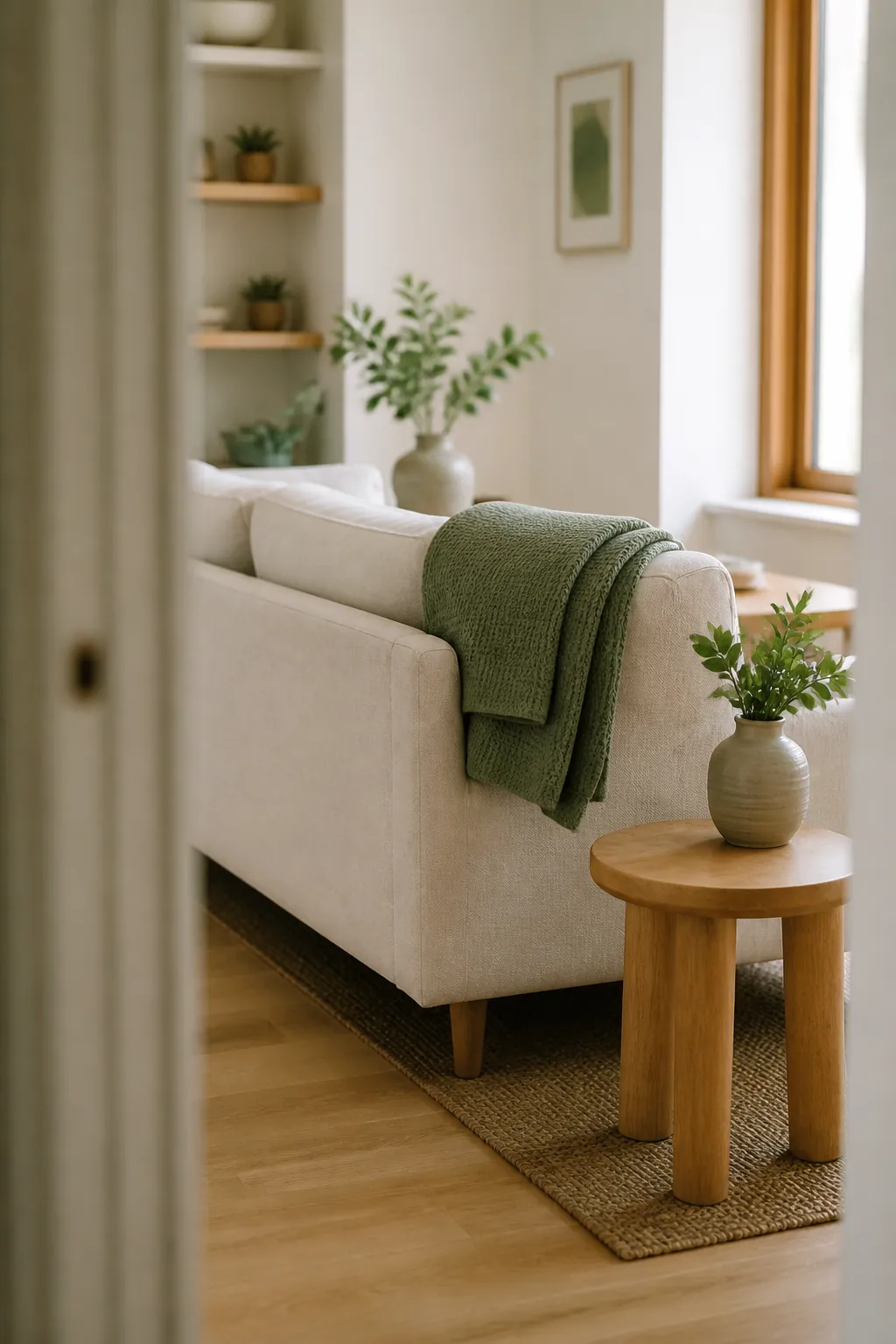
One blanket, folded in thirds and laid over the back corner of the sofa or the arm of a chair, is styling. Three of them is a mess. Pick your best-looking throw for the job, contain the rest, and the room reads as intentional even while it’s being used hard.
Hidden blanket storage ideas for off-season bulk
This is where small living rooms lose the fight: winter blankets sitting out in July, occupying the space the summer ones need.
Vacuum compression storage bags
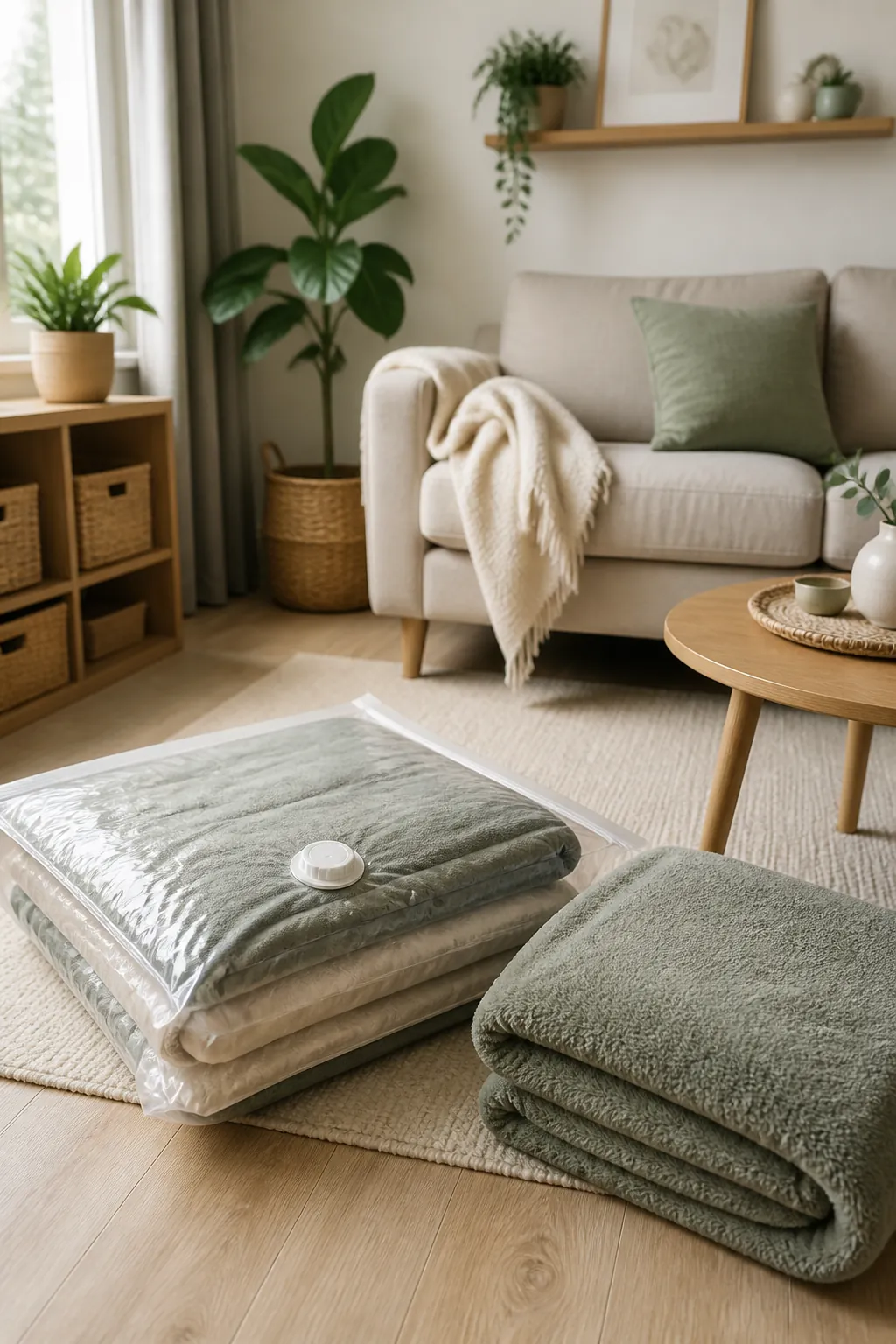
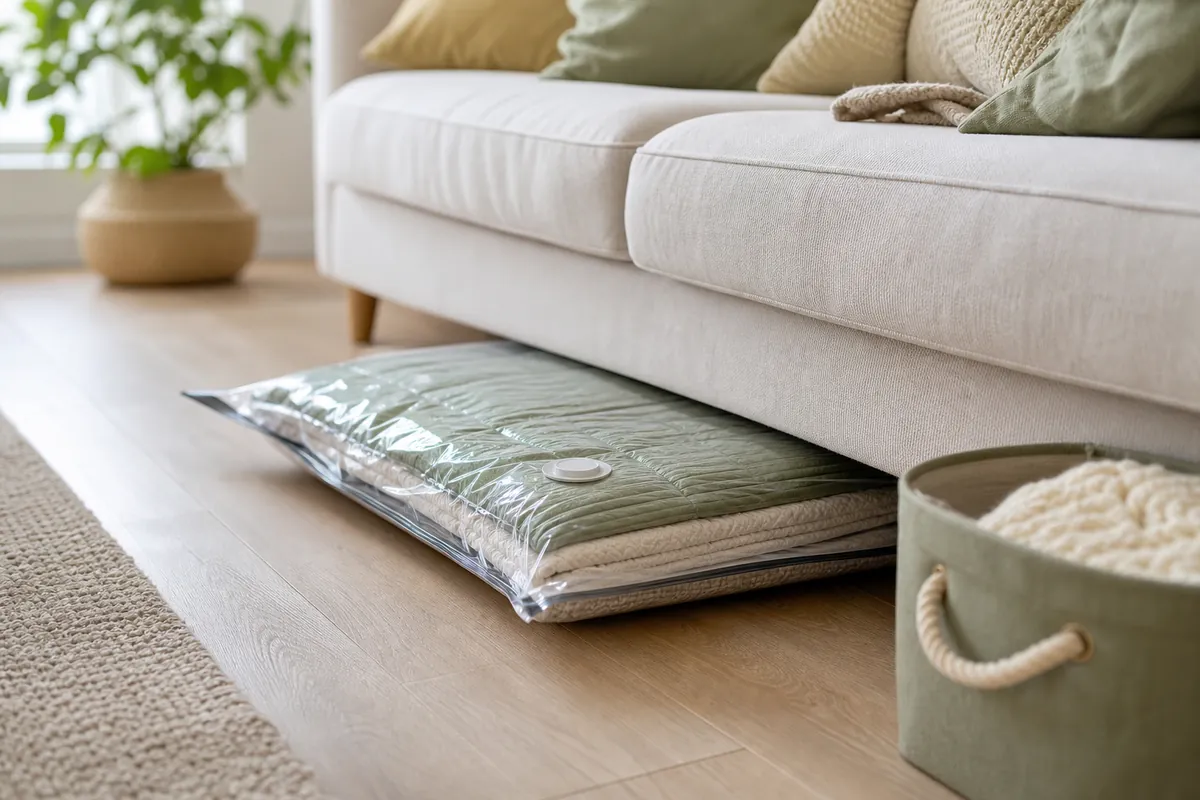
Vacuum compression storage bags do more for off-season bulk than any other single purchase. Four thick blankets collapse into something flat enough to slide under a sofa or lie on a closet shelf. In an apartment with no linen closet, that’s the whole difference between four blankets stored and four blankets scattered.
There are real limits. Everything must be clean and bone dry before sealing, because trapped moisture turns musty fast in an airless bag. Skip long-term compression for wool and down, since months of crushing damages loft and sets creases that never fully hang out. Press the bags flat rather than letting them bulge into a lump, so they slide into narrow gaps instead of wedging.
Then park them somewhere unglamorous: under the sofa, on the top shelf of the coat closet, under a bed in the next room, inside the base of that lidded bench.
The gap under the sofa
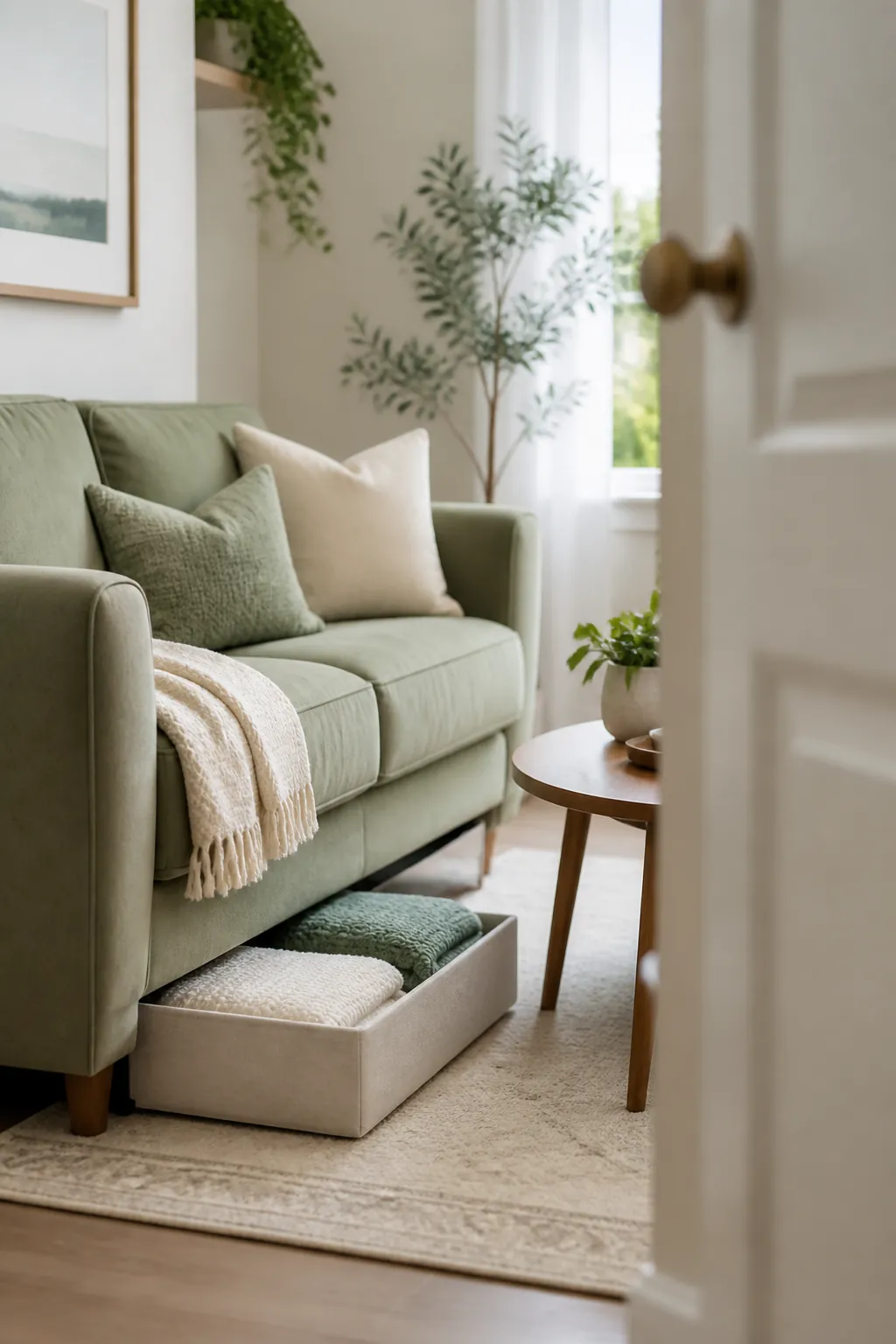
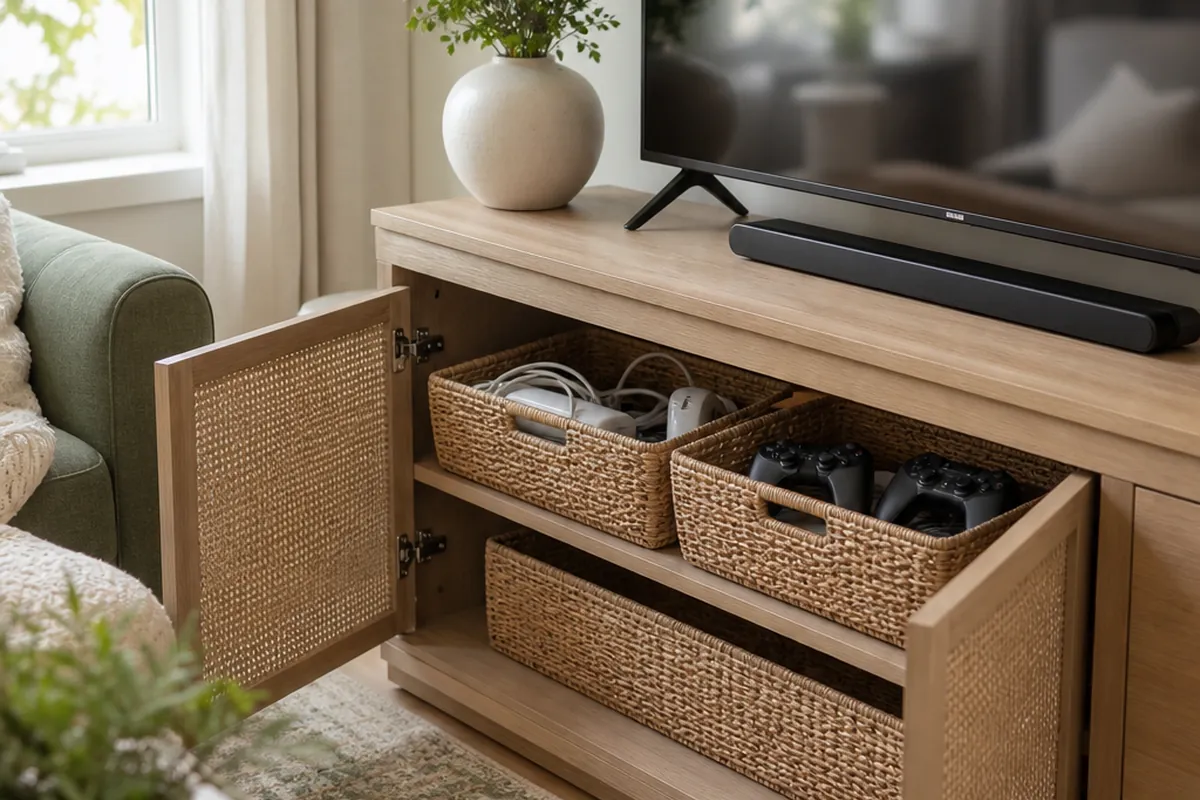
If your hand fits under the sofa, blankets fit under the sofa. A compression bag works, and so does a shallow fabric bin, though a bin with a handle is far easier to drag out with one arm. Measure floor to frame and subtract an inch before you buy, because a bin sized flush will scrape and catch every time you pull it.
One basket inside a cube shelf
Already own a cube unit? Give one lower cube to a soft basket of blankets. Lower cubes are easier to reach into and the visual weight belongs low anyway. One cube, not three. Blankets expand to fill whatever space you hand them.
Put the pieces together
The layout I’d build in most small living rooms: a storage ottoman with a lid in front of the sofa for nightly throws, a large woven storage basket in the corner for the two everyone grabs first, and vacuum compression storage bags under the sofa or up in a closet for the off-season stack. Add a blanket ladder only if you have a wall doing nothing and a household that actually re-hangs things.
Whether your storage works isn’t decided on setup day. It’s decided on a tired Tuesday night, when the blanket either makes it home or doesn’t. If putting it away takes more than five seconds and one motion, blame the container, not the people.