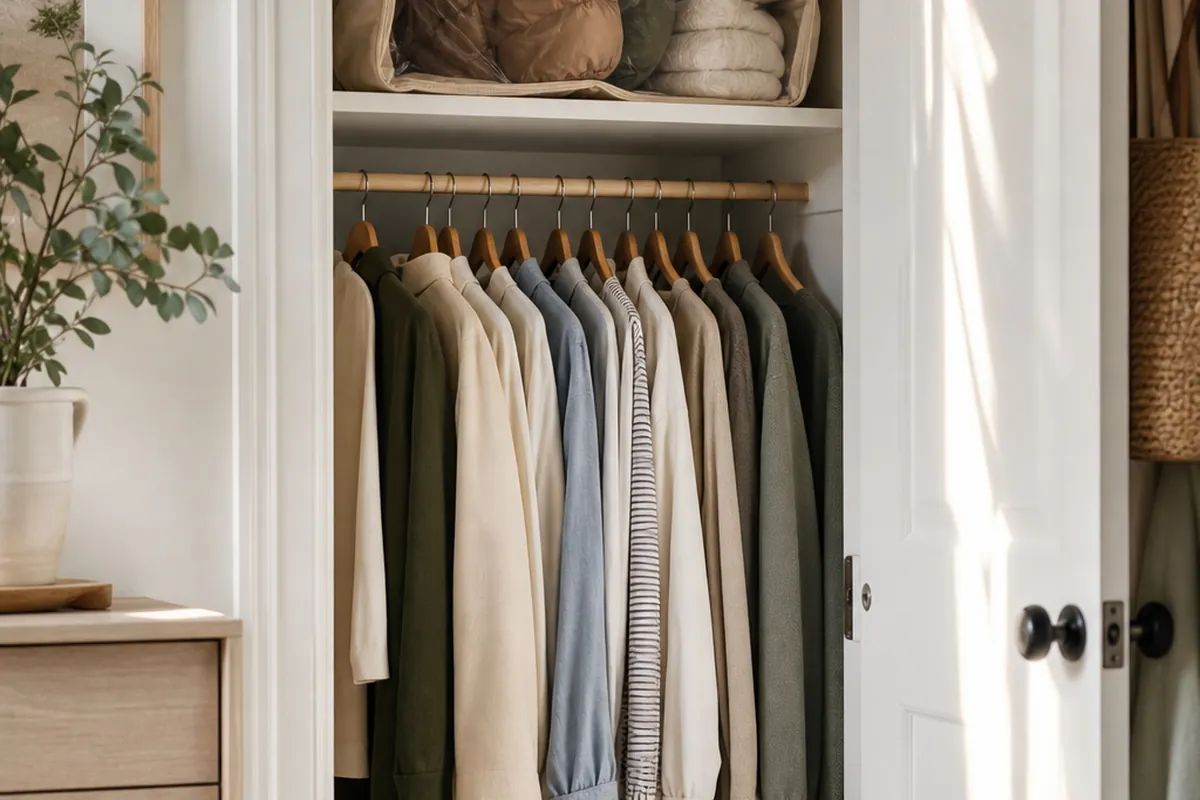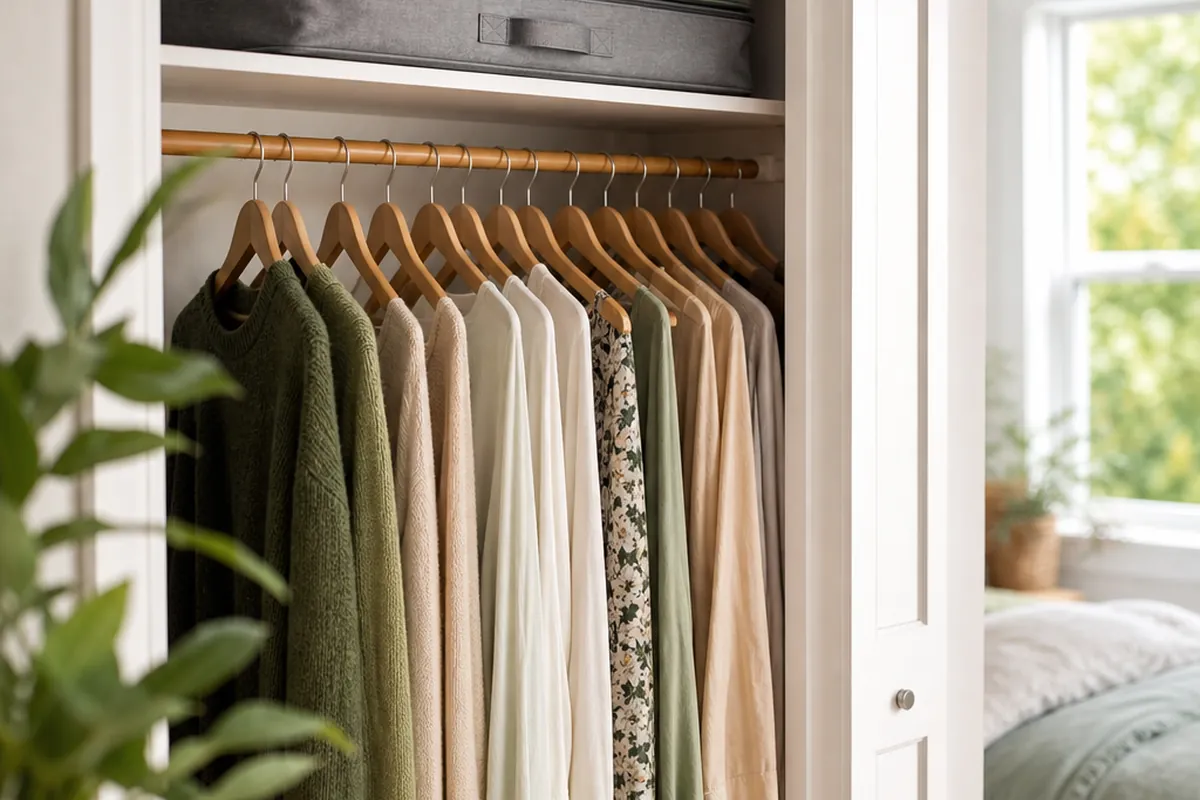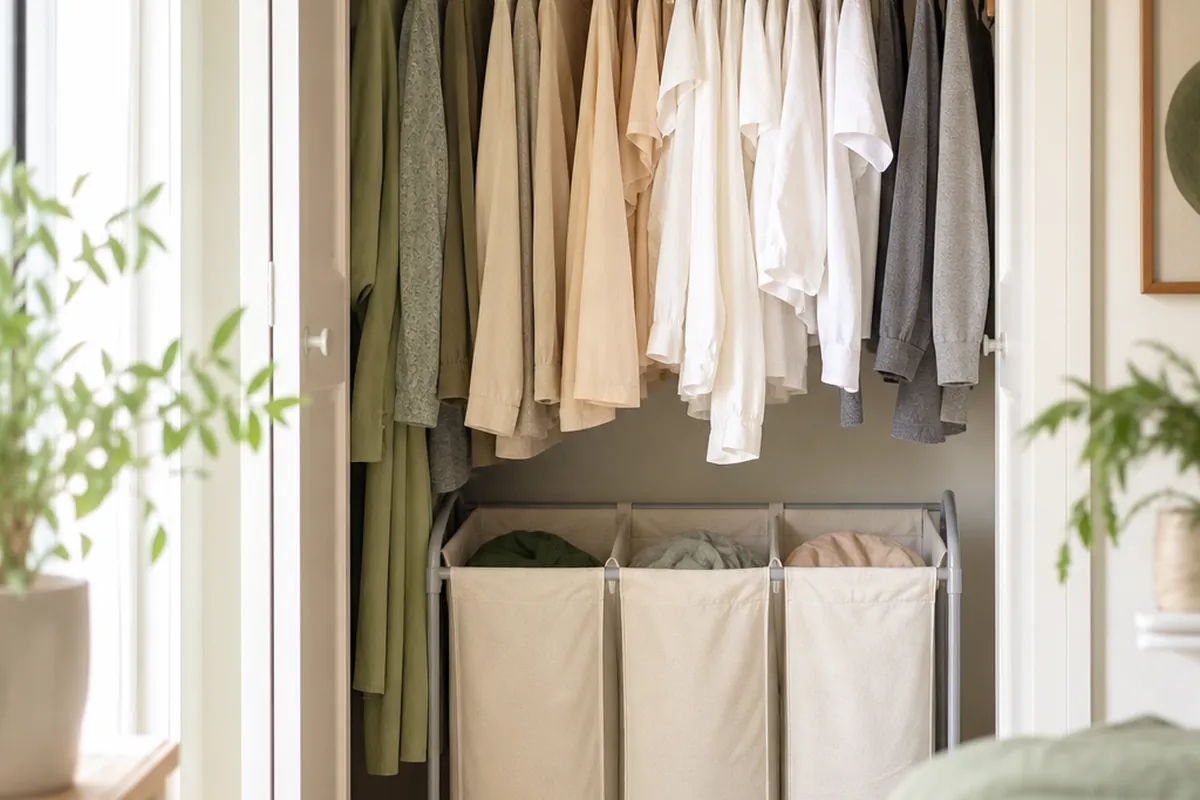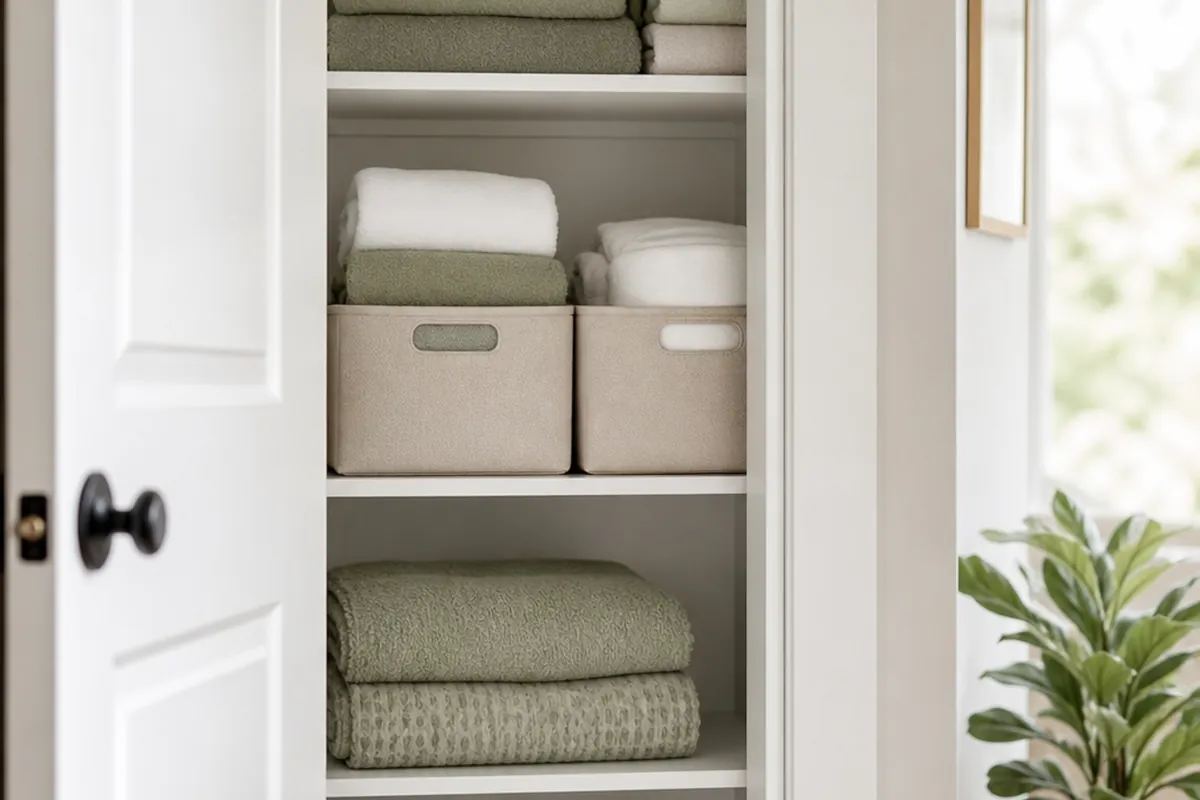
A linen closet slides into chaos faster than almost any other spot in the house. Everyone in the family digs through it, and nobody refolds. One yanked bath towel and the whole stack leans, then collapses, and suddenly you’re stuffing washcloths on top of sheet sets you can’t even identify. Good linen closet organization has almost nothing to do with folding prettier. It comes down to building small structures that hold their shape even when people are in a hurry.
Below are fourteen ideas that survive daily use, roughly ordered from the fixes that make the biggest difference down to the finishing touches.
Start by pulling everything out
Empty the closet completely before you shop for a single bin. Most households own far more towels and sheets than they have room for, and the quickest way to make a small linen closet work is simply to own less. Two or three towel sets per person, two sheet sets per bed, and an honest verdict on those frayed beach towels from a decade ago will get you most of the way there.
Wipe the shelves while they’re bare, then study the vertical gaps. Linen closets waste an astonishing amount of height between shelves. That empty air is exactly what the ideas below reclaim.
Measure the shelf depth, not just the width
Deep shelves are the reason things vanish. If a shelf runs deeper than a folded towel, whatever gets pushed to the back turns invisible. Jot down the depth in inches so the bins you buy actually reach toward the wall instead of leaving a dead zone behind them.
Stop the stacks from toppling
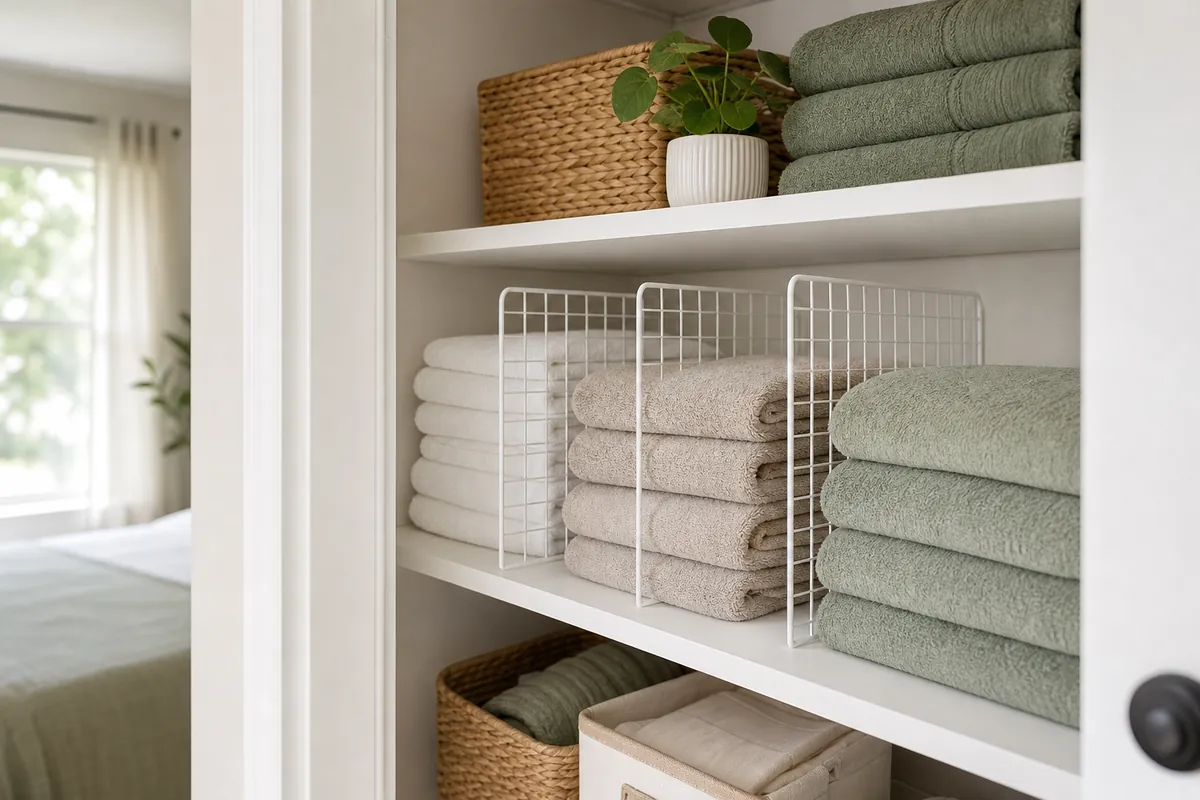
Add shelf dividers between towel piles
The single best upgrade for a linen closet is a set of shelf dividers. They slide onto the shelf and create rigid walls between stacks, so grabbing the top towel no longer sends the pile beside it slumping sideways. Choose dividers made for linen closets that clamp or hook onto the shelf edge; the loose kind wanders every time you reach in.
Space them roughly a folded-towel-width apart. One between the hand towels and bath towels, another separating sheets from blankets, and the shelf reads like labeled columns instead of one sliding heap.
File towels vertically instead of stacking
Stack towels and you only ever touch the top two while the bottom ones go stale. Fold each towel in thirds, roll or fold it into a tidy rectangle, and stand it on edge like a file in a drawer. Now every towel is visible at once, you can pull from anywhere without disturbing the rest, and the shelf holds noticeably more. Shelf dividers are what make this work, since the vertical rows need something to lean against.
Contain the small, messy stuff
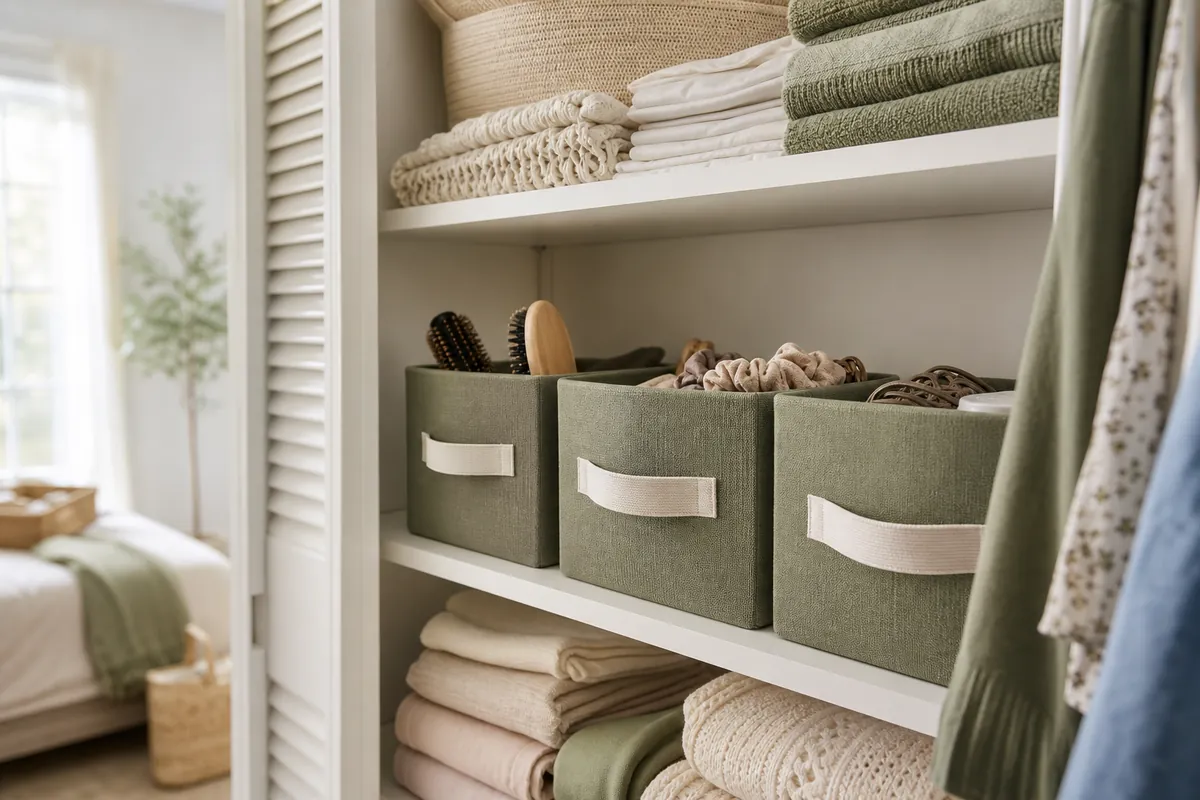
Corral washcloths and travel items in fabric bins
Small linens cause most of the mess: washcloths, cloth napkins, travel toiletry kits, spare pillowcases. Give each category a home in fabric storage bins with handles. Those handles do more than they seem to, because a deep shelf becomes a pull-out drawer the instant you can grab a bin and slide the whole thing out to see inside.
Soft-sided bins also forgive sloppy folding. Nobody creases a washcloth into a crisp square, and a bin hides that truth while the closet still looks calm. Buy a couple of sizes: taller bins for bulky items up high, shorter ones for the everyday shelf.
Group sheet sets inside their own pillowcase
This folding move is worth the extra thirty seconds. Fold the flat sheet, the fitted sheet, and one pillowcase, then tuck the whole bundle inside the matching second pillowcase. Every set becomes one self-contained packet, and the hunt for a stray fitted sheet ends for good. Stand the packets on edge in a bin or between shelf dividers so you can flip through them like records.
Label everything (yes, really)
Use a label maker so the system survives other people
Organization crumbles when only one person knows where things belong. A label maker fixes that quietly. Mark the front of every bin (“Queen sheets,” “Guest towels,” “First aid”) along with the shelf edges. Printed labels look cleaner than scrawled handwriting, and more to the point, they tell everyone else in the house where to put things back.
One label maker earns its keep across the whole home, not just this closet. If you’re already tagging pantry bins and drawers, a single device covers all of it. For clothing drawers, the same labeling logic pairs neatly with the systems in our guide to drawer organizers for folding clothes.
Face labels outward at eye level
A label you can’t read does nothing. Keep your most-used bins at eye and chest height with labels aimed straight out. Save the high, awkward shelves for things you reach for a few times a year: extra blankets, holiday linens, spare comforters.
Use the height you’re ignoring
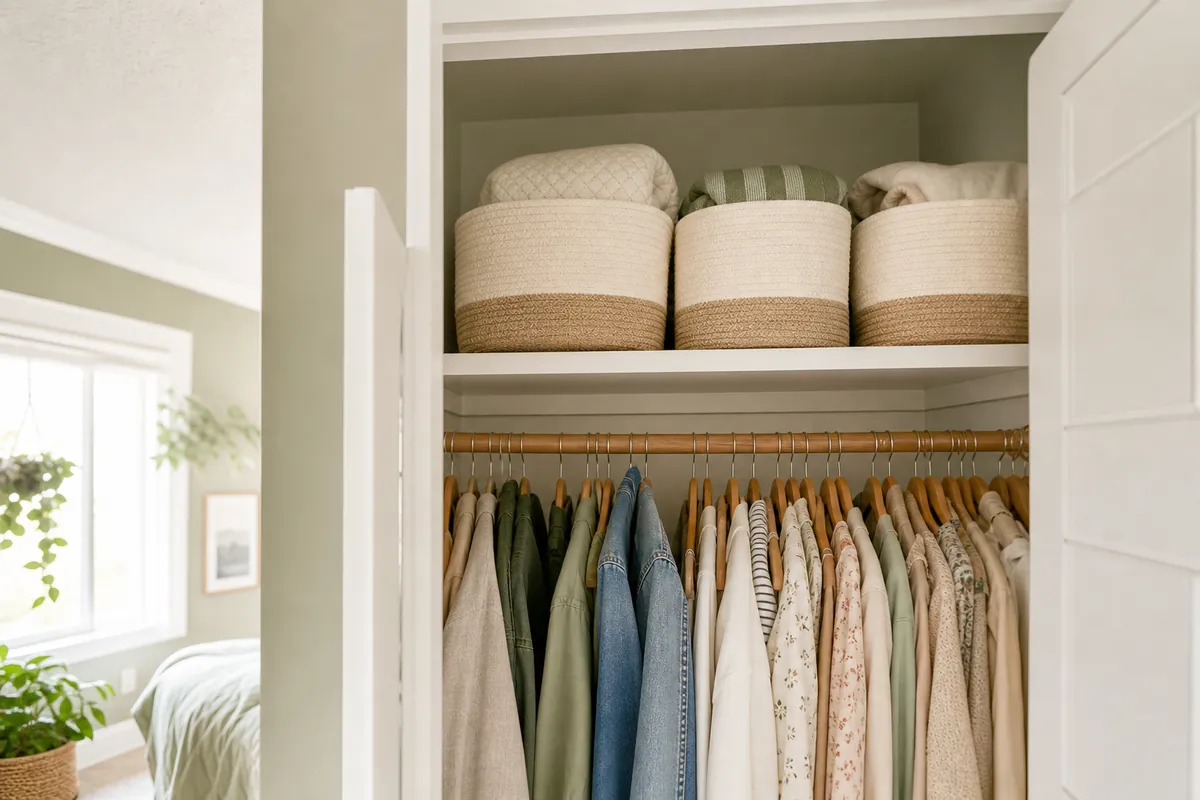
Add a shelf riser to split tall gaps
When a foot of empty air sits above a stack of towels, you’re storing air. A simple shelf riser doubles the usable surface, so folded towels live below and small bins perch on top. This is the same logic behind wringing more out of any tight closet, which we dig into in how to organize a small closet without shelves.
Hang an over-the-door organizer
The inside of the closet door is prime real estate that most people leave completely blank. A slim over-the-door rack or a fabric shoe organizer holds cleaning sprays, extra soap, first-aid supplies, and toiletry backups. No drilling required, which is a relief if you rent.
Store bulky bedding up high or under the bed
Off-season duvets and spare comforters devour shelf space they don’t deserve. Move them out of the daily zone entirely. Compression bags on the top shelf help, but the roomier answer is usually under the bed, and our guide to under-bed storage for clothes and seasonal items applies just as well to spare bedding.
Fine-tune the drawers and odd corners
Divide any drawers with adjustable inserts
Some linen closets include a built-in drawer or two at the base, and those become junk drawers overnight. Bamboo adjustable drawer dividers carve them back into sections for cloth napkins, spare washcloths, or a folded set of table linens. The adjustable style expands to fit the drawer width, so you skip the exact measuring and the custom insert.
Bamboo also shrugs off humidity better than cardboard-backed organizers, which matters in a closet sharing air with a bathroom.
Keep a small medicine and first-aid bin
Linen closets often double as the household medicine stash. Give it a dedicated, labeled fabric bin instead of letting pill bottles roll around loose. Keep it high enough to stay out of small hands, and check it every few months to clear out anything expired.
Dedicate a shelf to guest supplies
If you host, set aside one clearly labeled zone for guest towels and a spare set of sheets. When someone stays over, you grab a single bin rather than assembling everything from scratch, and guests can find fresh towels without opening every container in sight.
Keep it neat past week one
Refold on a flat surface, not in mid-air
Most stacks collapse because they were folded sloppily against someone’s chest. Fold on a bed or counter so the edges line up and the towers stay square. Consistent folds are the quiet ingredient that lets vertical filing and shelf dividers actually do their job.
Do a two-minute reset on laundry day
The closet stays organized only if linens get folded and returned the day they leave the dryer. Let them pile up and the system erodes fast. A quick weekly pass, straightening stacks and tucking stray washcloths back into their bin, keeps everything holding its shape.
If clawing back closet space is a running battle in your rental, these linen closet moves pair naturally with the no-renovation tricks in double your closet space as a renter.
Putting it together
You don’t need all fourteen ideas at once. Begin with the three that carry the load: pare down what you own, add shelf dividers so stacks stop toppling, and drop in a few labeled fabric bins with handles for the small stuff. Bring in a label maker so the rest of the household plays along, then tune the drawers with bamboo dividers and reclaim that wasted vertical air.
A linen closet that holds its shape has nothing to do with perfection. Every towel and sheet just needs a defined spot with a wall around it, so a rushed grab on a Tuesday morning doesn’t undo a weekend of folding.