Count the throw pillows on your sofa right now, then count how many of them get moved every single time someone sits down. In most small living rooms those are two different numbers, and the gap between them is where the clutter lives. Six pillows look styled in a photo. Six pillows at eight o’clock on a Tuesday are six things somebody has to shove onto the floor, the arm of a chair, or the top of an already-full basket before anyone can watch television.
Throw pillows are a strange category of clutter because they’re decorative and functional at the same time, which means nobody wants to hide them completely, but nobody wants to trip over them either. The ideas below give the overflow a real home, one that’s fast enough to use every night and tidy enough that the room doesn’t look like it’s mid-move.
How many pillows does your sofa actually need
Before buying a single container, thin the pile. A two-seat sofa reads as styled with two to three pillows on it. A three-seat sofa can carry four, maybe five if two are a matched lumbar pair. Past that number you’re not decorating the sofa, you’re parking pillows on it between uses, and every one past the working number becomes something you have to store, launder, or trip over.
Sort what’s left into two piles: the ones that stay on the sofa full-time, and the ones that only come out for company or a seasonal refresh. The first pile doesn’t need storage. The second pile is what the rest of this article is for.
Throw pillow storage for the nightly reset
These three ideas solve the immediate problem: where do the extras go between the time someone sits down and the time they get up.
1. Make the ottoman the nightly landing zone

A storage ottoman with a lid in front of the sofa is the single fastest habit to build, because the container is already where the pillows need to go. Lift the lid, drop them in, done in about five seconds.
Measure the interior before you buy, not the outside dimensions on the box. Once you subtract the hinge hardware and the padded underside of the lid, most ottomans give you roughly 15 by 15 by 14 inches of clear space inside, and a standard 18-inch square pillow squashes down to about half its loft when stacked. That’s room for three or four before the lid starts to dome. Push past that and you’re straining the hinge every night instead of closing it.
2. Give the overflow a basket with a rim taller than the pillow
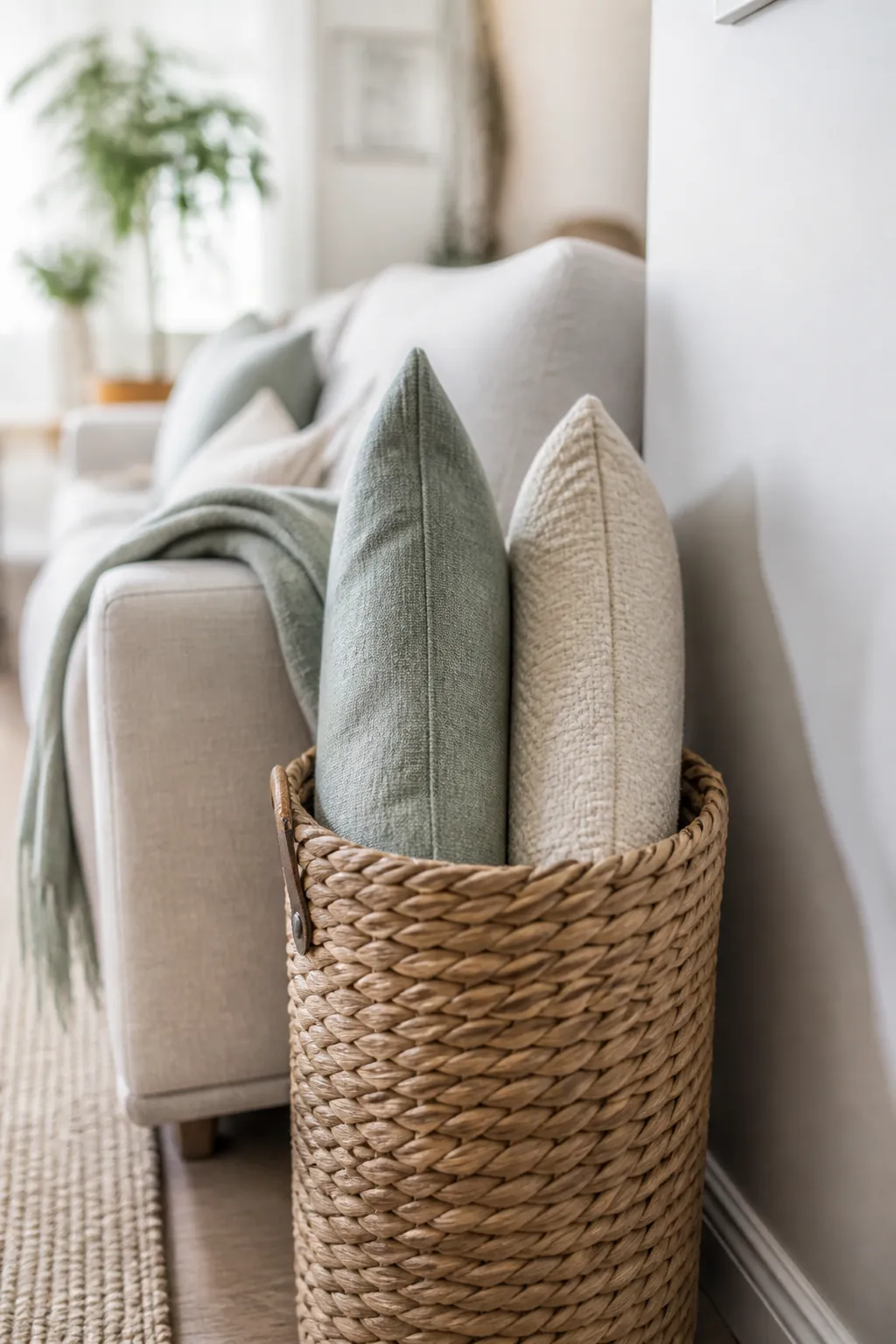
If an ottoman doesn’t fit the layout, a large woven storage basket parked in the corner beside the sofa does the same job in the open. The number that matters here is rim height, not width. A standard 18-inch pillow needs roughly 20 inches of basket to stand upright on edge; anything shorter and the top pillow slumps sideways within a day, which is exactly what makes a basket look like a dump pile instead of a styled corner.
Buy stiffer than feels necessary. Soft rope and seagrass baskets sag the moment they’re half full, and a sagging basket reads as laundry no matter how nice the weave is. A basket with a rolled or wired rim holds its shape empty and stays upright loaded.
3. Use the strip behind a floating sofa

If your sofa sits even four to six inches off the wall, that slot is storage you’re not using. Flat decorative pillows, the kind with less loft, lean on edge in that gap without anyone seeing them from the seating side. It’s not the right spot for thick, feather-filled cushions, which bulge and push the sofa forward over time, but it’s a genuinely free option for the flatter accent pillows that only earn their keep a few months a year. Our guide to behind-the-sofa storage for a tight living room covers the slim furniture that fits the same gap.
Storage for the overflow and seasonal pillows
The nightly rotation is one problem. Pillows you only use for company, or swap out every season, are a different one, and they belong somewhere you don’t have to see or dig through daily.
4. Slide a shallow bin under the sofa
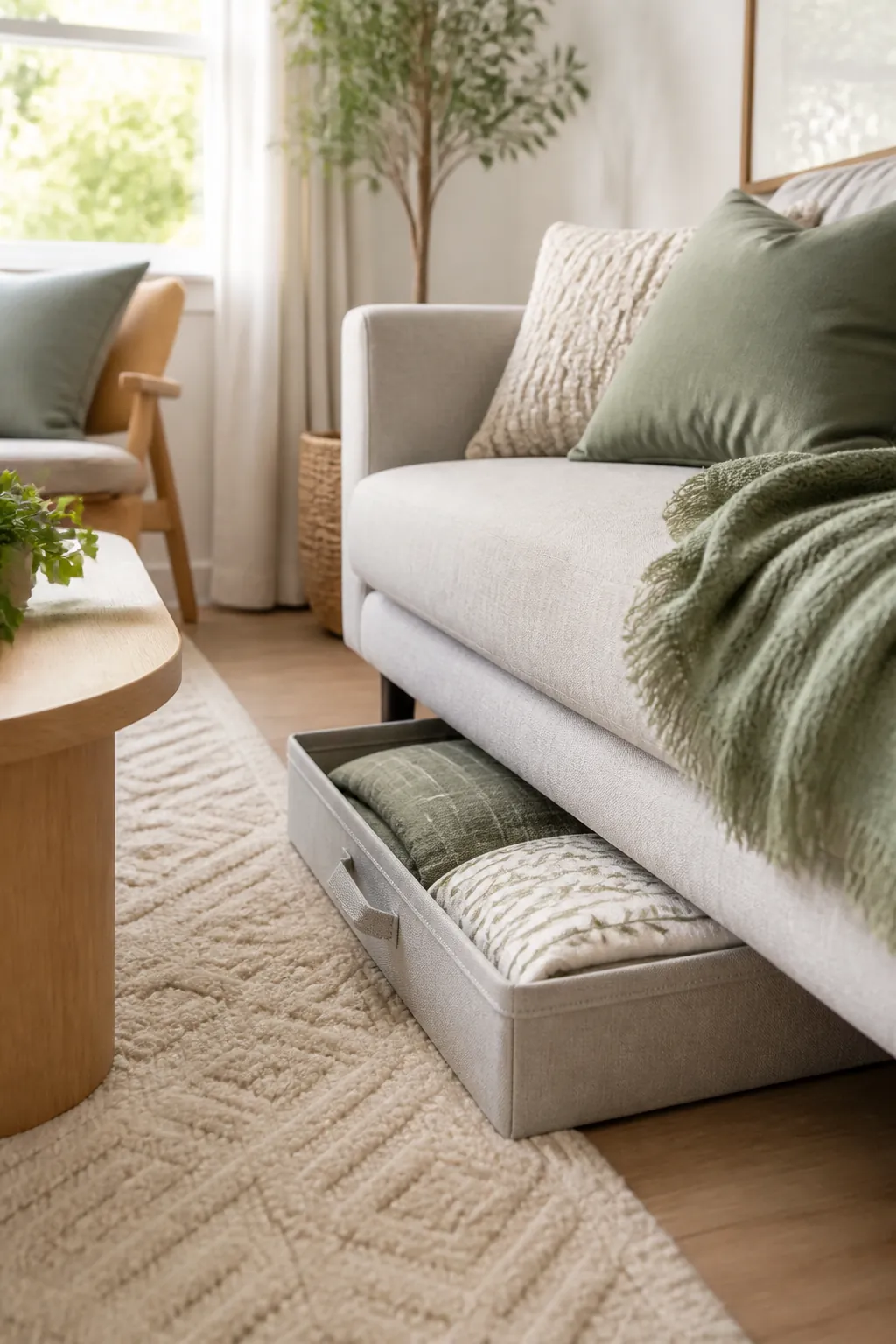
Measure the gap between your floor and the bottom of the sofa frame before you buy anything. Most sofas clear four to six inches, which rules out a deep box but fits a shallow under-bed storage bin with a lid just fine, whether you slide it under a bed frame or a sofa. Subtract an inch from your measured clearance before ordering, since a bin sized flush will scrape the underside of the frame every time you pull it out.
Use this spot for spare pillow covers and flatter accent pillows, not down-filled inserts. A closed bin traps moisture, and a feather or down pillow stored compressed against a hard plastic wall for months will pick up a musty smell that a wash won’t fully clear.
5. Give one cube on your shelf unit a single job
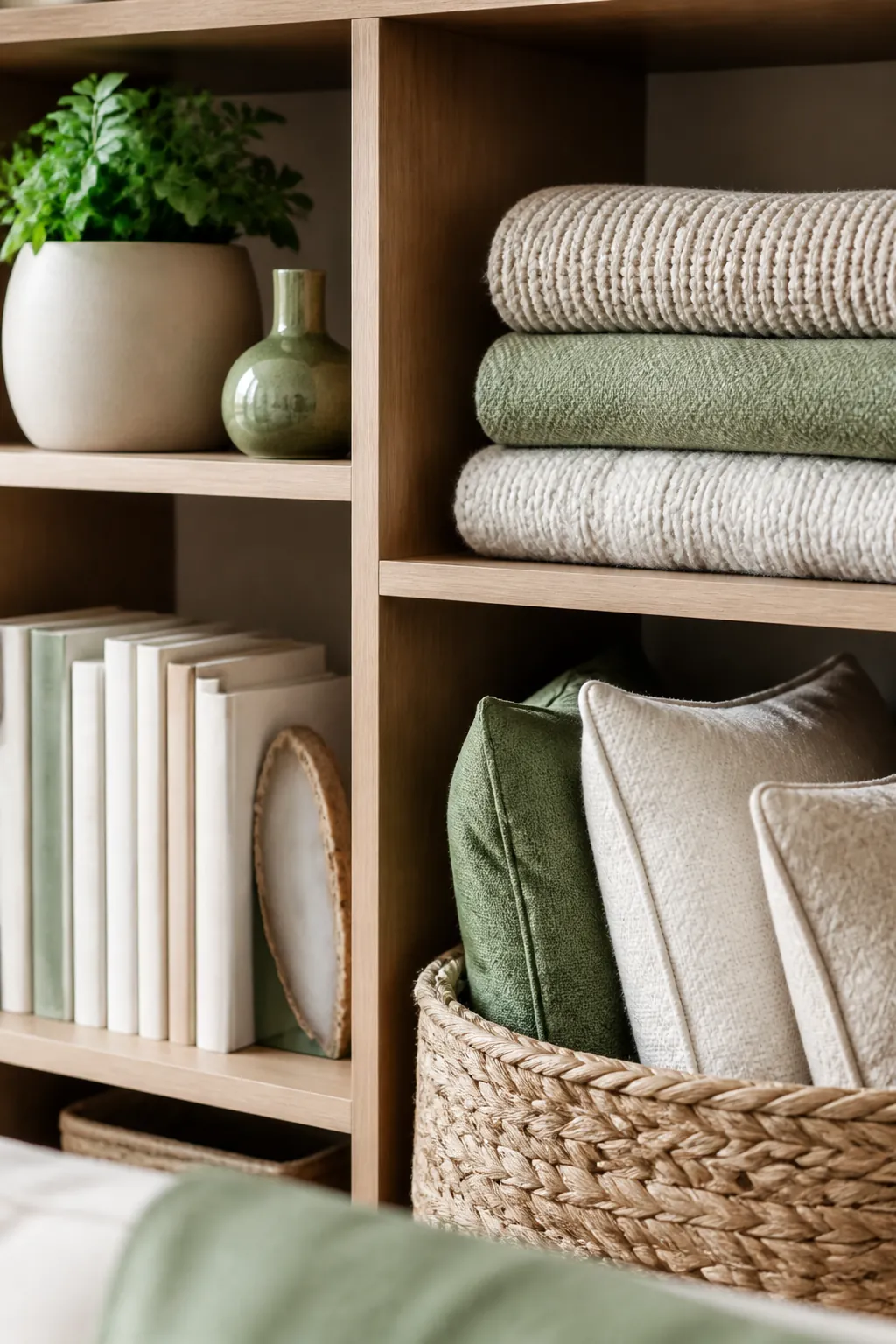
If you already own a cube shelving unit, hand one lower cube over to pillows and nothing else. Lower cubes are easier to reach into without bending awkwardly, and the visual weight of a stuffed cube belongs low in the piece anyway, not at eye level where it reads as clutter. The rule that keeps this working: one cube, not three. Pillows, like blankets, expand to fill whatever space you hand them, and a single dedicated cube forces the actual edit you keep meaning to do.
6. Rotate covers seasonally, store the inserts flat

If you swap pillow covers for the seasons, store the covers, not whole pillows. A stack of flat zippered covers takes up a fraction of the room that the same number of stuffed pillows does, and the inserts underneath can stay in year-round rotation instead of getting boxed up twice a year. Keep two or three inserts in reserve for whichever covers are currently in the closet, rather than owning a full stuffed pillow for every cover you’ve ever bought.
Making pillow storage look deliberate
The last three ideas are less about hiding pillows and more about making the ones you keep out earn their spot.
7. Flank a chair instead of crowding the sofa
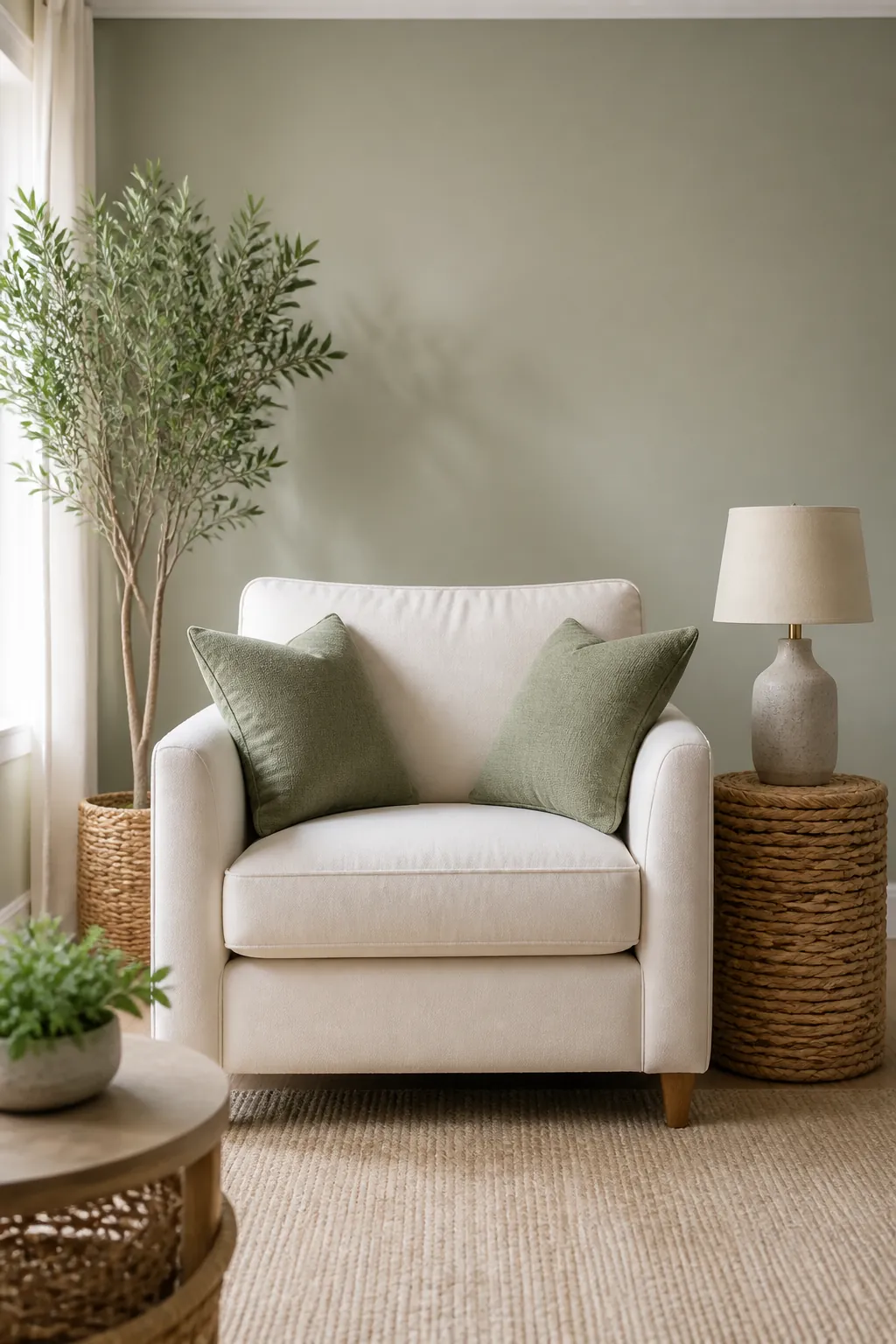
A single accent chair with one pillow on each side, using the woven basket from idea two as the side table, does more for a small room than piling five pillows onto a two-seat sofa. Splitting pillows across two pieces of furniture instead of stacking them all in one place is a styling trick that also happens to solve storage, since each spot only has to hold one or two.
8. Cap what’s visible at three

Three pillows on a sofa reads as intentional. Six reads as a pile that hasn’t been dealt with yet, even if every single one is expensive and coordinated. Pick your best two or three for daily display, and treat everything past that number as stored goods that rotate in for company, not permanent fixtures competing for the same twenty square feet of cushion.
9. Keep a ready set for guests in the ottoman
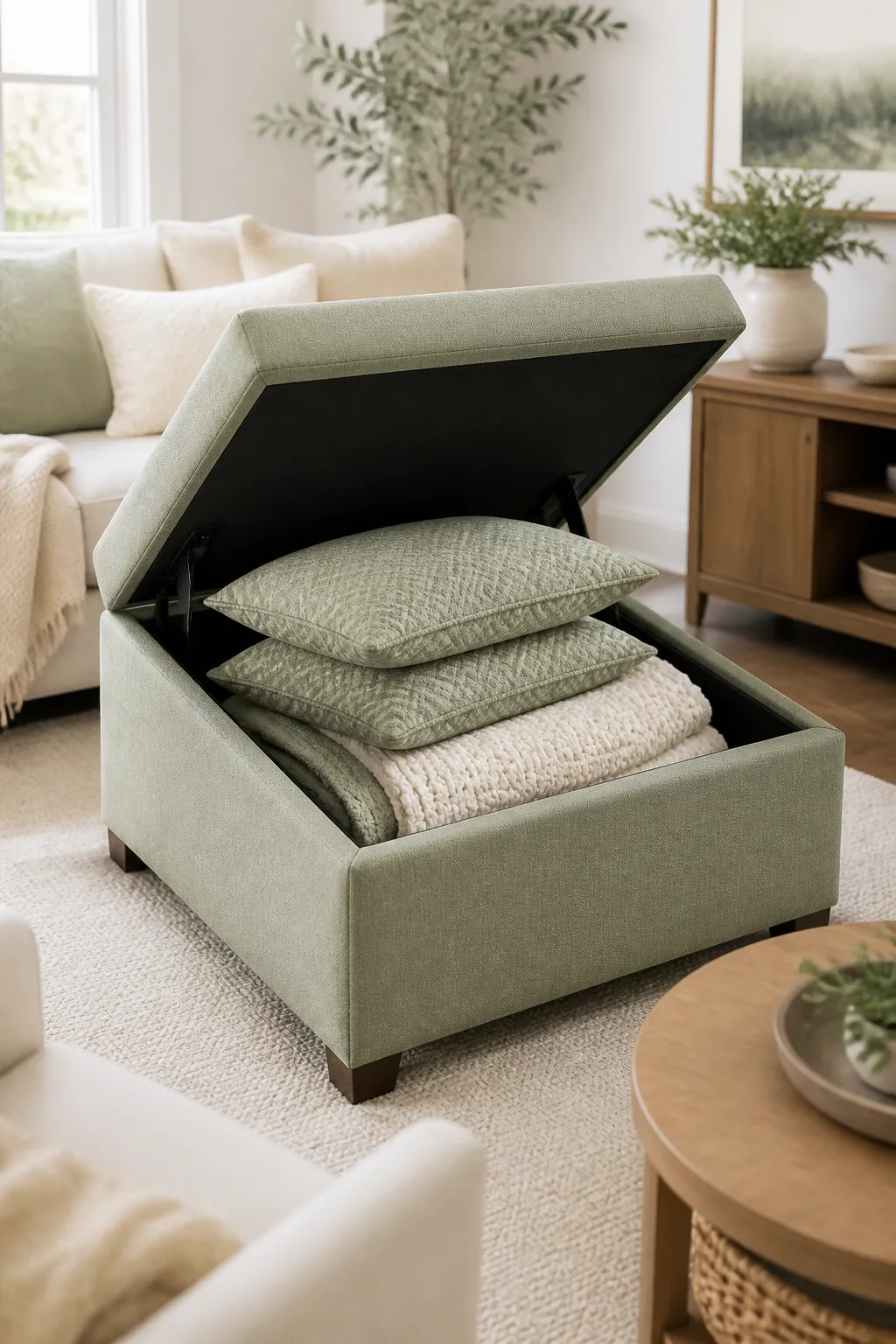
If you host overnight guests on a sofa bed, keep one matched set of two pillows set aside inside the ottoman specifically for that purpose, separate from your everyday rotation. It sounds like a small thing, but it means you’re not stripping the pillows off your own reading chair at eleven at night, and the guest set stays clean because it isn’t in daily circulation getting used as a laptop prop or a dog bed.
Where to start
If you only fix one thing, fix the nightly habit: a lidded ottoman or a tall basket within arm’s reach of the sofa, so moving pillows off the cushions takes one motion instead of a decision. Add the under-sofa bin once you notice a specific set, guest pillows, seasonal covers, that only comes out a few times a year. Everything else on this list is refinement once those two habits are in place.
The test isn’t how the sofa looks in a photo. It’s whether, on a random Tuesday with the pillows shoved wherever they landed, putting them back where they belong takes less effort than leaving them on the floor.