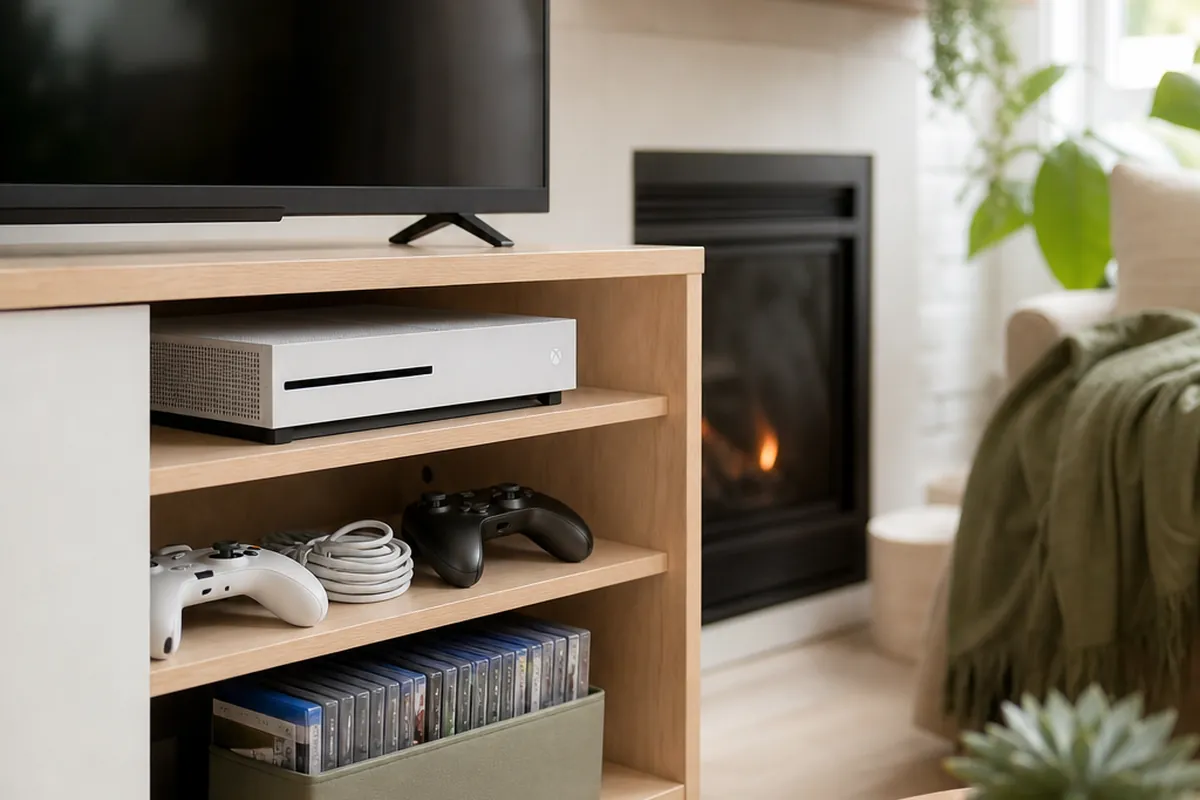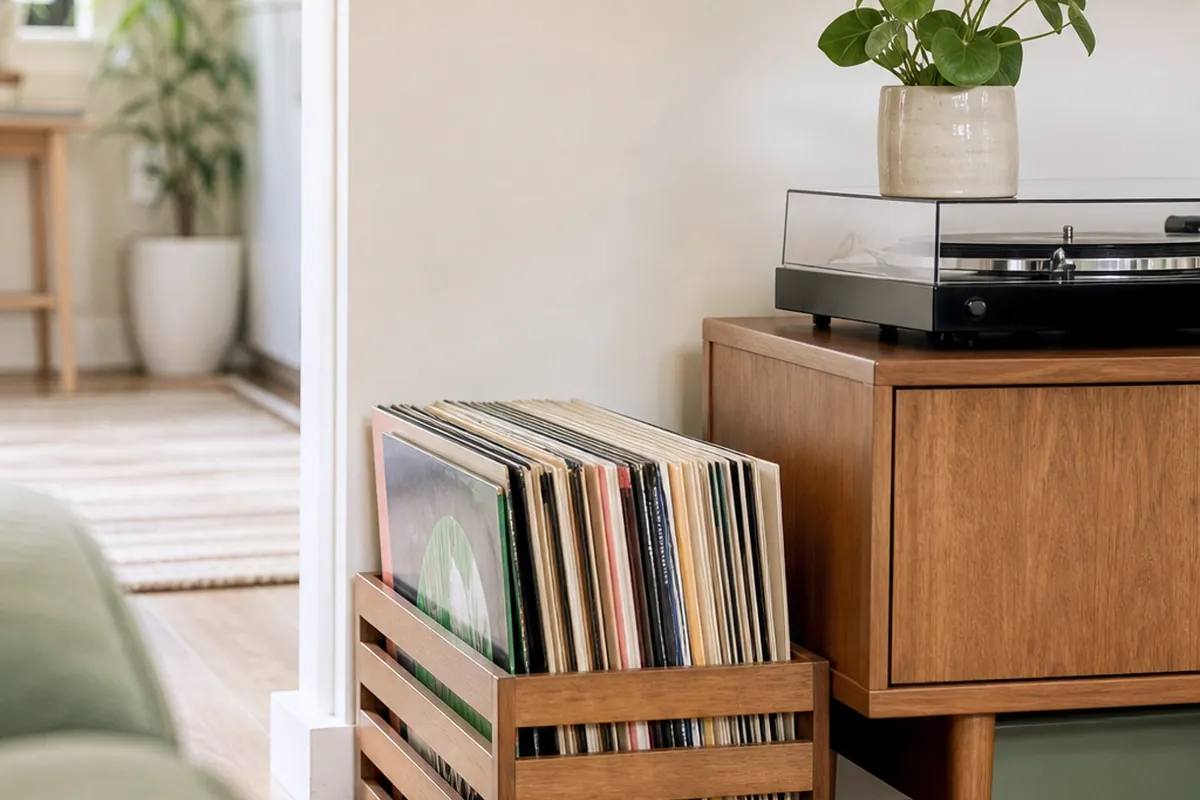
A reading corner in a small living room tends to go one of two ways. Either the chair sits there empty because nothing else about the spot invites you to stay, or it disappears under a pile of library books, a coffee mug collection and a charger cord snaking across the floor to the nearest outlet. Neither is a space problem. It is a problem of not giving the handful of things a reading nook actually needs their own specific spot within arm’s reach of the seat.
1. Size the corner before you buy anything
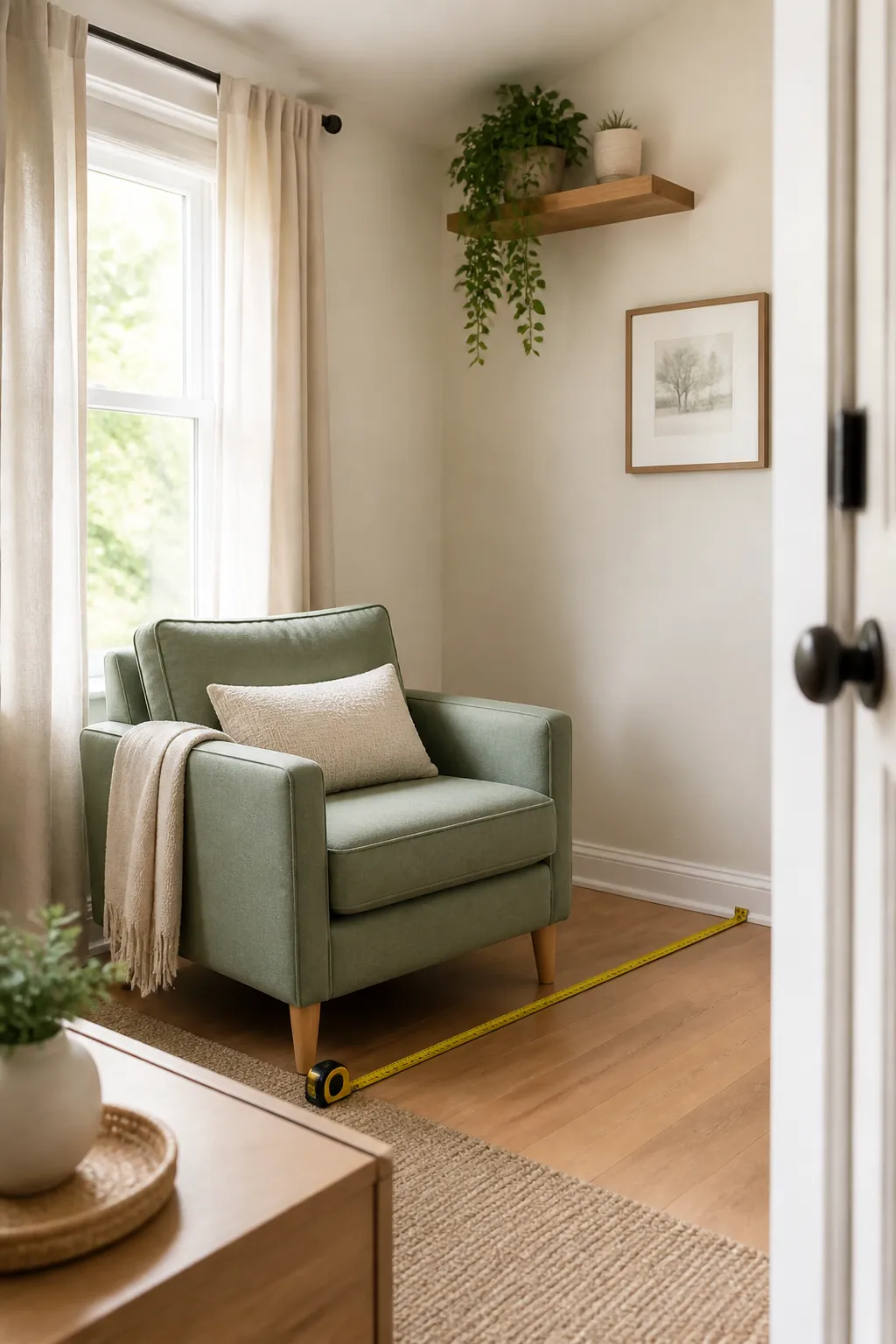
A reading nook needs less floor than it looks like it does, but it needs that floor in a specific shape. An armchair runs 30 to 34 inches wide and about 33 inches deep, and you want 12 to 16 inches in front of it for your feet, more if a footstool is going there instead. Add a side table and the whole footprint lands close to four feet square.
Measure that square in the actual corner before you shop for a chair, not after. A corner that is only three feet across can still take a slim chair and a table, but the footstool is the first thing to go, and planning for it from the start means you are not left stepping over it in a nook too tight to fit.
2. Let the side table carry the load, not the floor
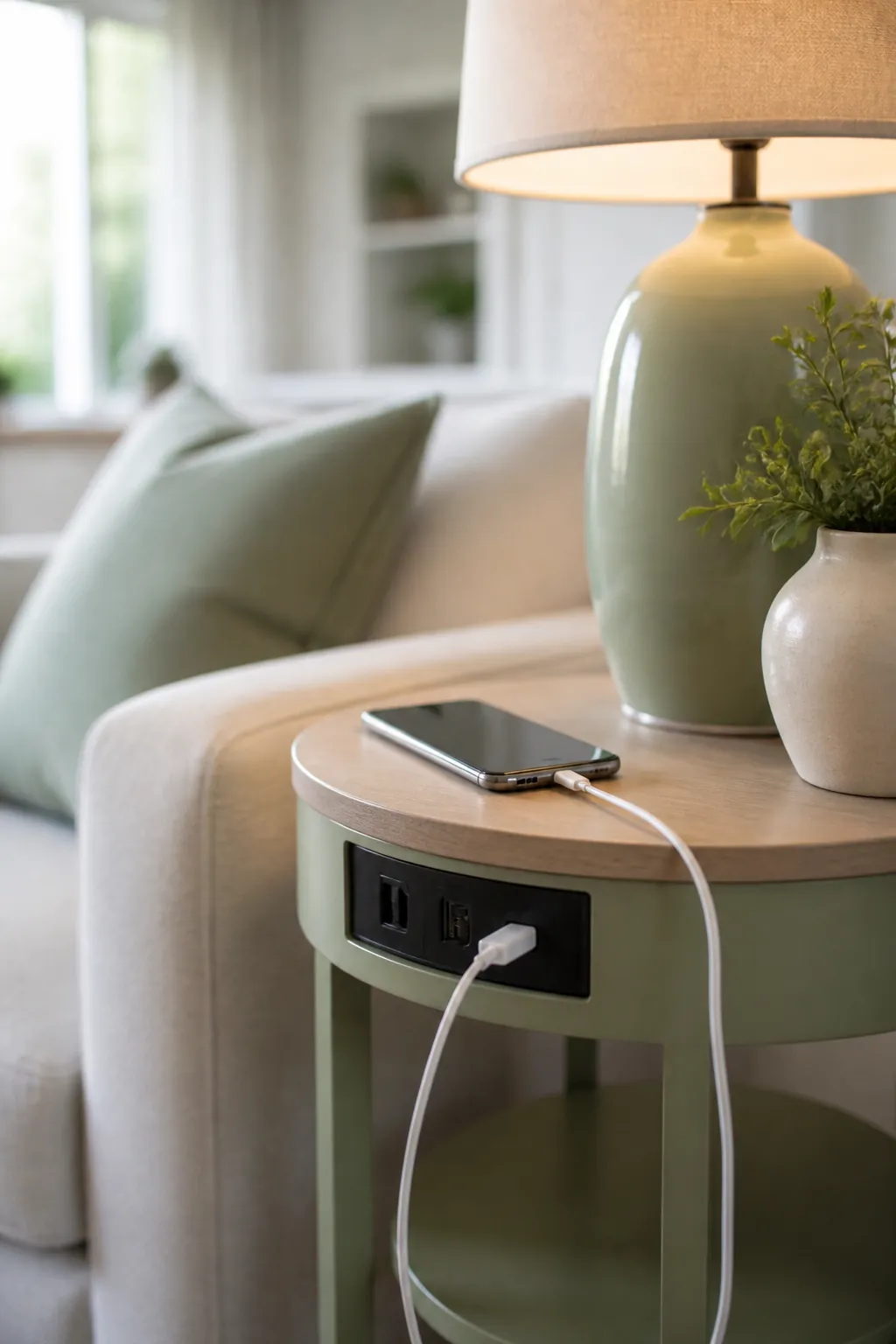
A slim side table with charging station solves two problems that usually get solved separately: somewhere to set a drink down, and somewhere to plug in a lamp without a cord running across the floor. At around 12 to 14 inches wide, it fits in the gap beside a chair arm that a standard end table would crowd, and the built-in USB ports mean the lamp, a phone and an e-reader all charge off the table instead of a power strip wedged behind the chair.
Set the table height within an inch or two of the chair arm. Much higher and reaching for a mug means lifting your arm; much lower and you are leaning down for everything, which is the kind of small friction that quietly convinces you to stop using the nook.
3. Give the current book a basket, not a stack on the floor
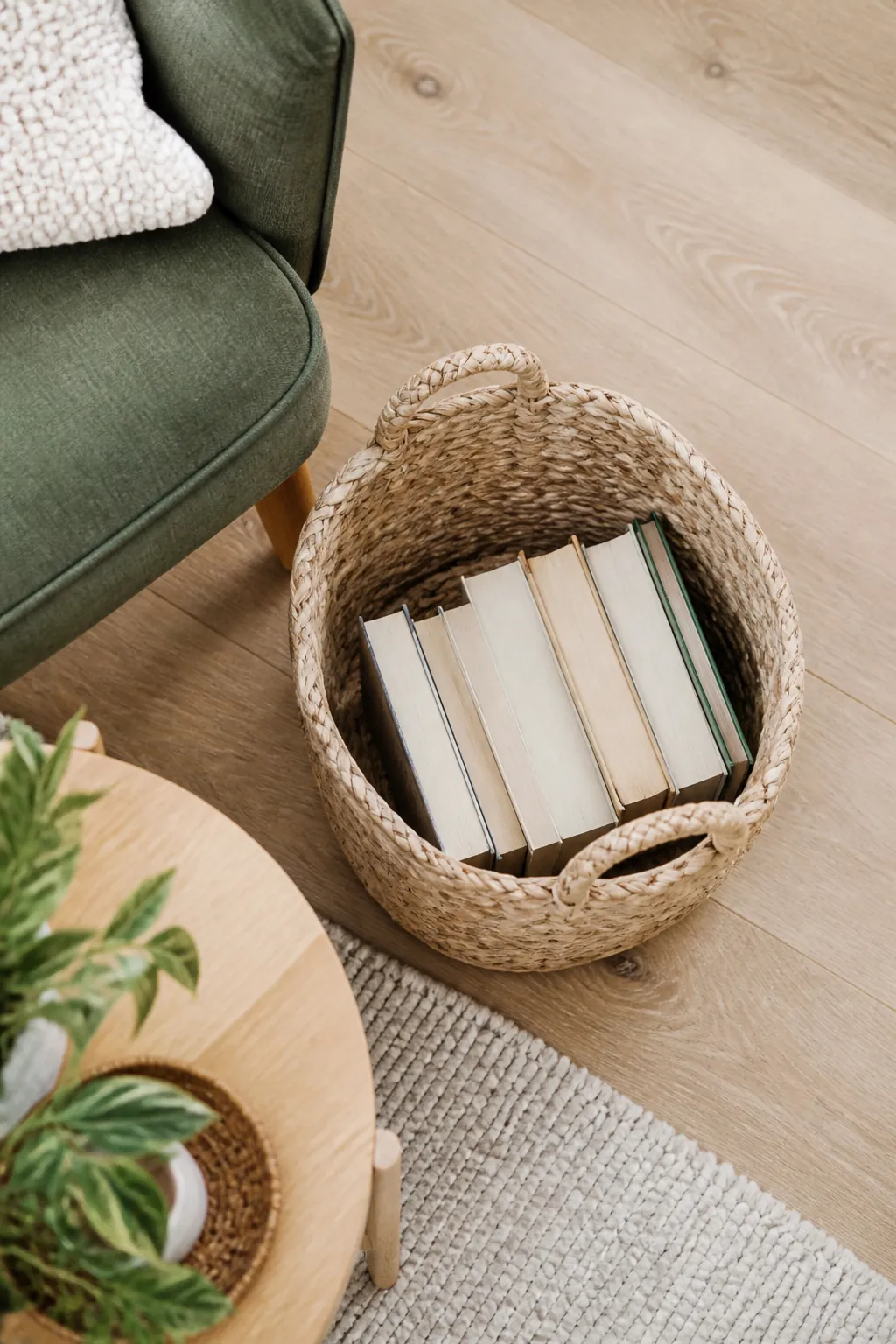
The book you are actually in the middle of needs a landing spot that is not the floor beside the chair leg, because a loose stack on carpet tips the moment anyone walks past it. A large woven storage basket set beside the chair holds whatever you are reading right now, plus the one or two you have lined up next, without needing a shelf at all.
Keep it to what you can see the bottom of. A basket that holds fifteen paperbacks comfortably starts swallowing books once you push past twenty, and a basket you cannot see into is a basket where the book you want is always the one on the bottom.
4. Catch magazines and library books with an under-shelf basket
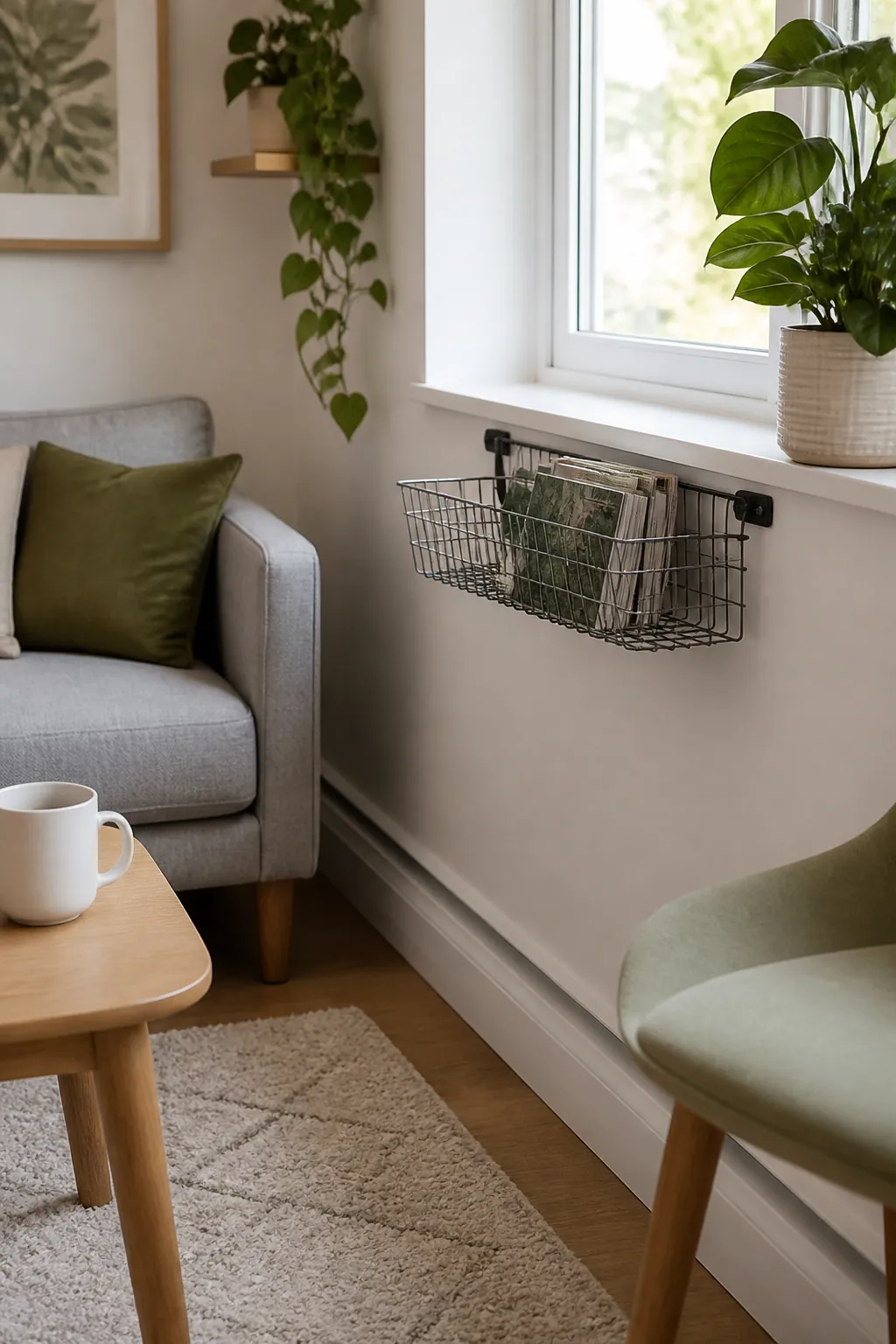
Magazines and library loans are the paper that never quite earns a permanent shelf spot, which is exactly why they end up loose on the arm of the chair. Under-shelf hanging baskets, about 13 inches long and 6 inches deep, clip onto the lip of an existing shelf or windowsill and hang below it, which means they add storage without adding a single inch of floor footprint, and nothing needs drilling to hang them. The clip wants a shelf edge no thicker than about three-quarters of an inch; a windowsill with a rounded or oversized lip can leave it sitting loose enough that a fully loaded basket tips forward.
This is the right spot for anything with a return date or a short shelf life: this month’s magazine, the library book due back Thursday, the takeout menu you keep meaning to recycle. Things with no end date belong on the shelf above, not hanging below it with everything else.
5. Keep one throw within arm’s reach, not draped on the chair arm
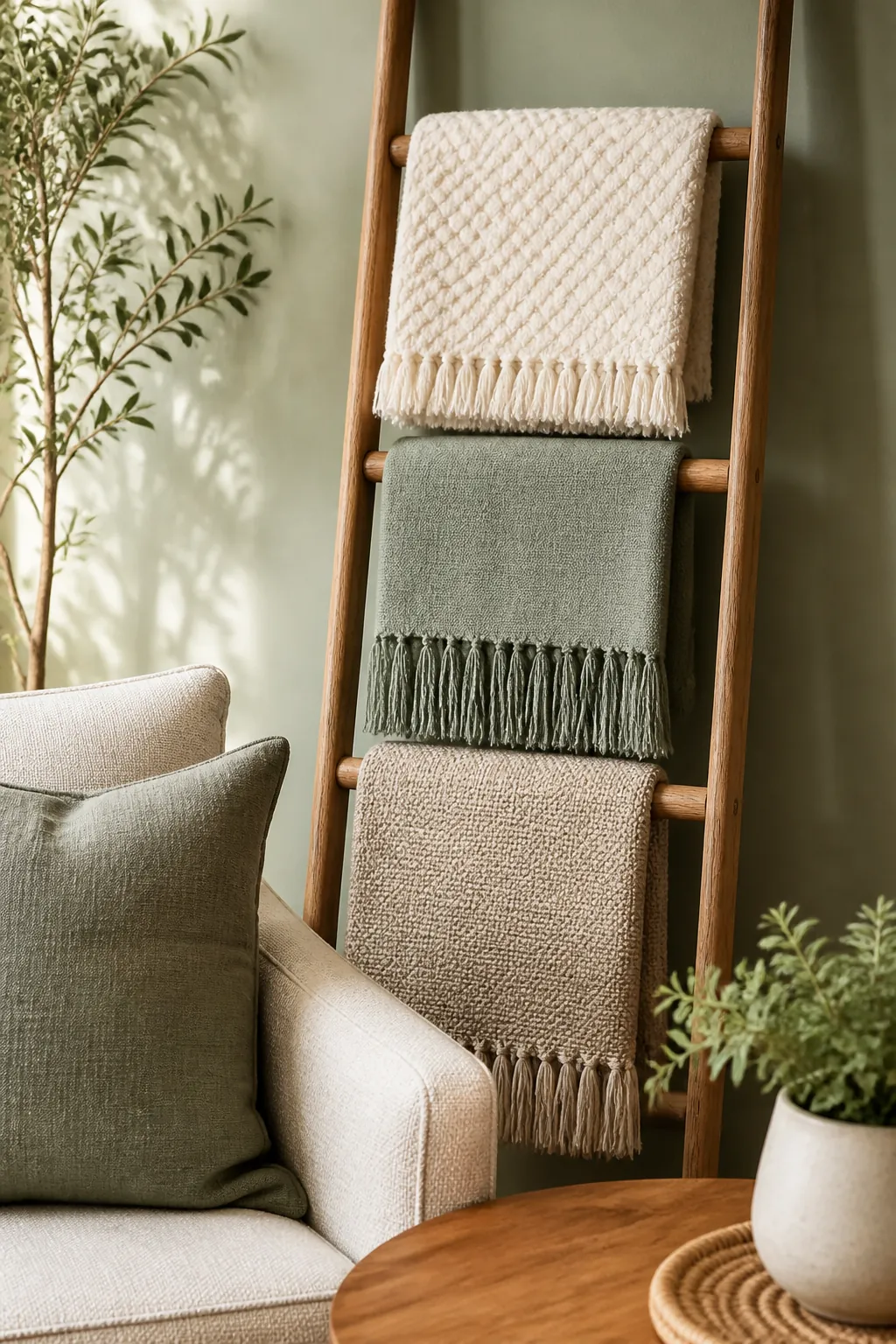
A throw draped over the chair arm looks tidy for about a day, and after that it slides, gets sat on half-folded, and ends up a permanent lump instead of something you reach for. A leaning blanket ladder set against the wall beside the chair holds three or four folded throws in the same footprint the chair arm was already losing to one rumpled blanket, and nothing about it needs a wall anchor since it rests on its own feet at an angle.
If floor space is too tight even for a ladder, blanket storage ideas for a living room covers basket and ottoman options that work from a flatter footprint.
6. Trade the bookcase for one shelf or ledge

A full bookcase is the wrong tool for a reading nook specifically, because its footprint fights the chair for the same floor. A single wall-mounted ledge, deep enough to face book covers outward rather than spines, holds a rotating dozen titles in about six inches of depth, which is roughly a quarter the footprint of even a narrow bookcase.
Weight is the number that decides whether this works without screws. A ledge loaded with a dozen hardcovers can run 15 to 20 pounds, and a renter-safe mount needs adhesive strips rated above that weight, not at it, because the rating on the package is for a single strip under ideal conditions, not the pair carrying a shelf someone bumps into weekly. If the ledge needs more than two strips to hit its rating, that is a sign to mount it lower and lighter rather than push the adhesive past what it is built for. For the rest of your collection, bookshelf organization ideas for a small living room covers the furniture-sized version of the same problem.
7. Solve the lighting without hunting for an outlet

A reading nook with no reliable light next to it gets used for ten minutes before dusk and ignored after that. A clip-on book light mounted to the chair back or a short floor lamp beside the table both avoid the ceiling-fixture problem most corners have, which is that the overhead light is rarely bright enough or rarely positioned right for a page at arm’s length.
The charging station on the side table from step two is what makes either option workable without a cord running across open floor to the nearest wall socket. If a short run of cord is unavoidable, flatten it against the baseboard with adhesive cable clips rather than leaving it loose, since a loose cord by a reading chair is the kind of thing that eventually gets caught by a foot. More on routing cords generally is in cord organization ideas for a small living room.
8. Contain the small stuff in one shallow tray or basket
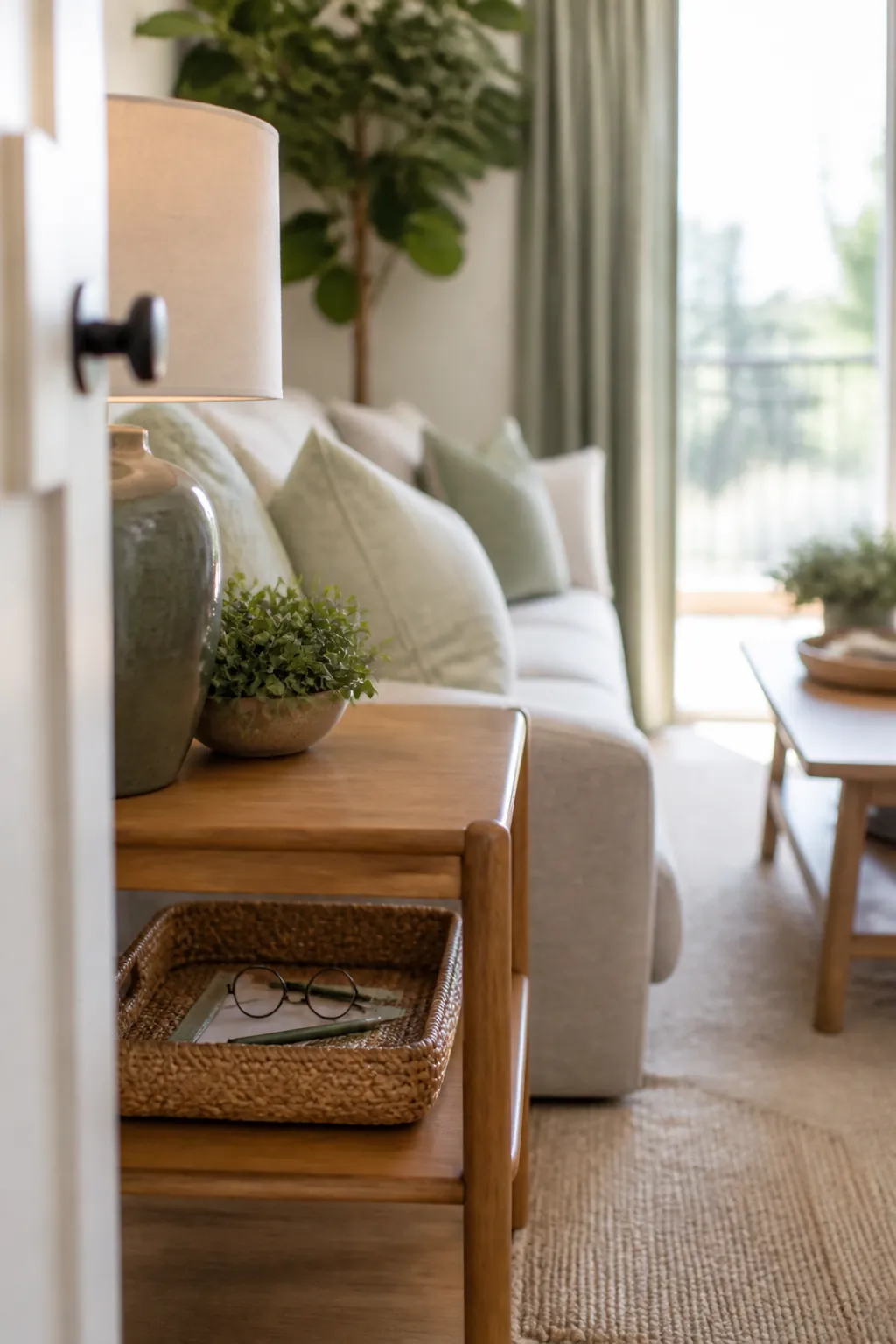
Reading glasses, a bookmark, a pen for marking passages, lip balm. None of it is big, but loose on a side table it slides around every time you set a mug down, and eventually it migrates to the coffee table across the room. A small basket on the table’s lower shelf, sized to hold five or six objects and no more, keeps the whole set together and visible at a glance.
The test is the same one that works for any small-object tray: if you have to dig for something, the basket is too full or too deep. A shallow dish wins over a deep one here, since depth just means stacking things on top of each other instead of laying them out where you can see them.
9. Make the whole setup renter-reversible
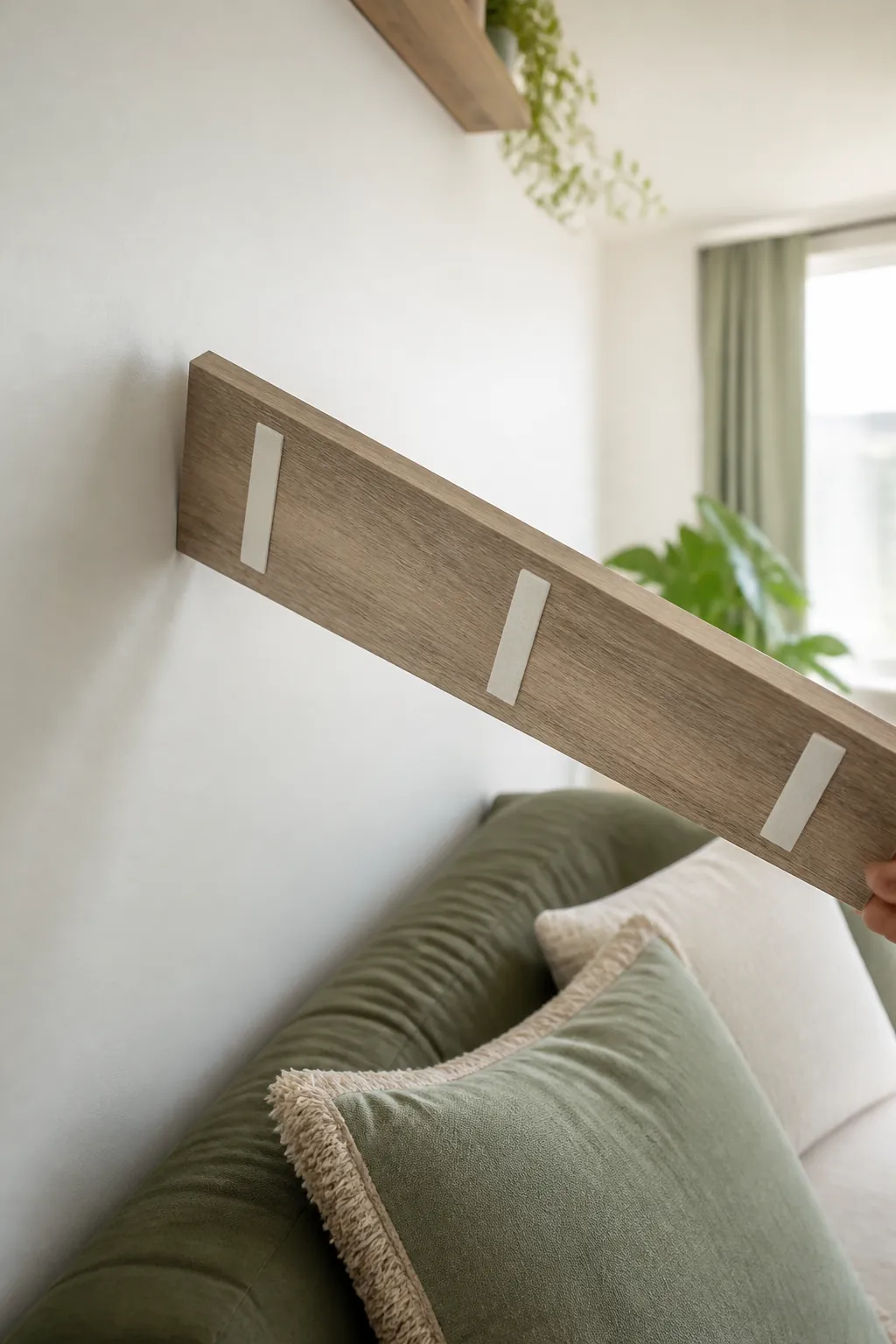
Every piece in this nook should come down clean. That means weight-rated adhesive strips on the ledge rather than screws, a leaning ladder rather than a wall-mounted hook for the throw, and a side table rather than a lamp arm clamped to a shelf. Test any adhesive strip on a hidden patch of the wall first and give it the full cure time on the label before hanging anything, since a strip loaded the same day it is applied is the single most common reason one fails.
Before you move out, pull the ledge off slowly and at a low angle rather than straight out, which is how most adhesive strips are designed to release without taking paint with them. A nook built this way disassembles into a chair, a table and a basket, every piece of it just as useful in the next apartment’s corner as it was in this one. For the rest of the room, small apartment organization ideas covers the same no-drill approach applied to everything else in a rental living room.
Where to start
If you are starting from an empty corner with just a chair in it, buy the side table with the charging station first. It solves the light, the drink and the cord problem in one piece of furniture, and everything after that, the book basket, the under-shelf catch for magazines, the ledge for the rest of your library, is an addition rather than a redesign.
If the corner already has a pile of books and a tangle of cords around it, start at the other end: sort the books into “reading now” and “everything else” before you buy a single thing. That split alone usually cuts the visible clutter in half, and it tells you honestly whether you need a floor basket, a wall ledge, or both.