A dresser is a large piece of furniture that holds a surprisingly small volume of clothing, and in a small bedroom it eats about a square metre of floor plus the space to open the drawers. Plenty of rooms genuinely cannot take one, and plenty of renters do not want to buy one for a flat they will leave.
The good news is that a dresser is not doing anything irreplaceable. It holds folded things and it provides a surface. Both jobs can be done with less floor, and usually better, once you stop trying to replace it with something dresser shaped.
1. Sort by what must be folded, not by what you usually fold
Start by splitting the wardrobe into things that have to be folded and things that only get folded out of habit.
The genuinely fold-only list is short: heavy knitwear that would stretch on a hanger, socks, underwear, and gym or lounge clothes you do not care about creasing. Almost everything else, including plenty of t shirts and jeans that people fold automatically, hangs perfectly well.
This matters because the fold-only pile is what you actually need to solve. For most people it turns out to be about a third of what they own, which is a much smaller problem than replacing a dresser.
2. Hang more than feels normal, on hangers that do not waste space
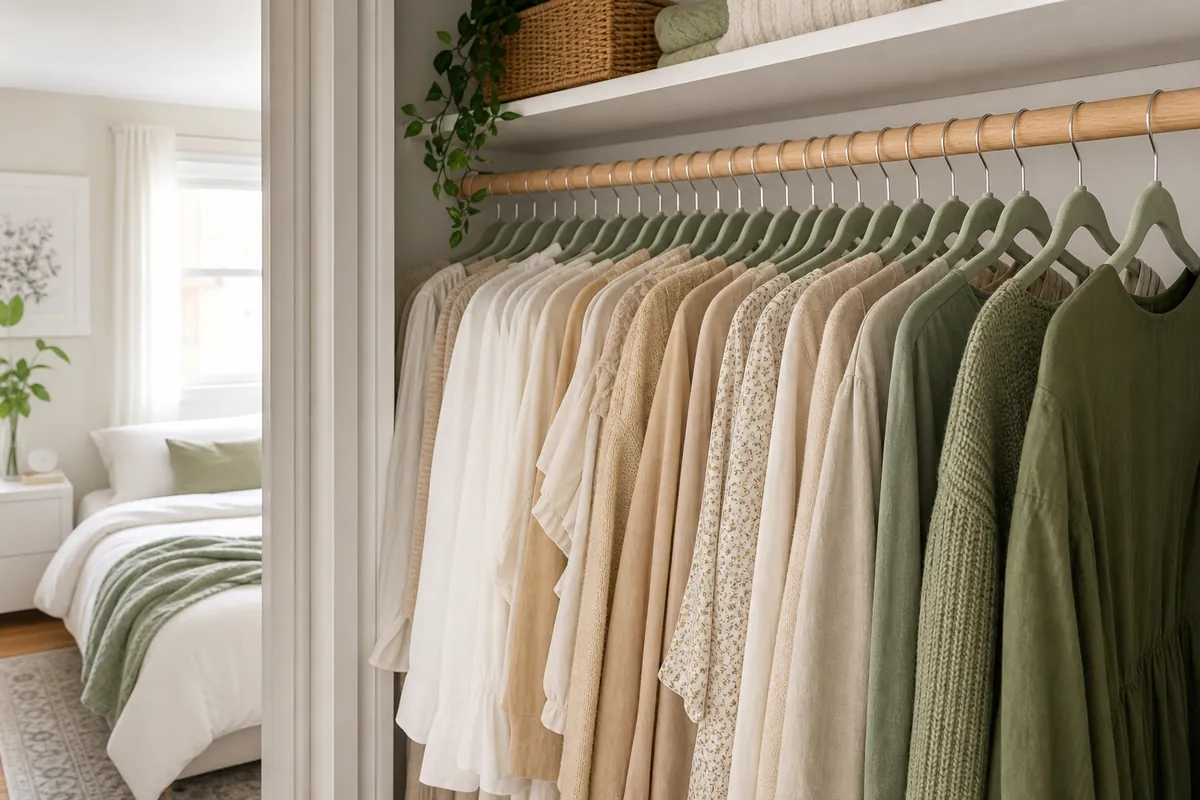
Once you accept that most things can hang, the rail becomes your main storage, and the hangers decide how much it holds.
Slim velvet hangers are the boring upgrade that actually works. Bulky plastic hangers waste around a centimetre each in thickness, which across a full rail is a noticeable stretch of lost space, and the velvet grip stops wide necklines sliding off, which is the failure mode that sends things back to a folded pile.
Buy them all at once rather than gradually. A rail with mixed hanger types does not compress properly, and the mismatched heights make the whole thing look chaotic even when it is tidy.
3. Use a hanging shelf organizer as the dresser stand-in
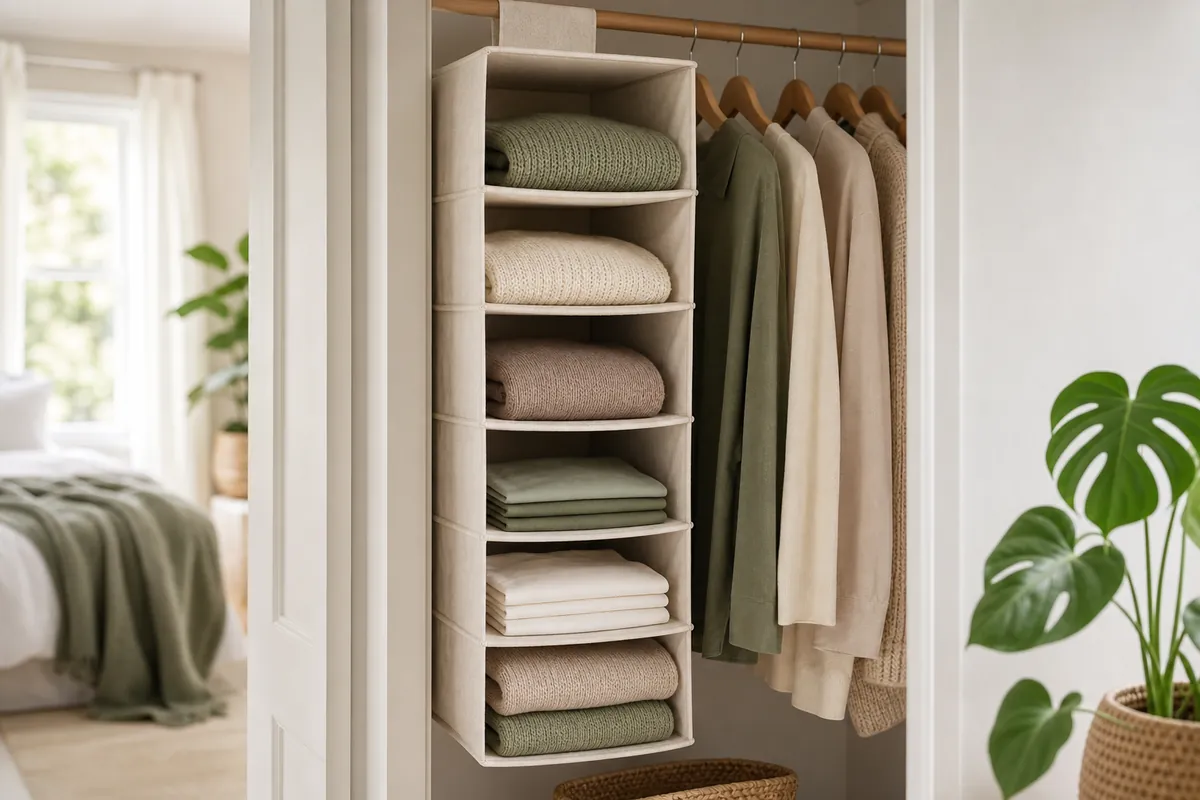
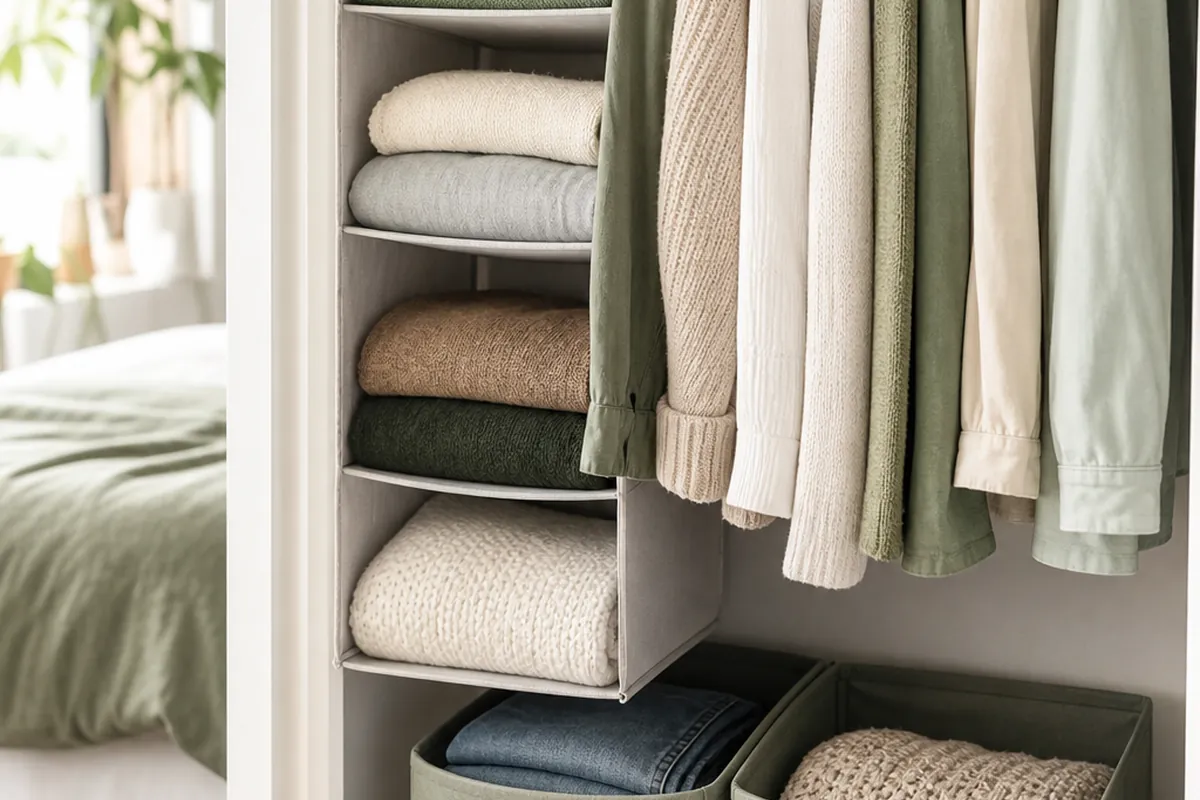
This is the closest thing to a drop in dresser replacement, and it takes no floor at all because it hangs from the rail you already have.
A 6-shelf hanging closet organizer gives you six folded compartments in the vertical space under short garments, which is usually dead air. It suits exactly the fold-only pile from step one: jumpers on the lower shelves where weight is fine, lighter things above.
Two honest limits. It needs a rail that can take the weight, so check a flimsy rental rail before loading it, and it steals hanging width, typically thirty centimetres. If your rail is already tight, that trade may not be worth it.
4. Choose a cube unit over anything dresser shaped
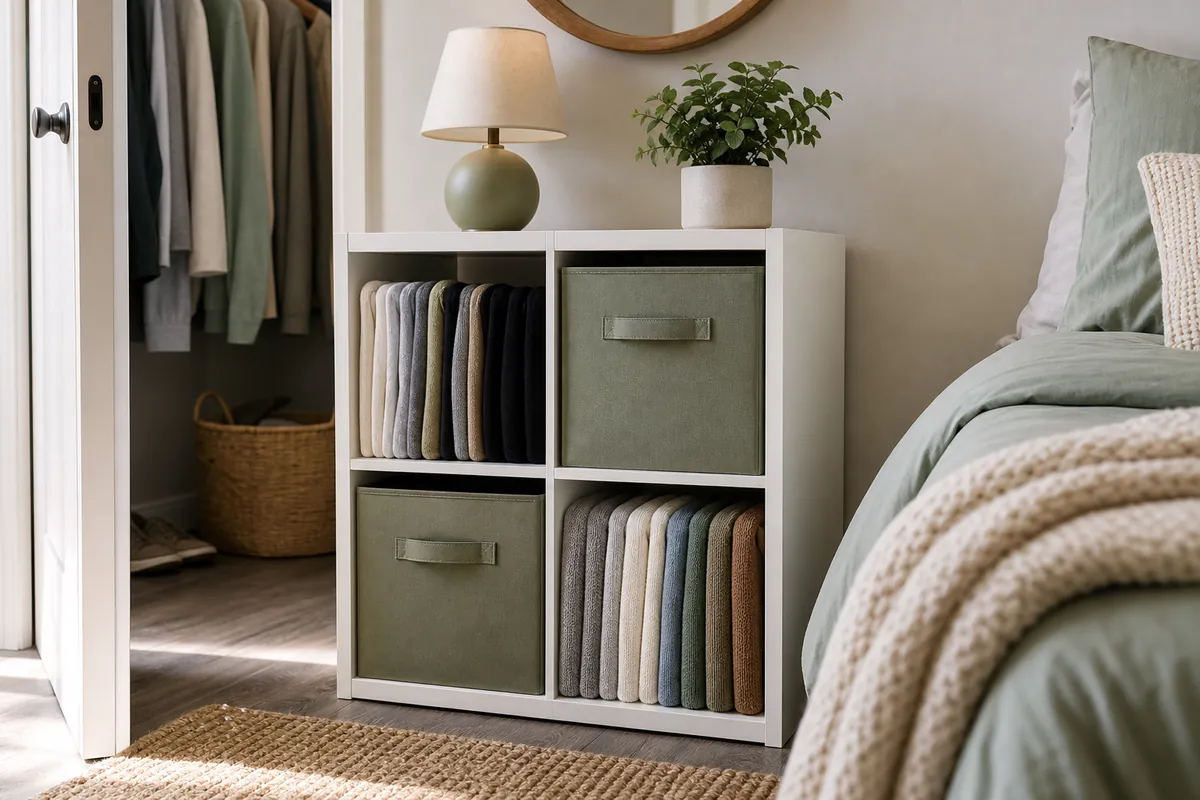
If you do need furniture, buy the shape that fits a small room rather than the one that traditionally holds clothes.
A cube unit with fabric storage cubes is shallower than a dresser, so it intrudes less into the walkway, and it is more flexible: some cubes hold folded stacks, others take bins for the things that never fold, and the top is the surface the dresser would have given you. It also comes apart flat when you move, which a dresser does not.
The compromise is real. Fabric cubes are less dust proof than closed drawers and slightly less tidy to look at. In exchange you get roughly the same volume in less depth, and the ability to reconfigure it in a room you do not own.
5. Treat under the bed as the drawer you already have
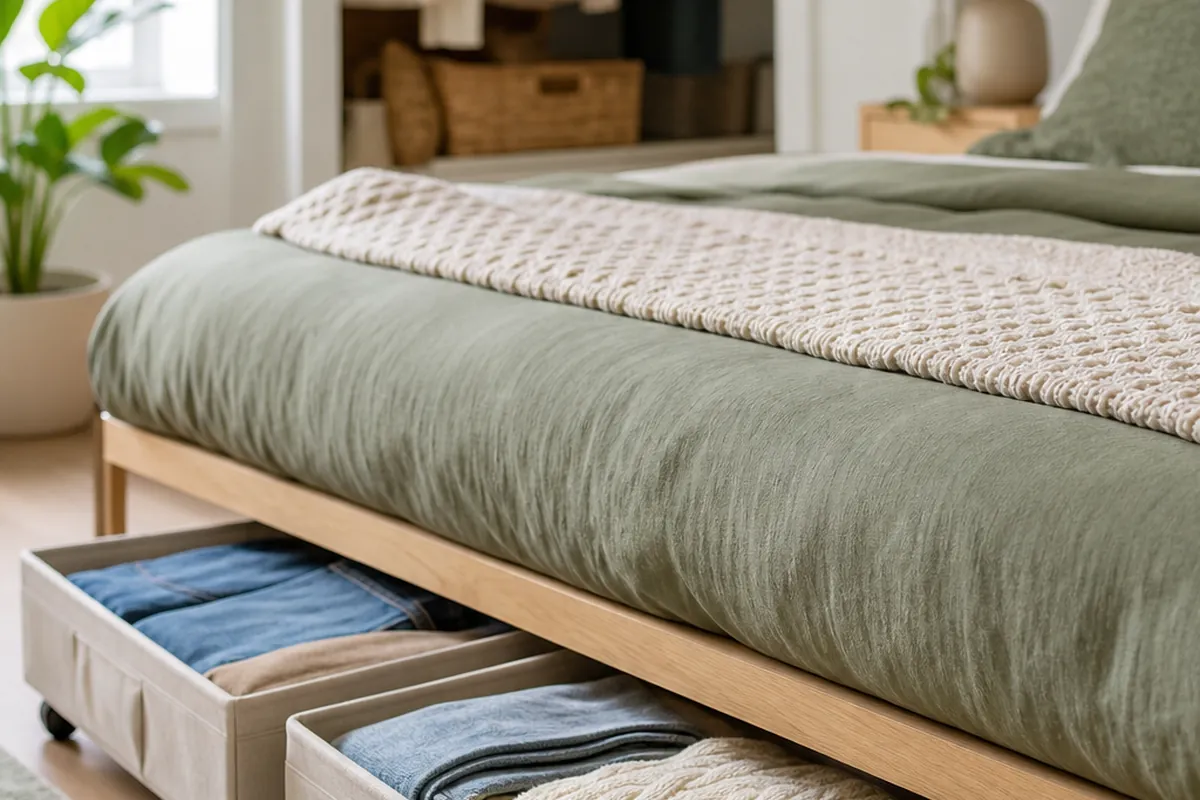
The space under a bed is usually the largest unused volume in a bedroom, and without a dresser it becomes important rather than optional.
It suits bulk and low frequency: off season clothing, spare bedding, the coat you need for two months a year. Keep daily clothes out of it, because anything requiring you to kneel down twice a day will end up on a chair instead. The full approach is in under bed storage for a small bedroom.
6. File folded clothes upright, never in stacks
Without drawers you will have open shelves or cubes, and on both, stacks fail.
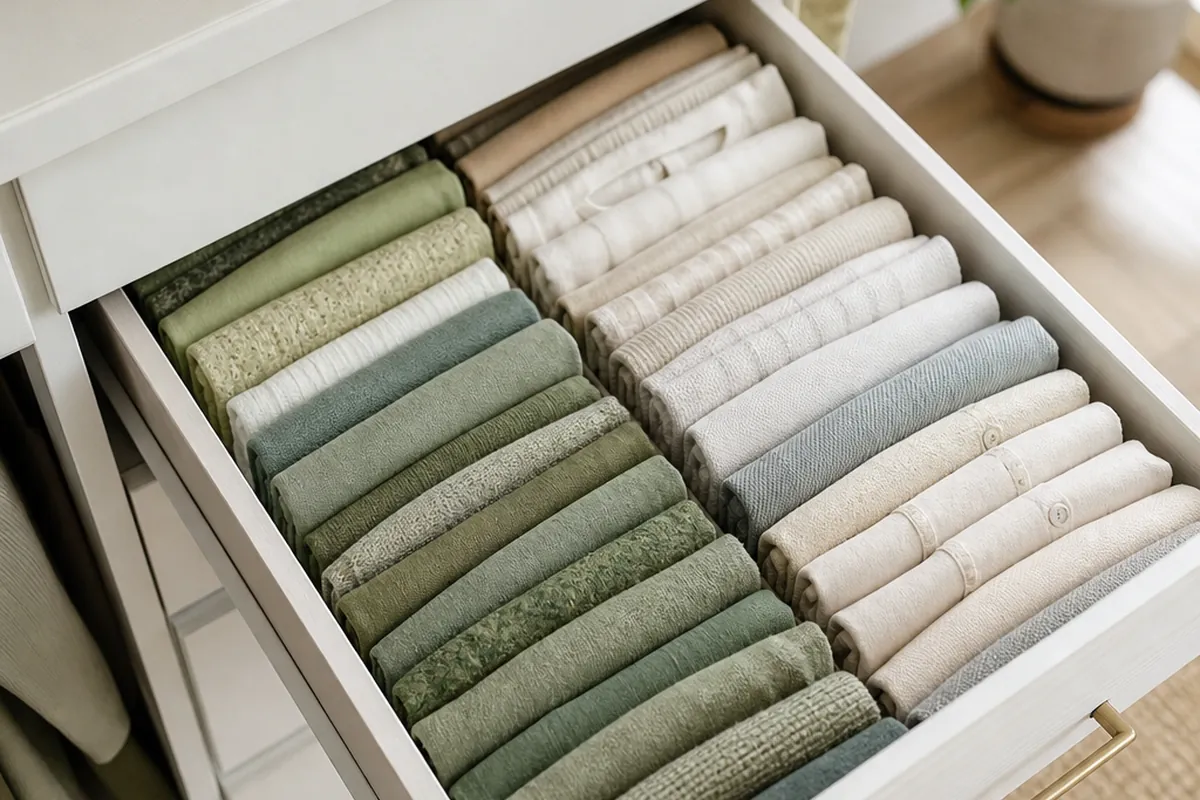
Fold everything to one consistent height, roughly the width of the shelf, and stand the items upright in rows so you see every edge. Two things improve immediately: you stop pulling from the middle and collapsing the pile, and you can see what you own, which is the reason the bottom of a stack never gets worn. The method comes from KonMari style drawer folding and works better on a shelf than it does in a drawer.
7. Give the unfoldable things a basket and stop arranging them
Socks, underwear, tights and swimwear are not worth folding. They are small, they tangle, and any neat arrangement lasts one laundry cycle.
Put them in baskets or fabric bins where the correct action is dropping them in. One basket per category, not one for everything, because a single mixed basket becomes something you dig through. This is the one place where lowering the standard is the right call.
8. Keep only the current season on the rail
Without a dresser the rail is doing most of the work, so it cannot carry a full year of clothing.
Split the wardrobe in half by season and store the half you are not wearing somewhere else, under the bed or on the top shelf. A rail holding only what is currently wearable is easier to use and holds noticeably more of what you actually reach for. It also makes the twice yearly swap the moment you notice what you did not wear at all.
9. Replace the surface, not just the storage
The overlooked job a dresser does is providing a surface at hand height for keys, a lamp and whatever comes out of your pockets.
If nothing replaces it, that stuff lands on the bed or the floor. A narrow shelf, the top of the cube unit, or a small wall mounted ledge covers it. It needs to be small on purpose, because a large empty surface in a bedroom fills up with things that then have nowhere else to go. Nightstand alternatives covers the same problem beside the bed.
10. Keep the chair honest
Every dresser free bedroom develops a chair, or a bench, or a corner of the bed, that holds the clothes that are neither clean nor dirty.
You will not eliminate it, so give it a rule instead: it holds one layer, and it gets cleared when you next put clothes away. The pile only becomes a problem when it gets deep enough that the bottom items are effectively lost, and a one layer rule stops that without pretending you are going to hang up a worn jumper every evening.
Storage without the furniture
Doing without a dresser works when you stop looking for a replacement object and split the job instead. Hanging takes most of it, a hanging shelf or cube unit takes the fold-only third, under the bed takes bulk, and a small surface catches the daily debris.
The result usually holds as much as the dresser did, takes less floor, and comes apart when you move, which in a rented room is worth something on its own.