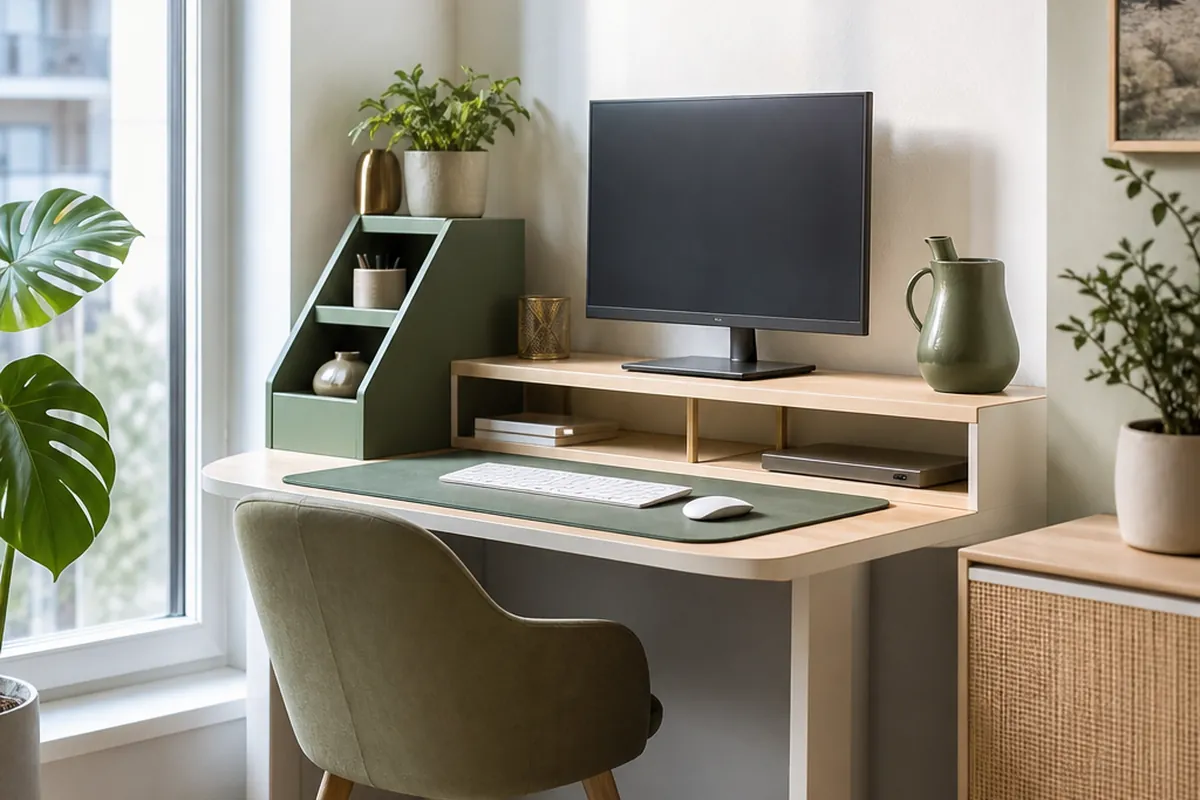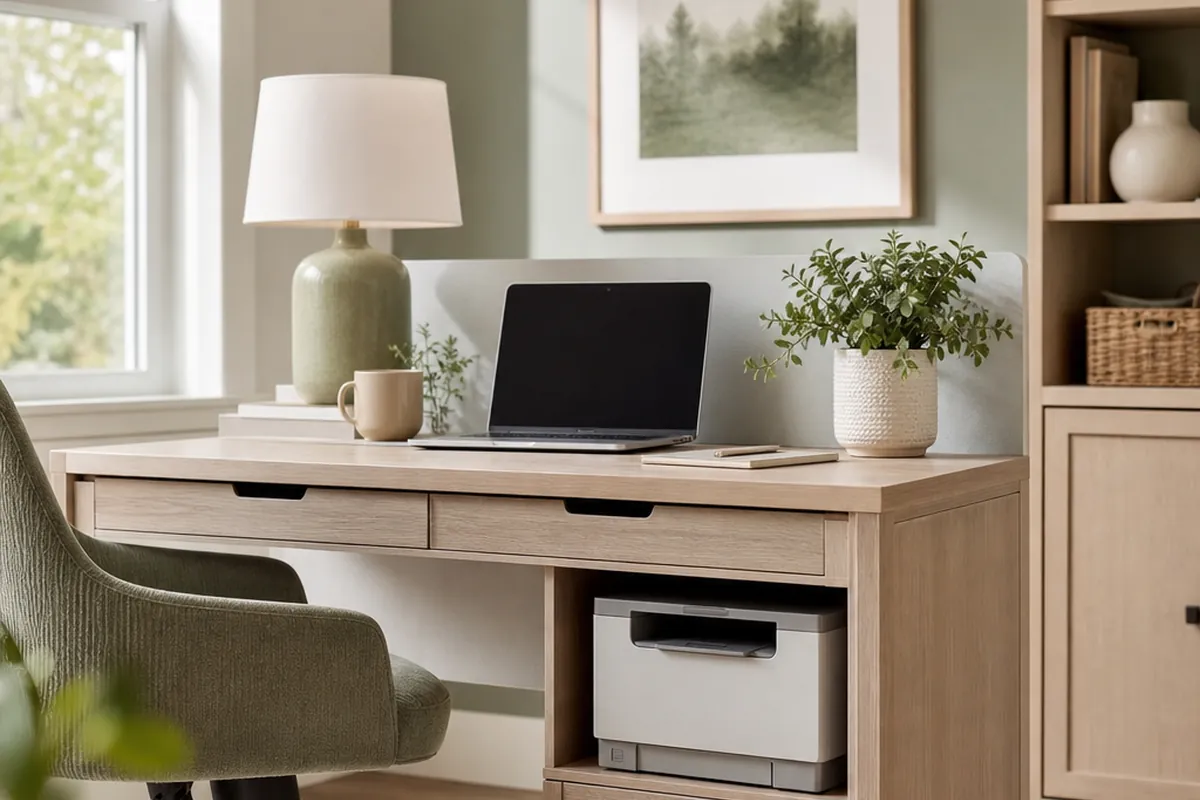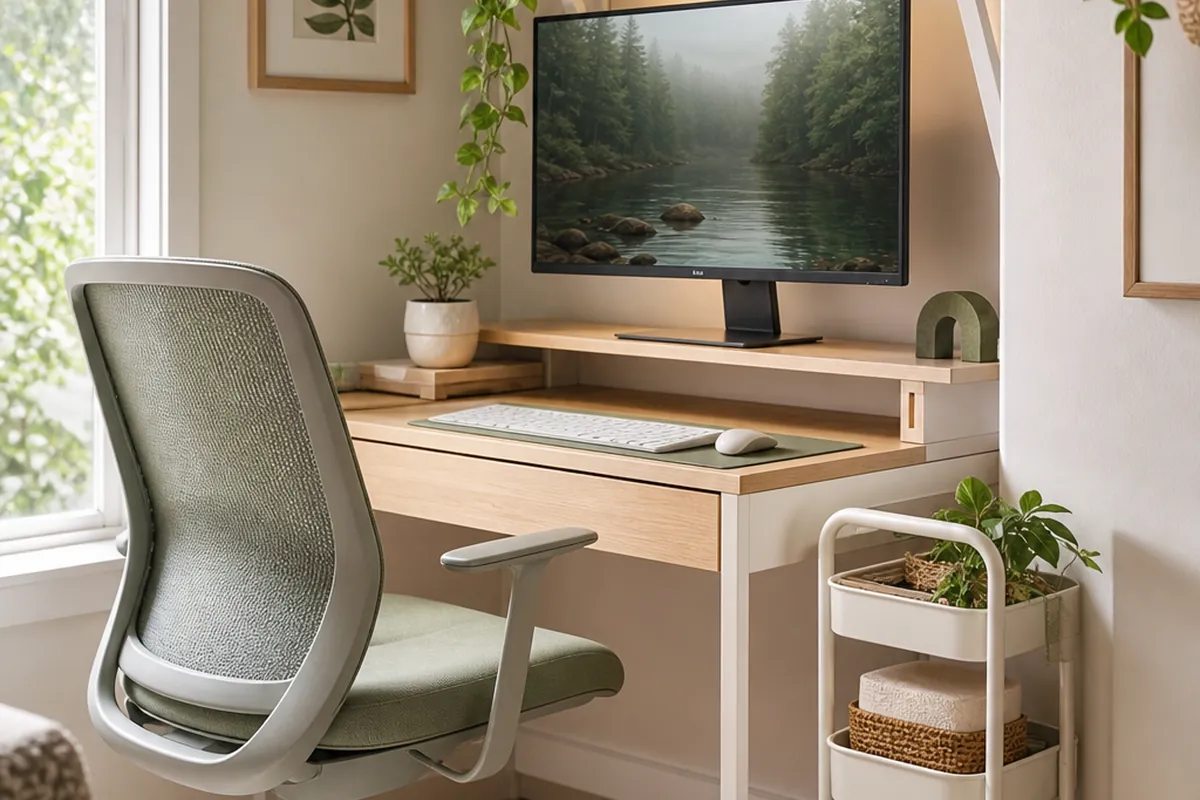
A corner desk earns its keep by turning a dead corner into a work surface, but it creates three storage problems a straight desk never has. The triangle at the back of the L is too deep to reach without standing up. Cords run in from two walls instead of one and collide at the seam. And the desk itself, angled off the walls to make the L work, leaves an oddly shaped gap of floor outside its own footprint that nothing sold for “desk storage” is actually sized for.
None of that gets fixed by buying the same riser and tray everyone recommends for a straight desk and hoping it fits. It gets fixed by measuring the specific shapes a corner desk creates and matching storage to them, starting with the part most people never measure at all.
1. Measure the inside apex before you buy anything for it
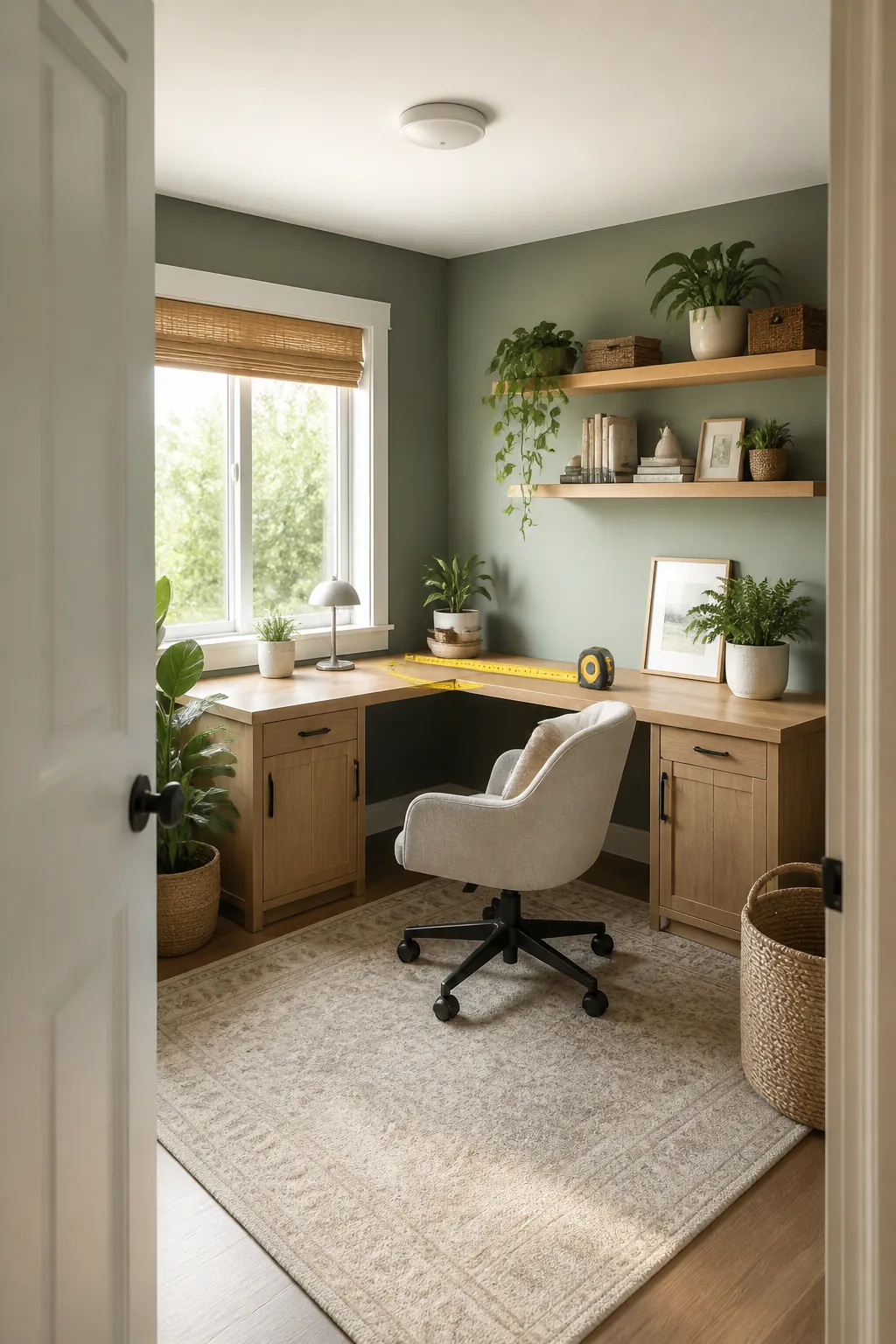
The point where the two desk sections meet, called the apex or the corner bridge, is usually a separate triangular or quarter-round panel bolted between the two straight returns. It looks like the most open part of the desk and is actually the least useful, because it sits 20 to 24 inches from the front edge on the diagonal, well past the 16 inches most people can reach without leaning or standing.
Measure that diagonal depth, not the width of either return, before shopping. A shelf or organizer rated for a 24-inch desk can still be too deep for the apex if most of that 24 inches is unreachable, and you’ll end up sliding your chair sideways to retrieve things that should have lived somewhere closer.
2. Put the monitor in the apex, not supplies
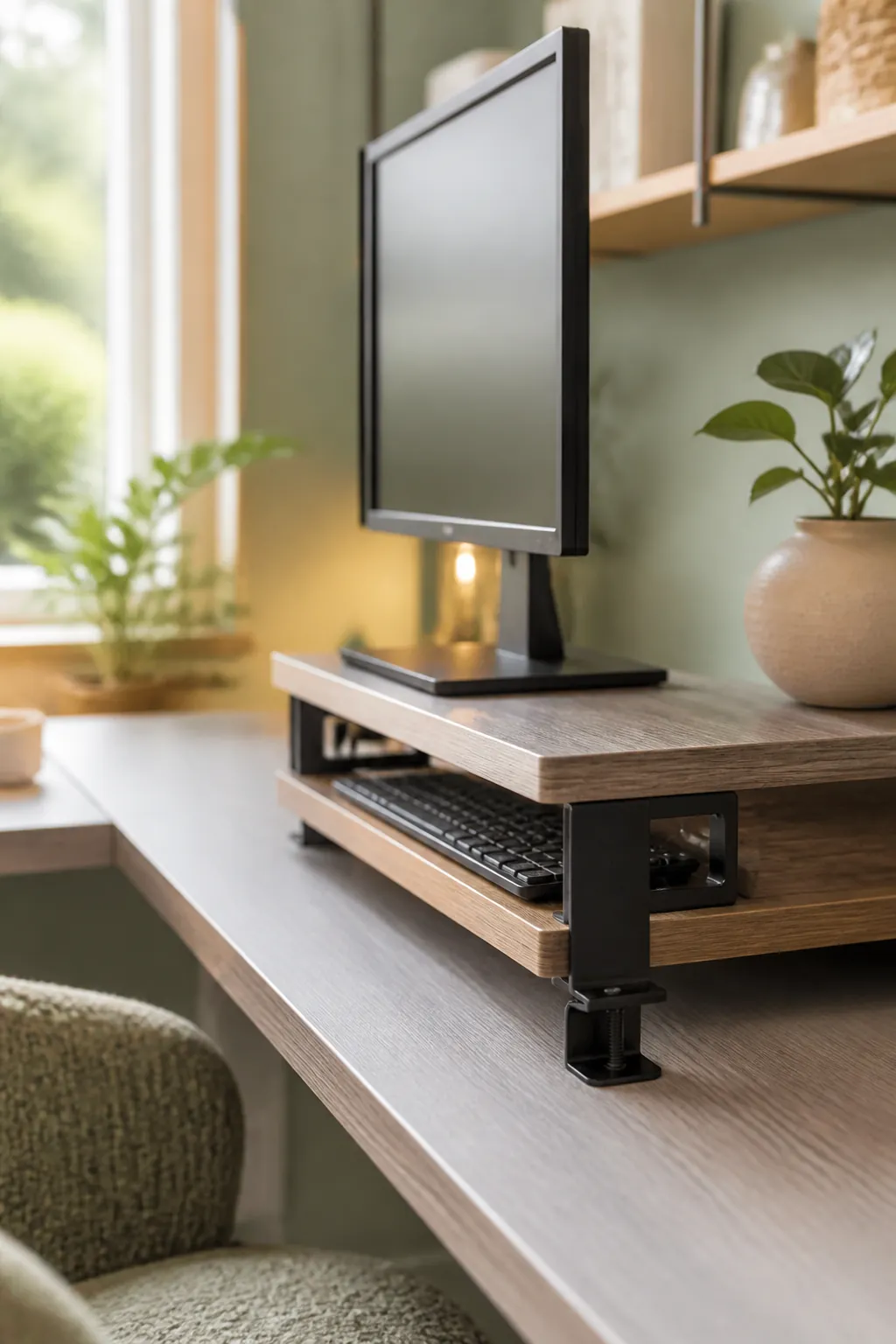
The one thing that belongs in that hard-to-reach triangle is something you look at rather than touch, which makes it the right spot for the monitor. An adjustable desktop organizer shelf raises the screen to eye level and opens a slot underneath for a keyboard or a notebook, using the one spot on the desk where height matters more than reach.
Check that the riser’s feet land on a single panel rather than straddling the seam between the apex piece and a return. Corner desks are often two or three separate panels joined with brackets, and a riser balanced across that seam rocks slightly every time you type, which loosens the bracket underneath faster than normal use would.
3. Give the second wall a floating shelf, since nobody else decorates it
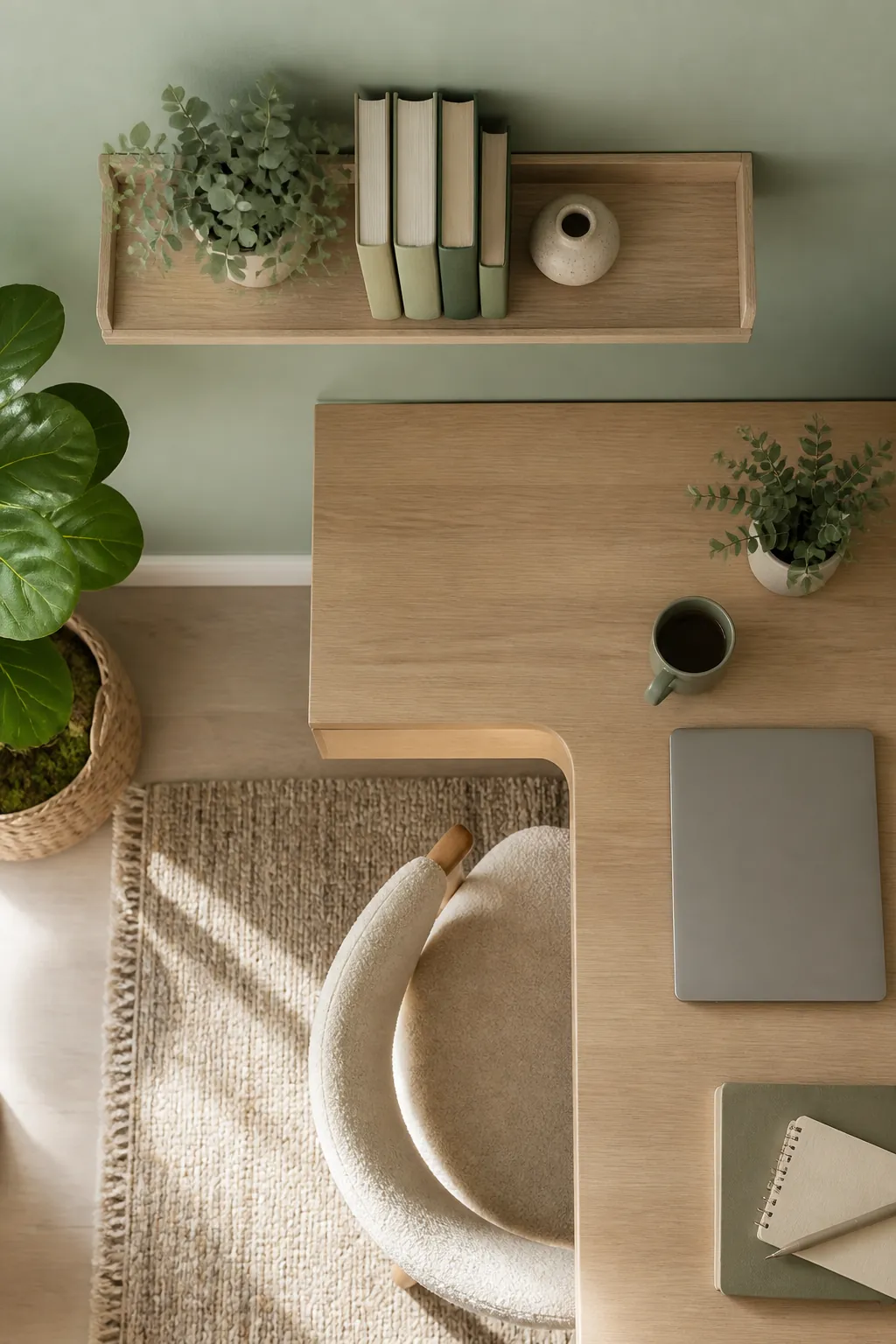
A corner desk sits against two walls, and almost everyone treats only one of them, the one behind the monitor, as real wall space. The second wall, behind the shorter return, usually stays bare because it’s not the one you’re facing.
A floating wall shelf with a lip mounted there, 8 to 10 inches deep, holds reference books, a printer tray, or a plant without taking an inch of desk surface. Keep it shallow on purpose. A deep shelf on that second wall starts to overhang the return below it, and you’ll find yourself ducking under your own storage every time you reach for something on that side of the desk.
If drilling into that wall isn’t an option, a weight-rated adhesive strip shelf holds a plant or a few paperbacks the same way without a hole, but check its load rating first. The lip style still beats a flat shelf either way, since it’s the lip that keeps a stack of books from sliding off when the apex gets bumped.
4. Claim the floor triangle outside the desk’s own footprint
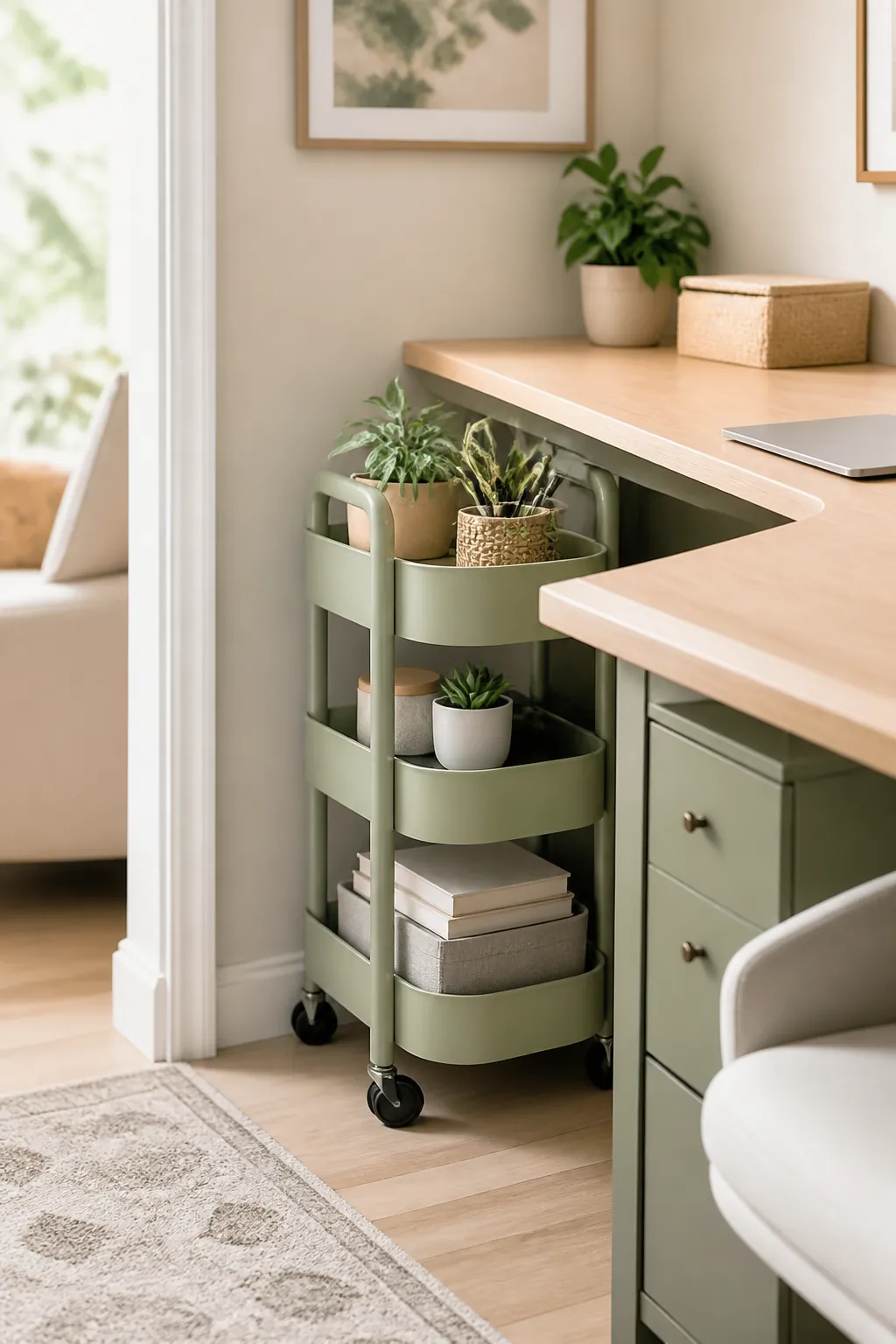
Angling an L-desk off two walls to make the corner work almost always leaves a triangle of open floor just outside the desk’s footprint, usually 12 to 18 inches at its narrowest point where the desk’s outer edge meets the wall. It’s too small for a filing cabinet and too large to ignore, and it’s the one storage opportunity specific to a corner layout that a straight-desk setup doesn’t have at all.
A 3-tier rolling cart fits that gap if you measure the narrowest point of the triangle, not the widest, since a cart that clears the opening at its mouth can still jam against the wall a few inches in where the angle tightens. Pull it out when you need the contents and push it back into the gap when you don’t, which is the whole advantage over a fixed shelf that would need to be built to the exact angle of your desk.
5. Route each return’s cords to its own nearest wall
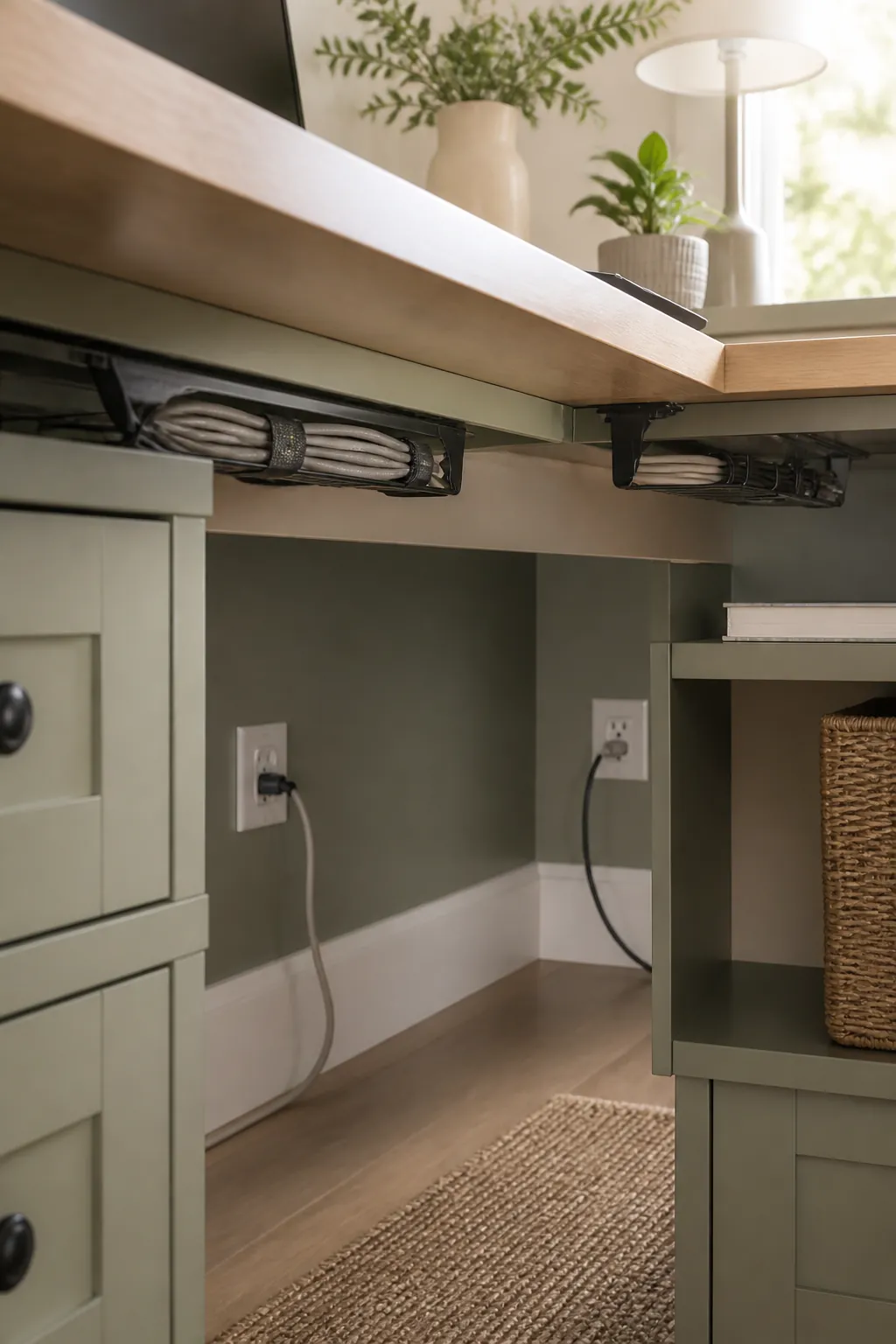
A corner desk pulls power and data cords in from two directions, and the instinct is to gather everything at the center seam where the two returns meet, since that feels like the middle of the setup. That’s exactly where two separate cord bundles collide and knot, because the seam is the one place neither wall’s outlet is actually close by.
Route the cords from each return to that return’s own nearest wall instead, with a separate under-desk cable tray or clip run on each side ending at its own outlet. Two short, separate runs tangle far less than one long run trying to reach across the whole L, and if one return ever needs to be unplugged and moved, you’re not untangling the other side’s cords to do it. For the rest of the setup beyond these two runs, cord and cable storage ideas for a small home office covers power strips and surge protectors in more depth.
6. Give the short return exactly one job
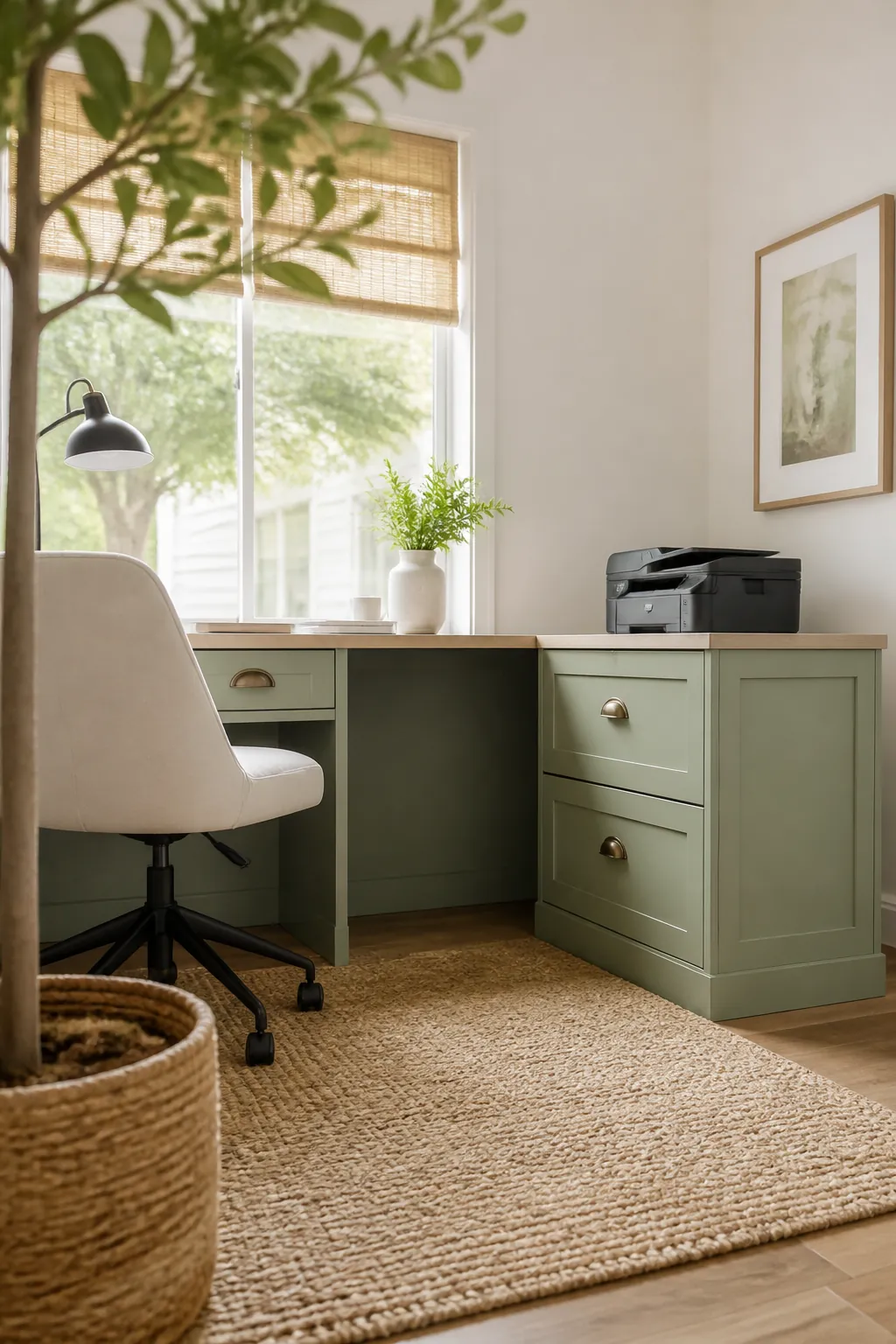
The shorter return on an L-desk, the one not facing your monitor, is where printers, scanners, and random supplies tend to accumulate because it isn’t the surface you’re actively looking at. Left unassigned, it fills with whatever didn’t have an obvious home, which on a corner desk is usually more than on a straight one since there’s a second surface to catch the overflow.
Decide what that return is for, printer and nothing else, or reference material and nothing else, before anything lands on it. A return with one stated job stays at that job; a return with no job becomes the desk’s actual junk drawer, minus the drawer. If the job is a printer, printer storage ideas for a small home office desk covers keeping the paper tray and cables from spreading past that one return.
7. Leave the kneehole alone
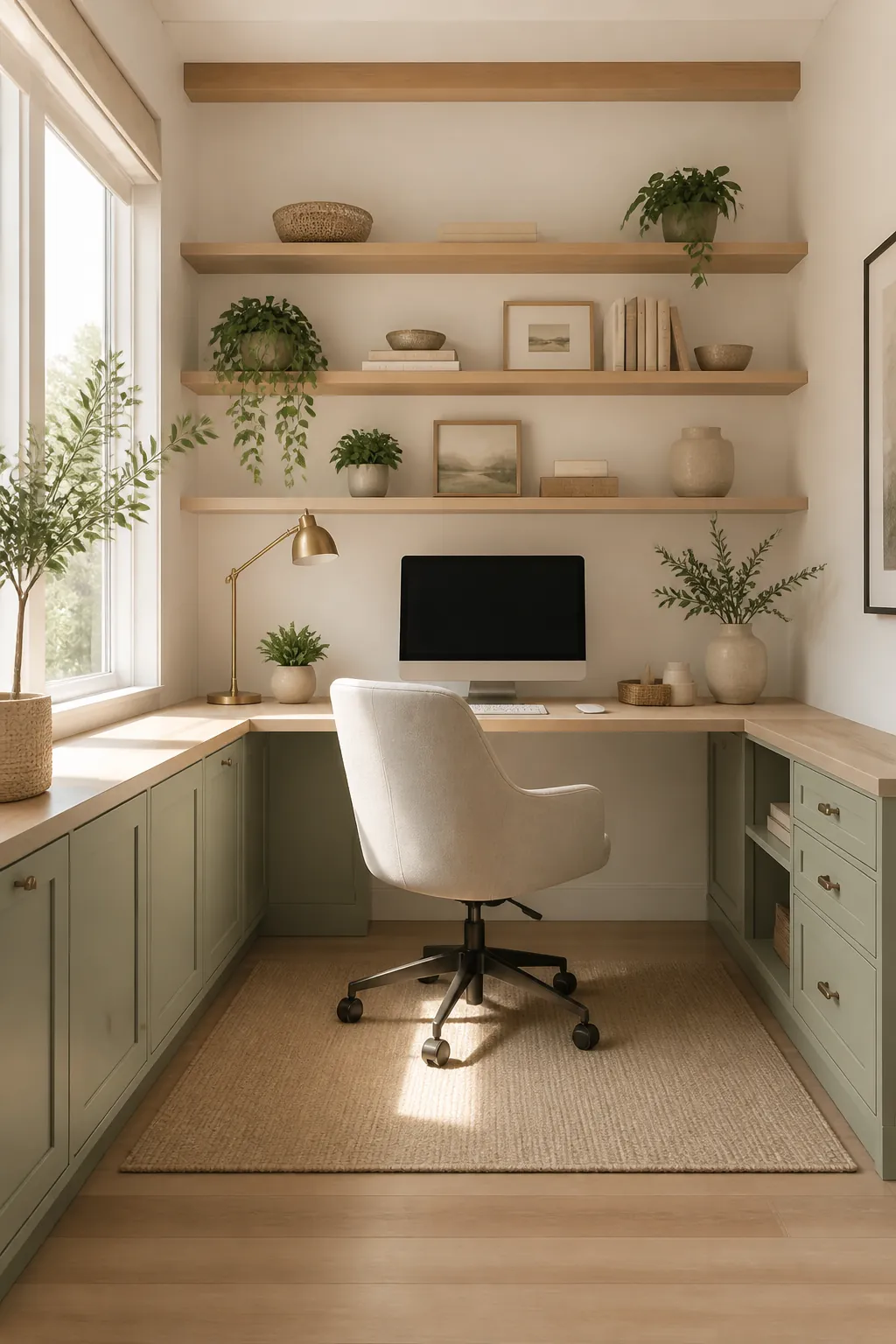
A corner desk’s kneehole, the open space under the apex and both returns, is often only 22 to 26 inches wide once you account for the support legs and brackets on both sides, narrower than the 30 inches you’d get under a single straight desk. It’s tempting to tuck a bin or small cabinet into that space since it looks empty, but it’s empty because your knees and chair need to swing through it as you turn between the two returns.
Anything stored under a corner desk should be low and against the back wall, never in the swing path between the two sides. If you catch your knee on something at least once a week, it’s in the wrong spot, not just in the way occasionally.
8. Use vertical space above the short return for things you grab standing up
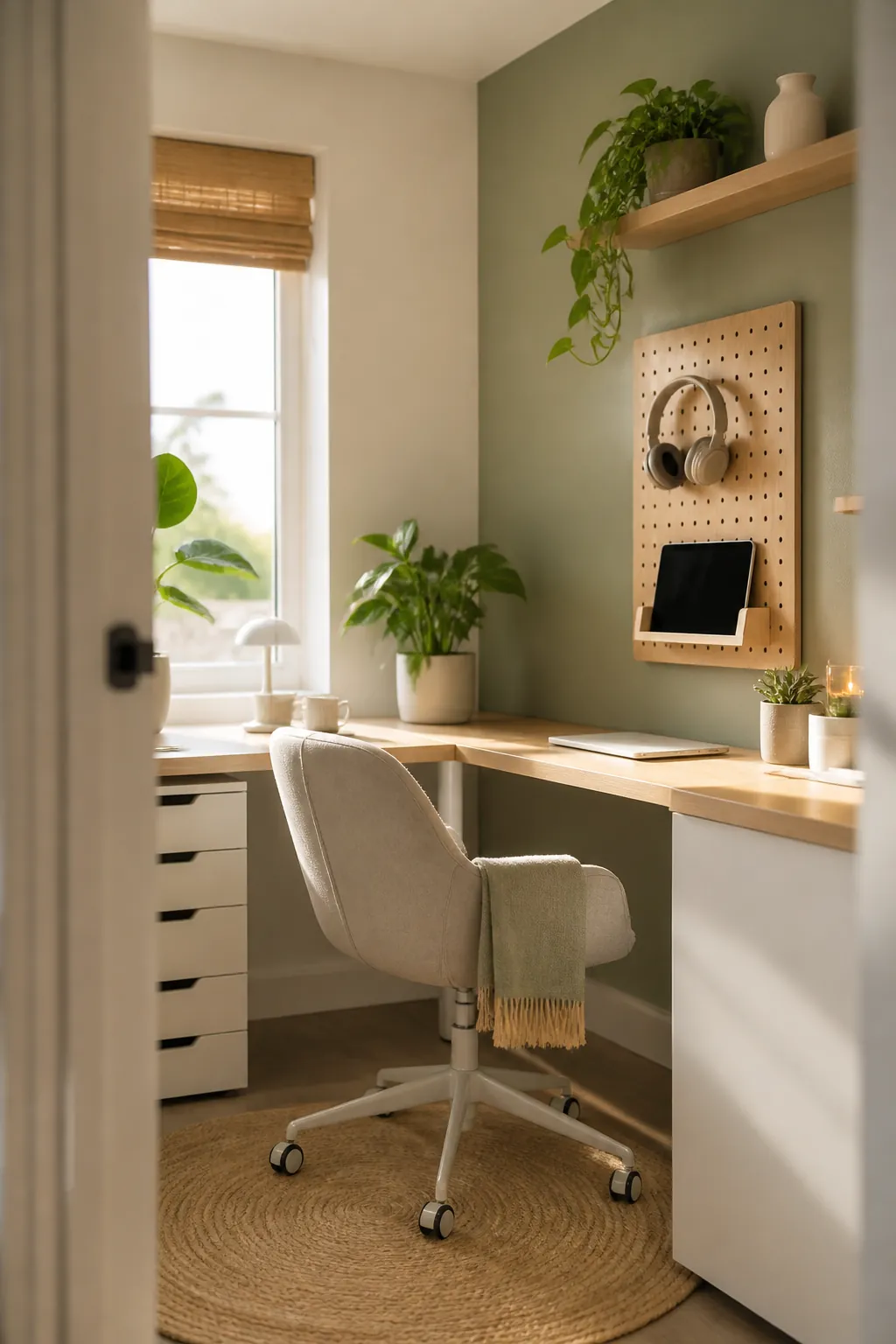
Above the short return, before the ceiling or the next piece of furniture, is vertical space that doesn’t compete with anything else in a corner setup, since you’re not sitting under it the way you are the main return. It’s a good spot for things grabbed standing, reference binders, a printer paper ream, spare cables, rather than things needed while seated and reaching.
This is also where a basic pegboard works well if you have one, since it holds odd-shaped items, a headset, a tablet stand, without needing a specific bin shape for each one. If the wall itself is off limits, the same odd-shaped items usually fit a tension rod wedged between the apex panel and the wall, hung with a few S-hooks, no holes either way.
9. Reset the apex weekly, since it’s the one spot you don’t see
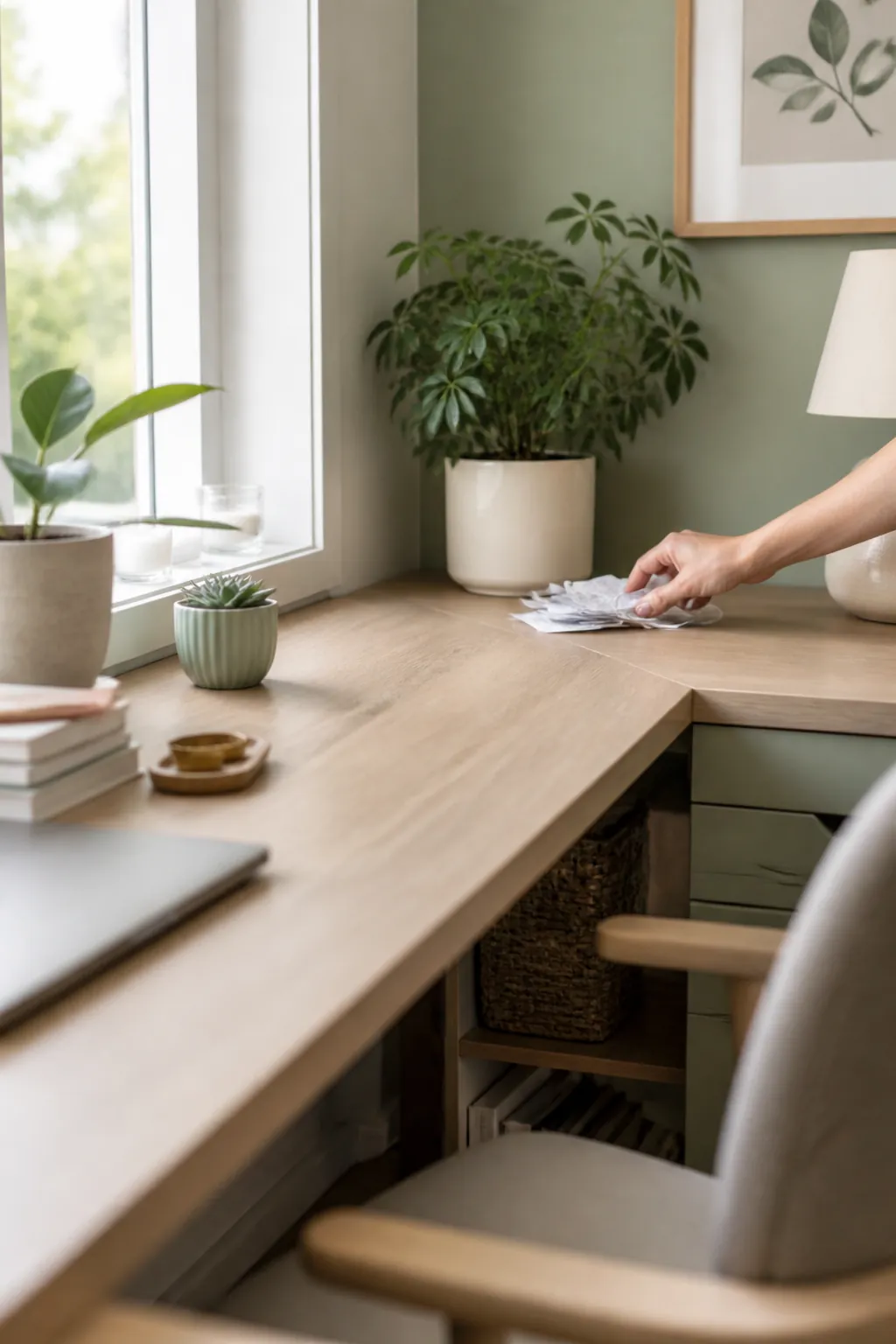
The apex collects more than either return, precisely because it’s the spot you look past rather than at while you work. Receipts, cables you meant to deal with, a coaster from three weeks ago, all drift toward the one part of the desk that isn’t in your direct line of sight.
A two-minute weekly check, specifically of the apex and the floor triangle outside the desk, catches drift the daily desk reset misses, since both spots are easy to overlook exactly because you don’t face them. Pair it with the office desk organization routine for the straight-desk half of the setup, and the corner-specific spots stop being the one part of the office that never gets tidied.
Where to start
Start with the apex measurement in section 1, since every other decision on a corner desk depends on knowing how much of that triangle you can actually reach. Put the monitor there, give the second wall a shelf, claim the floor gap outside the footprint with something narrow, and route each return’s cords to its own nearest outlet instead of funneling them to the center. None of this requires replacing the desk. It requires treating the L shape as a specific set of spaces, not a bigger version of a straight desk, and giving each of those spaces the one job it’s actually suited to.