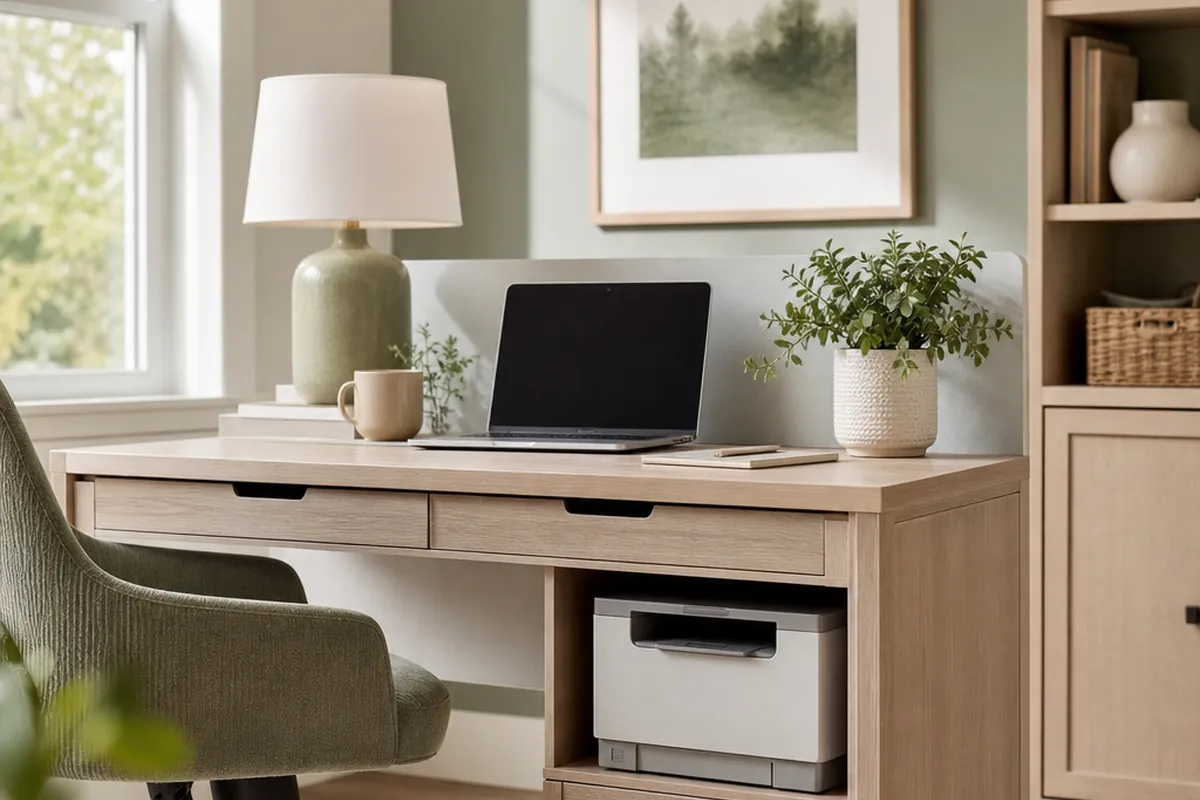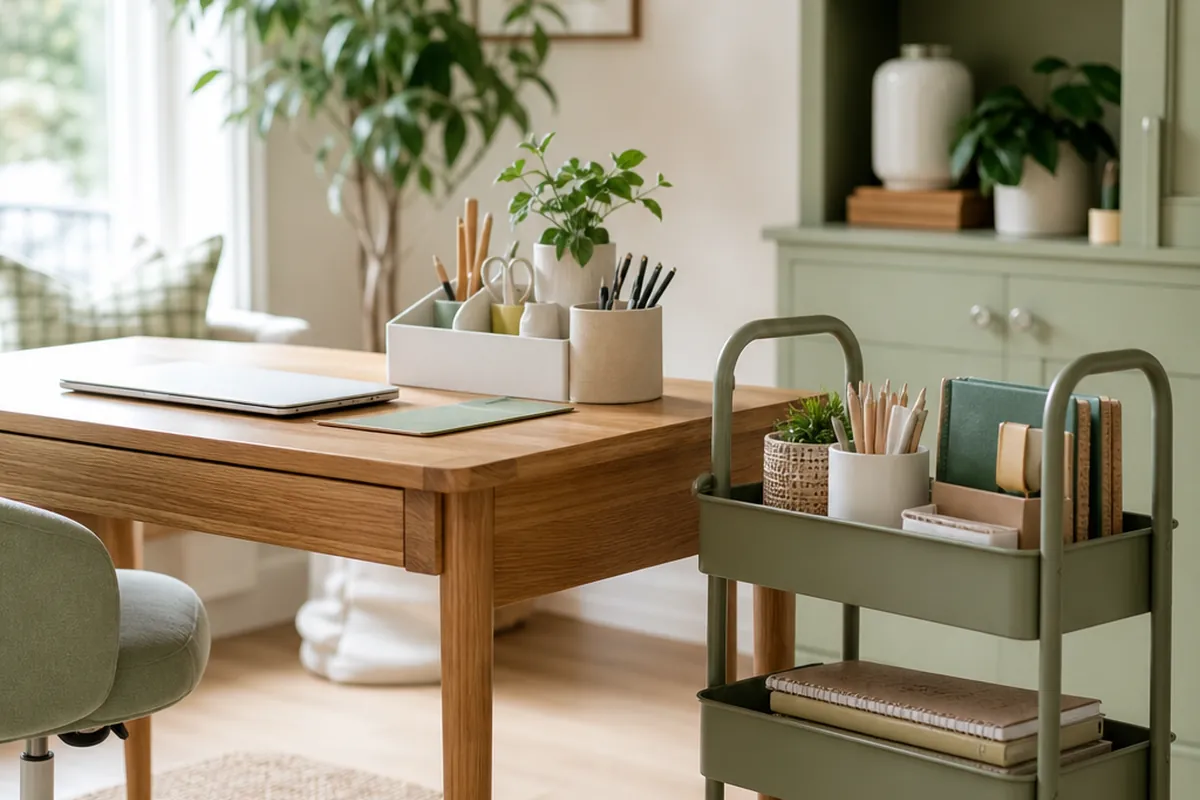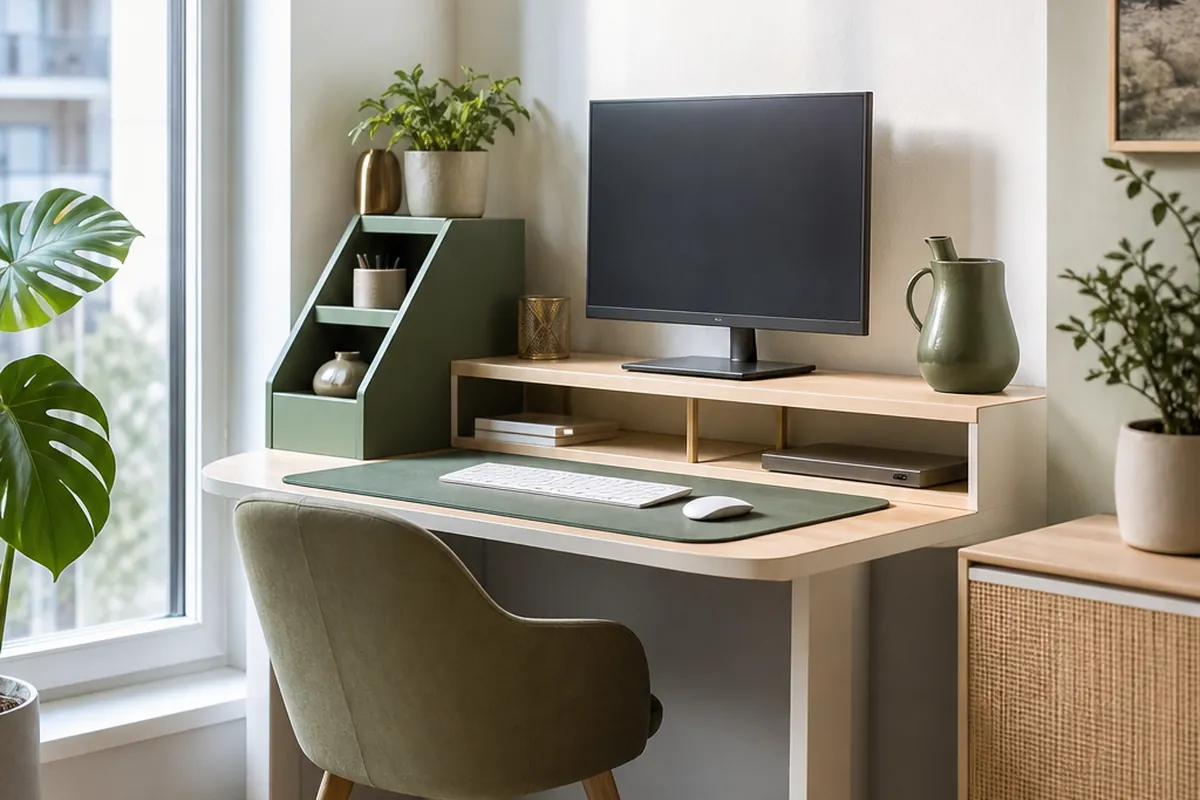
A desk in a small home is rarely just a desk. It is also where the post lands, where the laptop charges, and where anything without a home ends up at nine in the evening. The surface is usually the largest flat area in the room, and flat areas collect.
That is the actual problem, and it is not solved by buying a tidier pen cup. It is solved by deciding what the desk is for, then giving everything that is not that a destination somewhere else. What follows is the order that works, starting with the decision and ending with the two minutes a day that keep it.
1. Decide what the desk is for, in one sentence
Before anything comes off the surface, say out loud what the desk does. It is where you work on a laptop. It is where you work and pay bills. It is where you work and do a hobby that involves small parts.
This sounds like a formality and it is the whole thing. A desk without a stated job becomes the default destination for every homeless object in the room, which is how it filled up in the first place. Once the job exists, every item on the surface can be tested against it, and the ones that fail get moved rather than rearranged.
2. Clear it completely, then sort by how often you touch things
Take everything off. Not tidy it, remove it, so you are looking at an empty surface and a pile on the floor.
Then sort the pile by frequency rather than by category. Category sorting produces neat groups of things you never use, all of which still want desk space. Frequency sorting produces three piles: daily, weekly, and almost never. Only the daily pile has earned a place on the surface. The weekly pile goes within reach but off the desk, and the almost never pile goes wherever you keep things you do not need, which is not the room you work in.
3. Go up before you go wide
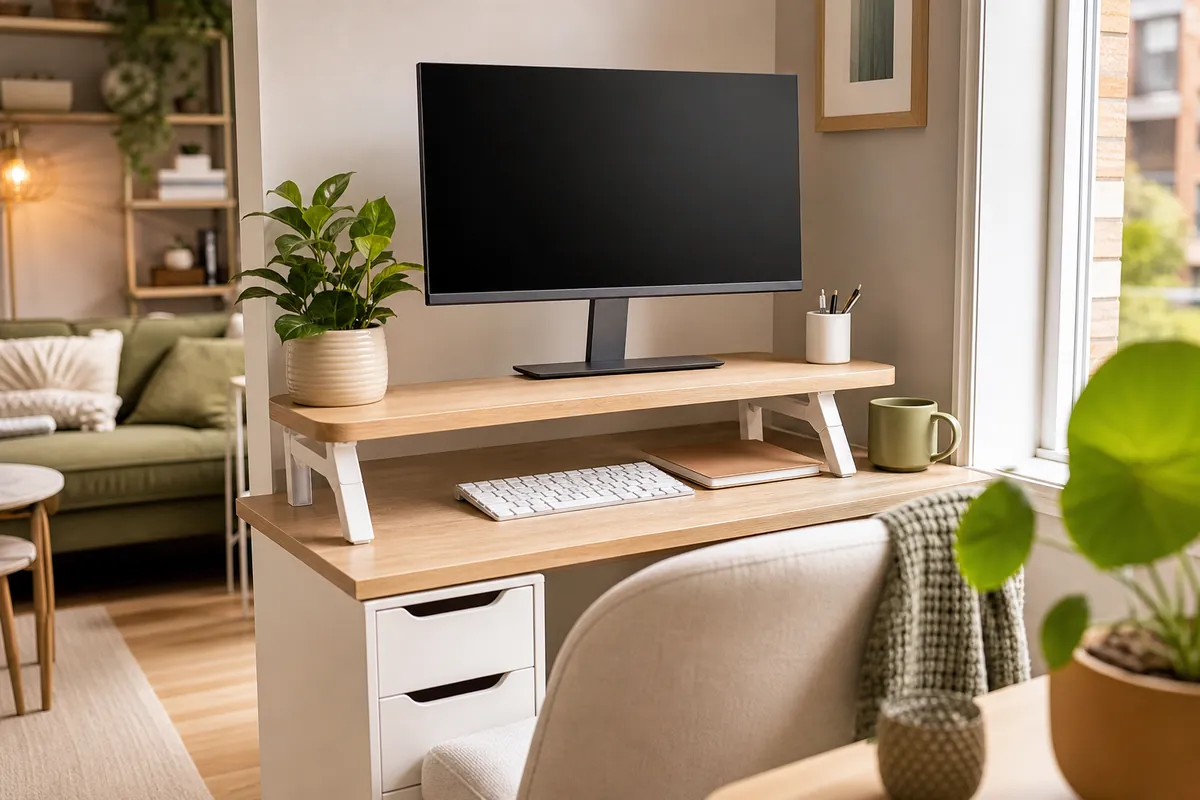
A small desk has very little surface and a surprising amount of unused air above it. The single highest-value change is usually raising the screen and using the space that opens up underneath.
An adjustable desktop organizer shelf does two jobs at once. It lifts the monitor or laptop to something closer to eye level, which your neck notices within a week, and it creates a slot underneath where a keyboard, a notebook or a tablet can live without occupying open desk. You gain roughly the footprint of the shelf twice over, once on top and once underneath.
The trade-off is honest: a riser raises the screen but does nothing for the depth of the desk. On a very shallow desk, under about sixty centimetres, a riser can push the screen too close. Measure before you buy.
When the desk has no drawers at all, up is the only direction left, and office supply storage ideas for a desk with no drawers covers the wall, the underside and the edge of the desk.
4. Give paper exactly one destination
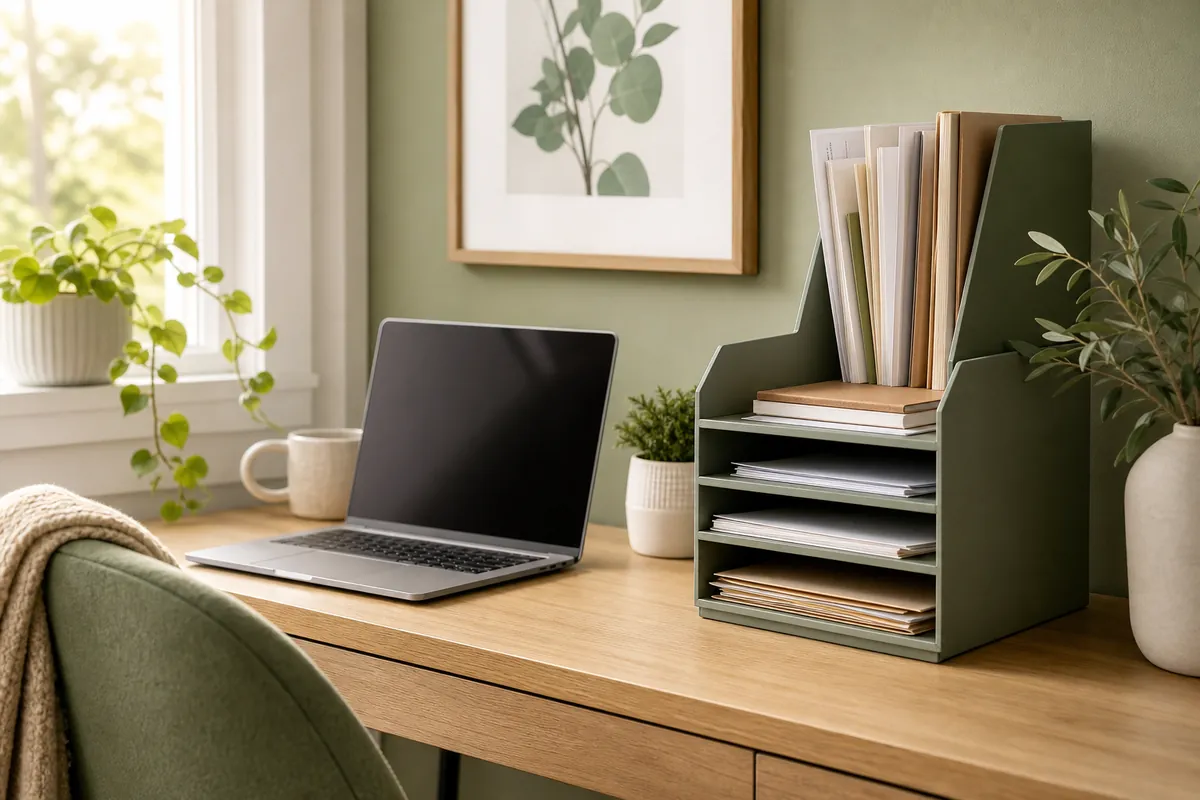
Paper is what actually kills a small desk. It arrives daily, it is flat so it stacks invisibly, and every sheet feels like it needs a decision before it can be filed, so no decision gets made and the pile grows.
The fix is one destination, not a system. A 4-tier desk organizer with a file holder works because it is a single obvious place for anything paper shaped, with enough separation that current things do not get buried under old things. Use the tiers loosely: incoming, in progress, reference. Resist the urge to label them by project, which turns a two second action into a filing decision and guarantees you will put the paper down on the desk instead.
The one rule that makes it work is that the tray gets emptied on a schedule, weekly for most people. A tray that is never emptied is just a vertical pile.
5. Get the cables off the floor
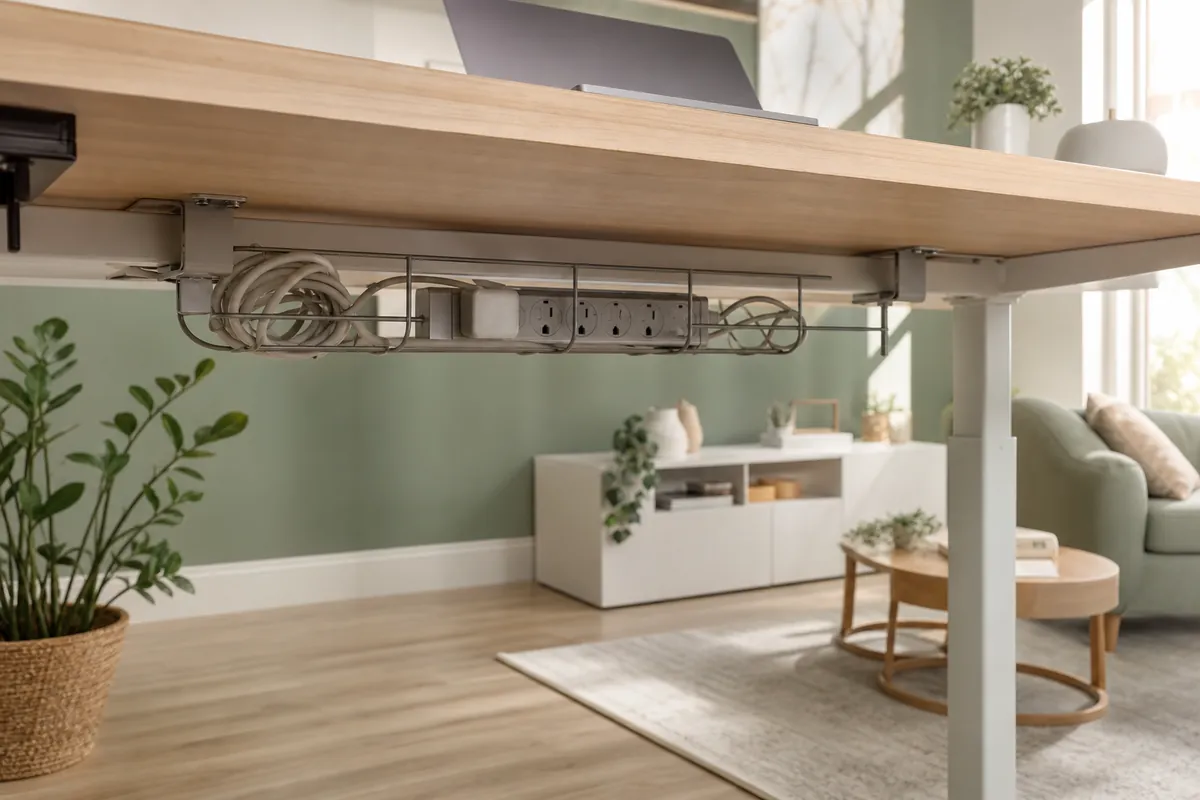
Cables under a desk in a small room are worse than they are in a big one, because you can see them from the sofa and because the floor space they occupy is space the room needs.
An under-desk cable tray holds the power strip and the slack up under the desktop where none of it is visible. The clamp-on versions matter if you rent, because they fix to the desk rather than the wall and leave nothing behind when you go.
Adhesive cable clips are the cheaper route and they are genuinely unreliable on anything other than smooth modern paint. On textured walls, older emulsion or anything slightly dusty they let go within a few weeks, sometimes taking a flake of paint with them. If the room needs more than the desk itself tidied, the same logic that works for cord organization in a small living room applies here.
6. Keep five things in arm’s reach and nothing else
Sit down and put your arms out. Whatever falls inside that arc is the most valuable space you have, and it should hold only the things you reach for without thinking. For most people that is five objects or fewer.
Everything from the weekly pile goes outside the arc but still in the room, on a shelf, in a drawer, in a box behind you. The distinction feels arbitrary until you notice that the reason the desk gets messy is that reaching for something two metres away is annoying, so it stays out once used. Move the boundary and the drift stops.
7. Be sceptical of the under-desk drawer unit
The instinct in a small room is to add storage under the desk. It is usually the wrong call.
A drawer unit sits exactly where your legs want to be, and legroom is most of what makes a small desk bearable to sit at for a working day. It also tends to hold the almost never pile, which did not need to be in the room at all. If you need the volume, a shelf above the desk or a narrow unit beside it holds a similar amount without taxing the one comfort a small desk has. Buy the drawer unit last, and only if the wall is genuinely full.
The printer is the other thing that quietly eats the space under and beside a desk. Printer storage ideas for a small home office desk covers where it can go instead.
8. Make it closeable if it lives in another room
A desk in a living room or a bedroom has a second job, which is to stop being a desk at the end of the day.
That means the working state has to be packable. A single lidded box or a shallow tray that takes the current project, the notebook and the pens, and slides onto a shelf, is enough. The room reads completely differently when the surface holds two objects instead of eleven, even though the desk itself has not moved. This is the same discipline that makes a homework station in a small apartment survive in a shared room.
The most closeable desk of all is one inside a closet, and cloffice ideas covers how to set one up without losing the closet entirely.
9. Light the desk itself, not the room
An under-lit desk quietly causes mess. If the surface is dim, you drift toward the brighter end, spread out to see, and leave things where the light was good.
A single task light with its own footprint, clamped to the desk edge or the shelf rather than standing on the surface, fixes it and costs no desk space. Clamped is the detail worth insisting on. A lamp with a base is one more object competing for the area you just cleared.
10. Reset for two minutes, daily
The last idea is the one that decides whether the other nine hold.
A small desk holds about a day of drift before it stops working. So the maintenance that works is short and daily rather than long and occasional: everything back to its destination, paper into the tray, surface down to the five things. Two minutes at the end of the working day, while the laptop shuts down. A monthly overhaul is the alternative, and the problem with a monthly overhaul is the twenty nine days in between, when the desk is unusable and you work at the kitchen table instead. If your desk is genuinely tiny, the constraints in dorm desk organization push this further.
A desk that stays clear
None of this is about owning less. It is about the desk having a job, having one destination for the thing that actually accumulates, and using the air above the surface rather than spreading across it.
Do those three, add the two minute reset, and a small desk stops being the surface that collects the room and goes back to being the place you work.