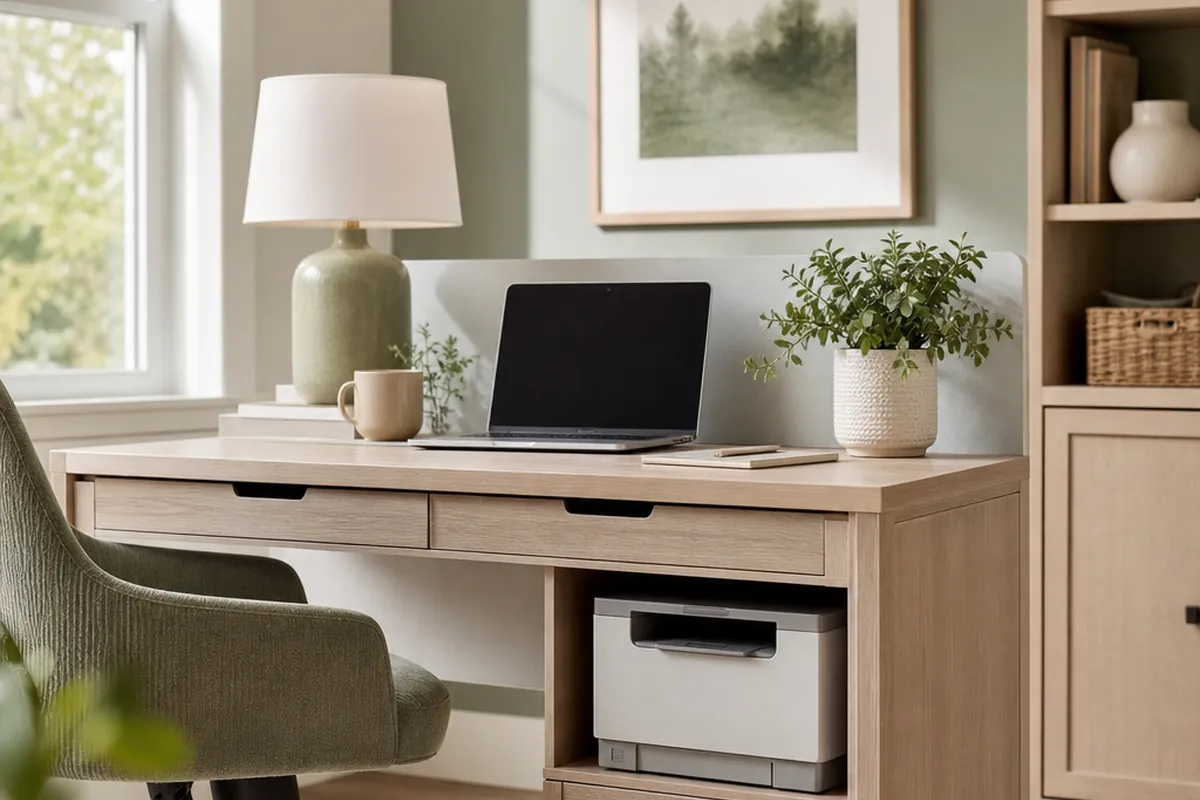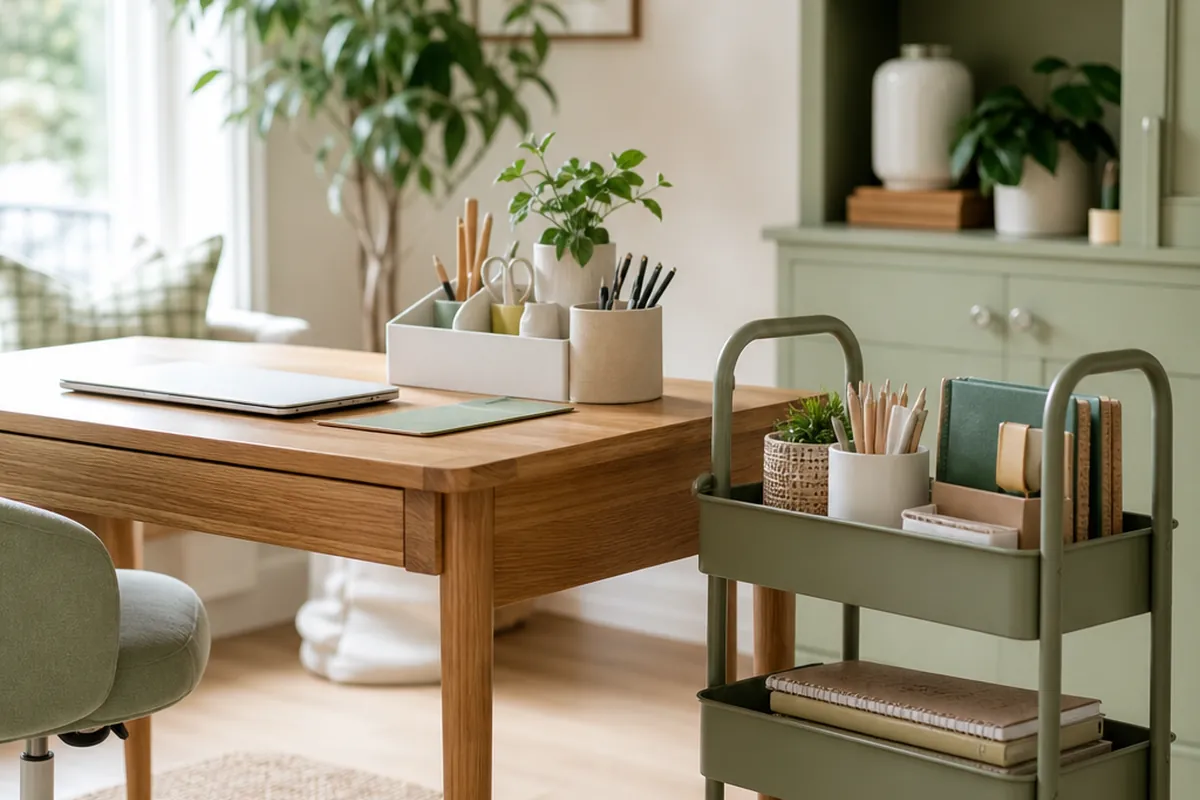
A small home office desk does not have a paperwork problem so much as a paperwork destination problem. Mail, forms and printouts all need somewhere to land the moment they arrive, and if that somewhere is not decided in advance, the desk itself becomes the answer by default. Once that happens, the surface you need for a laptop and a mouse is buried under six weeks of things nobody has decided about yet.
None of this needs a filing cabinet, which most small desks have no room for anyway. It needs three destinations instead of one, a couple of pieces of furniture that do not eat floor space, and a rule for how long paper is allowed to sit before it has to move on. The order below is the order that actually fixes a desk, starting with the sort nobody does before they buy storage.
1. Sort into three piles before you buy anything
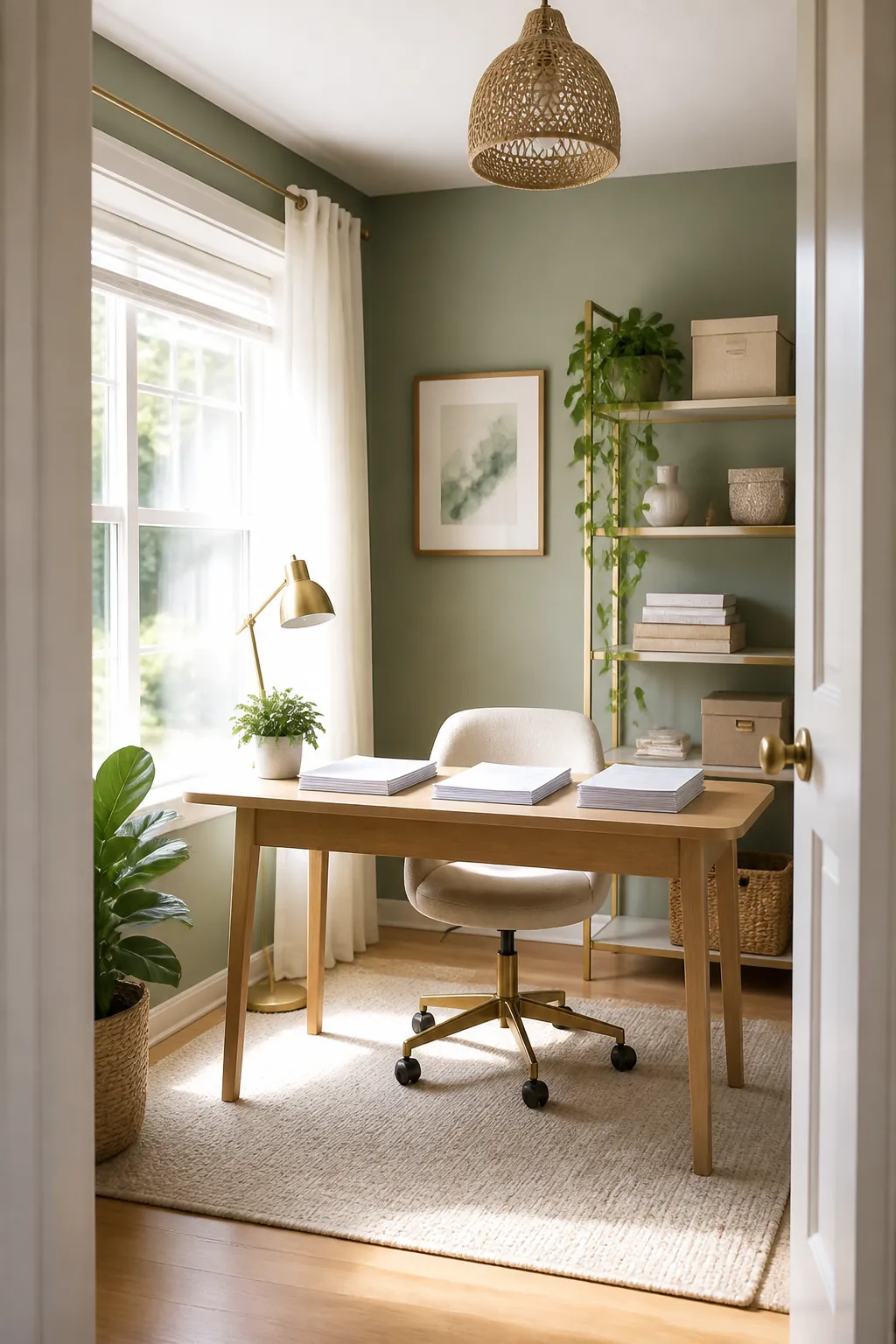
Storage bought before sorting just gives the pile furniture. It looks tidier and holds exactly as much unresolved paper as it did in a heap.
Split everything currently on the desk into three groups: act on this week, keep for the record, and recycle. Act means a bill due, a form that needs a signature, something to return. Keep means tax paperwork, warranties, and anything tied to an account or a purchase you might need to reference later. Recycle is everything else, and on most desks it is the majority of the pile once you actually look.
Do the sort once, properly, before section 2. Everything that follows assumes it already happened.
2. Give the act pile exactly one tray
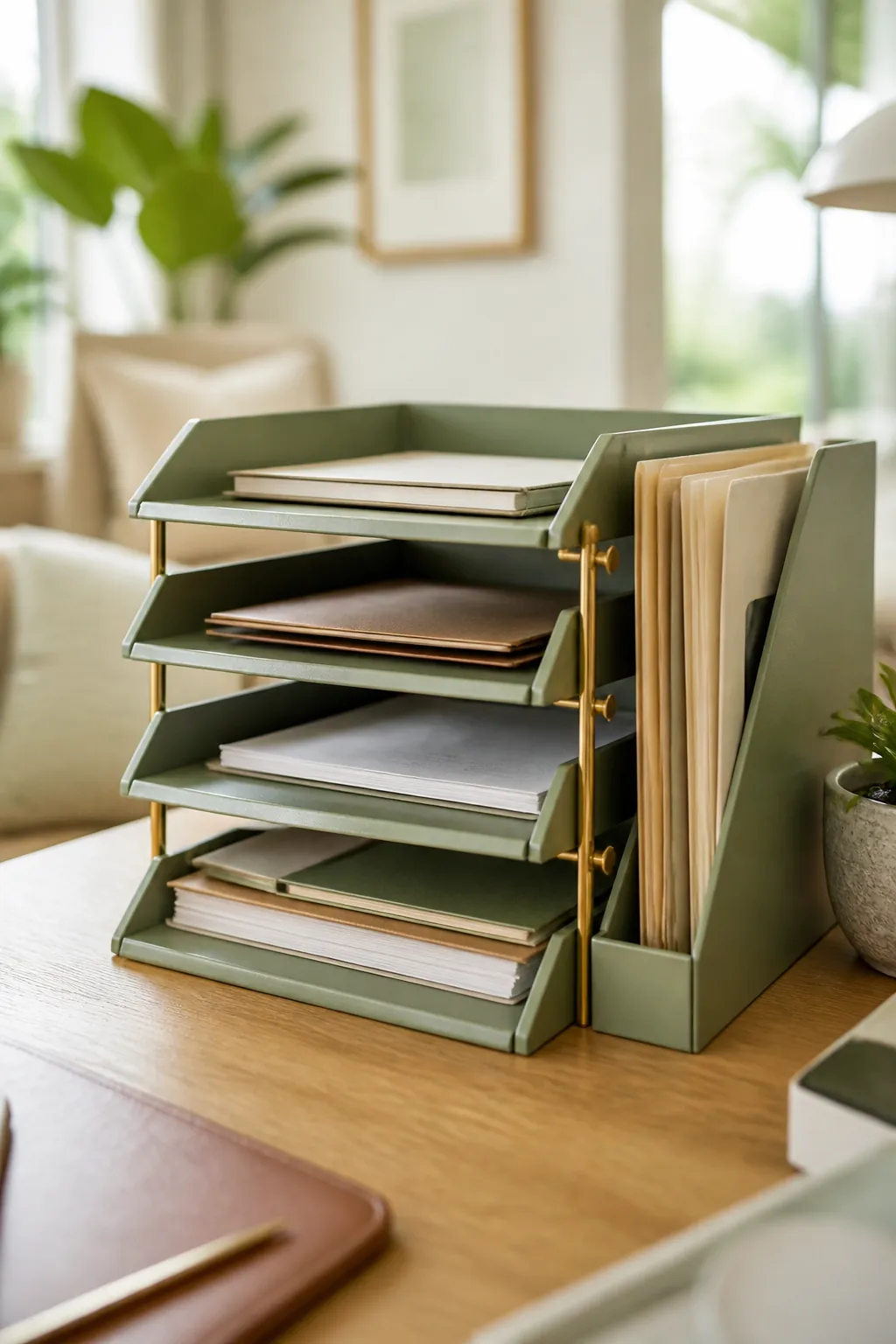
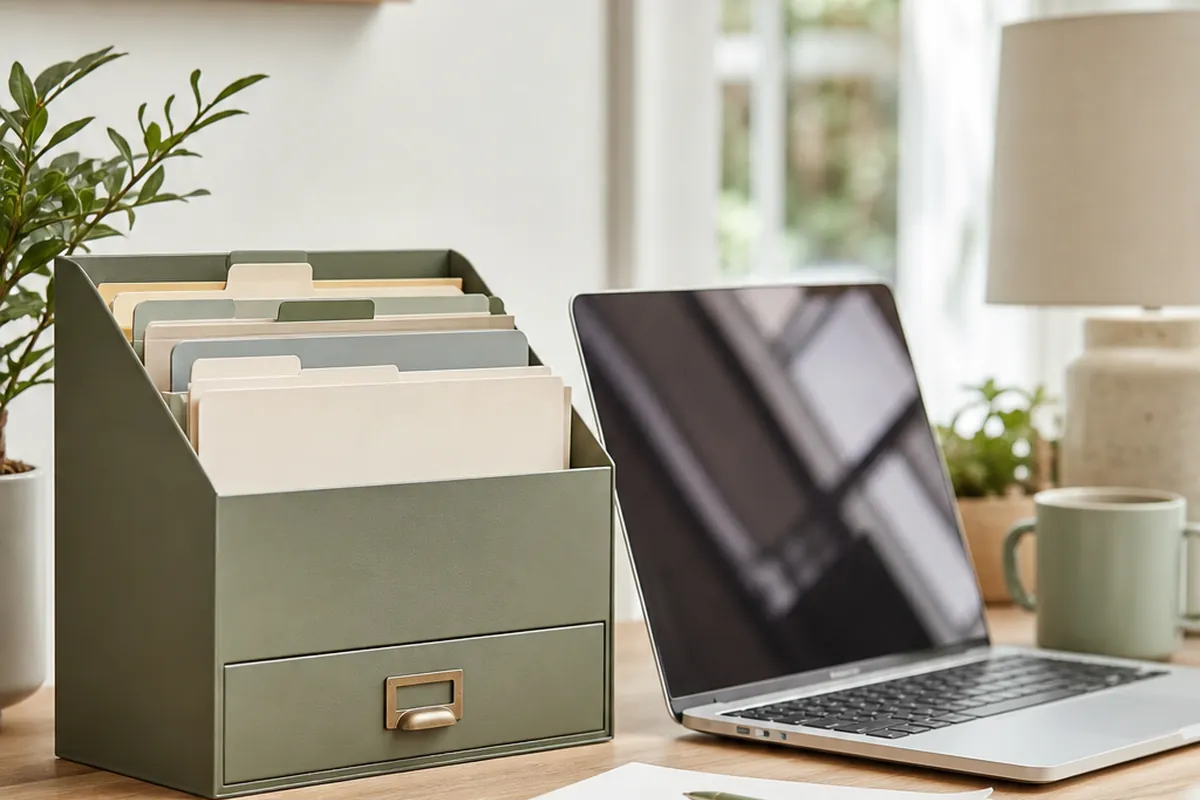
A 4-tier desk organizer with file holder becomes the single obvious destination for the act pile: incoming on top, in progress below it, and a vertical file slot for the handful of folders you are actively using. Four tiers is enough separation to keep today’s paper visible without spreading across the desk to do it.
The rule that keeps it working: nothing sits in the top tier longer than a week. Past that point it is not an inbox anymore, it is a second pile that happens to be upright, and an upright pile is just as much clutter as a flat one.
3. Move the keep pile off the desk completely
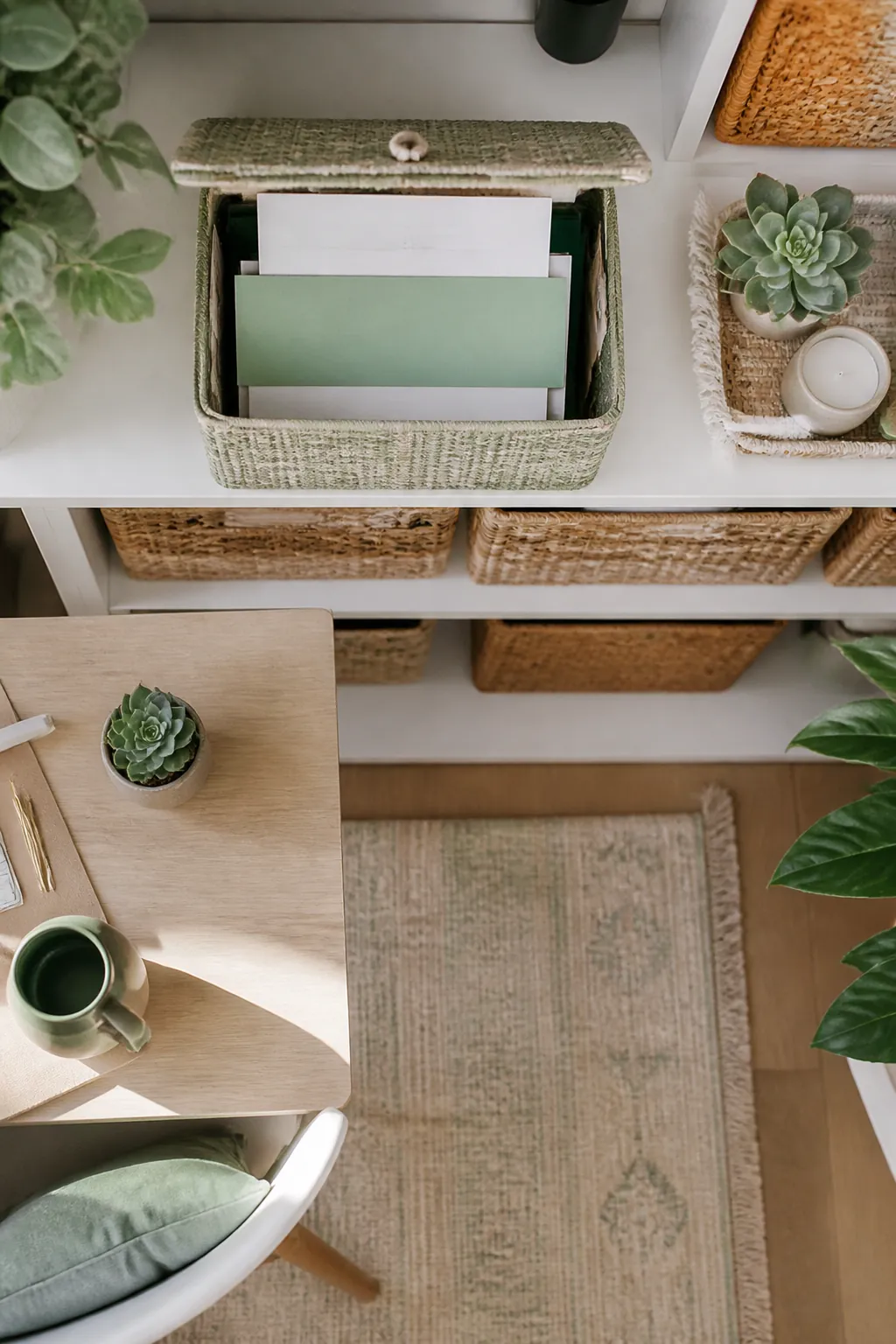
The keep pile is not paper you act on, so it has no reason to live where you work. A lidded box on a shelf, in a closet, or under the desk on the floor holds it just as well as a drawer would, and it frees the desk drawer for things you actually reach for daily.
A standard letter size document is 8.5 by 11 inches, and a lidded box around 15 by 12 by 10 inches holds roughly a year of household paperwork before it needs sorting again. That is a modest footprint for taking an entire category off the desk permanently.
4. Roll a cart under the desk instead of a cabinet
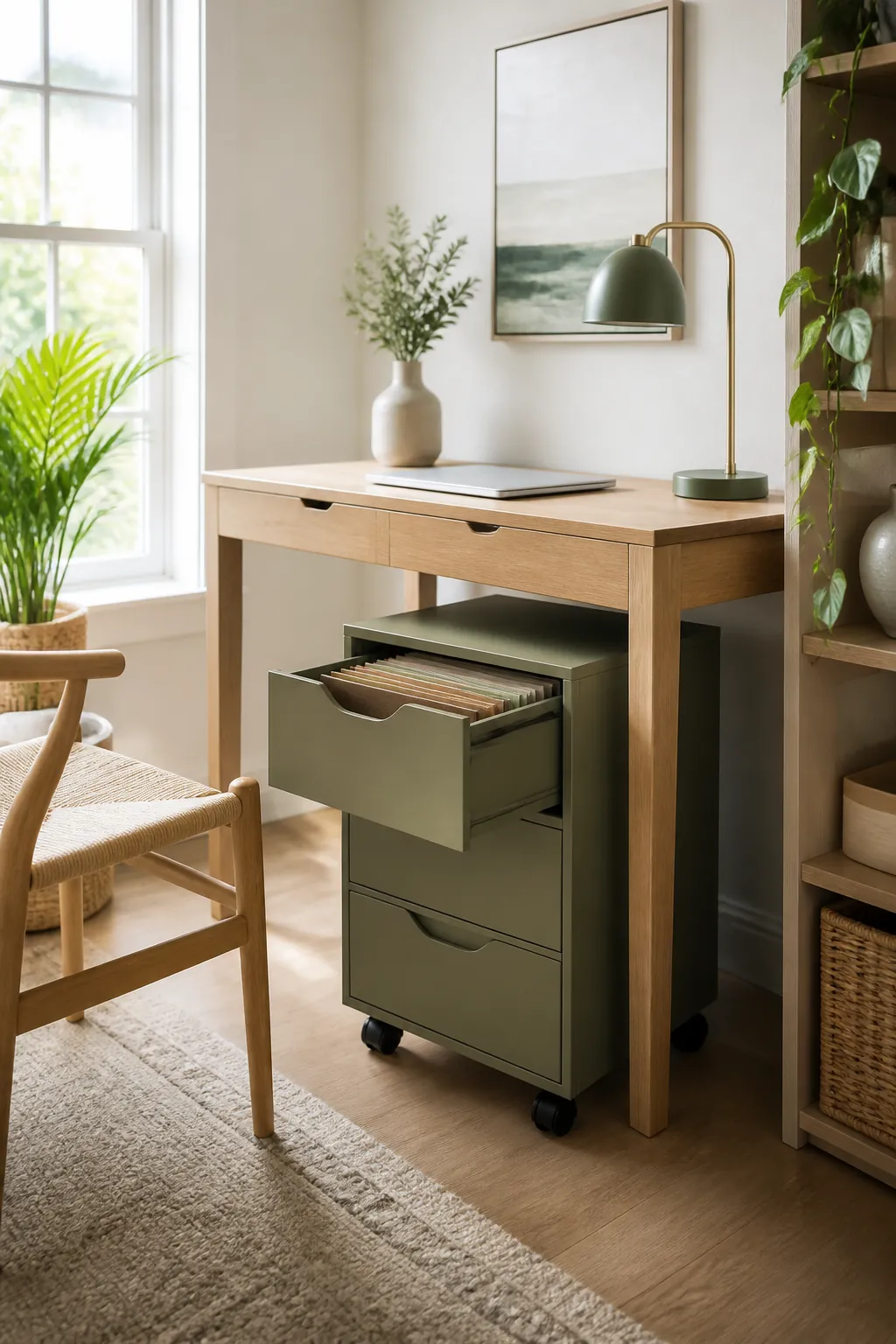
A rolling 3-drawer storage cart is the closest thing to a filing cabinet that still fits under a small desk and rolls out of the way when it doesn’t need to be there. Give each drawer one job: current year keep paper in the top, warranties and manuals in the middle, printer paper and spare supplies in the bottom.
The advantage over a fixed cabinet is that it moves. Pull it out to file something standing up, then push it back under the desk where it takes no floor space beyond the desk’s own footprint. A cabinet bolted to the wall gives you none of that flexibility and most renters cannot install one anyway.
That cart is also the best home for a printer, which is usually the largest single thing on a small desk. Printer storage ideas for a small home office desk goes through the options.
5. Catch mail on the wall, not on the desk
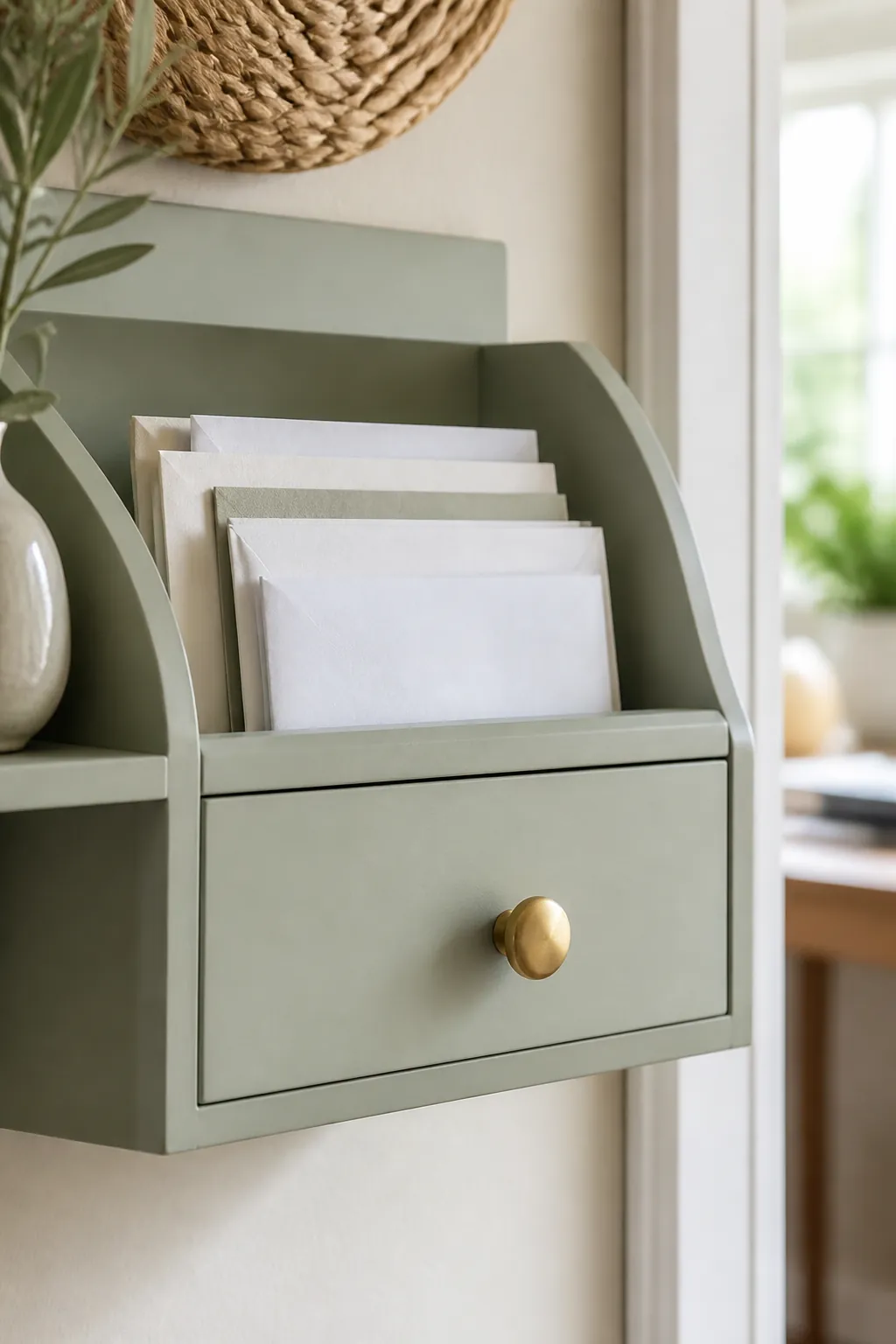
A wall-mount desk organizer mounted near the entry or just above the desk intercepts mail before it ever reaches the work surface. This one runs about 10 inches wide and 6 inches deep with a small drawer underneath, enough for the day’s mail and a pen without eating any desk depth at all.
Mount it with a heavy duty adhesive strip if the wall cannot take a screw. Most small strips are rated for a few pounds, which comfortably covers a week’s mail, but three weeks of unsorted catalogs left in the tray will exceed that rating and peel the mount clean off the wall along with a strip of paint. The fix is the same one that makes the rest of this system work: empty it weekly.
Mail that has to travel across a room to reach its holding spot does not travel. It gets dropped on the nearest flat surface, which is usually the desk, so the tray has to sit somewhere on the direct path between the door and the chair.
If the mail lands in the living room rather than the office, magazine and mail storage ideas for a small living room covers the wall pockets and racks that work there.
6. Reach for an expanding folder before a filing drawer
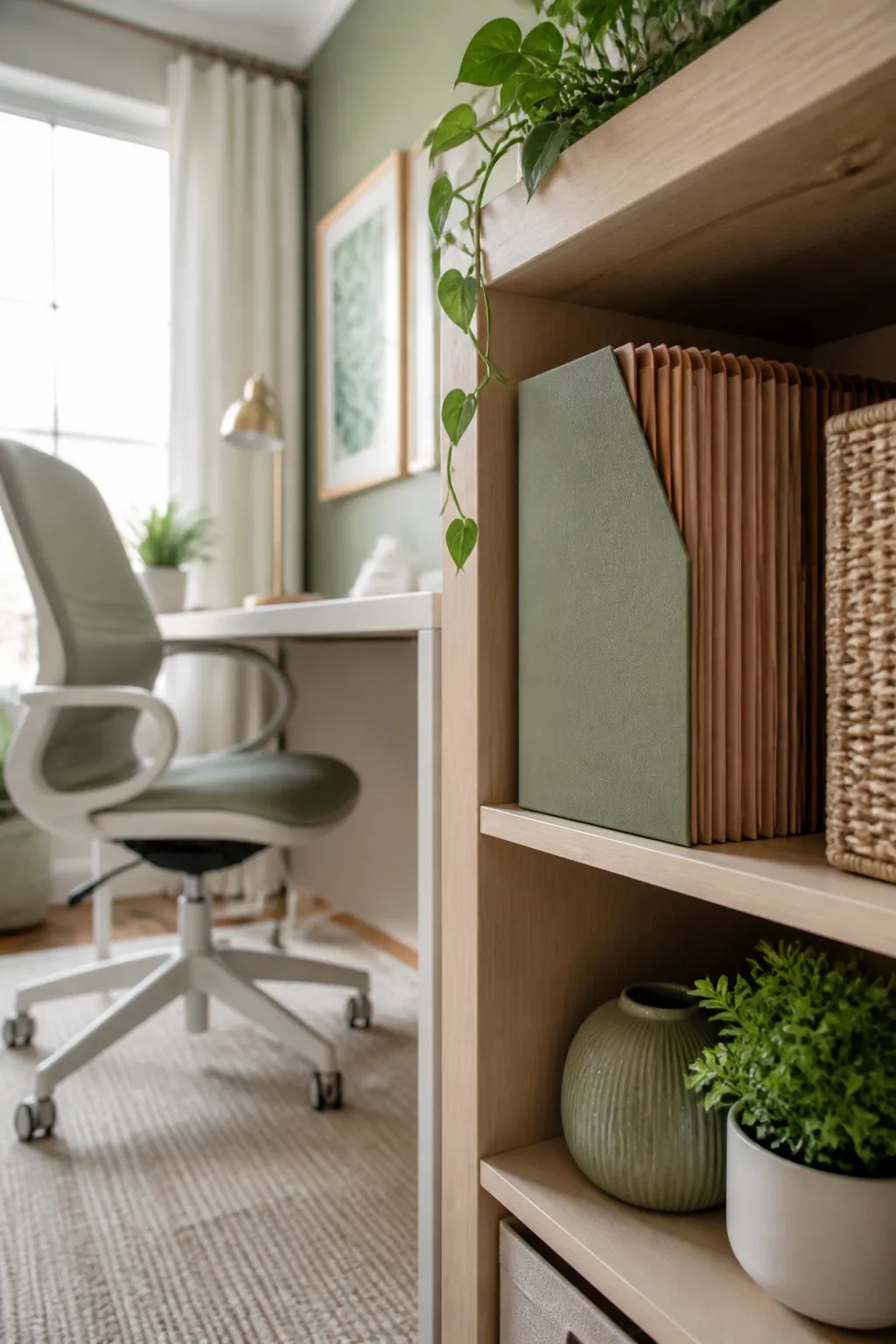
A standard hanging file frame needs a drawer at least 10 to 11 inches deep to hold the rails, which most small desks and rolling carts do not have. An expanding accordion folder does most of the same job in about 2 inches of depth, with 13 to 24 labeled pockets that sit flat on a shelf or stand upright in a bag.
It will not replace a real archive for years of tax returns, and it is not meant to. For the current year of active paperwork on a desk with no drawer to spare, it is the better fit, and it is the one item on this list worth buying without a specific brand recommendation attached, since the useful ones are simple enough that the label barely matters.
7. Give every category of paper a real shelf life

Vague rules like “keep important stuff” are why paper never leaves. Specific windows are what let you actually recycle something without a moment of doubt.
Utility and credit card statements are safe to let go after about a year, once you have confirmed nothing on them is disputed. Pay stubs can go once the matching year end summary arrives. Tax returns and the documents that support them are the exception, worth keeping three to seven years depending on what is on the return, since that is the range tax authorities can typically still ask about. Warranties and receipts for anything under warranty stay until the coverage period ends, then go with the item if it is ever replaced.
Write the windows down somewhere you will actually see them, even if it is a sticky note inside the cabinet door. Memory is not a filing system.
8. Shred weekly, in the same five minutes as everything else
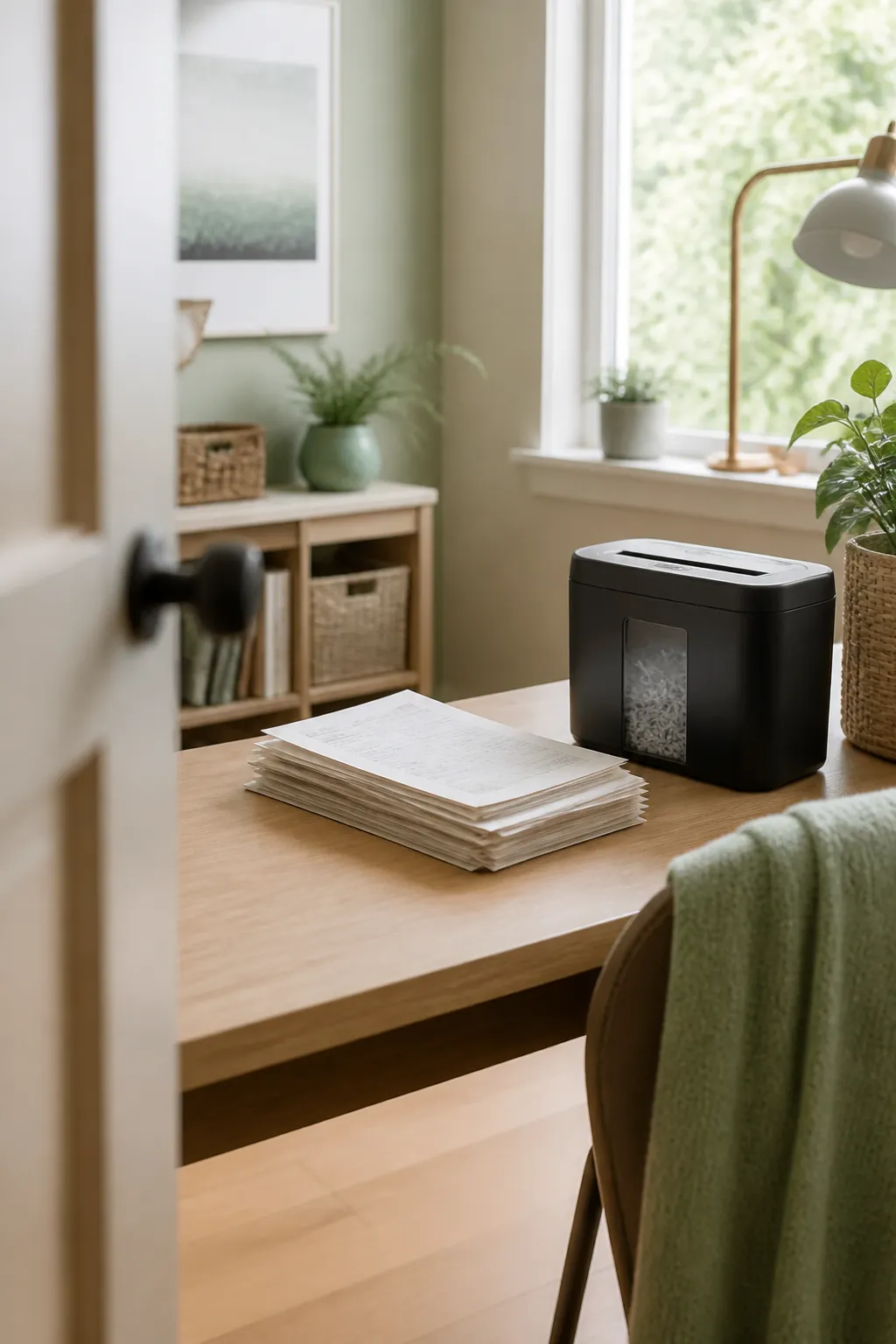
A shred pile left for an annual clearout grows into a box on the floor that everyone quietly steps around, and the size of that box is exactly why it never gets done. A weekly handful of bank statements and old bills takes under a minute in a small shredder and never reaches a size that feels like a project.
Shred anything with an account number, a signature, or a full birth date before it goes in the recycling. Everything else in the recycle pile from section 1 can skip the shredder entirely, since most junk mail carries nothing worth protecting.
9. Label the system or it quietly reverts to a pile
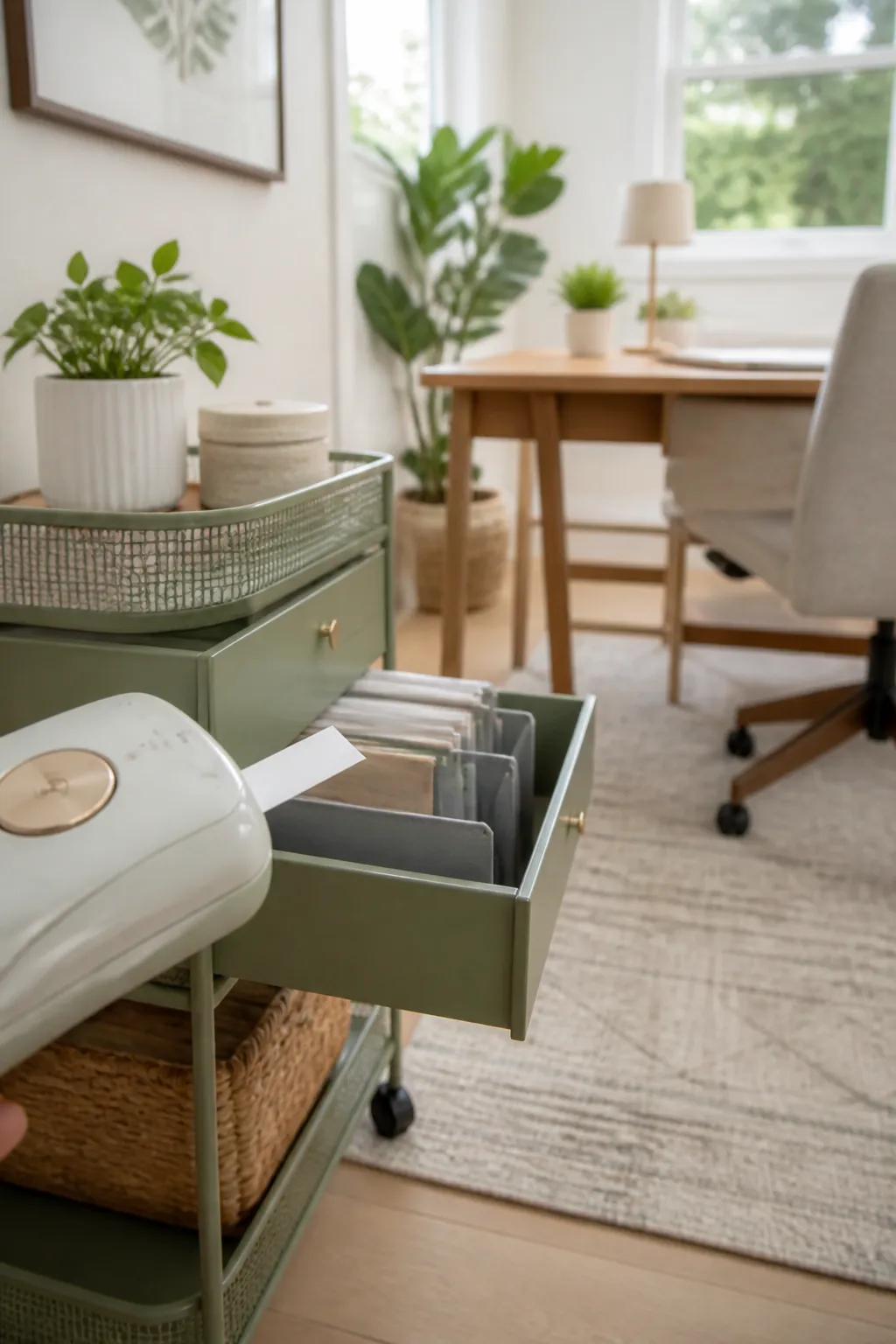
A label maker is a small cost for what it fixes, which is the way an unlabeled system slowly stops being used. A drawer that says “warranties” gets warranties put in it. A drawer that used to hold warranties, three months ago, before everyone forgot, gets whatever is easiest to set down.
Label the cart drawers, the file holder tiers if you use more than one folder per tier, and the lidded box from section 3. It takes fifteen minutes once and saves the slow drift back to a single pile that this whole system exists to prevent.
10. Make the reset a five minute Sunday job
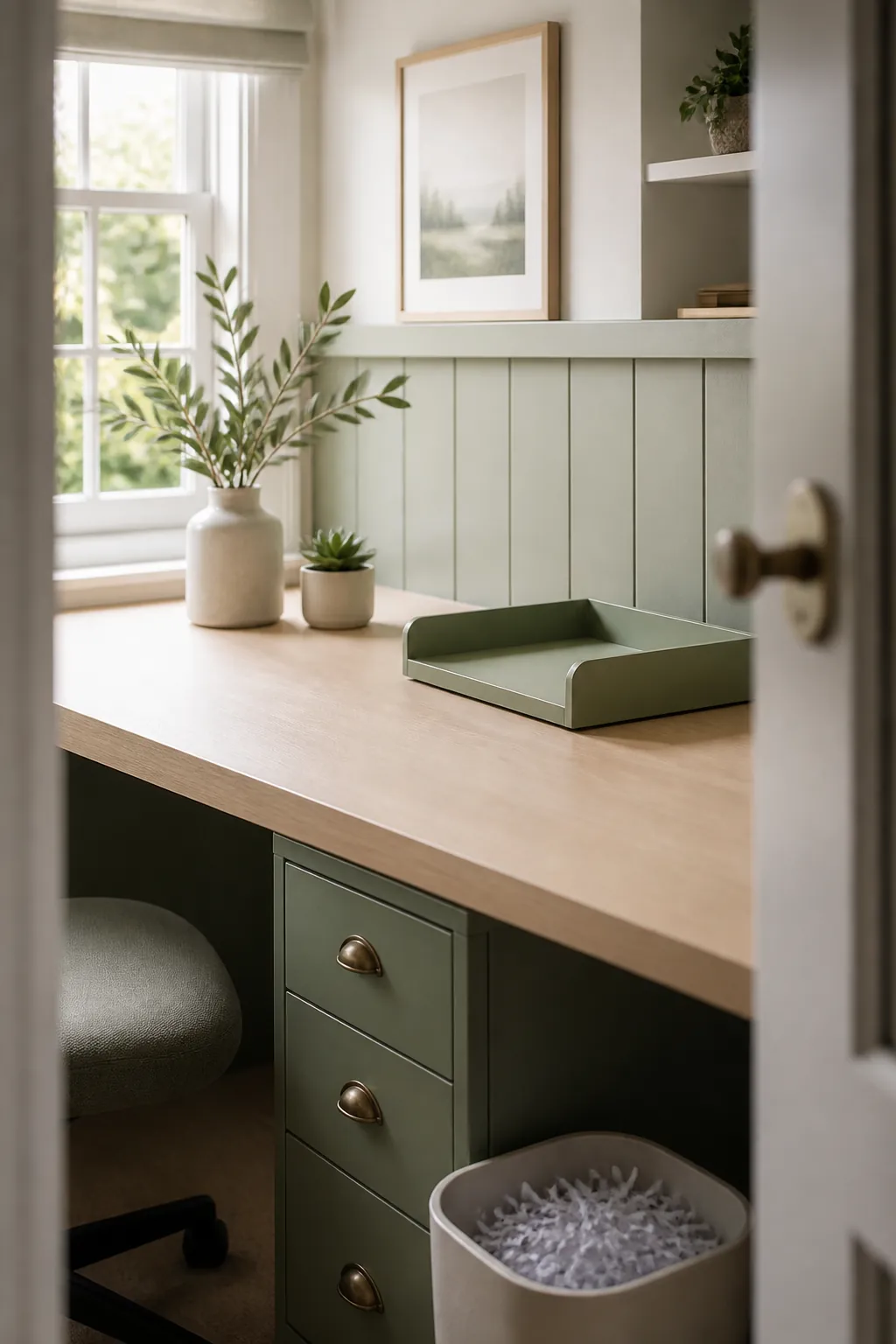
The system above only holds if something empties it on a schedule. Once a week, empty the desk tray into either the keep box or the recycling, clear the wall organizer, and shred whatever accumulated. That is the entire job, and at five minutes it is short enough to actually happen instead of getting postponed into a weekend project.
Skip a week and it is still a five minute job the week after, just with slightly more in it. Skip a month and it has become the same pile you started with, which is the whole reason this list exists in the first place.
Where to start
Start with the sort in section 1, because every other section assumes it already happened. Give the act pile one tray, move the keep pile off the desk into a cart or a box, and put a wall organizer between the door and the desk so mail never gets the chance to land on the work surface. Set the shelf life rules once, shred weekly instead of yearly, and close the loop with a five minute reset every Sunday. None of the individual pieces are complicated. What makes a desk stay clear is doing all of them at once instead of picking the one that looks nicest.