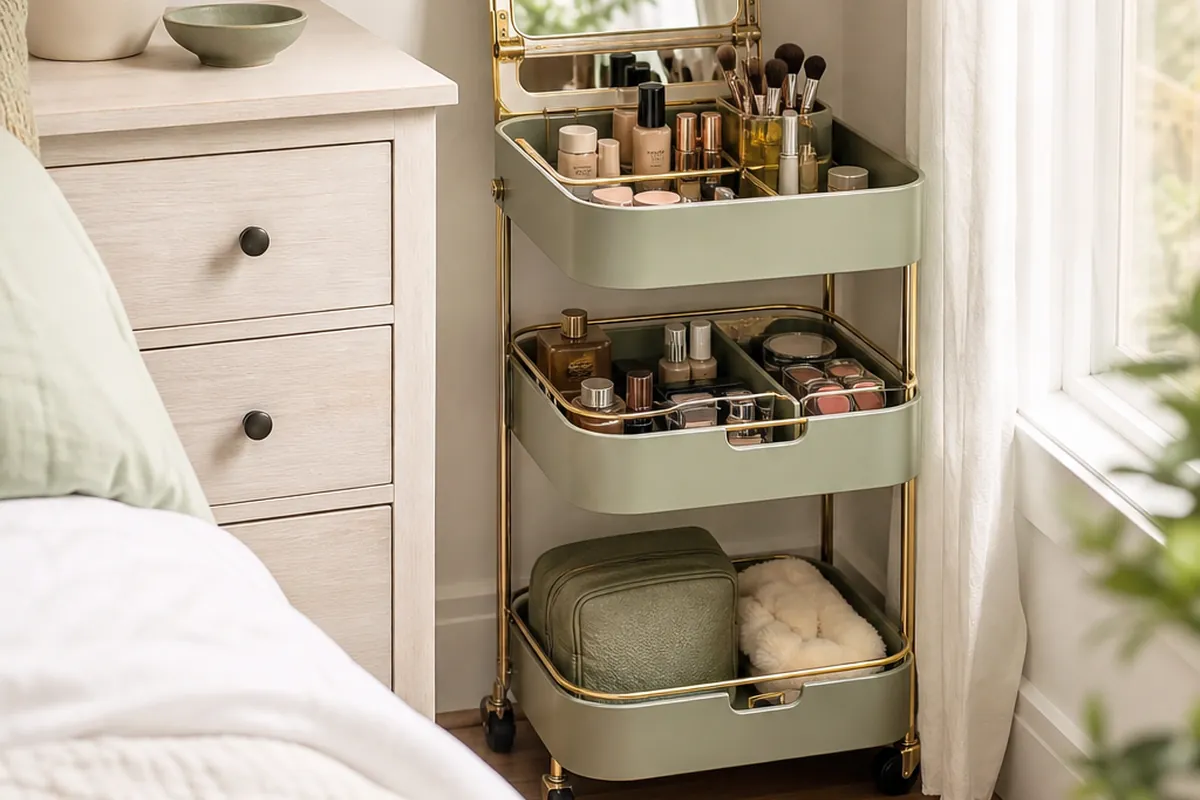
A small bedroom rarely has a spare wall for a real vanity desk, but it almost always has a leftover corner: the dead triangle beside a dresser, the gap next to a closet door, the sliver behind where the bed frame ends. That corner can hold a full makeup setup, mirror, lighting, and storage included, without eating the floor space you need to actually walk through the room. The trick is treating it as a cart and a wall, not as furniture, since a corner is almost never wide enough for a proper vanity desk with knee room.
Nine ideas below, sized for a renter’s corner rather than a dedicated makeup room.
1. Measure the corner before you shop for anything
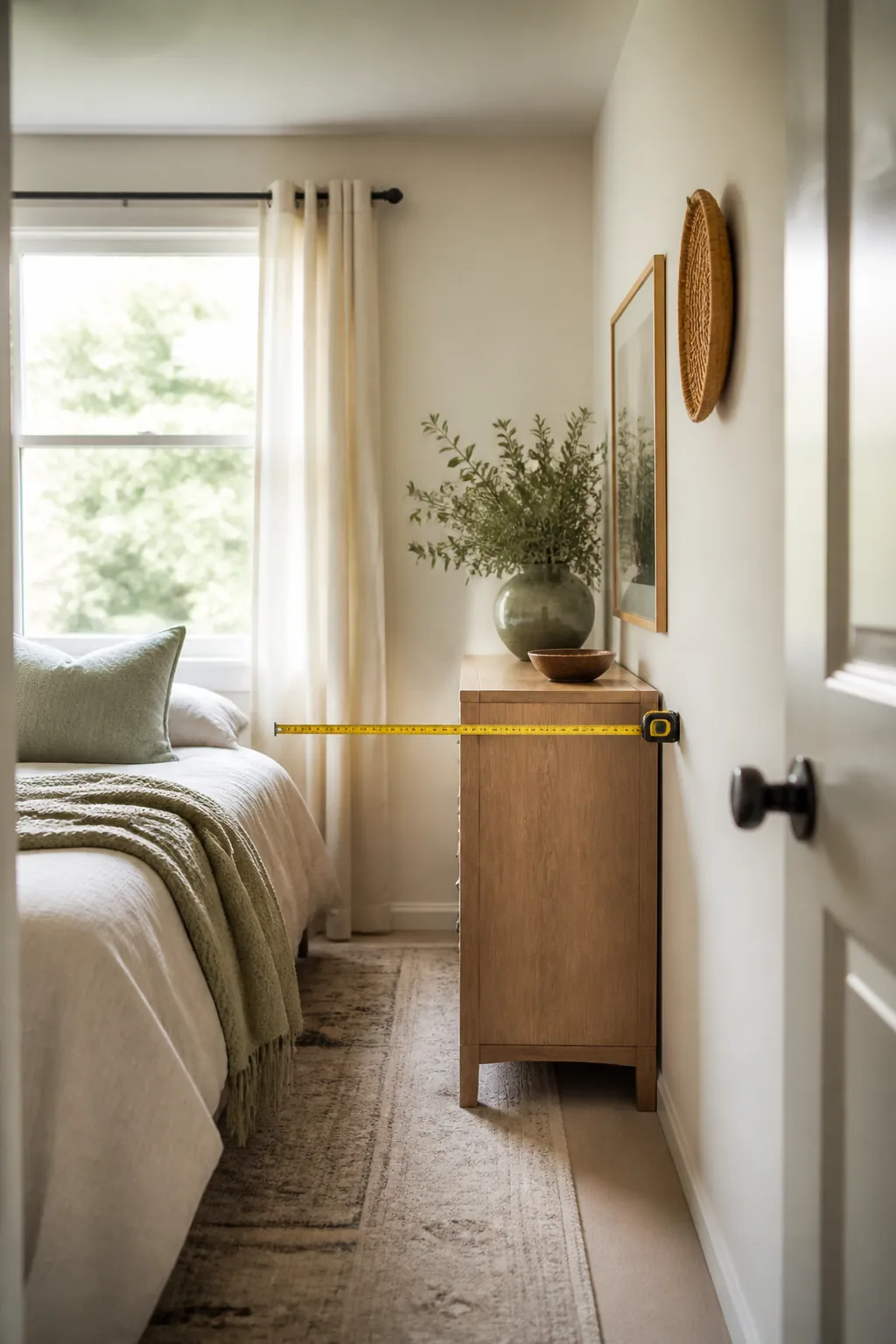
Two numbers decide everything that follows: the clear wall width on one side of the corner, and the depth from the wall out to wherever your foot traffic actually starts. Most usable bedroom corners run 18 to 30 inches wide, and anything narrower than about 16 inches won’t comfortably fit a cart with drawers, only a slim shelf or a wall-mounted caddy.
Measure at floor level and again at counter height, since baseboards, outlets, and a sloped ceiling in an attic bedroom can all shave an inch or two off the number you’d get from eyeballing it. Write both measurements down before you open a shopping app. A cart that’s a half inch too deep for the corner either blocks the closet door or sticks out into the walking path, and you won’t notice until it’s already assembled on your floor.
2. Choose a rolling cart over a fixed desk
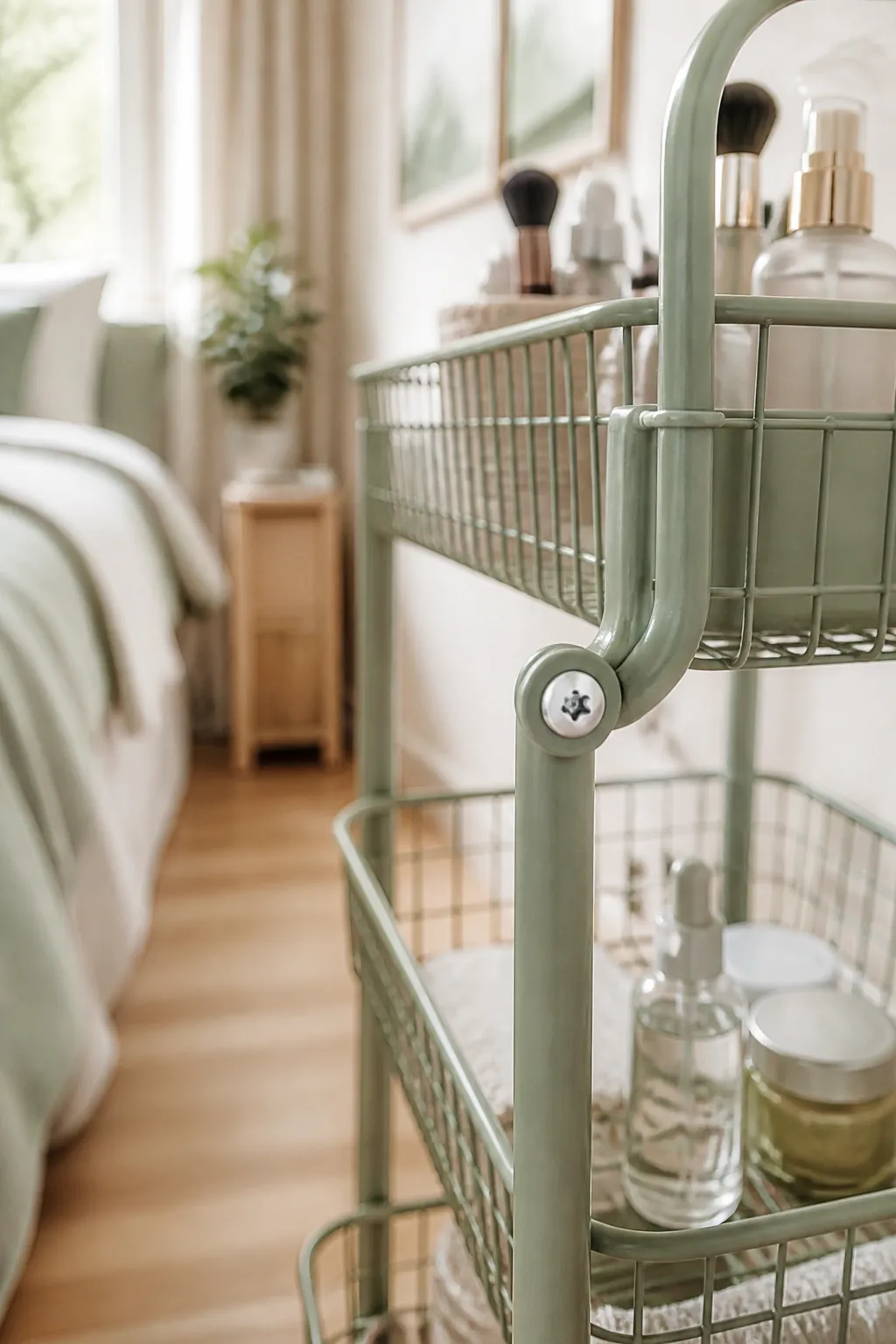
A vanity desk needs knee room, typically at least 20 inches of clearance under the surface, which most bedroom corners don’t have to spare. A 3-tier rolling cart solves the same problem sideways: you stand at it rather than sitting under it, and it rolls out from the corner when you need better light and back in when you’re done.
The tiers do double duty as sorting, top for daily products, middle for backup and skincare, bottom for hair tools or the caddy your curling iron lives in. Because it’s on wheels, it also survives a move without anyone patching a wall, which matters more in a rental than the aesthetics of a built-in vanity ever will.
3. Add a floating shelf only if the wall studs cooperate
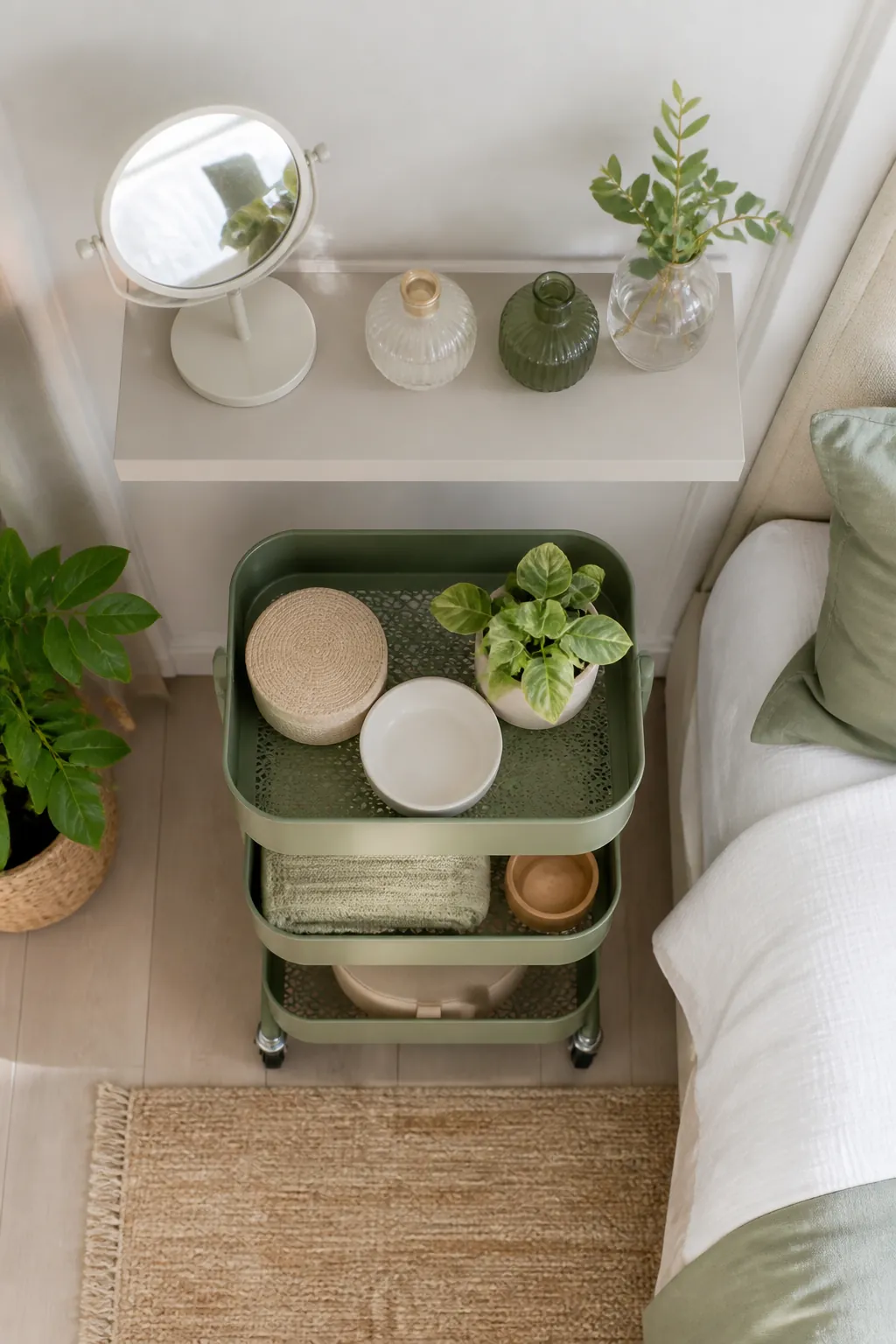
If the corner has wall space above where the cart sits, a single floating shelf roughly 18 to 24 inches long adds surface area without adding footprint. Anchor it into a stud if you can find one within that span, since a shelf loaded with glass bottles and a mirror stand gets heavier than it looks, usually eight to twelve pounds once everything is on it.
No stud in range, or a lease that says no holes at all? A heavy-duty adhesive shelf bracket rated for at least 15 pounds gets you the same shelf without drilling, as long as you give the adhesive the full cure time on the label, usually 24 hours, before setting anything on it. Loading it early is the single most common reason these brackets fail, not a defect in the bracket itself.
4. Skip a full vanity mirror and use what the room already has
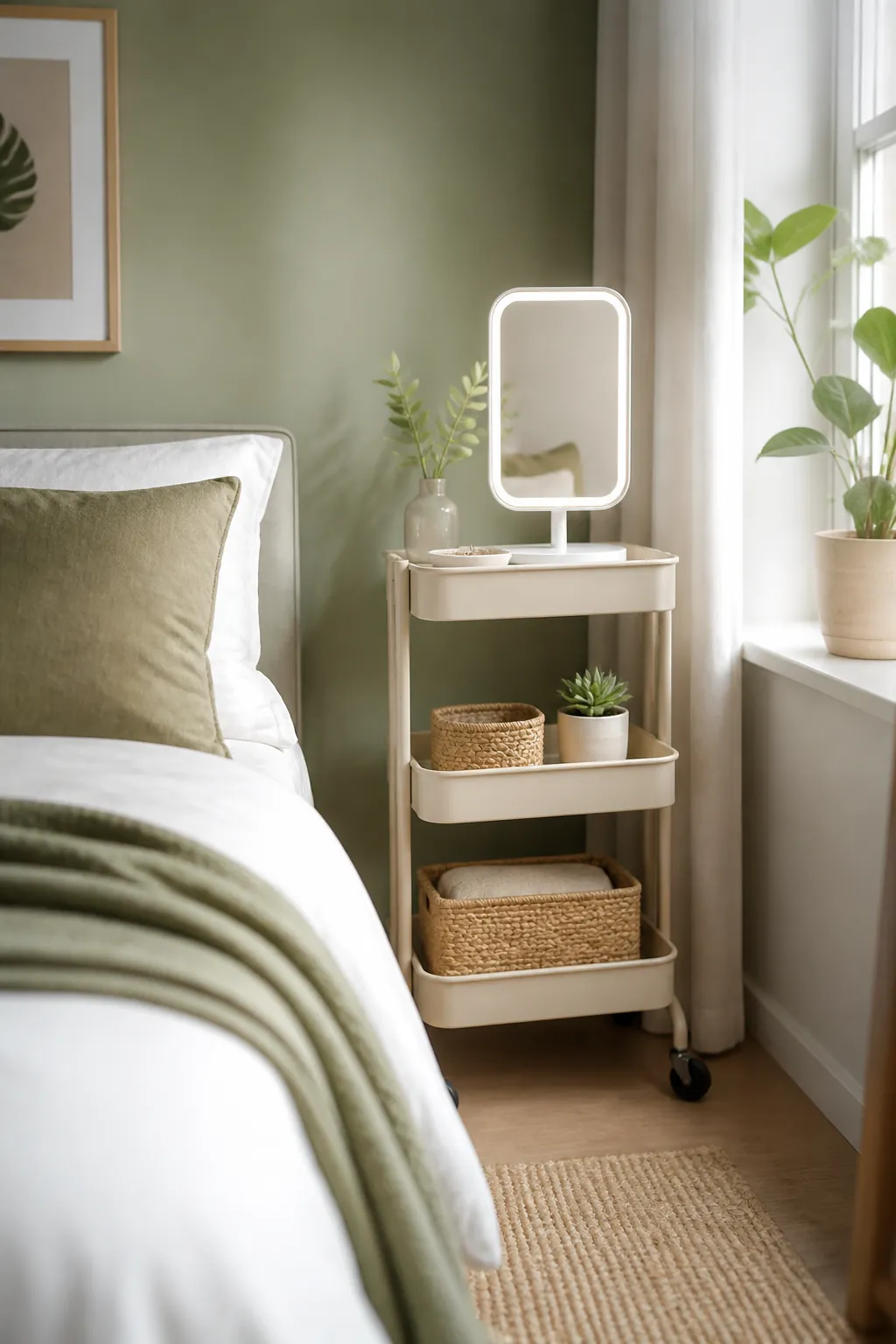
A corner rarely has room for both a cart and a large mirror mounted at eye level, so borrow a mirror instead of adding one. A closet door already has a mirror on it in a lot of small bedrooms, and standing a few feet back from the cart to use it costs nothing. Where there’s no door mirror, a small battery-powered LED mirror that clips or stands on the cart’s top tier gives you lit, close-up visibility exactly where you’re already working, without a cord running across the floor or a second wall fixture competing for the same few inches of space.
Check the battery mirror’s base width against your cart’s top shelf before buying. A base wider than the shelf tips over the first time you reach past it for a brush.
5. Sort daily products into a rotating organizer, not a pile
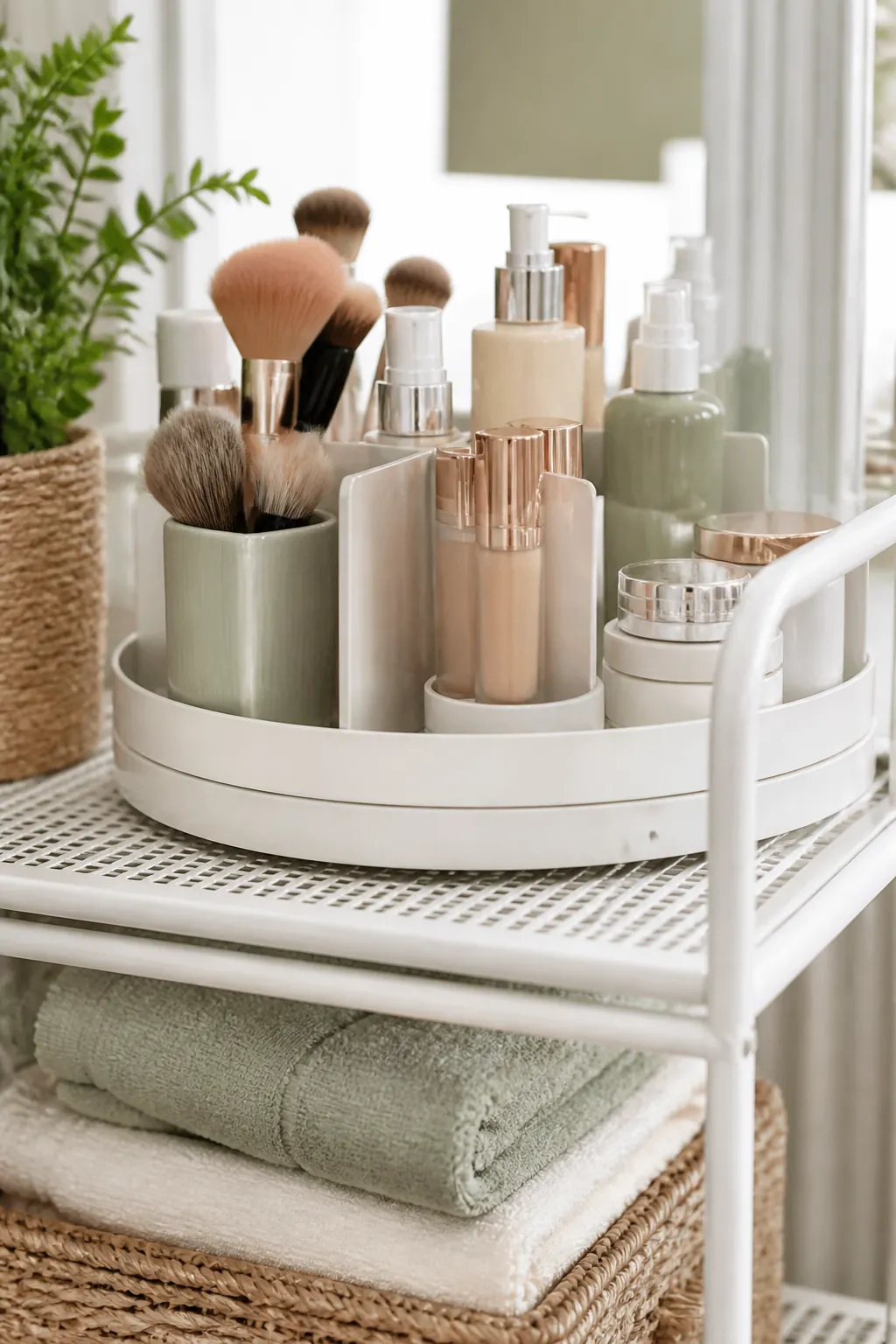
The counter pile happens because putting something down is faster than putting it away, and a lid or a drawer front is one motion too many for a rushed morning. A rotating makeup organizer removes that friction. Everything sits upright and visible on a turntable, so putting a product back means setting it in its ring and spinning to the next section, not opening anything.
Keep it to what you actually use most mornings, foundation, one or two brushes, the daily skincare step. A turntable loaded with forty products becomes as hard to scan as a drawer, just spinning instead of buried. Anything used less than weekly belongs one step further away, in a drawer or a bin under the cart, not competing for space on the turntable.
6. Give drawers real divisions, not open trays
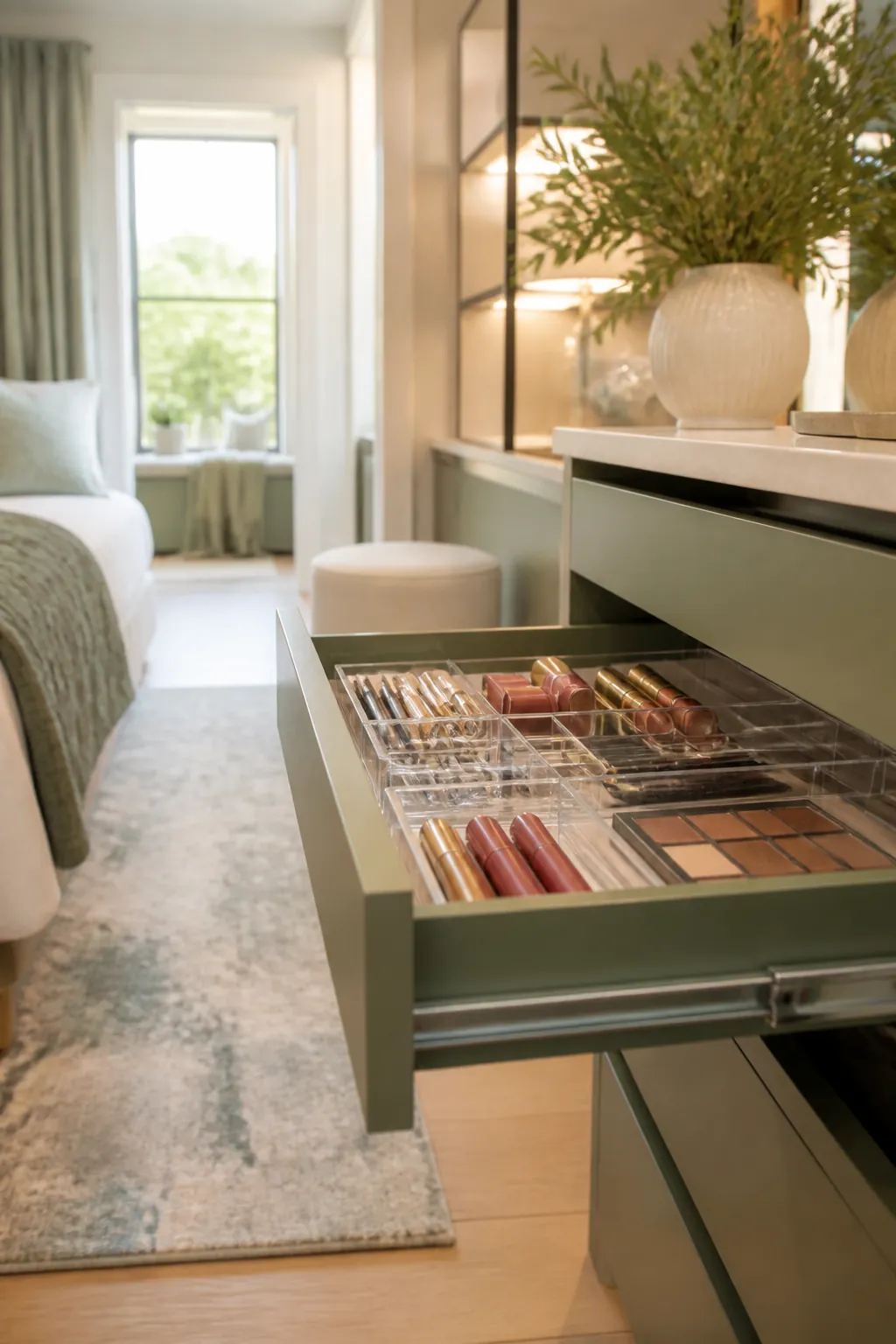
An empty cart drawer collects loose lip liners and eyeshadow palettes the same way a junk drawer collects everything else: fast, and without any order. An acrylic makeup drawer organizer breaks a drawer into compartments sized for actual product shapes, tall slots for pencils and brushes, wide shallow ones for palettes, small squares for loose singles.
Measure the drawer’s interior before ordering, not just its outer dimensions. Cart drawers often run an inch or so shallower inside than the cart’s overall depth suggests, because of the drawer’s own lip and slide hardware, and an organizer that’s a fraction too tall will stop the drawer from closing flush.
7. Store the stool or chair somewhere else when it’s not in use
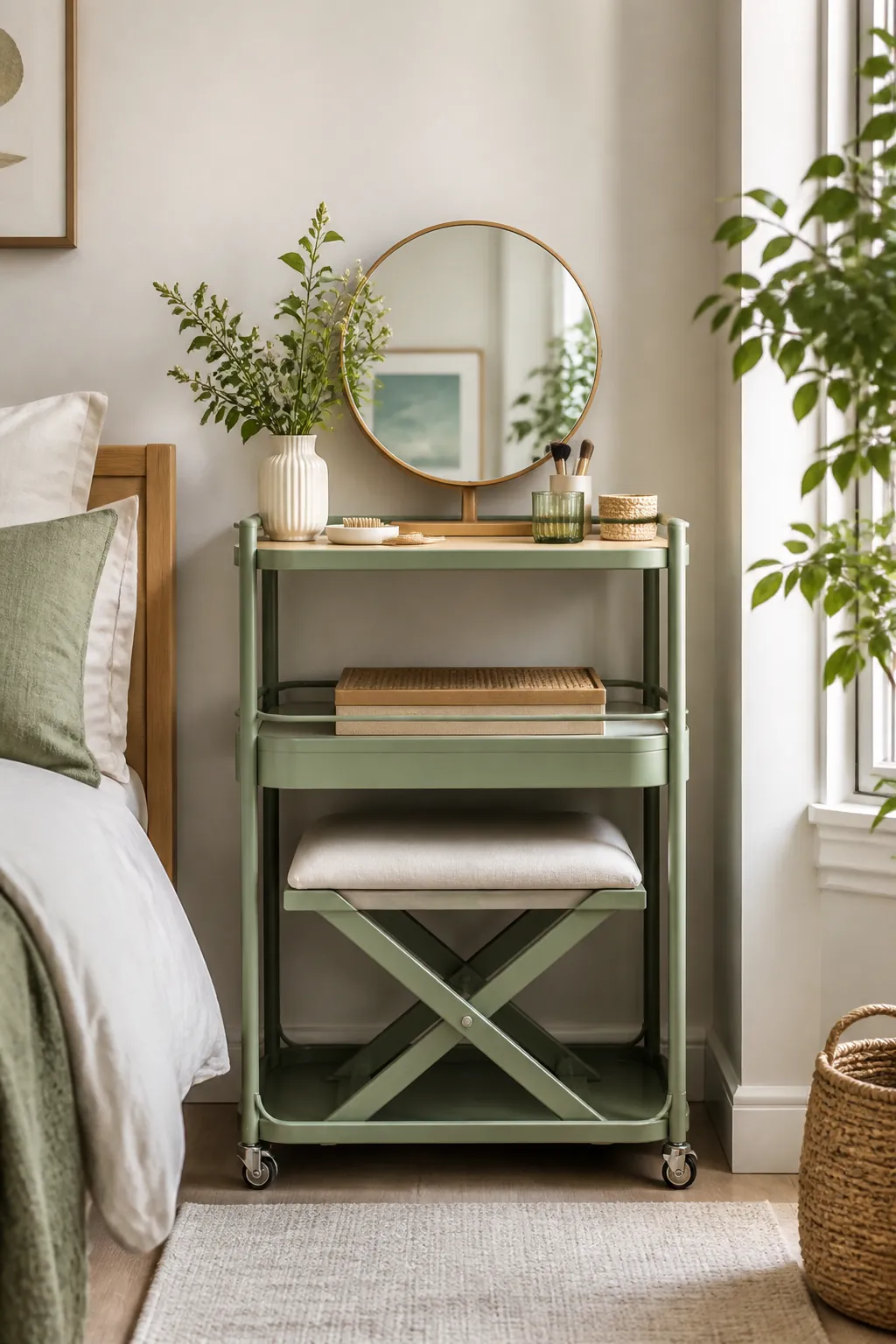
A stool pulled up to a corner cart eats the exact floor space a small bedroom can least afford to lose permanently. A folding stool that lives under the bed, or a lightweight chair borrowed from elsewhere in the room, only comes out while you’re actually sitting at the vanity and goes right back when you’re done.
If a stool has to live in the corner full time, pick one that slides fully under the cart’s bottom tier when not pulled out, so the corner reads as storage rather than seating for the other 23 hours of the day.
8. Keep hot tools contained and cooled before they’re put away
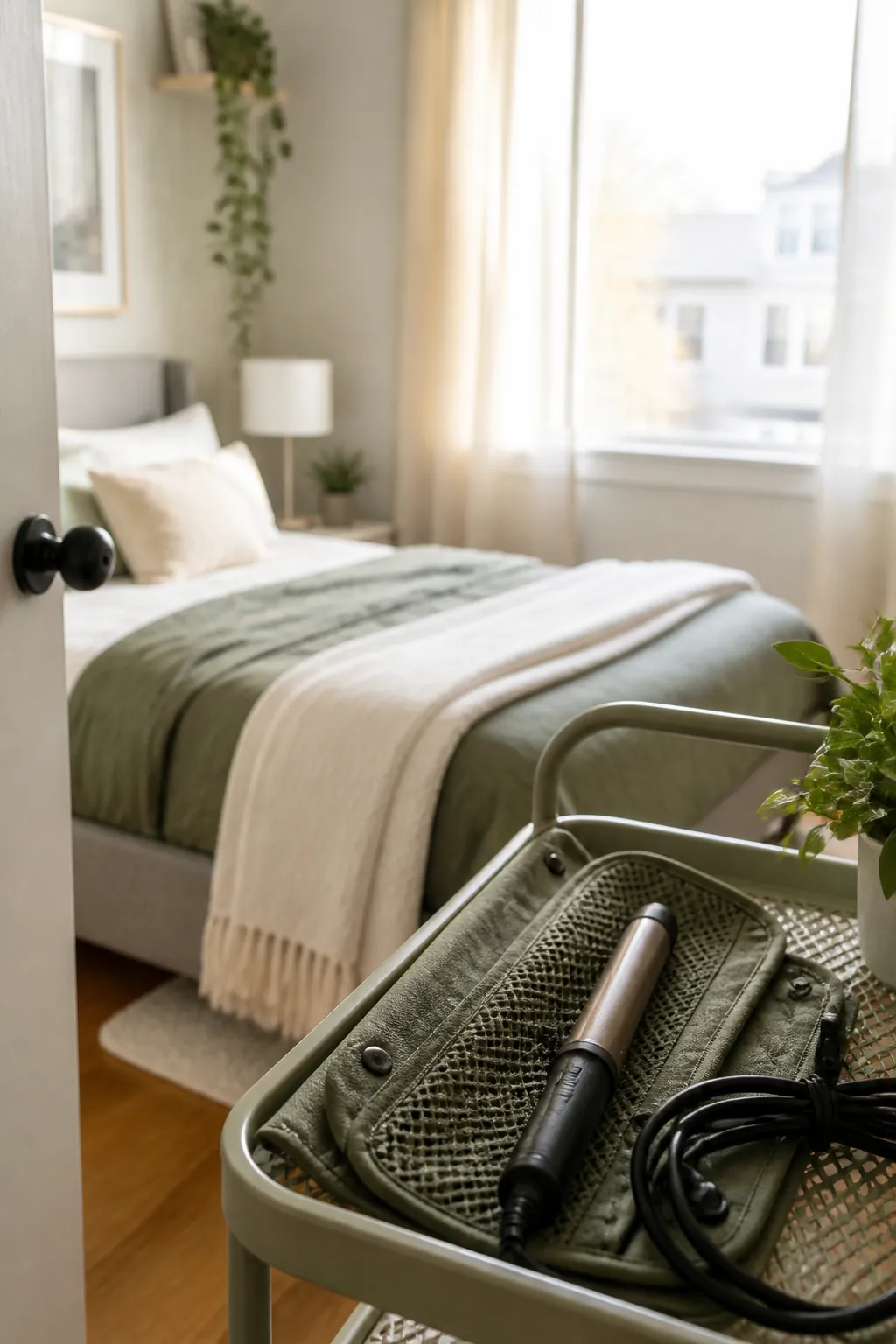
A curling iron or straightener stored while still warm is the fastest way to scorch whatever fabric or plastic it touches next. Let it sit on a heatproof mat or the metal top of the cart for a full five minutes before it goes anywhere, and store it in a heat-resistant pouch or a dedicated metal caddy rather than loose in a fabric-lined drawer.
Coil the cord loosely rather than wrapping it tight around the barrel. A tight wrap creates a stress point in the cord’s insulation at the same spot every time, and that’s a wear pattern that eventually shows up as a fraying cord, not just a tangled one.
9. Purge on a schedule, not when the cart overflows
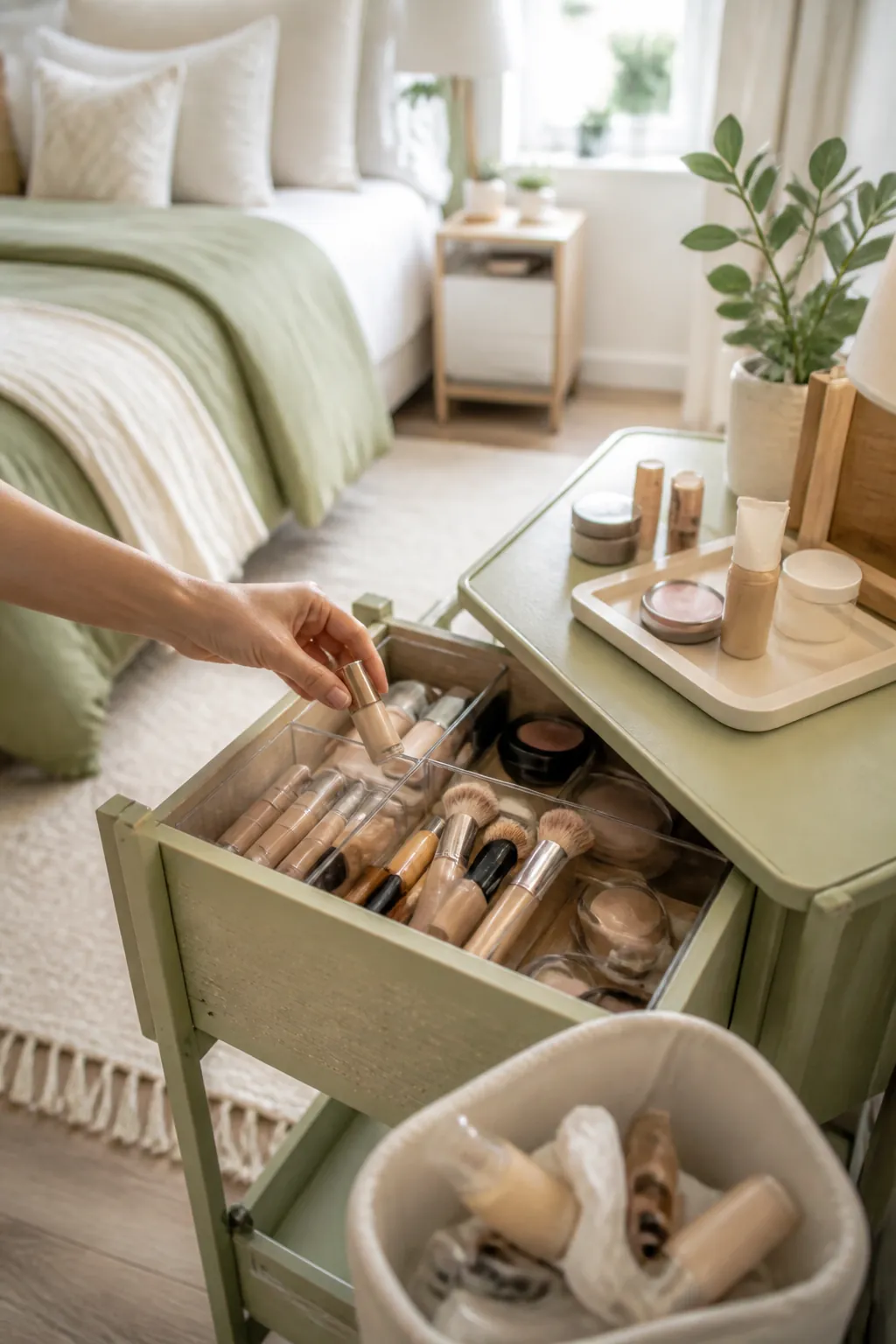
A vanity corner only stays small if what’s stored in it stays current. Mascara and liquid eyeliner harbor bacteria and dry out within three months of opening, and most other makeup has a real shelf life measured in months, not years, even unopened. Go through the whole setup twice a year, spring and fall work well as a trigger, and toss anything past its window along with anything you haven’t reached for since the last purge.
This matters more in a small corner than in a full vanity room, because there’s no spare drawer to absorb the products you’re not using. Every item you keep past its useful life is one that’s crowding out something you’ll actually reach for tomorrow.
Where to start
Measure the corner first, both the width and the depth, since that number rules out half the options before you spend anything. A rolling cart does the most work for the least footprint, add a floating shelf above it only if a stud or a rated adhesive bracket can carry the weight. Borrow a mirror from the closet door before buying a new one, sort daily products into a rotating organizer, and give the drawers real divisions so they don’t turn back into a pile. Store the stool elsewhere when it’s not in use, keep hot tools cooled and contained, and purge the whole setup twice a year. None of it needs a dedicated room, just an honest look at how much a corner can actually hold.