A dresser in a small bedroom is doing more work than a dresser was designed for. It is the clothes closet, the linen closet, and the place the odd things live, and it usually has four drawers to manage all of it. Small valuables are the exception worth separating early, which is what jewelry organization for a small dresser deals with. So the drawers get deep piles, the piles get excavated every morning, and by Thursday the folded stack you made on Sunday is a heap.
The fix is less about tidying and more about geometry. Ten ideas below, and the first two do most of the work.
1. Empty a drawer at a time, not the whole dresser
Doing the entire dresser at once produces a mountain on the bed and a decision to abandon it halfway through.
One drawer, start to finish, then the next. Each drawer takes fifteen minutes and ends in a finished state, which means you can stop after one and still be better off. This matters more than it sounds, because the main reason dressers stay disorganized is that reorganizing them feels like a whole afternoon.
Wipe the empty drawer before refilling. Dressers collect a surprising amount of lint in the corners.
2. Switch from stacking to file folding
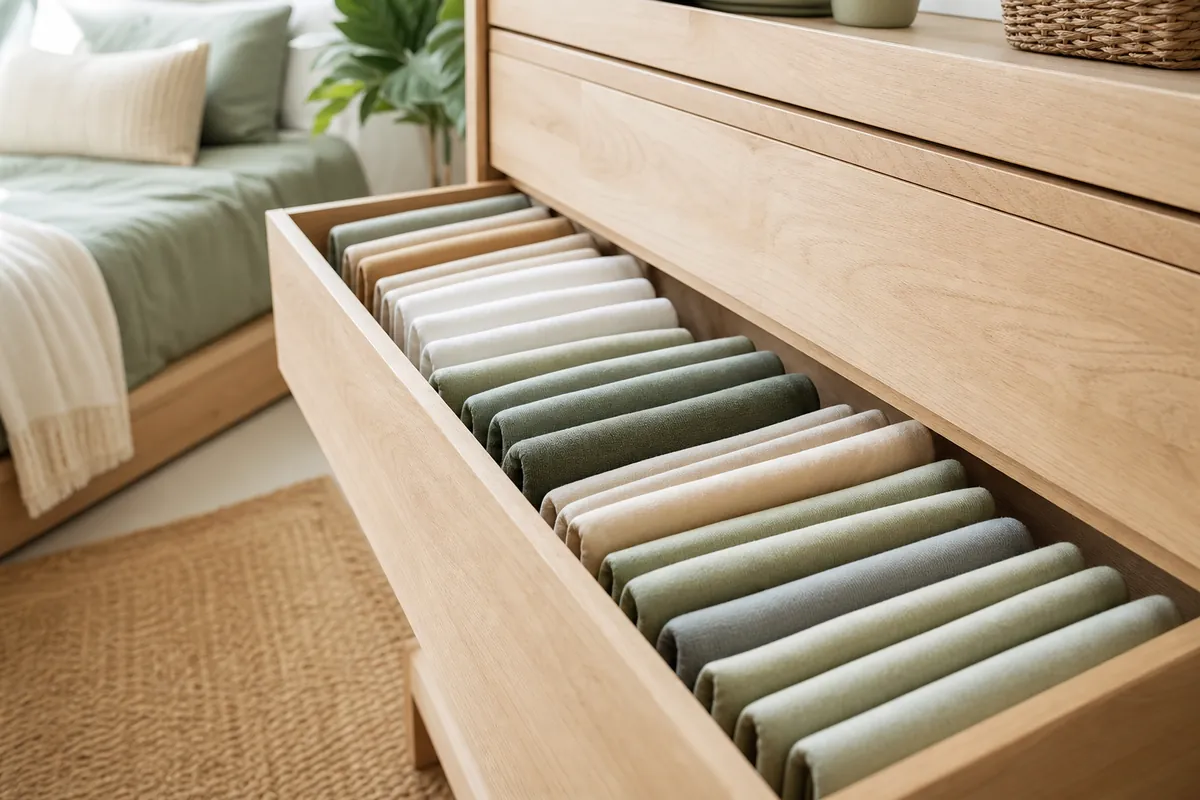
This is the single change that does the most, and it costs nothing.
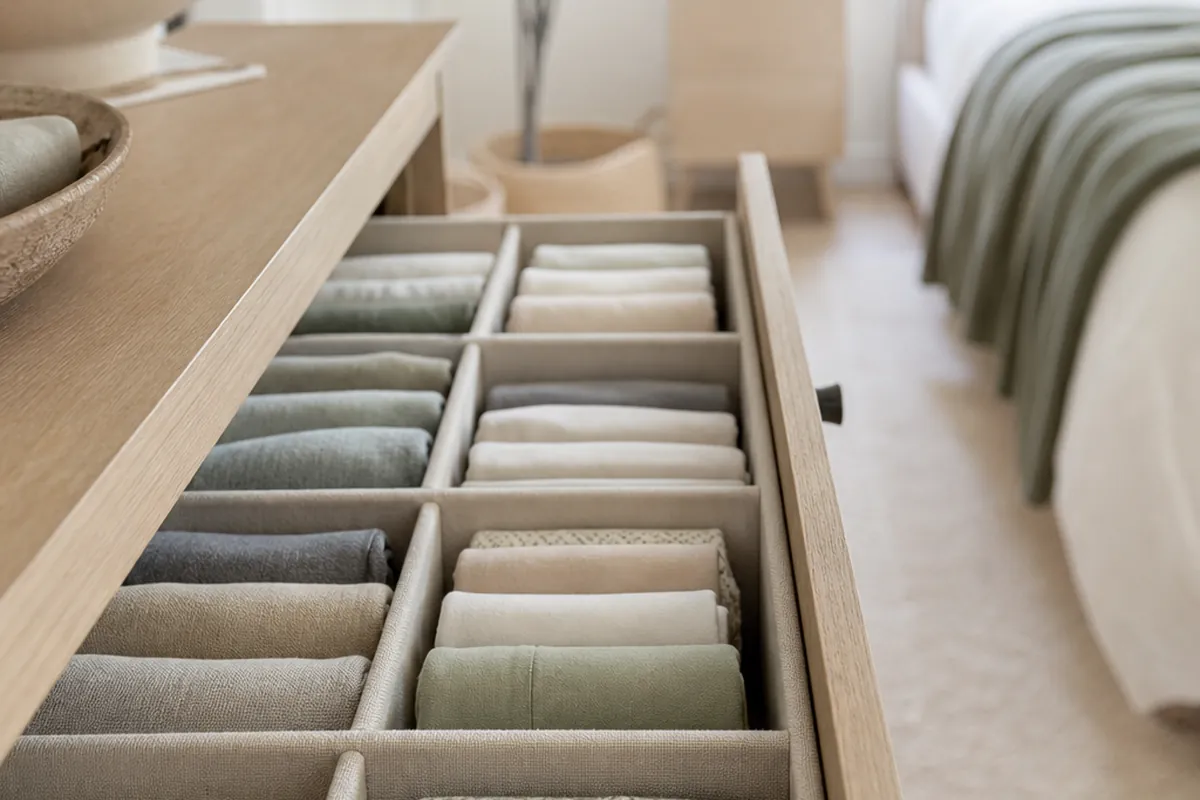
Fold items into rectangles and stand them upright in rows, like files in a drawer, instead of stacking them flat. You can see everything you own in one glance, and pulling out the third shirt does not topple the six above it. That toppling is exactly what turns a folded drawer back into a jumble within days.
It takes longer the first time and roughly the same time afterwards. If you want the full method rather than the summary, drawer organizers and folding goes through it properly.
3. Give soft items flexible compartments
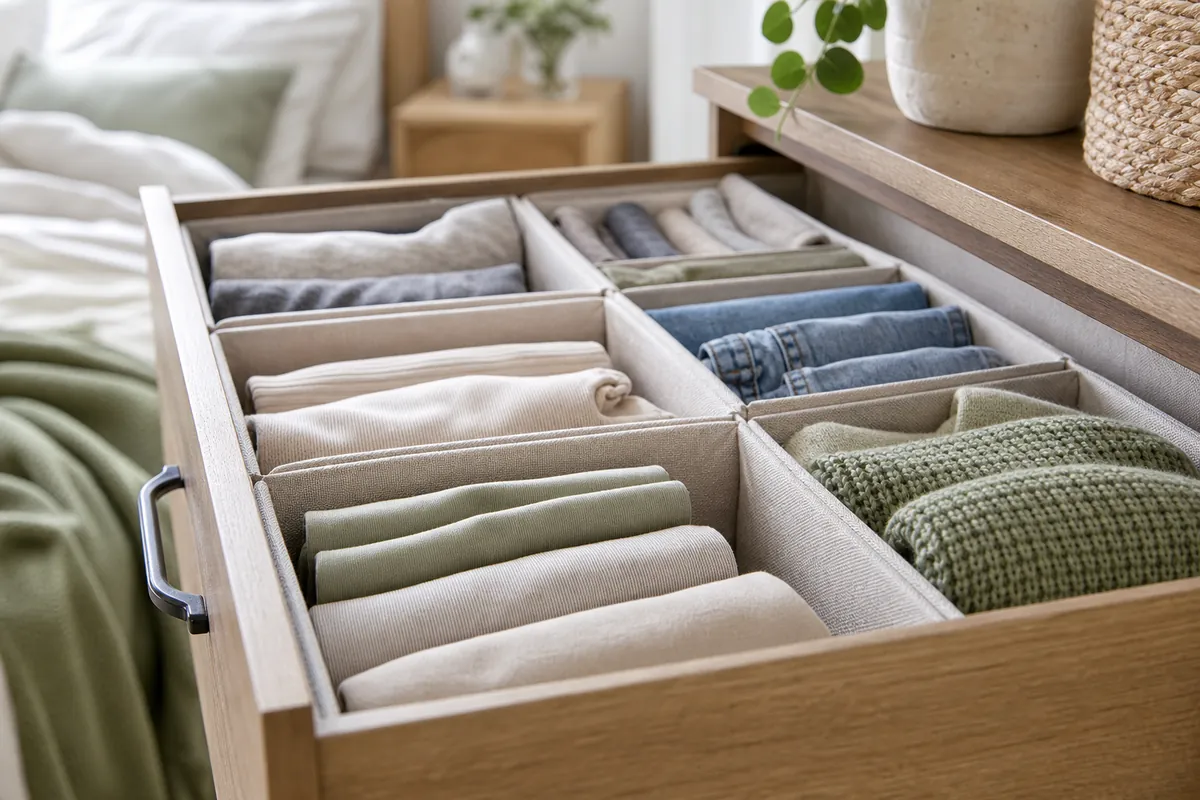
Underwear, socks, and t-shirts do not hold their own shape, so upright folding only works if something holds the row together.
A fabric drawer organizer set gives each category a soft-sided box that flexes to fit the drawer. Fabric suits these items better than rigid trays because it absorbs the slight over-stuffing that real life produces without the row collapsing sideways.
Fill each compartment to about eighty percent. A fully packed compartment is a stack again, just a smaller one.
4. Use rigid dividers where the line must stay straight
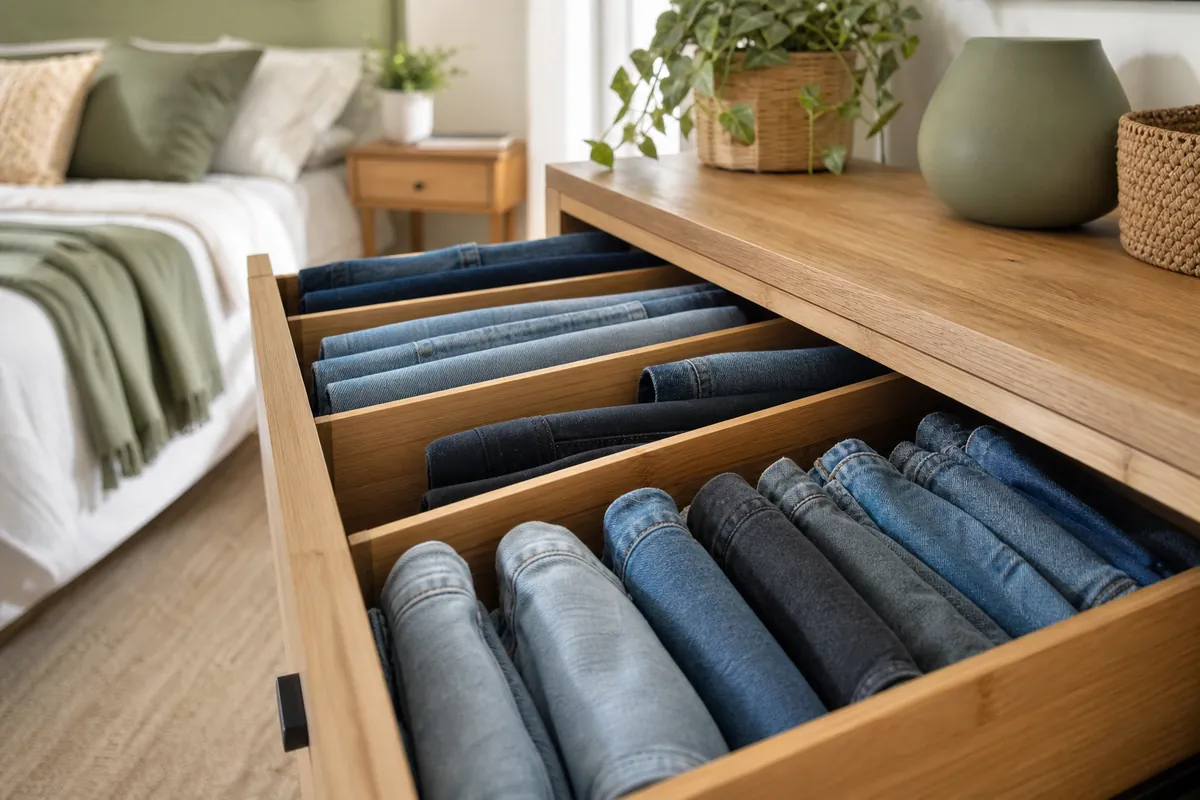
For anything that needs to stand up on its own, jeans, jumpers, folded pants, fabric boxes are too forgiving.
Bamboo dresser drawer dividers hold a hard edge, so a row of folded jeans stays a row rather than slowly leaning. They also look considerably better than plastic in a drawer you open every day, which matters more than it should.
Set the lane widths to what you own rather than dividing the drawer evenly. Most people need one wide lane and two narrow ones, not three equal thirds.
5. Fit awkward drawers with adjustable dividers
Dresser drawers are rarely a standard size, and a divider that almost fits leaves a gap that becomes the drawer’s junk lane.
Adjustable drawer dividers expand to the drawer and lock against the sides, which handles both odd widths and drawers that taper slightly toward the back. Measure at the narrowest point, and measure the depth too, because a divider taller than the drawer stops it closing.
6. Assign drawers by reach, not by category
The instinct is to group by type: shirts drawer, pants drawer. Better to think about how far you bend.
Top drawers, at hand height, take what you touch daily. The middle takes weekly items. The bottom drawer, which costs you a crouch, takes the things you reach for rarely: swimwear, spare bedding, the thermal layer you need twice a year. It is the same reasoning behind organizing a small bedroom with no closet, applied within one piece of furniture.
7. Leave one drawer with genuine slack
A dresser packed to capacity has nowhere to put the temporary, so the temporary lands in whichever drawer opens and undoes the sorting.
Keep one drawer, usually the bottom, at half capacity. It absorbs the clean laundry you have not put away, the clothes you are undecided about, and the things that arrive without a home. Slack is what makes the rest of the system survive contact with a normal week.
8. Get the “keeping” clothes out of the dresser
Most dressers are storing two distinct things: clothes you wear and clothes you keep. Only one of them earns prime space.
Sentimental items, the size you hope to be, and the coat that is genuinely too good to bin but never worn: these belong in long-term storage, not in the most reachable drawer in your bedroom. This is the step people resist and the one that frees the most room.
If the real problem is that there is no dresser at all, or the one you have is too small to organize, clothes storage ideas with no dresser covers the alternatives.
9. Store off-season clothes somewhere else entirely
In a small bedroom, a dresser holding both summer and winter clothes is holding twice what it should.
Off-season goes under the bed, on top of an armoire, or in a vacuum bag. Rotate twice a year rather than storing everything year-round, and the drawers you use daily stop being full before you start.
10. Reset in ten minutes, not in an afternoon
Once the compartments exist, maintenance is refolding a couple of rows rather than redoing the drawer.
Do it when you put laundry away rather than as a separate task. The system holds because each item has a lane to return to, and returning things is the actual failure point in every storage system, not the initial tidy.
Dresser organization that survives a normal week
The order that works: one drawer at a time, switch to file folding, then add compartments that match what you own. A fabric drawer organizer set handles soft items, bamboo dresser drawer dividers keep the structured rows straight, and adjustable drawer dividers rescue an odd-sized drawer.
Then assign drawers by how far you have to reach, leave one with slack, and move the clothes you are keeping rather than wearing somewhere else. If the room is still tight after that, bedroom storage ideas when there is no space left picks up beyond the dresser.