A bowl of fruit and a mesh bag of onions will eat ten inches of counter in a kitchen that doesn’t have ten inches to spare, and loose produce is worse at sharing space than almost anything else in the kitchen. It rolls, it bruises when something gets stacked on it, and half of it needs airflow the counter isn’t giving it, which is why a banana goes from yellow to black in two days flat sitting next to a sealed bread box.
Produce storage on a small counter comes down to picking the right container for what the food actually needs, airflow for some, darkness for others, and separation for the pairs that speed up each other’s spoiling, then keeping the footprint to what you’ll actually eat this week. Nine ways to do that below.
1. Measure what you’re actually trying to fit before buying a basket
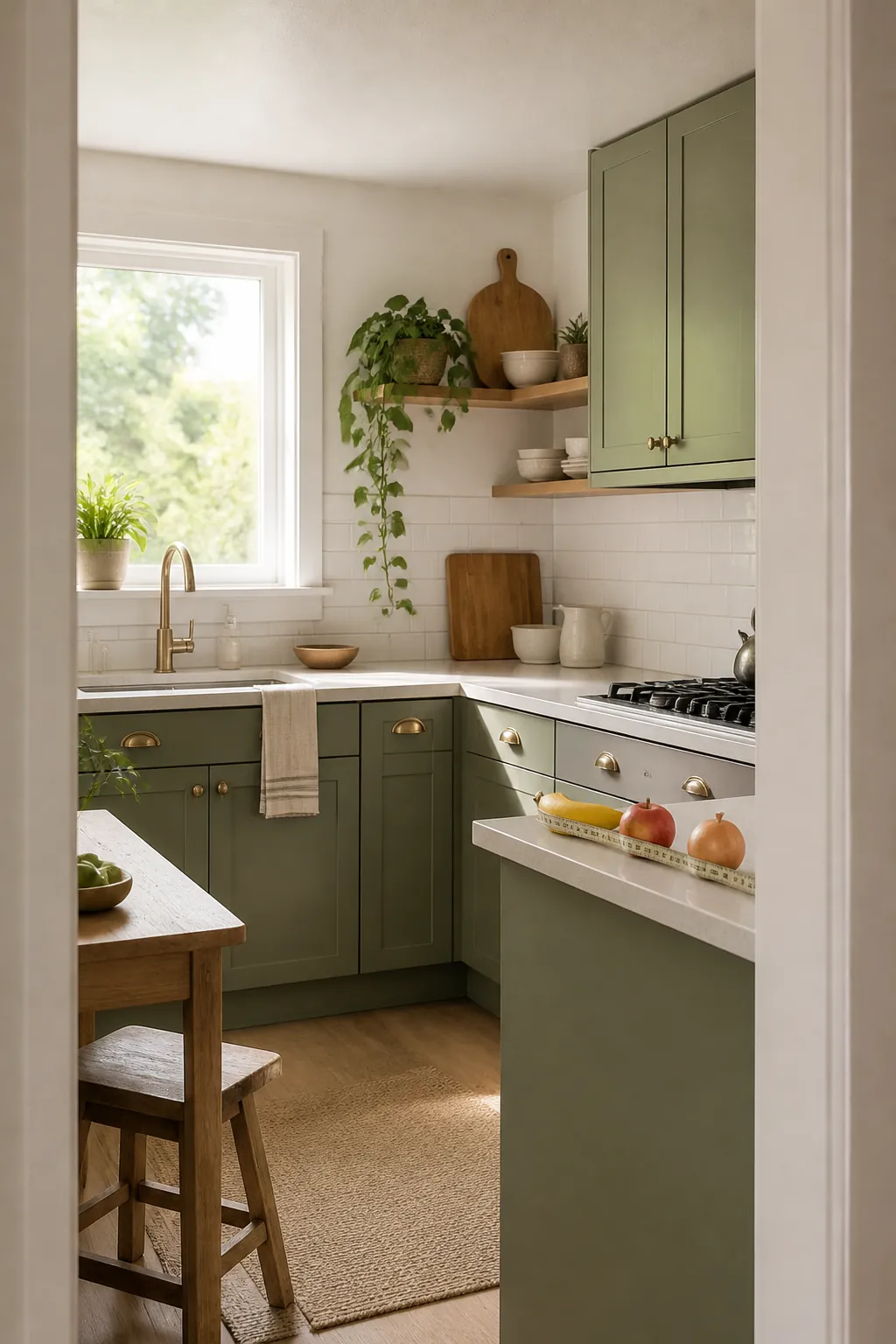
A single banana runs about 7 to 8 inches long, an average apple is roughly 3 inches across, and a yellow onion sits close to 2.5 to 3 inches wide. A week’s worth of loose produce for two people, a few apples, a bunch of bananas, two or three onions, and a couple of tomatoes, needs a container with a footprint of at least 10 by 10 inches if it’s all going to live in one place rather than spreading across every flat surface near the stove.
That number matters because it’s bigger than most people assume when they’re standing in an aisle holding a small decorative bowl. A bowl that looks right in a showroom photo usually holds four pieces of fruit before it’s full, and the fifth piece ends up back on the bare counter, which defeats the point of containing it in the first place.
2. Give bananas their own spot, away from everything else
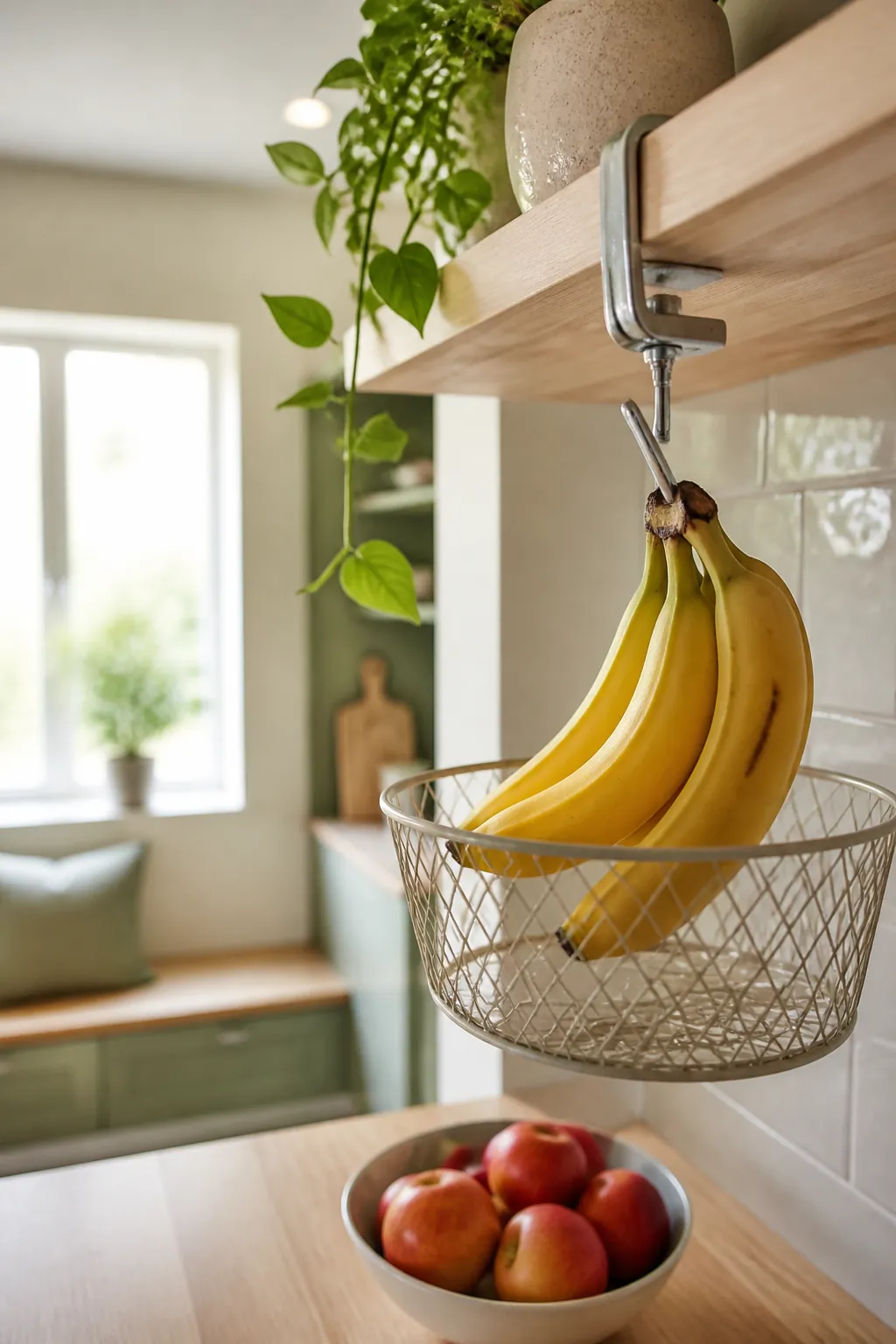
Bananas release ethylene gas as they ripen, and that gas speeds up ripening in whatever fruit sits near them, apples, avocados, pears, and stone fruit all included. Keep a bowl of mixed fruit on one side of the counter and bananas in their own spot at least a few inches away, and the rest of the bowl will last noticeably longer before it turns.
A under-shelf hanging basket solves this well in a kitchen with no spare counter inch to give bananas their own bowl. It clips onto the lip of an existing shelf with no tools, and a bunch of bananas hooked over the rim hangs in the air below the shelf rather than sitting on anything. Hanging also slows bruising, since a banana lying flat develops a dark spot everywhere it touches a surface, and a hanging bunch touches nothing but itself.
3. Separate potatoes and onions even if they share a cabinet
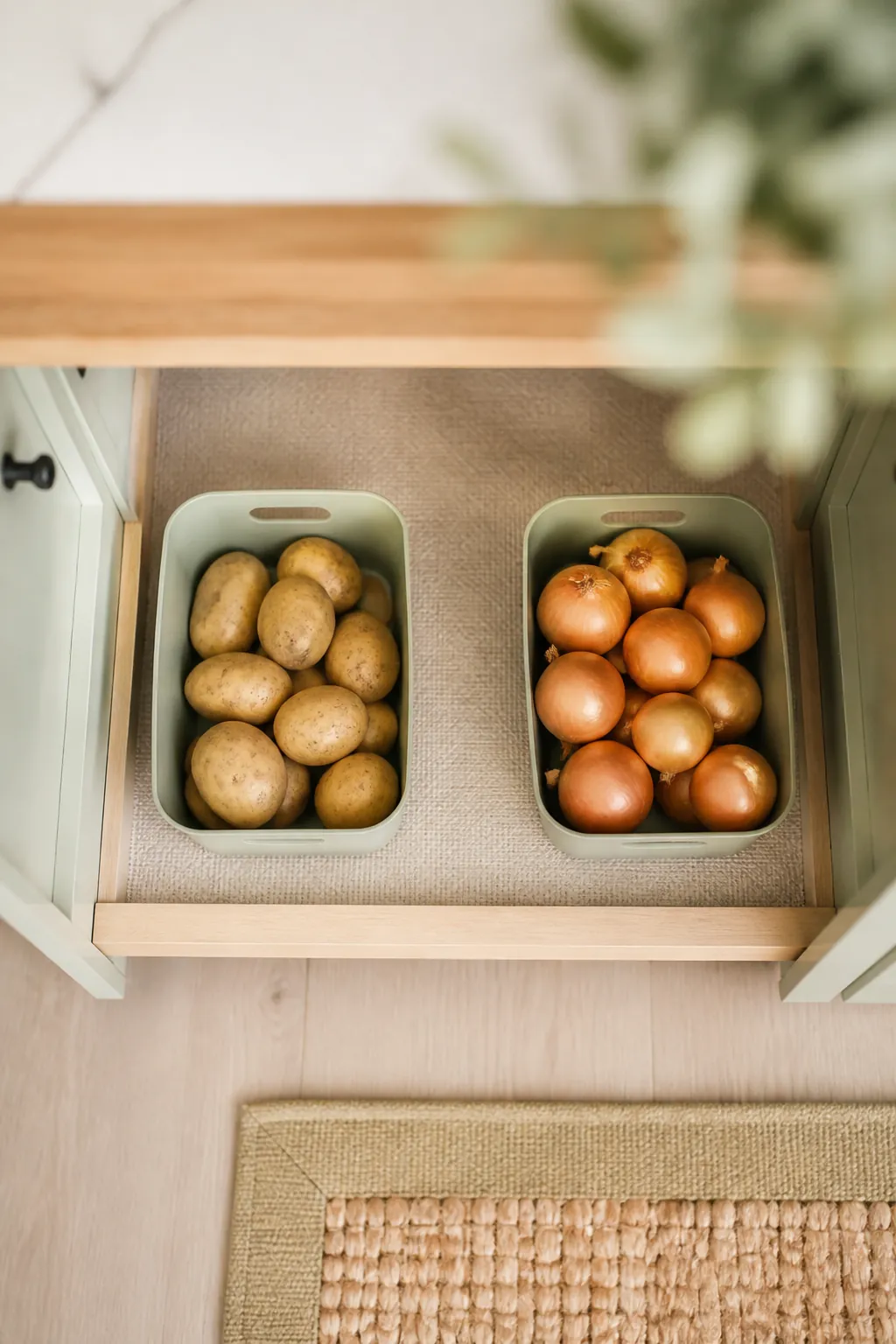
Potatoes and onions are usually sold next to each other and often get stored the same way, in one mesh bag or one bin, which is the opposite of what keeps them fresh. Onions give off moisture and gas as they age, and potatoes absorb both, which speeds up sprouting and soft spots in the potatoes specifically. Keep them in separate containers with a few inches of air between the containers themselves, not just separate compartments of the same bin.
Both still want the same general conditions: dark, cool, and away from direct sun, which usually rules out the open counter entirely and points toward the inside of a lower cabinet instead. If a cabinet isn’t available, an opaque bin tucked at the end of the counter beats a mesh bag left in daylight, since light is what turns potato skins green and bitter.
4. Use a turntable to keep root vegetables from going stale in the back
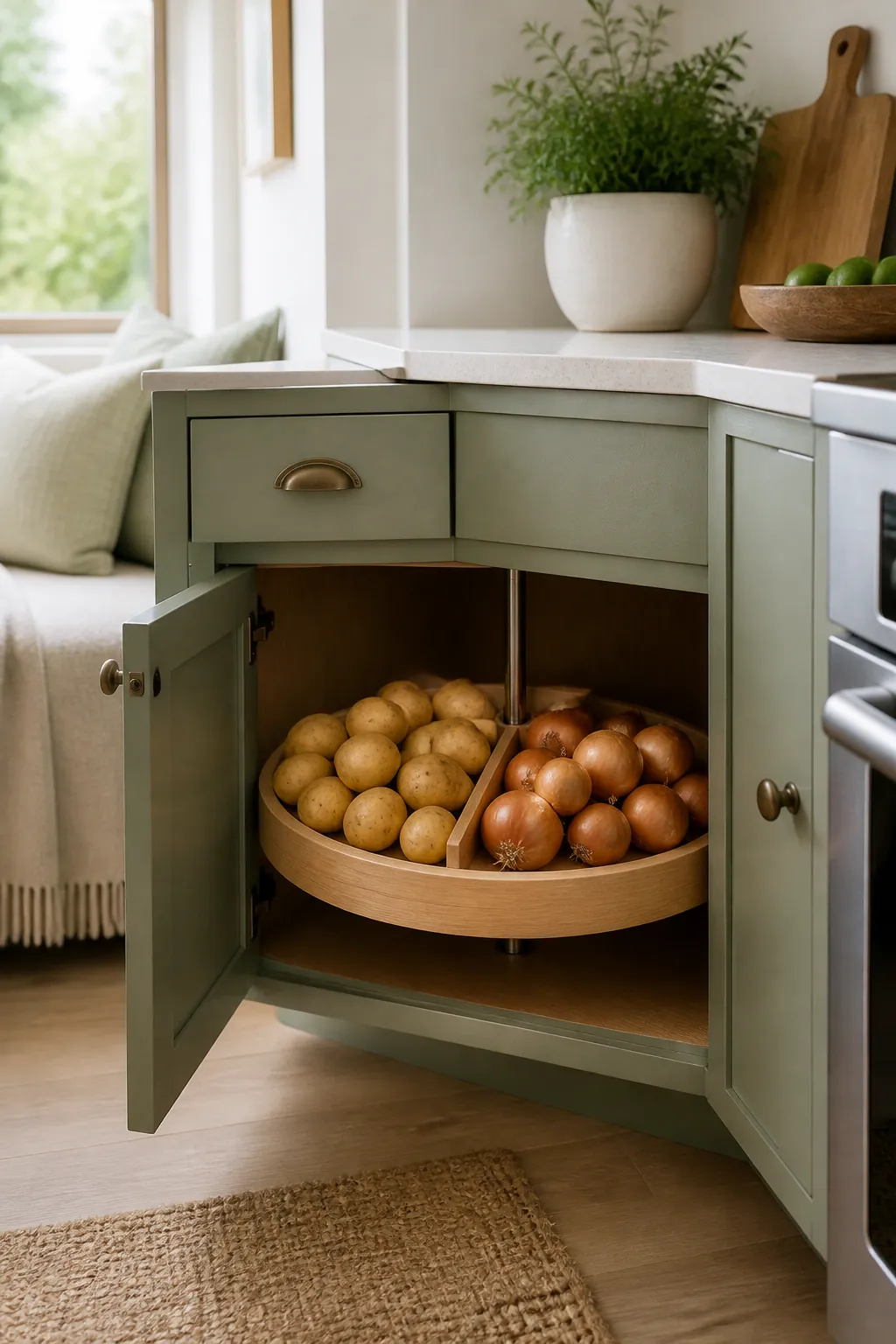
A corner cabinet or the back of a deep lower shelf is where root vegetables disappear and are forgotten, which is exactly how a bag of potatoes turns into a sprouting science project. A turntable lazy Susan organizer spins the back row forward with one turn, so nothing sits unseen long enough to sprout.
Load potatoes on one side and onions on the other rather than mixing them on the same turntable, since the point of a turntable is reach, not storage together, and the moisture problem from idea 3 still applies even when both are spinning on the same disc. A 12-inch turntable comfortably holds a week or two of both without crowding either side.
5. Choose a countertop bin that actually breathes
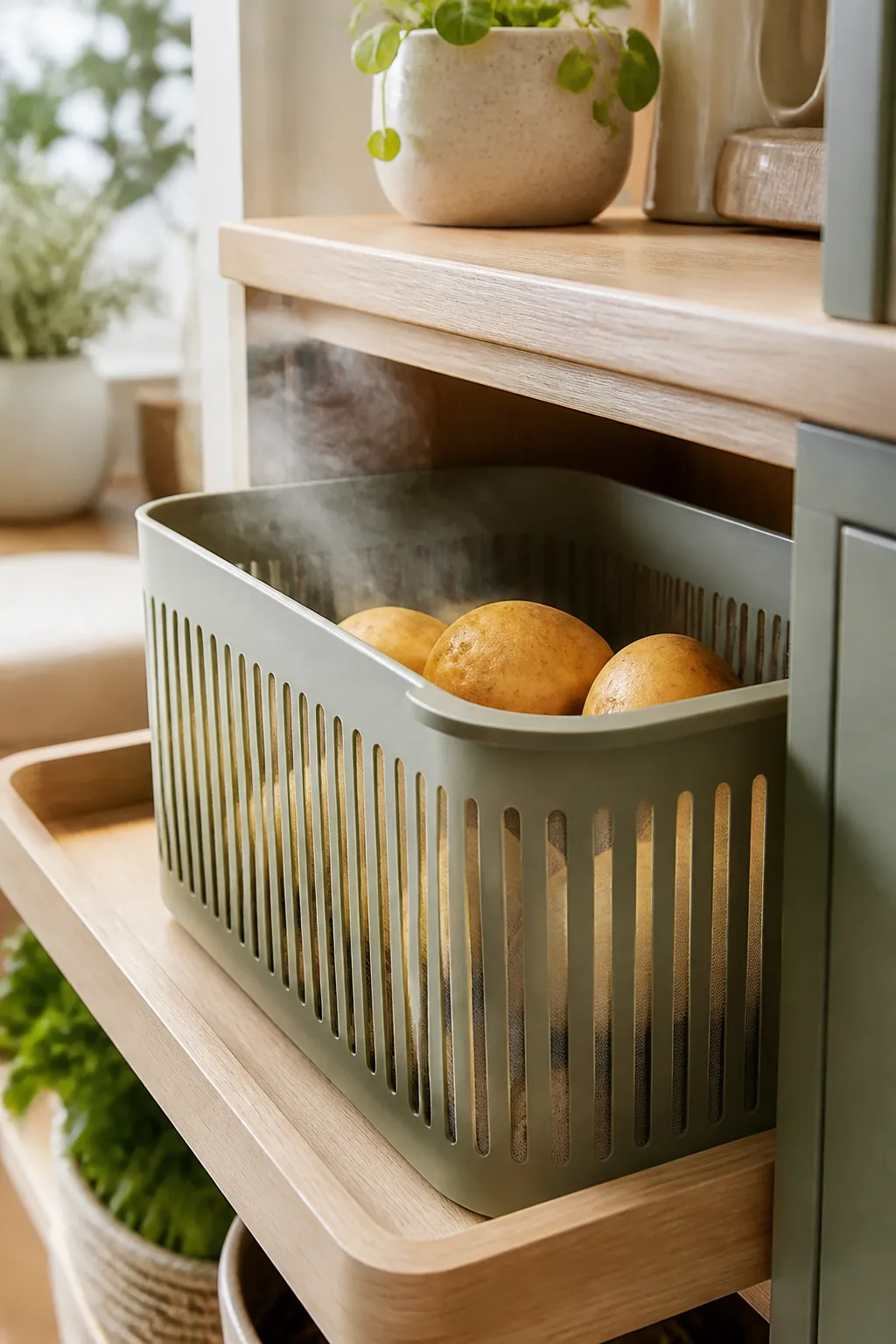
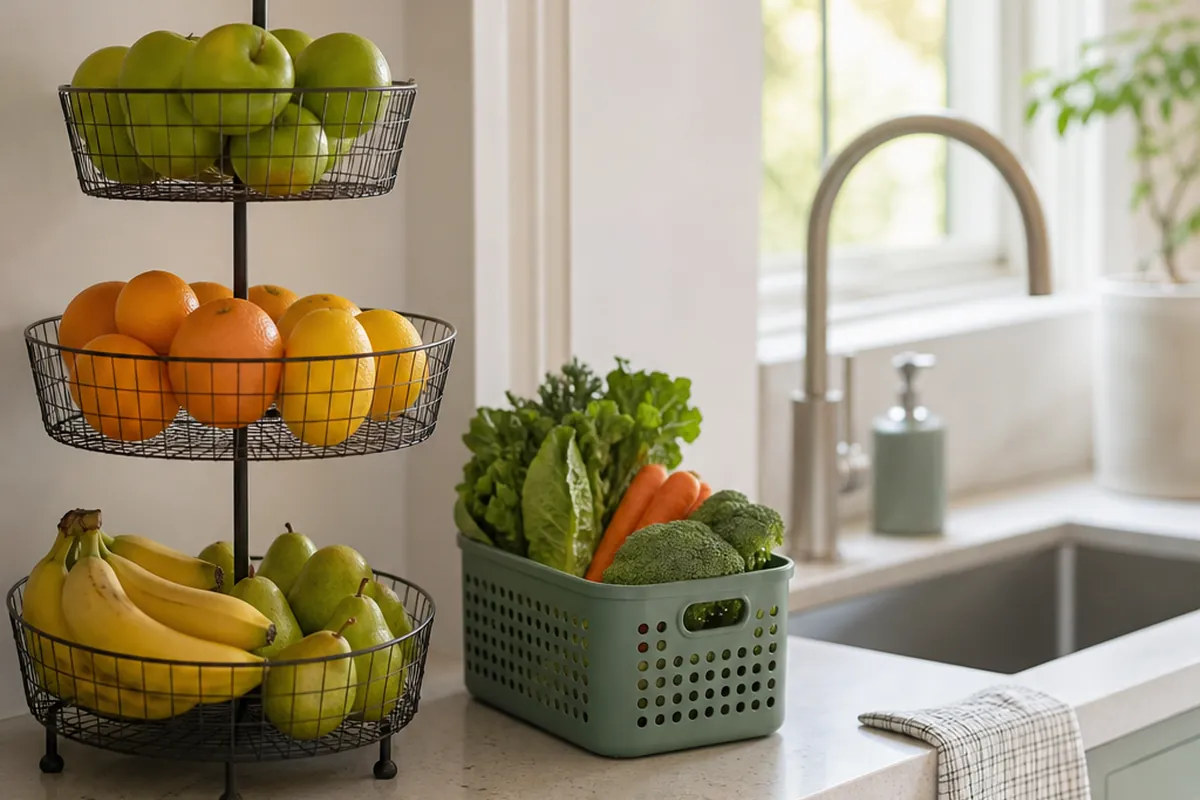
Anything stored in a fully sealed container sweats, and sweating against a vegetable’s skin is what speeds up rot. A countertop bin with slotted, mesh, or perforated sides lets moisture escape instead of condensing back onto the produce, which matters most for potatoes, onions, garlic, and winter squash, all of which last weeks longer with airflow than they do sealed up.
If you only have a solid-sided bin on hand, leave the lid off or crack it rather than sealing it shut. A sealed lid traps the exact moisture the vegetables are shedding, and within a few days you’ll notice it beading on the inside of the lid, which is the same moisture that would otherwise have evaporated away.
6. Give soft fruit a single layer, not a deep pile
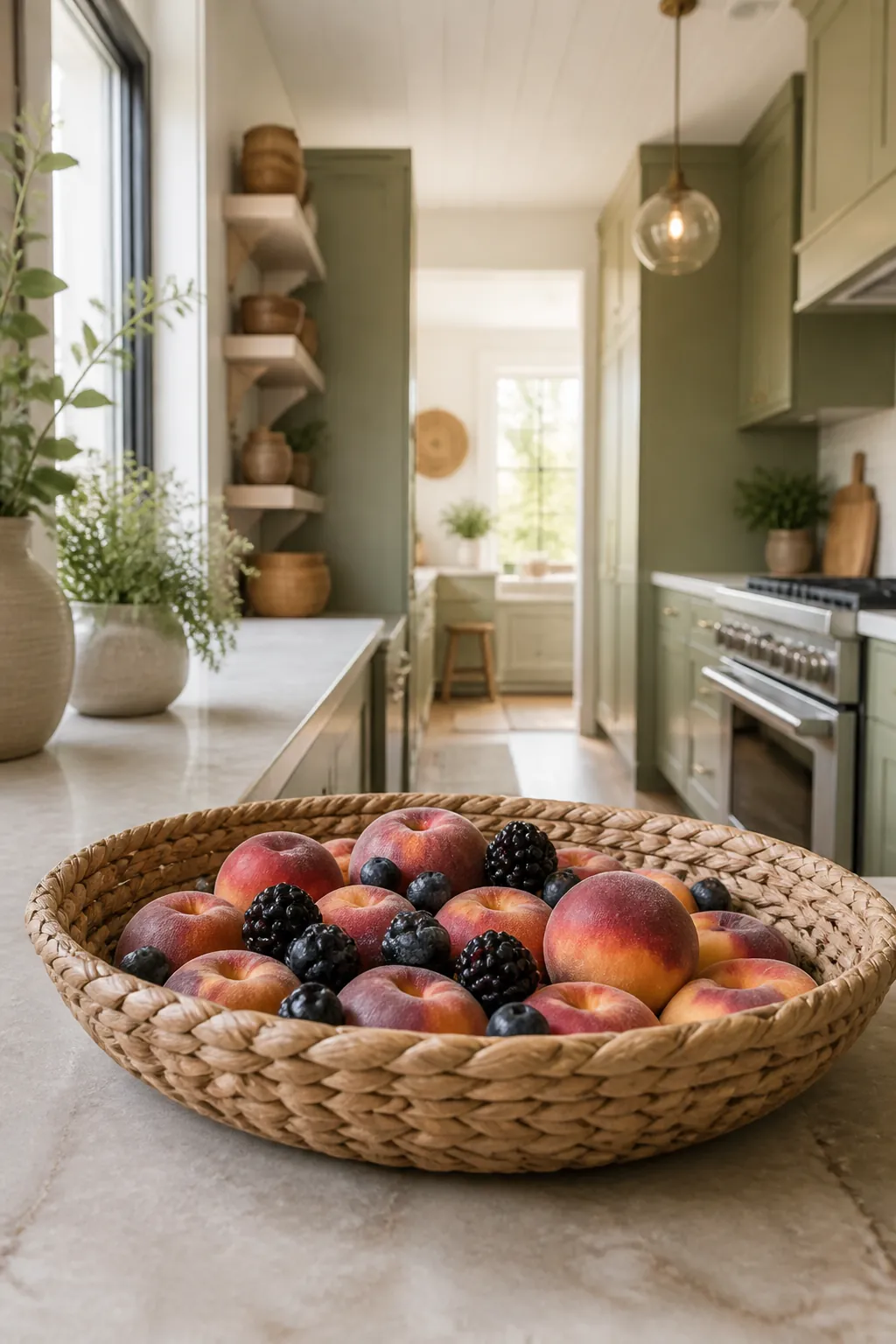
Soft fruit, berries, peaches, and anything with thin skin bruises under its own weight once it’s stacked more than two pieces deep. A shallow basket or tray that spreads fruit into one layer instead of a bowl that piles it up keeps the bottom layer from getting crushed by everything on top.
A large woven storage basket works well here because its wide, shallow shape naturally limits how deep anything inside can stack, unlike a tall bowl that practically invites you to keep piling fruit upward. Reserve the basket for what you’re eating this week and move the rest to the fridge, since a shallow layer only buys so much room.
7. Stack with a tiered stand if the counter footprint is genuinely fixed
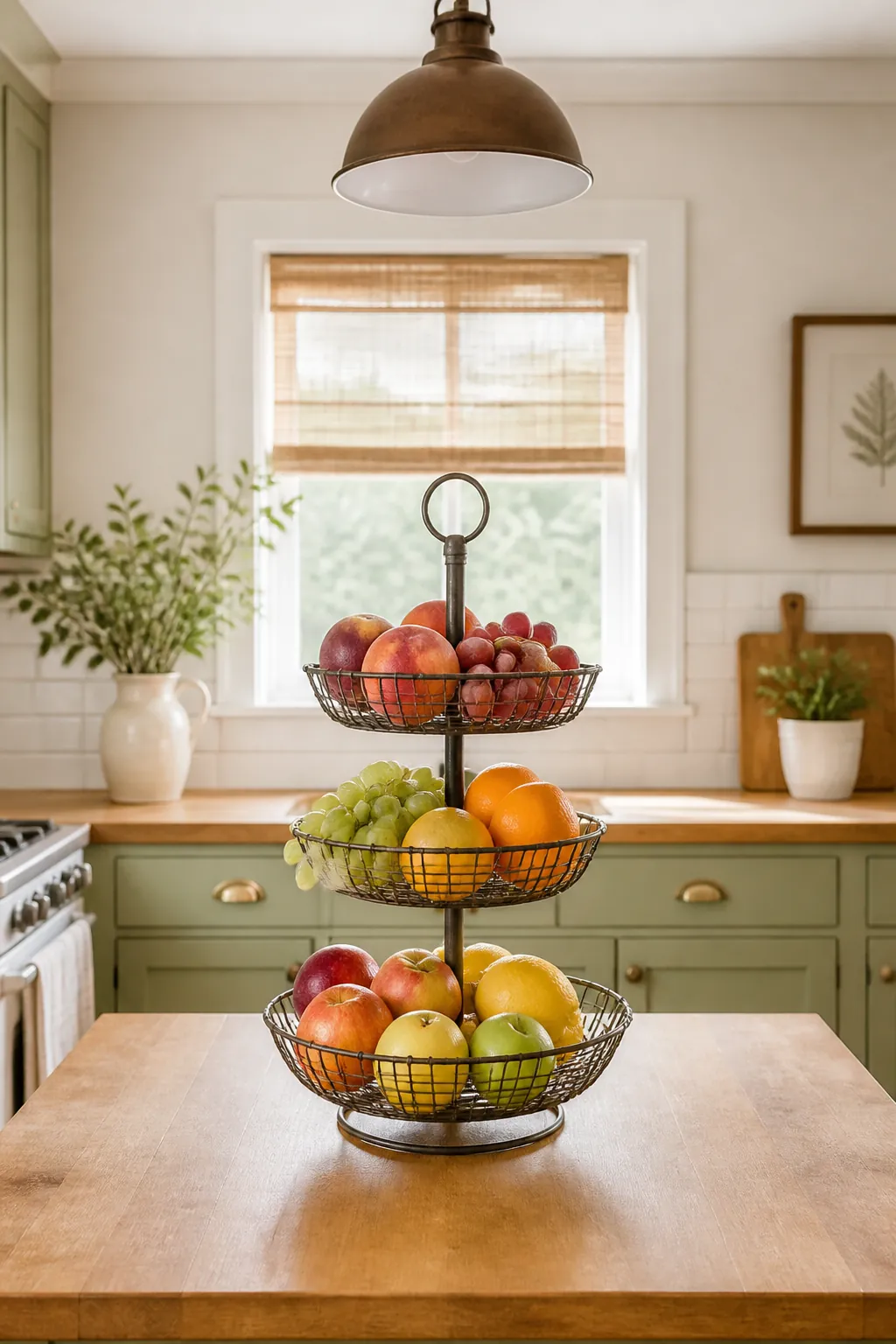
When the counter has exactly one 10-inch circle to spare and nothing more, a tiered stand turns that single footprint into two or three usable levels instead of one. Put the heaviest, most bruise-resistant produce, apples and citrus, on the bottom tier, and reserve the top tier for whatever’s lightest and softest, since anything above it can only press down, not up.
Check the tier spacing before loading it. A gap built for small citrus will crush anything taller, like a banana laid across it, so measure the tallest piece of fruit you regularly buy and make sure at least one tier clears it with room to spare.
8. Keep tomatoes off the fridge shelf and on the counter instead
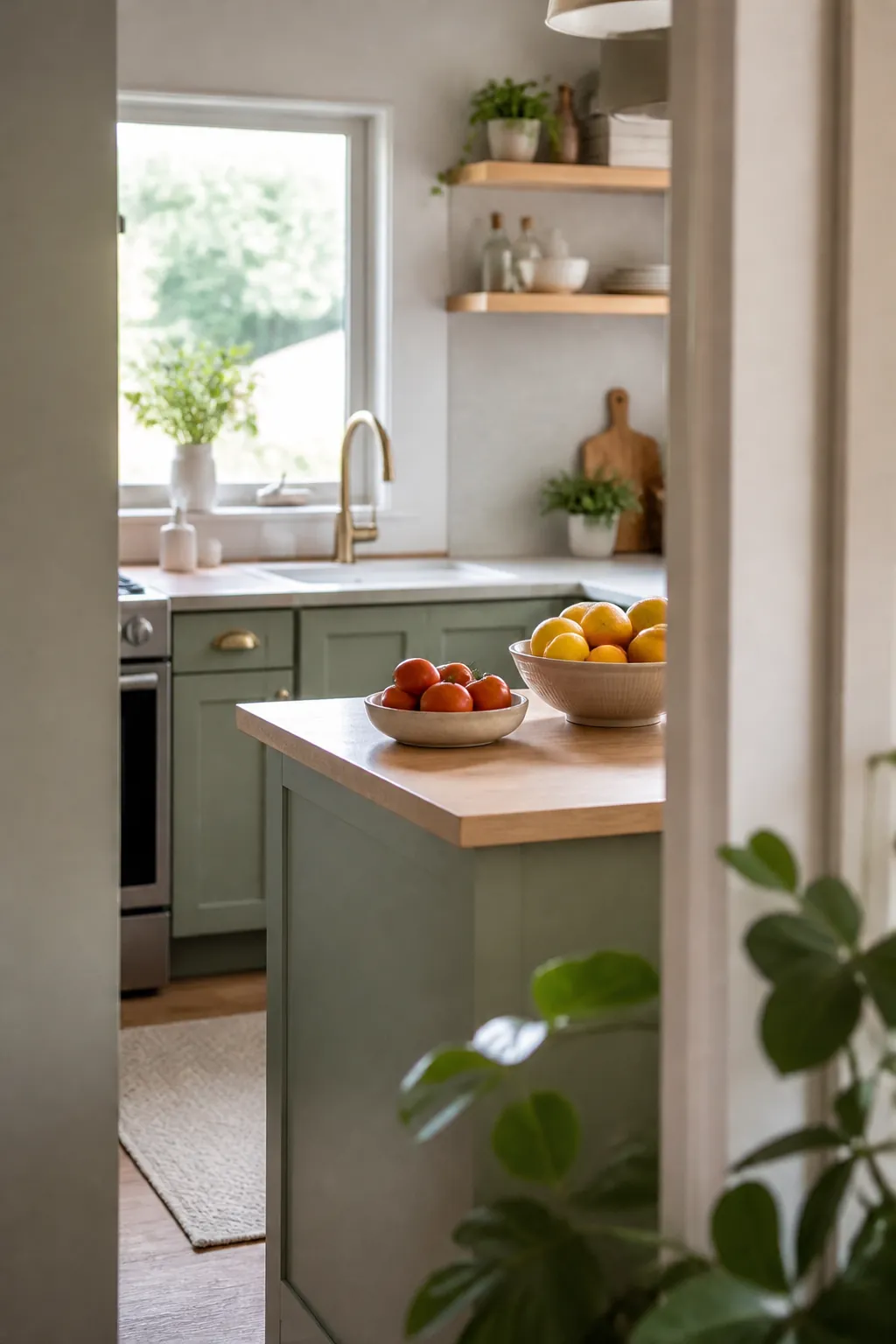
Tomatoes are one of the few common items that actively gets worse in the fridge before they’re cut. Cold breaks down the texture that gives a tomato its snap, leaving it mealy even if the flavor hasn’t faded yet. Keep whole, ripening tomatoes on the counter, stem side down, and only refrigerate what’s already cut or what you won’t use in the next day or two.
Give them their own small dish or corner of the basket rather than mixing them loose with apples or bananas, since a tomato bruises on contact more easily than most people expect, and a bruise on a tomato turns into a soft spot within a day rather than staying cosmetic.
9. Cap the footprint and route the overflow to the fridge
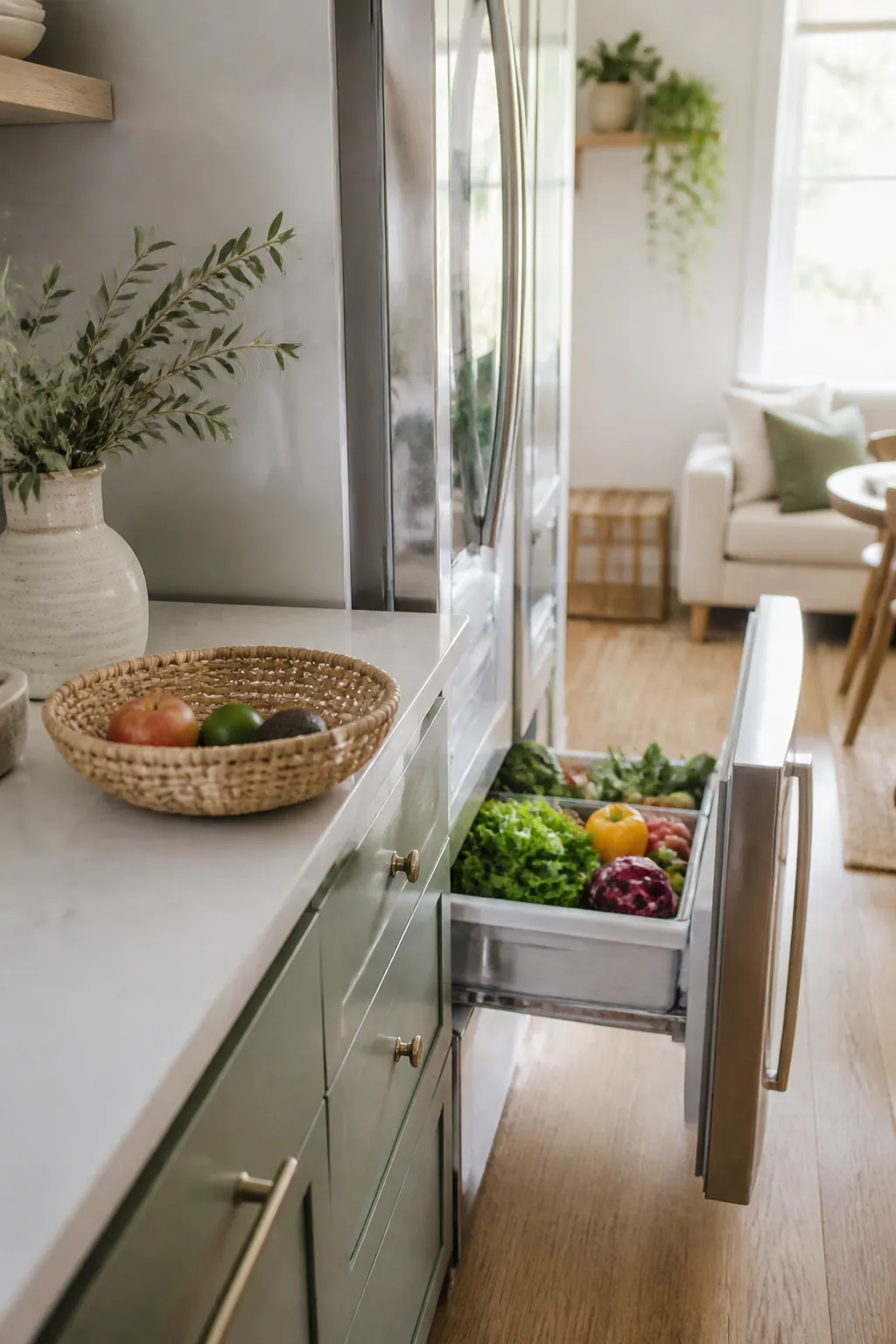
The honest fix for a counter that’s too small for produce storage isn’t a bigger organizer, it’s a smaller pile. Buy what you’ll eat in roughly a week, keep one basket for fruit and one bin for root vegetables, and anything past that goes straight into the fridge’s crisper drawer the day you bring it home rather than waiting on the counter for its turn.
This single habit does more for a cramped counter than any container on this list. A counter holding four days of produce looks and functions completely differently from one holding three weeks of backup groceries, and the containers above only work as well as the volume you’re asking them to hold.
Where to start
Start by separating what needs airflow from what needs darkness. Bananas and soft fruit want a basket with open sides and nothing stacked too deep, potatoes and onions want a vented bin kept apart from each other, and a turntable rescues whichever of those ends up in the back of a cabinet. Cap the total volume at what you’ll eat in a week, and the counter stops being a produce storage problem at all.