A bottle of wine, an opener, a couple of glasses and a cocktail shaker will colonize an entire counter if nobody stops them, because none of those objects has an obvious home in a kitchen built for plates and pans. The fix isn’t a bigger counter, which nobody renting a small kitchen is getting. It’s giving each piece of the bar a specific spot that isn’t the counter, so the only thing that ever sits out is whatever is being poured right now.
1. Measure the bottle and the glass before you buy anything
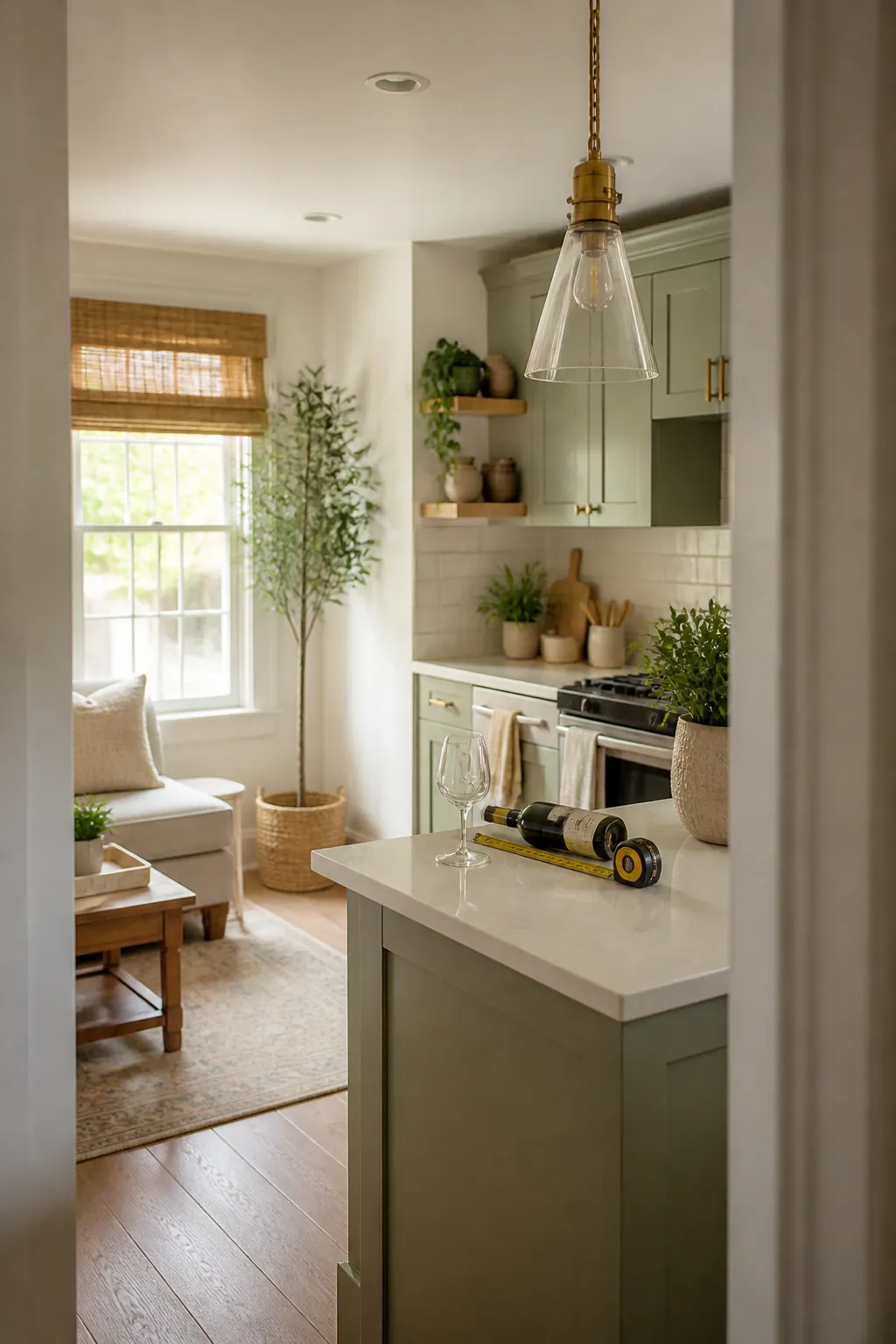
A standard 750ml wine bottle runs about 3 inches across at the base and anywhere from 11.5 to nearly 13 inches tall depending on the shape, with a Burgundy-style bottle usually the tallest of the common shapes. Full, it weighs close to 2.65 pounds, and a sparkling wine bottle runs heavier and wider at the base to hold the internal pressure, often closer to 3.4 inches across. Any rack, shelf, or cabinet slot has to clear the tallest bottle in the house, not the average one, or the one oversized gift bottle ends up permanently on the counter because nothing else fits it.
Stemware has the opposite problem: the stress point is the bowl, not the stem. A typical wine glass bowl runs 3 to 4 inches across at its widest, and that’s the number that has to clear whatever holder or shelf gap you’re measuring, not the narrow foot that makes the glass look like it would fit anywhere.
2. Hang the glasses under a cabinet instead of giving them a shelf
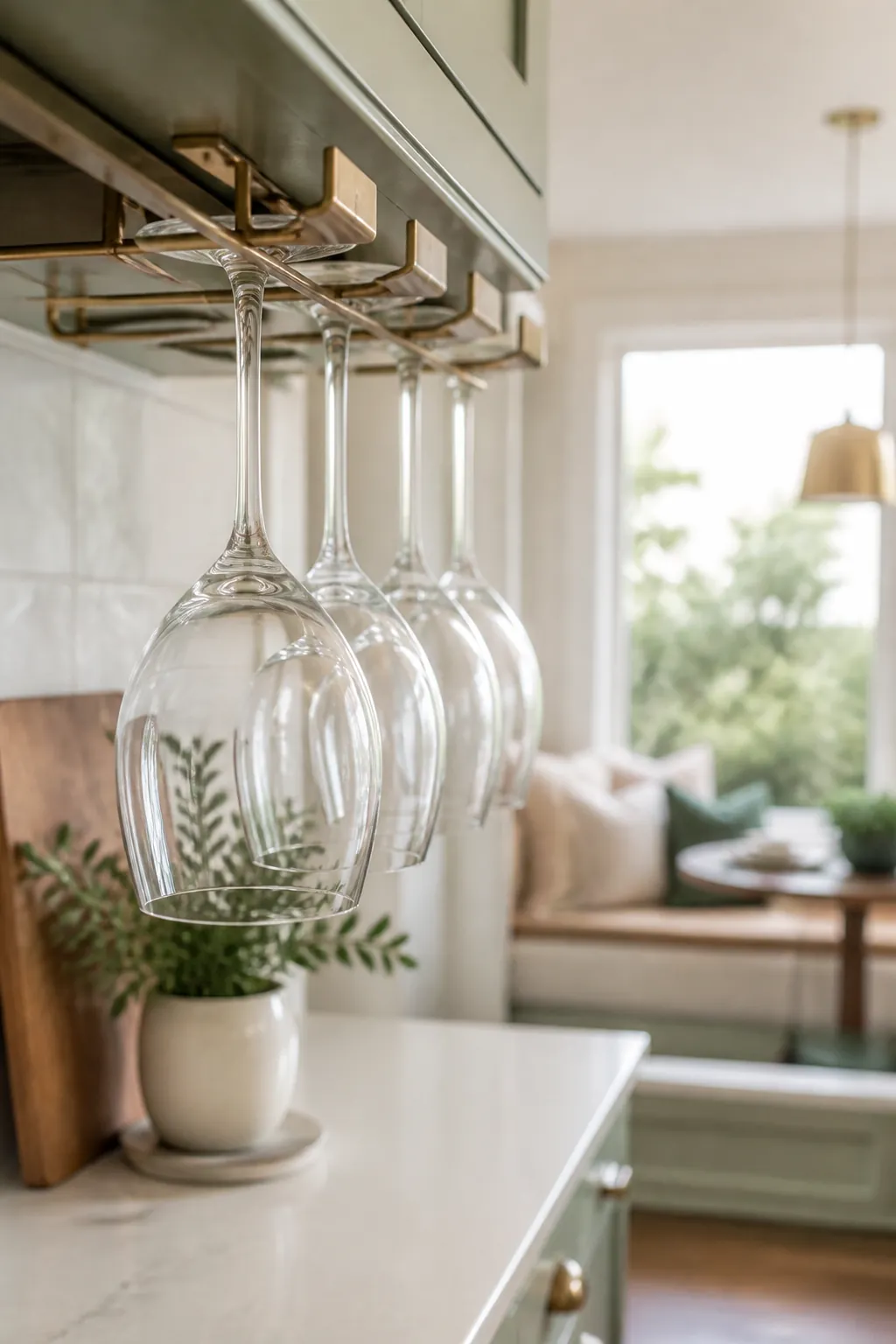
An under-cabinet stemware holder mounts to the underside of a wall cabinet with adhesive strips or a spring clamp, no drilling required, and holds each glass upside down by the stem so the bowl hangs in the air below the cabinet rather than sitting on a shelf. That move alone can free an entire shelf that four or five wine glasses were otherwise claiming.
The measurement that matters is the gap between the bottom of the cabinet and whatever sits on the counter below it. You need roughly 9 to 10 inches of clear space for a hanging bowl to miss a coffee machine, a toaster, or the backsplash. Measure that gap before ordering, because a glass that brushes the countertop every time the cabinet door swings will chip within a month.
3. Build a narrow bar nook with a rolling cart
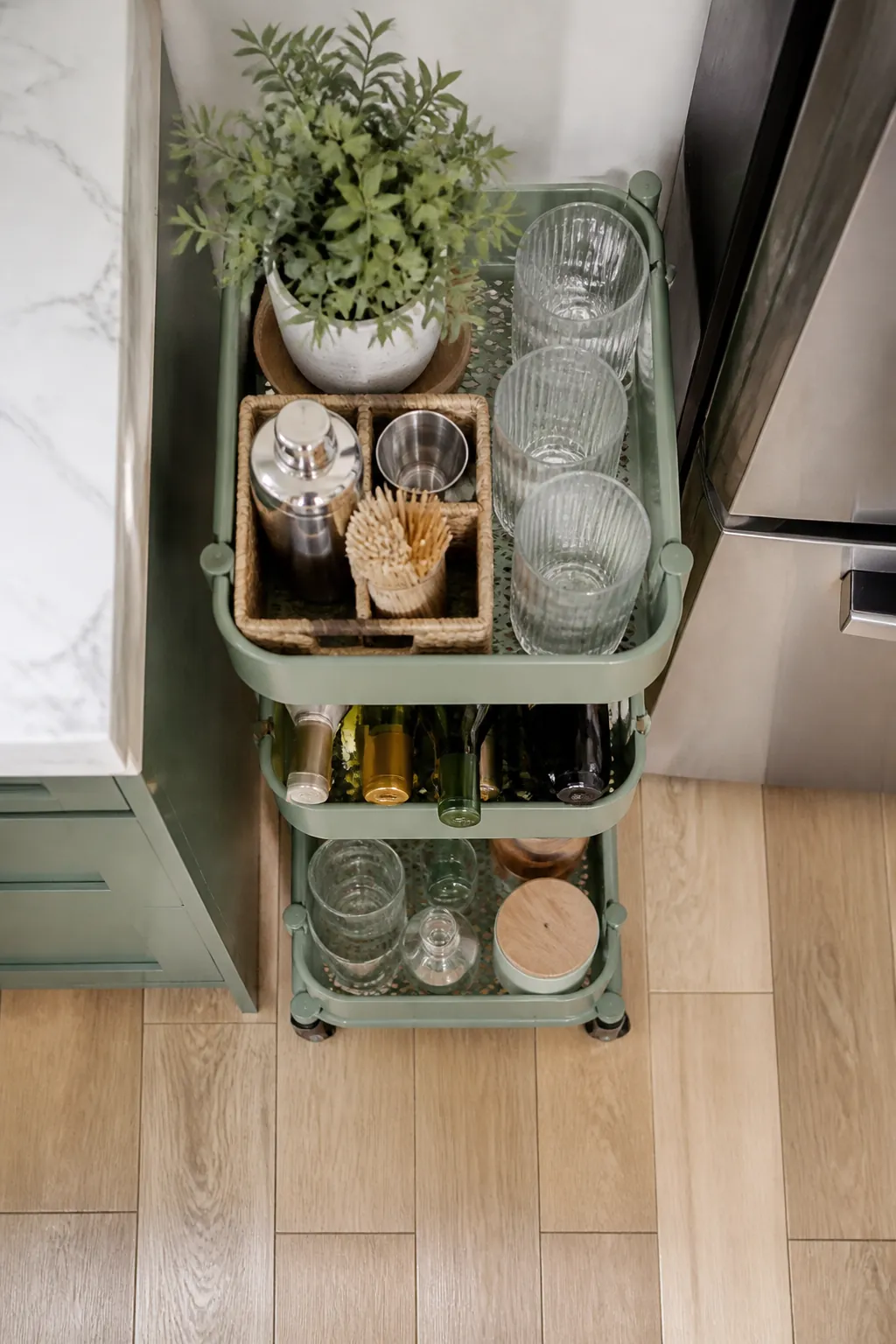
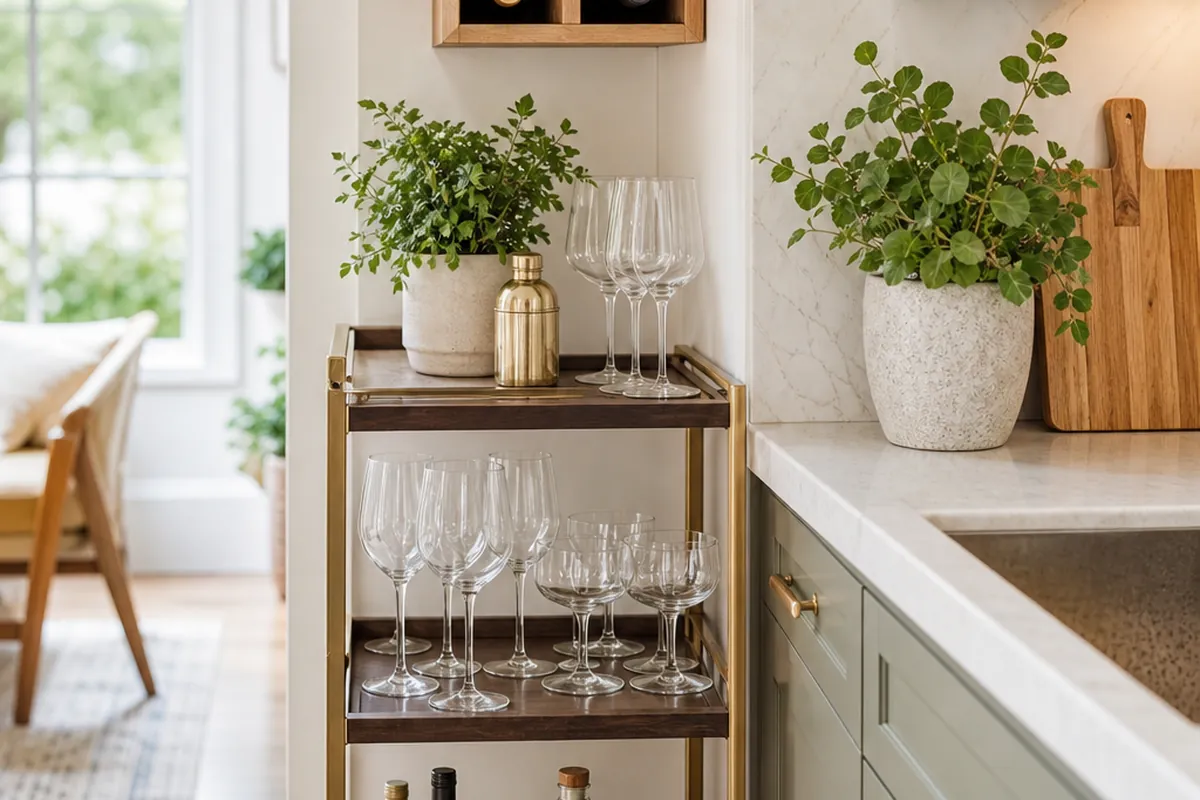
When there’s no cabinet to spare at all, the honest answer is to give the bar its own furniture instead of fighting for kitchen storage. A 3-tier rolling cart at around 10 inches wide fits the dead gap beside a fridge or at the end of a counter run, and the three tiers separate bottles, glasses, and tools without any of them touching.
Load it bottom-heavy. Bottles stored upright on the top tier raise the cart’s center of gravity, and a loaded cart that gets bumped while being wheeled out for cleaning will tip. Put the glasses and lighter tools on top, bottles on the middle or bottom tier lying on their sides in a small tray or wine tote, and let the locking wheels hold it still while you’re actually pouring.
4. Store bottles on their side, not standing up
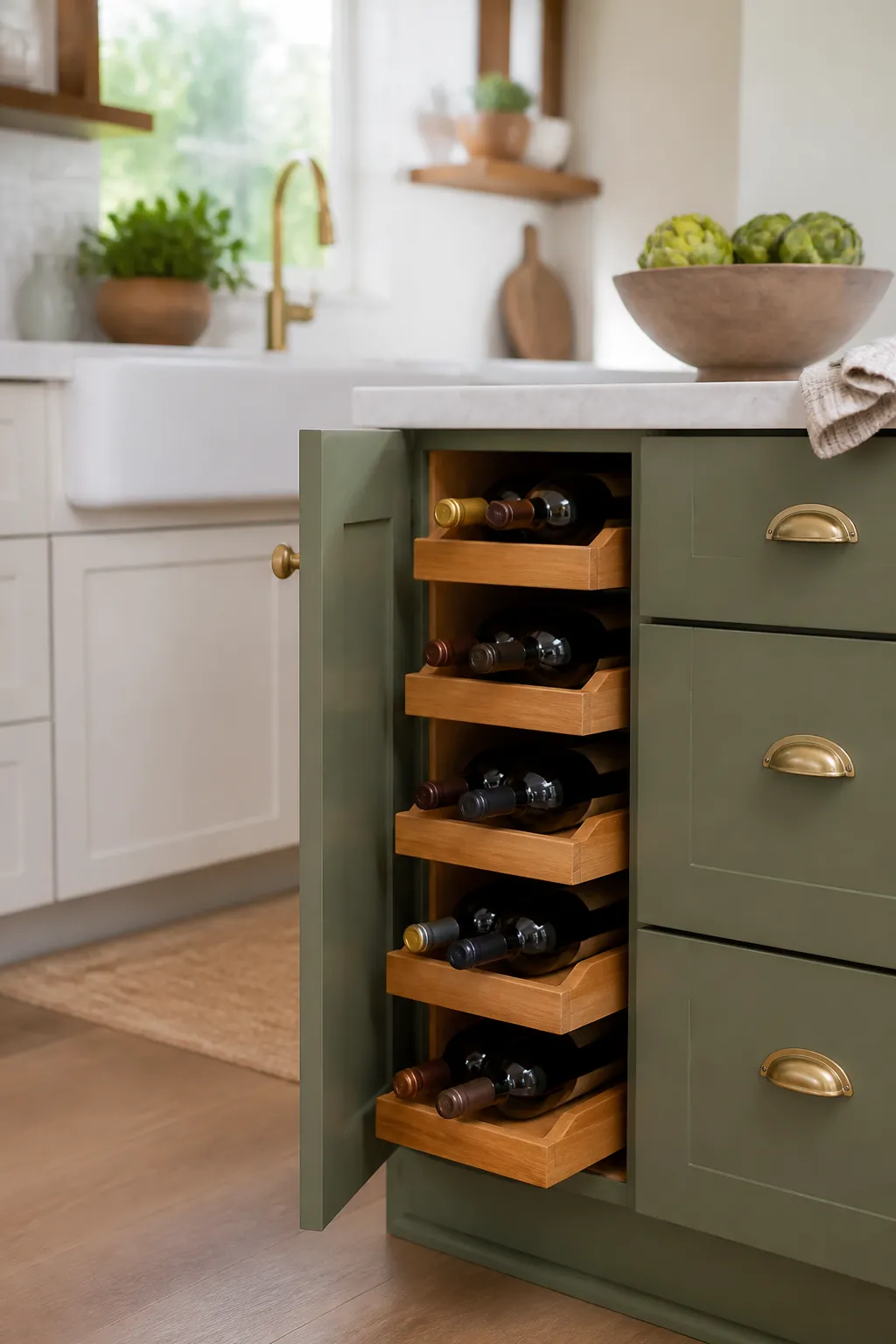
Lying a bottle down instead of standing it up isn’t about cork tradition, it’s about vertical space. A bottle on its side needs about 3.5 inches of shelf height and roughly 12 inches of depth to lie flat, versus up to nearly 13 inches of clearance standing up. That difference is often the gap between fitting four bottles on a cabinet shelf and fitting one.
The trade-off is that a loose bottle on its side rolls the moment the cabinet door opens. A shallow tray, a wine tote bag, or even a rolled kitchen towel on either side keeps it from sliding into whatever’s on the shelf next to it. Screw-cap bottles don’t need the cork kept moist the way old wisdom claims, but the space savings from lying them down apply exactly the same.
5. Give the corner turntable to mixers and garnishes, not bottles
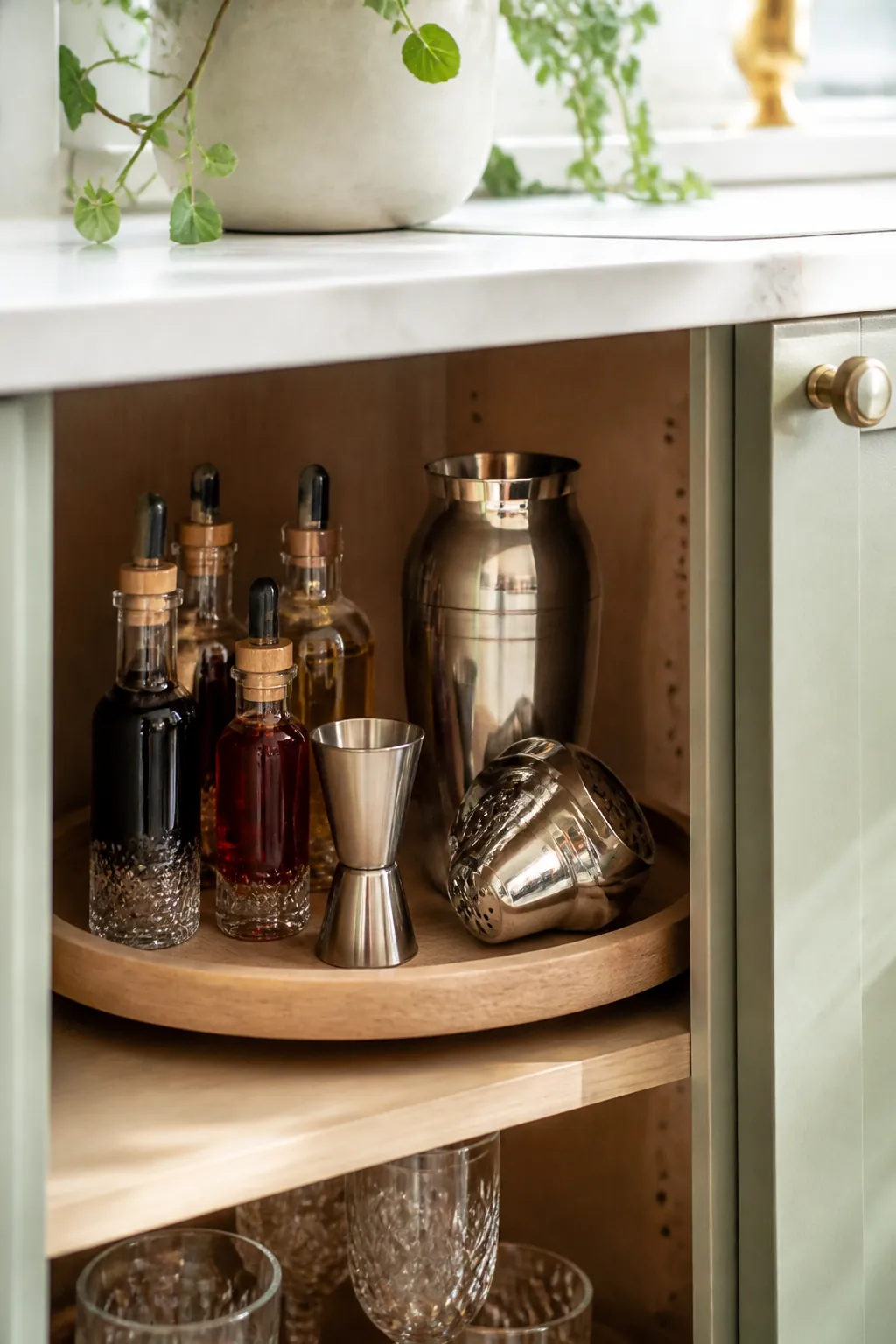
Corner cabinets waste more depth than any other spot in a small kitchen, and that depth is better used for the small bar items that get buried and forgotten than for anything bottle-shaped. A turntable organizer spins syrups, bitters, a jigger, and a cocktail shaker’s loose parts toward the cabinet opening instead of leaving them eighteen inches back where a hand can’t reach without emptying the shelf.
Keep bottles off the turntable itself if they’re taller than its rim. A bottle that overhangs the edge catches on the cabinet frame mid-spin and stalls the whole thing, which defeats the point of a turntable in the first place.
6. Double a shelf with a riser for stacked glasses or short bottles
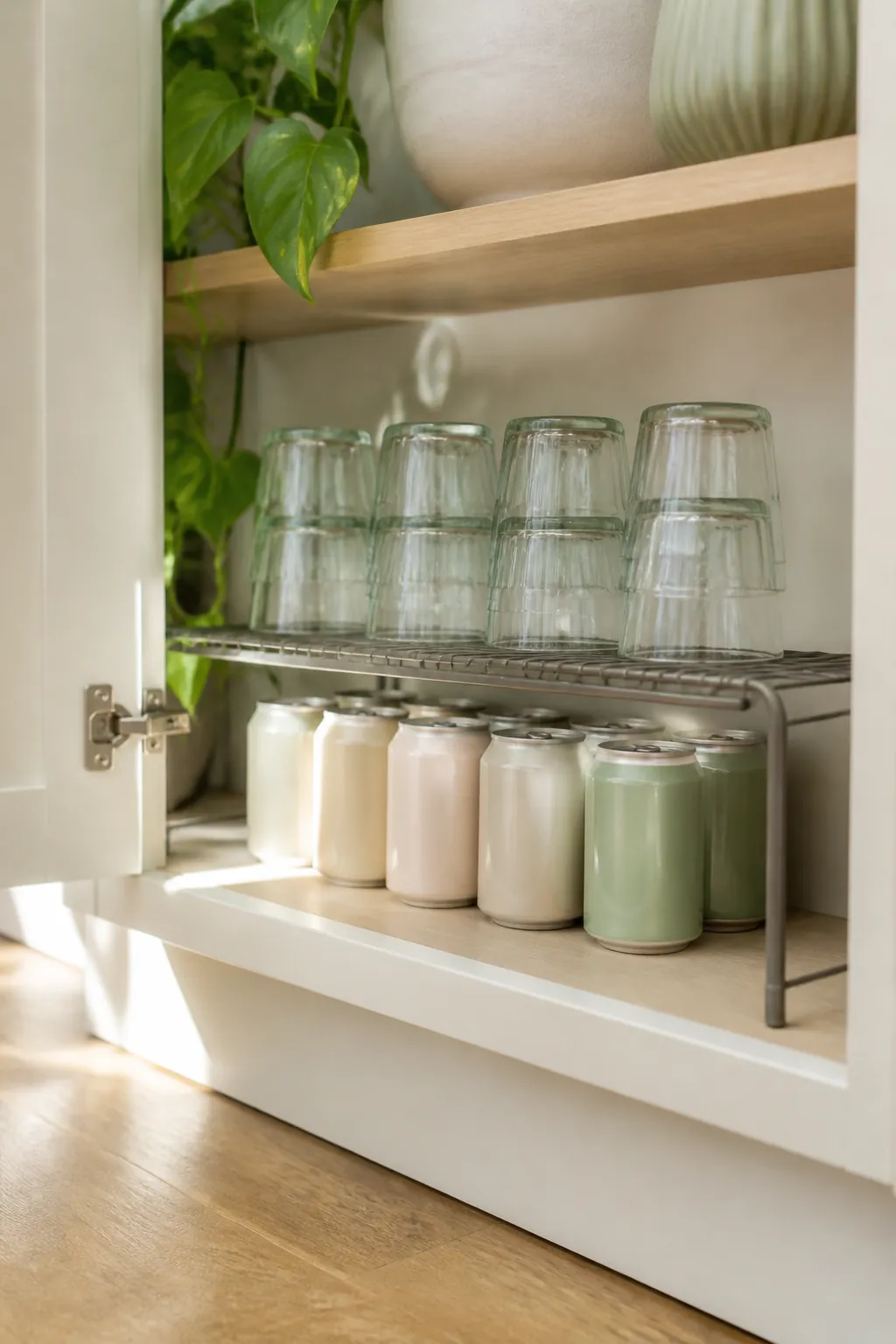
An expandable cabinet shelf riser turns one cabinet shelf into two tiers, the same trick it does for plates, and it works well for stacking short tumblers or lining up canned mixers underneath whatever’s tall enough to need the full shelf height above. The legs extend to fit a range of cabinet widths, and it lifts straight out when you move, which matters in a rental.
Reserve the riser for anything under about 6 inches tall. A standard wine bottle at 11 to 13 inches won’t clear the gap underneath once the riser’s second tier is in place, so this tool is for the short stuff, not the bottles themselves.
7. Be honest about what a countertop wine rack actually costs you
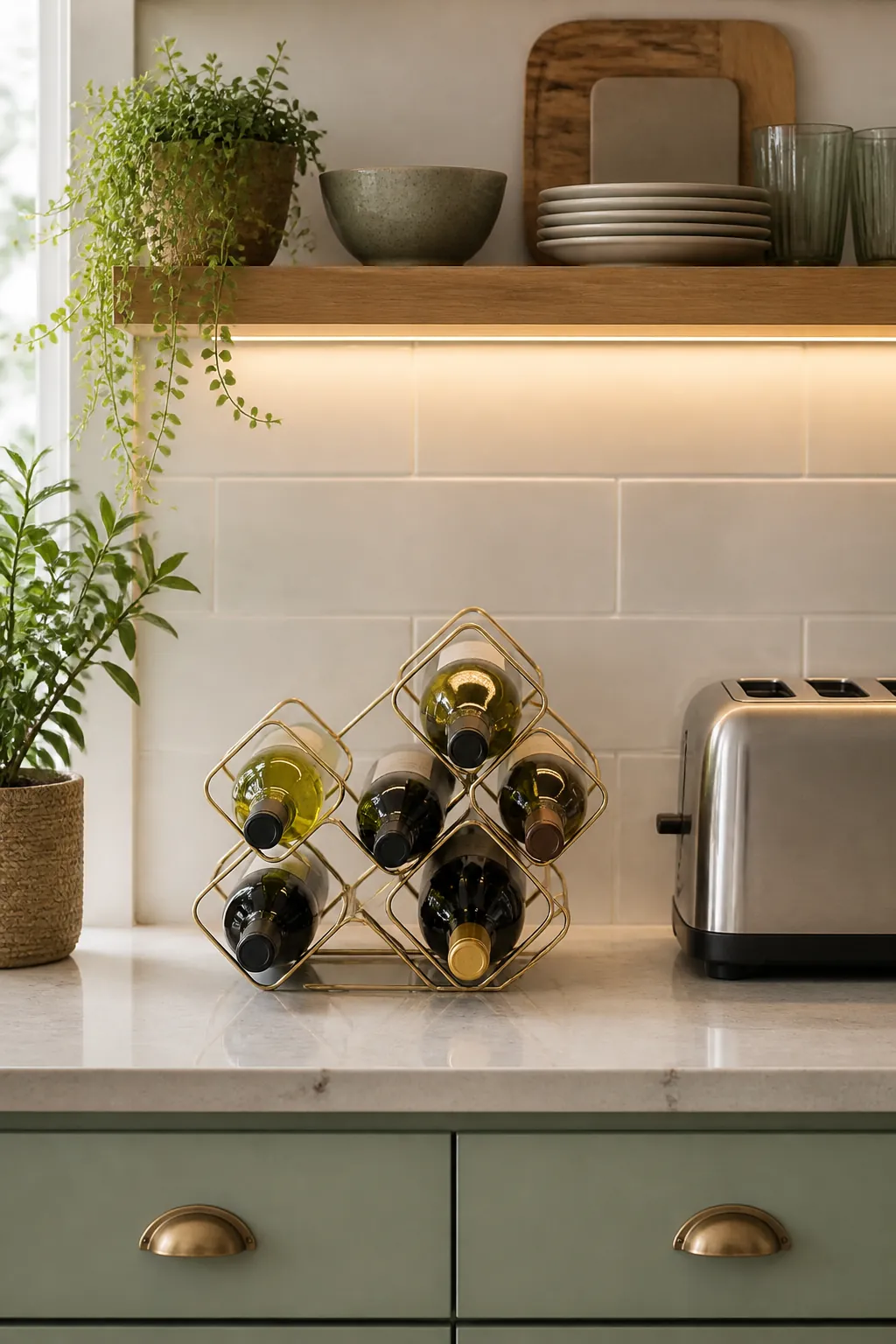
A countertop wine rack holding six to eight bottles at an angle looks like the obvious fix, and it’s worth being clear-eyed about what it actually takes: roughly a 10 to 12 inch square of counter, permanently, whether the rack is full or nearly empty. In a kitchen where that same square is also where the toaster or the knife block lives, the rack usually loses.
The angled wire versions have a second failure mode worth knowing before you buy one: a rack that’s half full is unbalanced, since the weight sits unevenly across the tiers, and a bump from a passing elbow sends bottles rolling off the counter rather than staying put. If the counter genuinely has a free corner that nothing else wants, a rack can work. If it’s a stretch, the cabinet methods above do the same job without the permanent footprint.
8. Put bar tools in one small caddy instead of a drawer
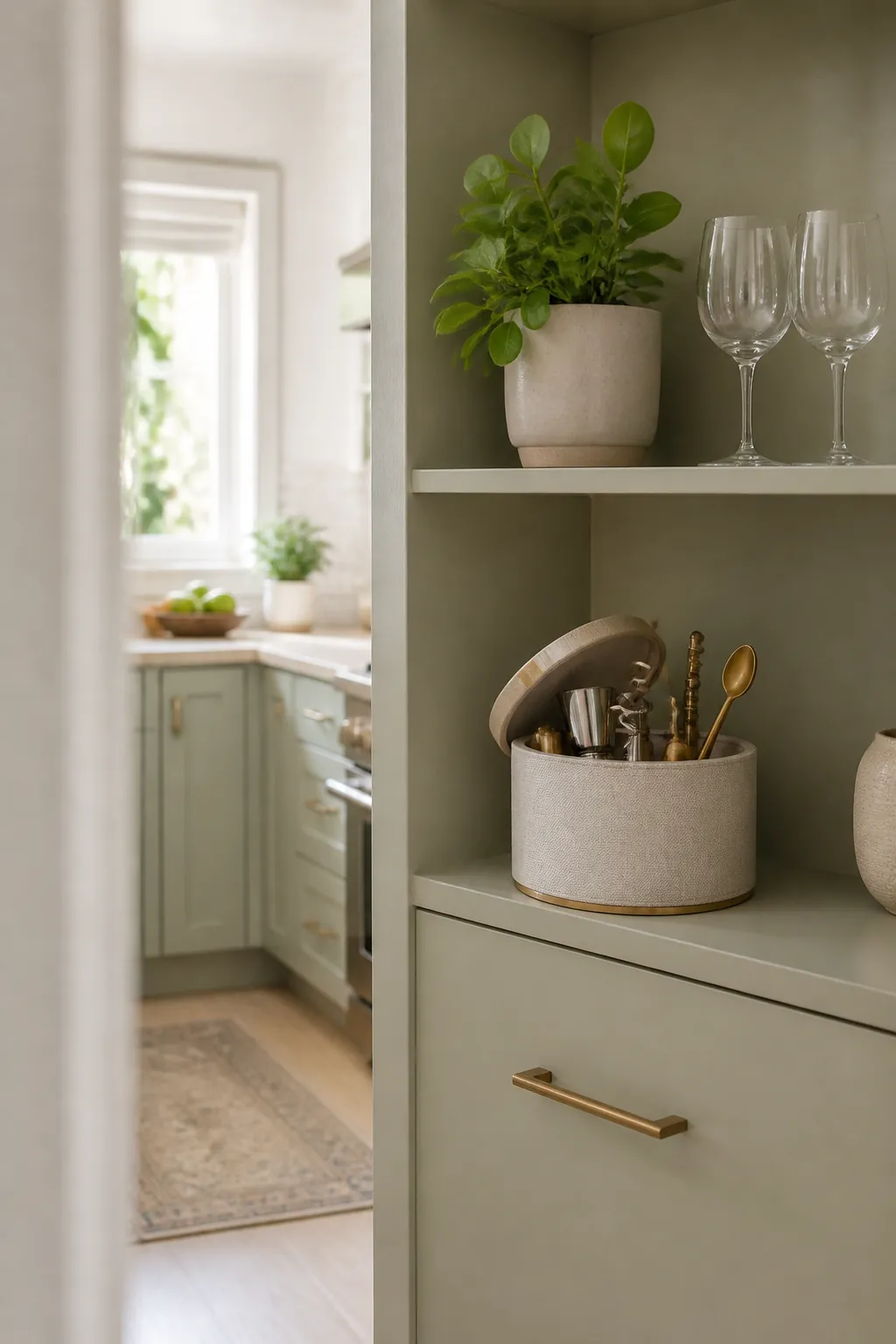
A corkscrew, a bottle stopper, a jigger, and a bar spoon take up almost no space individually, which is exactly why they scatter loose inside a kitchen drawer and vanish. A small lidded caddy around 6 by 6 inches, kept in the same cabinet as the glasses or bottles, keeps the whole set together and visible instead of mixed in with rubber bands and takeout menus.
The habit that makes this stick: everything goes back in the caddy, not the drawer, the moment it’s rinsed. A tool that misses the caddy once usually stays missing for a month.
9. Rotate the occasional bar gear out of the kitchen
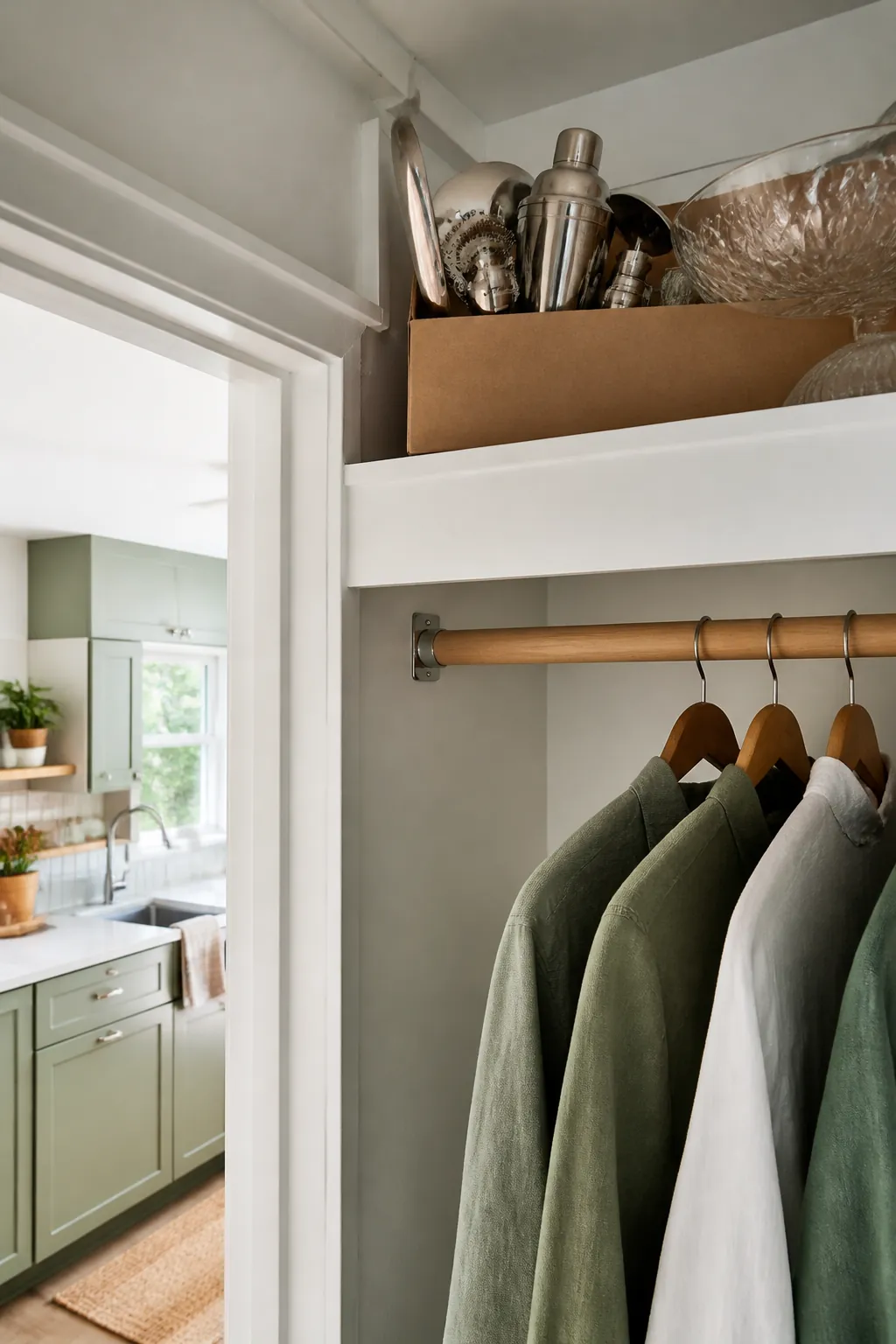
A full cocktail shaker set, a punch bowl, or a set of champagne flutes used a handful of times a year doesn’t need to compete with daily glasses and bottles for cabinet space. Box it, label it, and move it to a closet shelf or a bin under a bed instead of letting it sit in the kitchen eleven months out of twelve.
Champagne flutes are the fragile exception worth padding before they go anywhere: their narrow stems snap if they’re boxed loose and allowed to knock together on the trip to the closet, so wrap each one in a dish towel or stand them back in the slotted tray they came in rather than dropping six of them into a bin.
Clearing that one box of occasional-use gear out of the kitchen usually opens up more usable shelf space than any organizer bought to work around it, which is the same principle that helps with reclaiming counter space when there’s none to spare.
Where to start
Start with the glasses, since an under-cabinet holder frees a whole shelf for almost no effort, then decide whether the bottles go sideways on that freed shelf or onto a rolling cart if there’s no cabinet to spare at all. The turntable and the shelf riser are for the smaller stuff once the big items have a home. A countertop rack only belongs in the plan if there’s counter to spare that nothing else needs, and for most small kitchens, there isn’t.