If reaching for the milk means excavating past three condiment jars and a half-empty yogurt, your fridge isn’t too small. It’s just working against you. The best fridge organization ideas for small spaces have almost nothing to do with buying a bigger appliance and everything to do with using the cubic inches you already own. Right now, half a shelf sits empty above your short jars, the door bins hold three things when they could hold ten, and something leafy is quietly dissolving in the back where no one can see it.
Here are fifteen changes that genuinely free up room, listed roughly in the order I’d tackle them.
Start with zones, not shelves
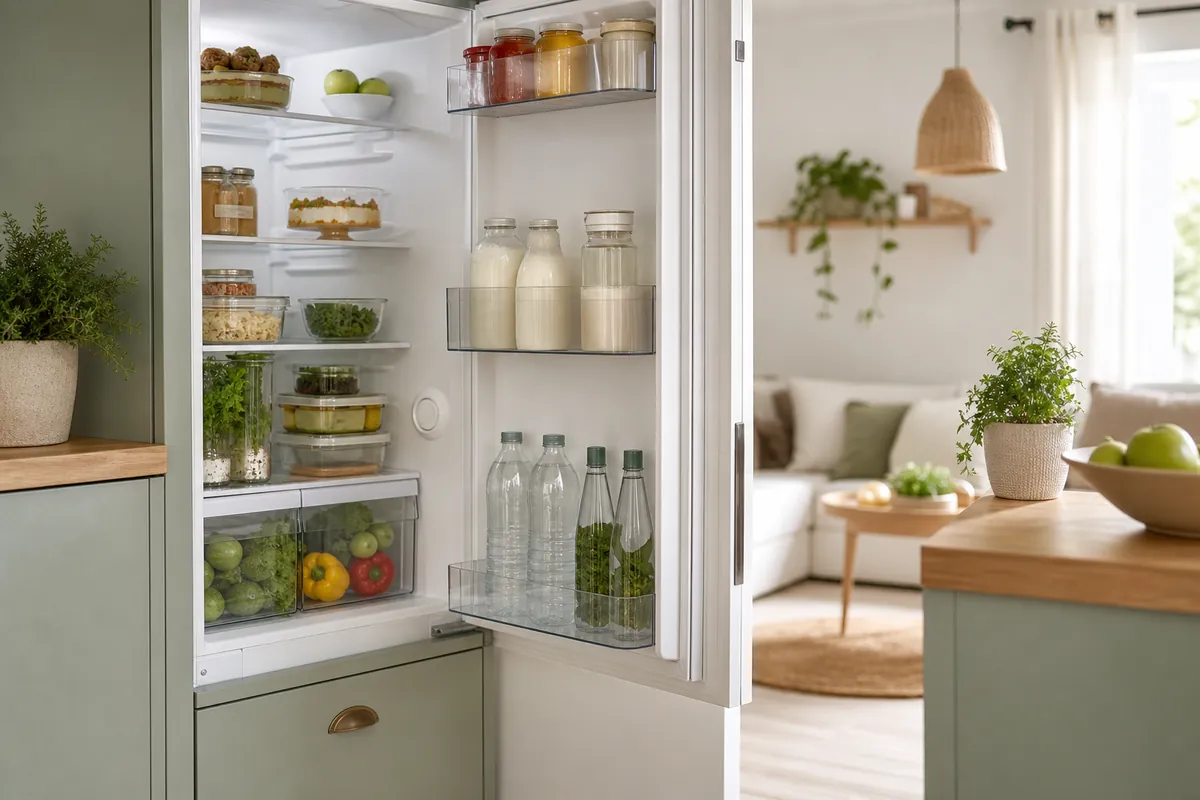
Before you buy a single bin, decide what goes where and commit to it. A fridge without zones fills up at random, which is exactly how you end up with mustard on three different shelves and no idea what’s actually in there.
1. Give every category a home
Drinks up top, leftovers at eye level, raw meat on the bottom shelf where it’s coldest and can’t drip onto anything. Dairy goes on a middle shelf, not the door, because the door swings warm every time you open it. Once each category has an address, you stop double-buying and you can spot empty space at a glance.
2. Pull everything forward
The back six inches of most shelves is where food goes to die. Build the habit of dragging items to the front edge whenever you close the door. That gap you open up at the back stops being a graveyard for expired hot sauce and becomes real overflow space.
Turn dead air into drawers with bins
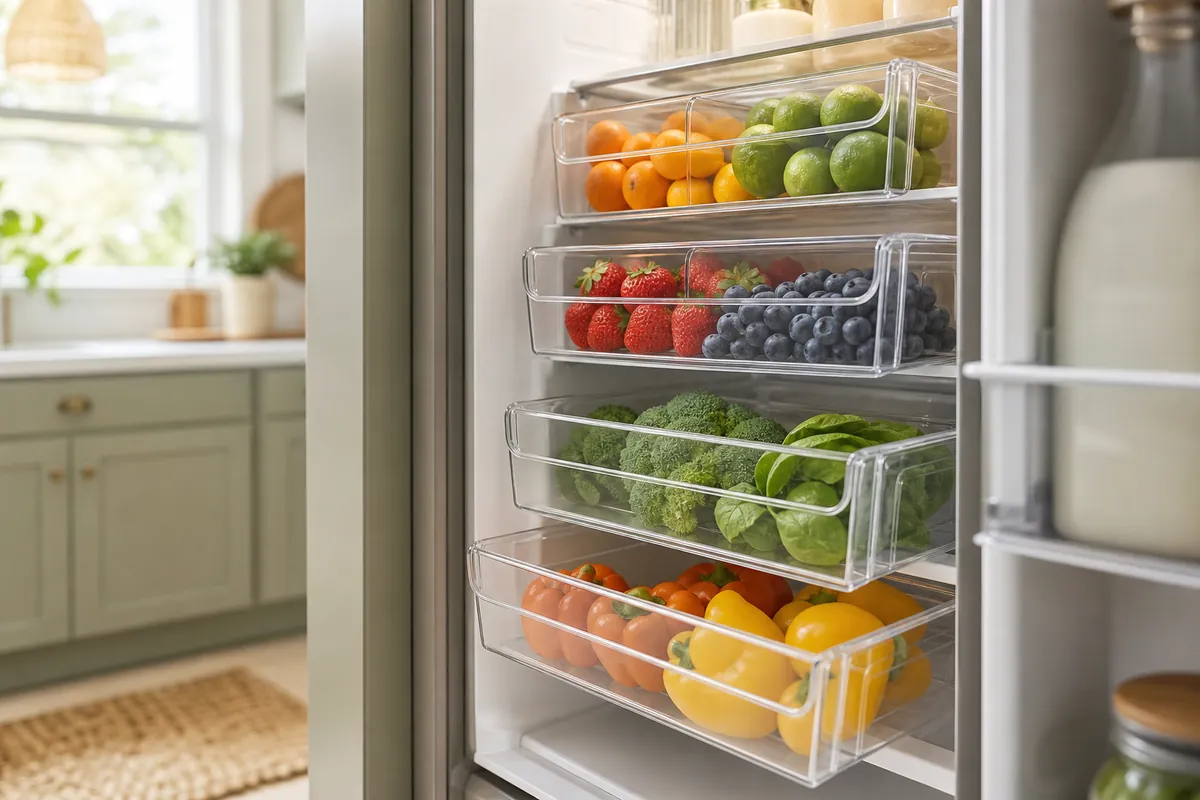
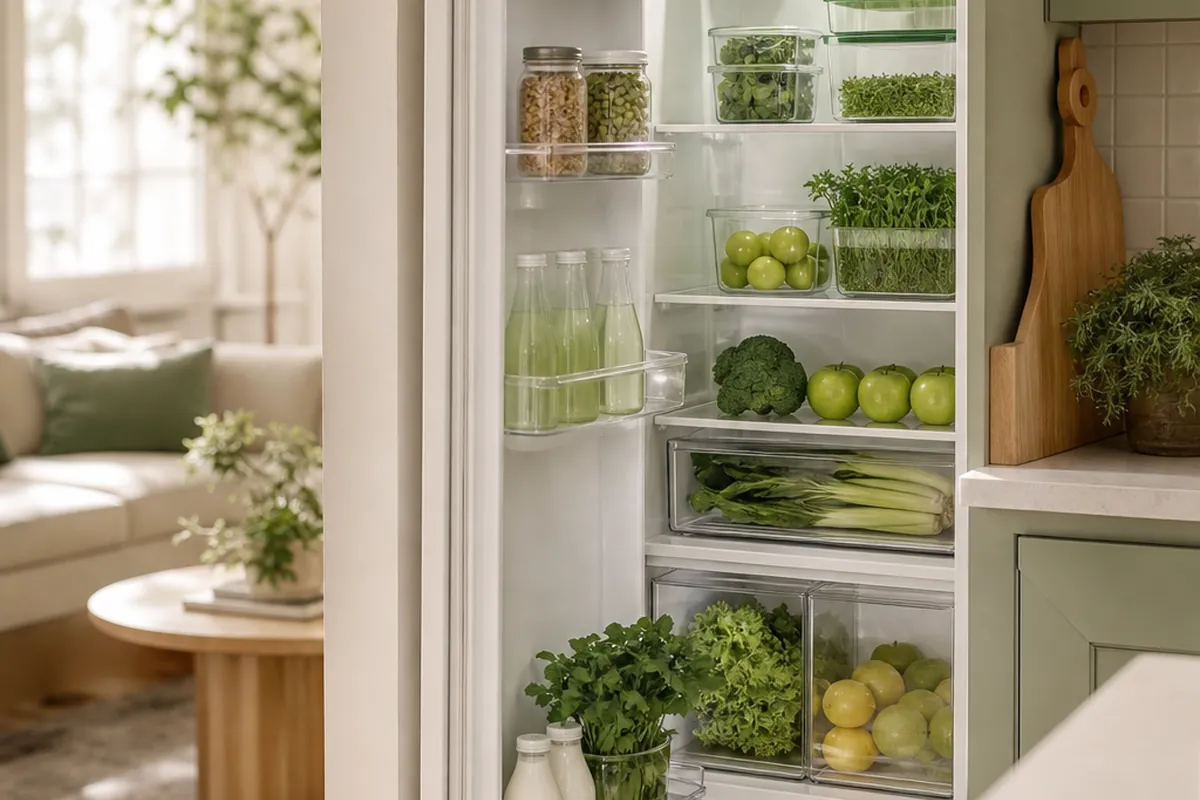
This is the single biggest upgrade for a cramped fridge. Open shelving wastes vertical space and buries things behind other things. Bins solve both problems at once.
3. Stack clear bins to reclaim vertical inches
A set of clear stackable fridge bins does two jobs: it groups like items so you can grab a whole category in one pull, and it lets you build upward into the air above short containers. Six bins usually covers snacks, cheese, deli meat, yogurt, condiment packets, and a catch-all. Clear is the whole point here. If you can’t see inside, you won’t use it, and it becomes another junk drawer.
4. Make an “eat me first” bin
Dedicate one bin near the front to leftovers and produce that’s on its way out. This habit cuts food waste better than any fancy container, because aging food stops disappearing into the back corners where it rots unnoticed.
5. Use a deep bin as a slide-out drawer
On a deep shelf, a bin becomes a pull-out drawer. Instead of unloading three jars to reach the back, you slide the whole bin forward, take what you need, and slide it back. It’s a small move that saves real time every single day.
Tame the door and the loose cans
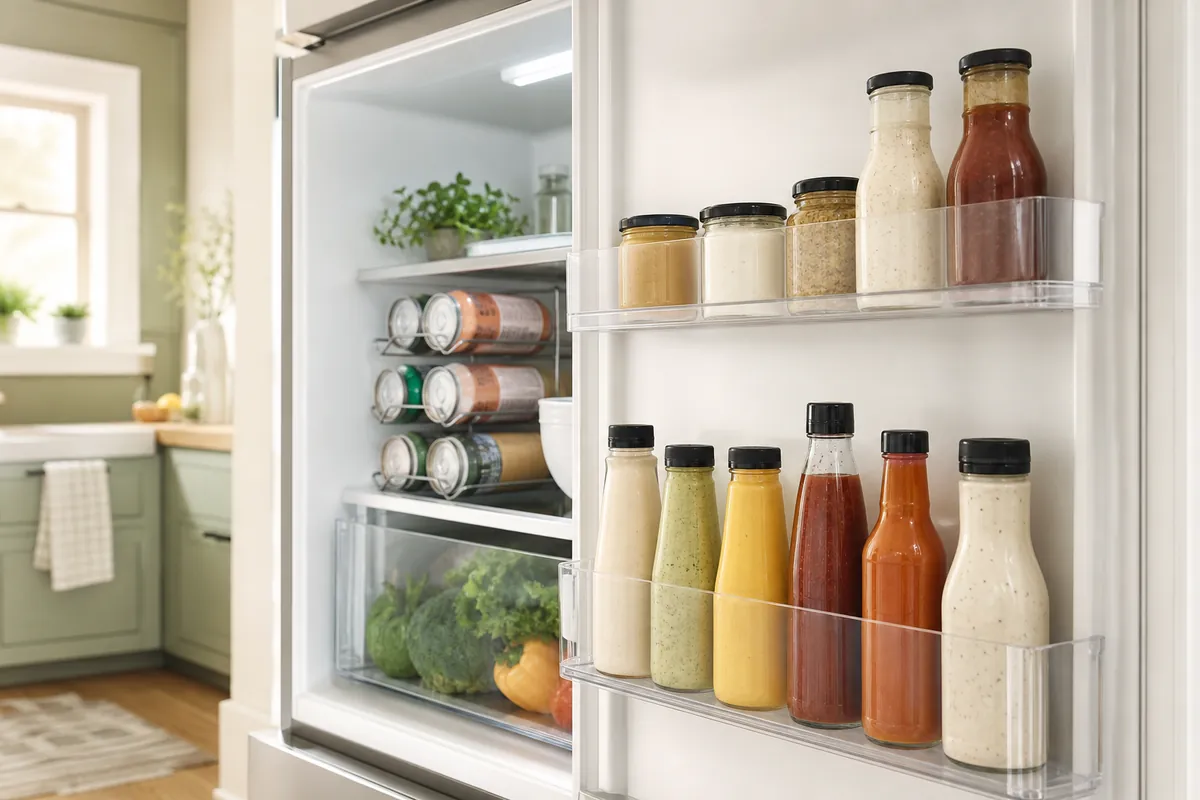
The door and stray cans are where small fridges bleed the most space to chaos.
6. Install a can dispenser rack
Loose cans are space vampires. They roll, they stack badly, and a handful of drinks somehow claims an entire shelf. A can dispenser rack loads from the top and feeds one can out the front, so a dozen sodas live in the footprint of maybe four. Bonus: you stop knocking over an open jar every time you grab a seltzer.
7. Reserve the door for sturdy, high-turnover items
Condiments, dressings, and juice belong on the door. They tolerate temperature swings and you reach for them constantly. Don’t burn that prime real estate on eggs or milk, which need the steadier cold of a middle shelf.
8. File pouches and packets upright
Sauce packets, shredded cheese, and flat pouches slide around and sprawl. Stand them upright in a small bin like files in a drawer. You’ll fit roughly three times as many and you’ll actually see what’s there.
Rethink packaging and containers
Manufacturer packaging is built for the store shelf, not your fridge, and it’s almost always bulkier than it needs to be.
9. Ditch the cardboard
Soda boxes, half-empty egg cartons, and oversized cereal-style boxes eat space for no reason. Break drinks out of their carton, move eggs to a slim tray if yours is chunky, and recycle the packaging. It’s surprising how much a fridge seems to grow.
10. Switch to square, stackable containers
Round containers waste the corners. Square and rectangular ones tile together and stack flat. If you’re replacing leftover containers anyway, buy one set that nests when empty and stacks when full. Matching lids alone will save you the ten-minute daily hunt for a match.
11. Decant only what earns its keep
Decanting looks gorgeous on social media, but in a small fridge you should only do it where it saves space or extends shelf life. Berries in a ventilated container last longer and stack better than the flimsy clamshell they came in. Decanting something that already comes in efficient packaging just creates more dishes.
Make produce last and shrink at the same time
12. Actually use the crisper humidity settings
High humidity with the vent closed for leafy greens, low humidity with the vent open for fruit and anything that spoils fast. Produce that lasts longer means fewer emergency grocery runs and less mush clogging the drawer.
13. Store greens with a paper towel
Line the bin or bag with a paper towel to soak up moisture, and your greens won’t go slimy in three days. Less spoilage means you’re not restocking things you already bought and cramming the shelves all over again.
Work the top and the freezer
14. Use the top of the fridge as bonus storage
The flat top of a freestanding fridge is prime overflow in a tight kitchen. A lidded bin up there holds spare paper towels, backup snacks, or pantry-style bulk items that don’t need to be cold. If you’re squeezing every last inch out of a small kitchen, this pairs well with the thinking in our roundup of space-saving kitchen gadgets for small apartments.
15. Stand freezer bags on their edge
Frozen bags stacked flat fuse into one unliftable brick. File them vertically like records instead. You can read every label, pull one out without triggering an avalanche, and fit noticeably more in the same drawer.
Keep it working past the first week
Organizing a fridge once is easy. Keeping it organized is the real test, and it comes down to two habits. First, wipe and reset your bins on grocery day, before the new haul goes in, so old items get pulled forward and the “eat me first” bin gets emptied. Second, resist the urge to overfill. A fridge packed wall to wall actually cools worse, and it drops you right back into the shuffle you were trying to escape.
If you only do three things, do these: set up zones, add a set of clear stackable bins, and strip the bulky packaging. Throw in a can dispenser rack if drinks are your particular clutter problem. Those moves free up a shelf’s worth of space in most small fridges without spending much or renovating a thing.