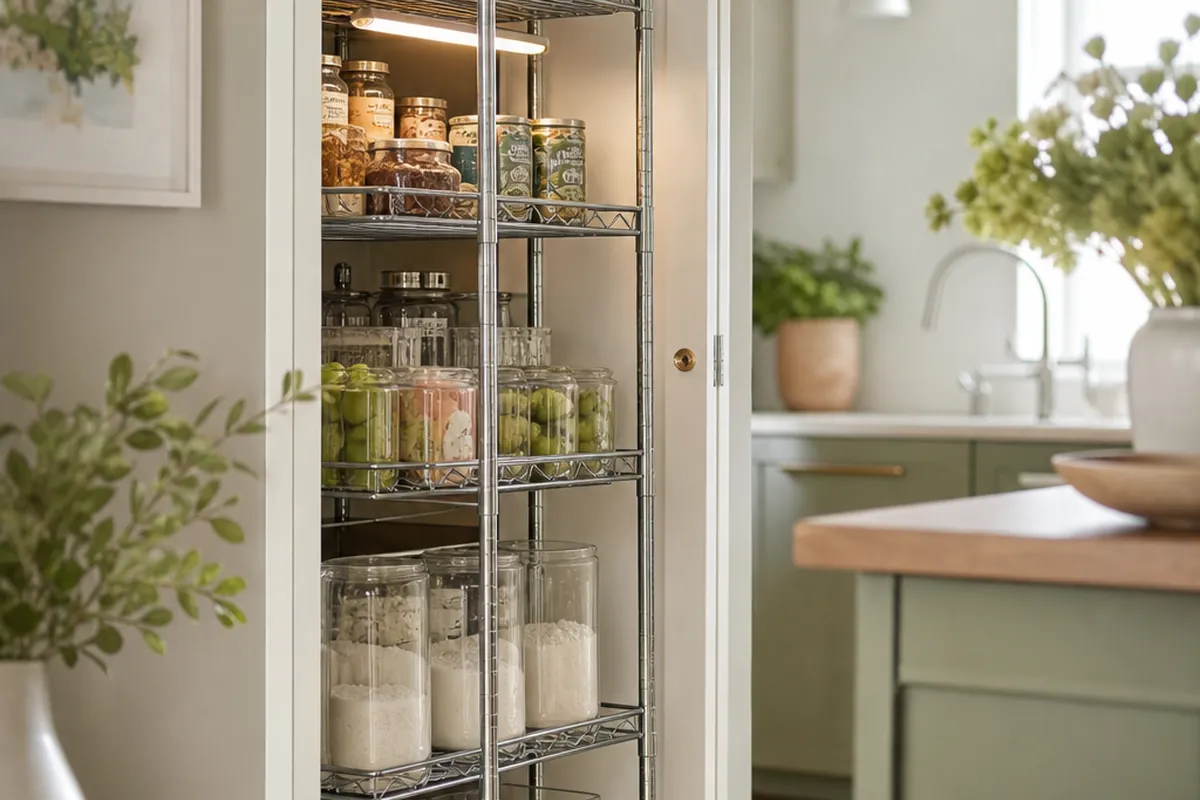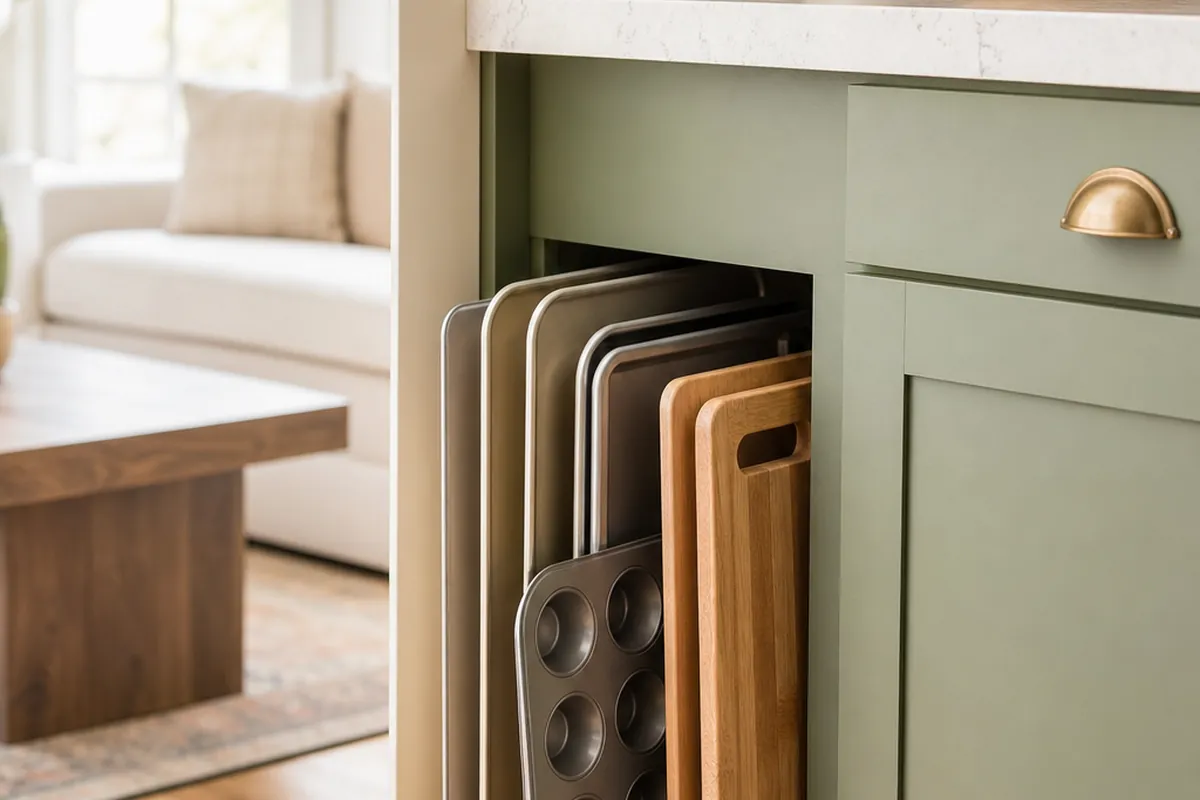
Measure the vertical gap between two of your pantry shelves before you buy a single container. If your tallest box clears the shelf above it by more than four inches, you are paying rent on air. That wasted headroom, along with the back of the door and the corners your arm can’t reach, is the whole opportunity in pantry organization for a small space.
A cramped pantry almost never needs more square footage. It needs a second layer on every shelf, a working door, and a way to reach the back without unloading the front. Twelve fixes below, ordered roughly by how much space each one gives back, with the trade-offs nobody bothers to mention.
Small-Space Pantry Organization Starts With Measuring the Air
Stand your tallest item on each shelf, hold a tape measure from the top of that item to the underside of the shelf above, and write the number on a sticky note stuck to the shelf edge. Do it for every level. You now have a shopping list instead of a hunch.
Those numbers dictate what you can buy. Six inches of clearance gets you a shelf riser or one shallow stacking bin. Ten to twelve inches means two layers of clear stackable food storage bins with enough room to slide the top one out without scraping. Fewer than four inches and the answer is a flatter container, not a taller plan. Guessing at this step is how people end up with a returns pile in the hallway.
The one-shelf rule
Resist the full teardown. Pick the shelf that annoys you most, empty it onto the counter, and rebuild only that one. You’ll learn which container footprint actually fits your shelf depth before you commit to eight of them, and you finish something the same day instead of stepping over cereal boxes for a weekend.
1. Claim the Back of the Door First
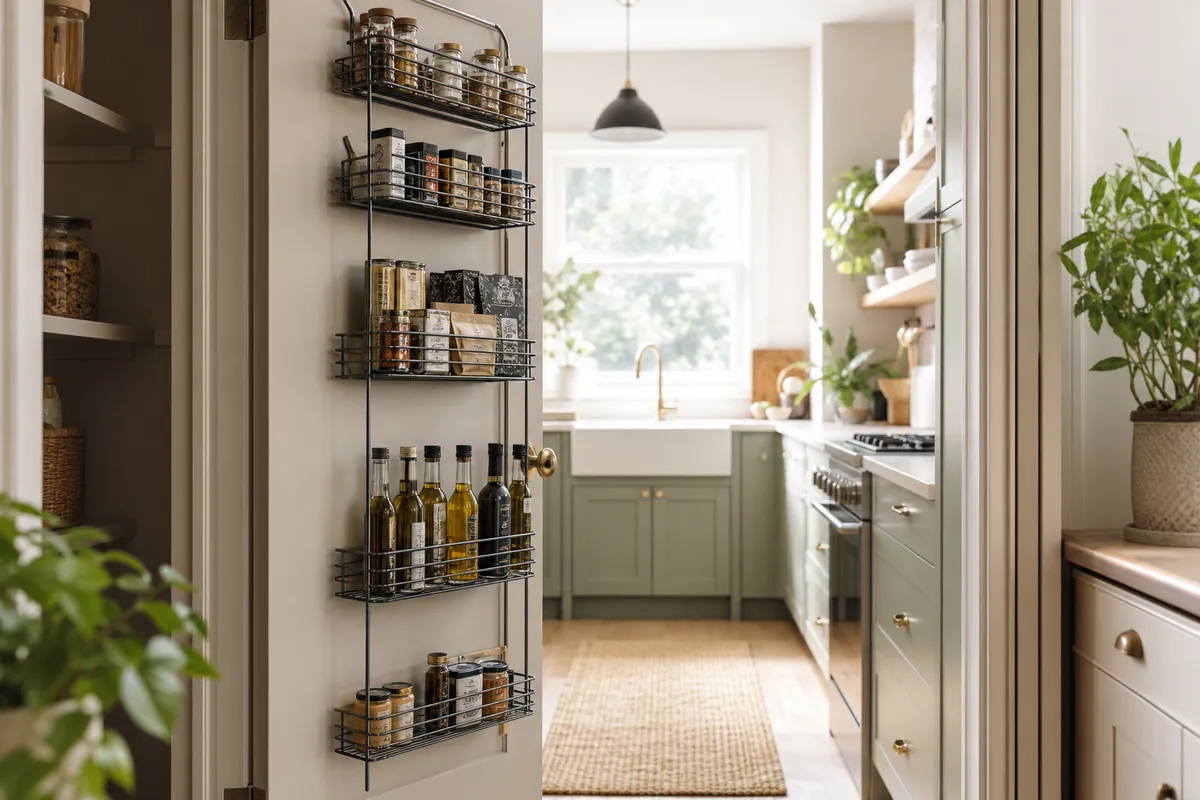
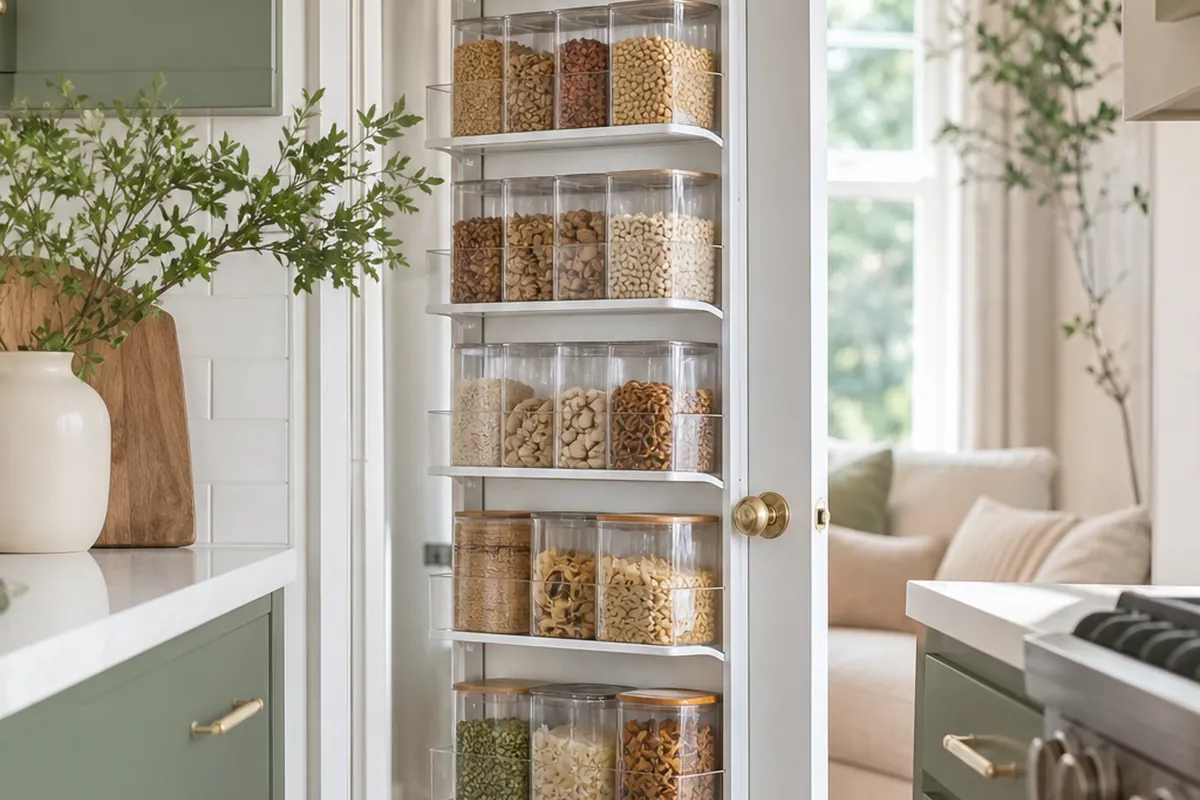
A pantry door is the biggest piece of unused storage in most small kitchens, and it usually holds one lonely coat hook. A tiered over-door pantry organizer converts that flat panel into six to nine shallow shelves, and shallow is precisely what you want for everything that disappears into the back of a deep shelf: spice jars, packet mixes, oil bottles, granola bars, tuna cans.
Two checks before you hang one. Confirm the door still latches with the rack loaded, because a snug frame plus a full rack equals a door that bounces back open. Then load the heaviest items on the lowest tiers so the whole thing doesn’t swing and clatter every time someone shuts it. If it still rattles, two adhesive foam bumpers between the rack and the door face kill the noise for pocket change.
Renters, the hooks rest over the top edge of the door rather than screwing into it, so nothing gets drilled. For more no-hardware approaches, these renter-friendly pantry fixes go further.
2. Stack Vertically With Clear Bins
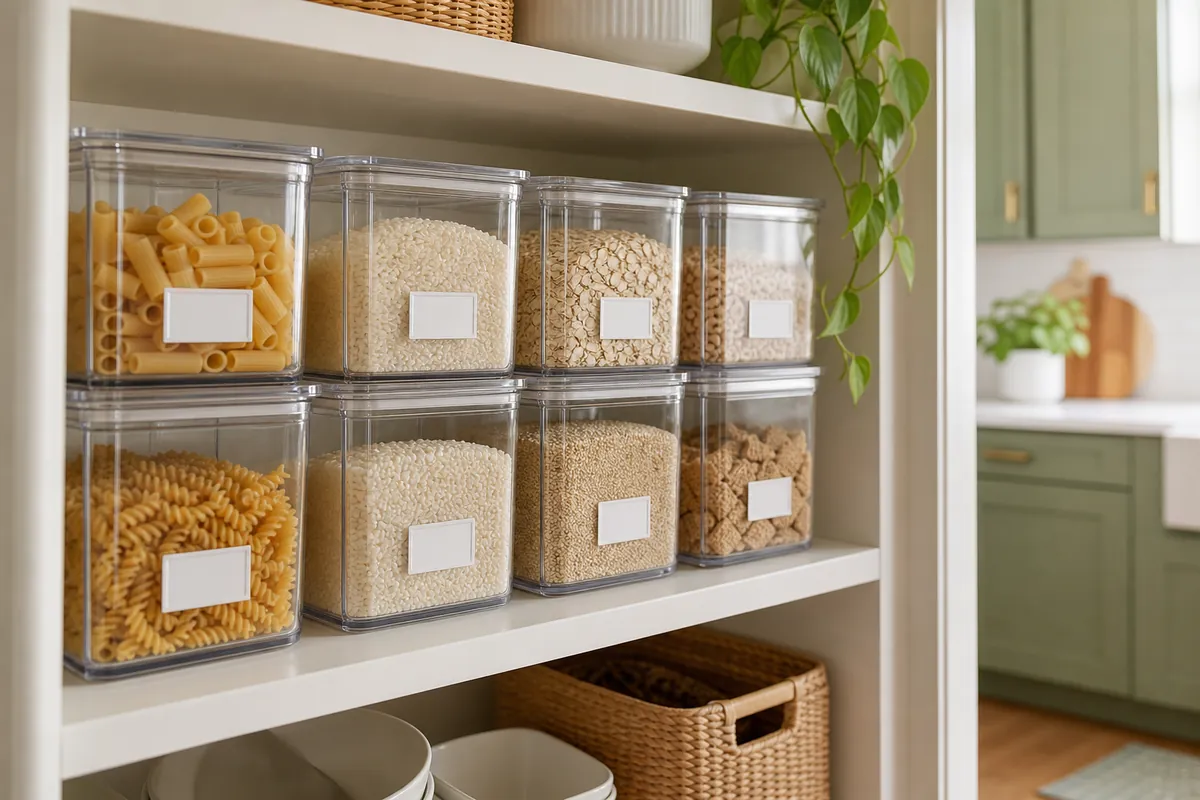
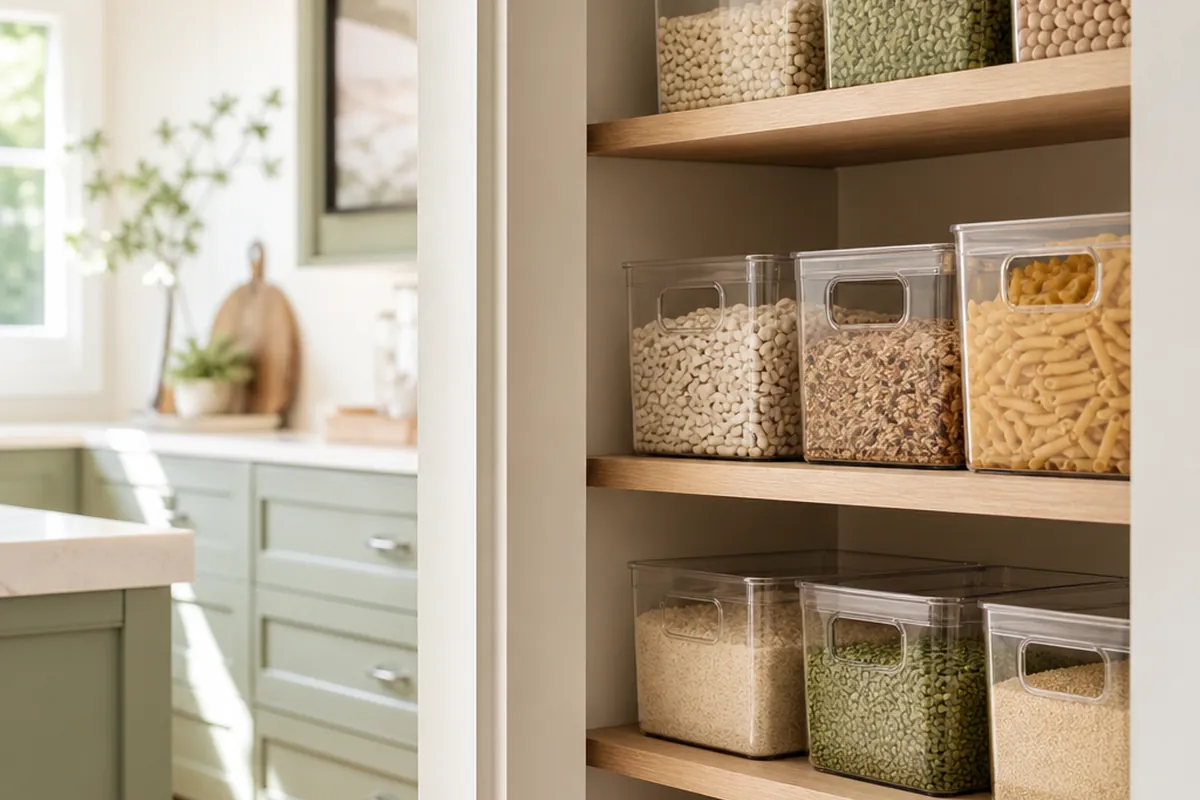
Strongest opinion in this article: clear stackable food storage bins beat handsome opaque baskets in a small pantry every single time. Opaque containers ask you to remember what’s inside, and memory collapses the moment someone else puts away the groceries. Glass or clear plastic sides let you restock by looking rather than digging.
Stacking is where the money comes back. Two bins holding rice and pasta in one bin’s footprint is a literal doubling of that patch of shelf. Buy one size and stay loyal to it, since mixed sizes don’t stack square and the benefit evaporates. Square or rectangular only, too. Round canisters leave triangles of dead space in every corner.
Decant what goes stale, skip the rest
Decanting the entire pantry into matching containers photographs beautifully and takes an afternoon you won’t get back. Do it for flour, sugar, rice, pasta, oats and cereal, all of which keep better sealed anyway. Leave cans, jars, vinegar and anything you buy once a year in its original packaging. The space gain isn’t there, and the refill chore is what makes people abandon the system by month two.
3. Put a Turntable in the Corner You Can’t Reach
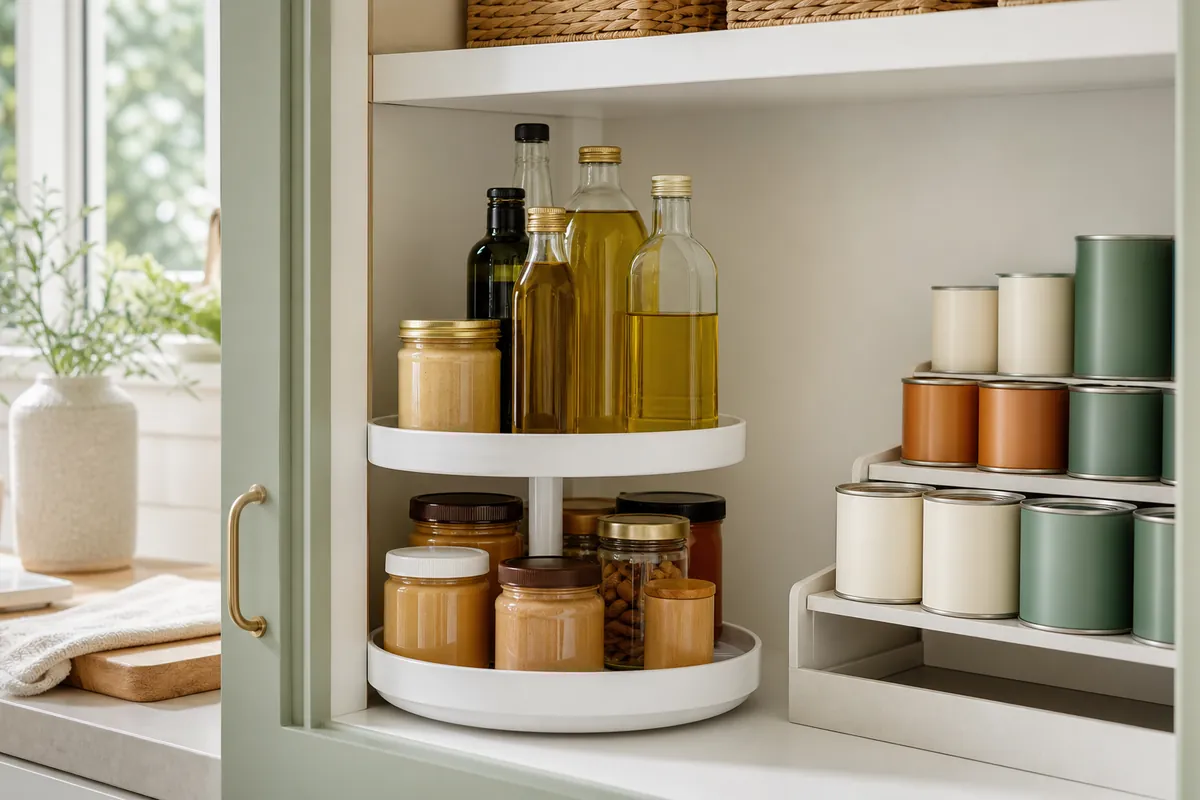
Every pantry has a graveyard: the deep back corner, the shelf behind the bracket, the spot where sesame oil goes to expire. A turntable lazy susan organizer fixes it by bringing the back around to the front without you unloading anything.
Load turntables with short, cylindrical, tip-prone things. Oils, vinegars, sauce jars, syrup, nut butters, extracts. A two-tier version holds roughly double what a single turntable footprint holds, which makes it my pick for the group of items you grab daily. One rule: leave a finger’s width of clearance on all sides so it actually spins. Wedged against a wall, it’s just a plastic circle.
4. Slide a Riser Under the Cans
Cans are short, heavy and impossible to read past the front row. A tiered can riser lifts the back rows so three or four labels face you at once, which means you stop buying a fifth tin of chickpeas. Not ready to buy? A sturdy shoebox turned upside down under the back row does the same job tonight, for free, and tells you whether the tiered version is worth the shelf depth it eats.
5. Under-Shelf Baskets Catch the Gap You Forgot
Slide-on under-shelf baskets hook over the front lip of a shelf and hang in the dead space beneath it. Give them flat, light cargo: bread, tortillas, foil and wrap boxes, tea, napkins. On wire shelving they clamp on in about ten seconds. On solid wood or melamine, measure the shelf thickness first, because most of these baskets top out around an inch and won’t clear a chunky pantry shelf.
6. File Boxes and Pouches Upright
Stop stacking boxes flat. Taco kits, pasta boxes, brownie mixes and foil pouches all behave better standing on edge like books in an open-front bin. You read every label from above, and pulling one out doesn’t collapse the stack onto the shelf below. It’s the cheapest visible upgrade in the pantry, and a plain magazine file will prove the concept before you spend anything.
7. Zone by Habit, Not by Category
Most advice says group like with like. In a tight pantry, grouping by when you use it wins. One breakfast zone with cereal, oats, coffee and sugar beats scattering those four items across four category shelves, because you reach in once instead of four times, and one reach means one chance to knock something over.
Keep daily items in the band between your chest and eye level. Weekly items sit directly above or below. Roasting pans, the backup paper towels and the sprinkle collection belong on the top shelf behind a step stool, and that’s fine, since you visit them twice a year.
8. Give Kids One Low Snack Bin
A single open bin on the bottom shelf, stocked only with what they’re allowed to take, ends the daily negotiation and keeps small hands out of your carefully stacked zones. Snack chaos still happens, but it happens inside one container instead of across three shelves.
9. Use the Wall Strip Beside the Door
The few inches of wall just inside or beside a pantry door almost always sit empty. A narrow wall-mounted rack, a hanging mesh produce sling or three adhesive hooks will hold aprons, reusable bags and onions. If drilling is off the table, buy adhesive hooks rated well above what you plan to hang, press them onto clean painted wall, and wait the full cure time before loading. Hooks fail because people hang a bag of potatoes on them twenty minutes after sticking them up.
10. Move Overflow Out of the Pantry
A pantry filled to its literal capacity stops functioning, because nothing has room to move. Backup paper goods, cases of water and the second bag of dog food belong elsewhere: a linen closet shelf, under a bed, a lidded bin on top of the cabinets. When every surface in the kitchen is already claimed, these no-counter-space fixes cover where the overflow can realistically live.
If there is no pantry at all, the fix is to make one. How to turn a closet into a pantry in a small apartment covers converting a hall or coat closet without any building work.
11. Evict the Spices Entirely
Spice jars in a deep pantry are a lost cause. They’re short, they hide behind cereal, and the duplicates pile up. Move them to door tiers, a drawer insert or a slim wall rack and you’ll free up more shelf than you expect, usually a full linear foot. There’s a longer breakdown of spice storage when you have no rack space if that’s your real bottleneck.
12. Label the Slot, Not the Food
Labels naming contents go stale the first time you switch from penne to rotini. Label the location instead: baking, snacks, grains, breakfast. A slot label survives every grocery run and quietly tells everyone in the house where things go back, which is the only reason a pantry stays organized past week two.
Stick labels on the front face of the bin at eye height, never on the lid. Lid labels are invisible when you’re standing up, which defeats the point of labeling at all.
A Weekend Plan for Pantry Organization in a Small Space
Short on time? Do three things and skip the rest. Hang the over-door pantry organizer and move everything short and skinny onto it. Add two turntable lazy susan organizers, one for oils and one for jars. Buy six matching clear stackable food storage bins in a single size and stack them two high on your deepest shelf.
Those three moves reclaim door space, corner space and vertical air in one pass, which is where the doubled shelf space comes from. Everything else on the list is refinement. Check back in two weeks, find the zone that fell apart fastest, and fix only that one. Pantry organization in a small space is less a project than a system you keep tuning until it stops irritating you.