A shower with no built-in niche gives you exactly one flat surface, and it is the floor. So bottles stand in the corner, get knocked over, and grow a ring of soap scum underneath that nobody wants to clean. The corner is still the right place to put storage, but it has to attach to something, and in a shower every attachment method has a specific condition it needs to work. Get the method right and none of this involves drilling into tile.
1. The corner is the only space you are not using
Look at a shower honestly and the walls are mostly occupied by nothing.
The corner is dead space in almost every shower, because it is awkward to stand in and nothing is designed to sit there. That makes it the one place you can add several tiers of storage without losing any of the space you actually use.
It is also the most structurally useful spot, since a corner gives you two walls meeting at right angles, which is what braced and adhesive fittings need.
2. A tension pole is the most reliable no-drill option
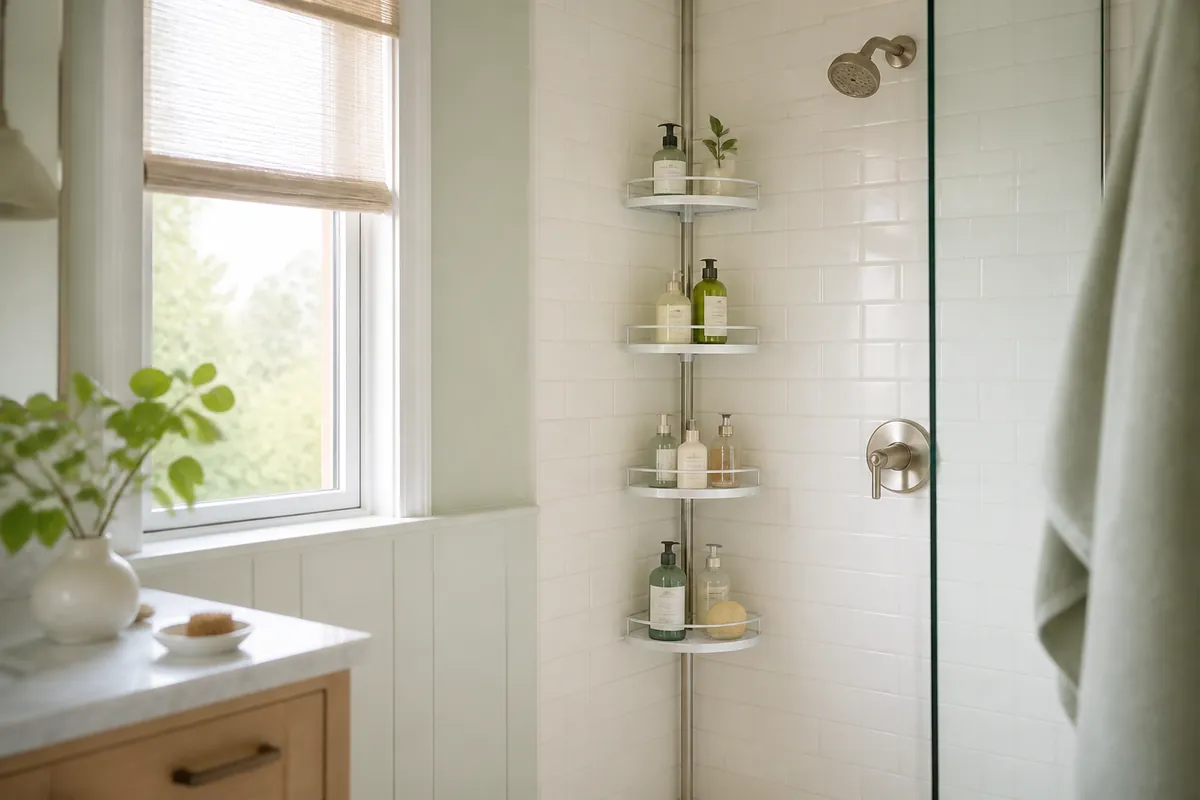
If you want storage that will still be there in a year, brace it rather than stick it.
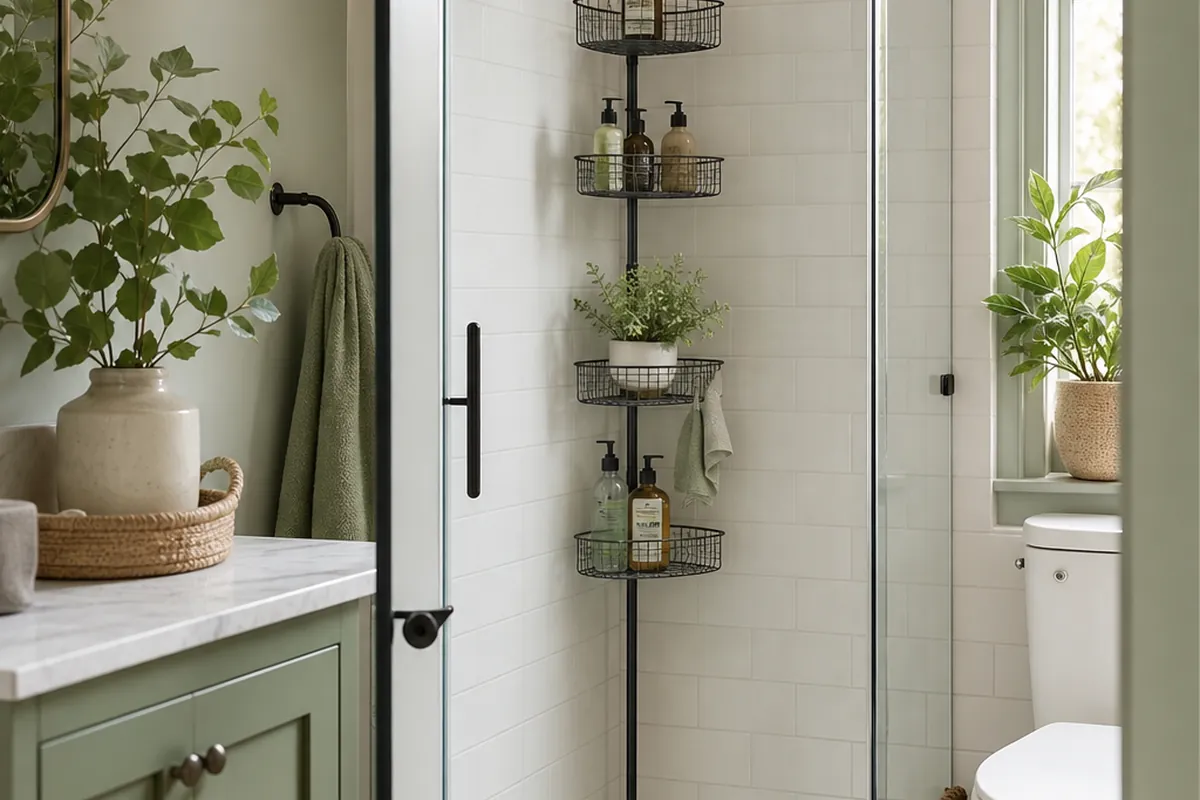
A tension pole corner shower caddy presses between the floor or tub edge and the ceiling, so the entire load goes into the structure rather than into the wall surface. Nothing has to grip tile, which removes the failure mode that kills every other method.
Check the adjustable range against your ceiling before buying. These commonly run from around thirty-four inches up to a little over nine feet, and a pole that cannot reach your ceiling is useless.
3. Suction needs a surface most showers do not have
Suction cups get a bad reputation they only half deserve.
They work, but the conditions are strict: smooth, non-porous, completely dry, and a single continuous flat area larger than the cup. They will not hold across a grout line, on textured tile, or on natural stone, because none of those can form a seal.
If your tiles are small, measure before buying. Four-inch tiles may leave no flat area big enough, and that is a property of your bathroom rather than a fault in the product.
4. Prepare the surface or nothing holds
The step almost everyone skips, and the reason things fall down at three in the morning.
Wipe the spot with rubbing alcohol rather than a bathroom spray. Most sprays leave a residue specifically designed to repel water, which is exactly what you do not want under an adhesive or a suction cup. Let it dry completely, press firmly for thirty seconds, then leave it alone for a full hour before hanging anything on it.
A suction-cup shower caddy installed this way is genuinely reliable. The same caddy pressed onto a damp wall will fail within a week.
5. Adhesive beats suction on most tile
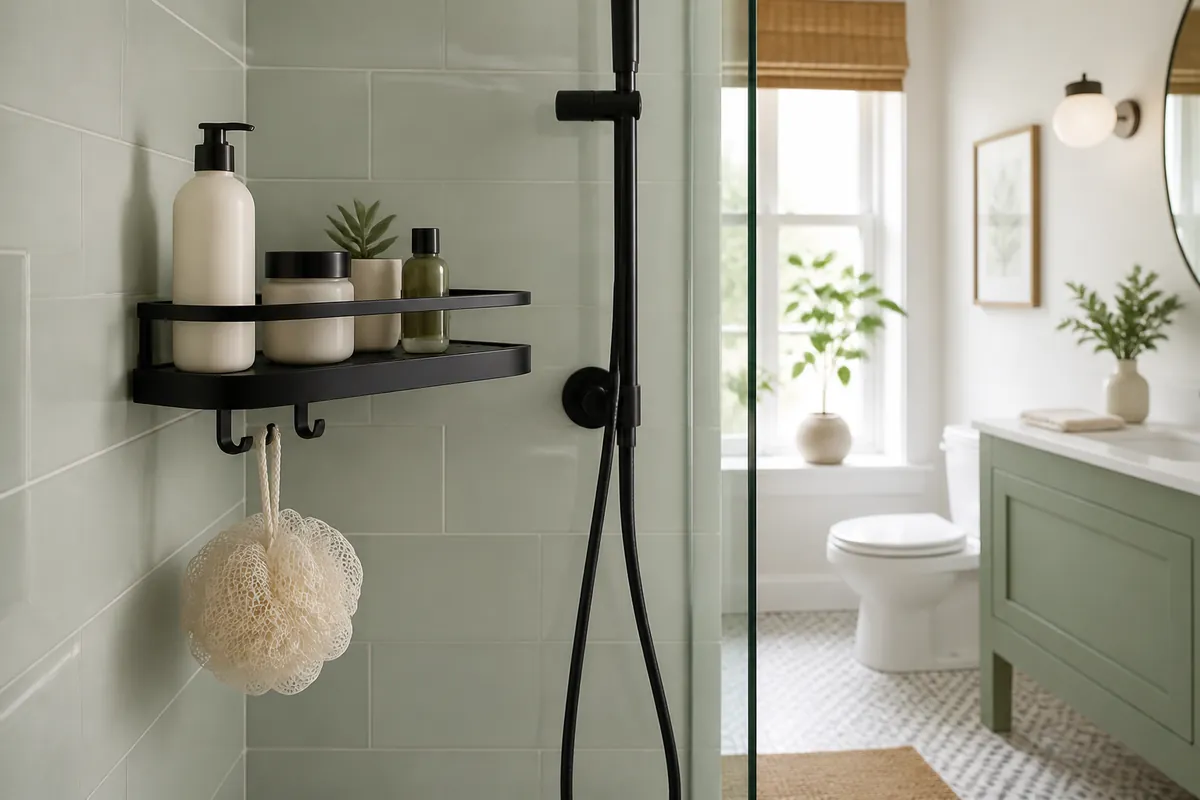
If you have a choice, adhesive is the more forgiving of the two.
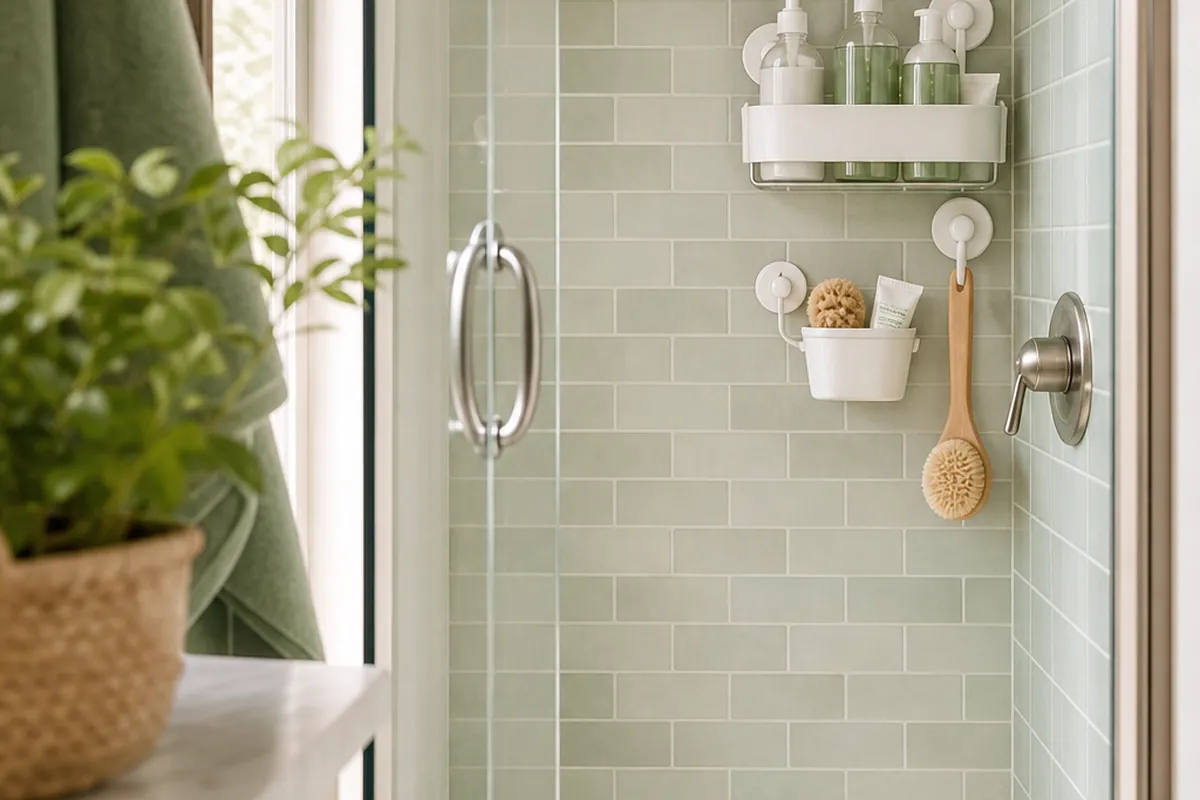
Modern adhesive fittings tolerate slightly imperfect surfaces better than suction does, and they do not lose grip as temperature changes through a hot shower. A corner adhesive shower caddy with hooks underneath gives you a shelf and hanging space in the same footprint.
The trade-off is permanence. Adhesive is meant to stay, and removing it takes warming and patience, where suction comes off in a second.
6. Stainless or coated, never plain metal
The material decides whether this looks good in six months.
A shower is a permanently wet, warm environment, which is the worst case for corrosion. Stainless steel or coated aluminum survive it. Plain metal racks develop rust streaks that transfer onto the tile and stain the grout, which is worse than the original clutter.
Leave a gap behind anything flat as well. Rust almost always starts where two wet surfaces touch with no airflow between them.
7. Daily things at chest height
Placement matters more in a shower than anywhere else, because you are wet and half blind.
Put what you use every day between chest and eye height, where you can reach without moving your feet. Use the tiers above for backups and the tiers below for things used occasionally, like a razor or a foot file.
Anything that requires bending or stretching while wet will migrate back to the floor of the shower within a couple of weeks, which is the exact problem you were solving.
8. Store supplies, not stock
The rule that halves what you need to store.
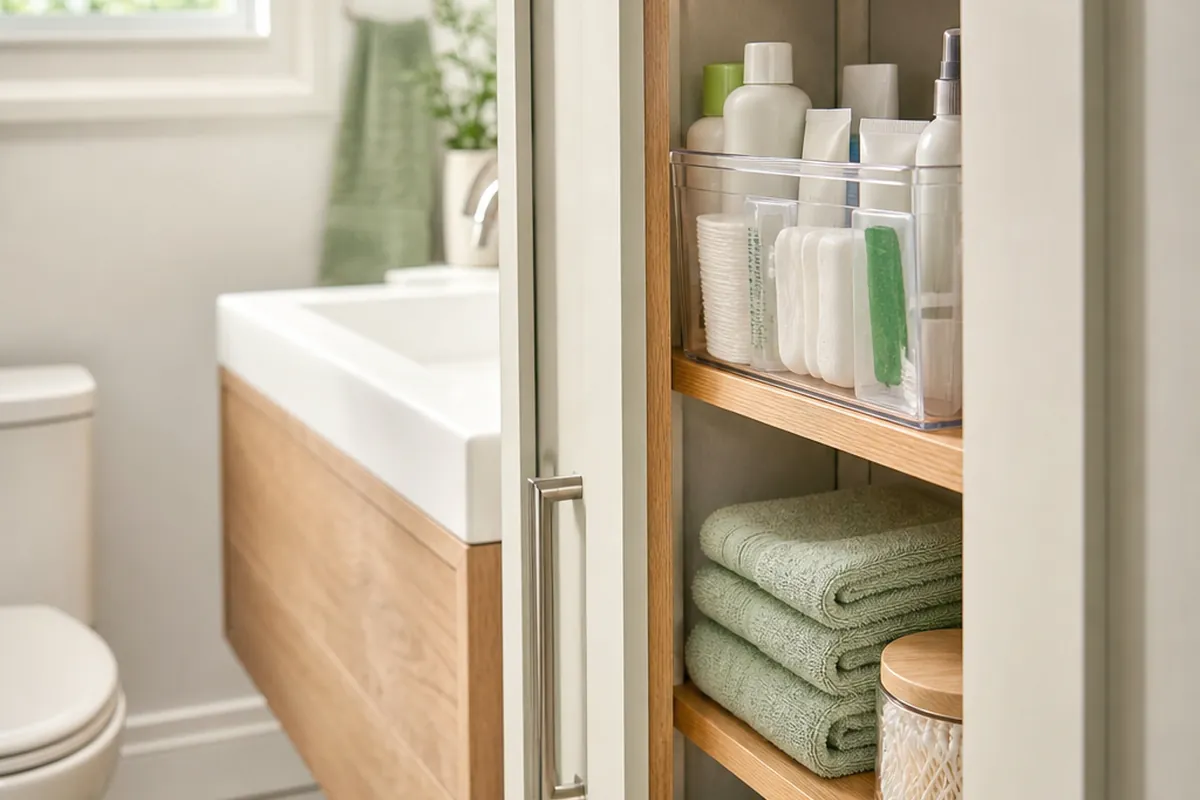
Most shower clutter is not in use. It is backups, refills, hotel bottles and things bought once and disliked. Those belong in a bathroom cabinet or under the sink, not in the shower where they take the storage you need and grow scum in the meantime.
Keep only what is open and in use. If you have two of something, one of them lives elsewhere.
9. Let everything drain
Solid shelves are a mistake in a wet environment.
Wire baskets, slotted shelves and anything with an open base let water fall through instead of pooling. A solid tray holds a shallow puddle that never dries, and that puddle is where soap scum and pink bacterial film start.
If a shelf you already own is solid, drill a couple of drainage holes in it. It is not elegant but it is the difference between wiping it weekly and wiping it monthly.
In a wet room there is no dry zone at all, so everything has to drain. Wet room storage ideas for a small bathroom covers storage that lives with being splashed every day.
10. Get bottles off the floor entirely

The whole point, and worth stating plainly.
Bottles on a shower floor are the reason the corner needs scrubbing. They trap water underneath, they get knocked over, and they make the floor impossible to clean around properly. Once every bottle has a place at height, the shower floor becomes a surface you can actually rinse.
Bath toys are the other thing that lives on a tub floor, and bath toy storage for a small bathroom gets them up and drying between baths the same way.
That single change does more for how clean a shower looks than anything else on this list.
11. Give the razor and the soap their own spot
The two things that never fit the shelf you bought.
A razor left on a flat surface rusts at the contact point and leaves a mark on the shelf. A bar of soap sitting in its own puddle dissolves from the bottom and turns the shelf into a slick of soft soap within days. Both need draining rather than a surface.
Most corner caddies include a soap dish with slots and a hook or two underneath, and those are the parts people ignore when they load them up. Use the hook for the razor so it hangs and drips, and put the soap where the water can leave.
If your caddy has neither, a small suction hook beside it costs almost nothing and stops both problems at once.
Where to start
Look at your corner and decide which method your walls can take. If the tile is large, smooth and flat, adhesive or suction will hold once you prepare the surface properly. If it is textured, small-format or stone, do not fight it: a tension pole needs no wall grip at all and is the more reliable choice anyway.
Then put the daily things at chest height, move the backups out of the shower entirely, and get every bottle off the floor. A shower with no niche is not short of space, it is just short of somewhere to put things.