A suitcase is an awkward object for a small closet. It is rigid, it does not fold, and most of it is empty air even when you own it outright. So it ends up wherever it last fit, usually flat on the closet floor where it blocks everything behind it, or crammed sideways on the shelf where it fights the folded stack next to it for space. None of that is necessary. A suitcase has a shape, a weight and an amount of dead space inside it, and once you deal with those three things it stops being the object your closet is organized around.
1. Measure the suitcase before you measure the shelf
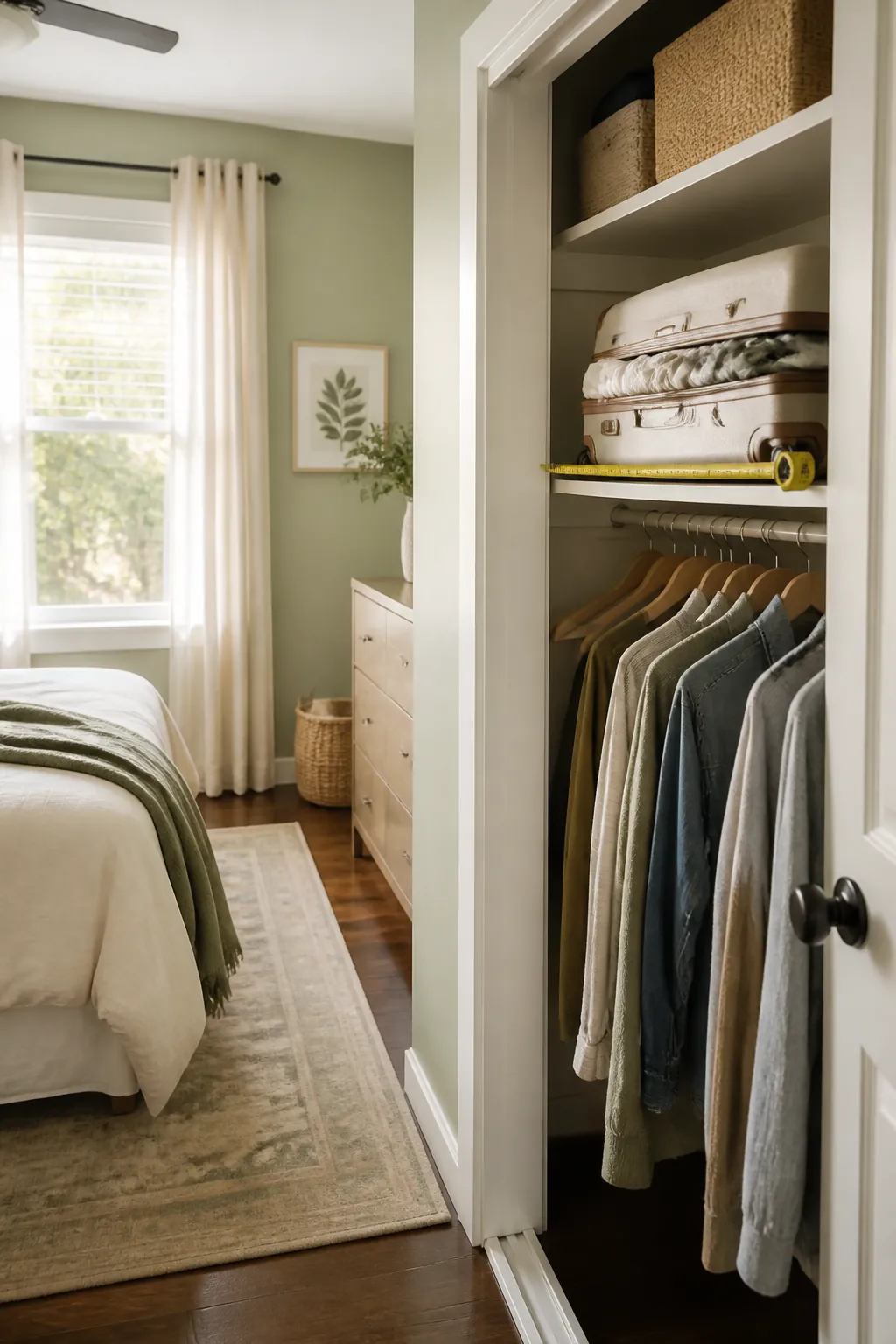
Closet shelves usually run twelve to sixteen inches deep, front to back. Suitcases are measured by their shell, not by how much they bulge once the wheels are on, so the true depth of a case is often an inch more than the tag says.
Measure yours with a tape, wheels included, and compare it to the shelf depth rather than trusting the size on the box. Turn the case so its longest edge runs along the shelf rather than front to back, and almost any reach-in shelf will take it. Turn it the other way and it hangs proud of the shelf edge, catching the door or whatever is hanging in front of it every time the closet opens.
2. Weight decides which shelf it’s allowed on
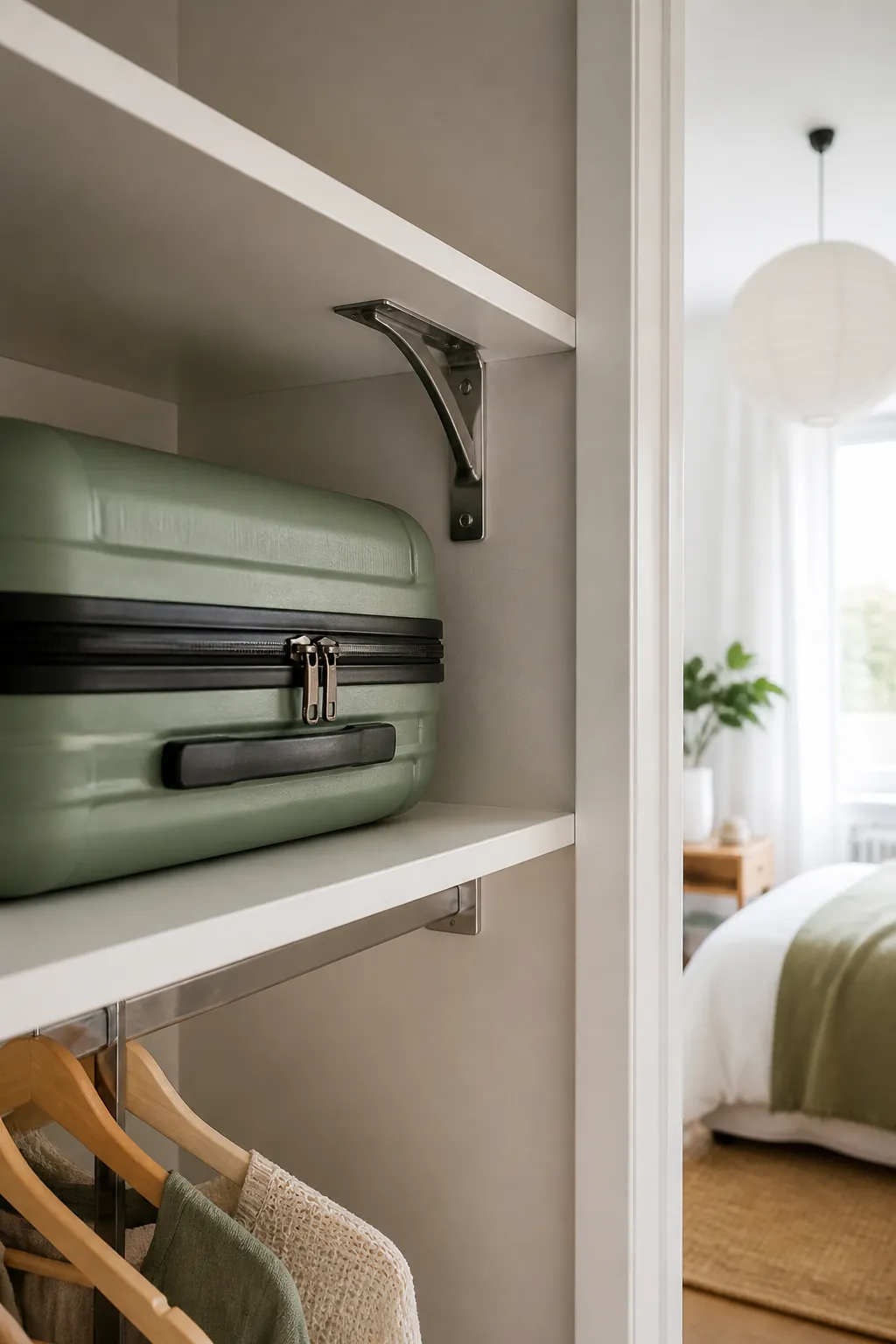
An empty hardside carry-on weighs around six to eight pounds. A medium checked case is closer to ten. Pack either one and you can add twenty to thirty pounds on top of that without trying hard.
Closet shelves on light wire brackets were built to hold folded shirts, not a loaded suitcase. A packed case up high on that kind of shelf is a genuine hazard, both to your back on the way down and to the shelf itself, which can bow or drop under a weight it was never rated for. Anything packed and heavy belongs on the floor. Light and empty is the only combination that earns a spot up top.
3. Nest smaller cases inside the biggest one
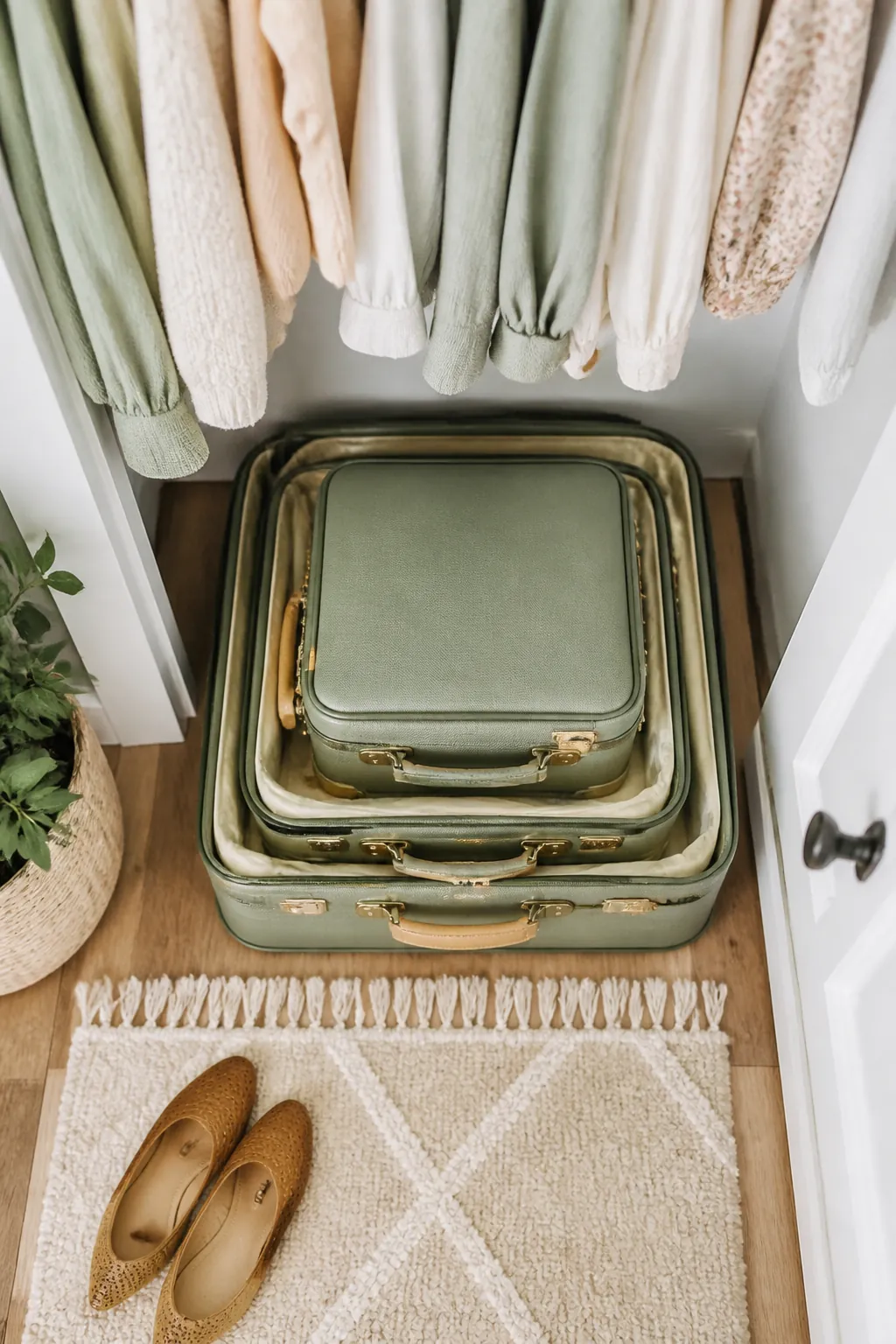
If you own more than one case, they should not be taking up separate footprints.
A matched set nests cleanly, smallest inside the next size up, inside the largest. What you are left with is one object occupying roughly the volume of your biggest suitcase rather than three. The catch is mismatched sets. A carry-on bought two years after a checked case rarely has the same proportions, and forcing one inside the other can strain a zipper that was never meant to close over another bag’s corners. Test it empty before you commit to storing it that way.
4. Turn the empty case into a container, not dead space
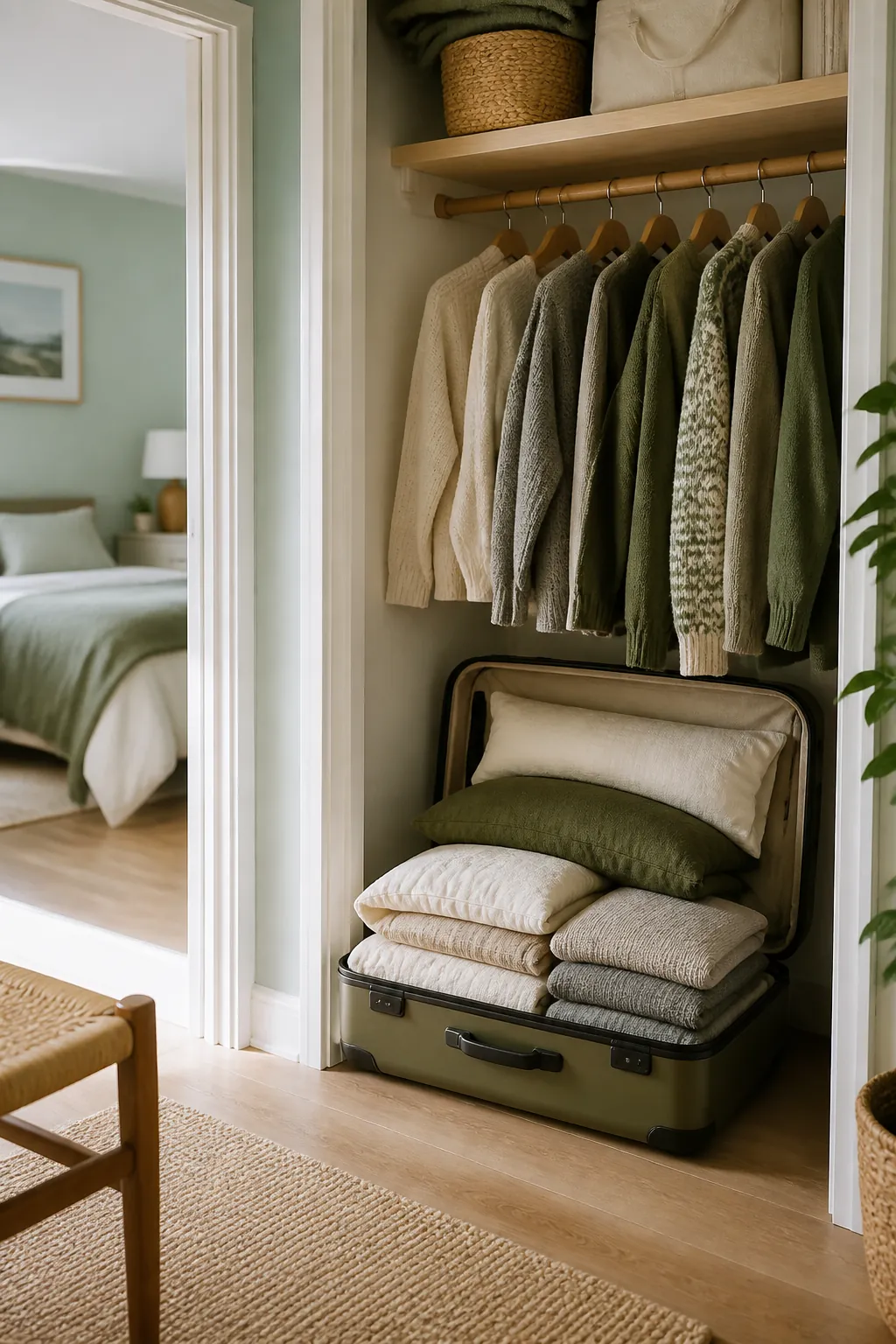
An empty suitcase sitting in a closet is doing nothing for you between trips. That is the real waste, not the floor space it takes.
Pack it with whatever else needs a home: off season sweaters, spare bedding, the winter coat that is not earning its rail space in August. A vacuum compression bag inside the case compresses soft items down to a fraction of their folded size, so the suitcase does double duty as a dust proof storage container rather than an empty shell. Skip the vacuum bag for anything down filled or structured, since hard compression over months flattens the loft and it does not fully recover.
Coats need more care than that, though. Out of season coat storage for a small closet explains which ones can be vacuum sealed and which need a breathable bag.
5. Stack with a riser between cases, not case on case
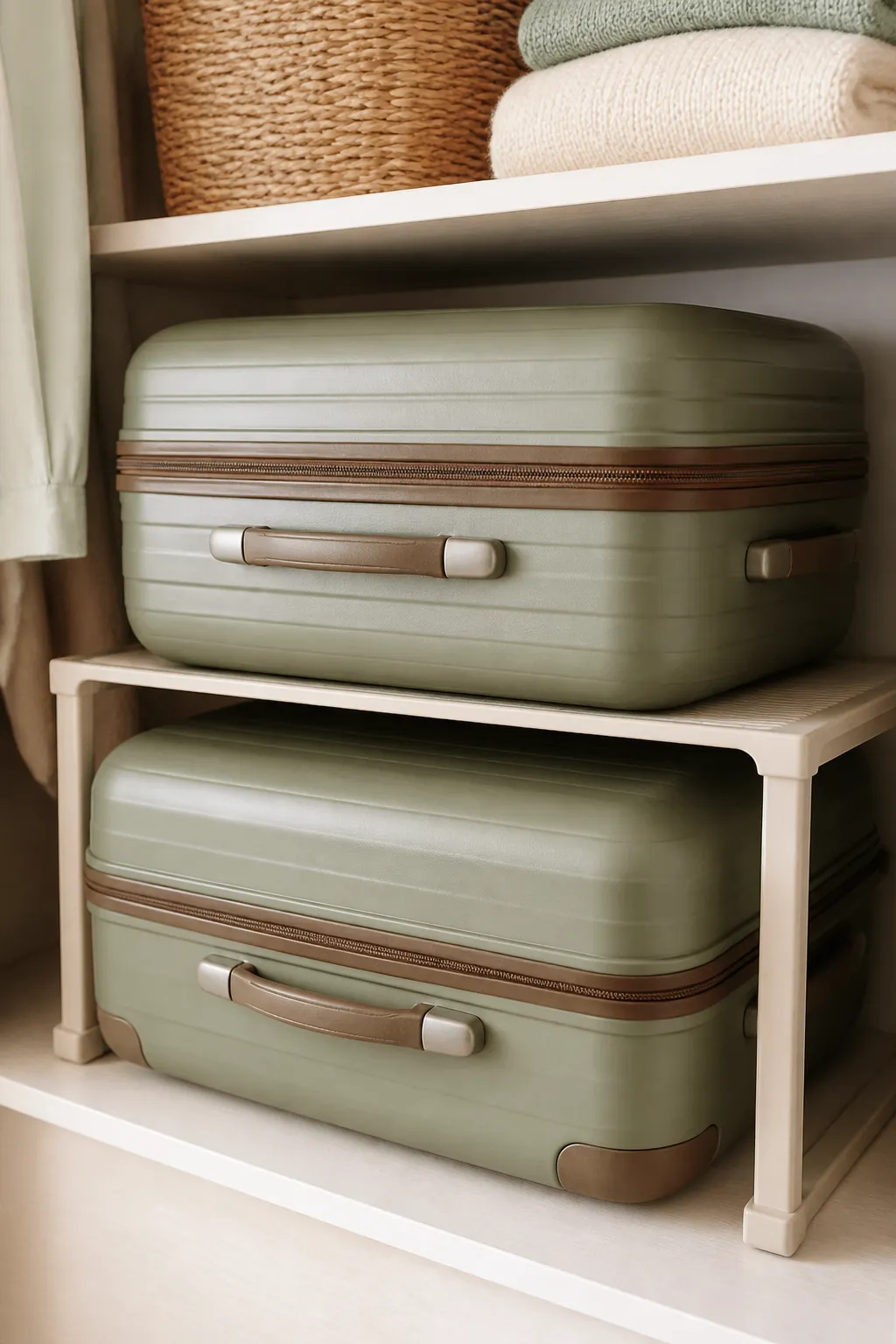
Two cases stacked directly on each other looks efficient and is the reason zippers fail.
The wheels and feet of the top case rest directly on the shell and zipper pull of the one underneath, and that point load does real damage over months of sitting there. An expandable shelf riser between them spreads the weight across a flat platform instead of four small wheels, and it keeps the bottom case’s zipper clear of pressure entirely. Check the riser’s own weight rating before loading a packed case onto it. Most are rated for stacks of folded clothes, not forty pounds of luggage, so keep whatever goes on top light or empty.
6. Give the suitcase its own section with a divider
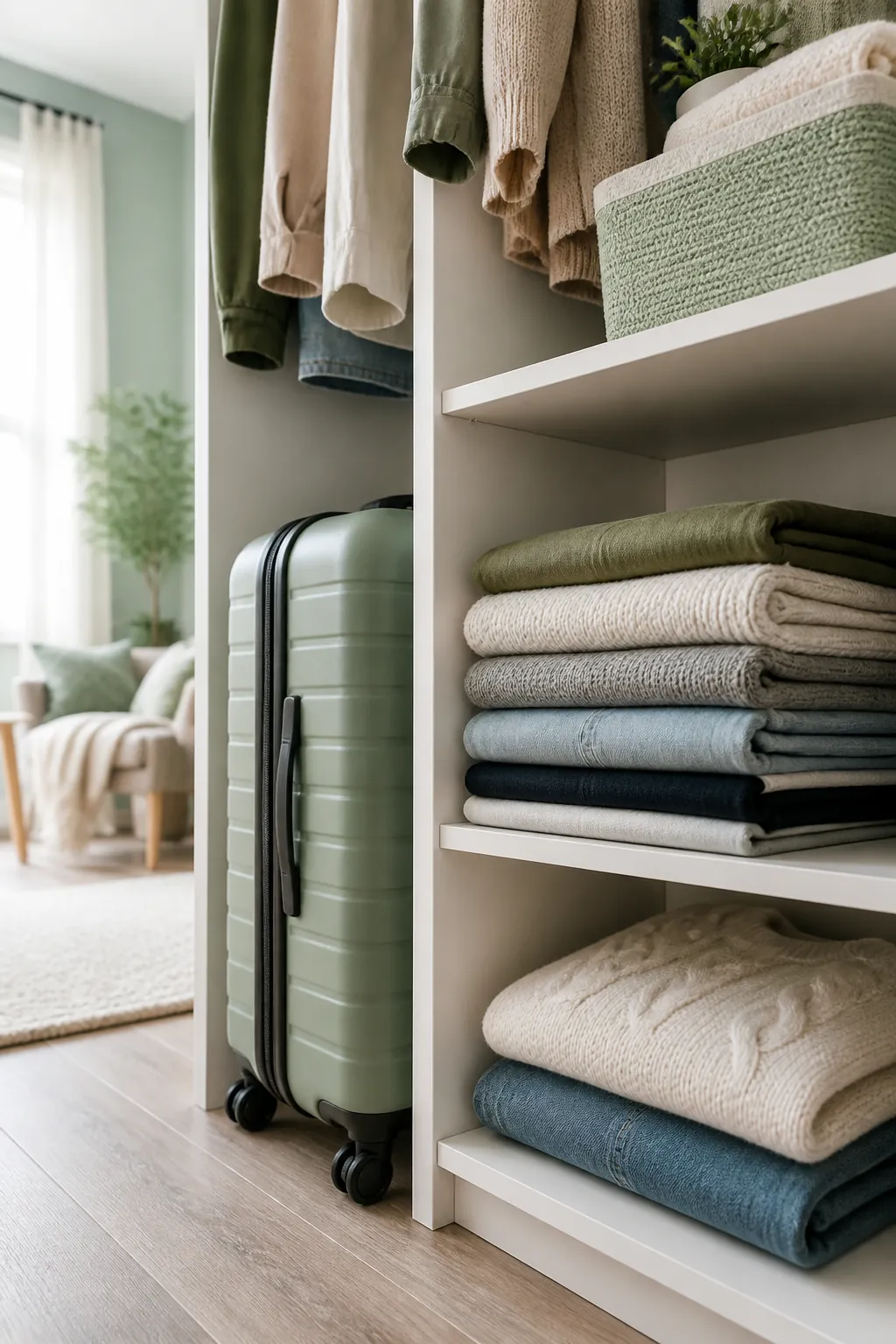
A suitcase parked against a stack of folded clothes on an open shelf is a slow-motion collapse. Its hard corner presses sideways into the pile every time the closet door swings, and eventually the pile loses.
Shelf dividers solve this by giving the case a wall of its own rather than letting it lean on your clothes. Clip one in on either side of where the suitcase sits and the rest of the shelf stays upright regardless of what the case does. This matters most on a shared shelf where luggage and folded clothes are competing for the same six inches of width.
7. No shelf? The floor under the rail is the suitcase’s home
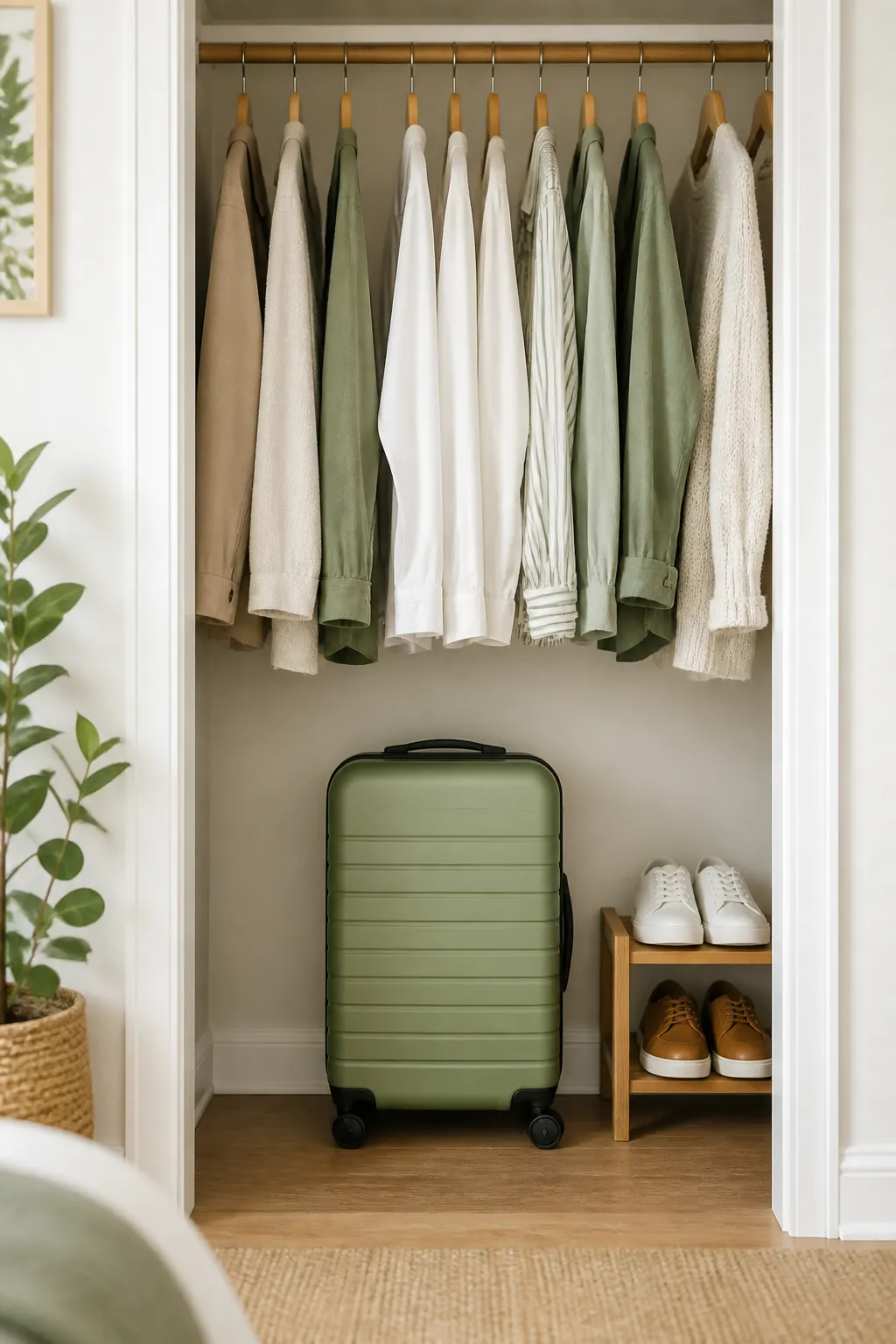
Not every closet has a usable shelf, and that is fine. The floor under the hanging rail is doing almost nothing in most closets.
Most reach-in rails sit five and a half to six feet up, and shirts hang to around forty inches, which leaves close to three feet of clear height beneath the shortest hanging item. Stood on end, a carry-on or medium case fits comfortably in that gap and only claims about fourteen inches of floor width, which is roughly what one pair of boots already takes.
Check the clearance with the case standing before you commit to the spot. A tall case with its handle extended can bump the hem of longer coats, and that is the kind of small daily friction that gets an object moved out onto the bedroom floor instead.
8. Stand hardside cases up, stack softsides flat
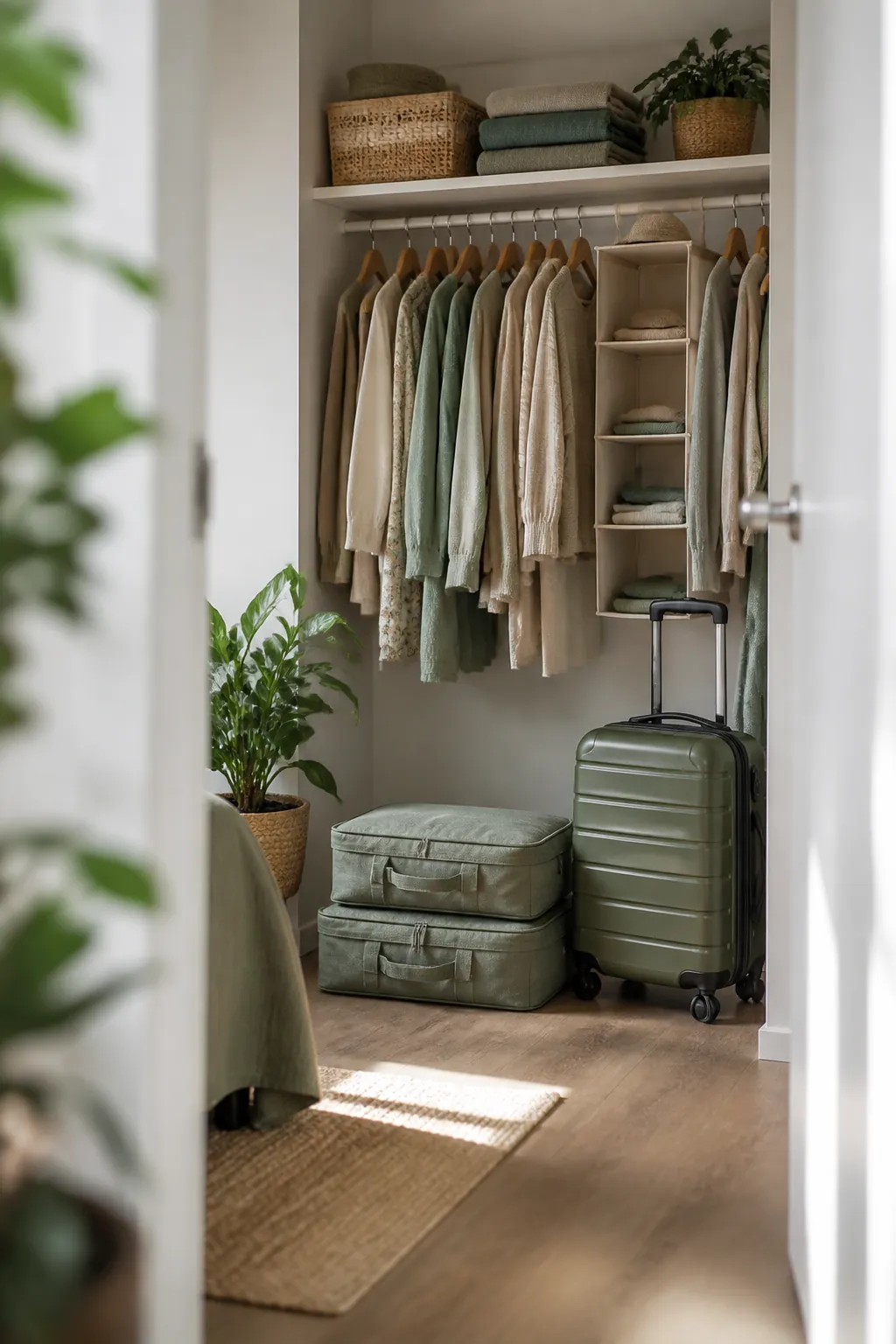
The two suitcase types behave differently under their own weight, and storing them the same way is why one always looks worse than the other.
A hardside shell holds its shape stood on end indefinitely. A softside duffel-style bag does not: stood upright with nothing packed inside it, the sides cave and it slumps sideways within a day. Softsides do better lying flat, either stacked two high on a shelf or laid along the closet floor against a wall. Match the storage method to the shell, not the other way around.
9. Give small travel gear a spot that isn’t a suitcase
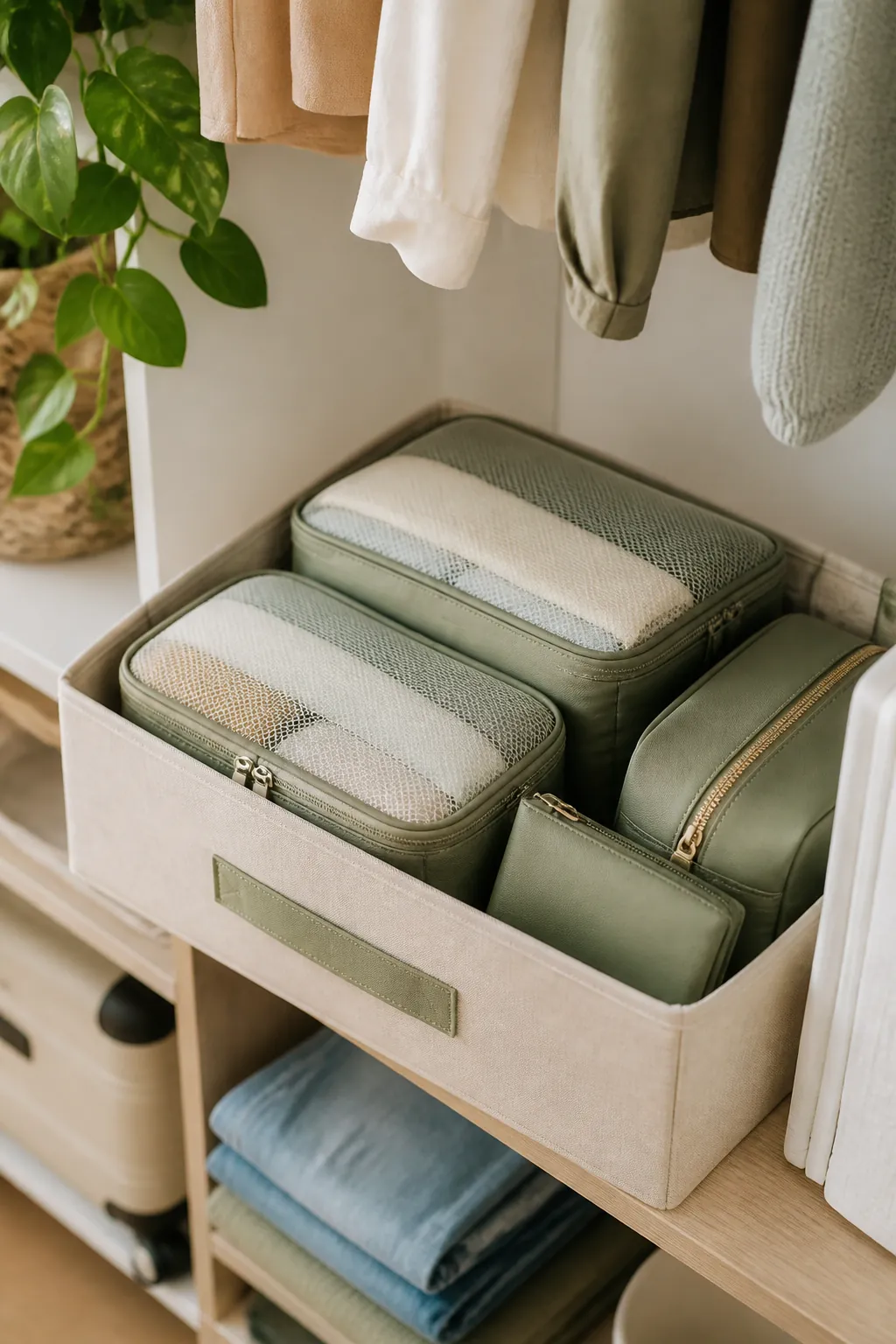
Packing cubes, a toiletry bag, chargers and the passport wallet tend to live loose inside whichever suitcase was used last, which means the next trip starts with a search through last trip’s case. Worse, a toiletry bag left zipped inside a suitcase for months is how a half-used bottle of shampoo ends up leaking into the lining.
Give that gear one small, fixed spot instead, a bin around shoebox size or a zip pouch on the shelf, so it is not tied to a specific bag. It also means the empty suitcase from step four stays fully available for off season storage rather than half full of travel odds and ends nobody remembers are in there.
10. Rotate by how often you actually travel with it
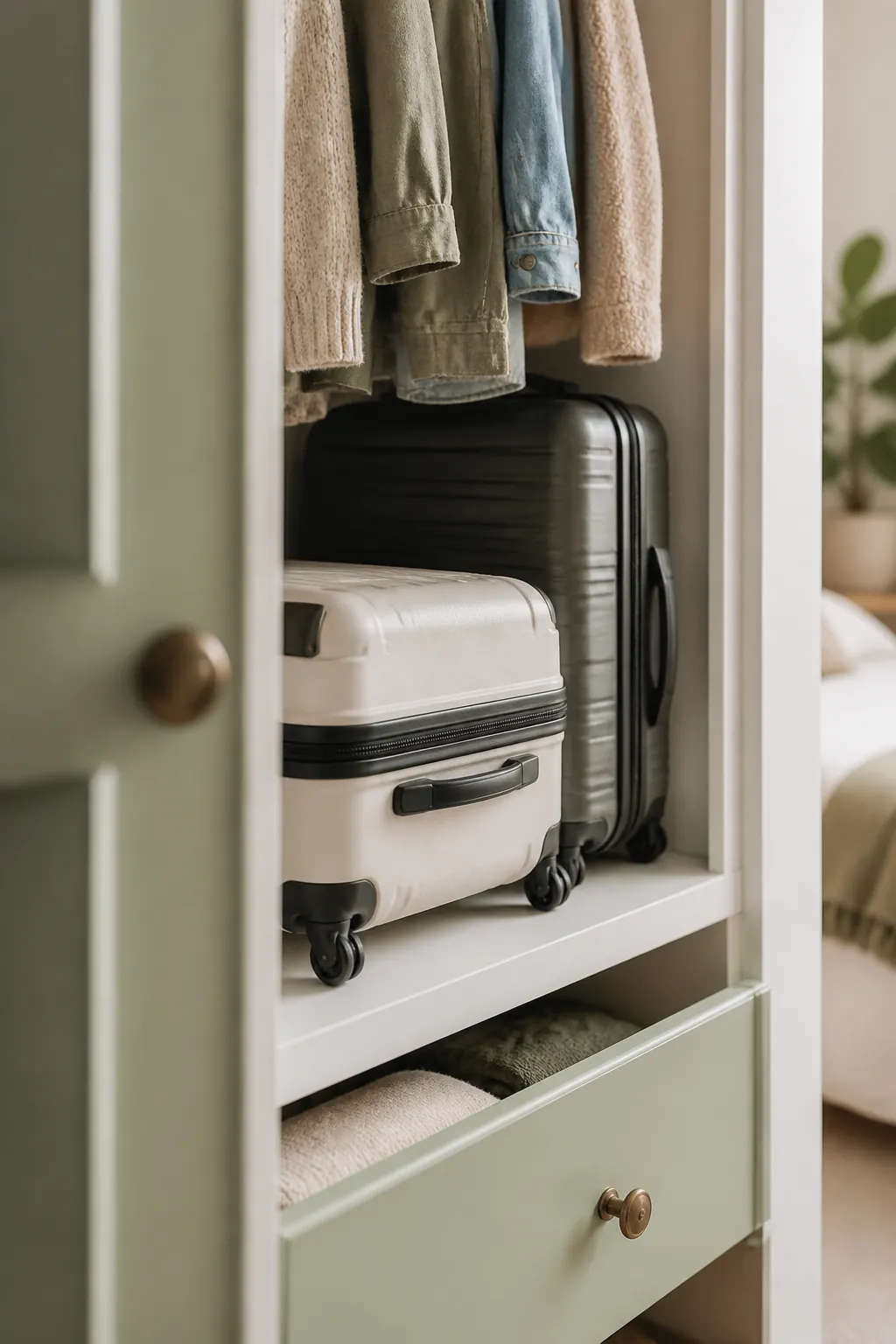
Not every case in the closet gets used equally, and the storage should follow that rather than treat them as interchangeable.
The carry-on that comes out every couple of months belongs on the floor or the lowest shelf, somewhere it takes ten seconds to reach. The oversized case you use once a year for a big trip can go on the high shelf or the back of a deep one, since the two extra minutes to get it down do not matter when it happens annually. Sort by frequency the same way you would sort anything else on a closet shelf, and the case you actually need never ends up buried behind the one you don’t.
Where to start
Measure your suitcases with the wheels on and compare that to your shelf depth, then split them by weight: light and empty goes up, heavy or frequently used stays on the floor under the rail. Nest what you can, pack the rest with a vacuum bag instead of leaving it empty, and if two cases have to share a shelf, put a riser or a divider between them rather than letting them fight it out.
None of this needs new furniture. It needs the suitcase to stop being treated as one oddly shaped object and start being sorted the way everything else in the closet already is, by size, weight and how often you reach for it.