Pull a favorite wool sweater off its hanger in October and the damage is right there: two little peaks pushed up into the shoulders, a neckline gaping wider than it did in March. That is the whole problem with sweater storage in a small closet. Knits are heavy, they stretch under their own weight, and one folded sweater eats about three times the shelf space of a folded oxford, so most renters end up cramming them wherever a gap opens up. Usually the worst possible gap.
Nobody needs a bigger closet to fix this. What you need is a fold that stands on its own edge, a way to use the dead air under your hanging rod, and somewhere to send the half of your collection you will not wear until next winter.
Why sweater storage starts with a fold, not a hanger
Gravity does the damage, not time. A hanger loads the entire weight of a chunky cardigan onto two narrow points at the shoulder, and after four or five months the fibers give up and stay that way. Cotton knits and cashmere distort fastest, since neither has much elastic recovery. Wool holds its shape longer, though it will bump eventually too.
So the rule is short: if it has knit structure, fold it. Folding also opens up stacking, and stacking is the only reason a small closet ever holds enough.
Fold in thirds, never in half
Lay the sweater face down and smooth it flat. Fold one sleeve straight back along the body, then the other, so the cuffs cross near the center. Bring each side in until the piece is roughly the width of a sheet of paper. Now fold from the hem up in thirds.
That last step is the one people skip, and it is the one that matters. A sweater folded in half is a floppy pancake, and a stack of pancakes avalanches the second you pull from the middle. Thirds give you a squared block with enough thickness to stand on its own edge, which is the entire trick behind file-folding, and it clears the front lip of a shallow closet shelf instead of hanging over it.
Measure your shelf depth before you commit to a fold width. Anything that overhangs will eventually slide.
If you want the drawer version of this, the KonMari-style drawer organizer breakdown covers how to stop upright folds from collapsing every time you remove one.
Vertical sweater storage: the hanging shelf organizer
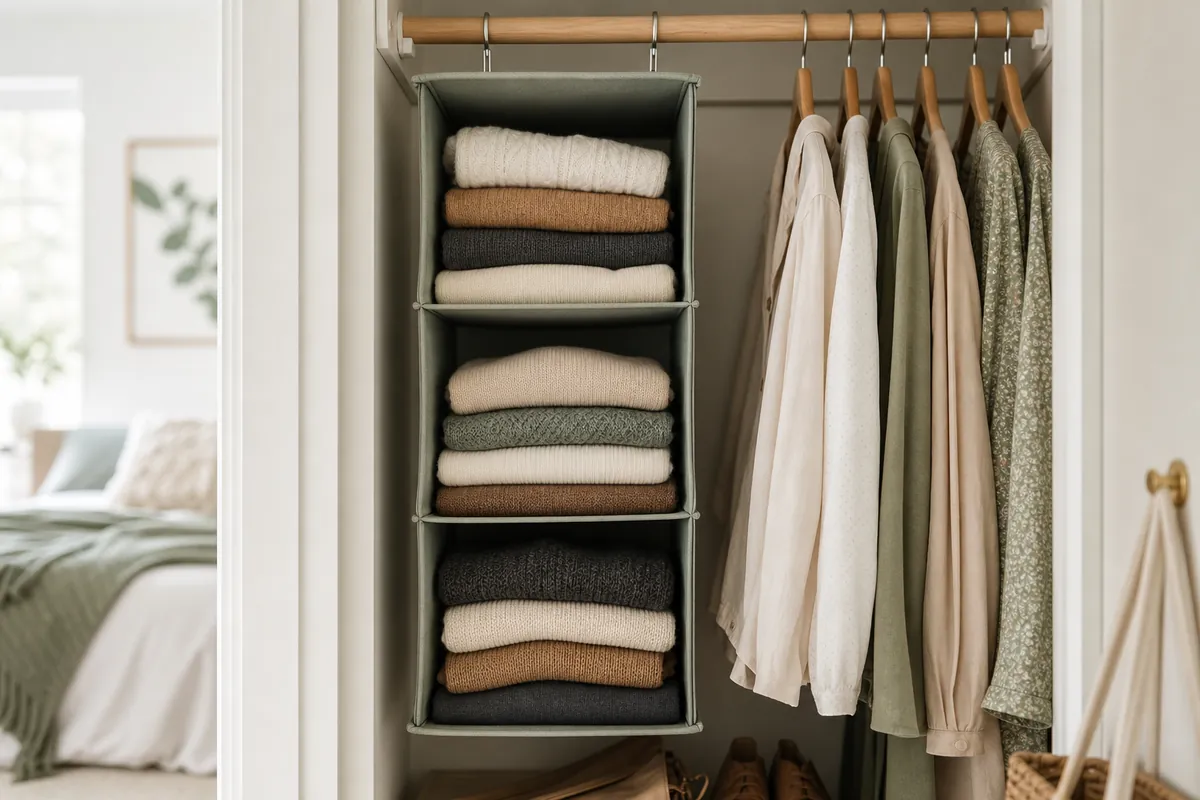
Look at the column of air under your shirts. Blouses and tees end at the waist, and below them sits two feet of nothing in the most accessible part of the closet. That is exactly where in-season knits belong.
1. Hang a shelf tower under your shortest garments
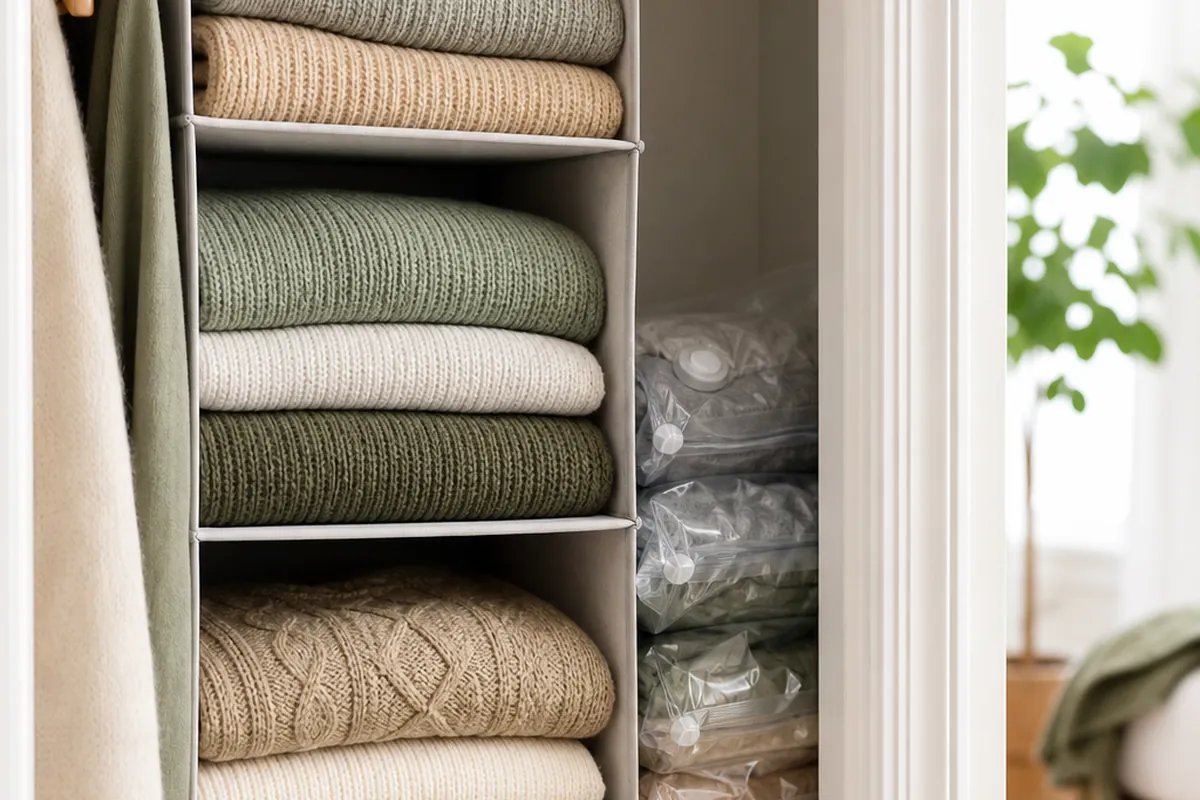
A hanging closet shelf organizer clips over the rod and gives you four to six fabric cubbies stacked vertically. For folded knits, it is the best money you can spend on a rental closet, and there is nothing to drill. Position it at the end of the rod where your shortest items live so you are not surrendering full-length hanging space for coats and dresses. Each cubby swallows three or four folded sweaters, which means six cubbies can hold an entire in-season collection in one visible column.
One honest trade-off: the organizer eats about a foot of rod. If your rod is already packed shoulder to shoulder, a slim three-drawer unit on the closet floor will serve you better.
2. Cap every stack at four
Here is the discipline part. Stacks taller than four sweaters slump when you pull from the bottom, then you stop putting things back properly, and by the second week the cubby is a heap. Four per cubby, sorted by weight, with heavy cable knits at the bottom and fine merino up top.
3. Sort by how often you wear it, not by color
Color sorting photographs beautifully and functions badly. Your three go-to sweaters belong at chest height in the hanging closet shelf organizer, grabbable without looking. The itchy gift sweater and the twice-a-year occasion knit go in the bottom cubby, or out of the closet entirely. For more ways to squeeze a single rod, doubling closet space without renovating pairs well with a hanging tower.
Off-season sweater storage under the bed
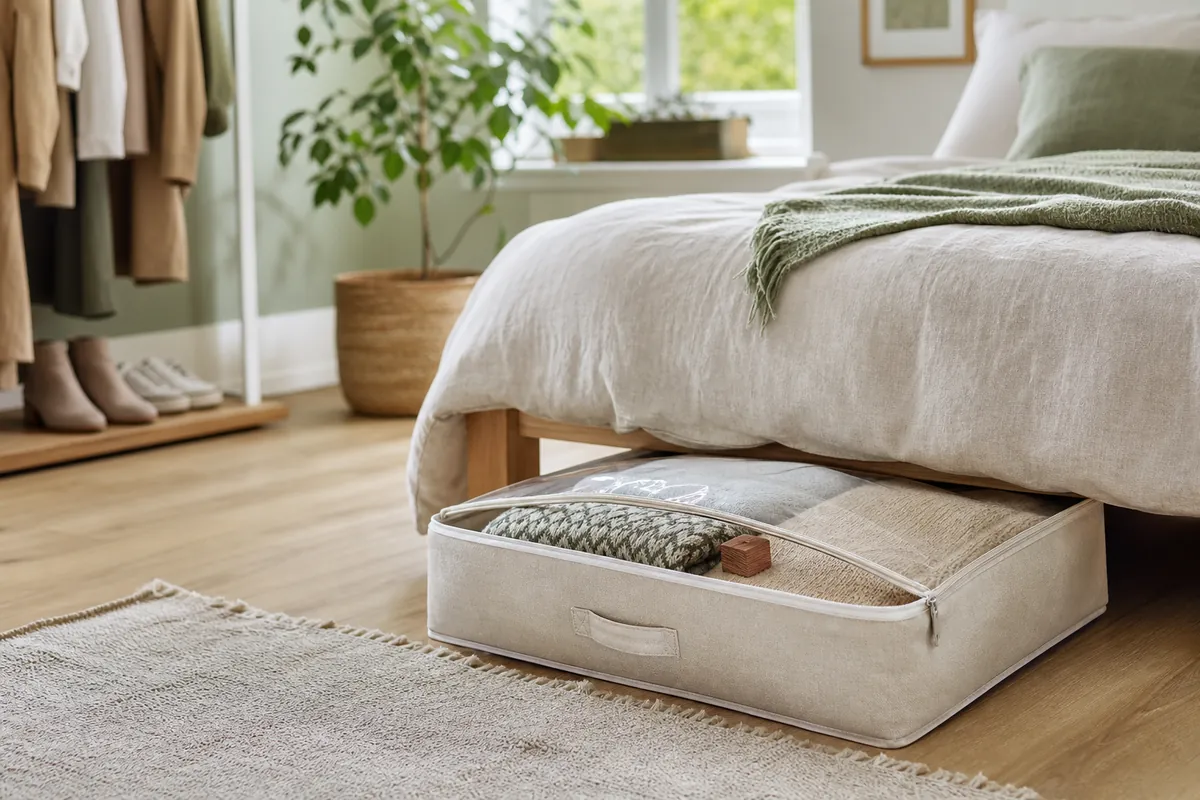
From April through September, half your knits have no business taking up closet real estate. Under the bed is flat, dark, and usually holding nothing but dust.
4. Choose under-bed clothes storage bags, not cardboard
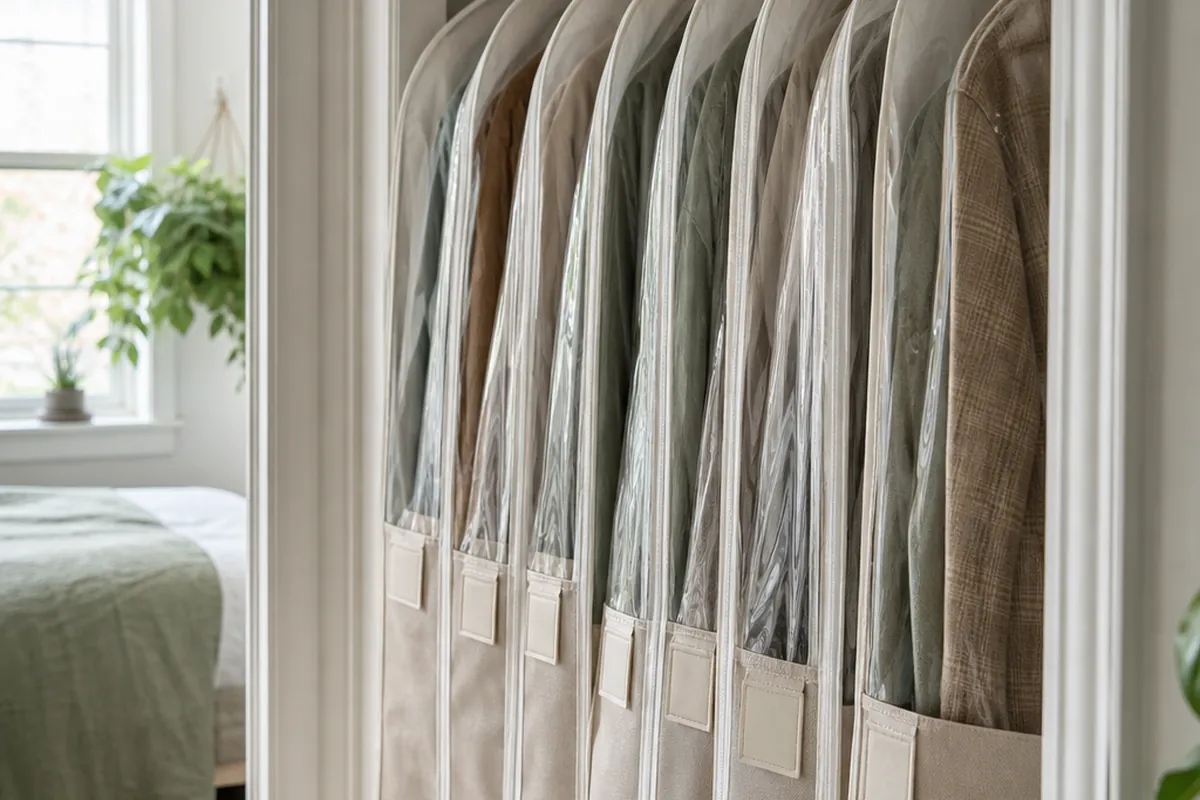
Breathable fabric under-bed clothes storage bags with a clear top panel are the right tool. They slide over carpet without catching, they hold a stack of folded sweaters at a height that clears most bed frames, and the window saves you from unzipping four bags to find one green cardigan. Cardboard boxes absorb humidity and attract silverfish. Leave those at the recycling.
5. Wash everything before it goes in
Moth larvae eat the residue, not the wool itself. Body oils, food traces, and perfume are the draw, so the sweater that looks clean but has been worn twice is exactly the one that comes out in spring with holes. Launder or dry clean, let it dry completely, then pack. Drop in a cedar block or a lavender sachet, and sand the cedar lightly once a year when it stops smelling of anything.
6. Use vacuum bags, but put a clock on them
Vacuum compression bags earn their place in a tiny apartment. A bulky pile of knits shrinks to a fraction of its height, which is sometimes the difference between fitting under the frame and not. Do not treat them as permanent, though. Natural fibers need loft, and months of hard compression flattens cashmere and angora in a way that takes days of airing to reverse, sometimes not fully. One season rather than one year, and stop the vacuum at roughly half volume instead of pulling every last bit of air out. For a fuller walkthrough of what fits down there, see under-bed storage for a whole season of clothes.
Clear bins, top shelves, and the stuff you forget you own
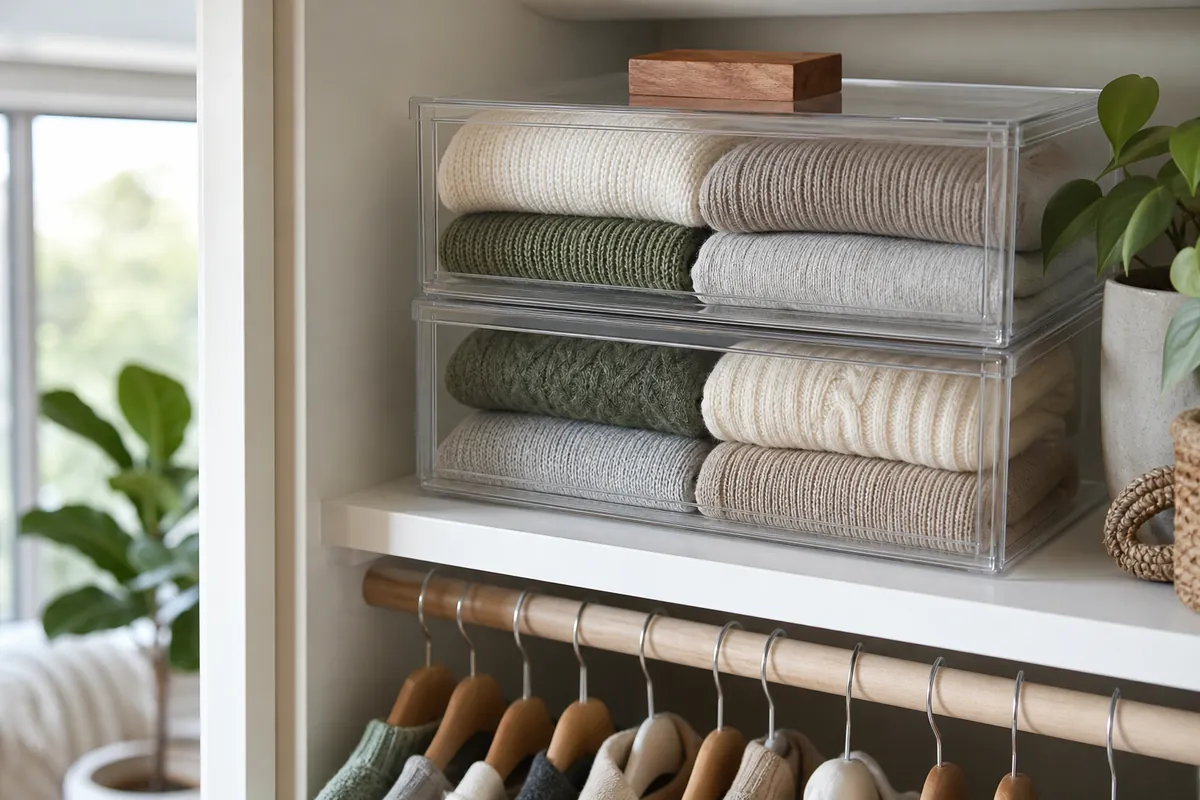
That shelf above the rod is the most wasted surface in any rental. Awkward height, so people pile loose things up there and never look again.
7. Switch the top shelf to clear stackable storage bins
Clear stackable storage bins solve the shelf in one move. Contents read from below without a step stool, the bins stack two high in most closets, and rigid walls stop folded piles from slumping sideways into each other. Group by category, turtlenecks in one and cardigans in another, instead of filling each bin evenly. A half-empty bin you can identify beats a full bin you have to excavate.
8. Front-load the bins you actually open
Deep shelves hide things. Put the weekly bin at the front edge, the once-a-season bin behind it, and label the short end that faces out even though the plastic is clear. Frosting and viewing angle make top-shelf contents far harder to read than you expect from floor level.
9. Give the closet floor a job
Most closet floors are a shoe graveyard with dead air above them. One or two clear stackable storage bins down there take the heaviest winter knits, and the flat lids double as a raised platform for shoes, which keeps them off the ground and makes sweeping easier. If footwear is what is eating your floor, the small-space shoe storage ideas go deeper on that trade-off.
10. Hang the two or three that genuinely need it
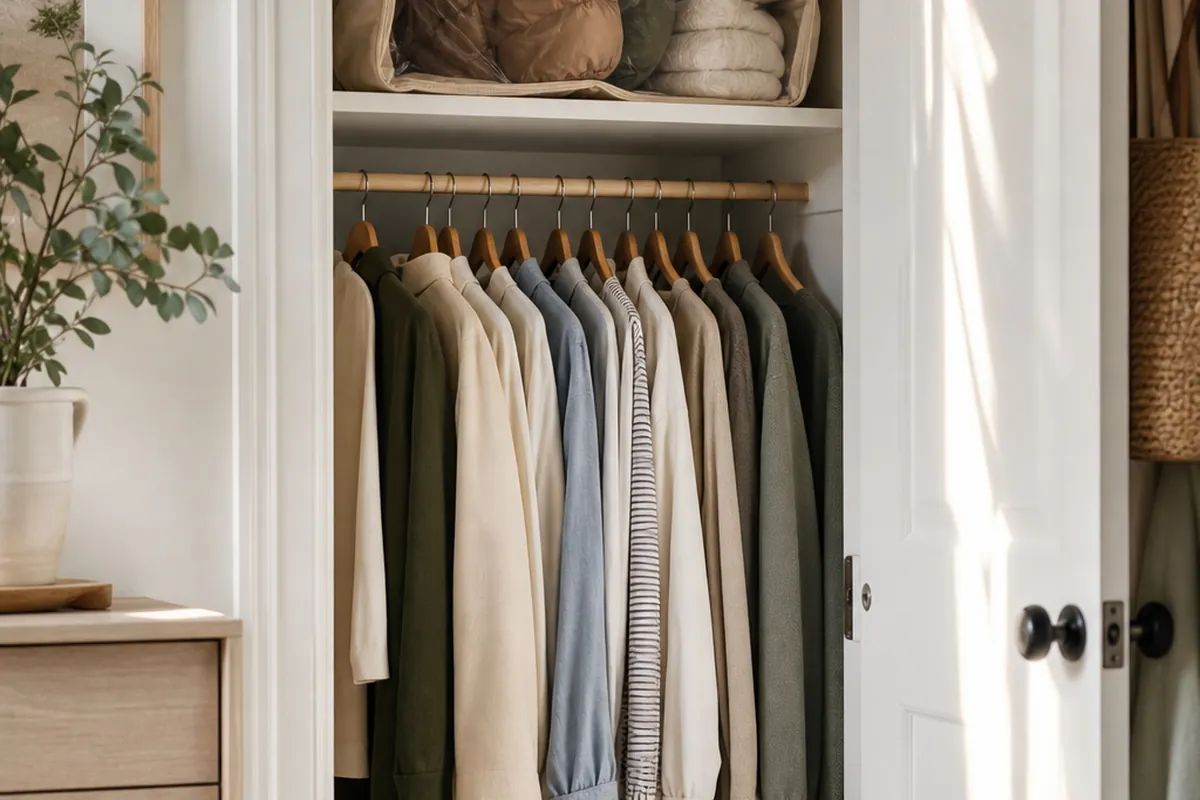
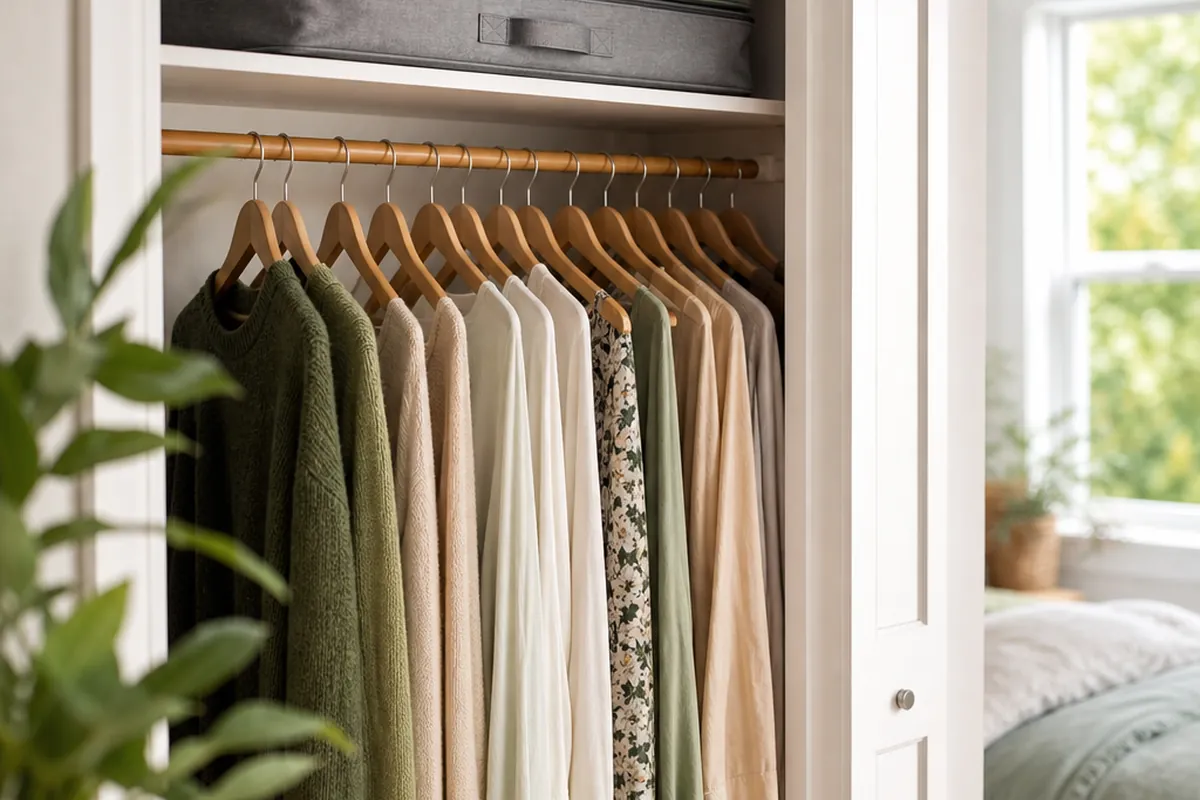
One exception to the no-hanging rule: fine-gauge lightweight knits and drapey open cardigans you wear as layers. Those wrinkle badly when folded and weigh almost nothing. Use wide wooden or padded hangers, never wire. For anything mid-weight you want hanging for speed, try the fold-over method, draping the sweater’s midsection over the hanger bar so the weight splits between body and sleeves instead of pulling down from the shoulders.
If you only buy one thing
Buy the hanging closet shelf organizer. It converts space you already own and are currently wasting, costs less than a dresser, and puts your daily knits at eye level. Under-bed clothes storage bags come second, because moving the off-season half out is what makes the closet breathe. Clear stackable storage bins are third, genuinely useful but easy to delay until you know what is actually left up top.
Keeping the system alive past November
Sweater storage rarely fails at setup. It fails at the return step, three weeks in. Three habits keep it honest.
Refold at the mirror. A sweater tossed on a chair will not get folded in thirds at eleven at night, so fold it standing right there the moment you take it off and drop it straight back in the cubby.
Swap in January. Anything you have not worn by mid-winter joins the off-season pile in the under-bed clothes storage bags, which frees a cubby for the three you actually reach for. Small move, big difference.
Air on the way in and on the way out. Knits coming out of compression should lie flat on the bed for a day before you wear them. Anything going into storage sits out overnight after its last wear so moisture evaporates instead of getting sealed in with it.
The whole build takes an afternoon: one hanging closet shelf organizer on the rod, two clear stackable storage bins up top, two under-bed clothes storage bags loaded with the off-season half. No drilling, no landlord conversation, no more shoulder bumps in the wool you love most.