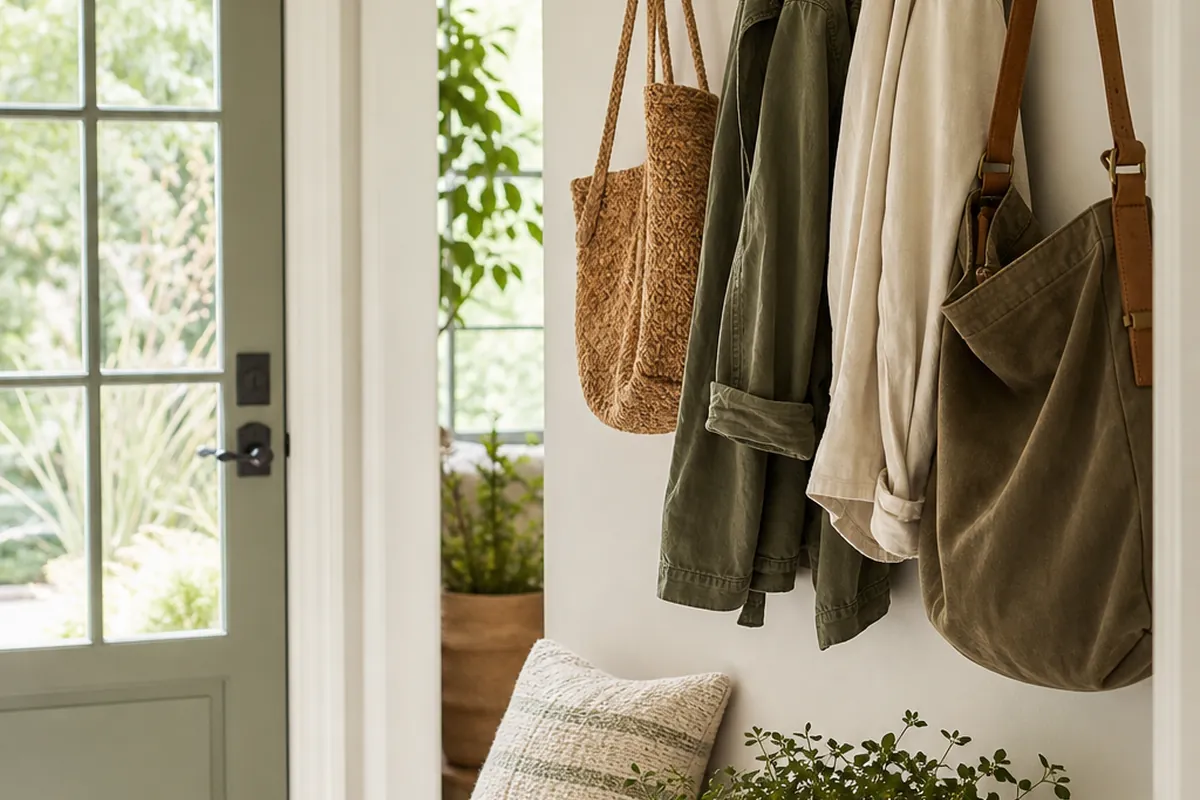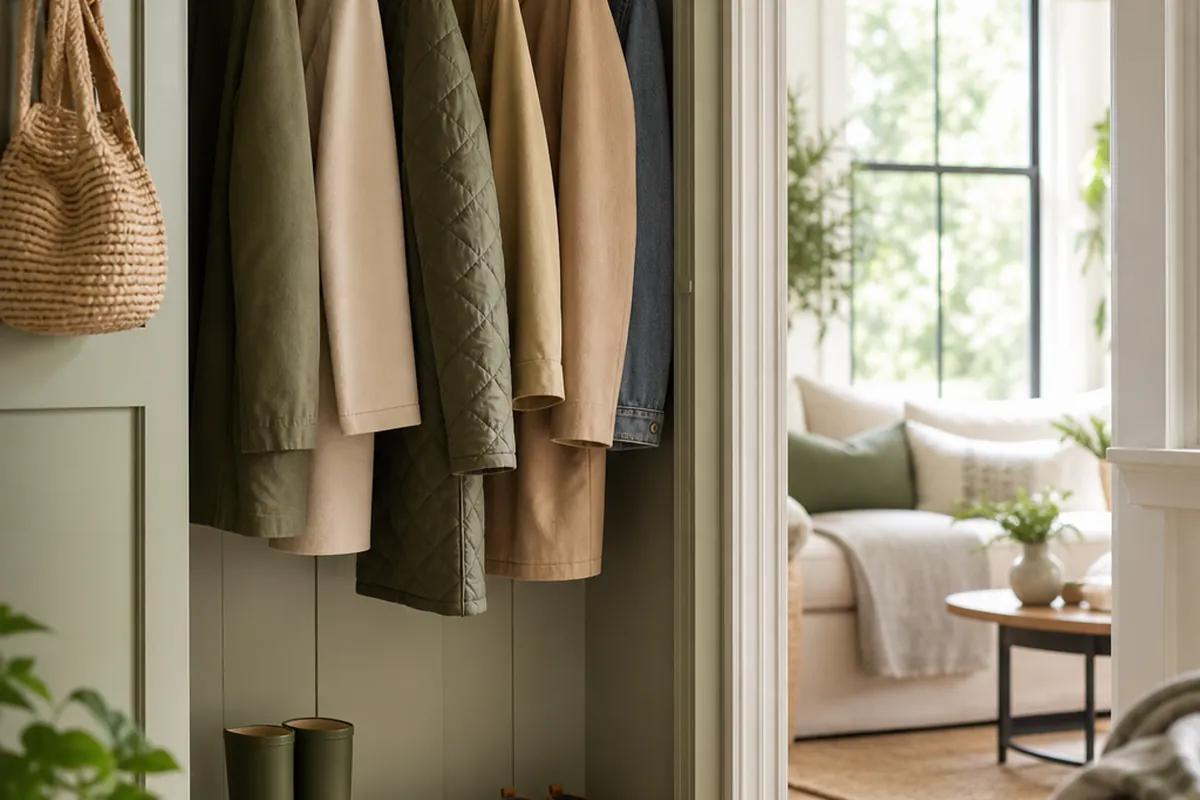
A winter coat takes up the rail space of four shirts and stays there eight months of the year whether you are wearing it or not. In a one or two rail closet, that is real square footage lost to something you will not touch again until the temperature drops, and most people solve it by shoving the coat to the far end of the rail rather than actually moving it out of daily rotation.
The fix is not a bigger closet. It is treating coats as a seasonal category with its own storage, the same way you already treat sweaters or swimwear, and picking the right container for the specific coat, because a down parka and a wool overcoat fail in opposite ways if you store them wrong.
1. Sort coats by fabric before you sort them by season
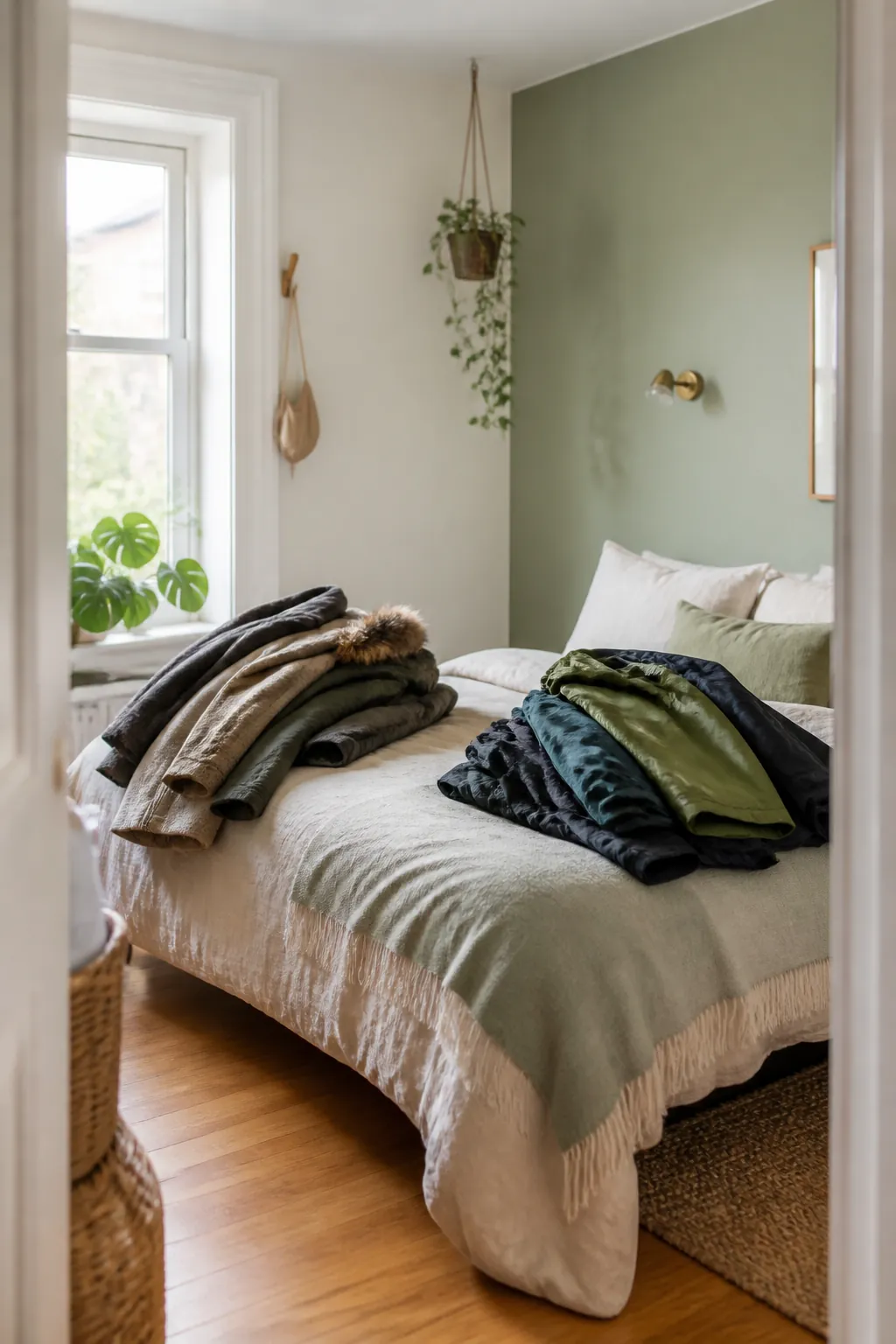
Not every coat should be stored the same way, and this is the step people skip because it looks like extra work for no reason.
Down and wool are structural. They hold their shape and warmth through loft, meaning trapped air, and anything that compresses them for months flattens that loft and does not always spring back. Synthetic shells, rain jackets and cotton canvas coats have no loft to lose, so they tolerate being squeezed into a small space fine.
Lay everything out and split it into two piles before buying a single container. This decides which method below applies to which coat, and skipping it is how a wool coat ends up flat as a pancake in April.
2. Clean before you store, every time, no exceptions

A coat going into storage dirty is a coat that comes out with a set stain and, worse, a smell that attracts moths and other insects drawn to body oil and food residue, not the fabric itself.
Wool and down go to the cleaner or through a gentle wash cycle rated for the fill. Everything else gets a wipe down and a check of the pockets, because a forgotten tissue or snack wrapper is what actually draws pests to a closed container.
This step takes twenty minutes and it is the difference between a coat you are happy to see again and one you are washing before you can wear it.
3. Bag wool and down in something that breathes

Fabric needs airflow over months of storage, and a sealed plastic bag traps the moisture a coat picks up from humidity in the air, exactly the condition mildew needs.
A cotton or non-woven garment bag is the right container for wool coats and down jackets, because the fabric breathes while still keeping dust and light off. Don’t have one yet? An old cotton pillowcase over the shoulders of the hanger does the same job for a single coat, a fine renter-friendly stopgap.
Skip the dry cleaner’s plastic bag for long term storage. Fine for the week between the cleaner and the closet, not for eight months.
Where the bagged coats then hang is its own problem in a short closet, and garment bag storage ideas for a small rental closet covers the rail, the door and the under-bed options.
4. Vacuum seal only the synthetic shells

This is where the fabric sort from step one pays off. A synthetic rain shell or a cotton canvas jacket has no loft to protect, so compressing it down to a fraction of its size costs nothing.
Vacuum compression storage bags pull the air out with a household vacuum, and a full size rain shell that took up a hanger’s worth of rail space flattens to about the thickness of a folded towel. That difference is what lets an under bed bin or a top shelf hold a whole season of shells instead of one.
The one hard rule: never put a down or wool coat in one of these. If you are not certain which pile a coat is in, it goes in the breathable bag from step three, not this one.
5. Give the divided top shelf to your heaviest coats, at the bottom of the pile
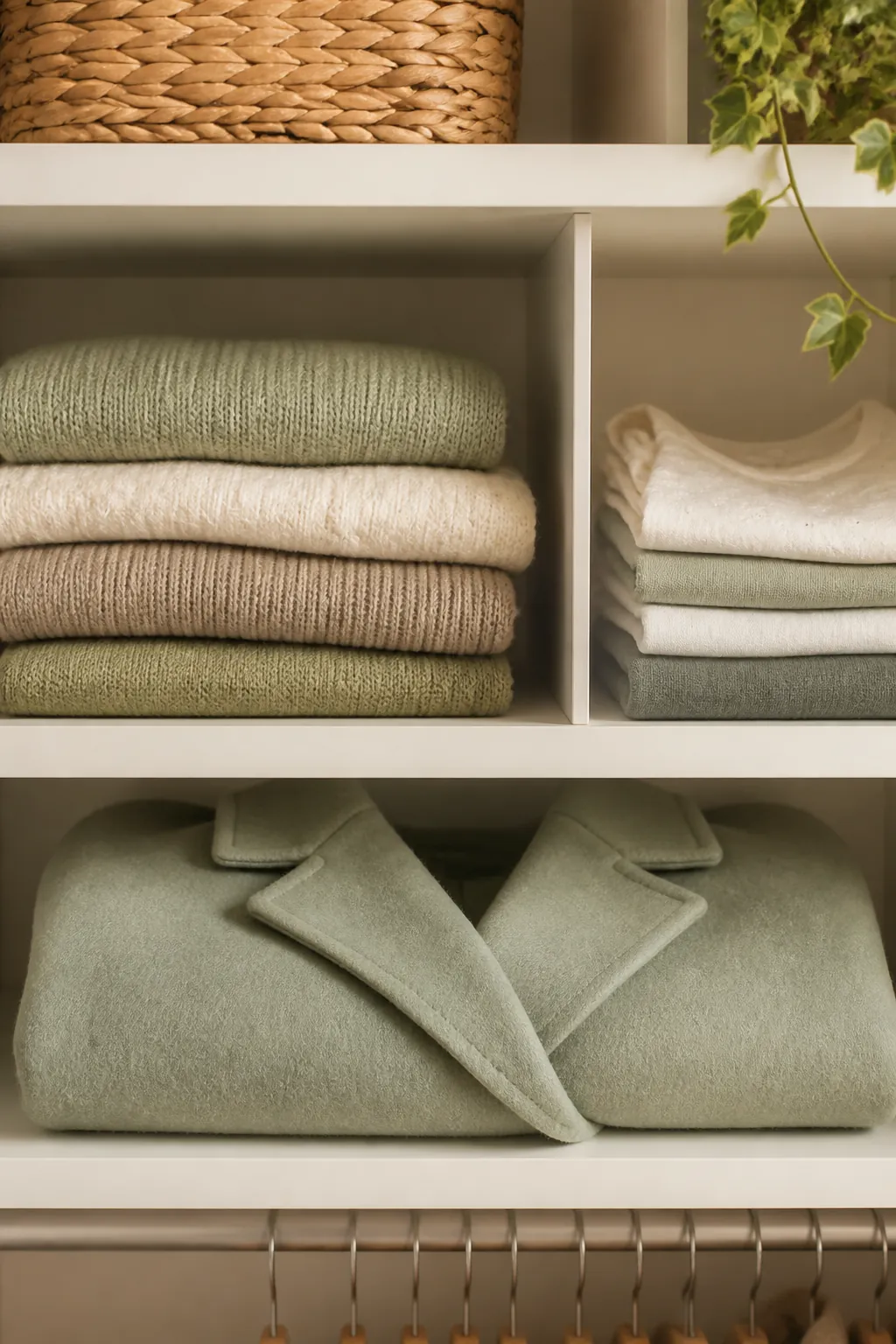
A closet shelf without structure is a place where a heavy coat slides sideways into whatever is next to it, usually squashing something softer.
Shelf dividers give a folded coat its own bay, wide enough that it lies flat rather than crushed into a wedge. Fold the coat once lengthwise and lay it flat rather than in a tight roll, since a hard fold crease sets into wool over months in a way that a knit sweater’s crease does not.
Put the heaviest coat at the bottom of any stack on that shelf, not the top. A parka or wool overcoat is easily four or five pounds, and weight resting on a lighter jacket for months leaves it visibly compressed by spring.
6. Move the whole rotation under the bed if the shelf is already full
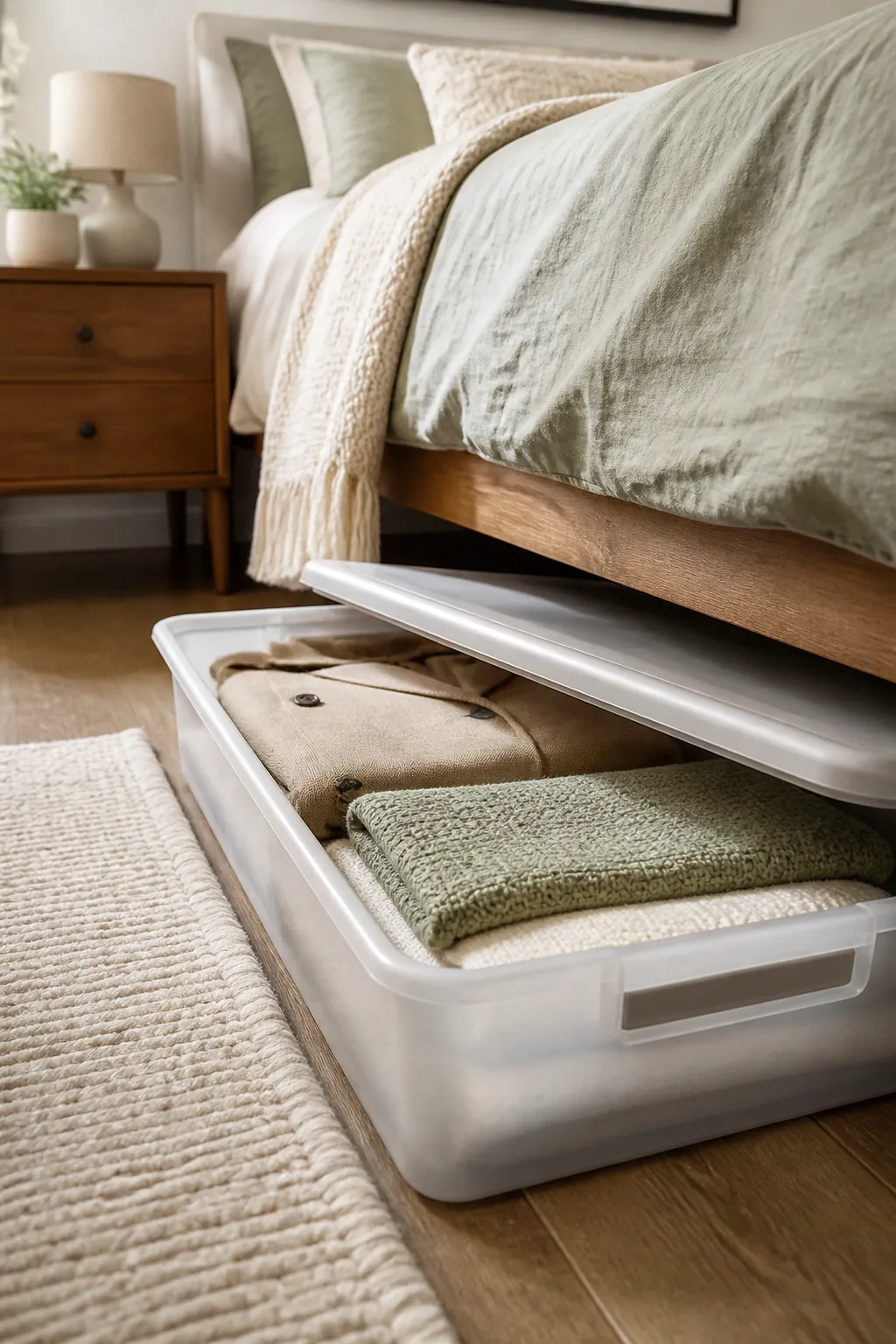
Coats are bulky enough that one can use the space three folded sweaters would take, so if the top shelf already has a season of sweaters on it, coats are the thing to relocate rather than force onto a shelf with no room left.
Under the bed handles this well because a folded coat is flat and rigid enough to lie in a low bin without crushing anything underneath it, unlike soft items that get pancaked by whatever sits on top. A bin with a lid, not a bag, is worth the extra few dollars here, since a soft bag under a bed frame tends to get compressed by the mattress slats above it over months.
The full method for this space is in under bed storage for a small bedroom. Coats suit it well precisely because they are seasonal and bulky, the two qualities that make the kneeling worth it.
7. Keep one coat rack hook by the door for the transition weeks
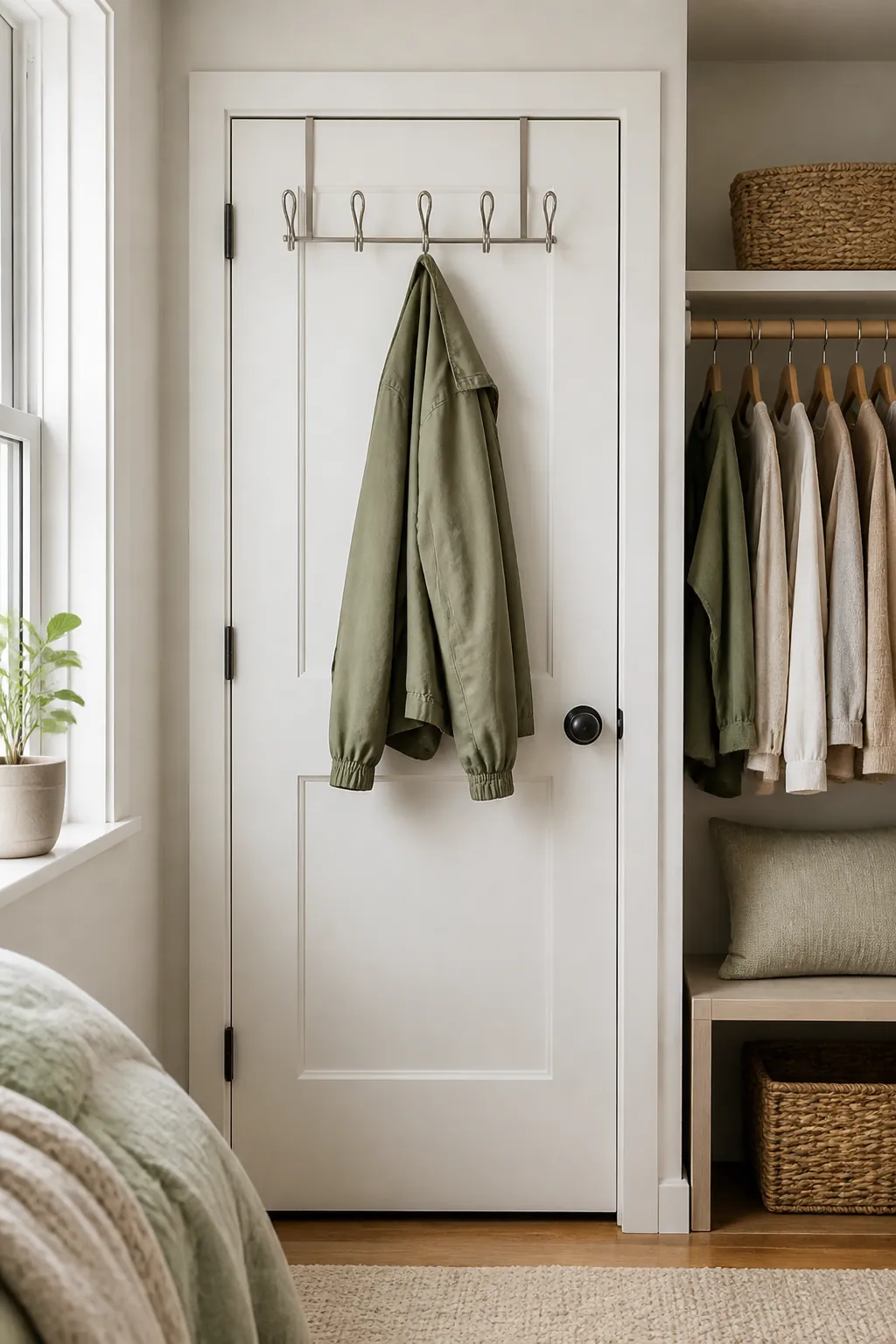
Seasons do not switch overnight, and the two or three weeks either side of a swap are when a coat that is technically in storage gets pulled back out for one cold morning.
An over-the-door hook rack gives that transition coat a spot that is not the main rail and not the storage bin either, so you are not unpacking a vacuum bag for one chilly Tuesday. It hangs on the closet door with no drilling, which matters if the closet door is hollow core, as most rental doors are, and cannot take a screw-mounted hook.
Move whatever is on it into proper storage once the weather actually settles. This spot is for the transition, not a permanent third option that quietly becomes a fourth pile.
8. Deal with moths before they are a problem, not after

Wool is the coat fabric moths actually eat, specifically the keratin protein in the fiber, so a wool coat sitting folded and undisturbed for eight months is exactly what they look for.
Cedar blocks or lavender sachets inside the garment bag are a mild deterrent, not a guarantee, and they need refreshing every few months as the scent fades. What matters more is disturbance: a coat pulled out, shaken, and refolded once mid-season is far less likely to develop a moth problem than one left completely undisturbed from October to April.
Find moth holes and the damage is done for that coat, so the whole storage area needs a deep clean, since eggs can be on other items nearby. Catching it early, at the first small hole, saves everything else stored near it.
9. Label every bag and bin by coat, not by season

“Winter coats” on a label tells you there are coats in there. It does not tell you whether your good wool coat or the kids’ snow jackets are in this bag when you have three of them stacked.
Write what is actually inside: whose coat, what type, roughly how heavy. This matters most on the top shelf, where you read a label from below rather than opening every bag, and it is the difference between finding the right coat in ten seconds and pulling down three to find one.
10. Set the swap date by the forecast, not the calendar

The urge to swap on a fixed date, the first of a given month, ignores that some years run two weeks warm or cold on either side.
Watch the ten day forecast instead and swap when it shows a real pattern change, not one warm afternoon. This avoids packing everything away and then needing a coat for one unseasonably cold week, which is exactly the scenario step 7’s door hook covers.
Do the swap both directions on the same day if you can. Storing this season’s coats and pulling out last season’s in one session means handling the divided shelf or the under bed bin once, not twice a few weeks apart.
Where to start
If you do nothing else, sort by fabric first. Wool and down go in a breathable bag on the divided shelf, weight at the bottom, and everything synthetic gets vacuum sealed flat enough to slide under the bed. That one split prevents the two most common failures, crushed loft and mildew, for twenty minutes of sorting.
Add the door hook for the transition weeks and a real label on every container, and a closet that used to lose a third of its rail to coats gets that space back for eight months a year.