A drawer of workout clothes looks nothing like a drawer of everyday clothes. Leggings do not fold flat, sports bras do not stack without crushing, and half of what is in there was worn yesterday and needs to dry before it goes anywhere near the clean pile. Most small rental closets were built for shirts on hangers and folded cotton, not for a rotation of damp synthetics that need airflow as much as they need space. Treat activewear like the rest of your wardrobe and it turns into a tangle of leggings within a week.
Nine ways to fix that without a dresser, a drill, or a bigger closet.
1. Separate clean from worn before anything gets stored
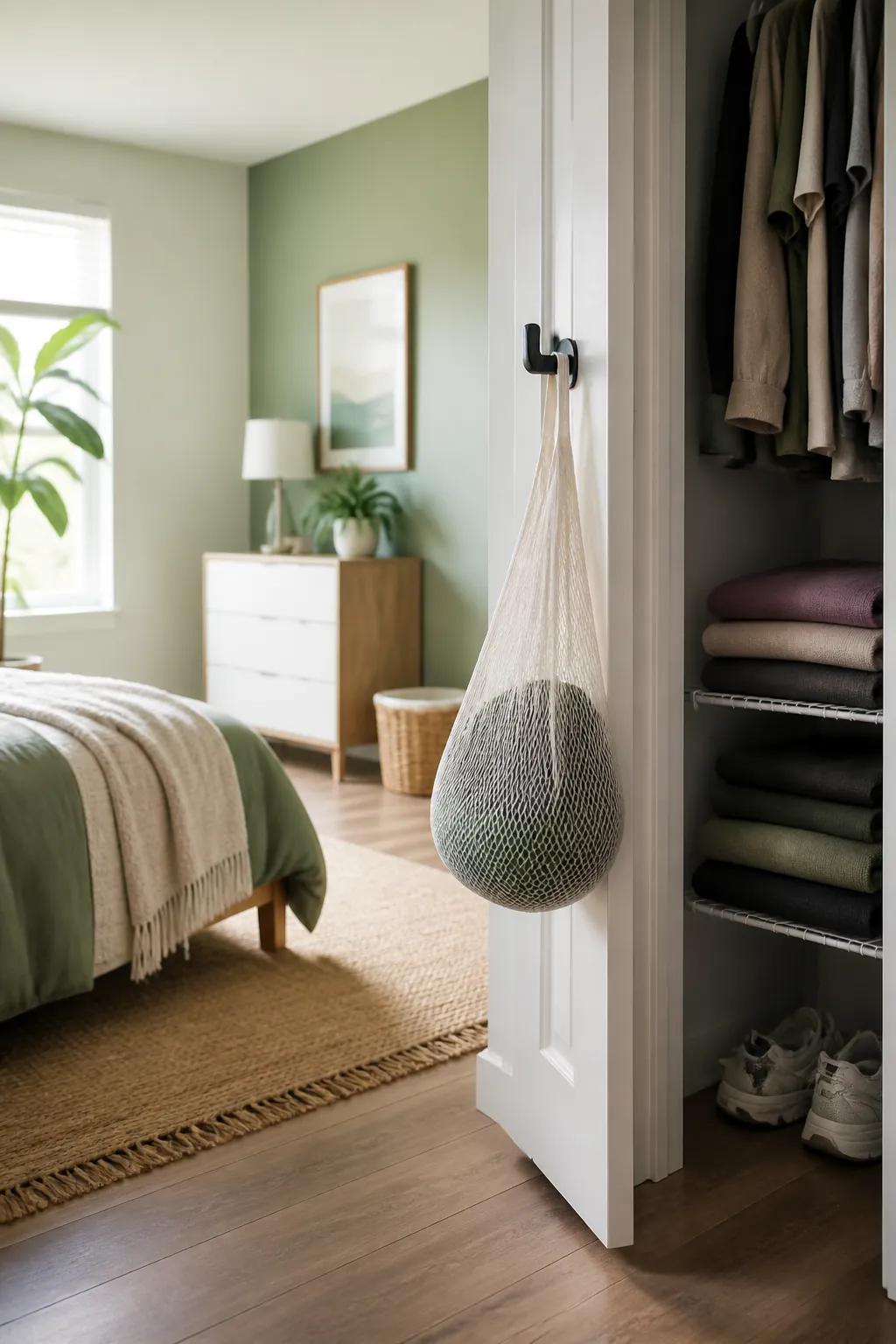
The single habit that keeps activewear storage from turning sour is sorting the moment you take something off. A shirt worn through one hard session is carrying bacteria that start multiplying on damp synthetic fibers within a few hours, and folding it into a stack of clean tees just spreads that to everything touching it.
Keep a small mesh laundry bag or an open hook by the closet door, not inside it, for anything that came off sweaty. It gets a few hours of open air before it goes in the wash, never straight into a bin with a lid. Everything that reaches your actual storage system should already be clean and fully dry. That one rule solves most of what people blame on “bad” storage products.
2. Roll instead of folding stretch fabric
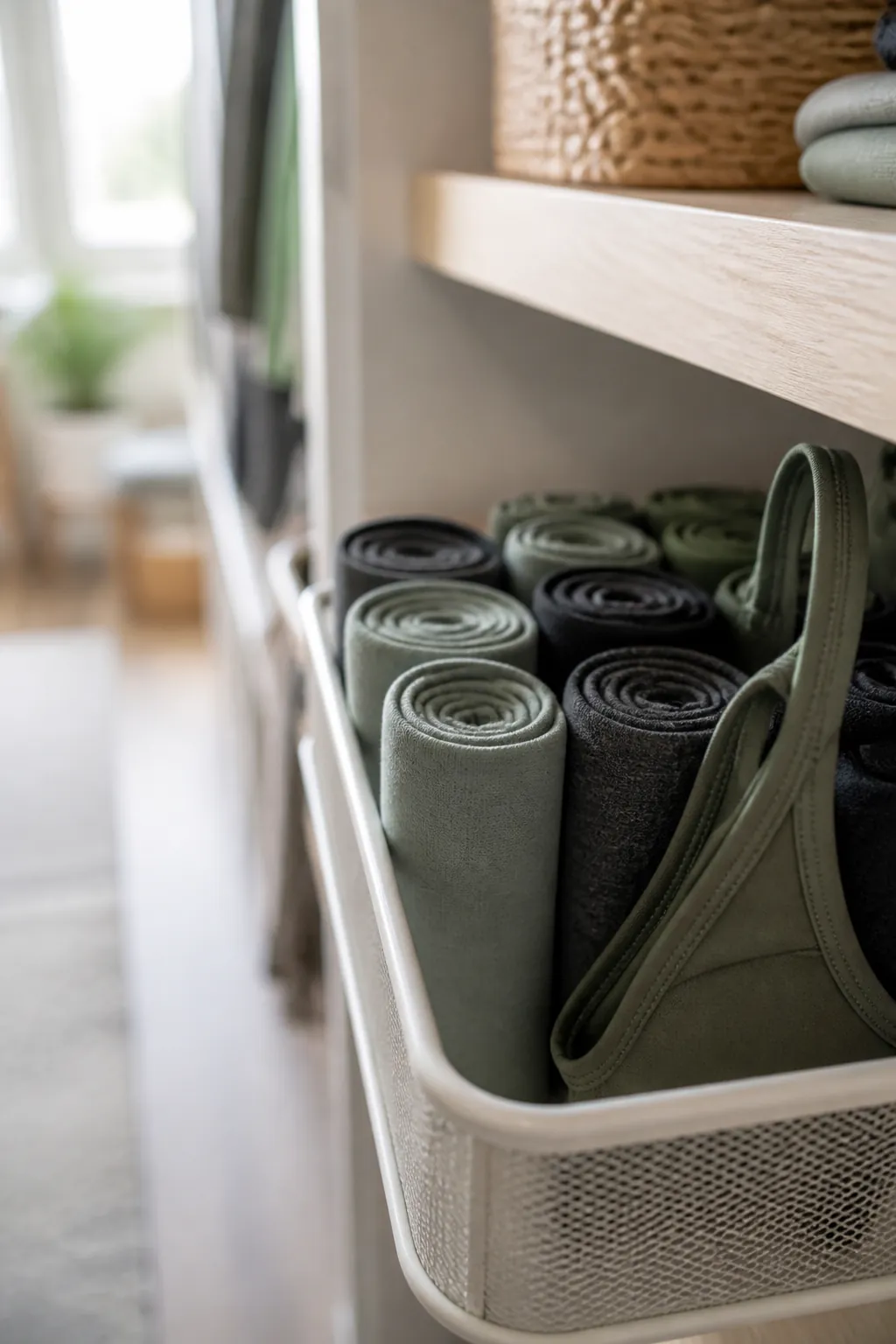
Cotton holds a fold. Spandex-blend leggings, compression shorts, and technical tees do not, because the fiber wants to spring back to its relaxed shape the second you let go. Fold them the way you fold a T-shirt and the stack slumps sideways within a day, and you end up refolding the same six items every morning.
Roll instead. Lay the piece flat, fold in any loose fabric at the sides so the width matches roughly where you want it to sit in the bin, then roll from the hem up into a tight cylinder about two inches wide. A properly tight roll stands on its own end, which means you can line a whole row of them up like books on a shelf and see every color at a glance instead of digging through a pile.
3. Give the rolls a tray so they cannot unwind
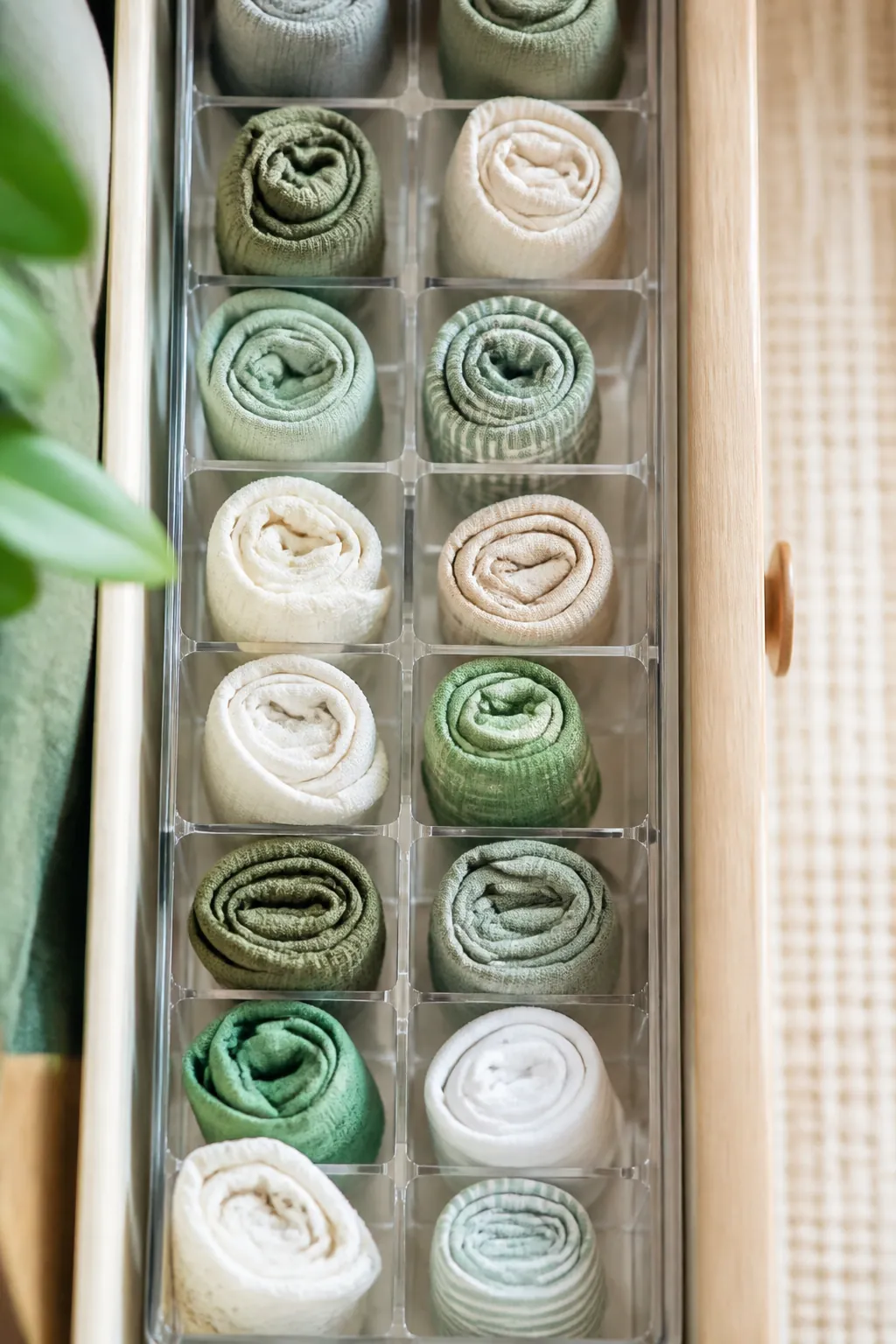
Rolled fabric that touches nothing else eventually loosens, especially anything with real stretch, and a loose roll flops over onto its neighbor the same way an unfolded shirt does. A clear drawer organizer set solves this by giving each roll a compartment roughly three to four inches wide, just tight enough to keep the cylinder from unwinding without crushing it flat.
Set the tray inside a shallow bin on the closet shelf, or inside an actual dresser drawer if you have one. Either way, the trick is the same one that makes the KonMari drawer method work for regular clothes: shrink the span each item has to support itself across, and it stops falling over. Sort by type across the trays, leggings in one row, sports bras in another, so you are not hunting through mixed categories every morning.
4. Store sports bras cup side up, never stacked flat
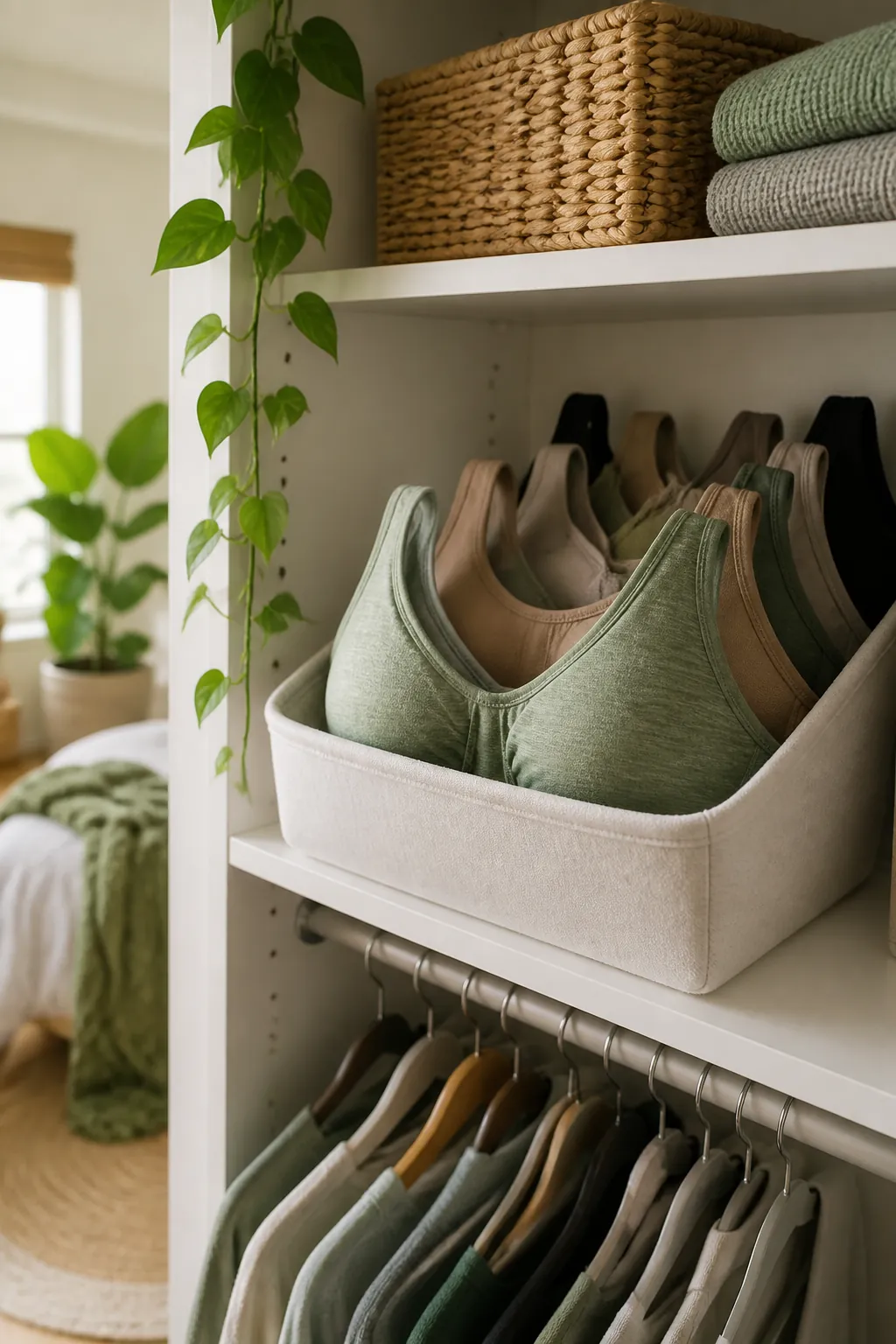
Padded and molded sports bras hold their shape through the cup structure, and that structure gives out under sustained weight the same way a paper cup collapses under a stack of books. Stacking three or four bras flat, one on top of the next, on a shelf for a few weeks can leave a permanent crease across the padding that no amount of reshaping fixes.
Stand them cup side up in a single layer instead, nested slightly like bowls in a cabinet, so the weight rests on the sturdy band rather than the padding. A shallow bin about four inches deep is enough depth for most sports bras to stand upright without tipping.
5. Corral socks and small gear in their own bin
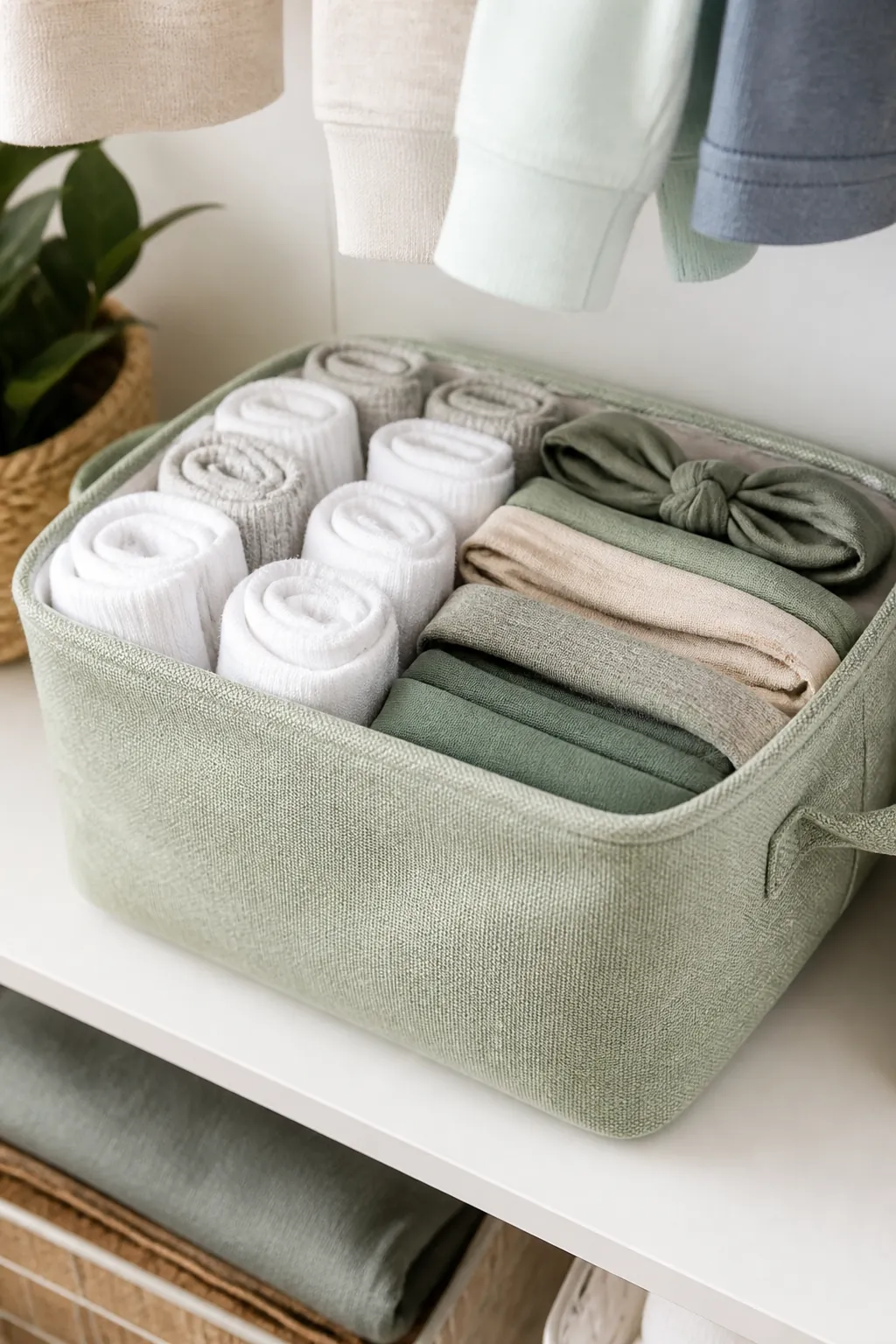
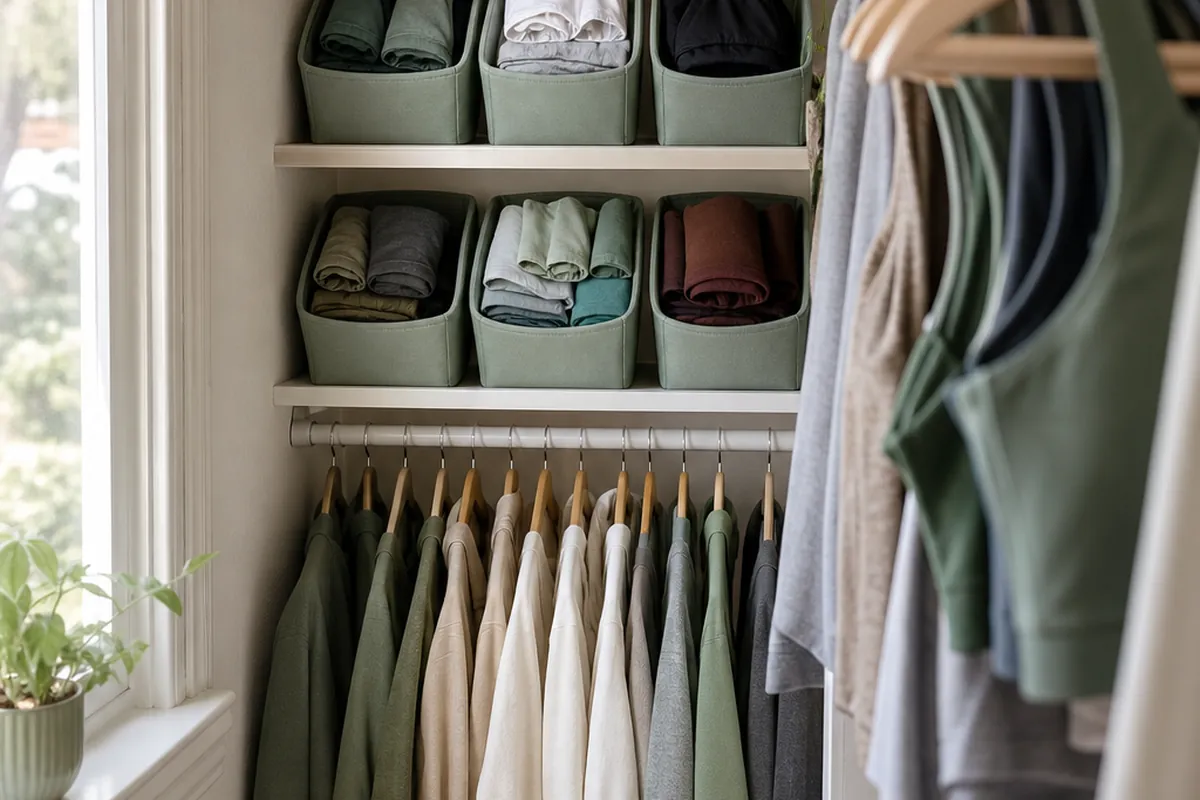
Ankle socks, headbands, wristbands, and the spare hair ties that seem to multiply on their own are the items most likely to end up loose on the closet floor, because nothing about them has a natural home. A fabric storage bin with handles gives them one, and the open-weave sides let air move through in a way a sealed plastic tote does not, which matters for anything that spent the morning in a gym bag.
Roll socks rather than balling them, since a rolled pair takes up less width and lies flatter against its neighbors. One bin per category beats one big bin for everything. A mixed bin of socks, wristbands, and hair ties turns back into a dig-through pile within a week, which defeats the entire point of containing it.
6. Repurpose a shoe organizer for the small stuff you actually reach for daily
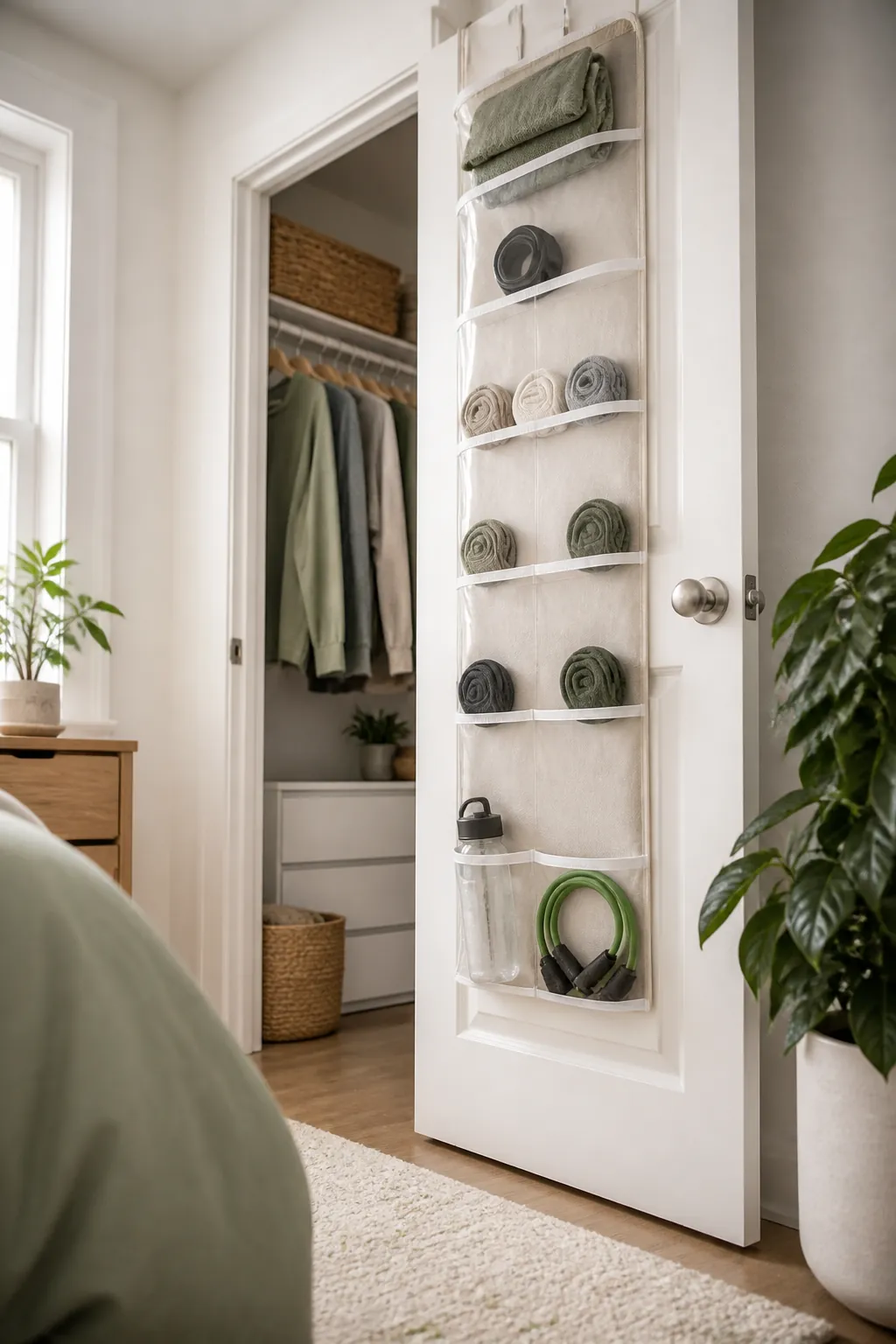
An over-the-door shoe organizer with clear pockets was built for shoes, but its pockets are close to ideal for the smaller pieces of a workout kit: a resistance band coiled into one pocket, a foam roller ball in another, a spare water bottle, a buff, a pair of gloves. Clear vinyl pockets mean you can see the contents without unzipping or digging, and the whole thing hangs on the back of the closet door with no drilling and no adhesive.
Reserve the top two rows for what you grab most, since those sit at eye level and shoulder height. Bottom rows work for backups and off-season gear like winter running gloves you only need three months a year. This is also the spot for anything too odd-shaped to bin, a jump rope, a set of wrist weights, that would otherwise roll around loose on a shelf.
7. Keep gym shoes off the closet floor and away from clean fabric
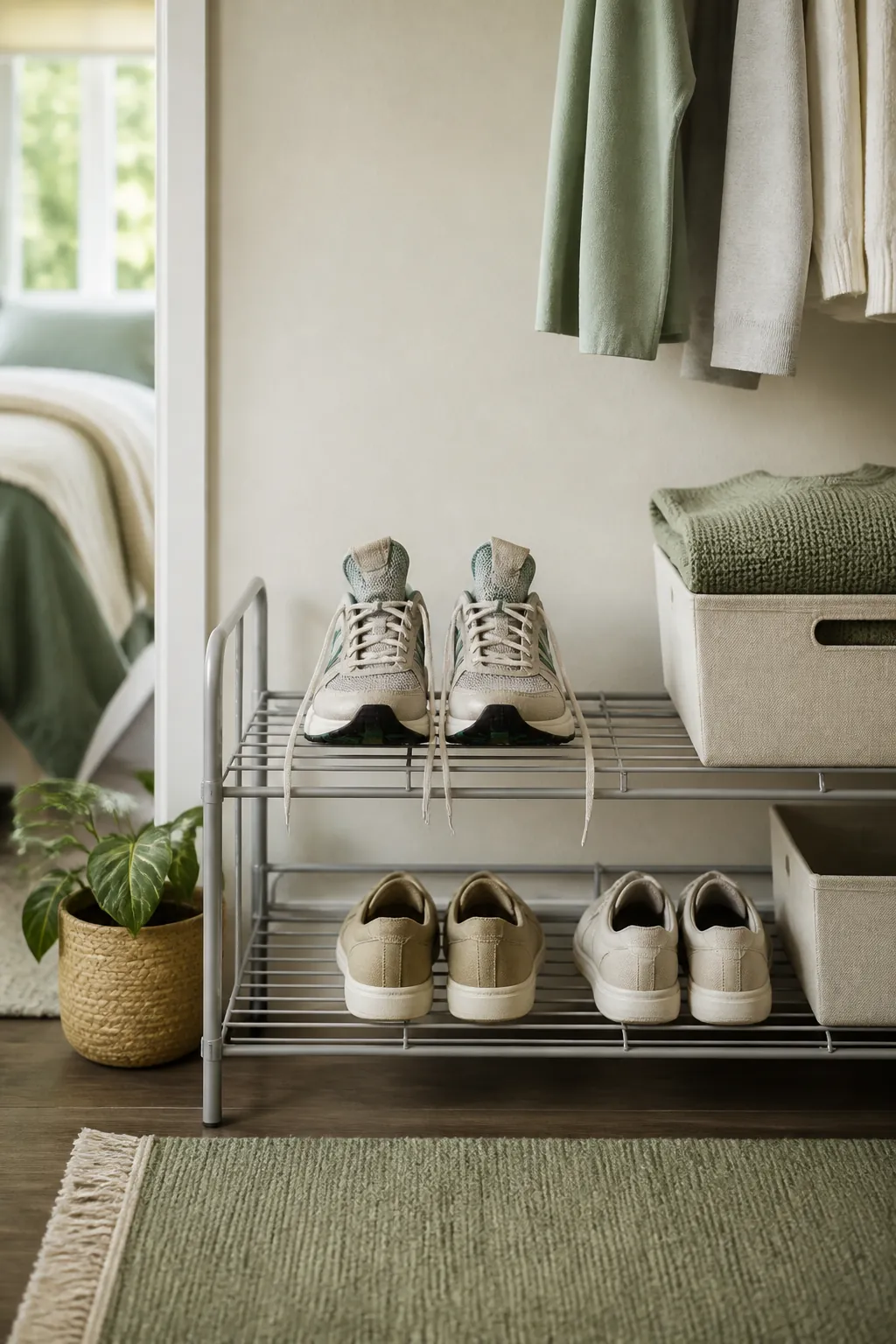
Running shoes and cross-trainers hold onto more moisture than dress shoes because mesh uppers and foam midsoles are built to breathe, which also means they release trapped sweat back into the air around them for hours after a workout. Stash a still-damp pair directly against folded leggings or into a closed bin, and both problems compound.
Give gym shoes an open shoe rack rather than a solid shelf or a drawer, ideally just outside the main closet if you have the floor space, in an entryway or mudroom corner. If they have to live inside the closet, keep them on the lowest shelf or floor, away from where clean folded activewear sits, and let them sit unlaced with the tongue pulled forward for a few hours after each run so air actually reaches the insole.
8. Hang the handful of pieces that genuinely need it
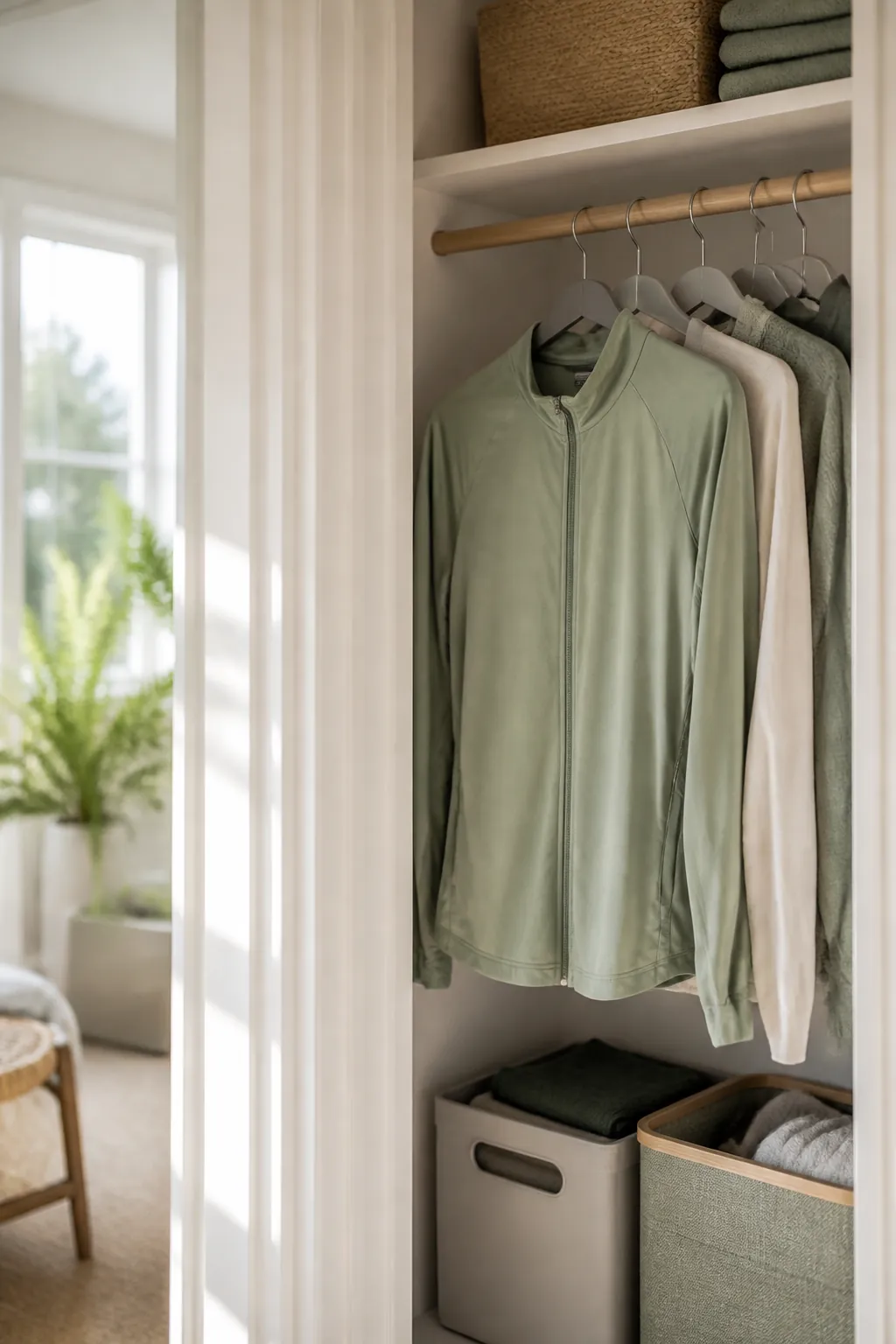
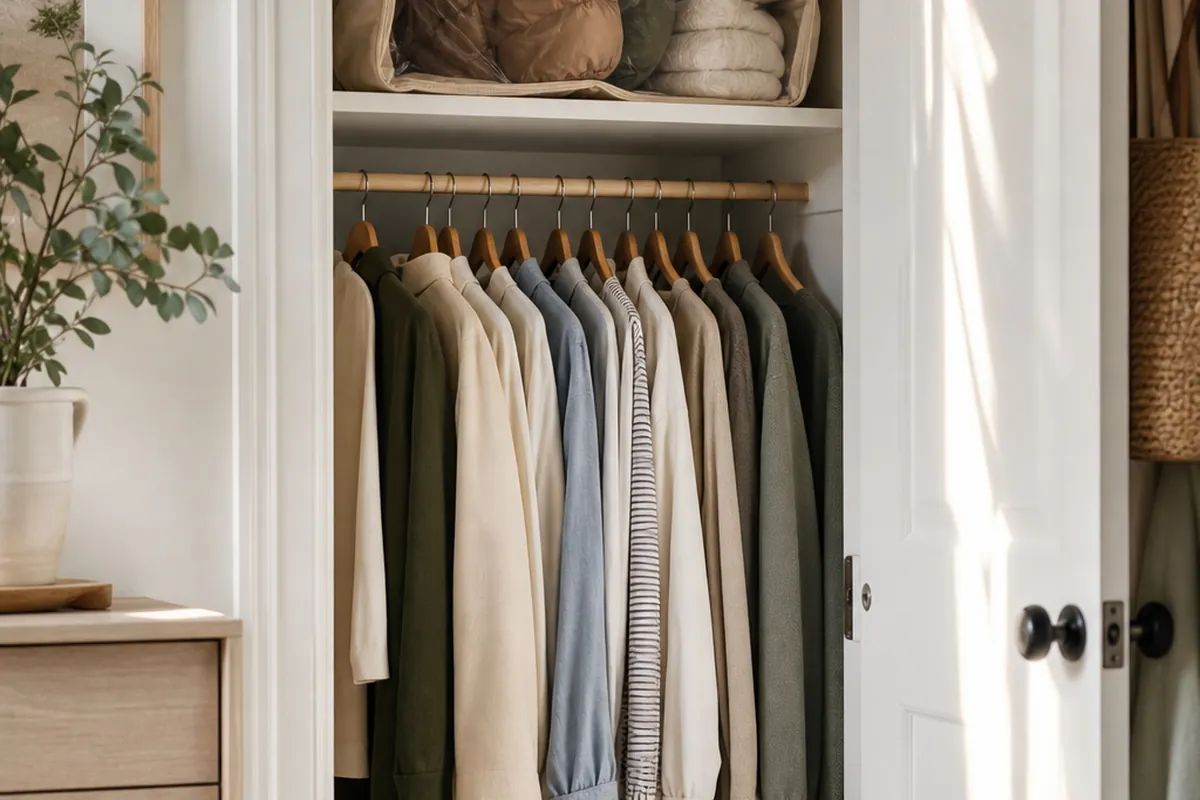
Not everything belongs in a roll. Lightweight running jackets, zip-up layers, and anything with a structured hood wrinkle badly when rolled tight and take up barely any hanger space, so they are the exception worth hanging. Use slim, non-slip hangers rather than wire, which lets a jacket keep its shape without denting the shoulders.
Keep this section small on purpose. Two or three jackets and a rain shell is plenty. The moment “things I hang instead of roll” grows past that, you are just back to a pile that happens to be vertical, and the whole point of rolling was to keep the collection visible and flat.
9. Build a grab-and-go zone for the bag itself
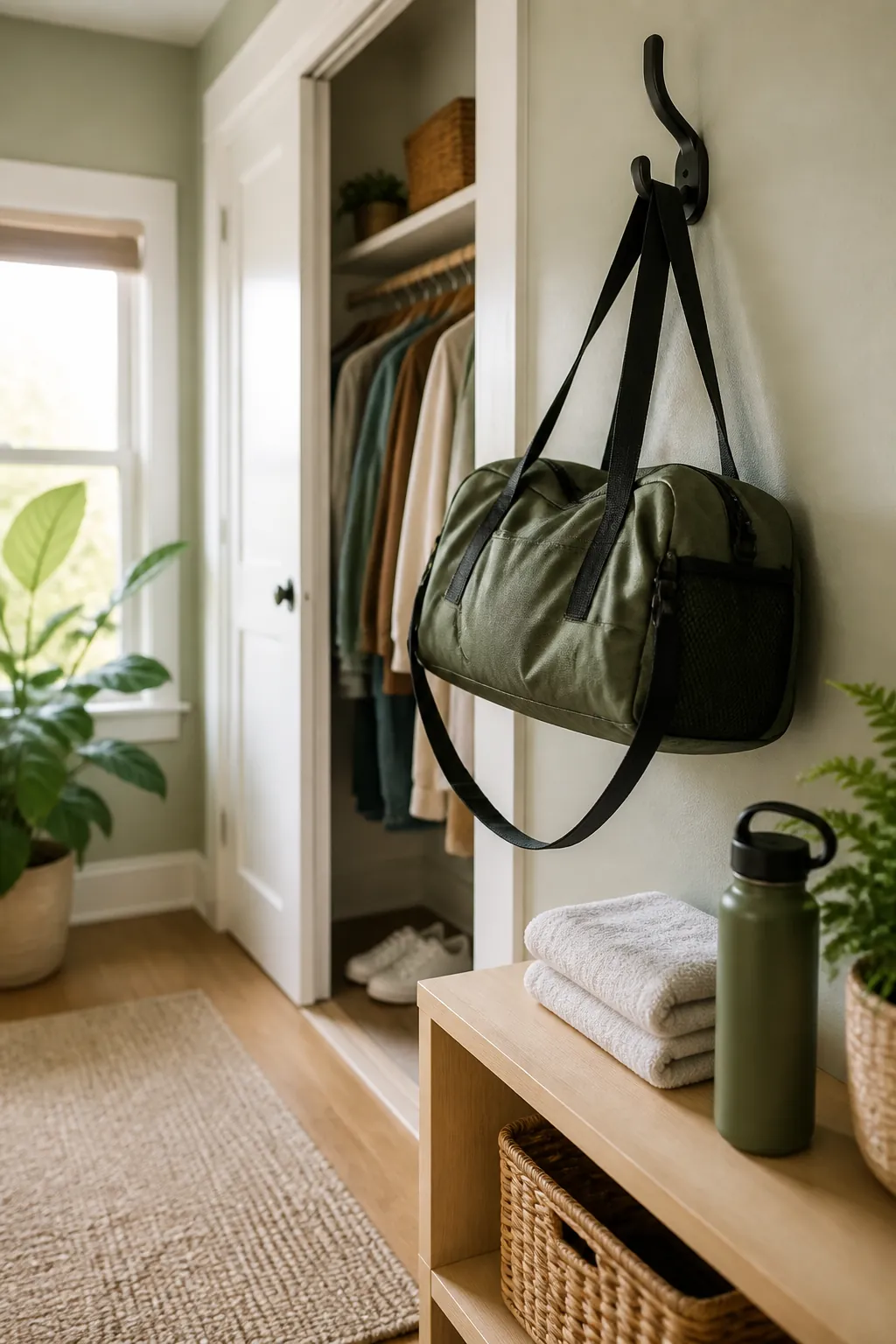
Every other idea here falls apart if getting dressed for a workout means opening three bins and a door every morning. Pick one spot near the closet entrance, a single hook and a small shelf, and stage tomorrow’s outfit and bag there the night before. A freestanding garment rack works well for this if your closet is already packed, since it holds the bag, a jacket, and a change of clothes just outside the door without touching the system inside.
This is the step that keeps everything else from unraveling. A closet stays organized right up until someone is running late, and a five-second grab zone is what stops that person from yanking three rolls loose looking for one legging.
Where to start
Start with the roll, not the products. Get leggings, sports bras, and tees into tight two-inch rolls and you will already see less mess before you buy anything. Add the clear drawer organizer trays next, since they are what keeps those rolls from unwinding into a pile again. The fabric bins and the over-the-door pocket organizer are the finishing pieces, worth adding once you know what small items are actually creating clutter in your specific closet.
None of this requires a drill or a landlord conversation. Every piece here hangs on an existing door, sits loose on a shelf, or slides into a drawer you already have, which means it all comes with you at the end of the lease, and the closet goes right back to holding shirts on hangers.