A toilet brush and a plunger are the two bathroom items nobody wants to look at and nobody can get rid of. They are also both wet more often than they look dry, both faintly unpleasant to store near anything else, and both need to live close enough to the toilet that reaching for one during an actual emergency does not mean a trip across the room first.
In a small bathroom that usually means they end up wedged in the gap beside the pan, leaning against the wall, or standing directly on the floor where the base collects a ring of grime nobody notices until it has been there for months. None of that is necessary. Here are nine ways to give both a real home.
1. Measure the forgotten strip beside the toilet first
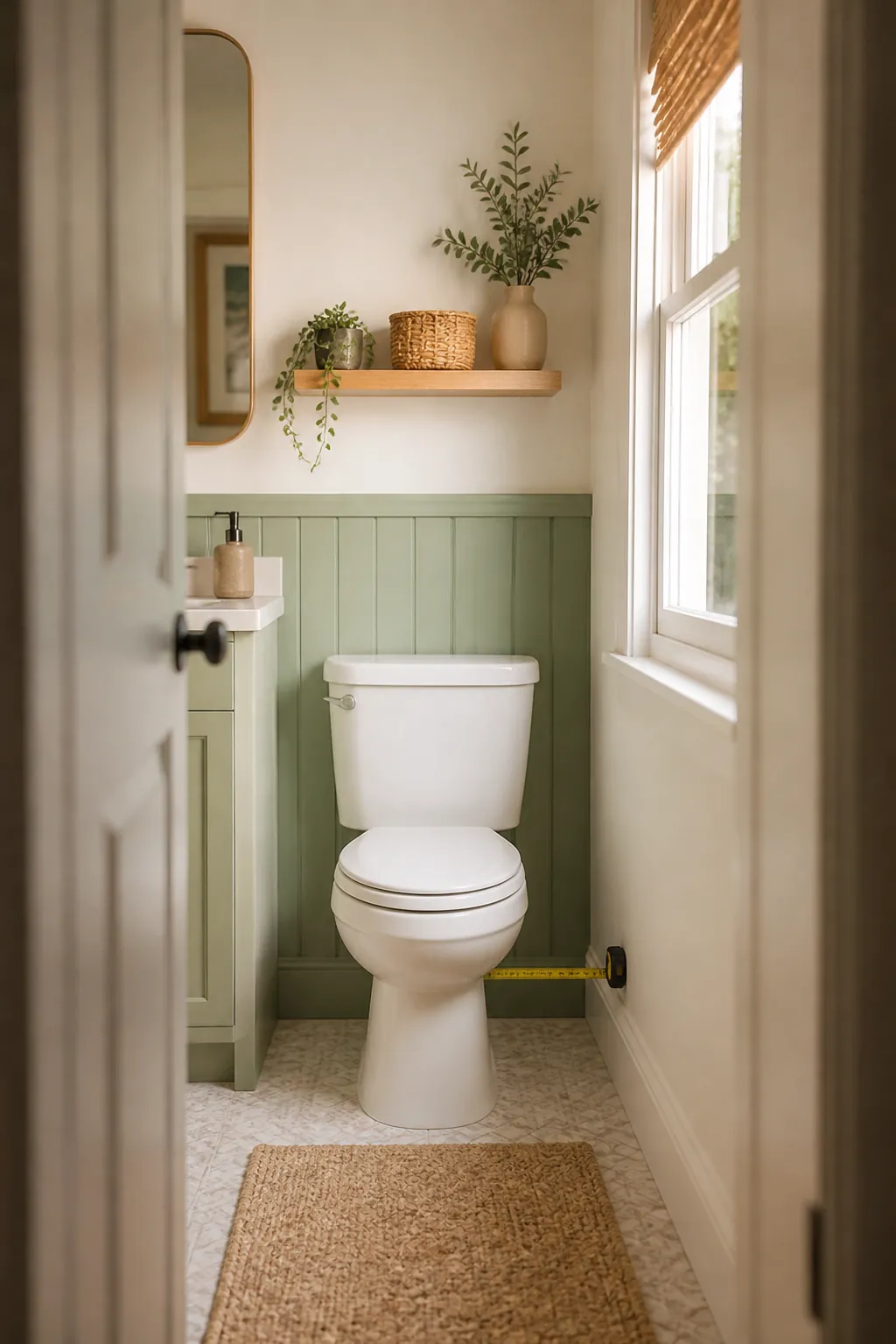
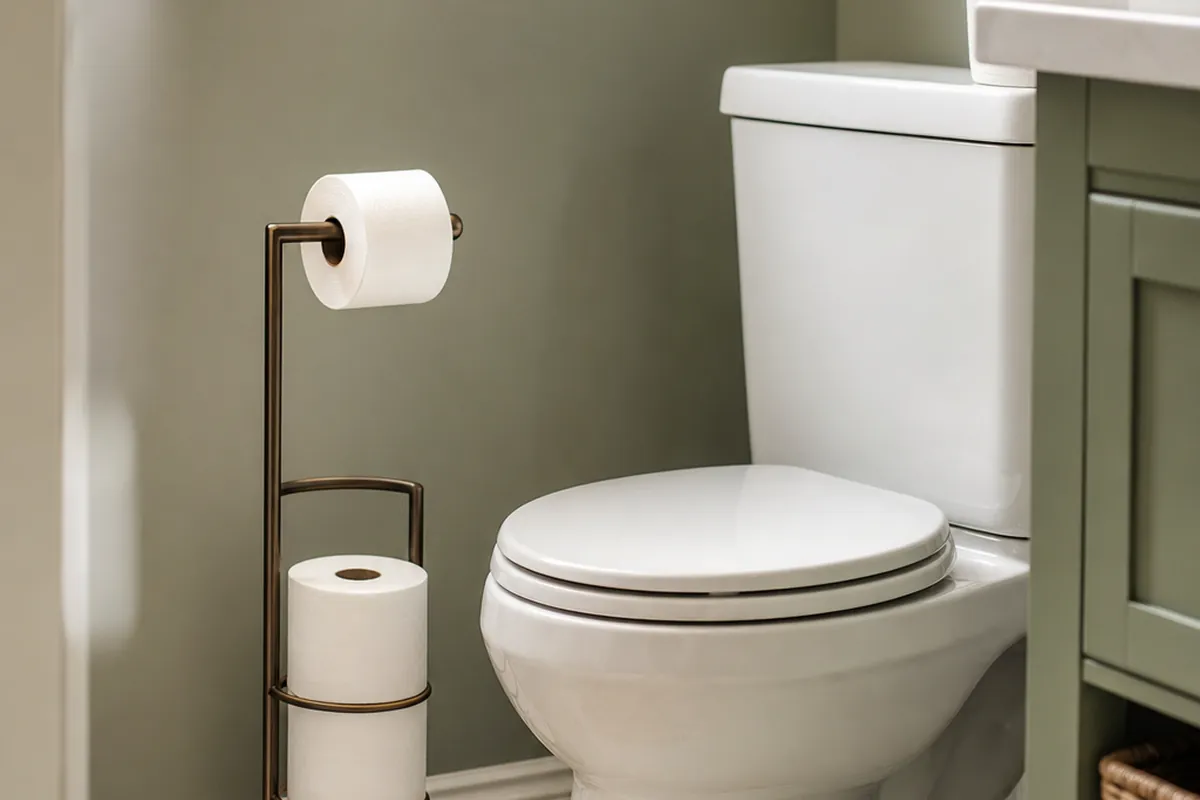
Before buying anything, measure the gap between the toilet and the nearest wall or vanity. In most small bathrooms it runs somewhere between four and nine inches, and it is almost always empty because nothing else fits there.
Measure at floor level and again at the widest point of the toilet tank, since the two numbers are rarely the same and a caddy that clears the bowl can still catch on the tank. Account for the baseboard too, which typically eats another half inch off a wall measurement that looked generous on paper. A unit bought to the floor-level number alone is the single most common reason these projects fail before they start.
2. Keep the plunger head off the floor, not just out of sight
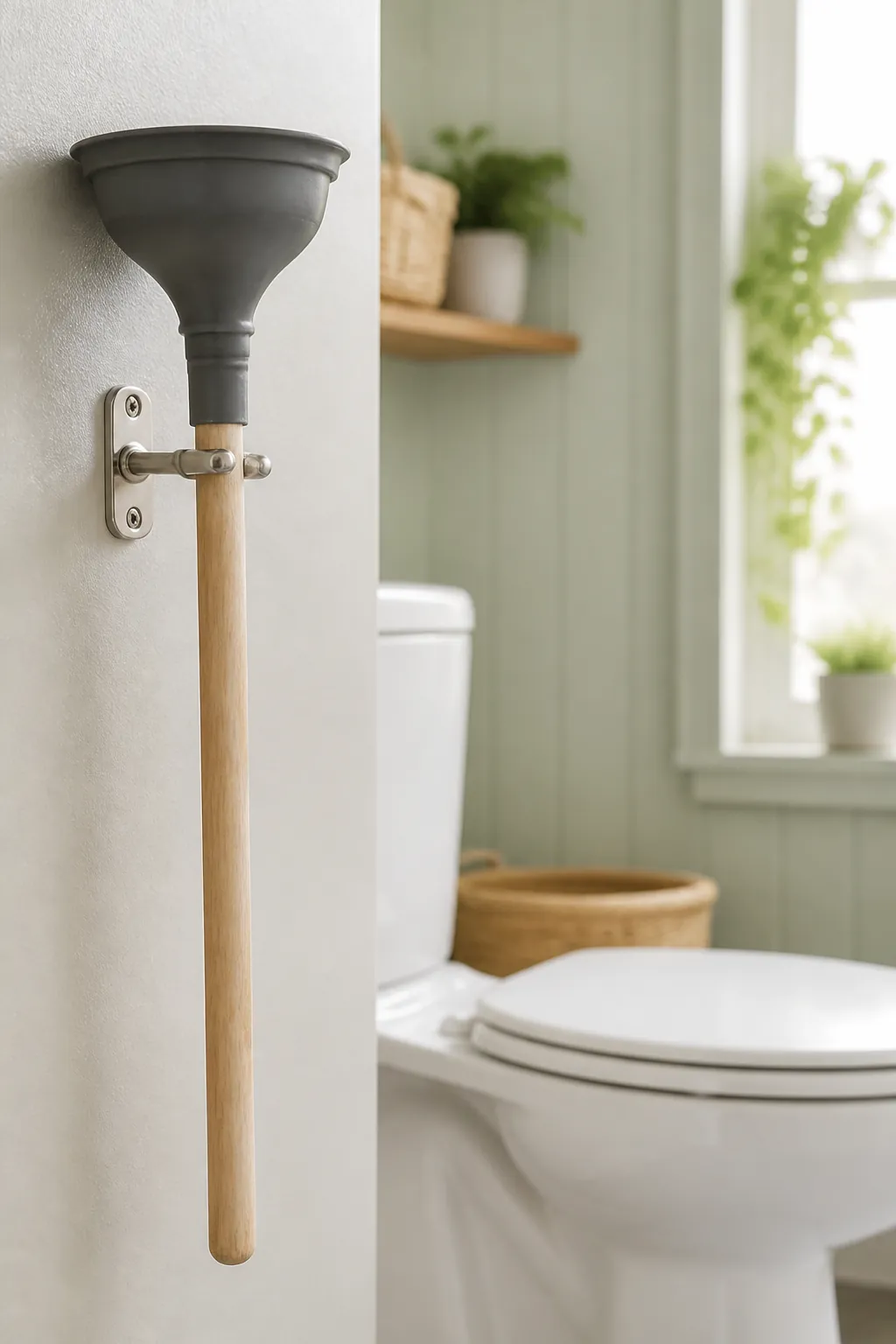
The instinct is to tuck the plunger behind the toilet and call it solved, but a plunger standing directly on tile keeps the rubber cup wet against the floor for hours, which is worse for hygiene than leaving it in plain sight somewhere it can actually dry.
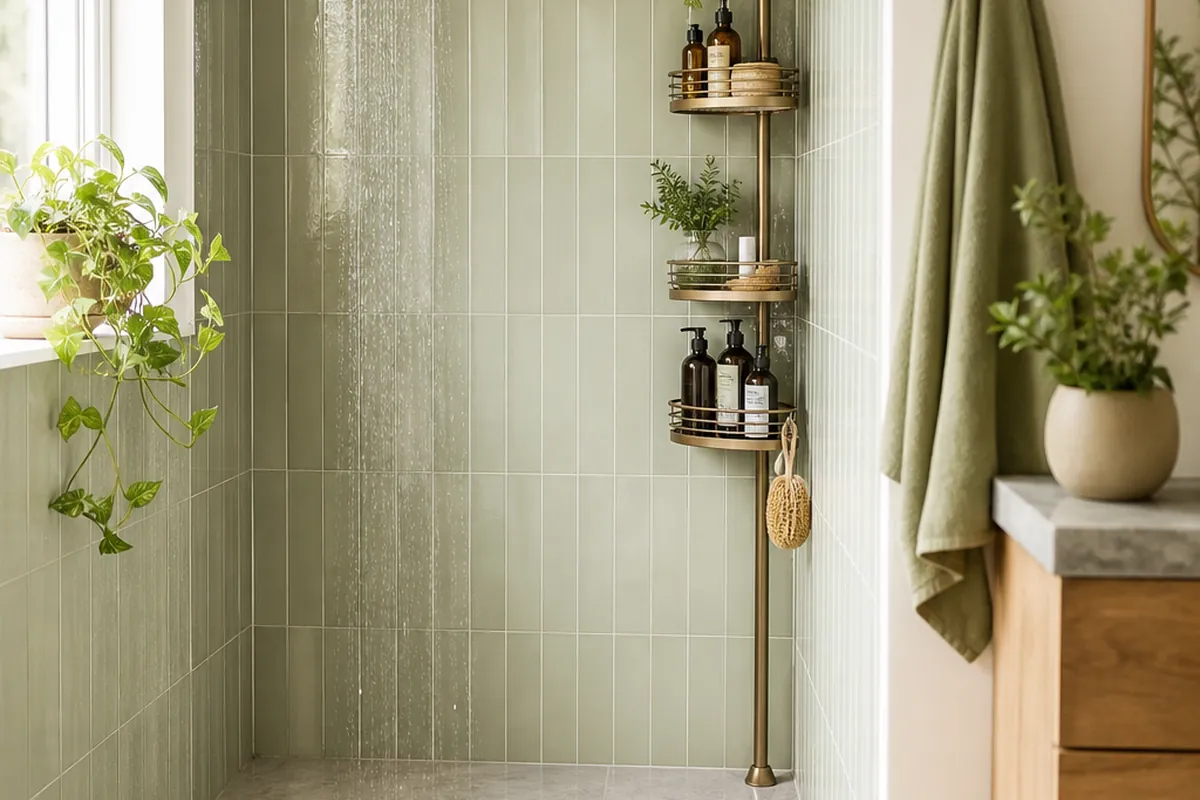
A hook that holds the plunger by its handle, head up, solves this properly. The water that is going to drip off it runs back down the handle instead of pooling under the cup, and the rubber gets air on all sides instead of sitting in its own puddle. A corner adhesive shower caddy with a hook on the underside does this job even though it is marketed for the shower. Mounted on the wall beside the toilet rather than inside the stall, the hook holds the plunger exactly the way you want it, and the little shelf above takes the brush holder.
3. Give the toilet brush a closed holder, never an open cup
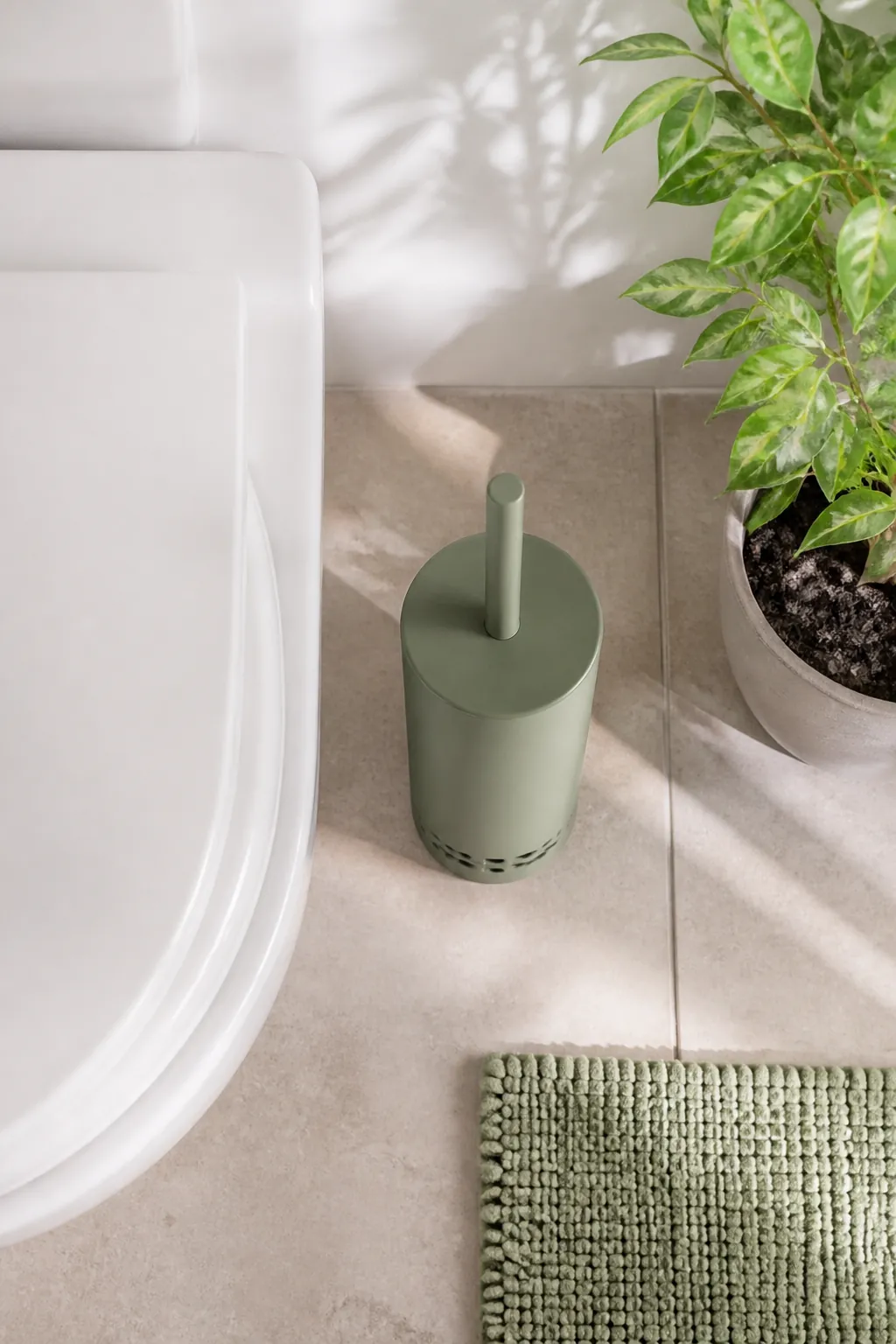
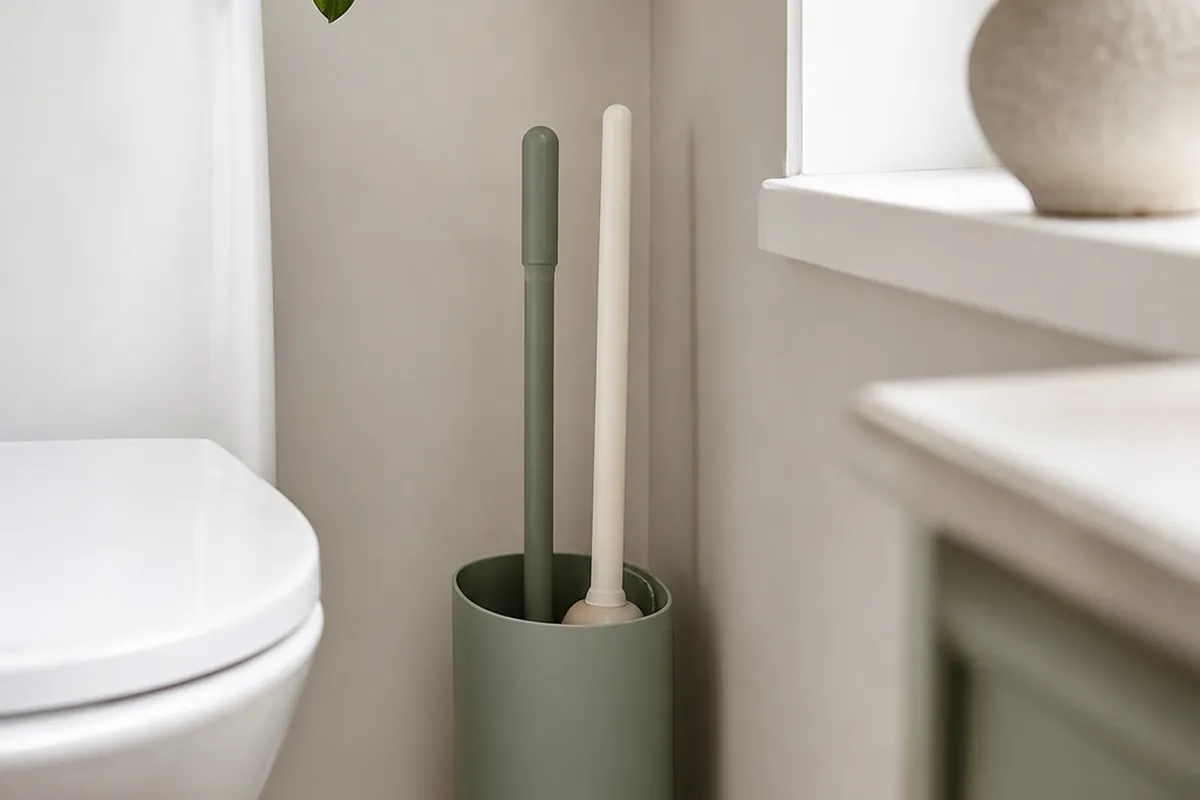
An open cup holding a wet brush head is doing nothing but concentrating odor in one spot. A closed holder with a lid traps the smell instead of airing it, but only if it also has drainage.
Look specifically for a holder with small vents or slots near the base. Those let the bristles drip dry inside the closed unit rather than sitting in standing water at the bottom, which is the actual source of the smell people blame on “just how toilet brushes are.” If the holder you already own has no drainage, propping the lid open for the first hour after each use does most of the same job for free.
4. Mount a corner caddy that holds both without a single drilled hole
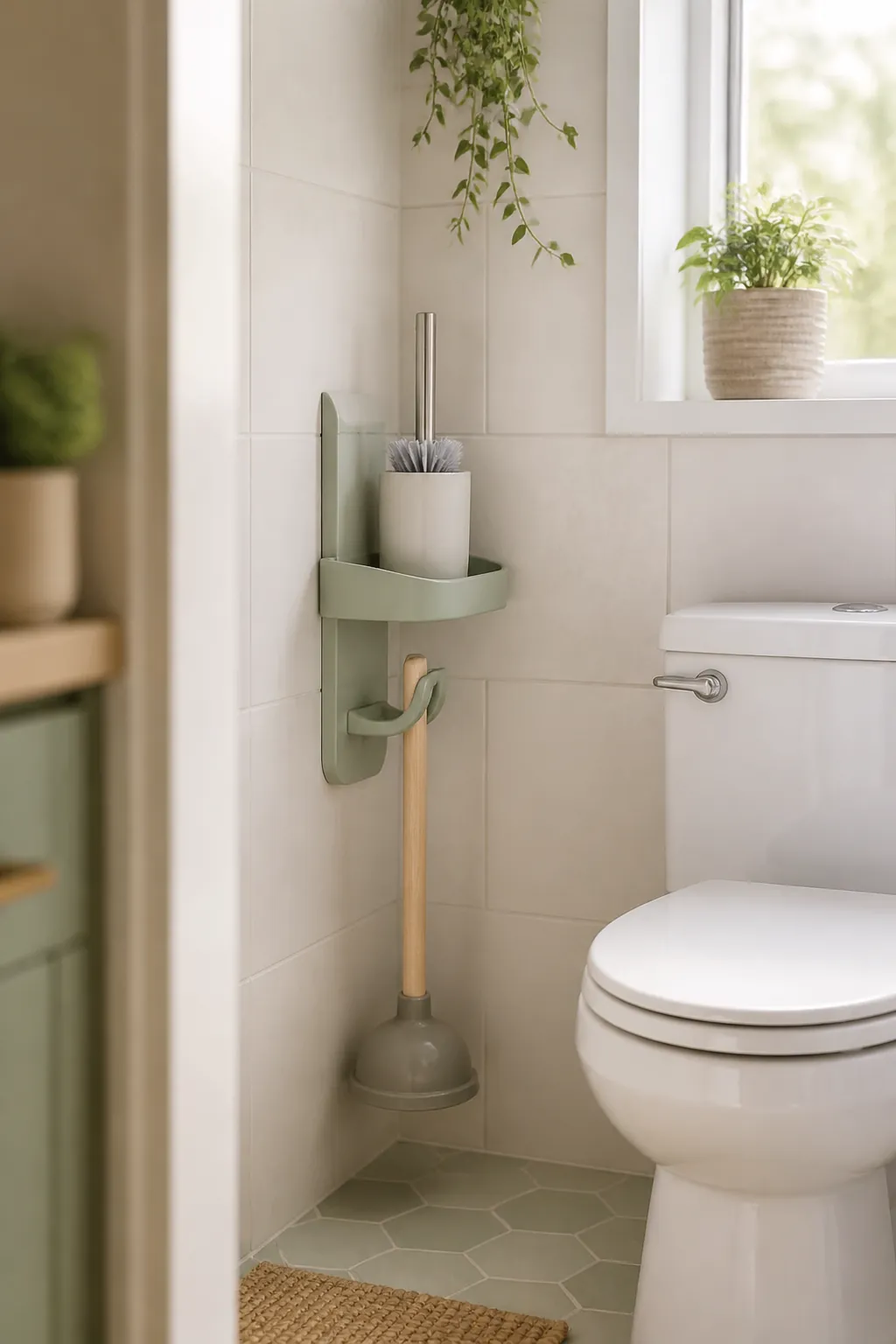
Corners are the one part of a small bathroom that almost nothing else claims, and a caddy built for that shape earns its keep fast, the same way it does in a shower corner with no niche. The same corner adhesive shower caddy mentioned above works equally well as a combined brush-and-plunger station: hook for the plunger underneath, small shelf above for a closed brush holder, all in a footprint of a few inches.
Getting the adhesive to hold is the entire job. Clean the tile with rubbing alcohol, press the pad firmly for a full thirty seconds, and leave the caddy completely empty for twenty-four hours before loading it. Almost every adhesive failure story is someone who hung weight on it the same evening the backing went on. It also wants a reasonably square corner and smooth tile; rounded corners and heavily textured stone will not give the pad enough contact area to trust it with either item.
5. Go floor-to-ceiling if the corner itself is too narrow
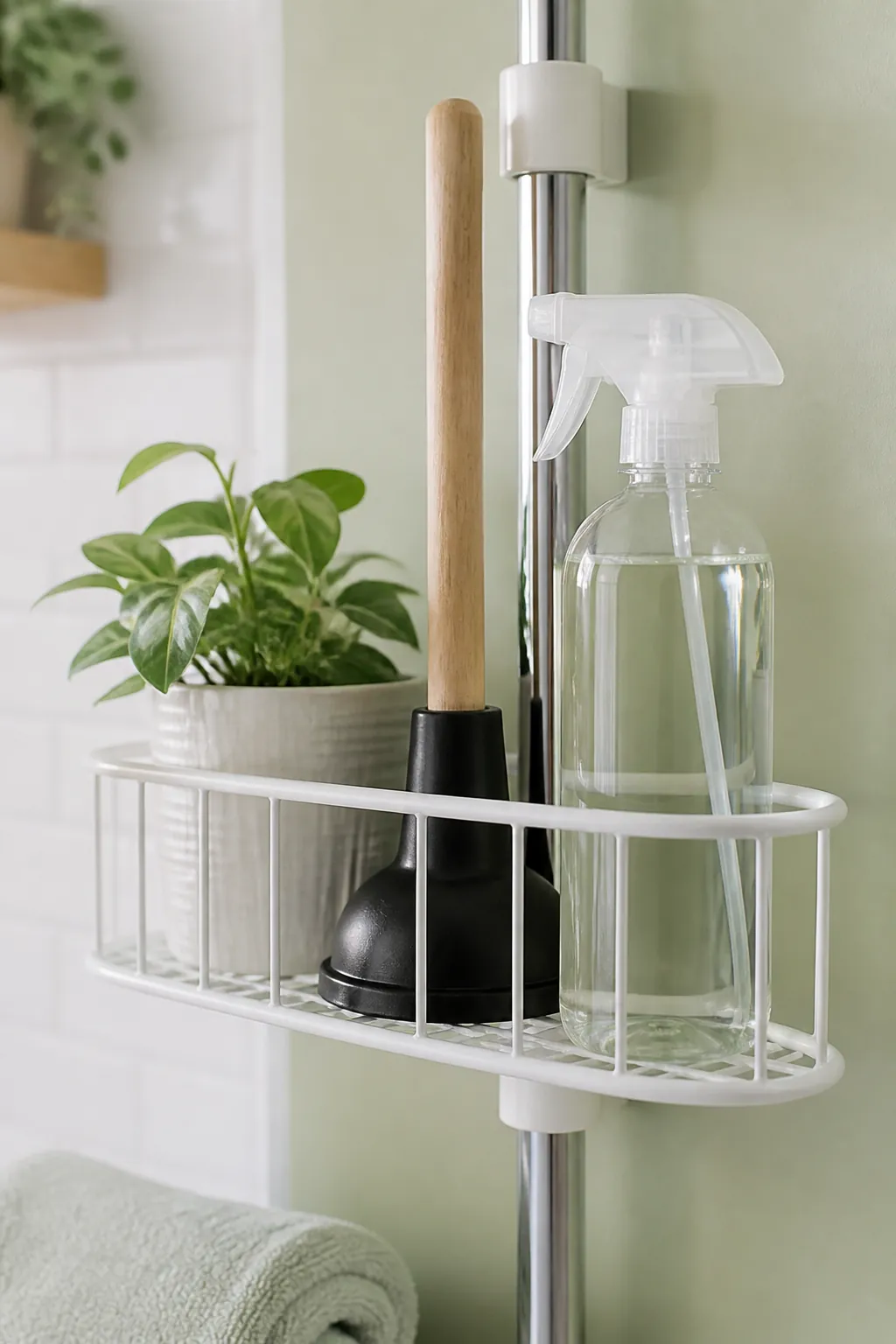
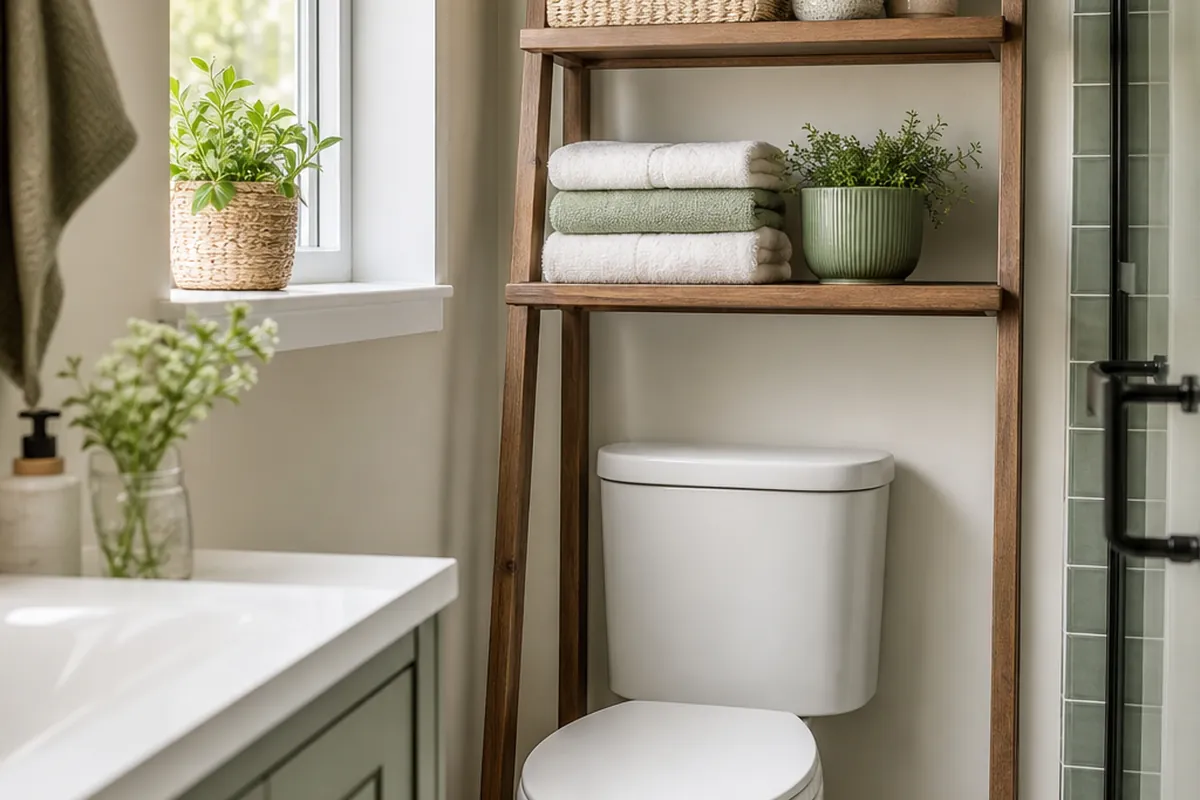
Some bathrooms do not have four spare inches anywhere, in which case the fix is to stop competing for floor space and build up through the empty air above the toilet instead. A tension pole corner shower caddy braces between floor and ceiling under spring pressure, with no fixings and nothing through the wall, and the lower basket or hook can take the brush and plunger while the tiers above hold cleaning spray and spare rolls of toilet paper.
It needs a flat ceiling, so a sloped or vaulted one rules this out, and the tension has to be properly tight rather than just snug. Check it again after the first week once everything has settled slightly, and choose stainless or a sealed finish, since plain metal left in a damp corner will eventually bleed a rust line down the grout.
6. Let both dry before you close anything over them
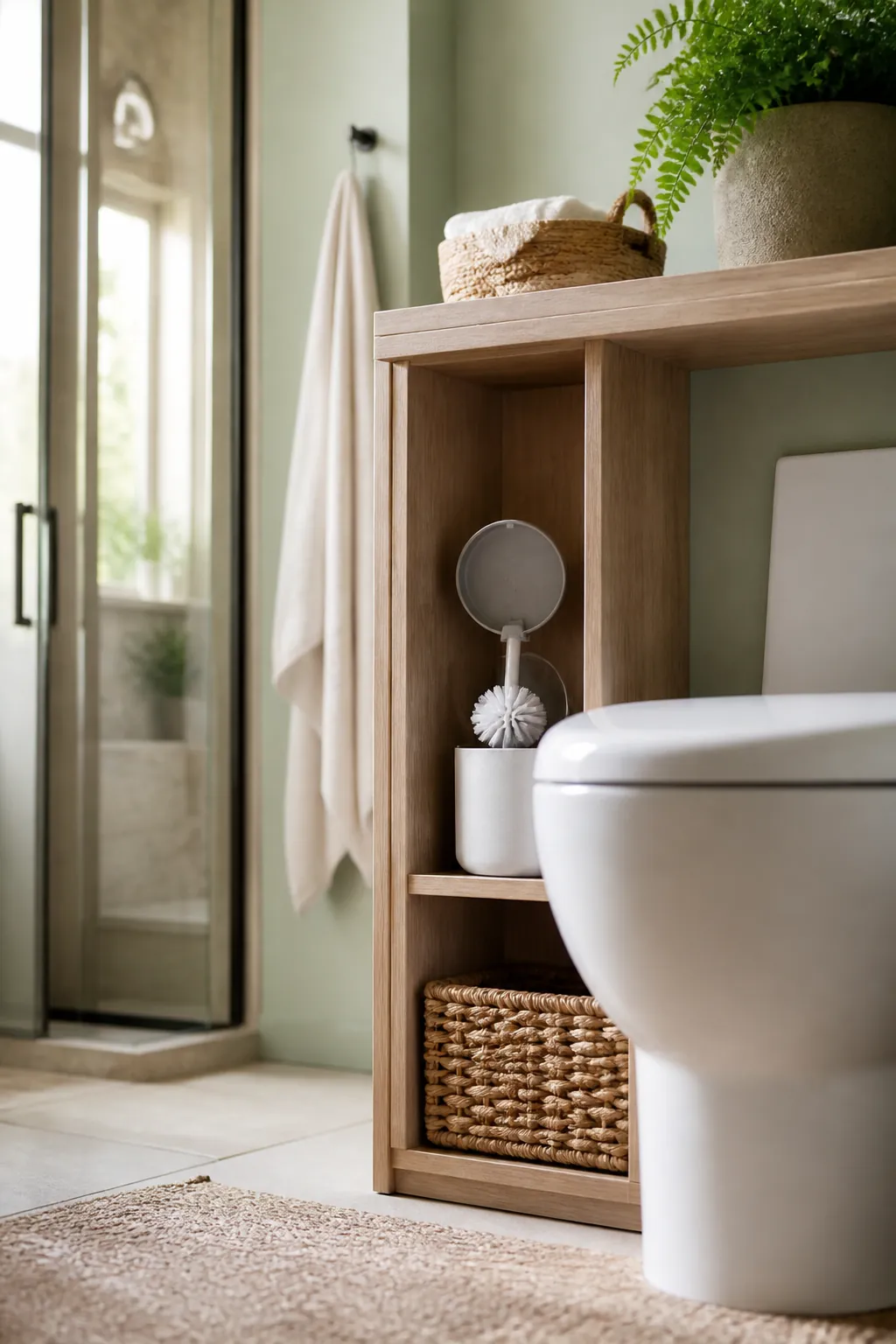
Whatever holder or caddy you land on, the single habit that prevents most of the smell complaints is simple: do not seal a wet brush or a wet plunger into a closed space the moment you are done with it.
Give the brush a minute with the lid propped before closing it, and let the plunger drip over the toilet bowl itself for a few seconds before hanging it on its hook. This costs nothing and takes less time than it takes to read this paragraph, and it is the difference between a closed holder that stays neutral and one that needs to be bleached every few weeks.
7. Build a portable kit for a shared or undersized bathroom
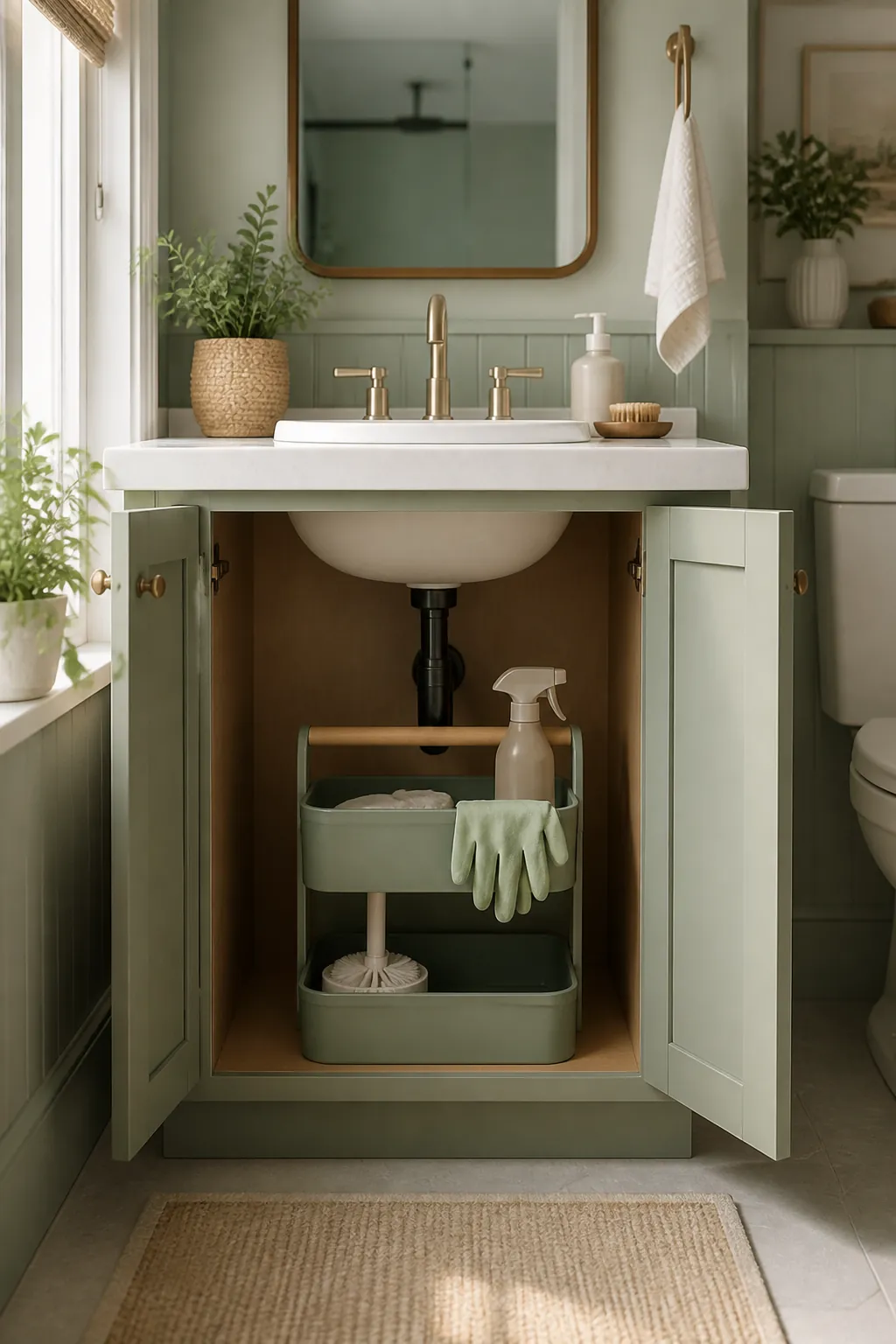
If the bathroom is shared, or small enough that nothing wants to live there permanently, a carry-out kit solves the problem differently. A stackable supply caddy with handle holds the brush, a bottle of cleaner, and gloves together, and lifts straight out to live under a sink or in a hall closet between uses.
This suits a plunger less well, since its handle length usually exceeds a small caddy’s depth, so pair this idea with a separate hook for the plunger alone rather than trying to fit everything into one container. The payoff is a bathroom that shows no trace of cleaning supplies at all when guests are over, which matters more in a studio or a shared rental than in a house with a door that closes.
8. Skip porous materials entirely
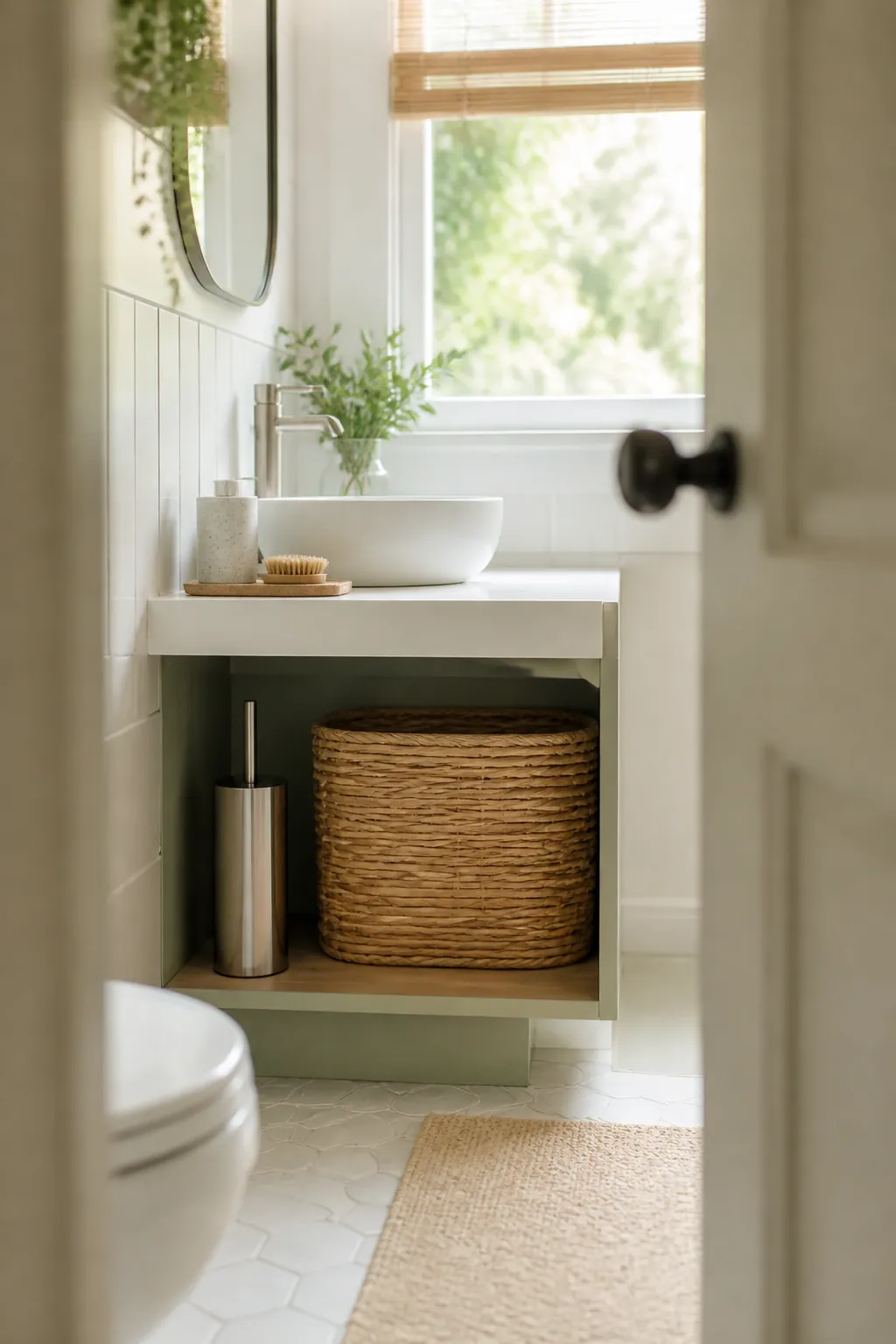
Wicker, unsealed wood, and anything with visible texture are the wrong material for either item, full stop. A wet brush or plunger set against a porous surface transfers moisture into it, and that moisture does not fully leave between cleanings in a humid bathroom.
Stick to sealed plastic, powder-coated metal, or stainless steel for anything that will touch these two items directly. It wipes down in seconds and will not hold a smell the way a woven basket eventually will, even if the basket looks nicer in a photo.
9. Know when the brush, the plunger, and the caddy are all due for replacing
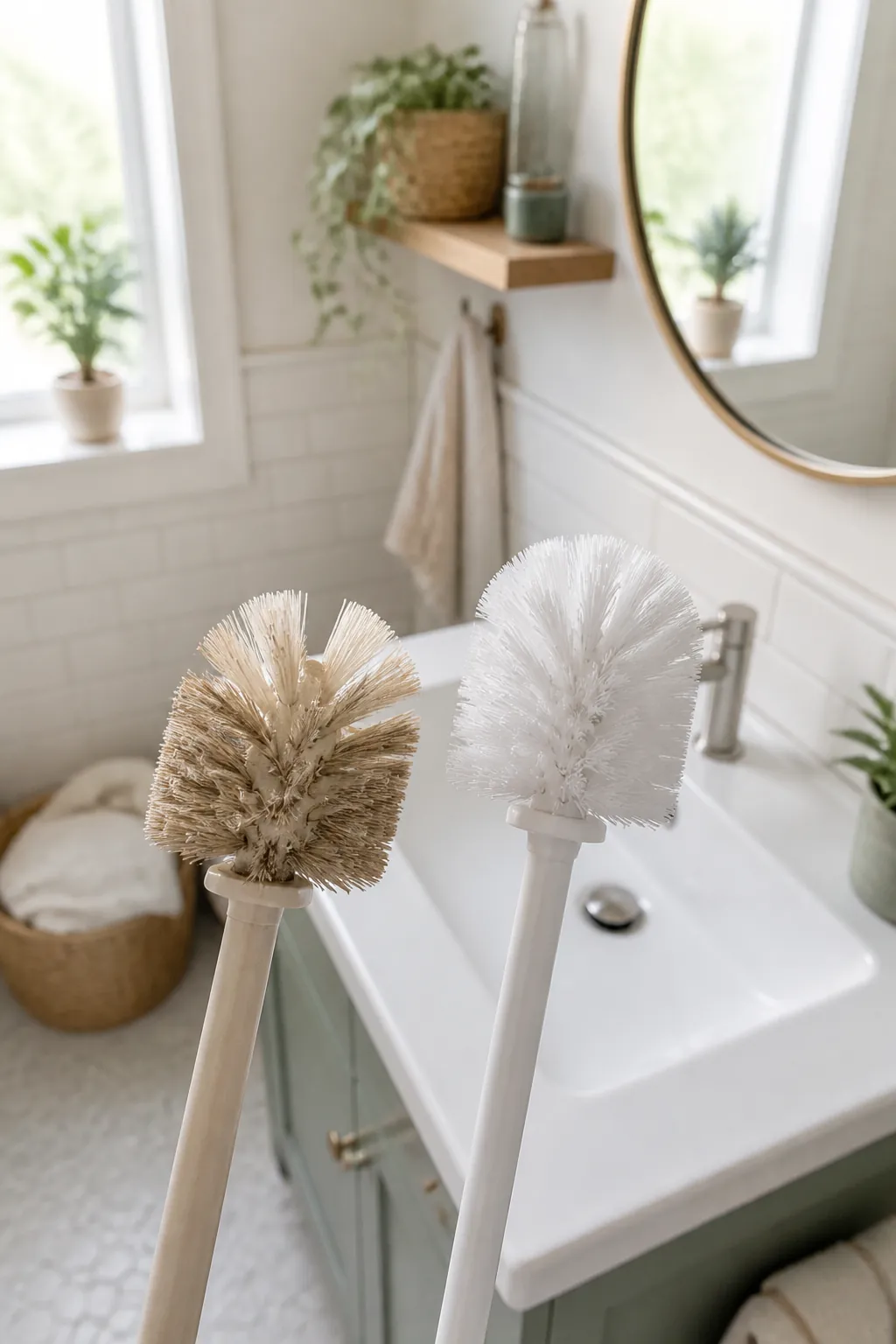
Bristles splay with use the same way any brush does, and a splayed head stops reaching the places a straight one does. Six months is a reasonable default for a standard toilet brush, sooner if it never seems to come out looking clean. A plunger rarely needs replacing unless the rubber has cracked or lost its flex, which usually shows up as a seal that will not hold on the bowl anymore.
Adhesive caddies and tension poles are worth a once-a-year check too. Adhesive weakens slowly and invisibly until the day it does not, and a tension pole that has not been retightened in a year is already looser than it feels.
Where to start
Start with the measurement, then pick one structure: an adhesive corner caddy if the wall is smooth and square, a tension pole if the corner is too narrow to spare, or a portable caddy plus a single hook if the bathroom is shared. Whichever you choose, make drainage and drying the habit underneath it, since that is what actually keeps either item from becoming the thing nobody wants to touch.
Once the brush and plunger have a real spot, the rest of a small bathroom tends to fall into line faster, and bathroom storage for a room with no cabinet is a good next stop if the rest of the room still needs sorting.