A small apartment nursery runs out of floor before it runs out of gear. The crib and dresser claim their footprint on day one, and everything that arrives after that, the stroller, the infant car seat, the pack n play, the bouncer, has to find a home in whatever is left over. None of it is small. A folded stroller alone can be taller than the crib rail, and a car seat base does not shelve the way a stack of onesies does.
The nine ideas below are built around that reality: measure the actual gear before buying anything to hold it, give the biggest pieces a fixed spot instead of moving them daily, and keep the whole system renter-friendly since most of this gear will move house again before the baby outgrows it.
1. Measure the gear, not the room, before you buy anything
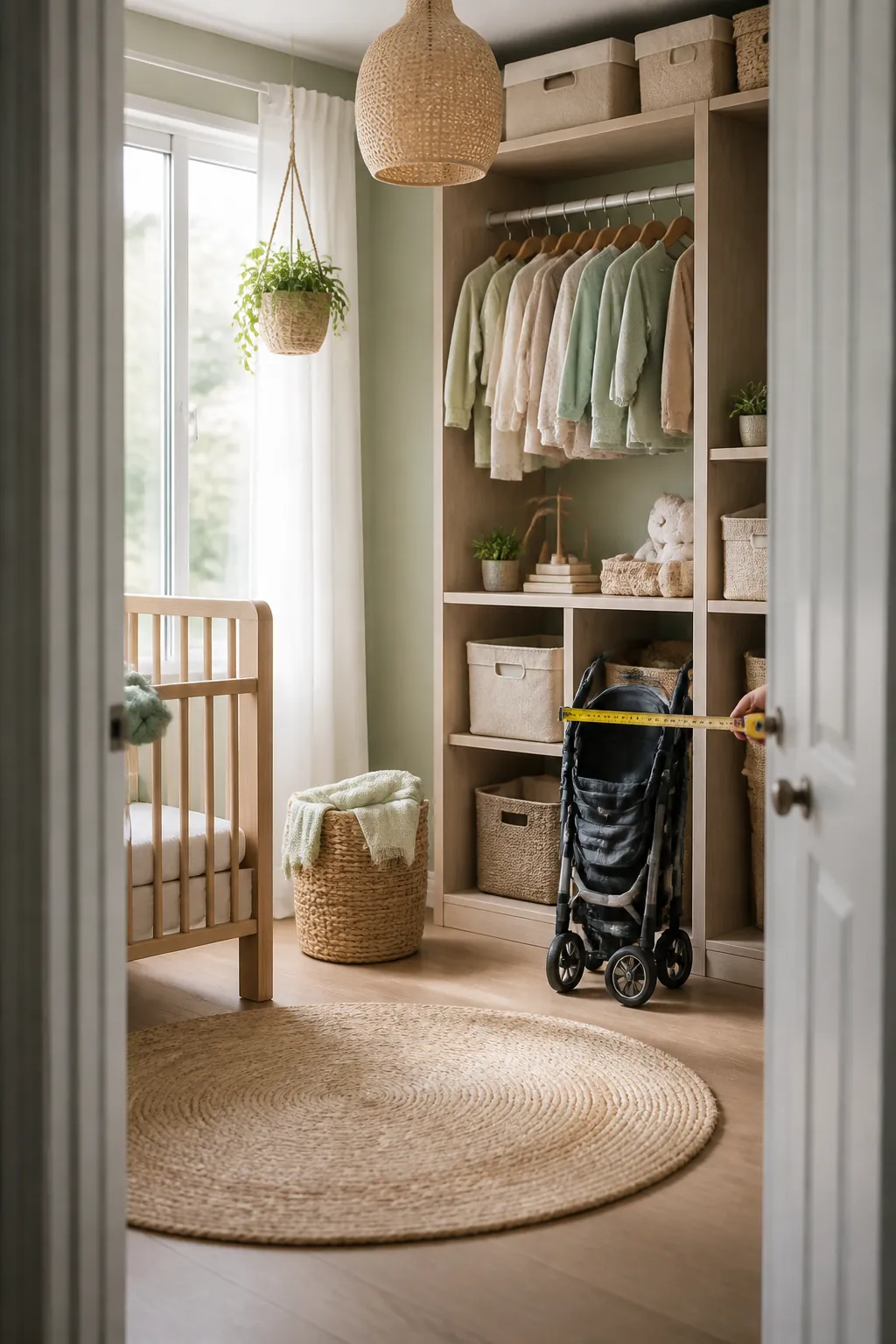
The mistake that wastes the most closet space is buying an organizer sized to the nursery instead of to the stroller and car seat that actually have to fit in it. Fold the stroller the way you would to store it and measure that footprint, not the boxed dimensions from the listing, since a display-floor fold and a tired-parent-at-9pm fold are rarely the same size.
Do the same with the pack n play bag and the car seat base. Write the three numbers down before you shop for bins, shelves, or hooks, because a corner that fits an umbrella stroller at 13 inches wide will not take a standard travel-system stroller at 24, and no amount of clever shelving fixes a gap that was never going to work.
2. Corner the stroller and strap it, don’t lean it
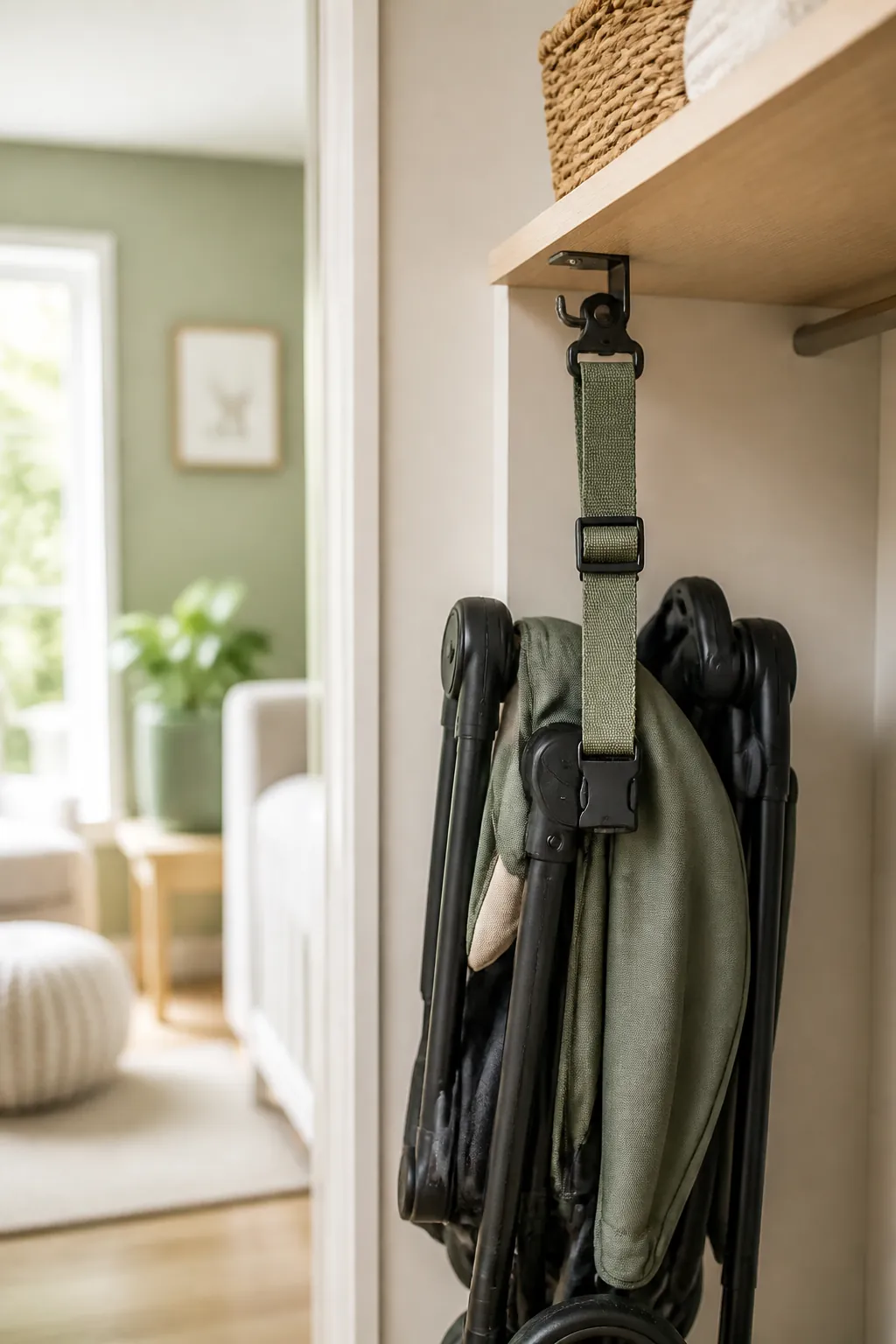
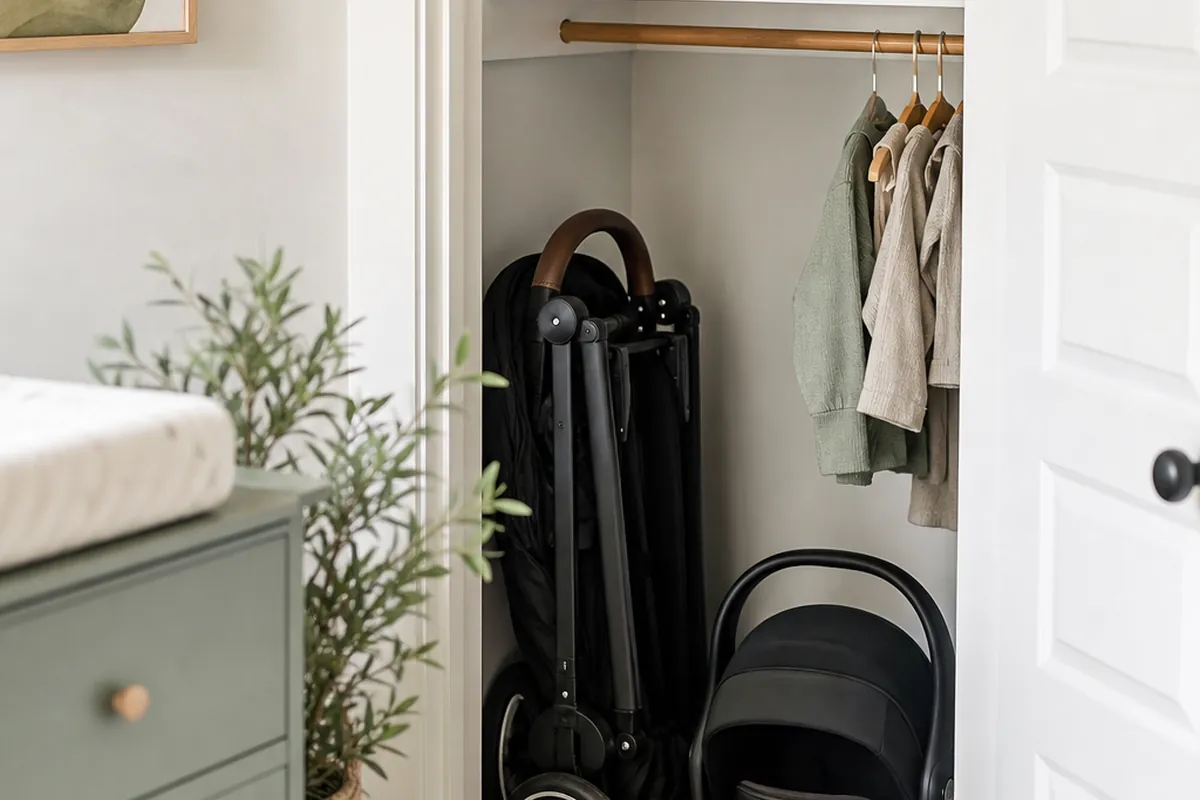
A folded stroller left leaning against a wall migrates. It slides, it falls into the crib space, and in a rental it can mark the wall finish over months of contact in the same spot. Pick an actual corner, ideally one out of the crawling baby’s reach once the baby is mobile, and treat it as the stroller’s permanent address.
A furniture safety strap, the same kind used to anchor a bookcase, looped around the folded frame and hooked to a shelf bracket or closet rod keeps it upright without drilling into the wall itself, since the anchor point is the existing furniture rather than the drywall. This matters more than it sounds: a top-heavy stroller that tips onto a crawling baby is a real injury risk, not a tidiness problem.
3. Give the infant car seat a fixed floor spot
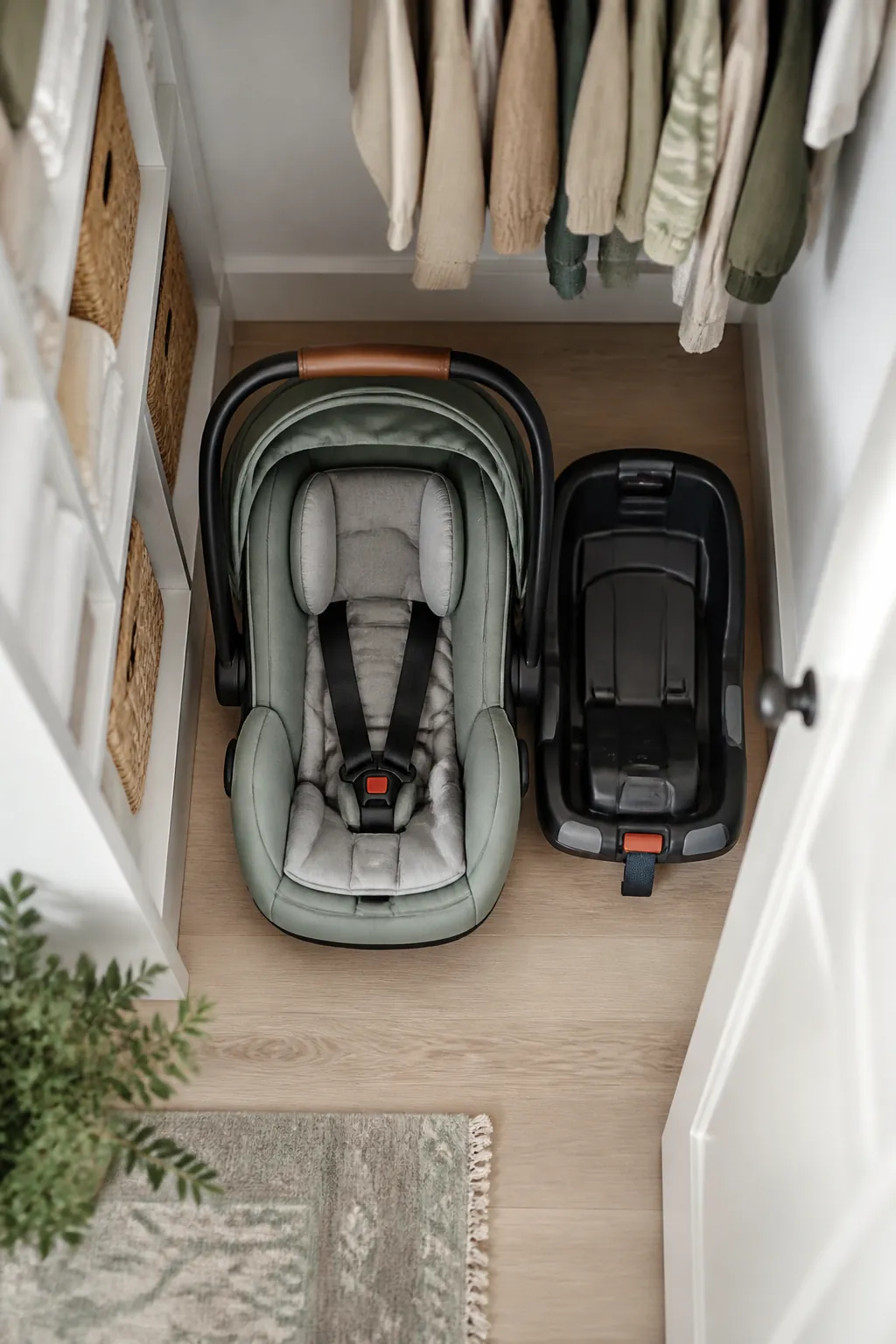
An infant car seat with its base weighs 15 to 20 pounds and covers roughly 20 by 27 inches on the floor, which rules out a shelf at height for safety and rules out a closet rod entirely. It needs ground space, and the honest fix is deciding where that ground space is once and leaving it there, rather than shuffling the seat between the nursery floor, the hallway, and the car every day.
Clip the harness and pull it snug before setting the seat down so the straps don’t trail and become a trip hazard or a chew toy. If a second base lives in a second car and only visits the nursery occasionally, that one goes to deep storage, covered in the next idea, rather than taking up the same daily floor spot as the one in active rotation.
4. Roll the playard into the closet corner, standing up
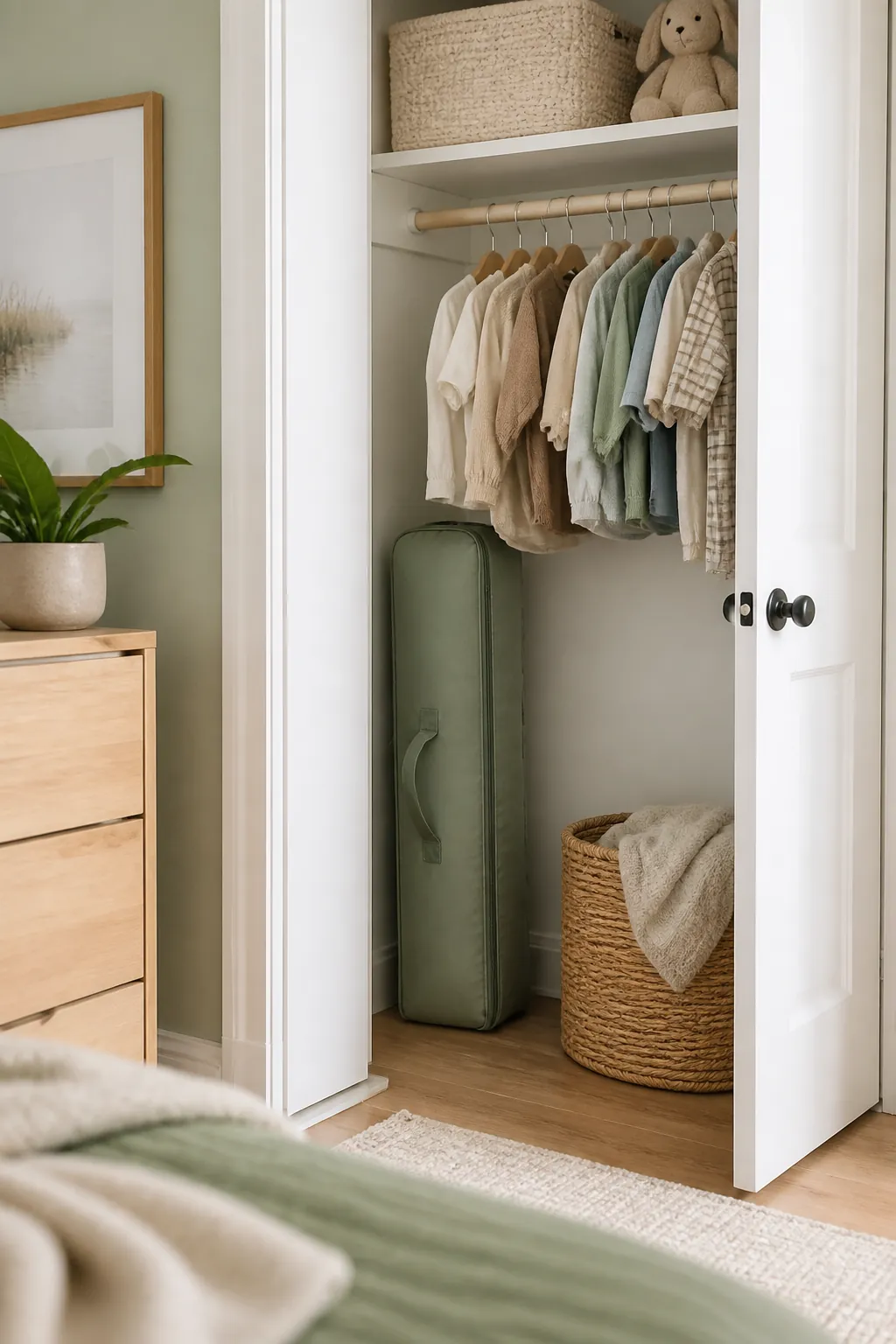
A pack n play folds into a bag that is typically 8 to 10 inches across but 38 to 40 inches long, a shape that rarely fits any shelf built for baby gear. Laid flat, it eats an entire shelf on its own; propped in a corner beside the closet rod, standing on its end, it takes up barely more floor space than the stroller does.
This is the one piece of gear where measuring wins twice: once to confirm the closet has 40 inches of vertical clearance in that corner, and again to check the bag’s width against whatever else already lives on the closet floor. A too-narrow gap means the bag gets wedged and stays wedged, which is its own kind of clutter.
5. Corral loose gear in a bin instead of a drawer
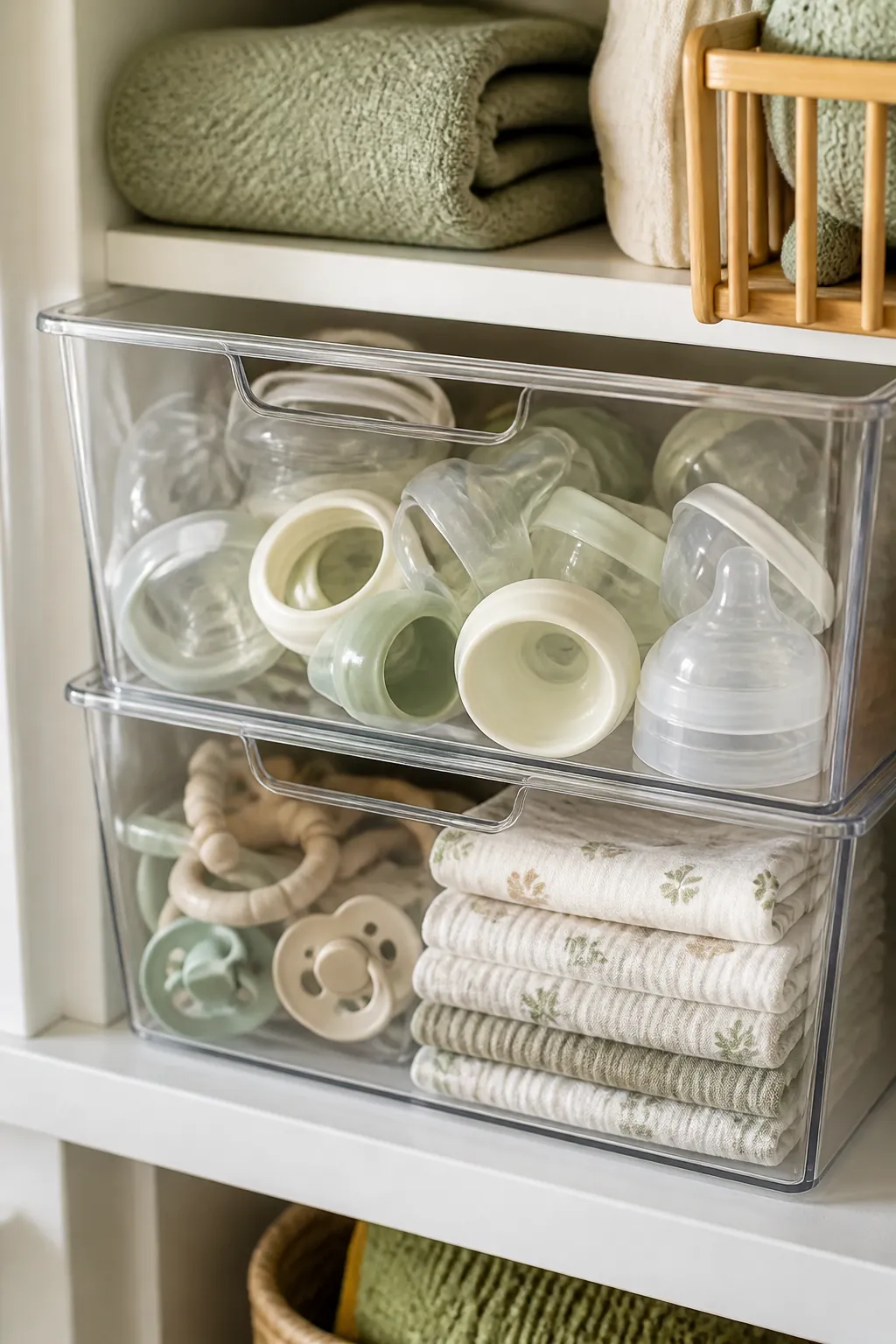
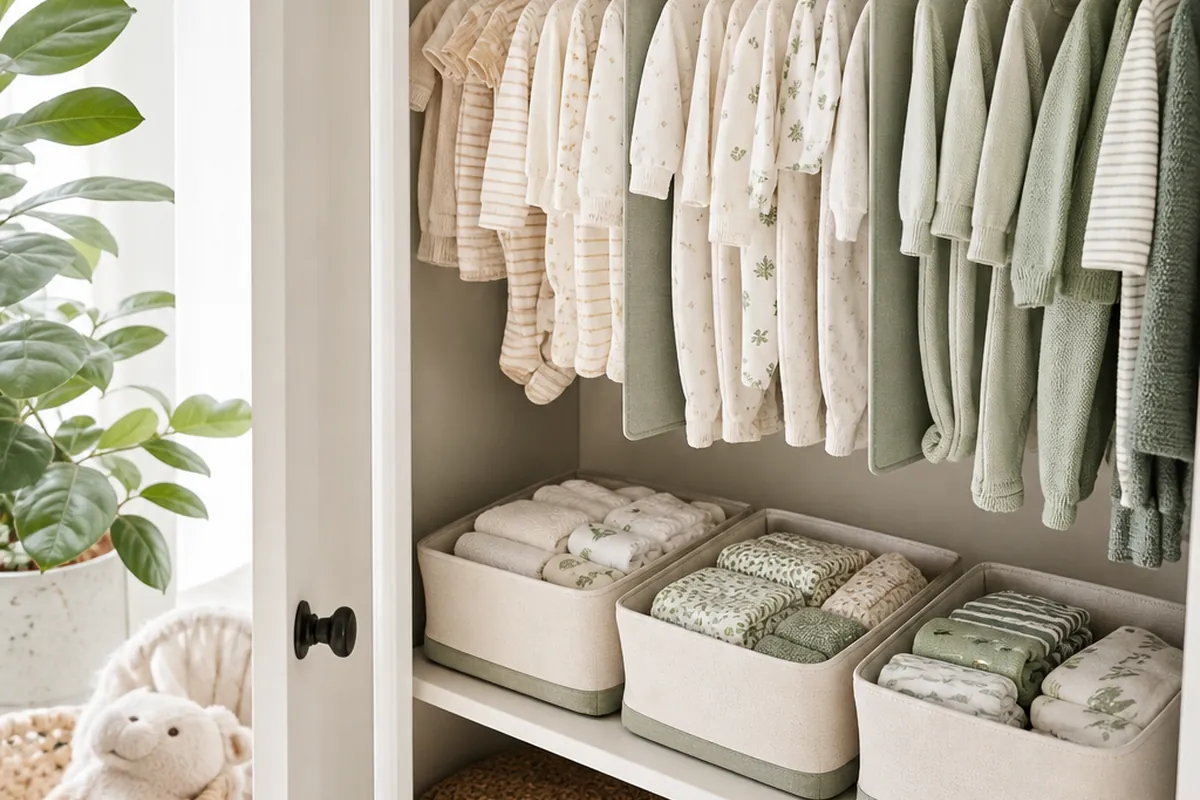
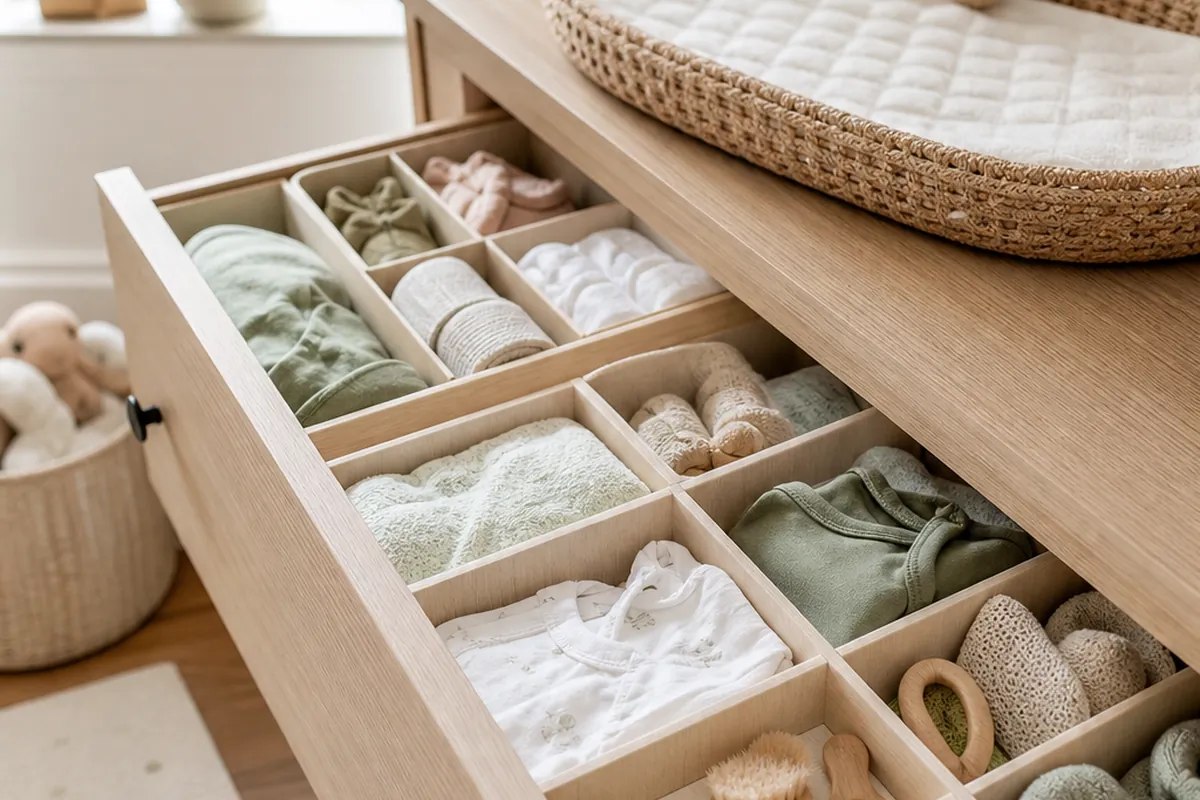
Bottle parts, spare pacifiers, a spit-up cloth stash, teething toys: this is the gear that has no natural home and drifts across every flat surface in the room if it doesn’t get one. A clear stackable storage bin on a closet shelf gives it a boundary, and being clear means you can see what’s inside without pulling every bin down at 3am.
Sort by function rather than by size: one bin for feeding gear, one for bath and grooming, one for the miscellany that doesn’t fit either category. Three bins with a real category each beat one big bin labeled “baby stuff,” which fills up and stops being searchable within a month.
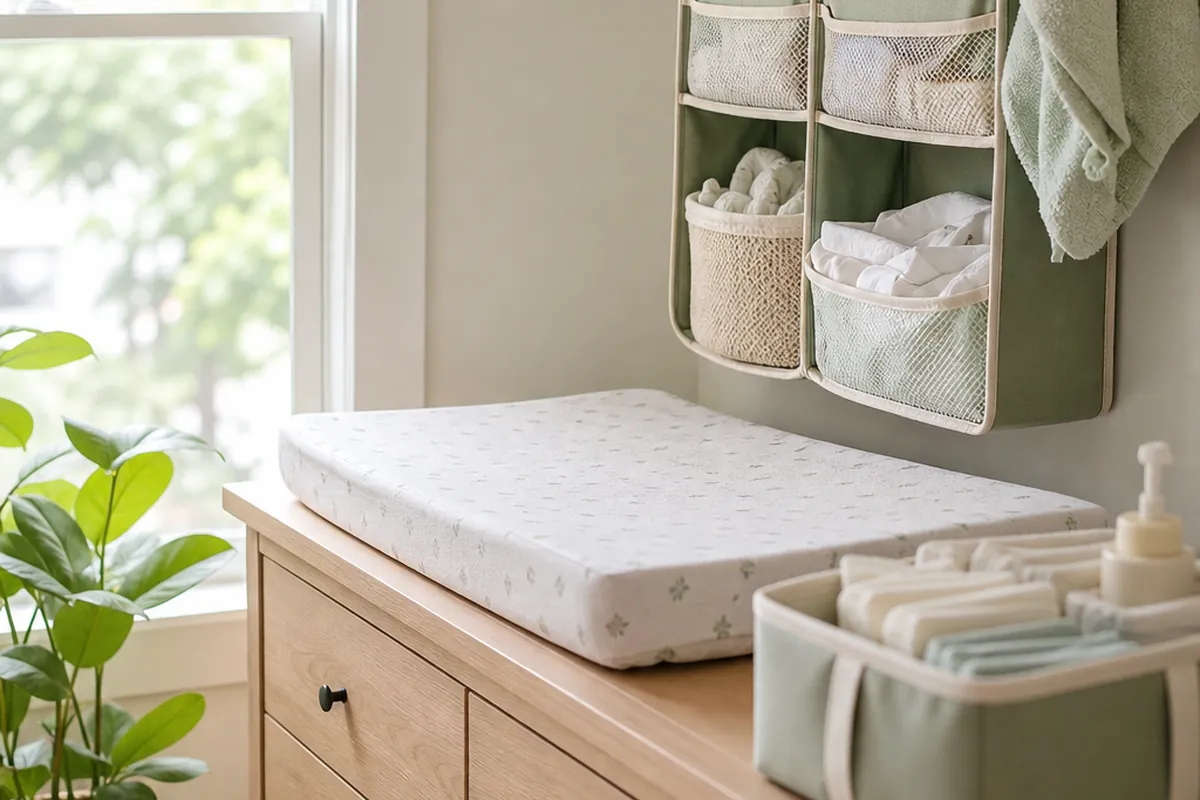
6. Hang a shelf organizer in the closet corner for what won’t stack
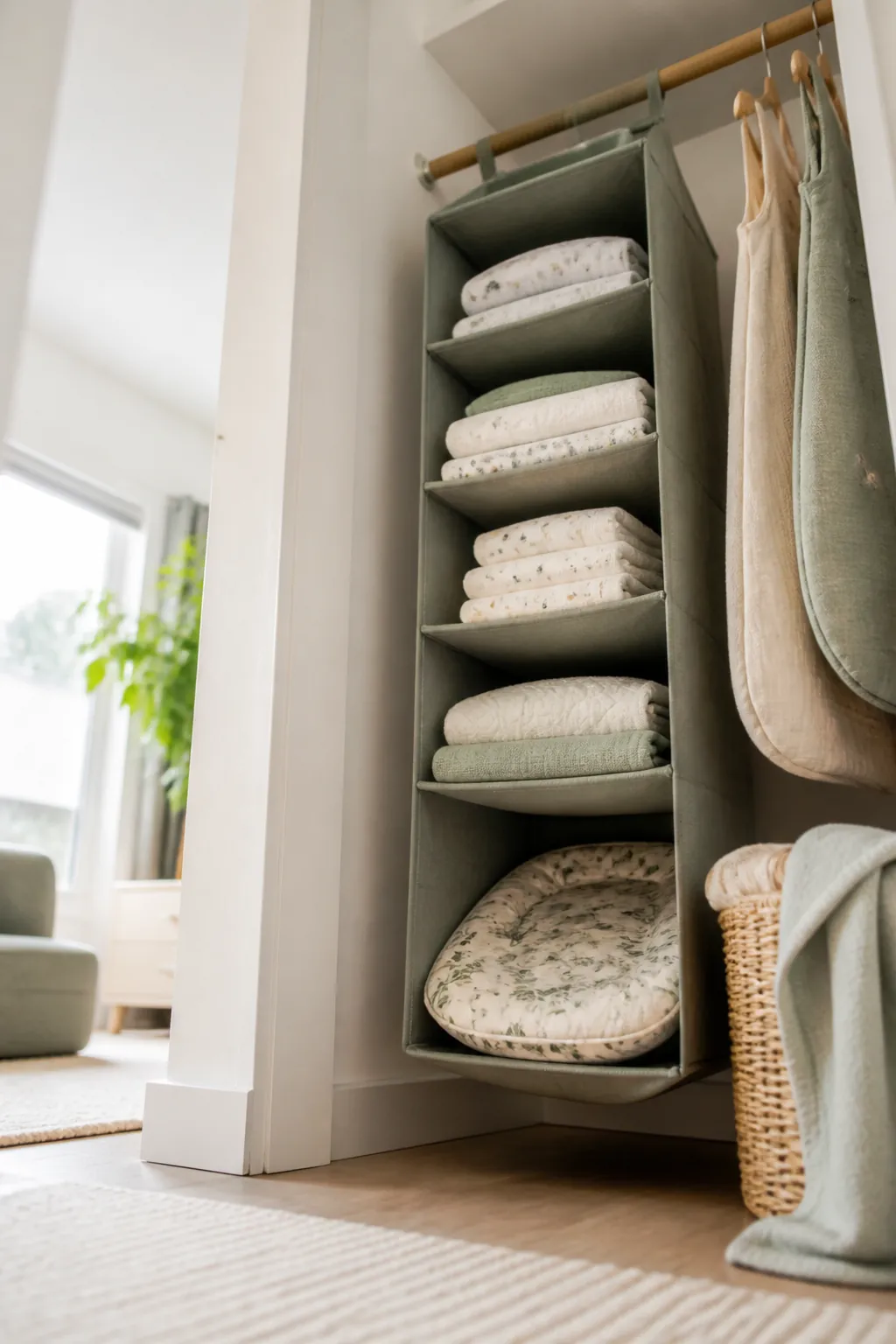
Not everything folds flat or stacks cleanly, bulky swaddle blankets, a stack of burp cloths, the bouncer’s spare cover. A 6-shelf hanging closet organizer clips over the existing closet rod rather than needing any wall fixings, which suits a rental, and at roughly 12 inches square by 48 inches tall it gives six shelves of soft storage in a corner that would otherwise hold one stack of loose items.
Put it in the corner the stroller and playard don’t need, usually the side of the closet away from the door swing, and use the lower shelves for what you reach for daily. The top two shelves, out of reach without a step, are the right spot for gear that’s between sizes: the next bouncer insert, the infant insert for a convertible car seat, things you need again in a few months but not this week.
7. Hang the diaper bag and carrier where you actually leave with them
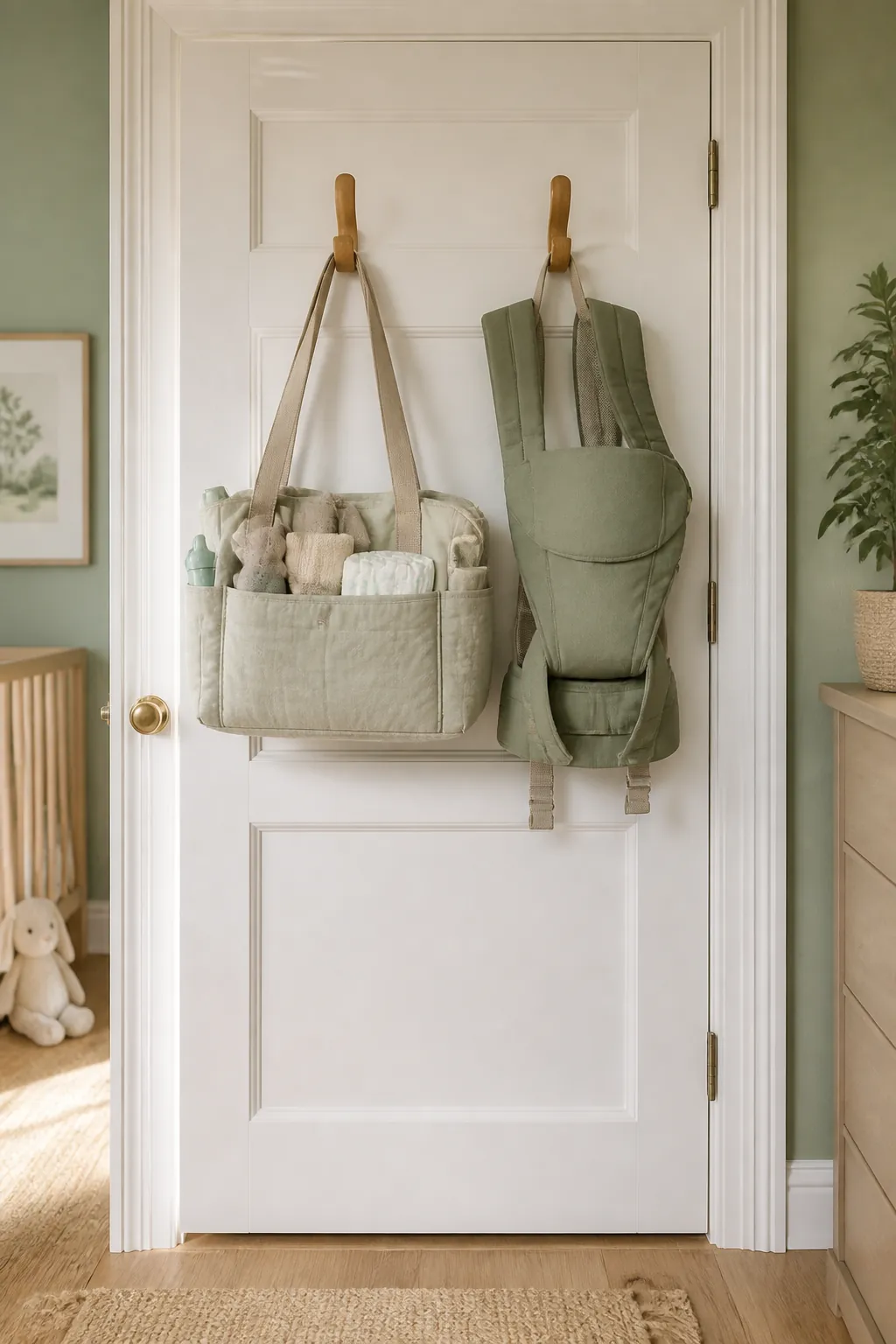
A diaper bag and a baby carrier both get used the moment you’re heading out the door, which means they fail as closet items. Stashed on a shelf, they get left on a chair or the floor within a week, because nobody wants to open a closet with their hands full and a baby on one hip.
An over-the-door hook hanger on the nursery door or a nearby closet door solves this without any drilling, holding the bag and carrier at grab height right where you leave the room. Check the weight rating before loading a fully packed diaper bag onto it, since a stocked bag with bottles and a change of clothes can run 5 to 8 pounds, more than an empty tote, and an undersized hook set will bend or pull loose within weeks.
8. Keep a grab-and-go zone separate from deep storage
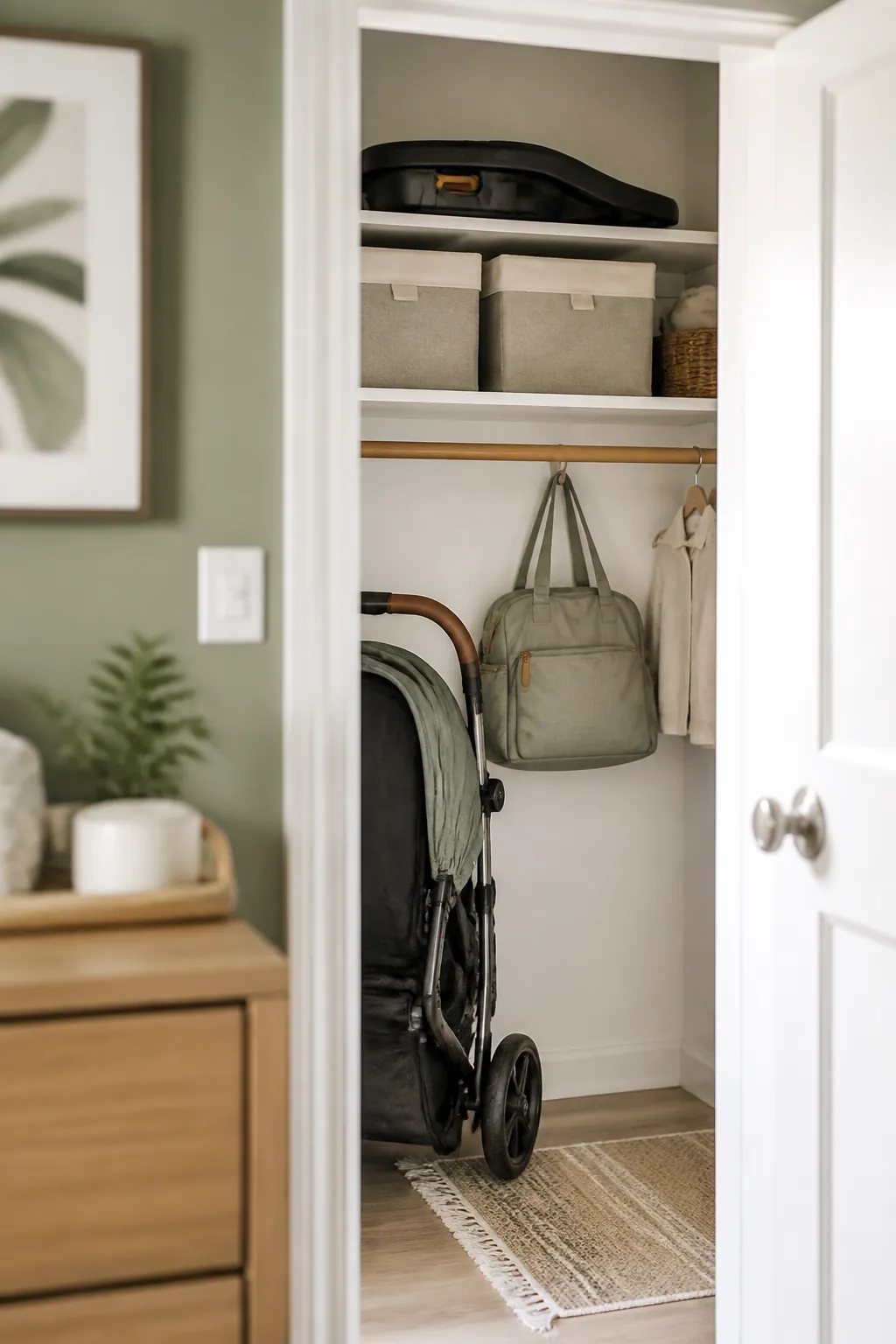
The gear you touch every day, the diaper bag, the stroller, the carrier, and the gear you touch every few months, spare bases, seasonal bunting, the next size of everything, are not the same category even though they’re all “baby gear.” Storing them together means digging past off-season items to find what you need on a Tuesday morning.
Keep daily gear at the front of the closet and at reachable height. Push everything else to the back, the top shelf, or a bin that gets opened on a schedule rather than daily. This split does more to keep the nursery usable than any single container, because the actual friction in a small nursery comes from search time, not from a lack of bins.
9. Rotate gear out as the baby outgrows the infant stage
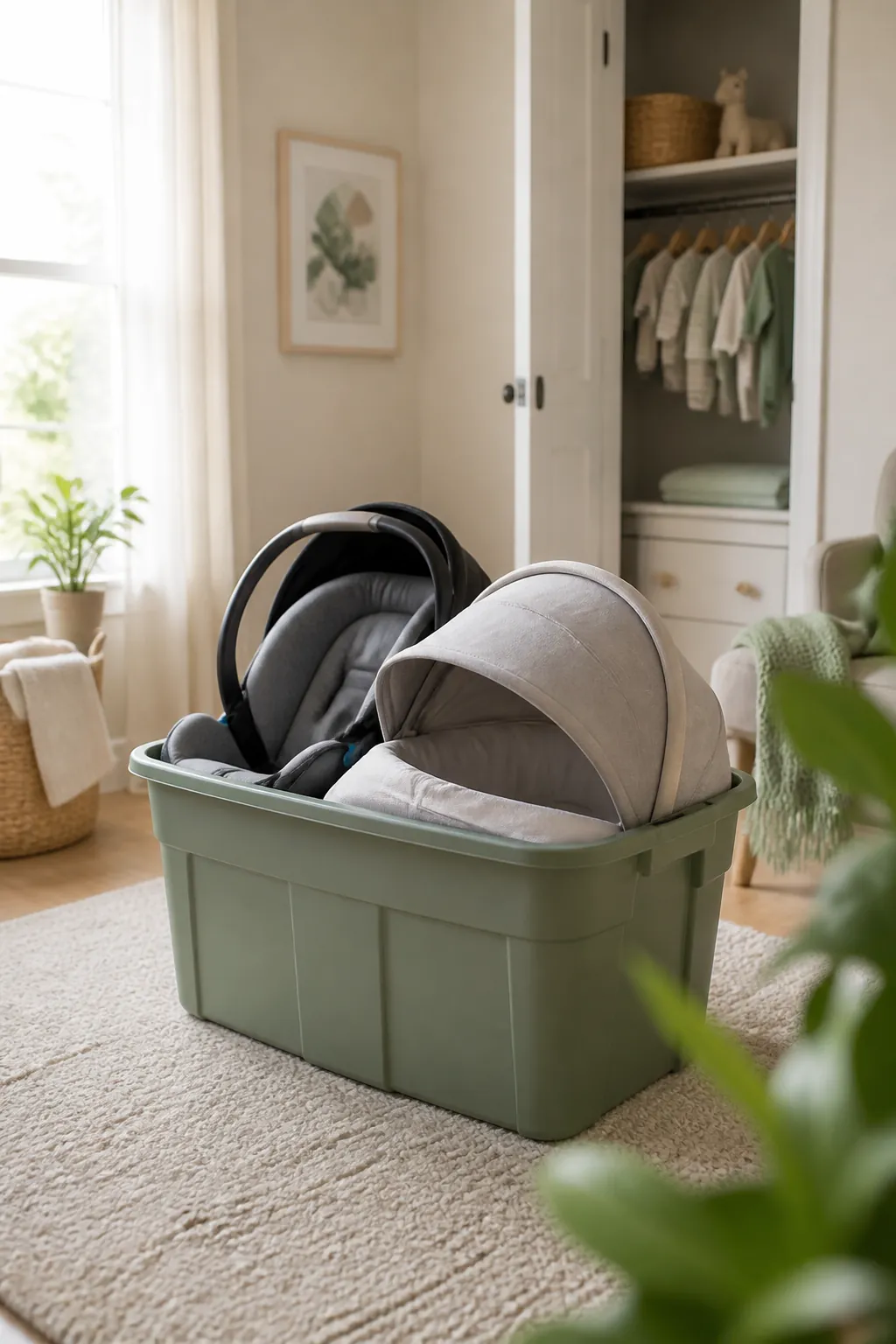
An infant car seat gets swapped for a convertible seat, a bouncer gets swapped for floor time, a bassinet attachment for the pack n play stops getting used, all within the first year. Gear that’s done being used but not yet ready to sell or pass on becomes the single biggest source of nursery clutter if it just stays in place.
Set a habit of clearing outgrown gear out of the active zones within a week or two of retiring it, into a bin bound for storage elsewhere in the apartment, a relative’s garage, or a donation drop-off, rather than letting it linger at the back of the closet indefinitely. A nursery gear system that never gets edited fills back up no matter how well it was organized on day one.
Where to start
Measure the stroller folded, the car seat base, and the playard bag before buying a single bin, since those three numbers decide what actually fits the corner you have in mind. Corner and strap the stroller, give the car seat a fixed floor spot, and stand the playard on end rather than laying it flat.
From there, a clear stackable bin handles loose gear, a hanging shelf organizer takes the corner that won’t stack cleanly, and over-the-door hooks put the diaper bag and carrier at the height you actually reach for them on the way out. Keep daily gear separate from deep storage, and clear outgrown pieces out on a schedule, and the nursery keeps working through every stage instead of needing a full reset each time the gear changes.