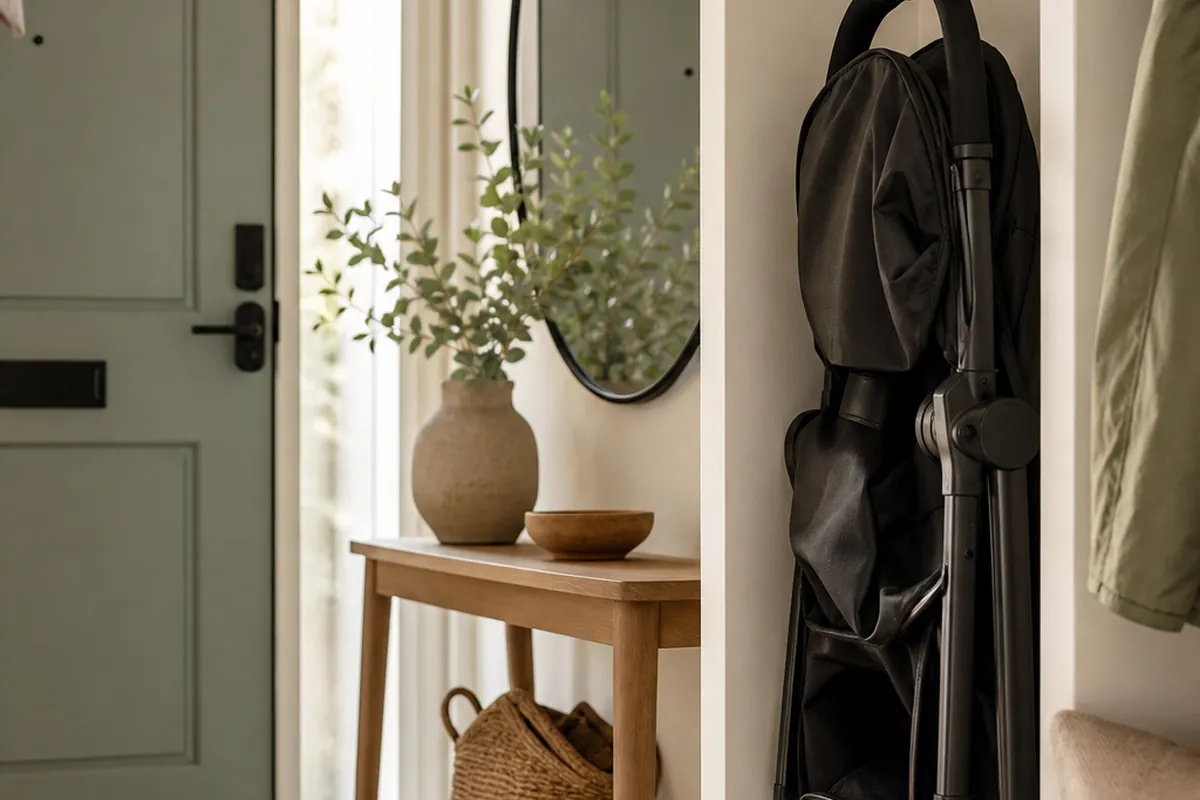
A stroller does not fit the entryway plans most small-space advice is written for. It is too big to tuck in a basket, too heavy for an adhesive hook, and too awkward to fold and unfold twice a day just to keep it out of the walkway. In a studio or a one-bedroom, it usually ends up leaning against the wall by the door, slowly grinding a black stripe into the paint at wheel height. There is a better way to park it, but it starts with numbers rather than a trip to the store.
1. Measure the stroller folded, not the box it came in
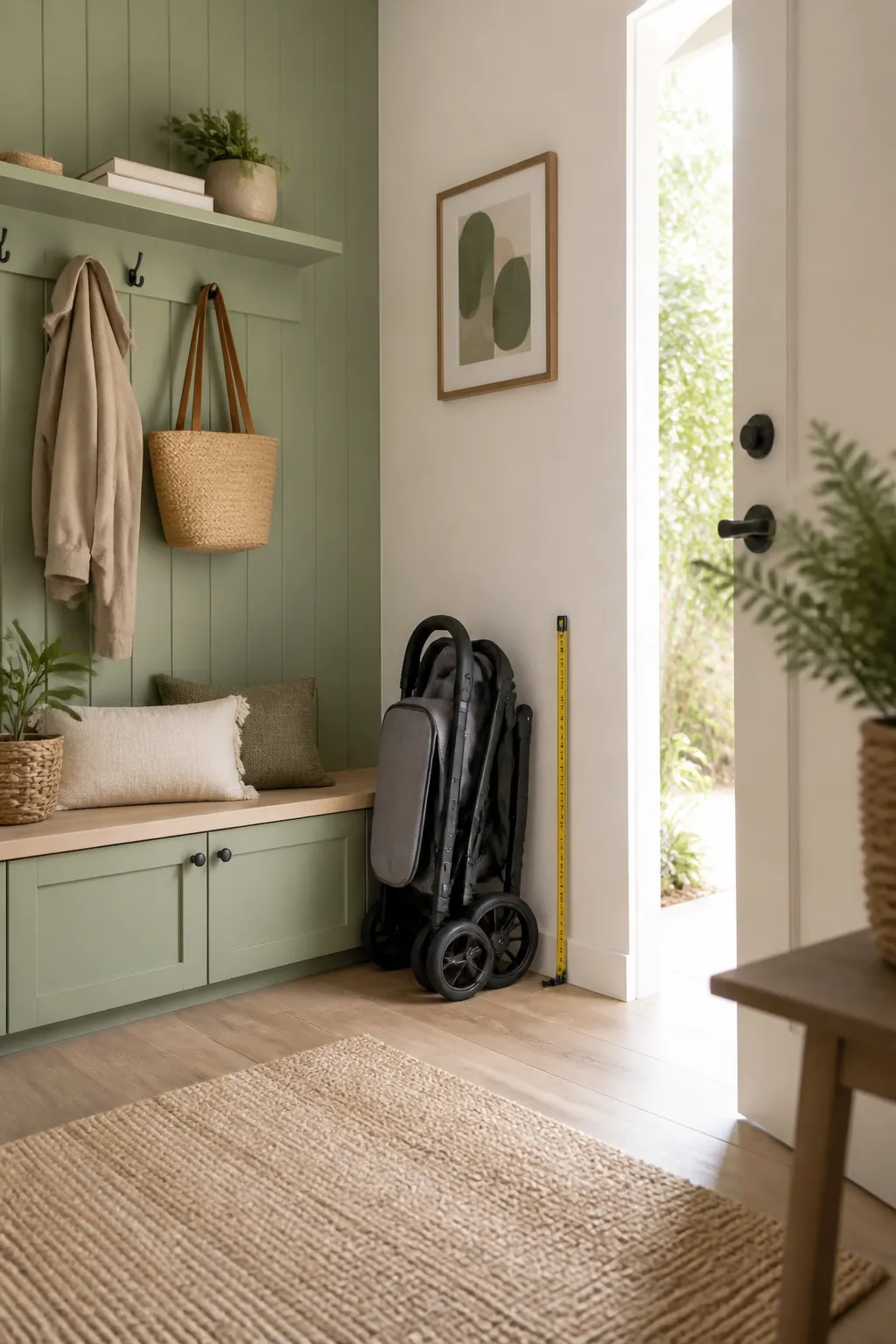
The box a stroller ships in is built for a warehouse pallet, not for your entryway, and its dimensions are close to useless for planning storage.
Fold the actual stroller the way you will fold it every day, with the canopy down, and measure the real footprint: height, width and the depth once the wheels and any basket are accounted for. An umbrella stroller often folds to something like 40 by 12 by 10 inches. A full-size stroller built to take a car seat can fold to 35 by 25 by 14 inches or larger, and a jogging stroller frequently will not fold flat at all because the fixed front wheel is built for stability, not storage.
That last group is worth naming honestly now, because no amount of clever hardware turns a jogging stroller into a hanging one. If yours does not fold under about 15 inches deep, plan for a floor spot from the start instead of shopping for a hook that will never work.
2. Decide if it is leaning against a wall or standing free
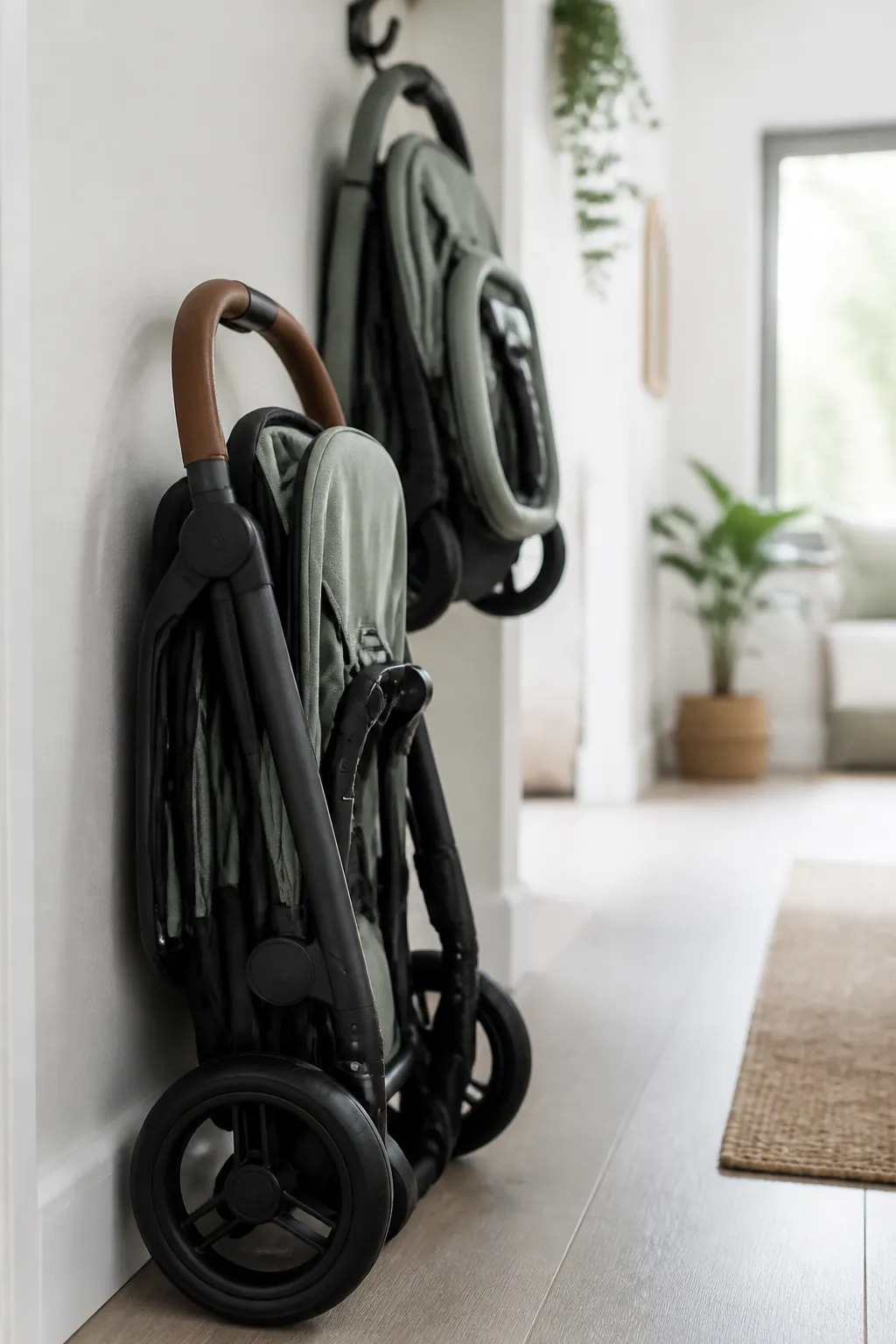
Once you know the folded size, there are really only two homes for it: propped against a wall, or hanging from one.
A stroller propped on the floor needs a footprint, not just a wall. Most entryway consoles and shoe cabinets run 12 to 14 inches deep, and a folded stroller in that same range can share the same strip of floor with a few inches to spare, as long as nothing else needs that space too. A stroller wider than that, or one with a basket that bulges past the frame, will eat into the walkway instead.
A stroller off the floor needs a hook rated for its actual weight, not a guess, which is the part that goes wrong most often.
3. Weight-rate the hook before the stroller ever touches it
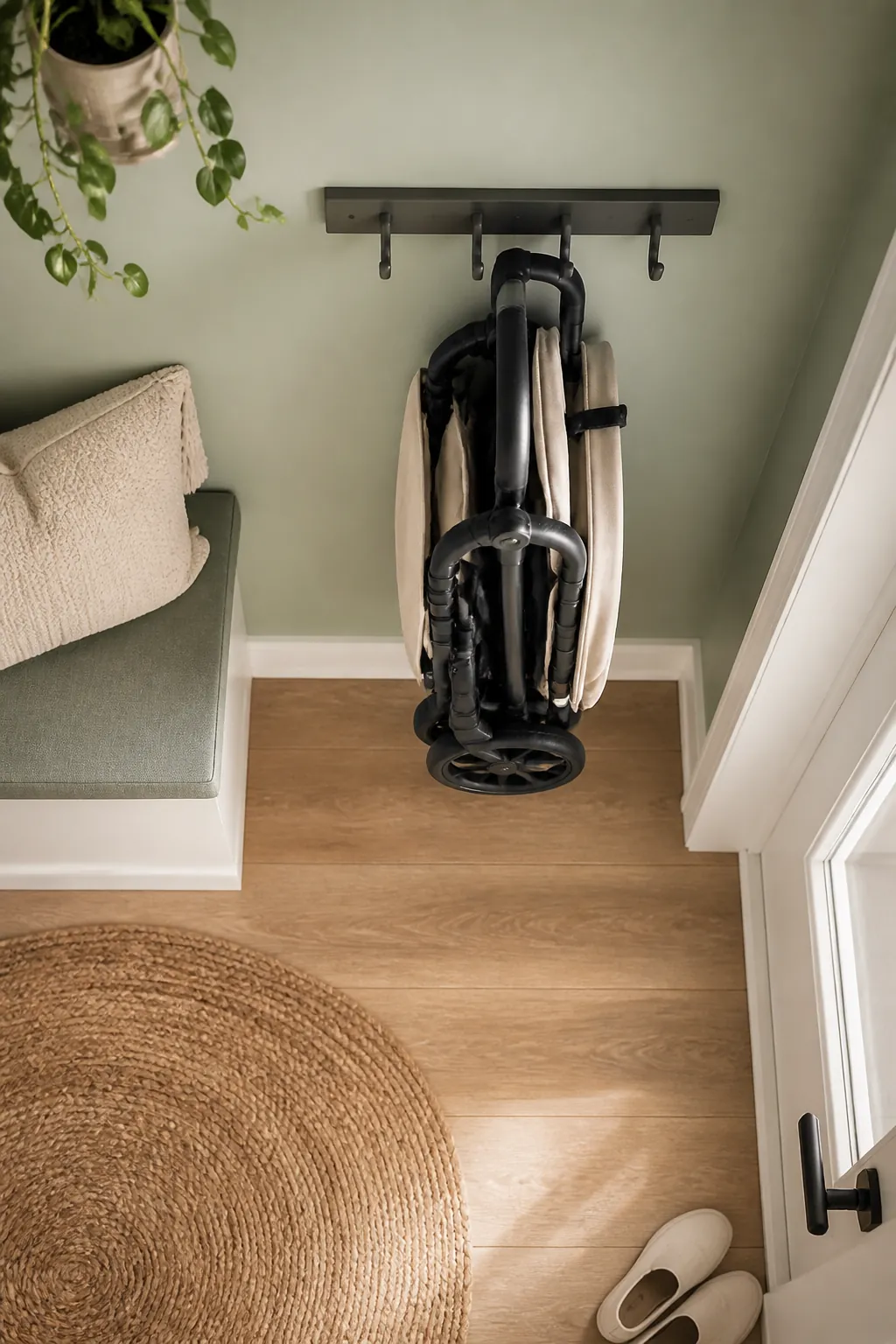
This is the specification nobody reads on the packaging until the hook is already in the wall.
A standard folding stroller weighs 17 to 25 pounds. A travel system frame, even with the car seat removed, can pass 30. Adhesive wall hooks are typically rated for 5 to 10 pounds each, which means the stroller that looks fine hanging there today is one humid afternoon away from peeling the hook off the wall, usually while nobody is nearby to catch it.
A heavy-duty wall hook rack rated for 40 pounds or more is built for this kind of load rather than a coat. Buy for the stroller’s actual weight plus a comfortable margin, not for what looks strong enough on the shelf.
4. Mount into a stud and mark it before you drill
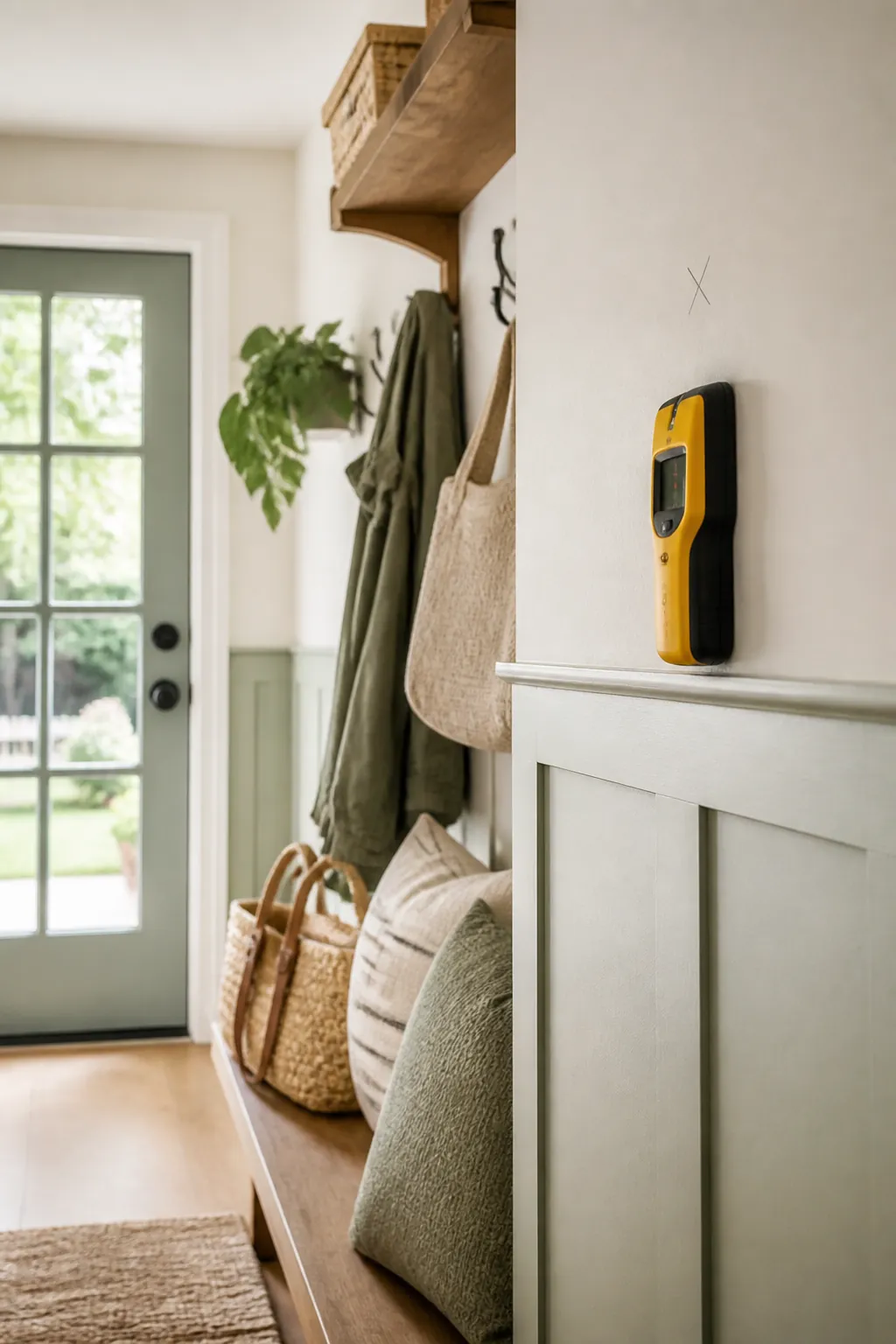
A hook rated for 40 pounds is only as strong as what it is screwed into.
Find the studs with a stud finder before you commit to a spot, and mark the center in pencil rather than eyeballing it later with the drill already in hand. Drywall alone, even with a weight-rated anchor, is a reasonable bet for 15 pounds and a poor one for a stroller that pushes past 25, especially once you factor in the leverage of a frame swinging slightly every time the door opens nearby.
If drilling is off the table because you are renting and the lease is strict, skip ahead to the over-the-door version in a few sections rather than compromising on a wall anchor you are not confident in.
5. Keep the folded stroller out of the front door’s swing
The same rule that governs entryway benches applies here, and it is just as easy to miss.
Open the front door all the way and watch where the leading edge travels. Anything inside that arc, including a stroller handlebar sticking out at 40 inches, gets clipped every time someone comes in with their hands full. A stroller that stops the door a few inches short of fully open will get moved out of frustration within a week, usually back onto the floor in the middle of the room.
Mount the hook, or plan the floor spot, on the wall the door swings away from, not the one it swings toward.
6. Go over-the-door when you can’t drill
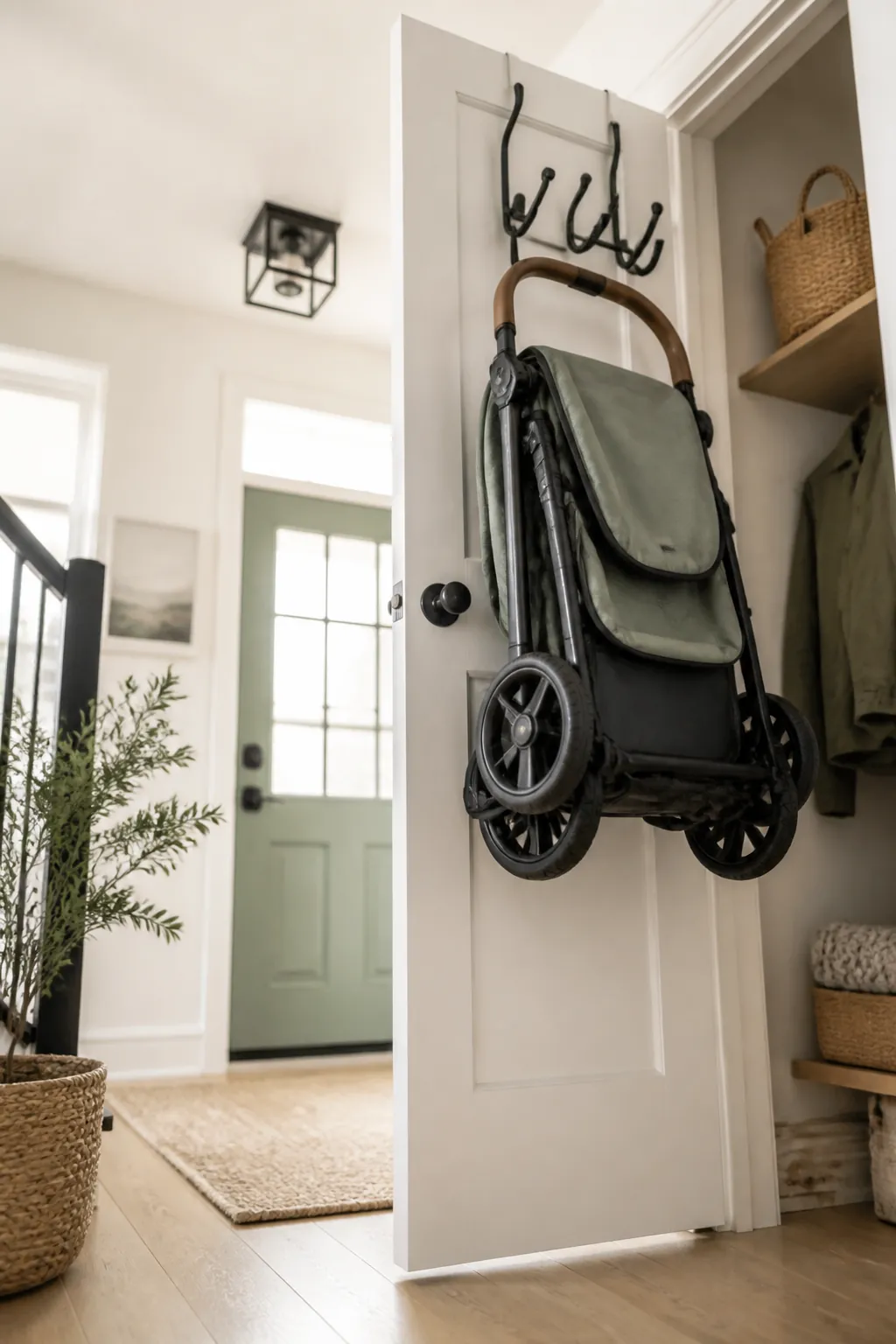
Renters who cannot put a hole in the entryway wall still have a full sheet of unused vertical space on the back of the nearest interior door.
An over-the-door hook rack grips the top of a standard interior door with no fixings and lifts straight off when you move. Hang the stroller from the hook nearest the hinge side rather than the outer edge. That position keeps the load close to where the door itself is supported, instead of leveraging the whole rack outward every time the door swings.
Check the door’s thickness before ordering, since most of these racks are sized for a standard 1.375-inch interior door and a thicker one can be a tight fit. And check the per-hook weight rating rather than the rack’s total, since a 25-pound stroller can exceed what any single hook is rated for even if the rack overall claims more.
7. Give the wheels a mat, not the bare floor
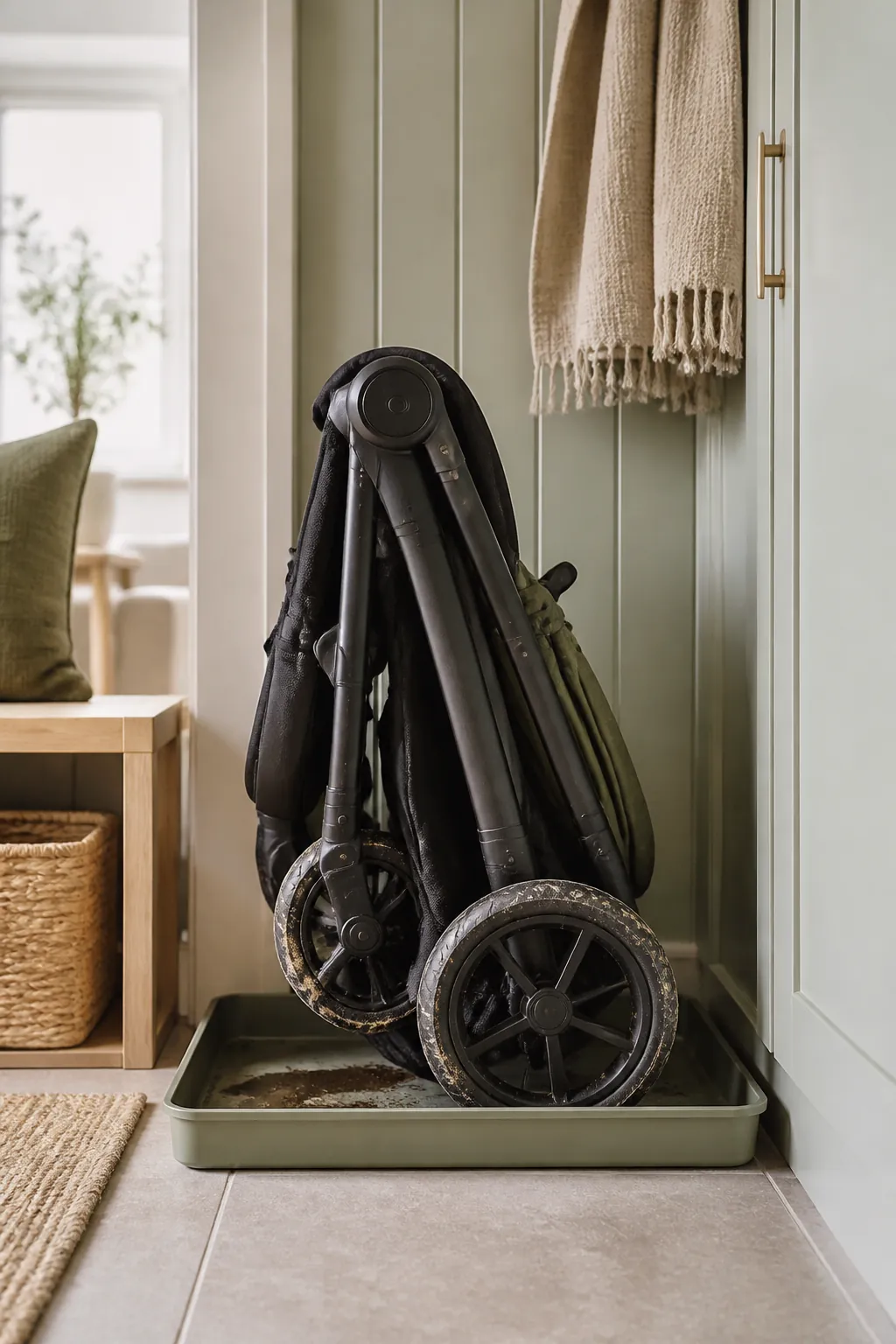
Whichever storage method you use, the wheels are the part that damages a rental.
Stroller tires pick up whatever the sidewalk had on it: oil, grit, salt in winter, and moisture that never fully dries between trips. Parked in the same spot day after day, that residue works into hardwood finish and can dent softer vinyl plank flooring under the weight of the frame. A thin rubber mat or a shallow boot tray under the wheels catches the grime and takes the point load off the floor, and it can be wiped out in seconds instead of scrubbed.
If the stroller leans against the wall rather than hanging, add a soft stopper, even a folded towel, between the tire and the paint. A tire ground into the same spot for months leaves a mark that a security deposit will notice.
8. Give the diaper bag a landing spot near the stroller
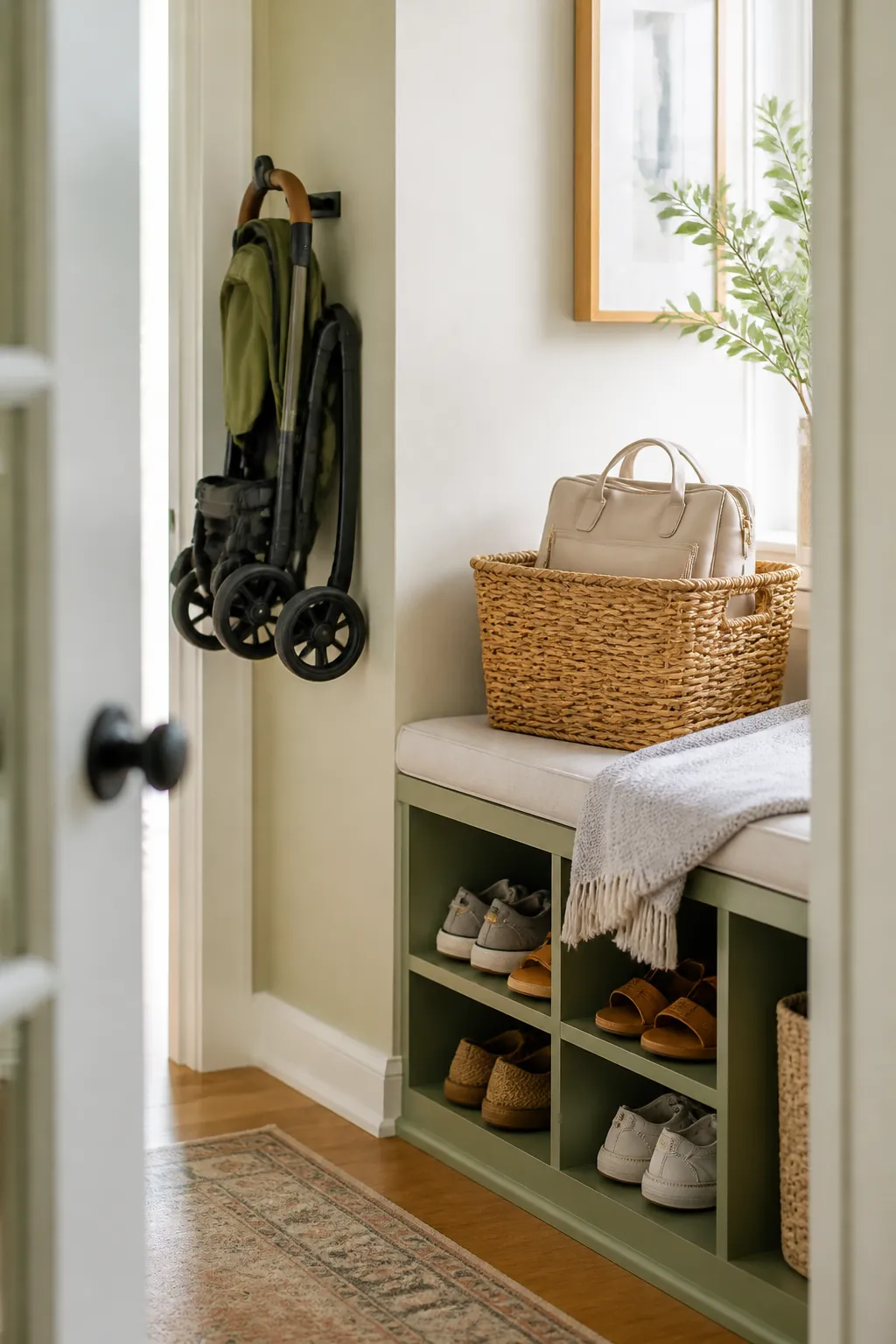
The stroller is rarely the only thing that needs a home by the door. The diaper bag, a rain cover and a snack cup all travel with it, and if they do not have a spot of their own they end up on the floor underneath.
A narrow entryway bench with shoe storage, at 12 to 14 inches deep, sits well next to a wall-mounted stroller without doubling the floor footprint, and it gives you somewhere to sit while getting a toddler’s shoes on before the stroller even comes off the wall. Keep one basket on it dedicated to stroller accessories, so the bag has a landing spot that is not the floor.
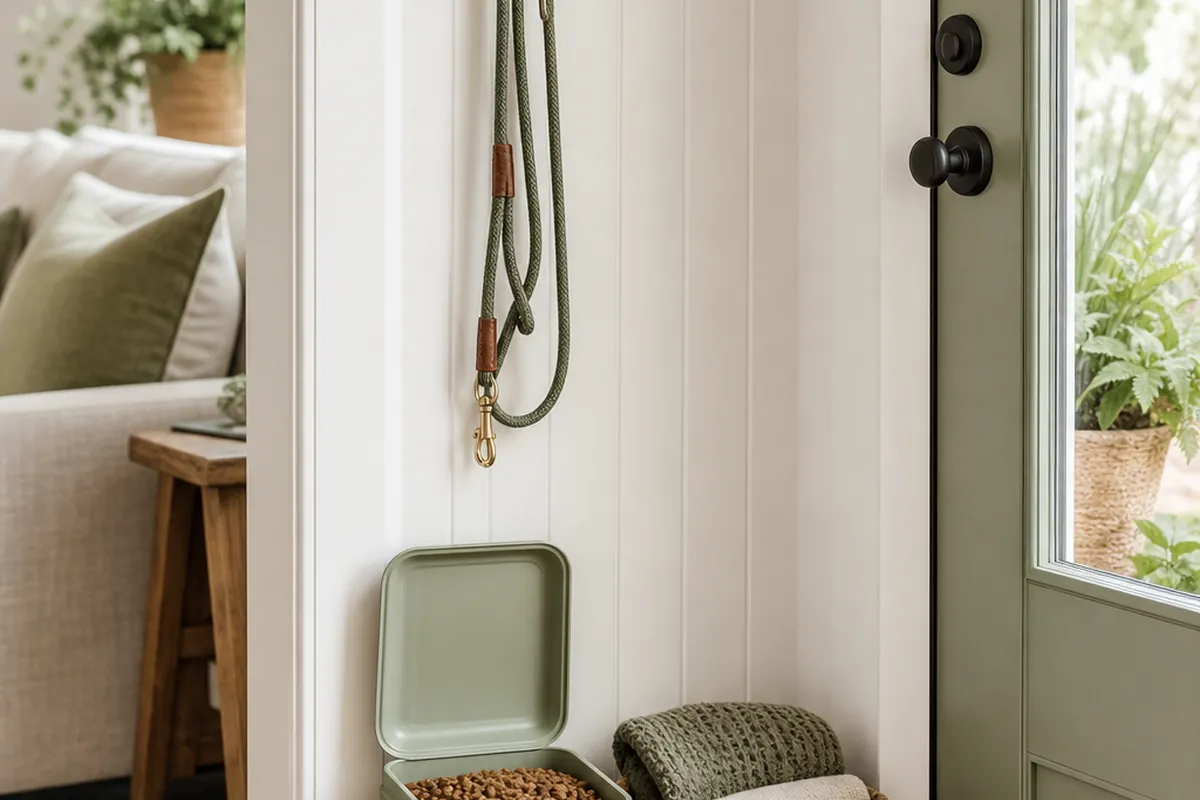
The same thinking applies to a dog’s leash and walking kit, and pet gear storage for a small apartment entryway works through where that lands when the stroller already has the wall.
9. A second stroller needs triage, not more space
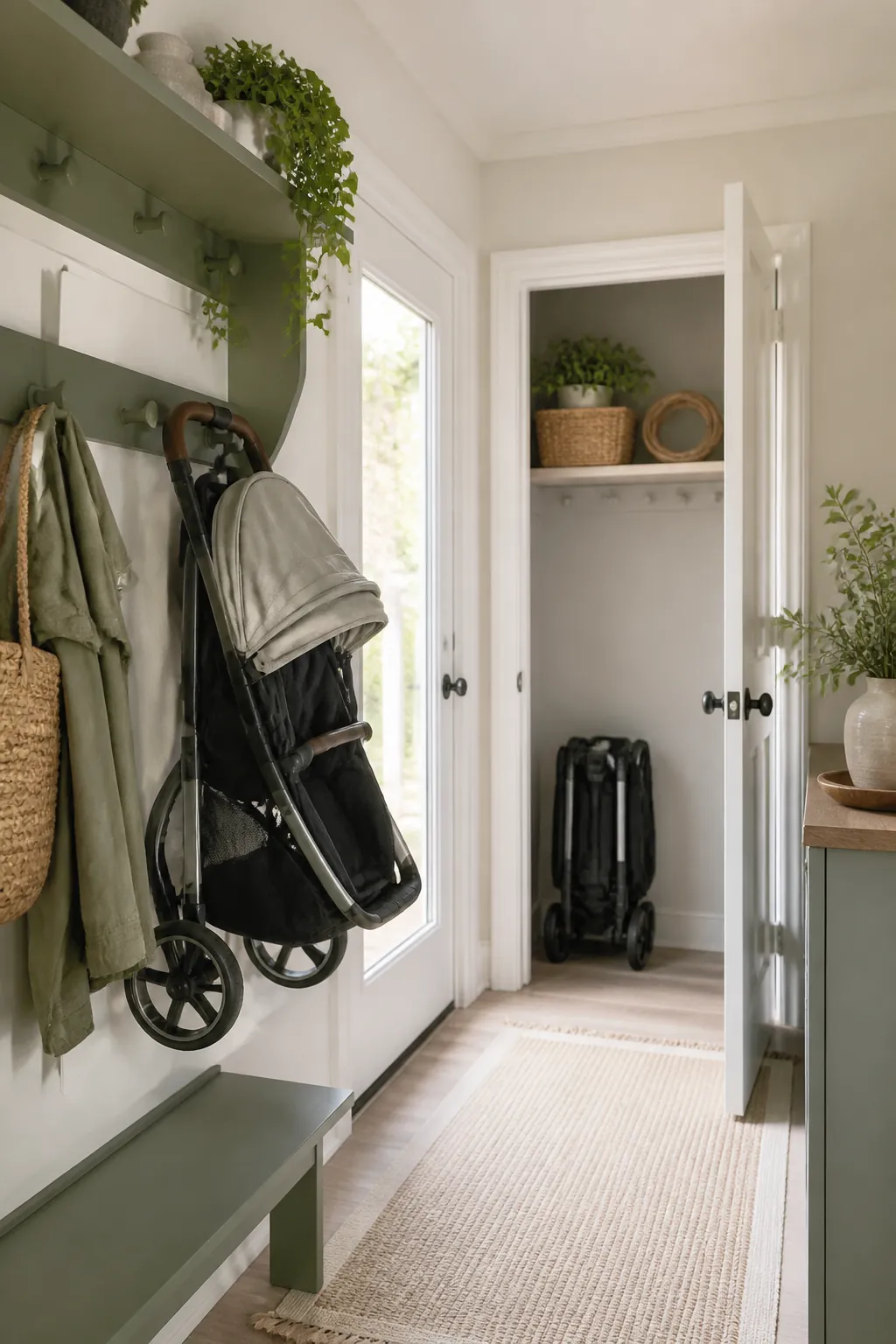
Two strollers, an everyday one and a jogging or travel model used occasionally, will not both fit neatly on hooks in most apartments, and trying to make room for both is how the entryway ends up worse than before.
Keep the one used daily by the door, on the hook or in the marked floor spot. Move the occasional one somewhere it does not compete for entryway space at all: a hall closet floor, under a bed with the wheels removed if they detach, or a corner of a storage unit if the household has one. If a stroller has not left that spot in a season, it is a candidate to sell or pass on rather than storage to plan around indefinitely.
Where to start
Fold the stroller the way you actually use it and measure that shape, not the shipping box. If it folds under about 15 inches deep and under 30 pounds, a stud-mounted hook or an over-the-door rack will carry it, as long as the position clears the front door’s swing. If it does not fold that small, stop trying to hang it and give it one marked, mat-protected corner of floor instead.
Either way, plan the landing spot for the bag and accessories at the same time as the stroller itself. A wall or corner that solves the stroller but leaves the diaper bag on the floor has only solved half the problem, and it is the half that was never really the hard part.