A nursery closet is a strange storage problem, because almost nothing about it stays true for long. The clothes are tiny, there are a lot of them, and the entire contents get replaced every few months as the baby grows out of one size and into the next.
That means a nursery closet organized like an adult one, sorted by type and hung on a rail, goes wrong within weeks. What works instead is built around size and around the constant outflow of things that no longer fit.
1. Sort by size before you sort by anything else
In an adult closet, category is the useful grouping: shirts together, pants together. In a nursery it is close to useless, because the thing that decides whether a garment is wearable this week is not what it is, it is what size it is.
Sort everything by size first. Current size at the front and at eye level, next size up stored but accessible, everything below current size out of the closet entirely.
Done this way, getting a baby dressed involves no thinking. Done the other way, you spend the first year rediscovering vests that stopped fitting two months ago.
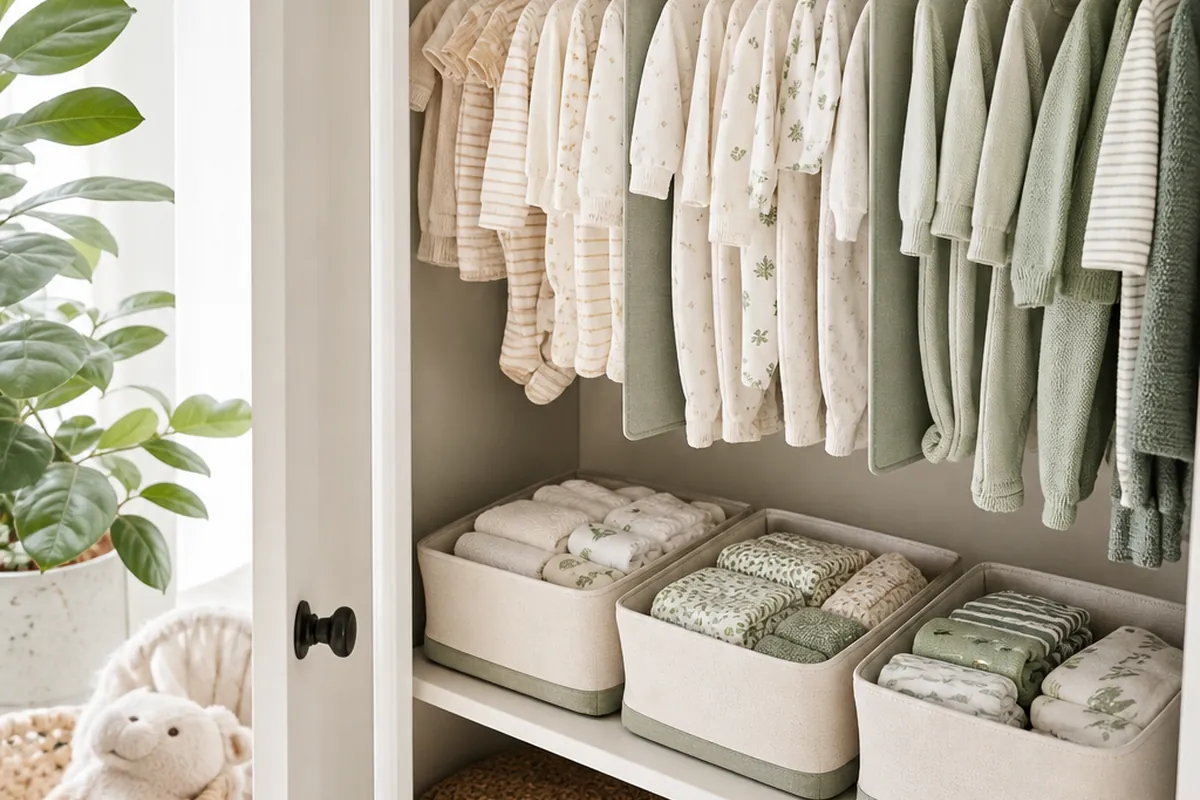
2. Put size dividers on the rail
Once things are sorted by size, they need something holding the sections apart, or the order collapses the first time somebody puts laundry away in a hurry.
Rail dividers do this for very little money, and you can make them from cardboard if you would rather. The point is that the boundary is visible, so putting a garment back in the right place takes no decision.
Label them by size rather than by age. The ages printed on baby clothes are optimistic guesses and vary wildly between brands, whereas the size on the label is at least consistent with itself.
It also helps to leave the current section deliberately loose. A crammed rail is what makes people give up and drape things over the end, and in a nursery the current size is the only section that needs to be easy.
3. Claim the dead space under the rail
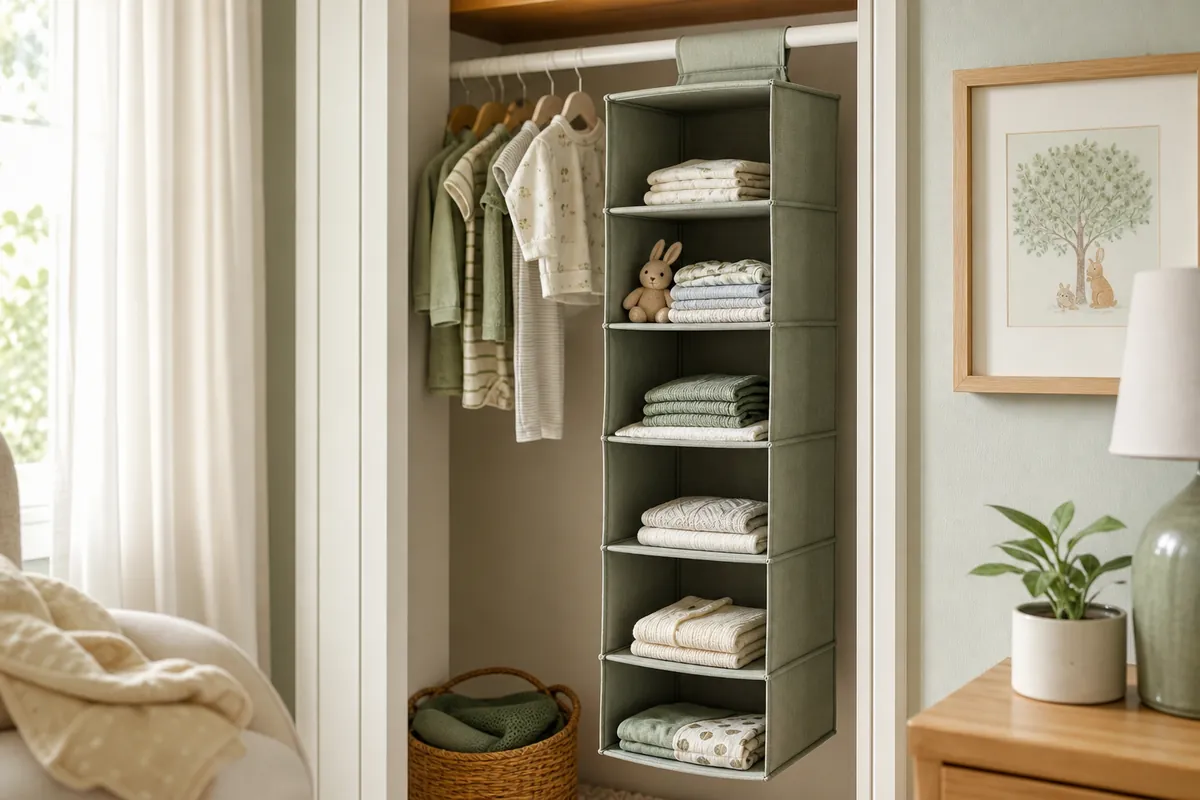
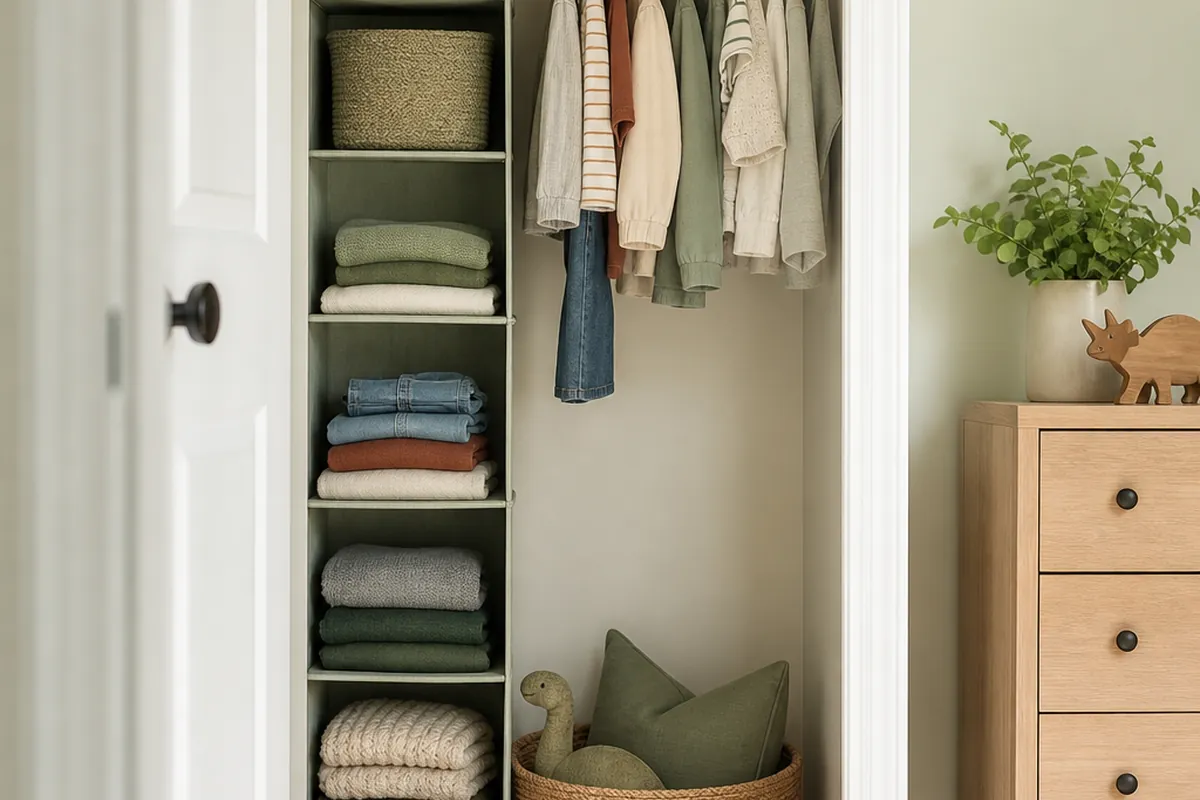
This is the biggest single gain available in a nursery closet. Baby clothes are short, so a rail set at adult height leaves two or three feet of completely empty air underneath the hanging garments.
A 6-shelf hanging closet organizer fills that column. It hangs off the existing rail rather than needing any fixings, which suits a rented flat or a nursery you do not want to drill into, and at 12 inches square by 48 tall it gives six shelves of folded storage in space that was doing nothing.
Use it for the bulky, everyday things: sleepsuits, vests, blankets, the day’s spare outfits. Leave the rail above it for the small number of things that genuinely need hanging.
4. Give the high shelf to the future, not the present
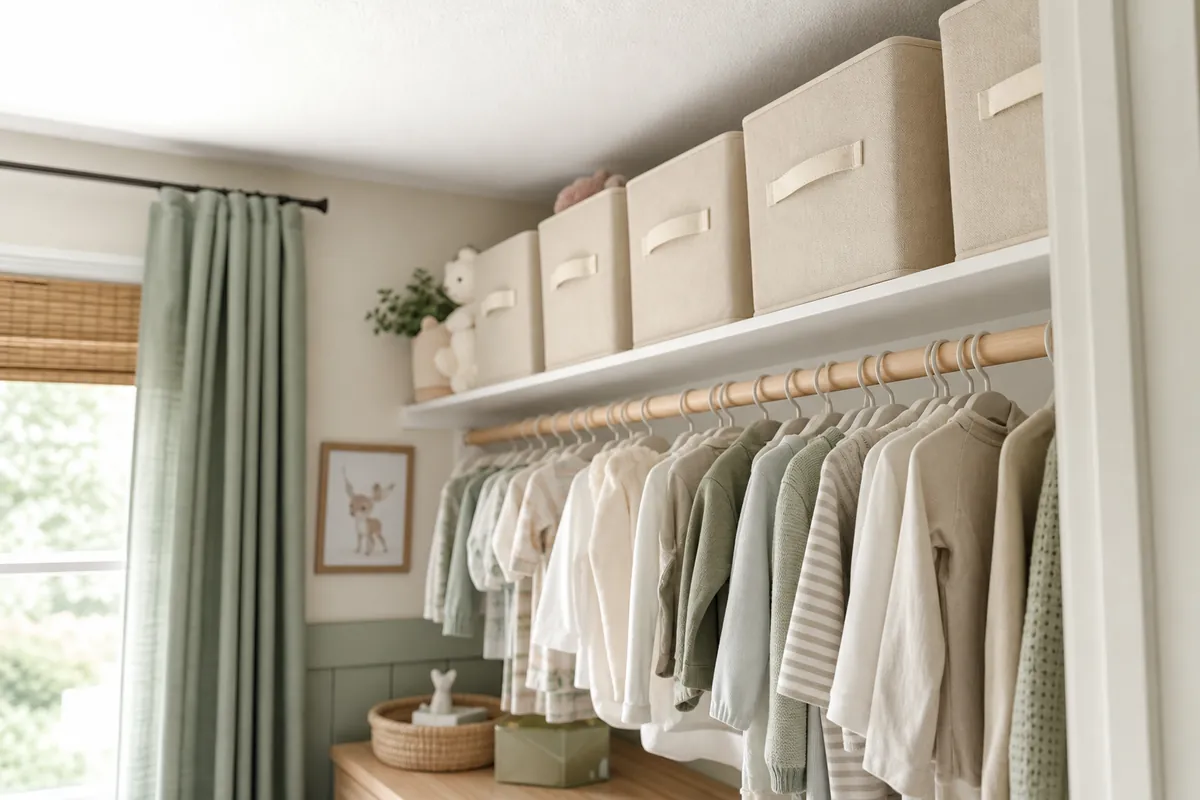
The shelf above the rail is out of reach when you are holding a baby, which makes it the wrong place for anything you need daily and the right place for what comes next.
Fabric storage bins with handles suit it well. They are about 10 and a half inches square with a handle on the front, so one can be pulled down one-handed, and being soft sided they will not hurt anyone if a bin does come down awkwardly. Six of them covers the next two sizes with room for the gifts that arrive in sizes you will not need for a year.
Label the front of each bin with the size. In eight months you will not remember what went in which, and a stack of unlabelled bins gets opened all at once or not at all.
One safety note worth taking seriously: nothing heavy or hard goes on a high shelf above a changing area, and any freestanding shelving in a nursery should be anchored to the wall before the baby is mobile rather than after.
5. File the folded clothes instead of stacking them
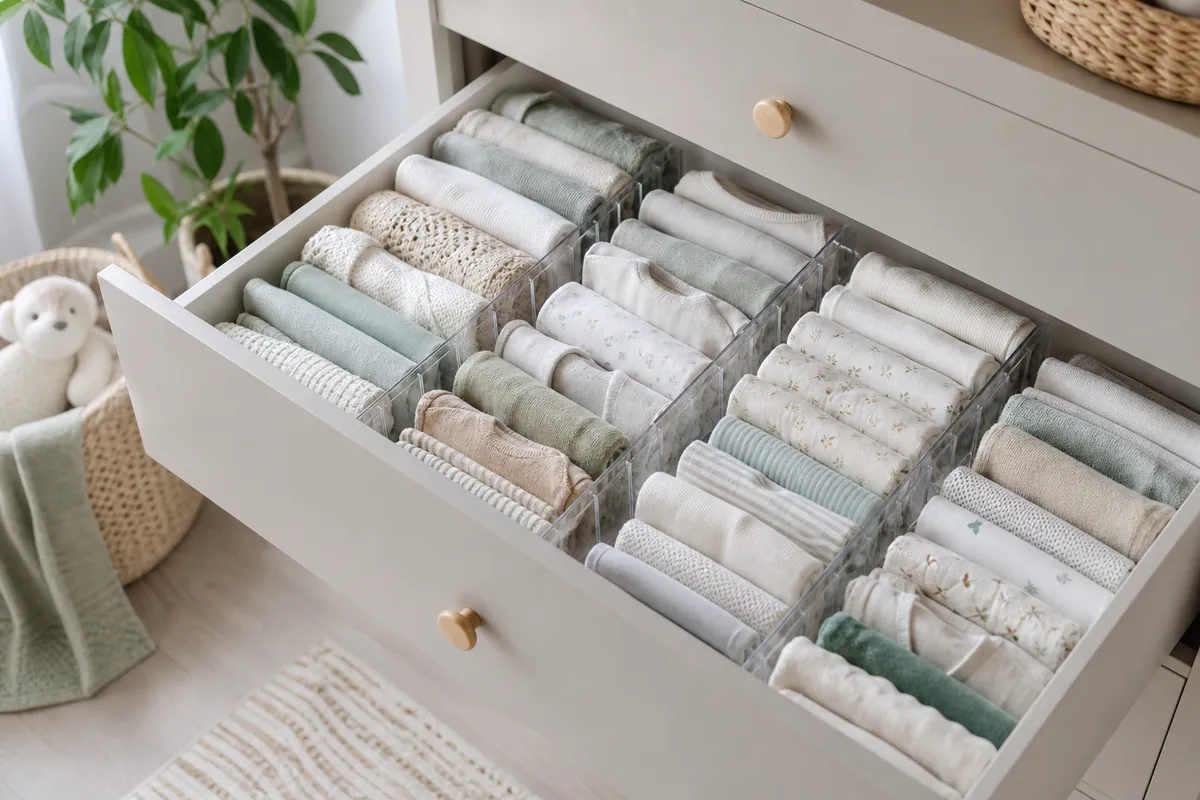
Baby clothes are small enough that a stack of them is a solid brick in which the bottom two thirds are invisible. Pull one out and the rest topple.
Adjustable drawer dividers turn a drawer into three or four narrow lanes, and once the clothes are folded and stood upright in those lanes you can see every item at once. These expand from about 10 to 16 inches so they fit most nursery drawers, and at 4 inches high they are well matched to how small the clothes actually are.
One lane per category is enough: sleepsuits, vests, pants, socks and hats. It is the same filing idea that makes kids’ closet organization in a small room work, applied to much smaller garments.
Socks and hats are the exception worth calling out. They are too small to stand up on their own and will slump into a drift at the back of the drawer no matter how well the rest is filed, so give them a small open box inside the lane rather than fighting it.
6. Set up the outgrown box on day one
Nothing else in a house has an outflow like a nursery. Every week something stops fitting, and if there is nowhere for it to go it goes back in the drawer.
Put a box or a large bag in the bottom of the closet from the start, and the rule becomes automatic: it does not fit, it goes in the box, immediately, without a decision about whether to keep or pass on. That decision happens later, when the box is full, and takes ten minutes.
Without this, the outgrown clothes stay mixed in with the current ones, which quietly undoes the size sorting that everything else depends on.
7. Keep the daily supplies at your height and reachable one-handed
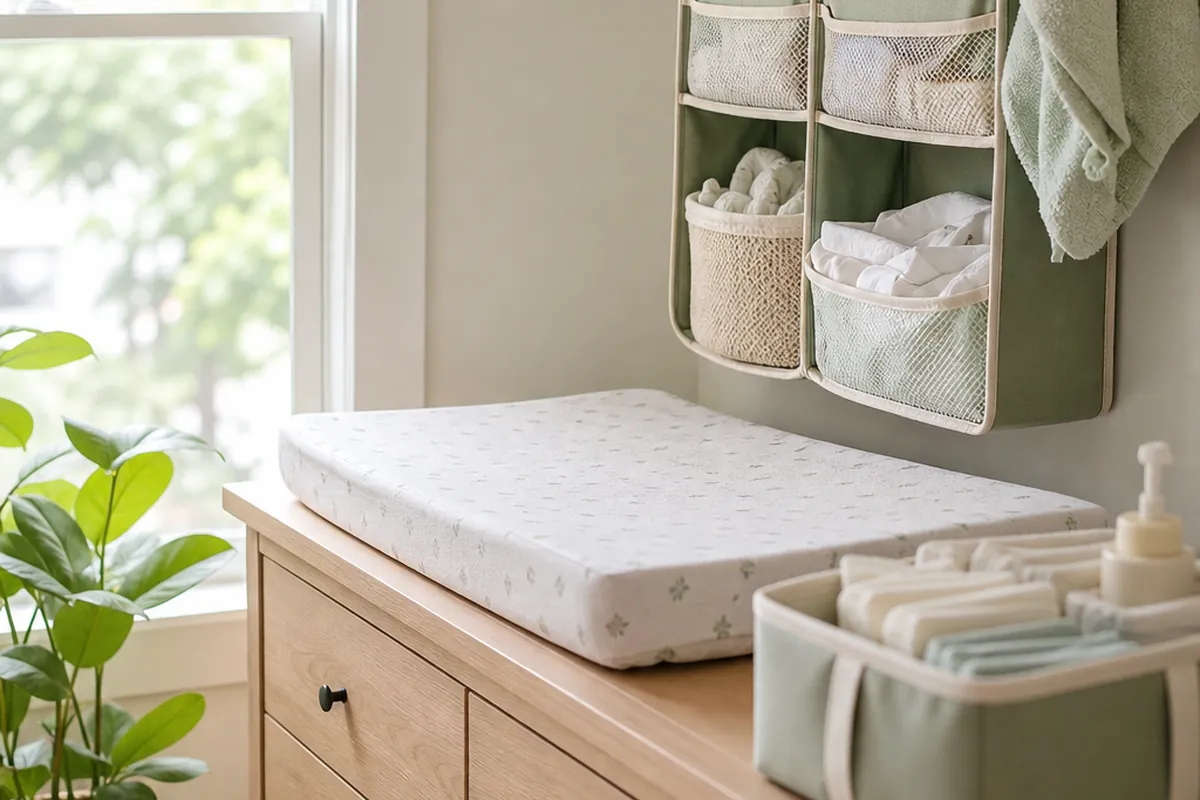
Diapers, wipes, creams and muslins get used many times a day, often while holding a baby with the other arm.
That puts them at standing height, at the front, in open containers rather than anything with a lid to unclip. A shallow basket on a shelf at chest level beats a lovely lidded box at knee level every time, because you will be operating it one-handed and half asleep.
Keep the bulk stock somewhere else entirely. A pack of diapers takes a huge amount of closet volume, and only the current opened one needs to be at the changing spot. A sensible split like this is most of what makes nursery organization on a budget go further than it looks like it should.
8. Decide what the closet floor is for
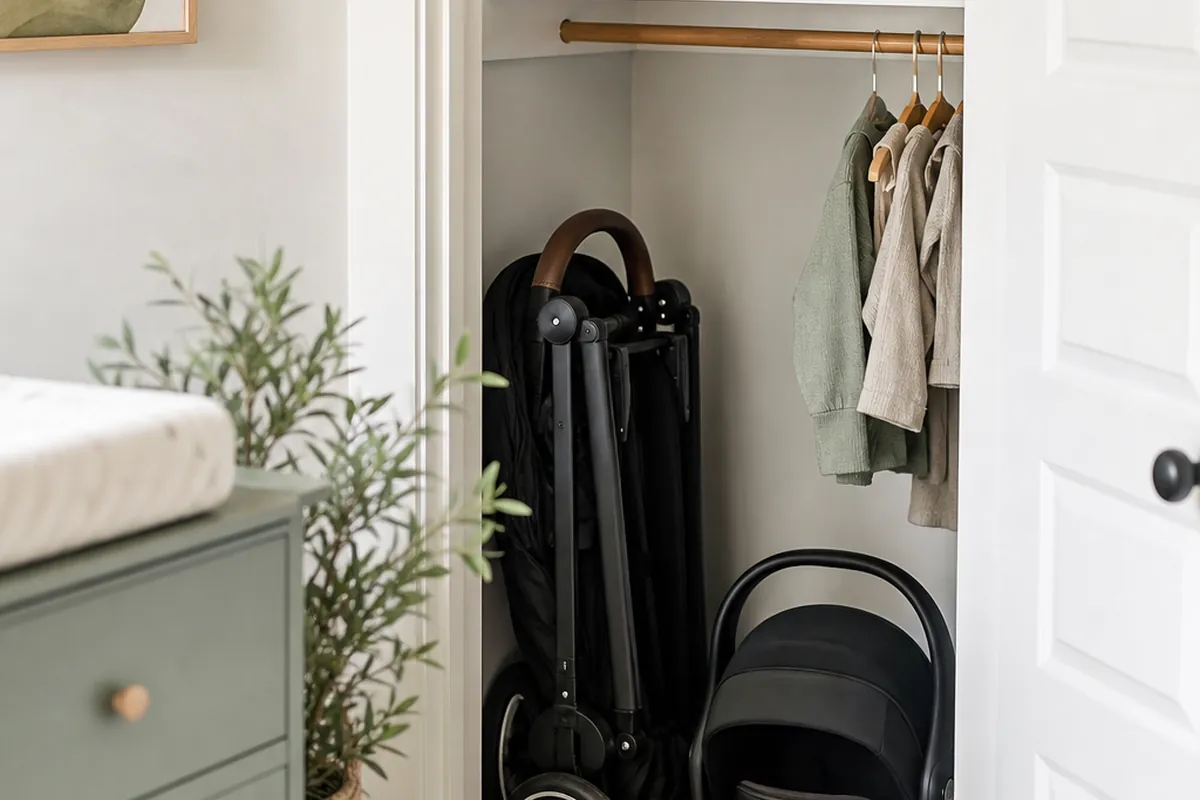
The floor of a nursery closet fills up by default with whatever has no home: gift bags, a spare bouncer, the packaging from the stroller.
Give it one job instead. A laundry basket is usually the best choice, since a nursery generates a startling amount of washing and a basket in the closet keeps it out of the room. The outgrown box is the other strong candidate.
What it should not be is general overflow, because the floor is the only part of the closet a crawling baby can reach once the doors are open. That is also the reason anything with a cord, a plastic wrapper or a small detachable part should be stored above waist height rather than at the bottom, well before the baby is moving.
9. Keep the sentimental things out of the working closet
Every nursery accumulates things nobody intends to use: the coming home outfit, the hand knitted cardigan from a relative, the first hat.
These are worth keeping and they are not clothes any more, so they should not be stored with clothes. One labeled box, stored outside the nursery closet, keeps them safe and stops them taking daily-access space. Soft toys tend to go the same way, and the honest version of that problem is covered in stuffed animal storage.
The working closet holds what the baby will wear in the next three months. Everything else is archive.
10. Re-sort every three months
A nursery closet is not a system you set up once. The contents turn over completely several times in the first year, and any arrangement drifts out of date on its own.
Every three months, take twenty minutes: move the next size down from the high shelf, empty the outgrown box, and reset the rail dividers. Tie it to something you already do, such as a checkup or the start of a season, so it happens without being remembered.
Twenty minutes four times a year keeps it working. Left alone until it stops functioning, the same job is an afternoon with everything on the floor.
Organize for the growing, not for the clothes
A nursery closet is easy to make beautiful and hard to keep useful, and the difference is whether it is built around the fact that everything in it is temporary.
Sort by size, fill the dead space under the rail, put the next sizes up high and the outgrown box on the floor, and re-sort every three months. Do that and the closet keeps working through every growth spurt instead of needing rescuing after each one.