Most advice about small space storage is really advice about owning less. This is not that. It assumes you own a reasonable amount and your home is simply not big enough, which is the ordinary situation.
The useful reframe is that homes are sold by floor area but used as volume. Floor is the resource everyone counts and it is the one already spoken for. The space above, behind and underneath what you already own is unmeasured, unused, and usually adds up to more than a spare room would. These fifteen ideas are a tour of it.
1. The air under every shelf
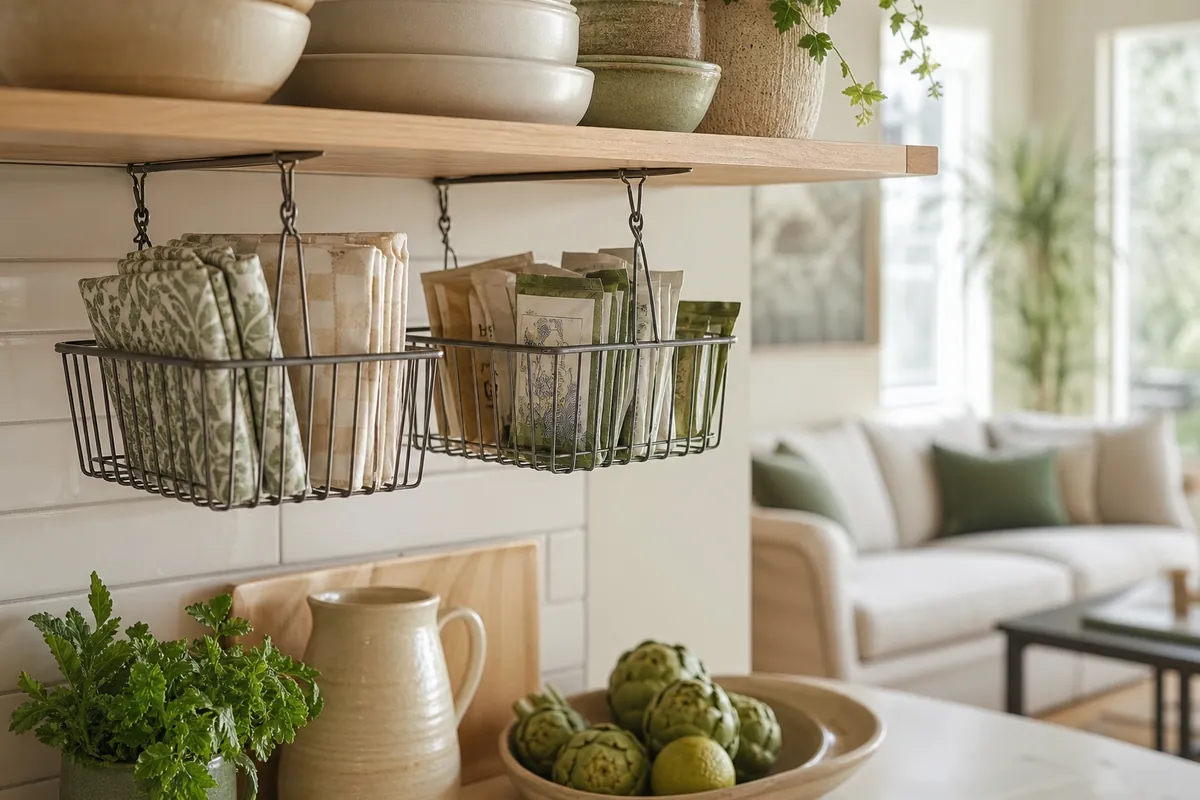
Every shelf in your home has a band of empty air above whatever sits on it, because shelves are spaced for the tallest thing you might store, not the average thing you do.
Under-shelf hanging baskets clip onto the shelf above and hang into that band, which turns dead air into a second layer without tools. They work best for light and flat things: wraps and foil in a kitchen, folded flannels in a bathroom, cables and chargers in a cabinet.
2. The back of every door
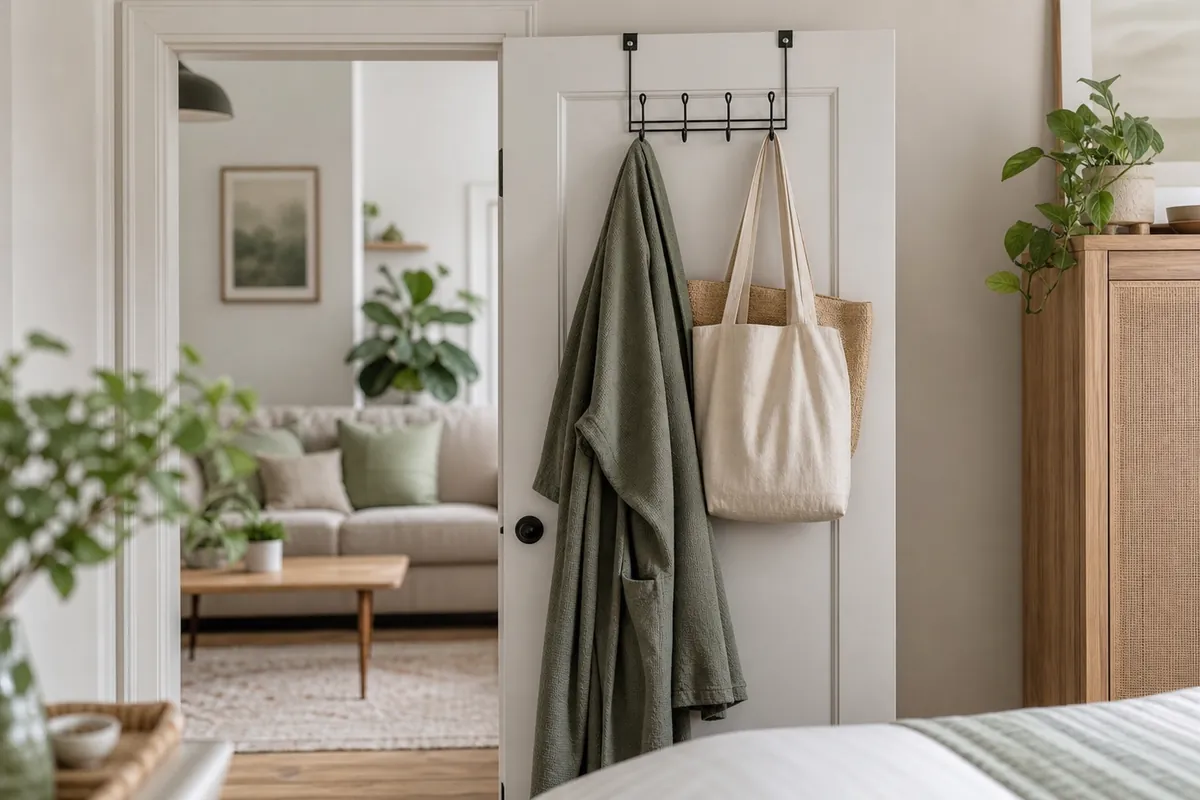
Interior doors have a completely unused surface on the side you never look at, and in a rented home it is the only large surface you can use without permission.
An over-the-door hook hanger takes coats, bags, dressing gowns and the tote you use for everything. Hooks beat pockets here, because hooks stay shallow and a door with a deep organizer on it often stops closing against the frame.
3. The wall above the door frame
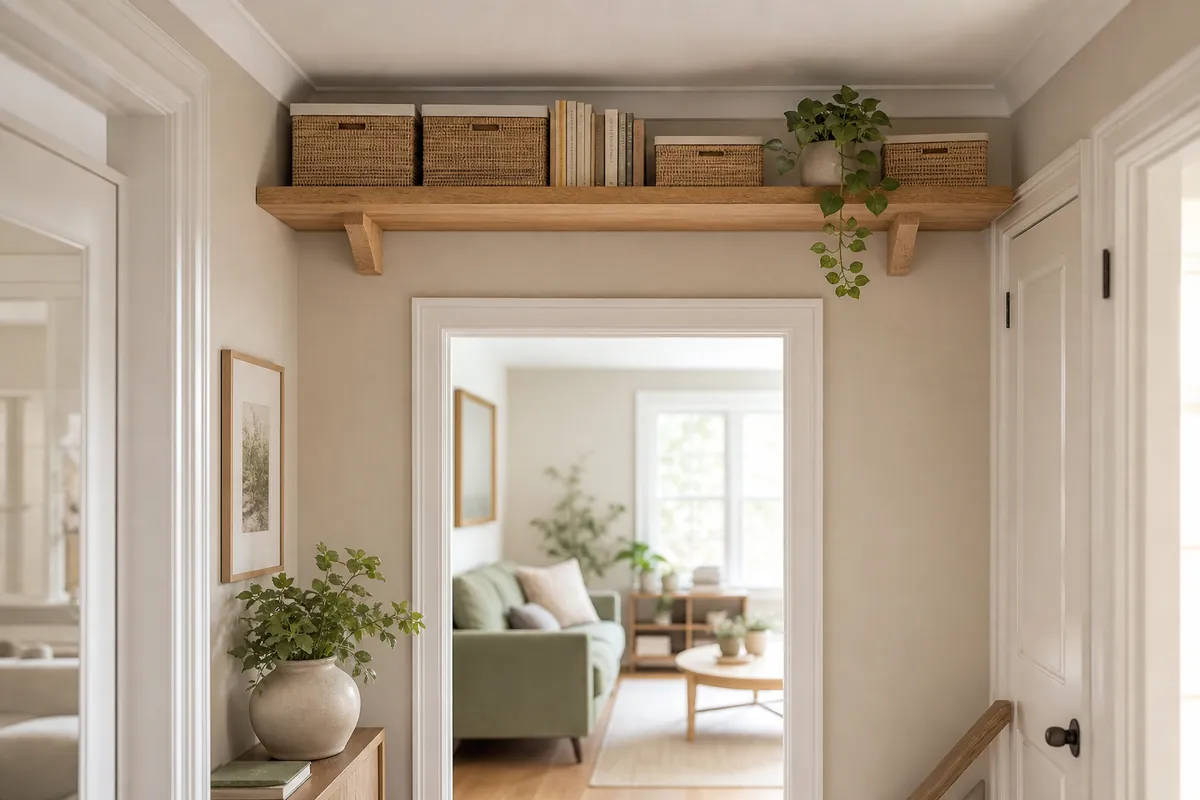
The thirty or so centimetres between a door frame and the ceiling runs around the entire home and holds nothing at all.
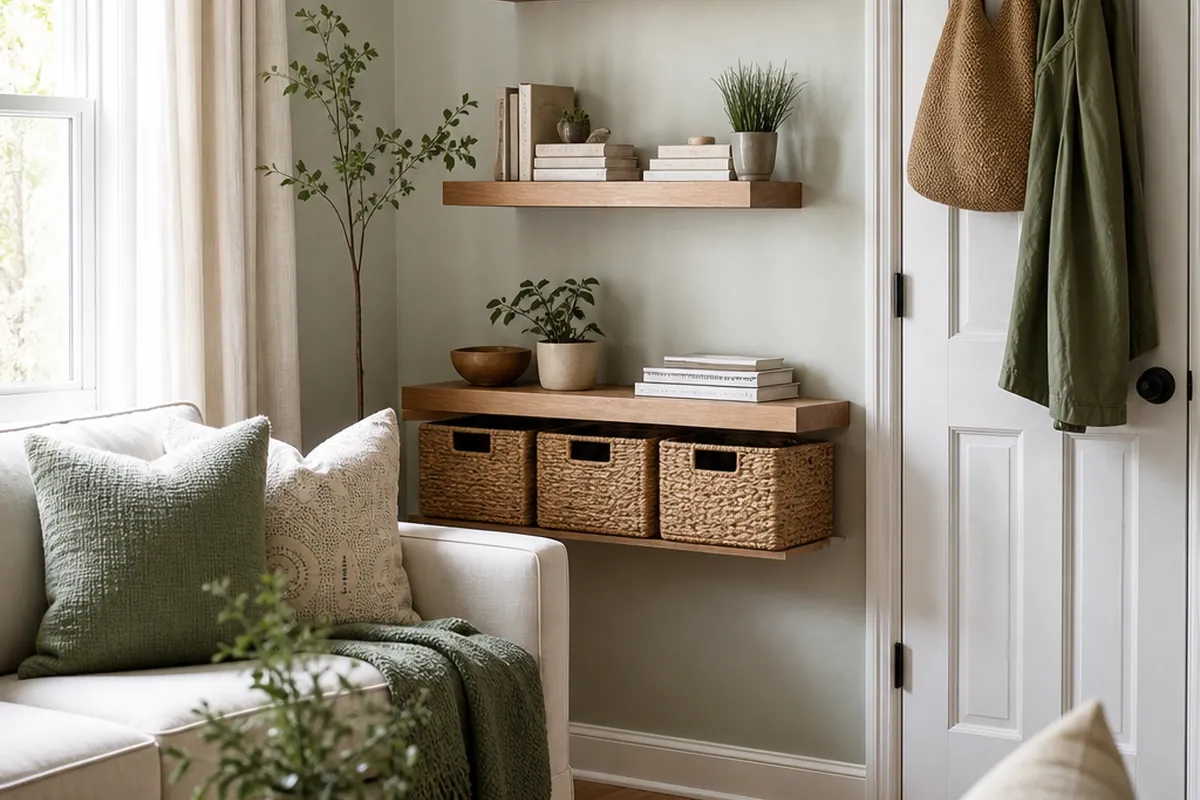
Floating wall shelves up there are genuinely invisible in daily life because they sit above the sightline, which is why this adds storage without making a room feel busier. Keep it to light and rarely needed things, since you will need to stand on something to reach it.
4. The slot beside the appliance
There is usually a gap of ten to twenty centimetres beside a fridge, a washing machine or a cabinet run, and it is either empty or holds a mop at an angle.
A narrow rolling cart made for that width turns it into a pull out pantry or a cleaning store. Measure the gap and the handle clearance before buying, because the common failure is a cart that fits the slot but cannot be pulled out past a door handle.
5. Underneath the bed
The largest single volume in most homes, and the most commonly wasted, because an unlidded space under a bed just collects dust and single socks.
Lidded containers or a rolling drawer convert it into real storage for bedding and off season clothes. Raising the bed on risers doubles it if you need more.
6. Inside the furniture you already sit on
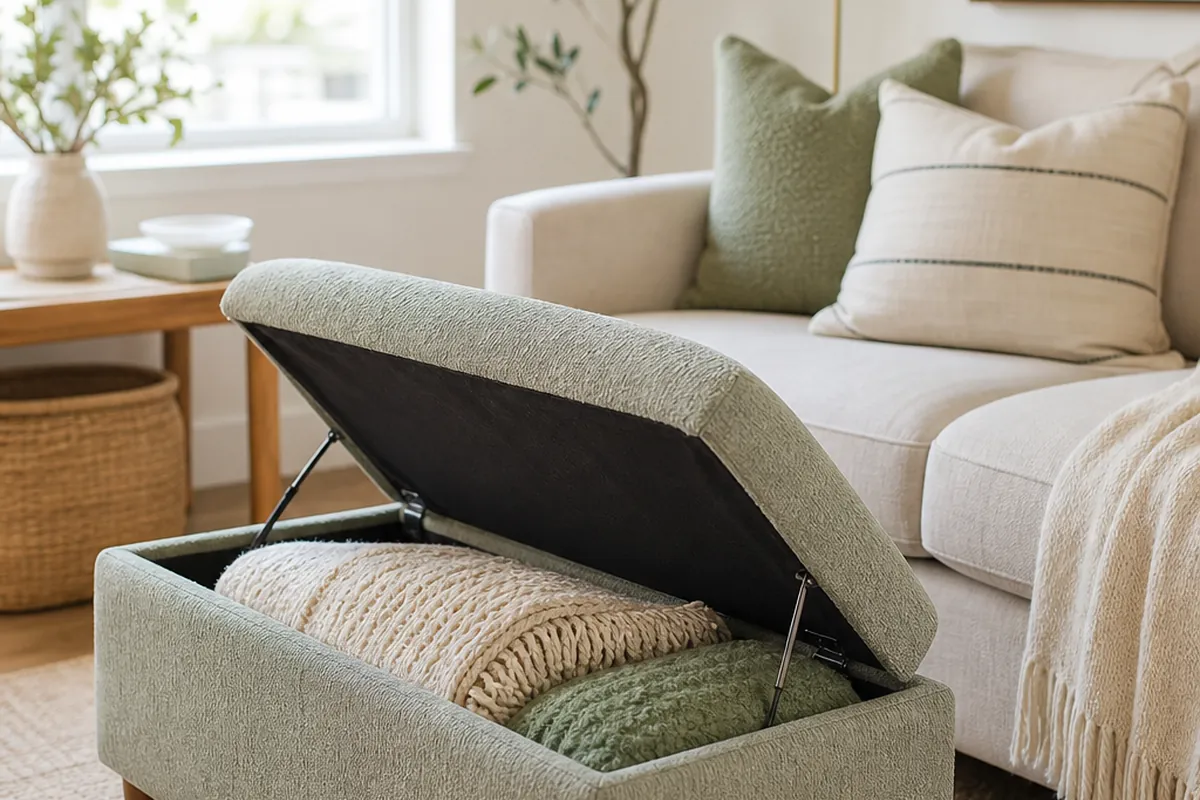
Seating is bulky and usually hollow, which makes it the best hidden storage in a living room.
A storage ottoman or a bench with a lid holds blankets, games or toys in space you already paid for with floor area. See storage ottoman ideas for a small living room for what actually fits.
7. The inside of cabinet doors
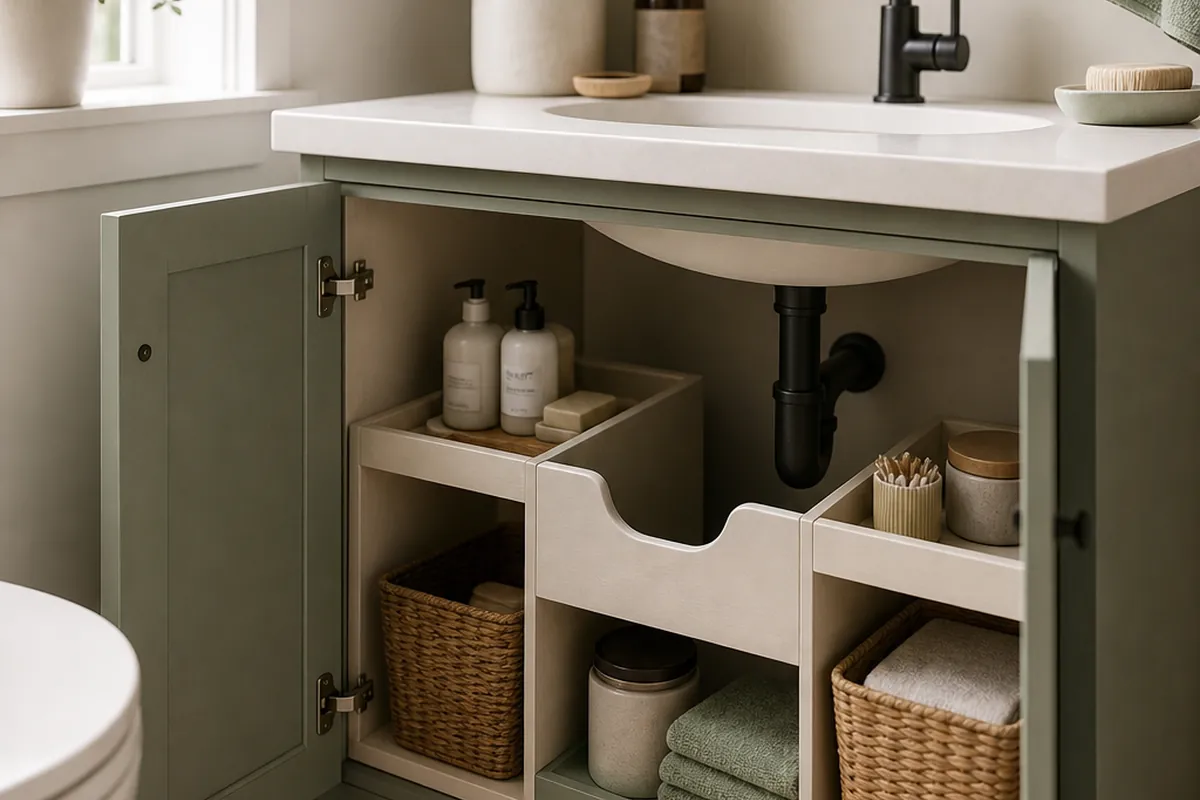
Kitchen and bathroom cabinet doors have a shallow usable depth, roughly five centimetres, that nothing ever occupies.
Adhesive hooks, a slim rack or a small caddy there hold foil, pot lids, cleaning sprays or hair tools. It is shallow storage, so it only suits flat and light things, but it is space that was doing nothing at all.
8. The vertical middle of deep cabinets
A deep cabinet with one shelf wastes most of its height, since stacking anything more than two high makes the bottom item unreachable.
Shelf risers create a second level so short items stop wasting tall space. This single change usually adds more kitchen capacity than any reorganising of what is already in there.
9. Above the bathroom door
Bathrooms run out of storage faster than any other room, and the wall above the door is the one surface that is always free.
A single shelf up there holds spare toilet rolls, towels and the bulk toiletries you buy in threes. Nothing you need daily, because reaching is awkward, which is exactly why the space is still available.
10. The wall beside and above the bed
Bedrooms are usually full at floor level and empty above the mattress.
Shelves either side at hand height replace bedside tables and take no floor at all, and a higher shelf running the width of the bed holds books and the things that would otherwise migrate to the windowsill. More options in bedroom storage when there is no space left.
11. Rails and hooks instead of shelves for awkward things
Some objects store badly on shelves: mugs, tools, hats, bags, cleaning equipment with handles. They stack poorly and topple.
A rail with S hooks handles all of them in a strip of wall a few centimetres deep. Hanging suits anything with a handle, a hole or a loop, and it stops the small pile of awkward objects that forms in the corner of every cabinet.
12. The top shelf you cannot reach
Most homes have a shelf so high it is functionally decorative. Treat it as long term storage rather than wasted space.
Suitcases, seasonal decorations, the spare duvet. The rule is that anything up there should be needed twice a year at most, and light enough to bring down safely at arm’s length above your head.
13. Hollow furniture in general
Once you start looking, a lot of furniture is mostly air: beds, benches, window seats, the space under a console table, the interior of a footstool.
Buying the hollow version of a thing you were buying anyway is free storage. Buying a hollow thing you do not need is just furniture, so the test is whether the object earns its floor space on its primary job first.
14. The awkward corner
Corners defeat rectangular furniture, so they end up holding a plant and a small pile of things nobody has dealt with.
A corner shelf unit or a tall narrow cabinet uses the height where the floor is difficult. This is where craft and hobby supplies fit well, since they are small, numerous and want vertical storage, as in craft storage for small spaces.
15. Measure volume before you buy, not footprint
The rule underneath all of this. Most disappointing storage purchases fit the space perfectly and hold less than the space could have held, because they were chosen to fill a gap rather than to hold a known quantity.
Work out what has to go in, in litres or in armfuls, then find the thing that holds it. It is a slower way to shop and it is the difference between storage that solves the problem and storage that becomes part of it.
Where the space actually was
Nothing here requires a bigger home or a purge. It requires looking at the parts of the room you have stopped seeing: above the doors, under the shelves, behind the doors, inside the seating, and the thirty centimetres of air above everything on every shelf you own.
Add three or four of these and most small homes gain the equivalent of a large cabinet, without losing any floor at all.
Finding the space is half the job. Deciding what goes in it, and in what order, is the other half, and small apartment organization ideas that free up real space covers that side.