Count the soft stuff in your living room right now: throws slung over the sofa arm, a heating pad, two spare pillows, the kid’s lap desk, board games nobody has opened since spring. None of it has an address. That is the exact gap a storage ottoman in a small living room fills better than another basket, another shelf, or another promise to declutter on Saturday.
One piece of furniture that seats a guest, holds your feet, hides a laundry basket’s worth of clutter and eats less floor than an armchair? Good trade. Below are eleven ways to actually put one to work, along with the buying details that separate an ottoman you love from a lidded box you resent.
Why a Storage Ottoman Beats a Coffee Table in a Small Living Room
A coffee table gives you a surface. That’s it. An ottoman gives you a surface (once you add a tray), a seat, a footrest and a couple of cubic feet of hidden space inside the same footprint. In a room under roughly twelve feet across, four jobs in one silhouette beats a handsome tabletop every time.
Soft edges are the underrated part. Small rooms make you squeeze past furniture, and padded corners don’t bruise a shin the way solid oak does. If you have kids, or you drag furniture around whenever the sofa bed comes out, that alone changes how the room feels.
Honest downsides: you can’t set a full mug on fabric without a tray, and anything living on top has to move before you can open the lid. Both are fixable in about ten seconds. Neither is a reason to skip the swap.
Get the Height Right Before You Worry About Length
Aim for a lid that lands level with your sofa seat or an inch or two below it. Go taller and the thing reads as a chest parked in your walkway. Go much shorter and it stops working as a footrest, which was half the point. Length is the forgiving dimension, though you still want about eighteen inches of clearance between the ottoman and the sofa so nobody has to shuffle sideways to reach the far cushion.
11 Storage Ottoman Ideas for a Small Living Room That Actually Work
1. Retire the coffee table completely
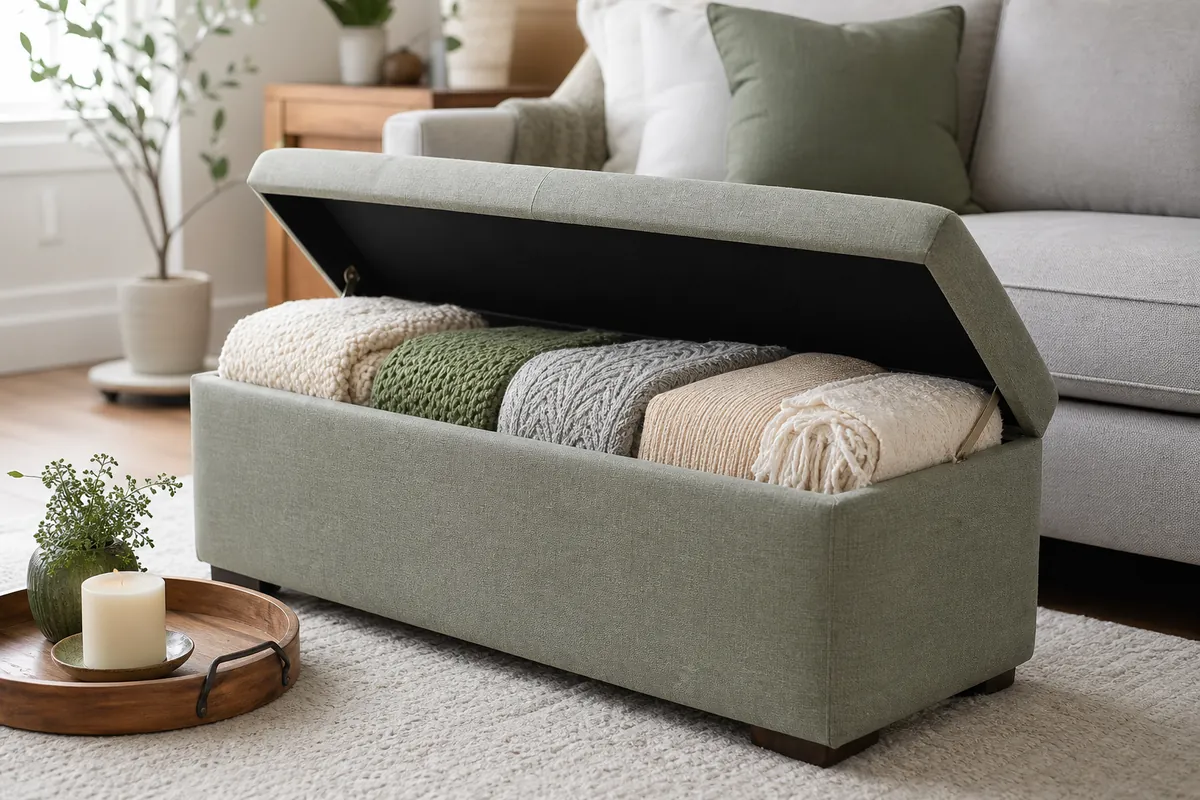
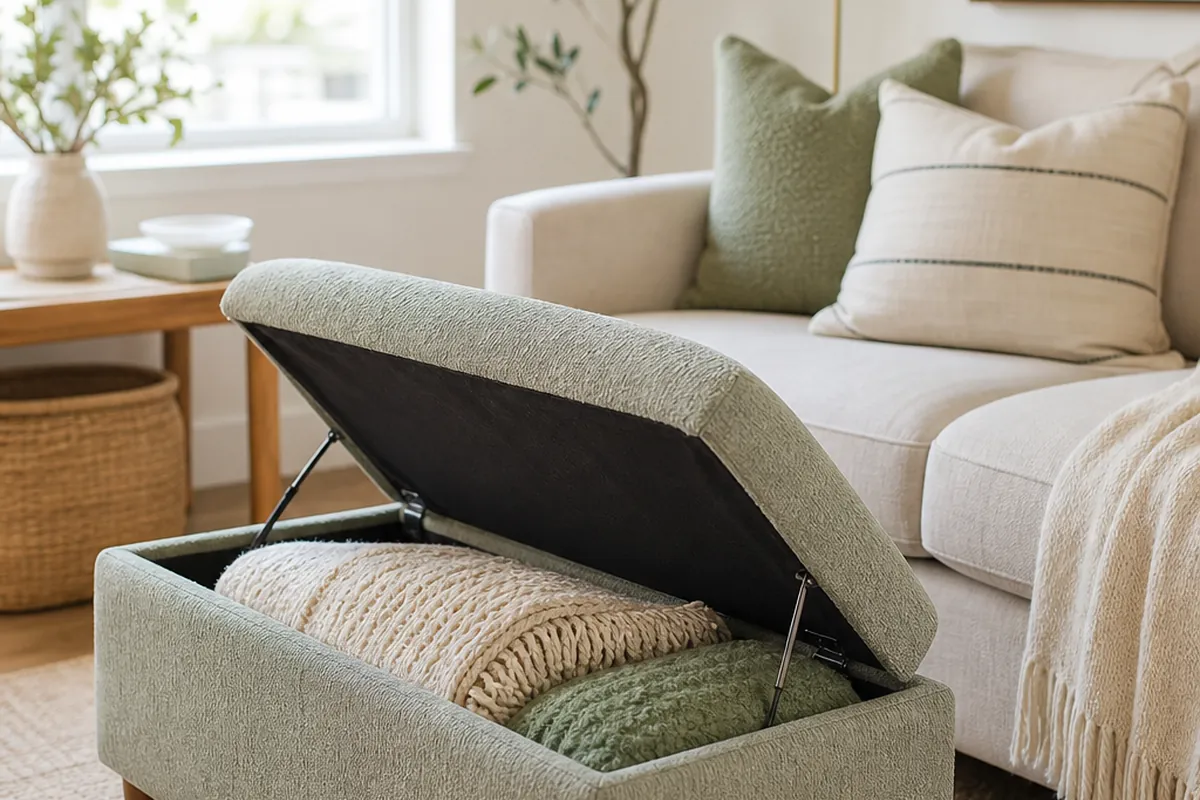
This is the single biggest win available to you. A long storage ottoman bench with lid, centered in front of the sofa, swallows blankets, games and the remote graveyard, then hands back a padded surface for feet or a serving tray. Guests arrive and the lid becomes seating for two. My blunt rule: if your current coffee table stores nothing, it is decoration you’re paying floor space for.
2. Turn it into the blanket bank
Stop draping. Fold throws in thirds and stand them on edge like files rather than stacking them flat, so any single blanket pulls out without collapsing the pile. Nothing else resets a permanently rumpled room this fast, and it plays nicely with the other approaches in our guide to blanket storage ideas that look good in a living room.
3. Use two cubes instead of one long bench
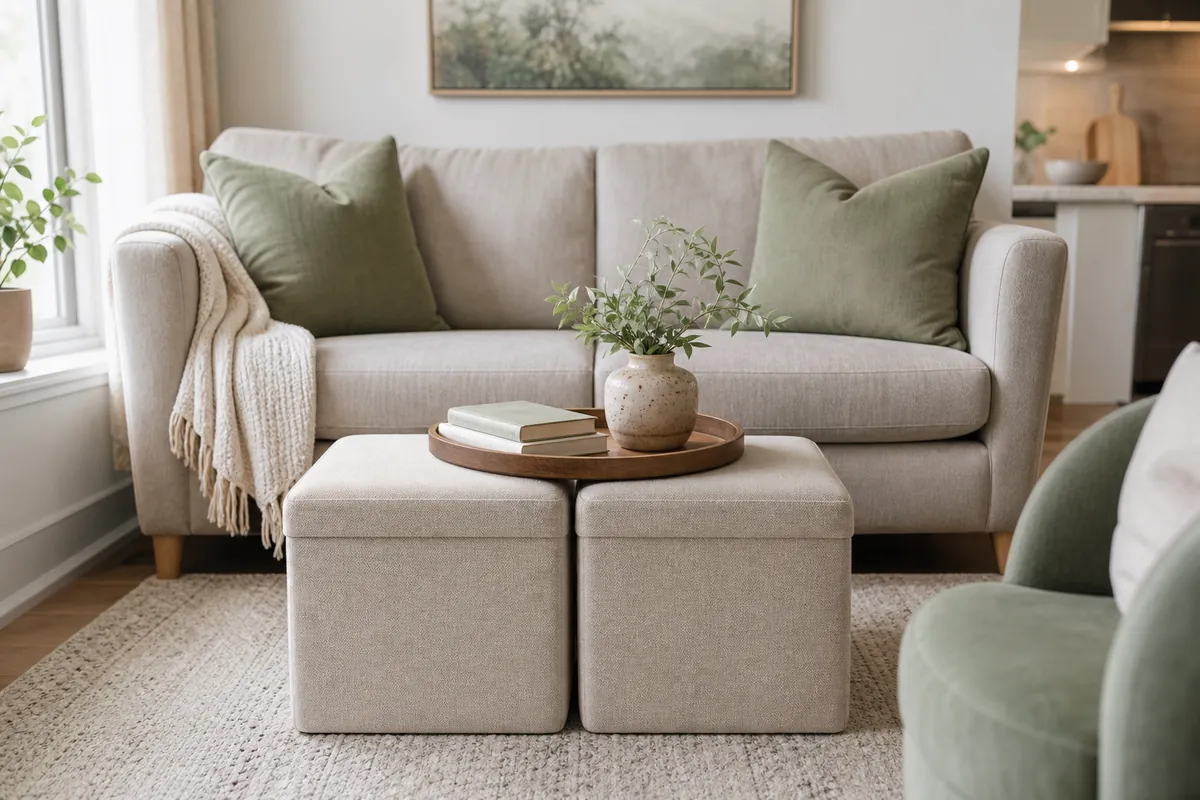
When your layout changes week to week, movie night versus six people eating off their laps, two collapsible storage ottoman cubes beat one committed piece. Push them together as a coffee table, split them apart as side seats, shove one under the console when you need bare floor. They’re light enough that a seven-year-old can move them, which is the whole reason they get moved.
4. Park one under the window as a shoe-tying perch
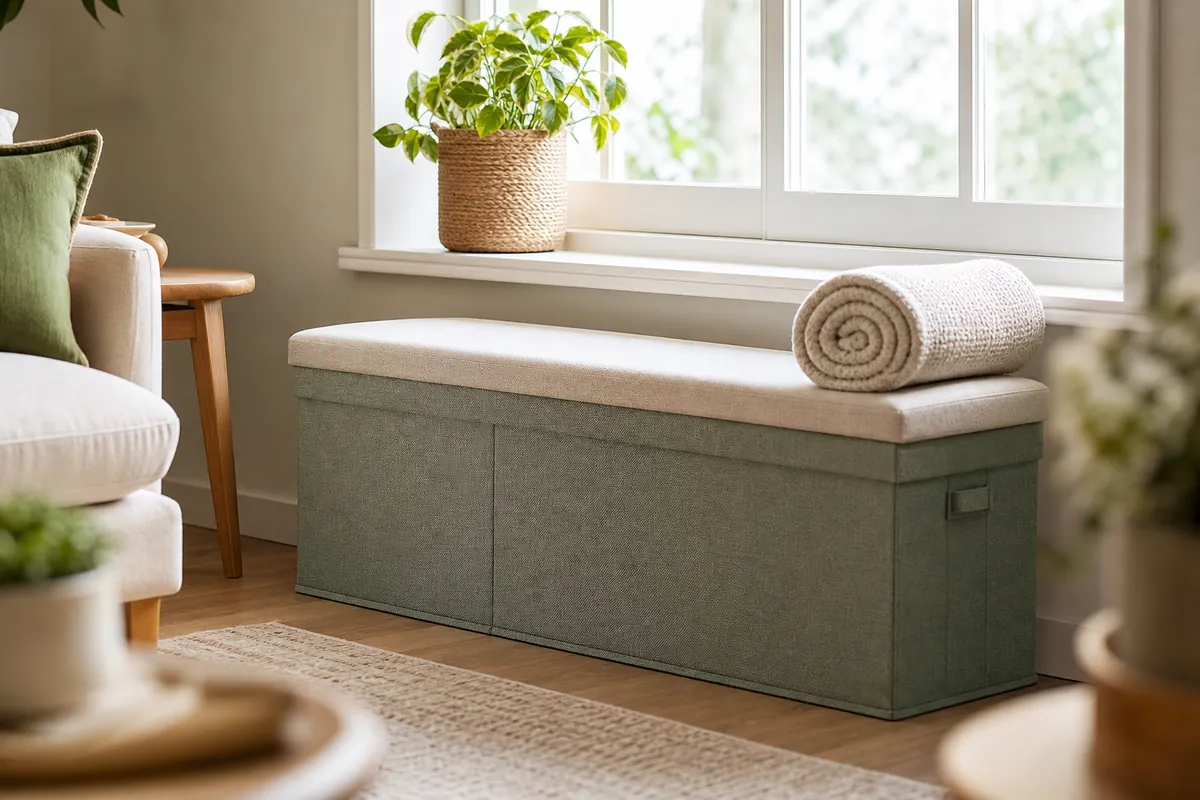
A folding fabric storage bench under a window buys you somewhere to sit and pull on boots plus a home for off-season curtains, spare pillows or the vacuum attachments nobody can find. Pull it three or four inches off the wall so the baseboard doesn’t tip it forward at an angle.
5. Build a landing strip just inside the door
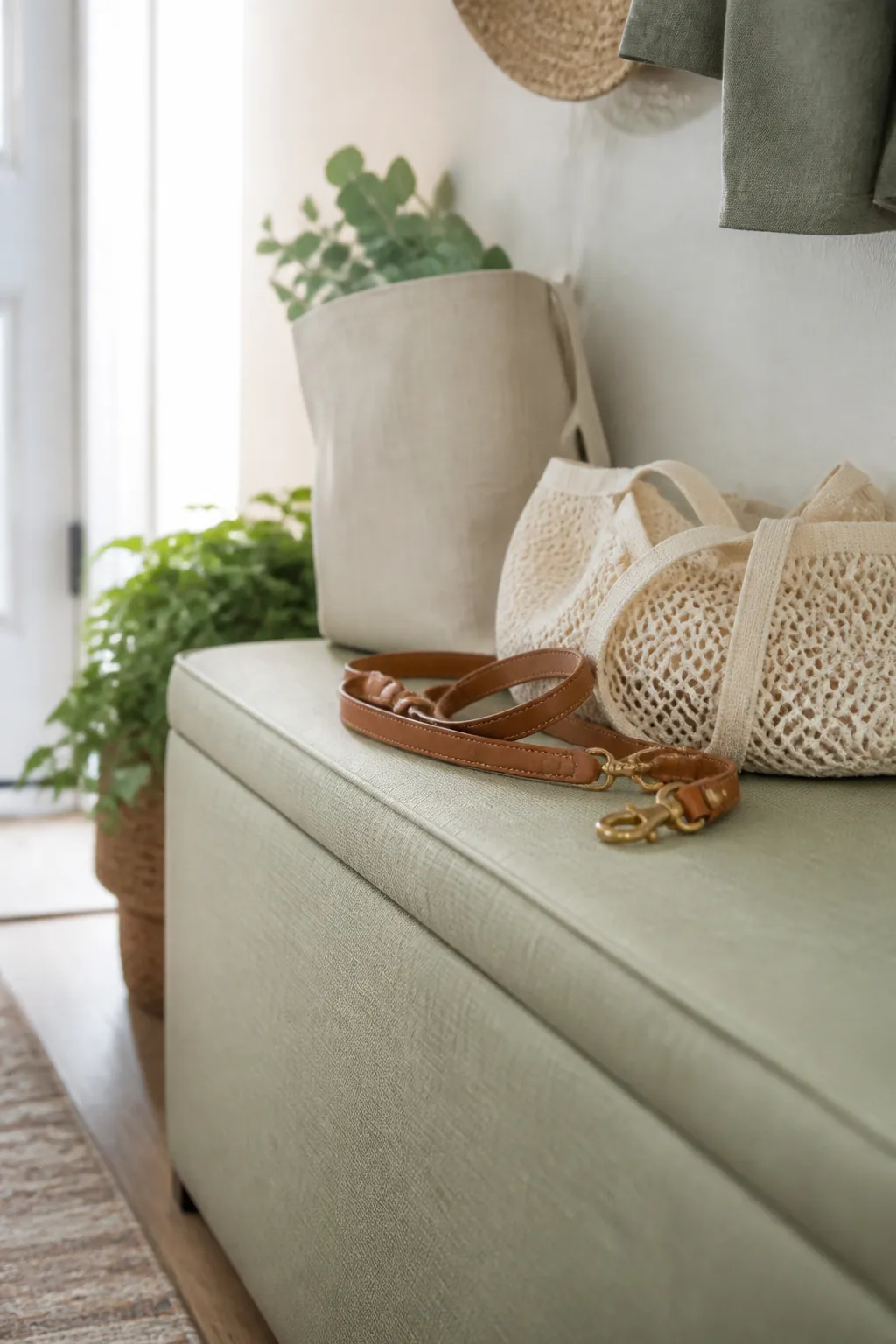
No entryway? Set a narrow ottoman parallel to the wall near the door. Shoes, dog leash, reusable bags and the umbrella go inside; keys and mail land on a small tray up top. Contain the mess in the first ten feet and it stops migrating across the whole room.
6. Corral the toys behind a lid
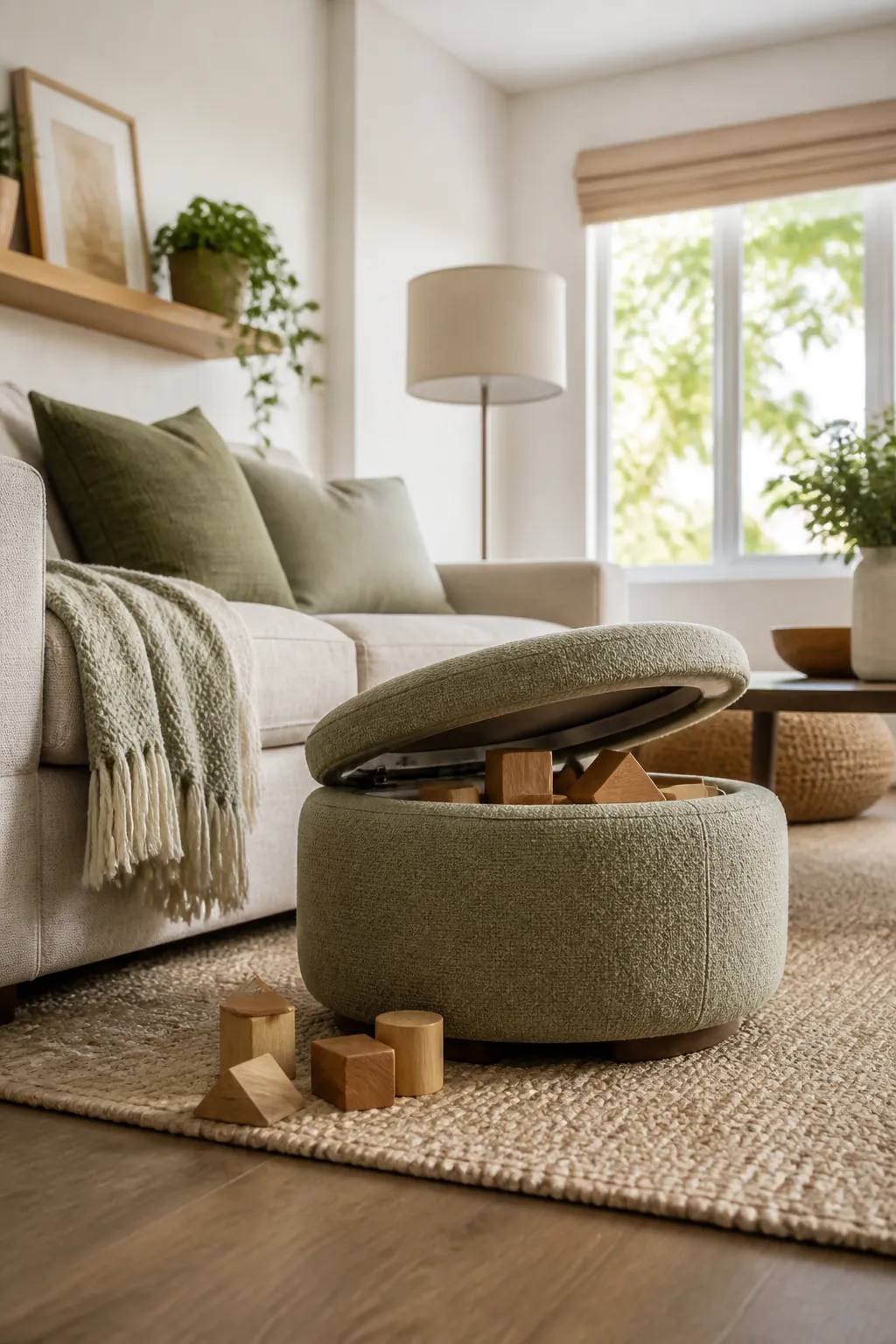
Toys look chaotic because they’re visible, not because there are too many of them. One ottoman that takes a day’s worth of blocks in a single sweep resets the room in about ninety seconds flat. Look for a removable lid or a slow-close hinge so nobody loses a fingertip.
7. Add a rigid tray and it becomes a real table
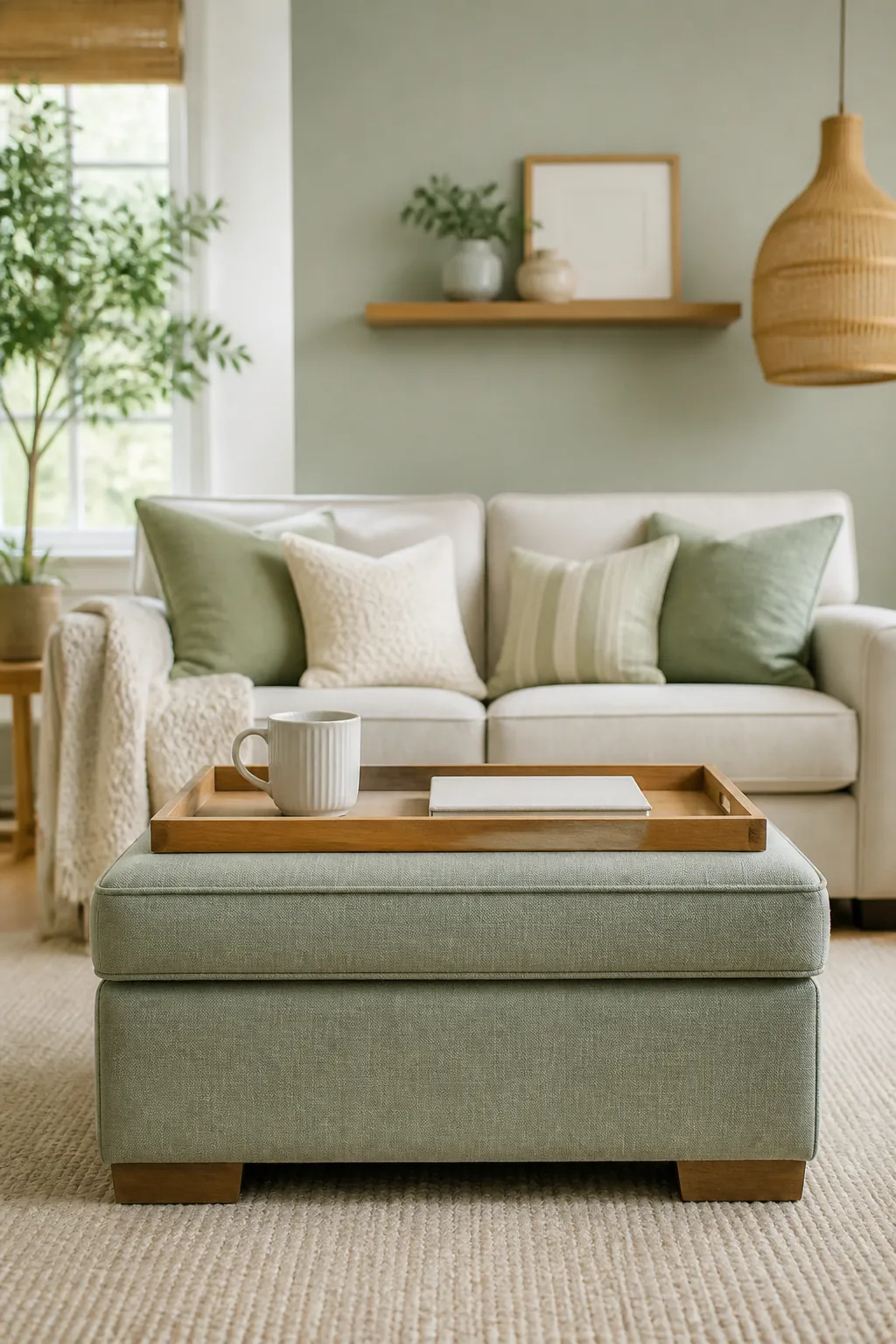
Wood or metal, doesn’t matter, but it has to be stiff and wide enough to span most of the lid so it doesn’t sink into the padding. A tray is what stops guests from noticing your coffee table is furniture in disguise. Buy it the same day you buy the ottoman, not three months later.
8. Hide the cable nest
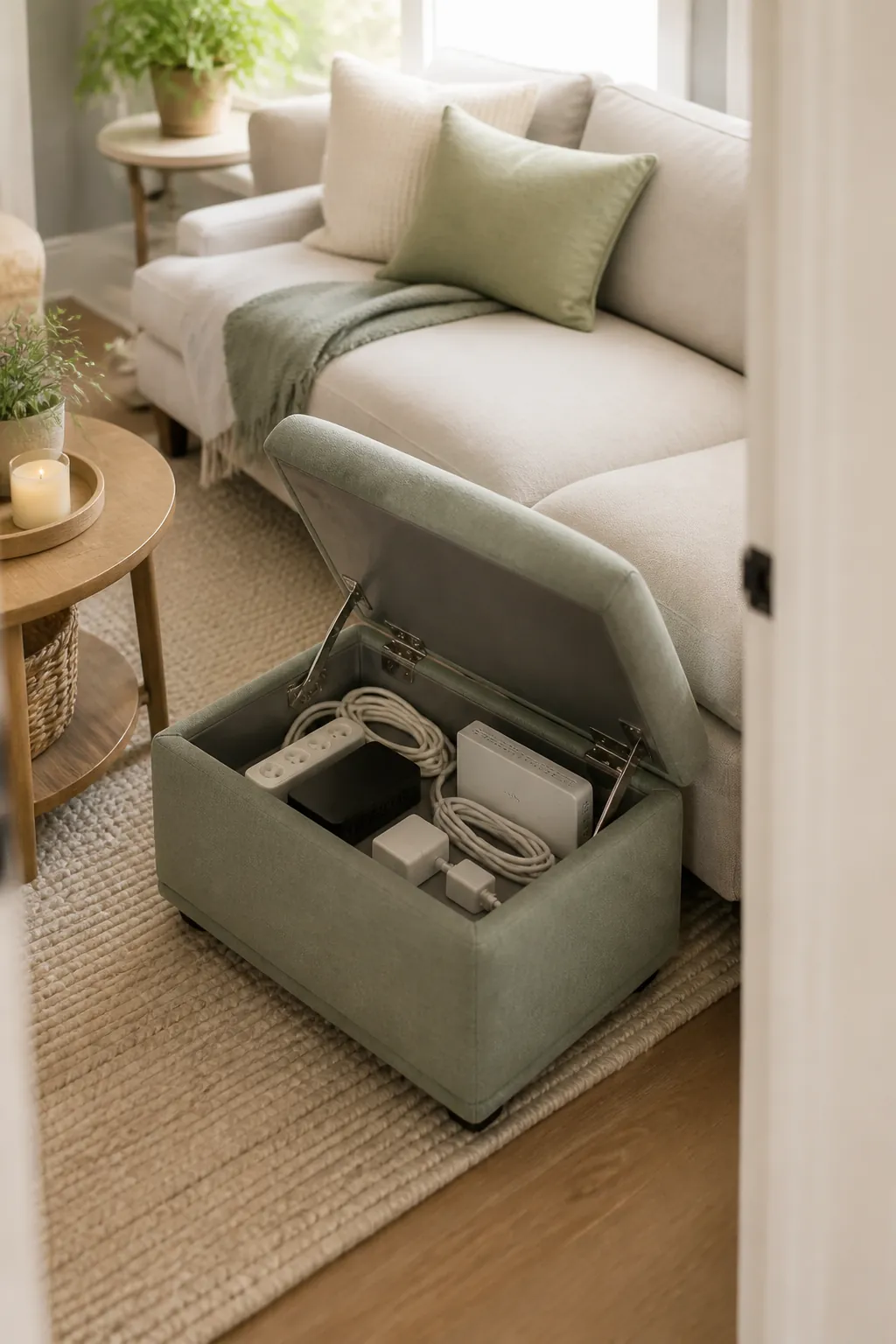
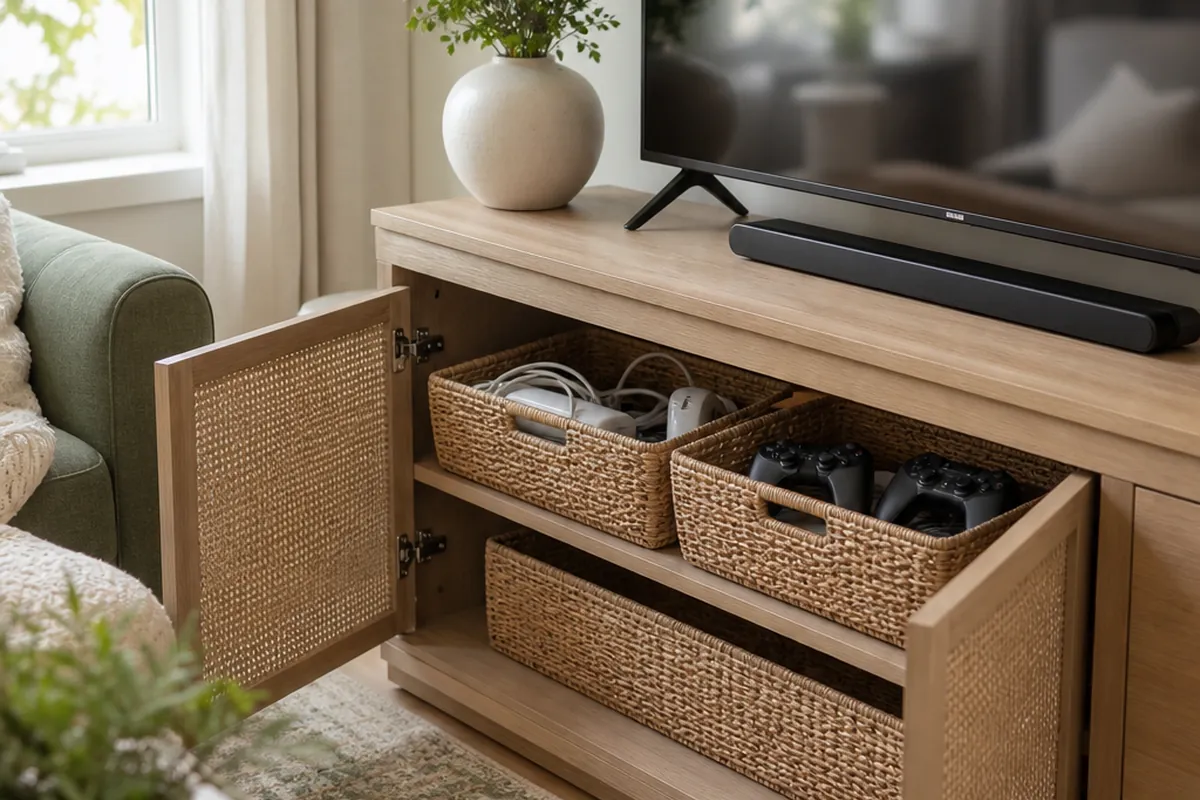
Game console cords, four spare chargers, whatever the router came with. Drop a small power strip inside a cube ottoman, run one cord out through the gap at the back, and every charging brick you own vanishes. Skip this if the ottoman seals tight, and never fully enclose anything that runs warm.
9. Treat the interior as a seasonal locker
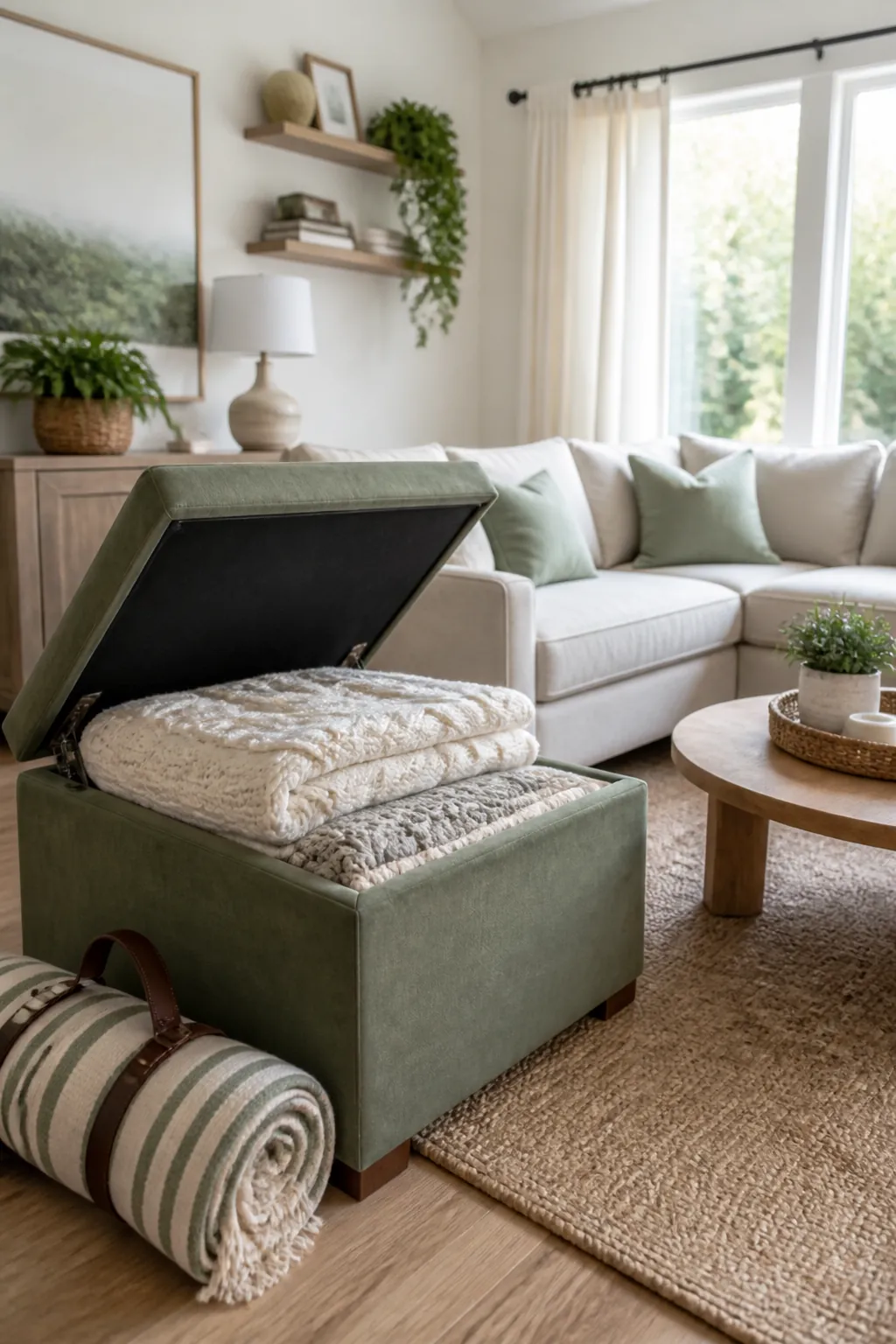
Heavy winter throws live inside from October through April. Come summer, they swap places with the beach blanket and the picnic set. Same cubic footage, no extra closet, and nothing bulky sits idle for six months in the good real estate near the sofa.
10. Bookend the sofa with a matching pair
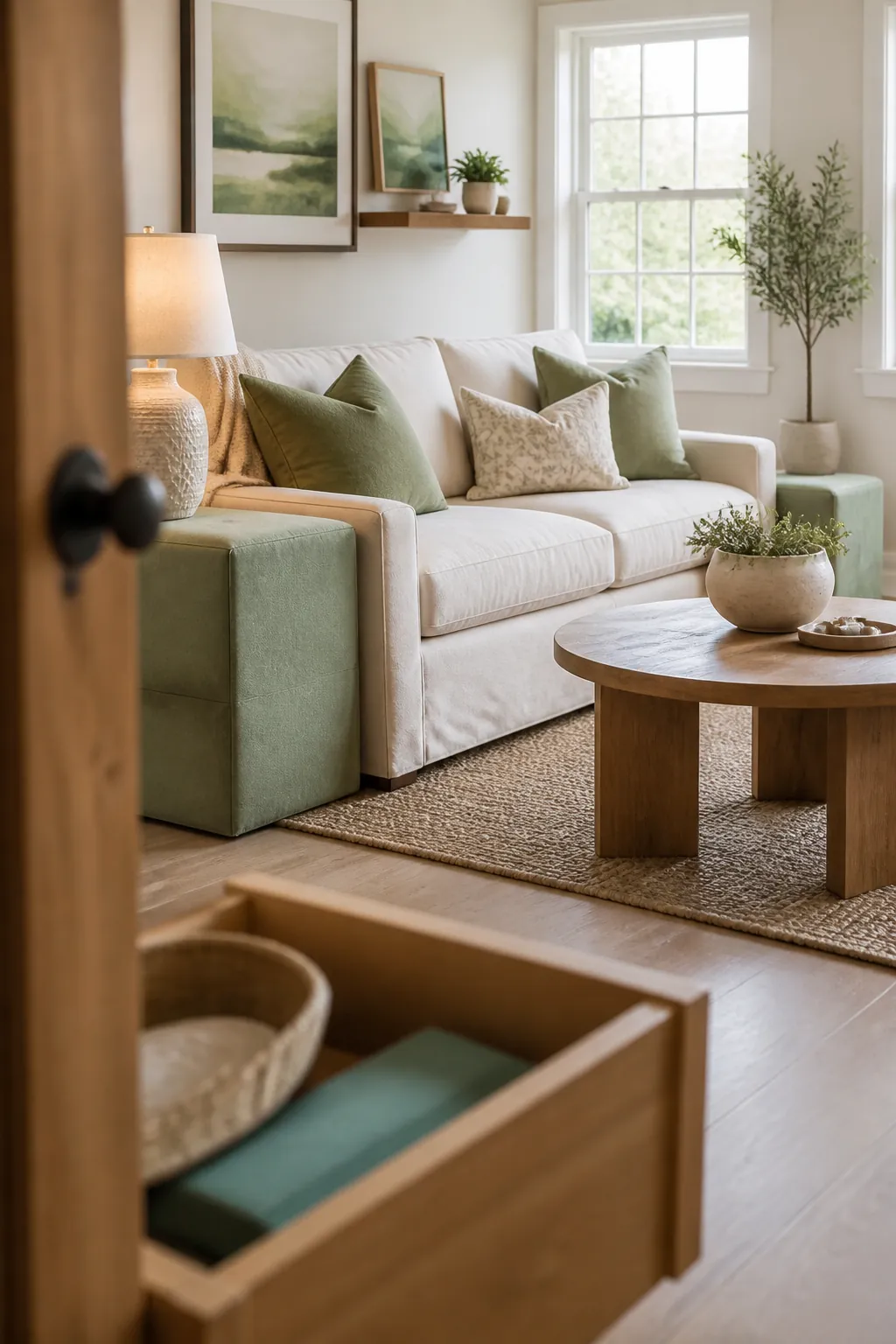
Where a side table would normally sit, a cube ottoman earns more. Magazines and a laptop sleeve go inside, a lamp or a drink sits on top of a tray, and the whole thing becomes a seat when someone shows up unannounced. Two flanking the sofa look deliberate rather than improvised.
11. Slide one under a console table
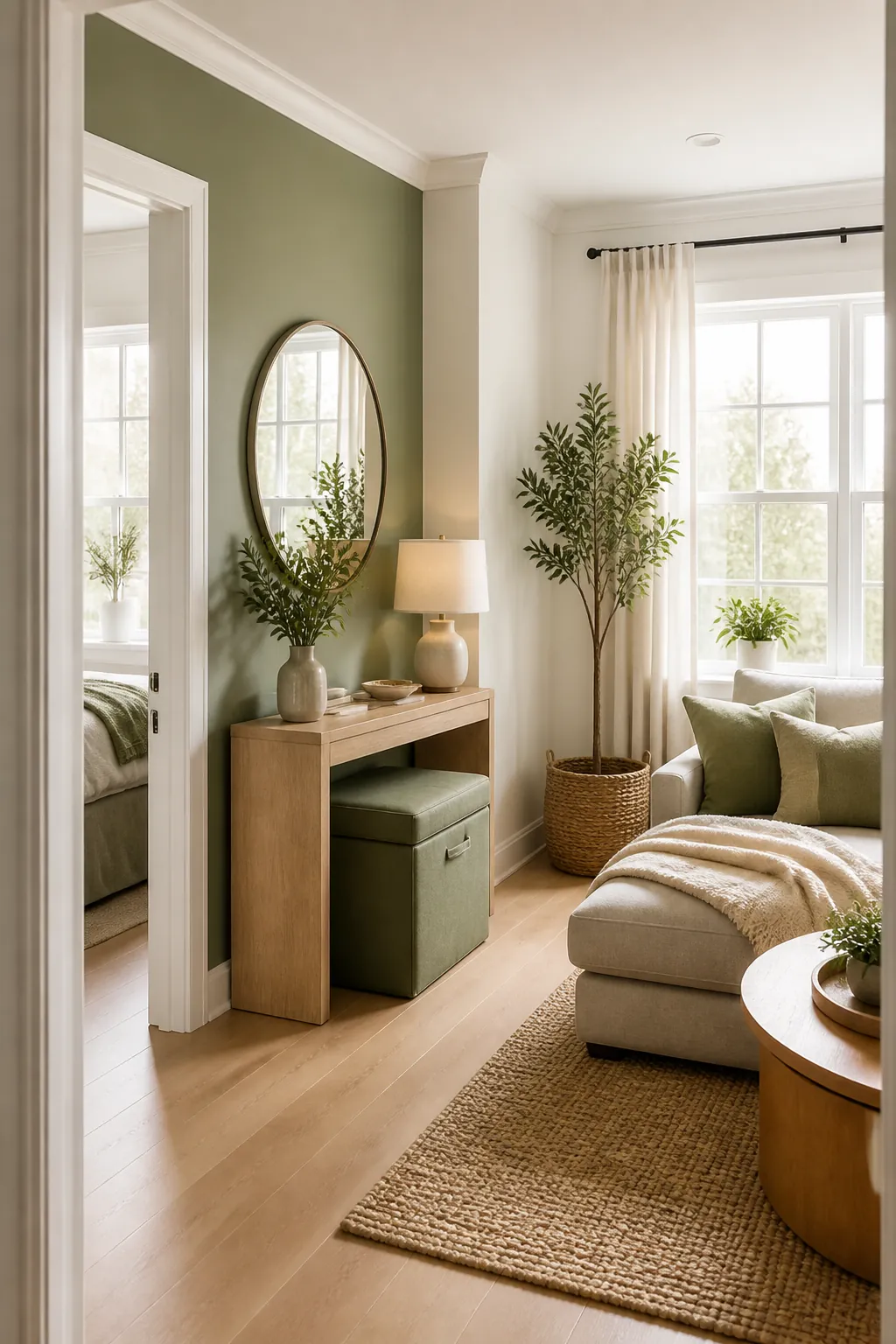
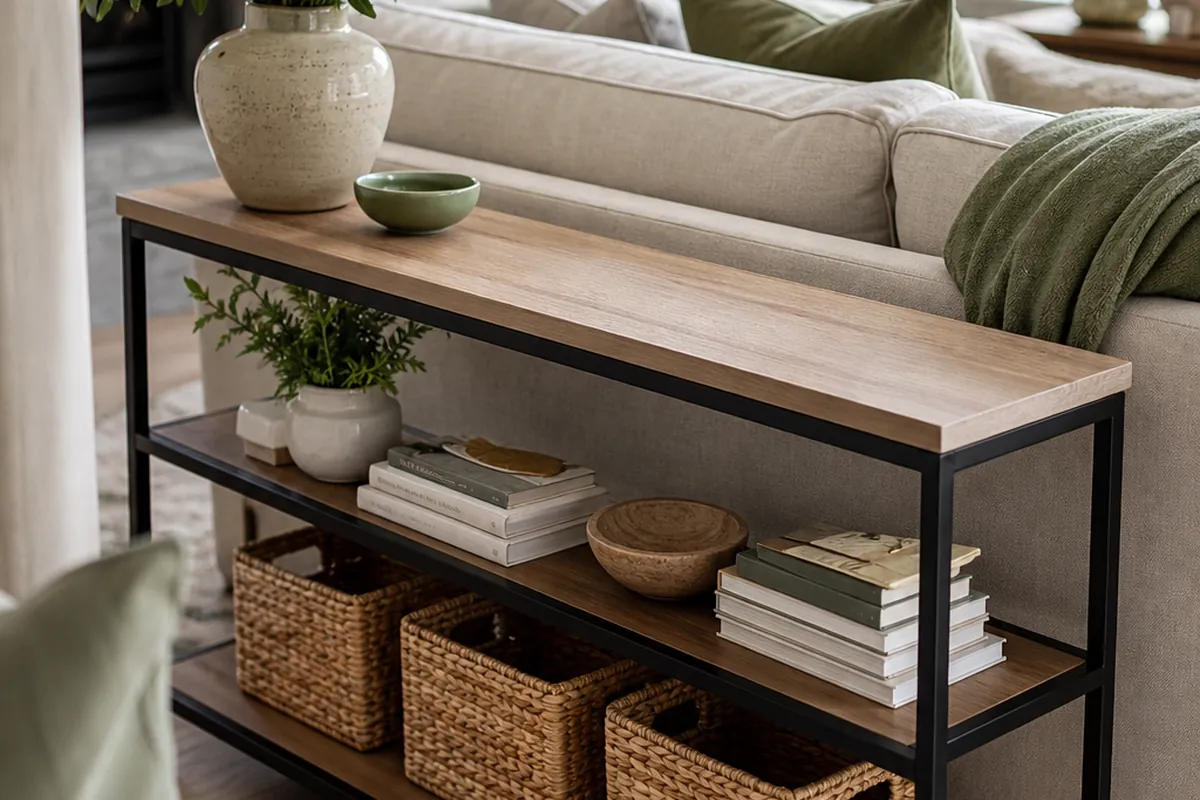
Dead space under a console is storage you already own and aren’t using. A low collapsible cube tucked underneath disappears visually and pulls out as a perch on demand. This is the move for rooms so tight that anything standing in open floor feels like an obstacle course.
What to Look For in a Storage Ottoman
Lid style. Hinged lids stay attached and open one-handed, which is what you want for blankets you grab nightly. Removable lids skip the hinge as a failure point and generally take more weight, so they suit real seating. Daily access is the tiebreaker: if you’re in and out constantly, take the hinge.
Frame and weight rating. Anything you plan to sit on needs an actual frame, not stiffened cardboard wrapped in fabric. A storage ottoman bench with lid built on a wood frame handles adult seating without complaint. A collapsible storage ottoman cube is honest about being for feet, light perching and storage. Match the piece to the job and neither one disappoints you.
Fabric. Woven texture hides crumbs and pet hair better; faux leather wipes clean in one pass. Shedding dog or toddler in the house, take the wipeable surface and accept the slightly cooler look. Everyone else should choose texture, because it warms up a small room in a way flat vinyl never does.
Flat-pack behavior. A folding fabric storage bench collapses to almost nothing, which matters more than people expect. Renters who move every couple of years, or anyone who has to clear the floor when the sofa bed comes out, should rank that fold above a plusher lid.
Styling It So It Does Not Look Like a Box
Contrast is the fastest fix. Solid-color sofa? Choose a woven or nubby ottoman. Textured sofa? Go smooth. Matching the two exactly makes them read as one oversized blob, and blobs shrink rooms.
Keep the top to three things at most: a tray, one low object like a short stack of books or a candle, and something with a little height, a small vase or a squat plant. Pile on more and you’ll quietly stop opening the lid. One more trick, leave a visible sliver of rug around the base. An ottoman floating on a rug reads as furniture; one jammed against the sofa reads as a storage bin someone forgot to put away.
Three Mistakes That Make Ottoman Storage Fail
Storing things you need every single day. Move a tray, lift a lid, dig, repeat, and within a week that item lives on the floor instead. Inside is for blankets, games, seasonal textiles and backup supplies. Nothing you touch before your first coffee.
Overpacking until the lid domes. A bowed lid looks messier than an open basket, strains the hinges and ruins the piece as a seat. Fill to about three-quarters and stop.
Buying one that’s too small for the sofa. A lone cube in front of a three-seater looks stranded and holds almost nothing. Rough guide: the ottoman should run half to two-thirds the length of the sofa. Two cubes pushed together count as one long piece, so measure them side by side.
Where to Start
Buying one thing? Make it a lidded bench that replaces the coffee table, sized to roughly two-thirds your sofa length, with a hard tray on top from day one. That swap alone gets blankets off the arms, games out of sight and every remote in one place. Add a collapsible cube later for the flexible spot, whether that turns out to be the entry, the window or the gap beside a chair. Furniture that does three jobs is the furniture that survives in a small room.
If the sofa floats away from the wall, the strip behind it is another hidden storage zone. Behind-the-sofa storage ideas for a tight living room covers the slim tables and shelves that fit there.