Organizing a small apartment is a different problem from organizing a small room. A room can be solved with better storage. An apartment keeps re-cluttering, because things are arriving through the door faster than the system absorbs them, and because in a small home there is no slack anywhere to absorb a bad week.
So this is less about containers and more about flow: where things come in, where they get used, and which surfaces quietly become storage when nobody is paying attention.
1. Start at the door, not at the worst room
The instinct is to start with whichever room is most annoying. Start at the entrance instead.
Everything cluttering the apartment came through that door: mail, packages, shopping, bags, shoes, packaging. If the entrance has no system, you are tidying downstream of a faucet that is still running, which is why organizing sessions feel undone within two weeks.
2. Give every category exactly one home
The single biggest cause of recurring mess in small homes is categories with two or three plausible homes. Batteries in the kitchen drawer and the hall closet. Chargers in three rooms.
Two homes means every put away is a decision, and decisions get deferred by putting the thing down on a surface. One home per category, even an inconvenient one, removes the decision entirely. This is what makes something like a junk drawer work: it is one known destination rather than a mystery.
3. Store things where you use them, not where they belong logically
Logical grouping is how shops organize, not how homes work. All the cleaning things together in one cabinet sounds tidy and means carrying products around the apartment.
Split by use point instead. Bathroom cleaner lives in the bathroom, dish things in the kitchen, a small caddy for anything genuinely portable. The test is whether the thing is put back after use, and the honest answer is that people put things back when it takes under five seconds.
4. Build an official drop zone before an unofficial one appears
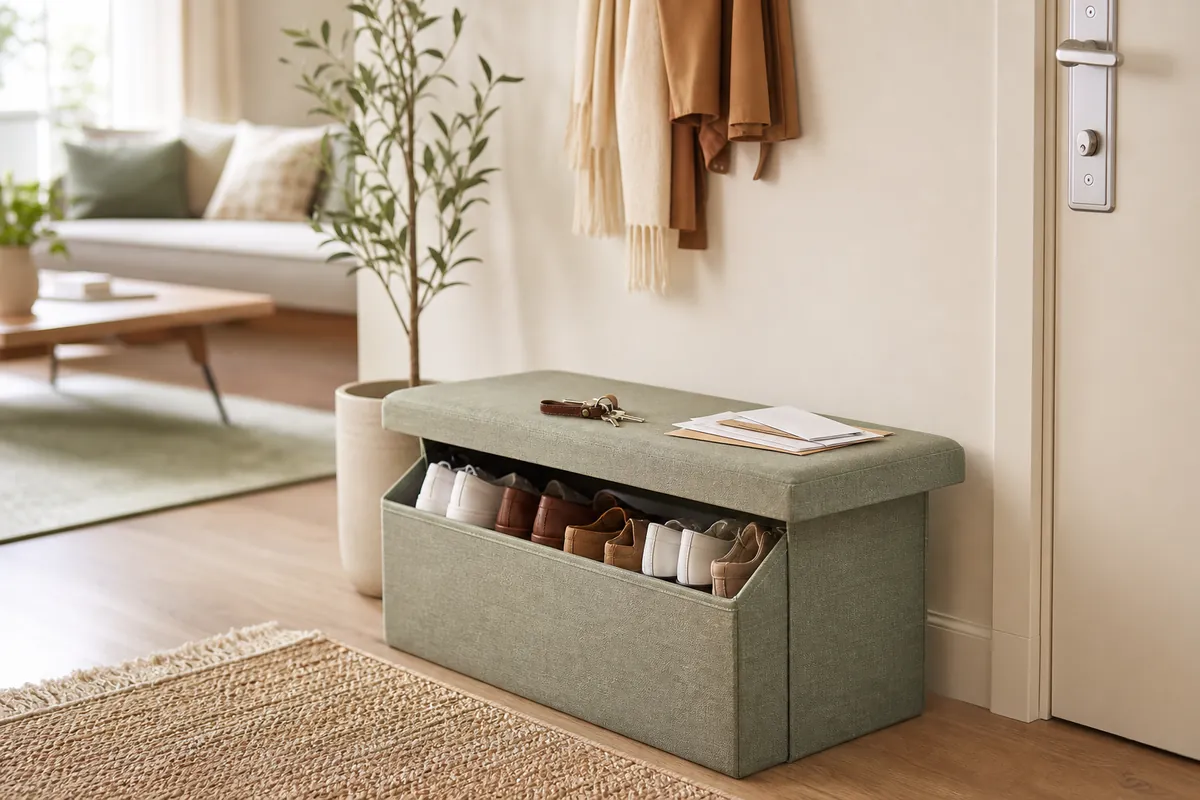
Every home has a drop zone. The only question is whether you chose it, or whether it chose the dining table.
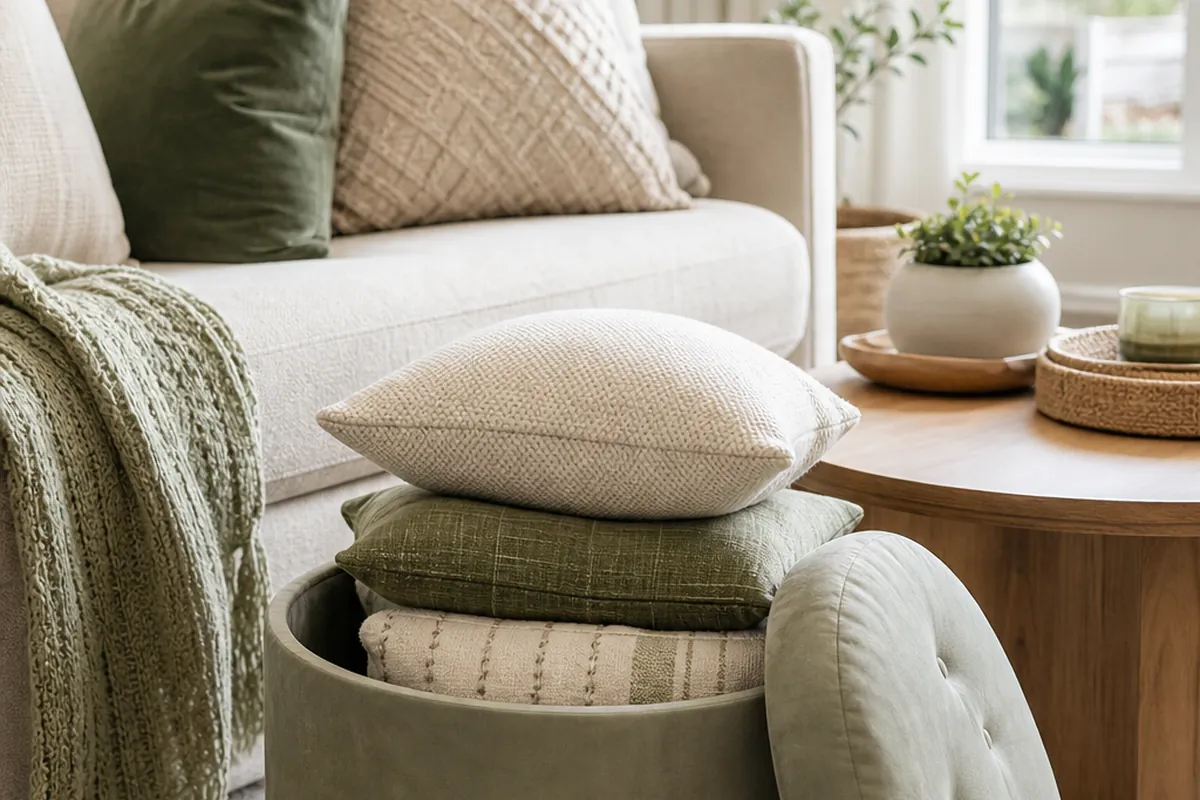
A folding fabric storage bench at the entrance does three jobs at once: somewhere to sit to take shoes off, closed storage inside for the shoes themselves, and a designated surface for keys and post. The reason it works is that it is on the path you already walk, and any drop zone off that path gets ignored.
Keep it small on purpose. A large entrance surface becomes a shelf for things that never leave.
5. Contain by category, and buy the containers last
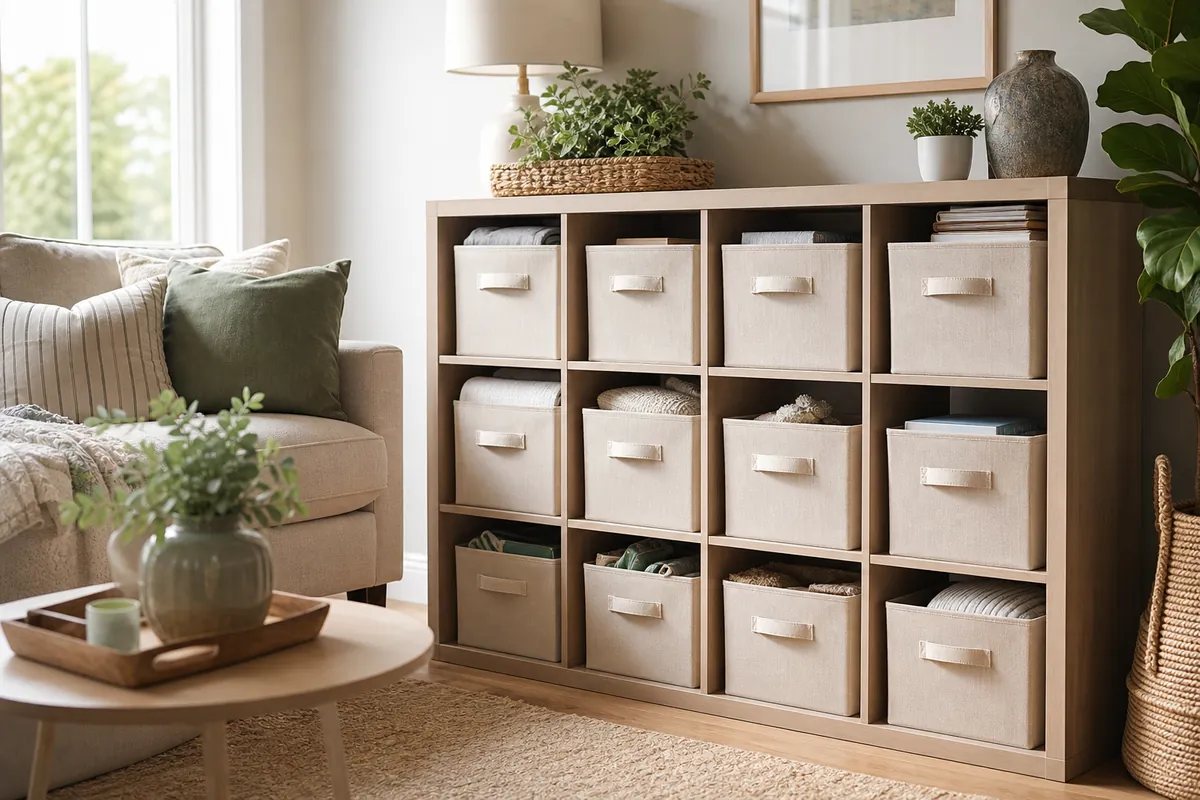
The common mistake is buying storage first and then deciding what goes in it, which produces attractive bins full of unrelated objects, which is a pile with a lid.
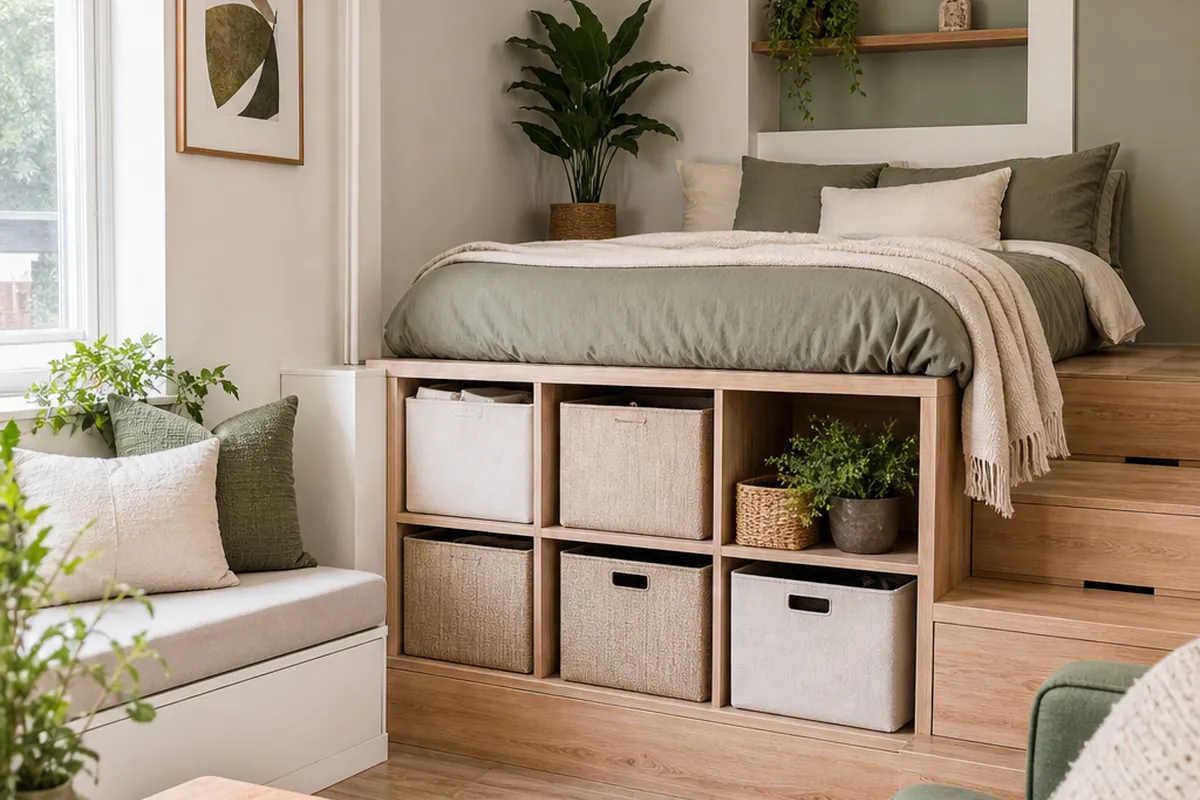
Sort into categories first, see how much each one actually is, then buy. Cube storage bins in a matching set work well at this point because uniformity does the visual work in a small room, so six bins read as one calm object rather than six separate things.
One category per bin, and if a category needs two bins it is probably two categories.
6. Raise the bed and use what appears
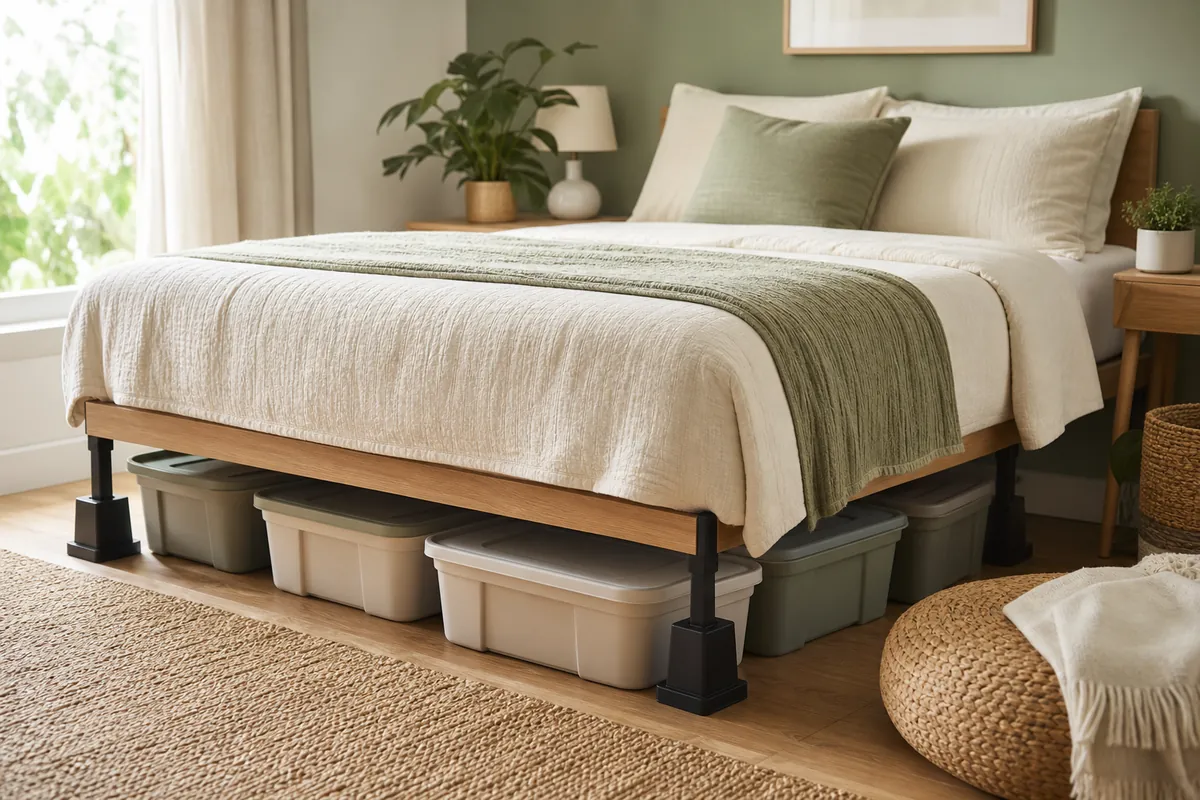
In a one bedroom or a studio, the bed occupies the largest single footprint in the apartment, and the volume under it is usually eight to fifteen centimetres of nothing.
Adjustable bed risers take that to twenty five or thirty, which is the difference between the space fitting nothing and fitting real containers. It is the cheapest square metre of storage available in most apartments.
Two cautions. Check the risers are rated for your bed and occupants rather than assuming, and do not raise a bed so high that getting into it becomes a manoeuvre.
Under the bed is one of the biggest pockets of unused space in most apartments, but it is not the only one. Clever storage ideas for small spaces lists the rest, door backs and shelf gaps included.
7. Make zones so a studio has rooms
Without walls, everything blurs, and blurred space has no correct place to put anything down.
Furniture and rugs make the divisions: a rug under the seating, a shelf unit with its back to the sleeping area, a lamp marking the working corner. Once the apartment has four notional rooms, objects have somewhere to belong, which is most of what organization is.
8. Hold flat surfaces at about half full
Flat surfaces in a small apartment are not decorative, they are storage waiting to happen, and they fill at a predictable rate.
Half full is the working threshold. A counter or a table at fifty percent absorbs a day of normal life and still looks intentional. The same surface at ninety percent tips into looking chaotic the moment one more thing lands, and one more thing always lands.
9. Apply one in one out only where things actually multiply
As a universal rule this collapses within a month, because it turns every purchase into paperwork.
Apply it to the four or five categories that genuinely grow without limit: clothes, mugs and glasses, books, cables and chargers, and children’s toys. Everything else is not the problem, and pretending it is makes the rule feel punishing enough to abandon. For toys specifically, the version that survives is in toy storage for a small living room.
10. Reset one room, not the apartment
A whole apartment reset needs an afternoon you do not have, so it does not happen, and the mess compounds until it needs a whole weekend.
Fifteen minutes on one room is the unit that actually gets done. In a small home that is genuinely enough to finish a room, which matters because finishing is what makes you willing to do it again. Rotating through four zones means the whole apartment gets reset weekly without a single long session.
11. Deal with paper and packaging before they enter
Post and parcels are the highest volume inbound items in most homes, and both are mostly waste that arrives disguised as things.
Open post standing at the recycling, not sitting at the table. Break down parcel boxes the day they arrive rather than stacking them by the door for a trip that keeps not happening. In a small apartment, three days of cardboard is a visible problem, and it is entirely avoidable.
12. Fix the thing that annoys you daily, first
If you only do one thing, make it the friction you hit every single day: the cabinet where something falls out, the coat with no hook, the drawer that jams.
Daily irritations are worth more than a rearranged cabinet you open twice a month, and fixing one buys enough goodwill to keep going. That is usually the entrance, which is where entryway closet organization earns its place.
Space you did not have to move for
Small apartments do not stay organized because of clever containers. They stay organized when things enter through a system rather than a doorway, when every category has one home, and when the surfaces are not already full.
Do the entrance, the one home rule, and the half full surfaces, and the apartment will hold a normal life without needing a weekend of recovery every month.