A costume box works for exactly one week after Halloween. After that it turns into a knot of tulle, one sequined boot, and three headbands with no mask in sight. Dress-up clothes don’t follow the folding logic of regular clothes: a cape can’t be stacked, a tutu crushes flat under anything heavier than itself, and a costume built from six small pieces is only as good as the piece your kid can actually find. Nine ways to store a playroom’s dress-up collection so a costume comes out whole, not half a costume and a search.
1. Split the box into “in rotation” and “everything else”
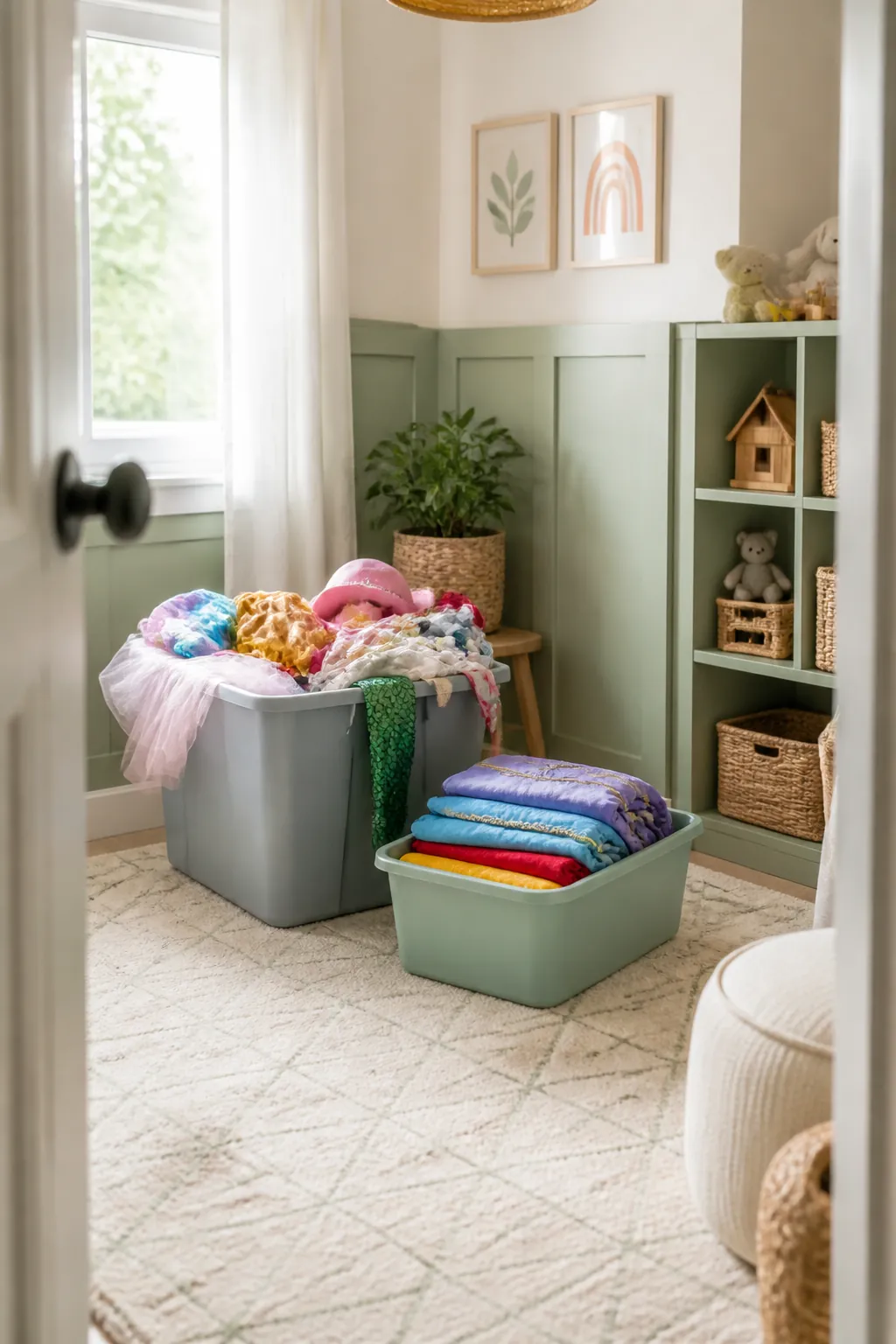
A typical costume collection outgrows one bin within a season: the two or three current favorites, last year’s Halloween costume nobody’s touched since, and the hand-me-down cape that’s still two sizes too big. Keeping all of it together means digging through six costumes to find the one that actually gets worn.
Pull anything untouched in the last month into a separate archive (idea 8 covers where that goes). What’s left, usually four to six pieces, is what earns the reachable, front-of-room storage the rest of this list builds.
2. Give capes and dresses a low rod, not a dresser drawer
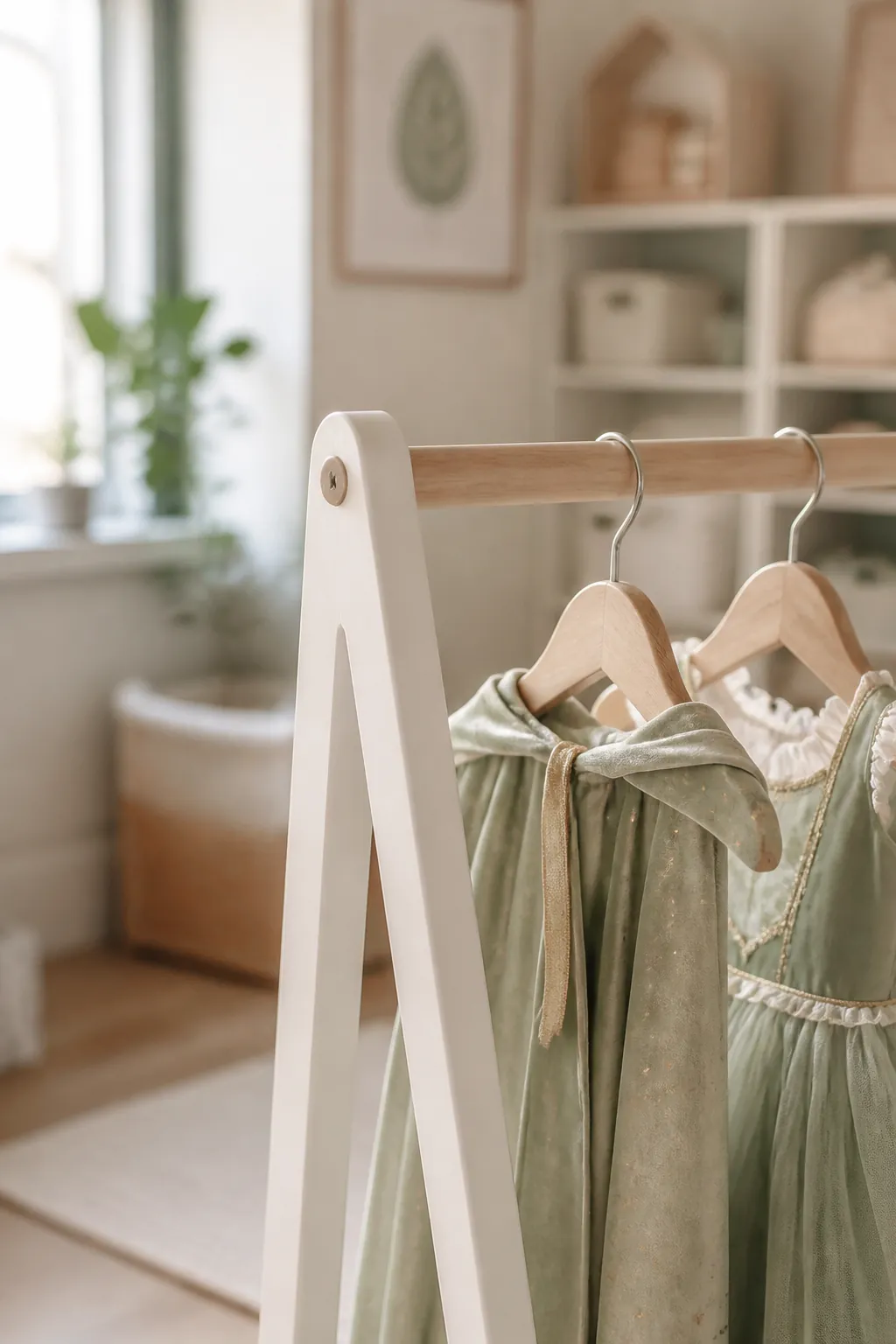
Structured pieces, capes, dresses, robes, lose their shape fast when folded flat in a drawer, and a stack of them turns into an avalanche the moment a kid pulls the bottom item out.
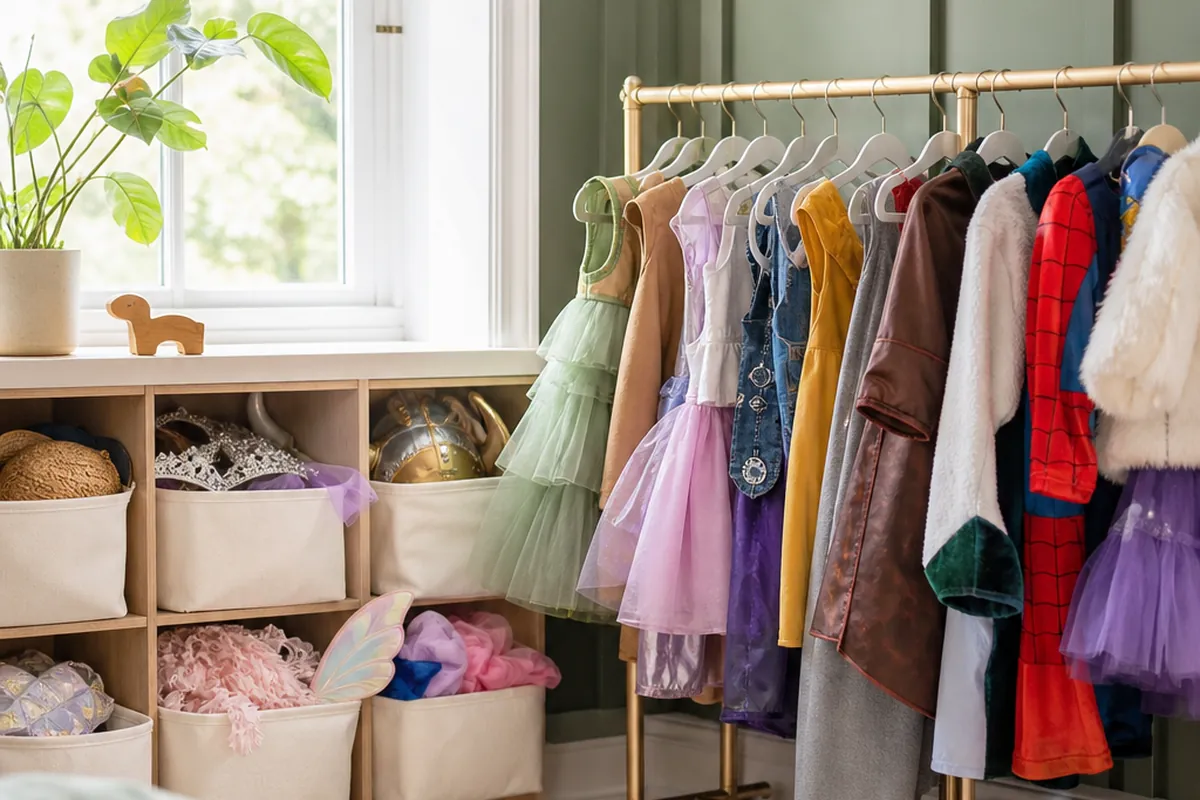
A freestanding garment rack solves this without needing a real closet. Set the rod at 30 to 34 inches off the floor, roughly chest height for a preschooler, rather than the 60-inch height built for adult coats. A rod that’s too tall gets skipped entirely, and costumes end up back on the floor in a pile at the base of the rack instead of hanging where they belong.
3. Keep every costume’s accessories in the same bin as the costume
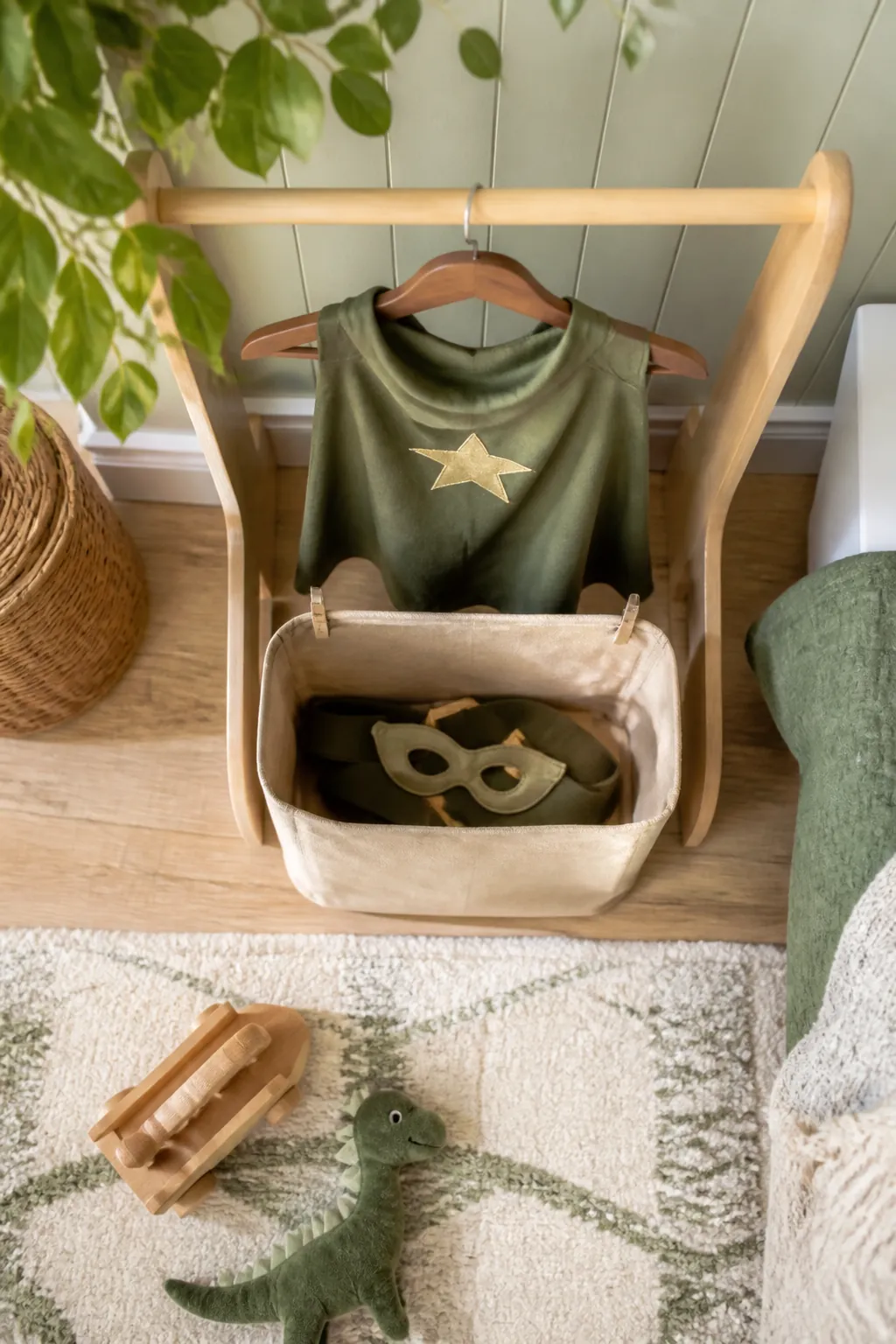
This is the single biggest reason costumes stop getting worn. The cape lives on the rack, the mask ends up in the general toy bin, and the wand is wherever it was dropped three weeks ago. A costume scattered across three storage systems is never whole enough to grab and put on, so it stops getting chosen.
Assemble each costume as a set: the fabric piece, plus its mask, wand, belt, or gloves, together in one fabric storage bin with handles, or in a mesh pouch clipped to the same hanger the cape hangs on. One costume, one container. If a piece goes missing, it’s missing from one obvious spot instead of three possible ones.
4. Add a hanging shelf for shoes, gloves, and small props
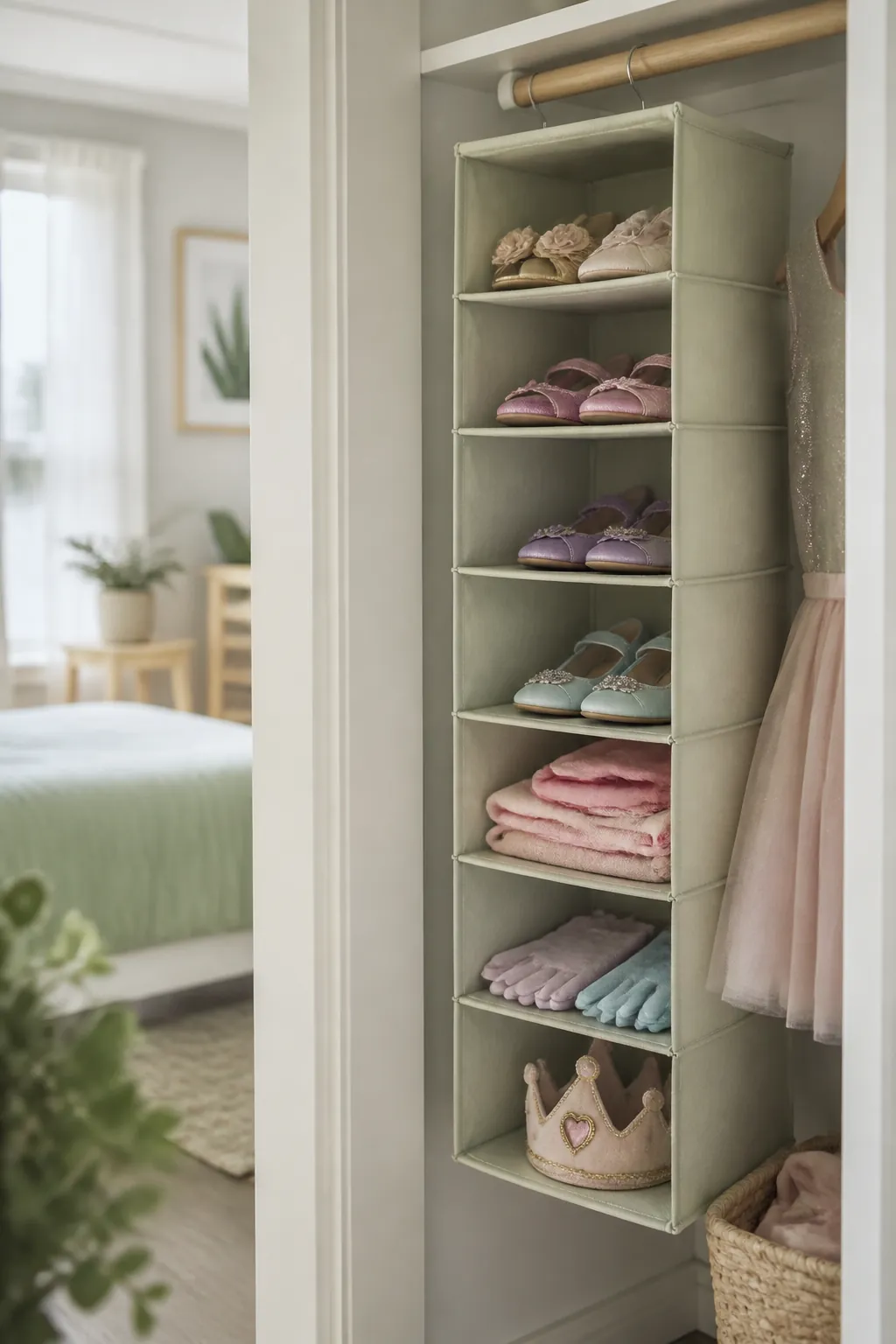
Small, mismatched items, plastic heels, fairy wings, a plush crown, don’t belong in the same bin as fabric, since a heavy shoe crushes a tutu underneath it and a wing gets bent flat inside a folded dress.
A 6-shelf hanging closet organizer hung in a playroom closet or from a coat hook gives these their own compartments, each about 12 inches square, wide enough to hold a pair of shoes without stacking anything on top. Sort by category rather than by costume: all shoes on one shelf, all headwear on another. Kids find things faster by type than by trying to remember which costume a stray glove belongs to.
5. Protect delicate fabric so it survives more than one Halloween
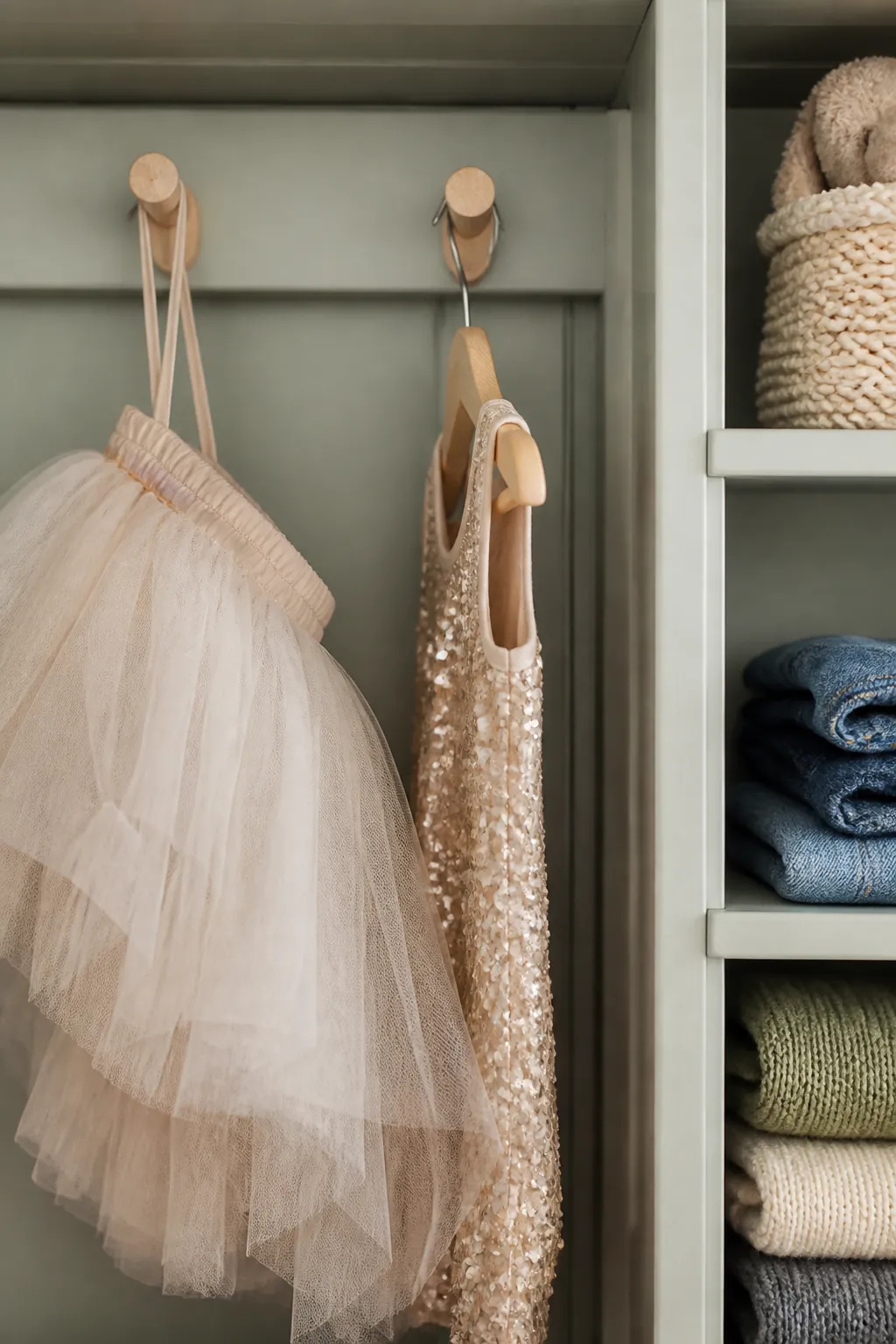
Tulle, sequins, and fake fur don’t behave like regular clothes. Tulle loses its puff permanently when something sits on top of it for even a few weeks, sequins shed when they rub against rough fabric like denim or wool, and fake fur mats down if it’s crammed into a tight space.
Hang tutus and full skirts rather than folding them into a bin, and store sequined pieces on their own hook or hanger, away from anything with texture. A costume that spends a season flattened at the bottom of a toy box comes out looking used even if it was worn twice.
6. Label bins with pictures, not character names
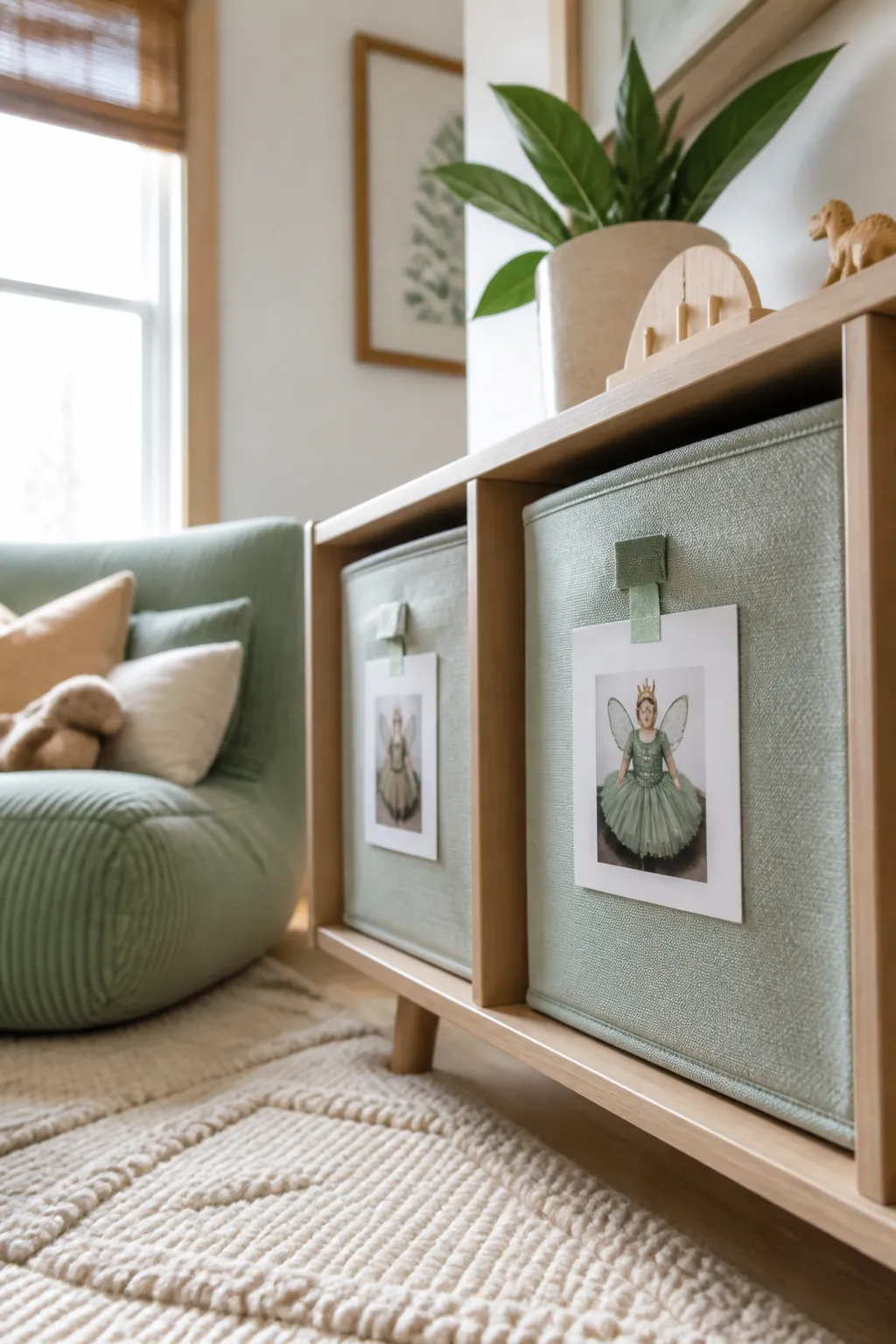
For a child who can’t read yet, a word on a bin is decoration, not an instruction. A photo of the costume itself, printed small and taped to the front, tells a kid exactly what’s inside without asking an adult first.
This matters more here than in a regular closet, because dress-up play happens in the moment. A kid who has to open three bins to find the right costume usually grabs whatever’s on top instead, and the rest of the collection quietly stops getting used. Swap to words once they’re reading, which doubles as an easy way to teach the words.
7. Set up a quick-change corner near the play area
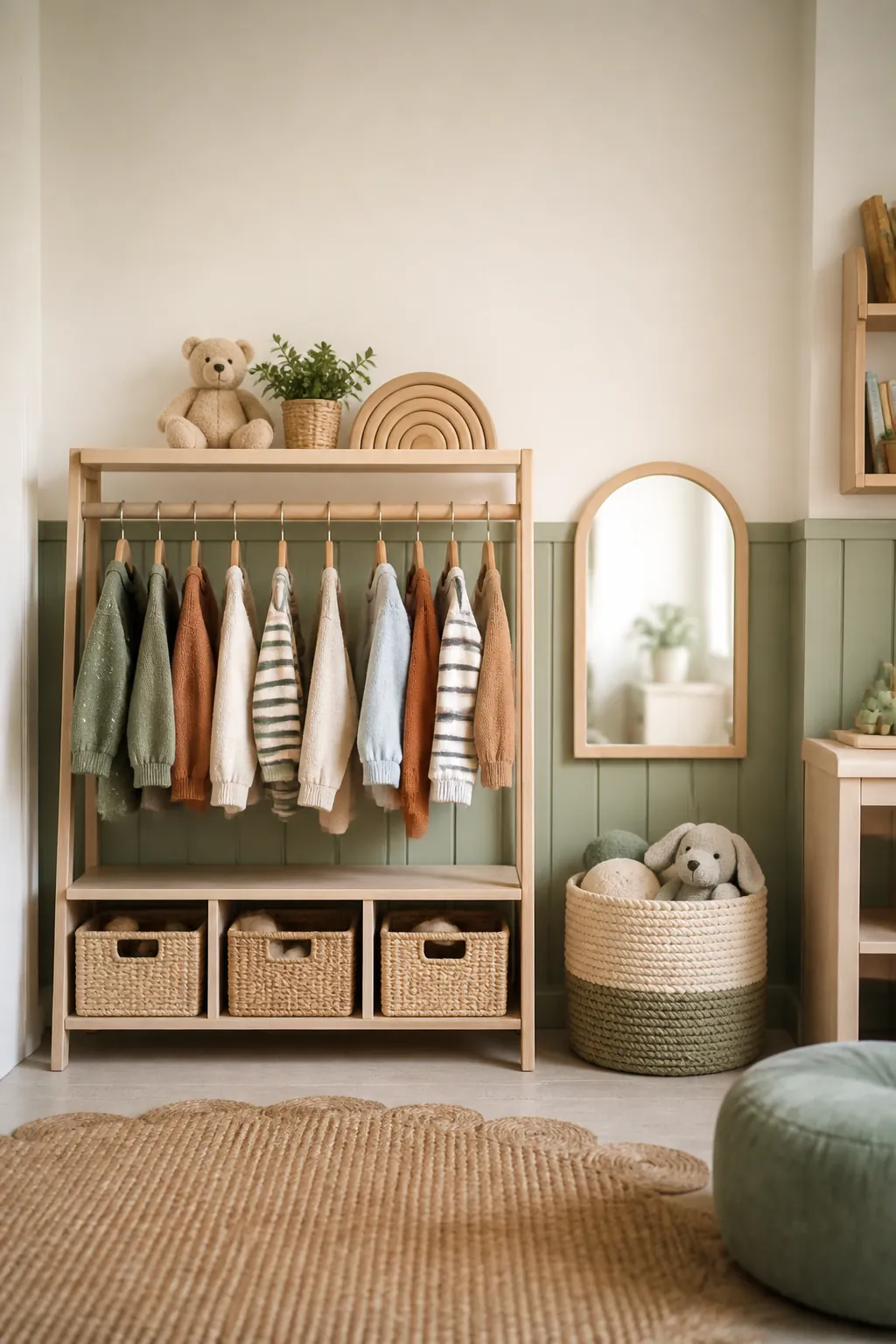
Costume storage tucked into a bedroom closet across the house gets used far less than storage sitting right where the pretend play happens. Put the rack, the shelf, and the bins in the same corner of the playroom, ideally near a low mirror, so getting into character doesn’t require a trip down the hall.
Add one laundry basket beside the setup for the regular clothes that come off mid-change. Without it, discarded play clothes end up on the floor around the rack, which makes the whole corner look like a mess even when the costumes themselves are perfectly organized.
8. Store off-season and outgrown costumes outside the playroom
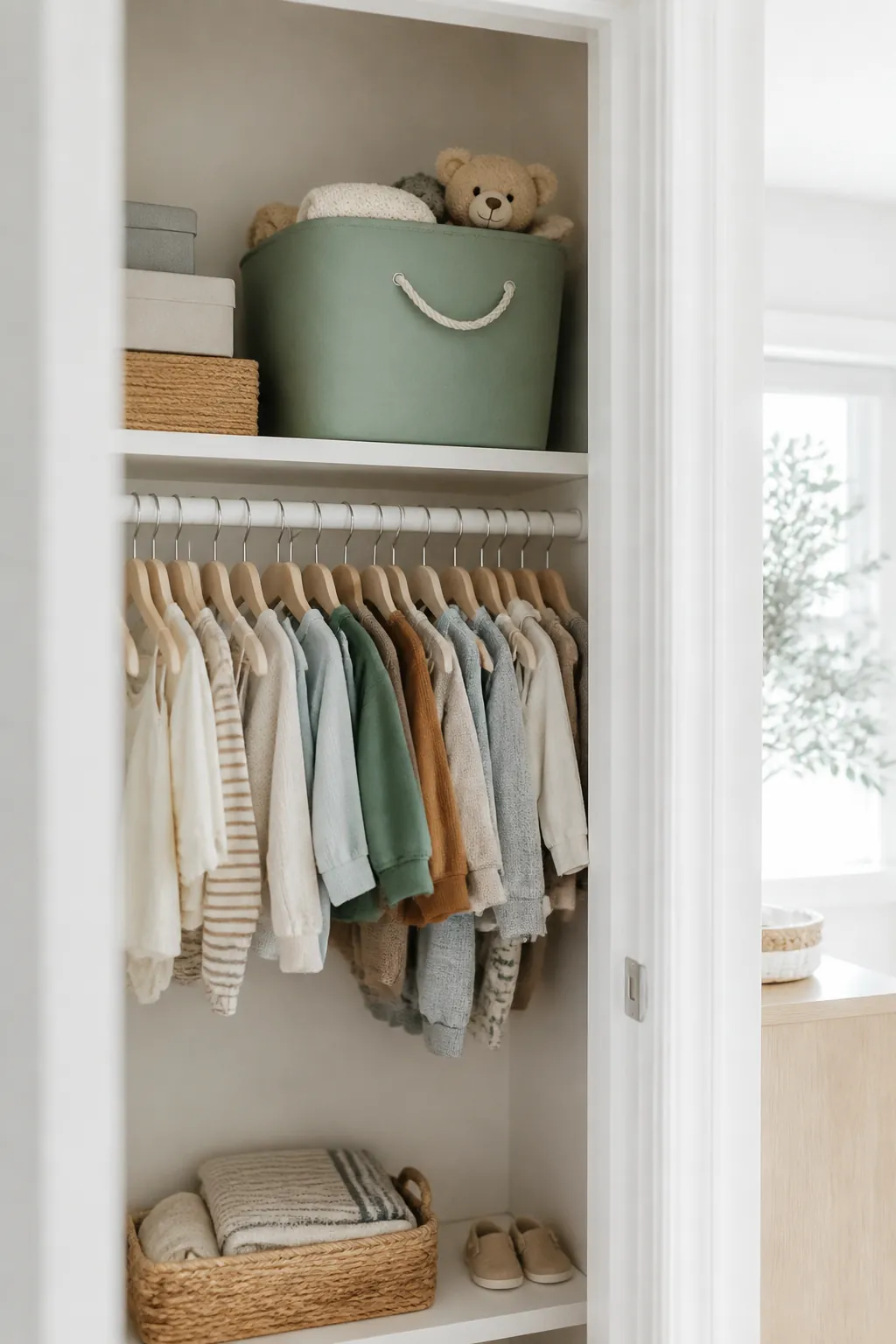
Costumes worn once a year, last Halloween’s dinosaur, the fairy dress from a birthday party two sizes ago, don’t need prime real estate in a room a kid uses daily. They need one labeled bin, stored under a bed, on a closet’s top shelf, or in an attic or garage if space allows.
Label each bin by occasion or by size rather than by character, since sizes change faster than costume preferences do. A bin marked “size 4-5” is useful again next season. A bin marked “unicorn stuff” usually isn’t, once the unicorn phase has passed and the costume no longer fits anyway.
9. Build a rotation so the box doesn’t just grow
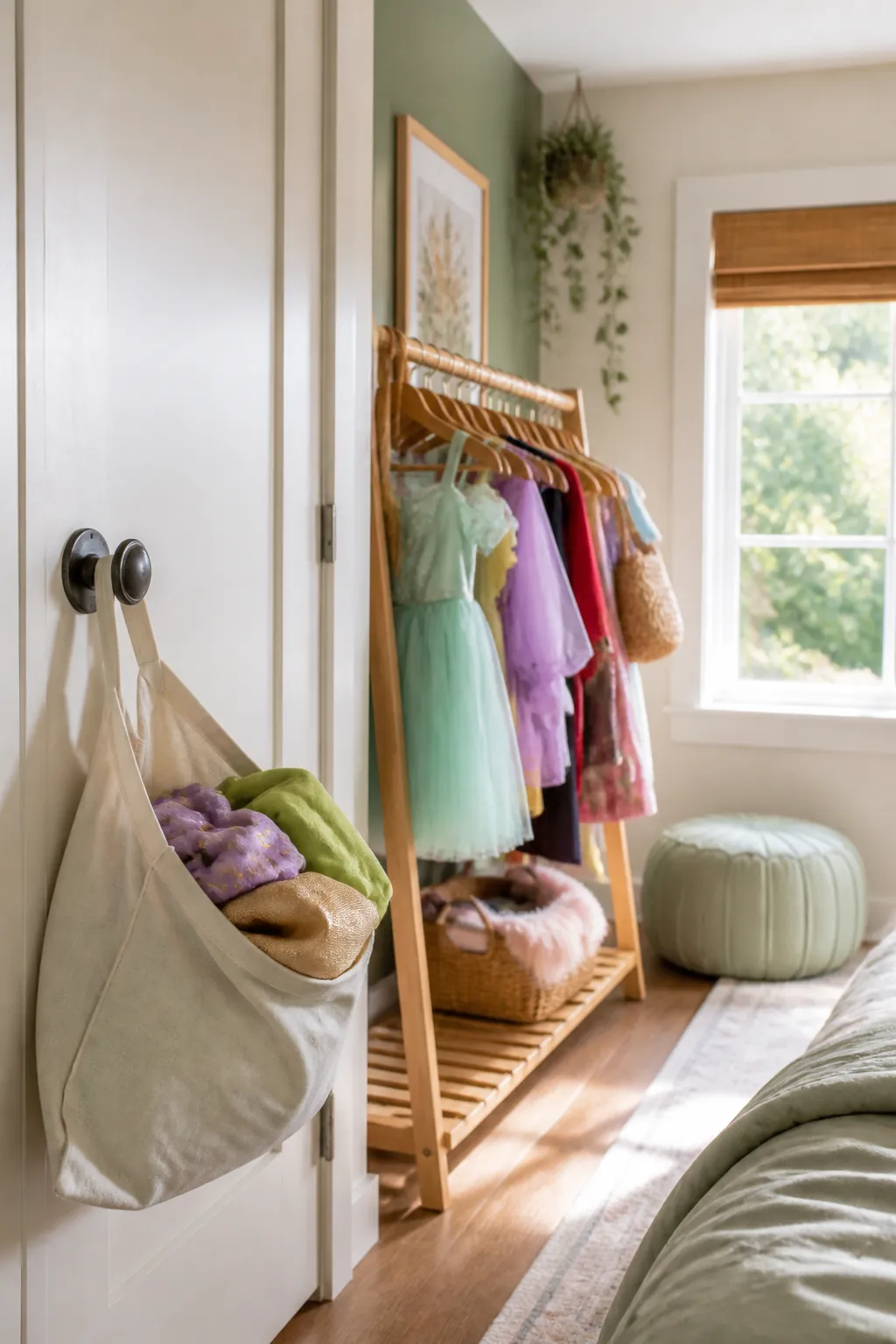
Storage without a limit just relocates the clutter six months down the line. Pick a boundary and hold it: the rack is full when nothing new fits, or the active rotation lives in exactly one bin plus whatever’s on the rod. When a new costume comes in, an old one moves to the archive bin from idea 8, or out the door entirely.
Keep a donate bag in the closet and add outgrown or unloved costumes to it as they turn up during the season’s sort. Let your kid help decide what goes. Away from the pressure of a big cleanout, most kids are more willing to part with things than the adult doing the tidying expects.
Where to start
Start with the sort, not the shopping. Pull the few costumes actually in rotation away from the pile of everything else, then reunite each one with its own accessories in a single bin. Add the freestanding garment rack for anything structured enough to hang, and the hanging shelf organizer for the small stuff that shouldn’t live loose in a toy box.
Skip anything that asks a kid to fold tulle neatly or remember which bin a mask goes in. The setups that last are the ones a distracted six-year-old, halfway into a superhero costume, can use without asking for help.