A child’s closet has a design problem no adult closet has: the person using it is three feet tall and the rail is at five. So the parent puts everything away, the child cannot reach any of it, and the floor of the closet fills with the clothes they pulled down trying.
Kids closet organization in a small room is mostly about lowering the whole system to their height and accepting that a child’s version of tidy is coarser than yours. Ten ideas below, built around that.
1. Sort by size before you organize anything
Before containers, before rails, get the wrong sizes out. A small kids closet is almost always storing three sizes at once: what fits, what they have outgrown, and what someone gave you for next winter.
Only the current size belongs in the closet. Outgrown goes into a labeled bin somewhere else entirely, and too-big goes into another. That single move usually halves what you are trying to fit, and it means everything left in the closet is wearable today, which is the point.
Do this before buying anything, or you will buy storage for clothes that should not be there.
2. Drop the hanging rail to their height
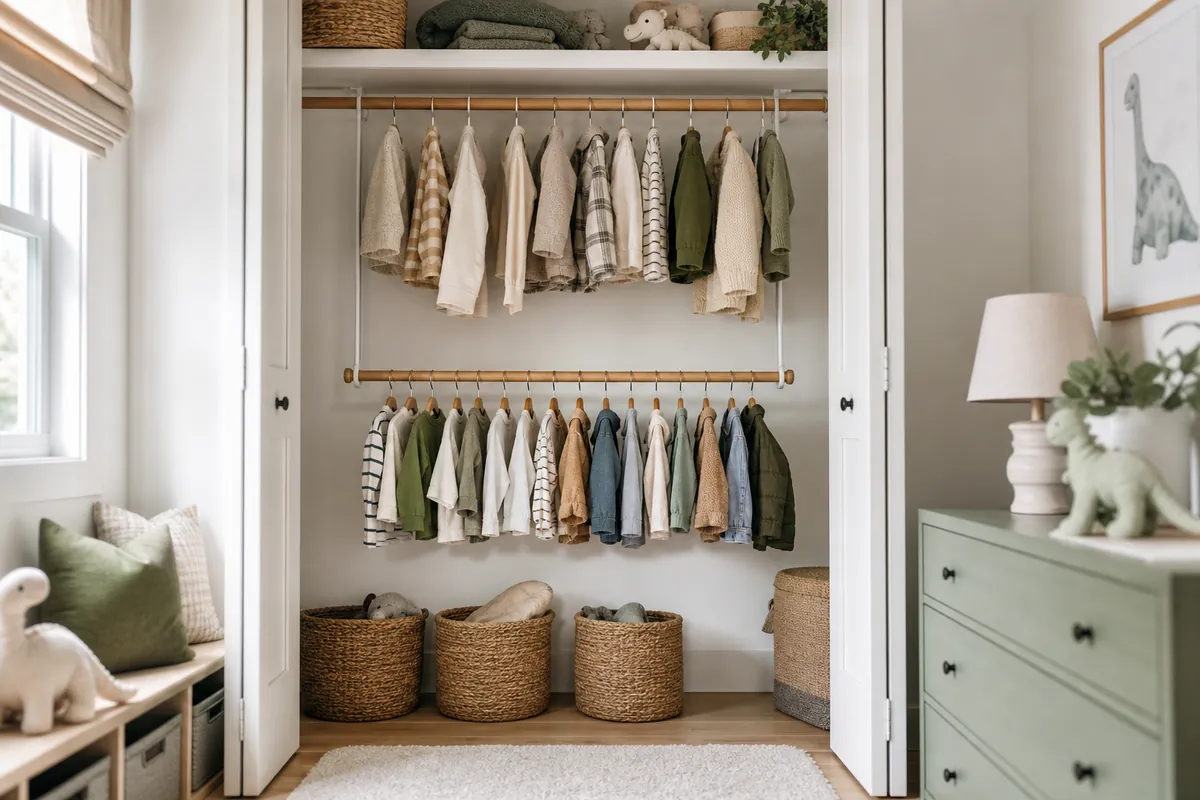
The rail height is the reason children cannot use their own closet, and it is the easiest thing to fix.
A second rod that hangs from the existing one brings the hanging space down to chest height, roughly doubles the rail length, and needs no drilling. Put the child’s everyday clothes on the lower rail and keep the upper one for coats, occasion clothes, and anything you would rather they did not choose unsupervised.
Height matters more than length here. A child who can reach a hanger will put clothes back on it. A child who cannot will use the floor.
3. Use a hanging shelf tower for folded clothes
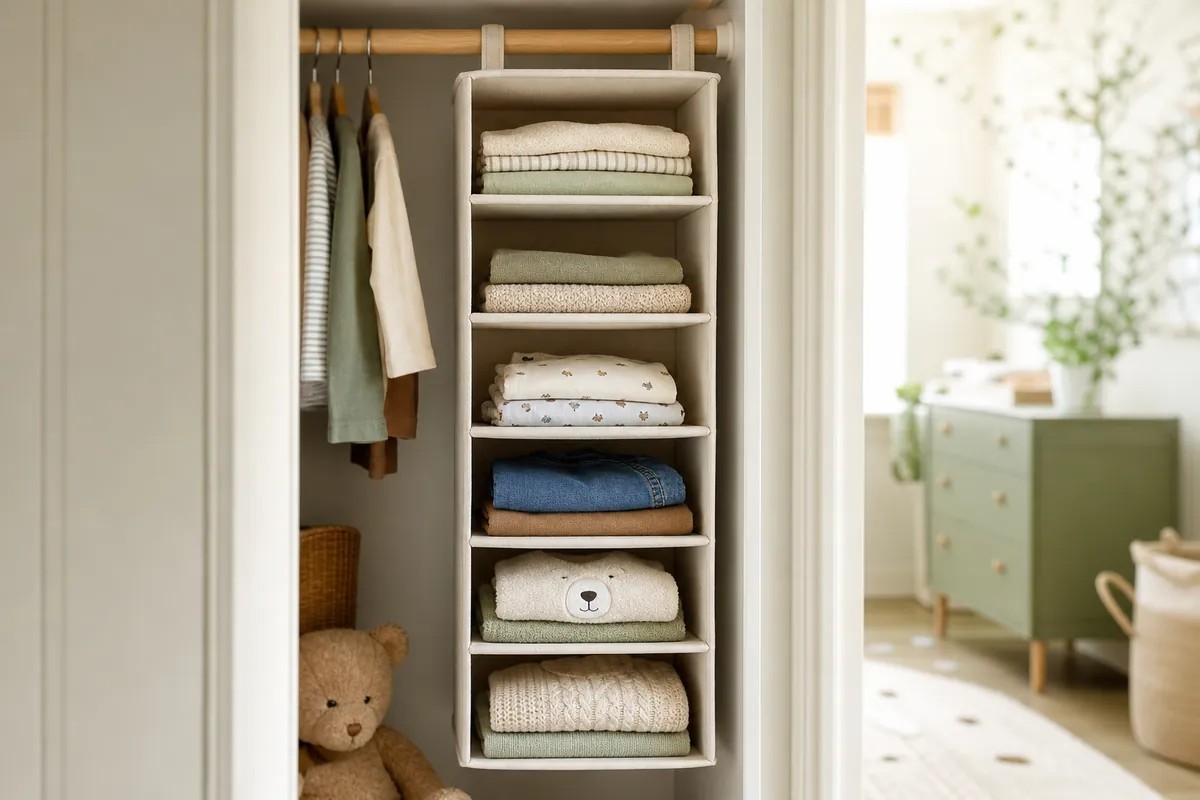
Folded stacks on a high shelf are invisible and unreachable to a child, which makes them functionally storage for you rather than for them.
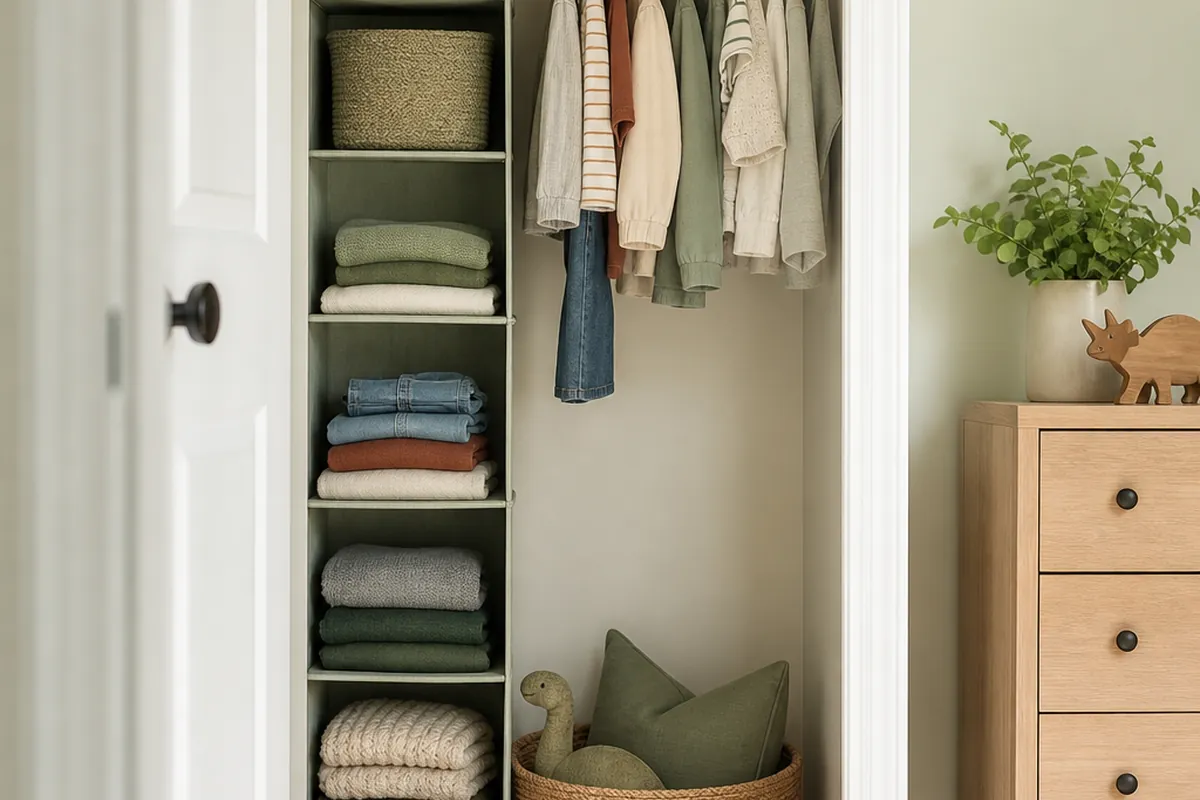
A 6-shelf hanging closet organizer hangs from the rail and turns vertical air into six reachable compartments. One shelf per category, at a height they can see into. It also stops the classic problem where pulling a t-shirt from the middle of a stack collapses the pile.
Hang it at one end rather than the middle so the rail keeps a usable run for hangers.
4. Give small items their own hanging organizer
Socks, tights, swimming kit, hats: small, numerous, and the things most likely to end up scattered.
A kids hanging clothes organizer with several compartments keeps these grouped and at a height a child can reach into. Pockets and open shelves work better than drawers for this age, because a drawer requires a two-handed pull and a child with one hand full will simply drop things instead.
5. Choose open bins over lidded boxes
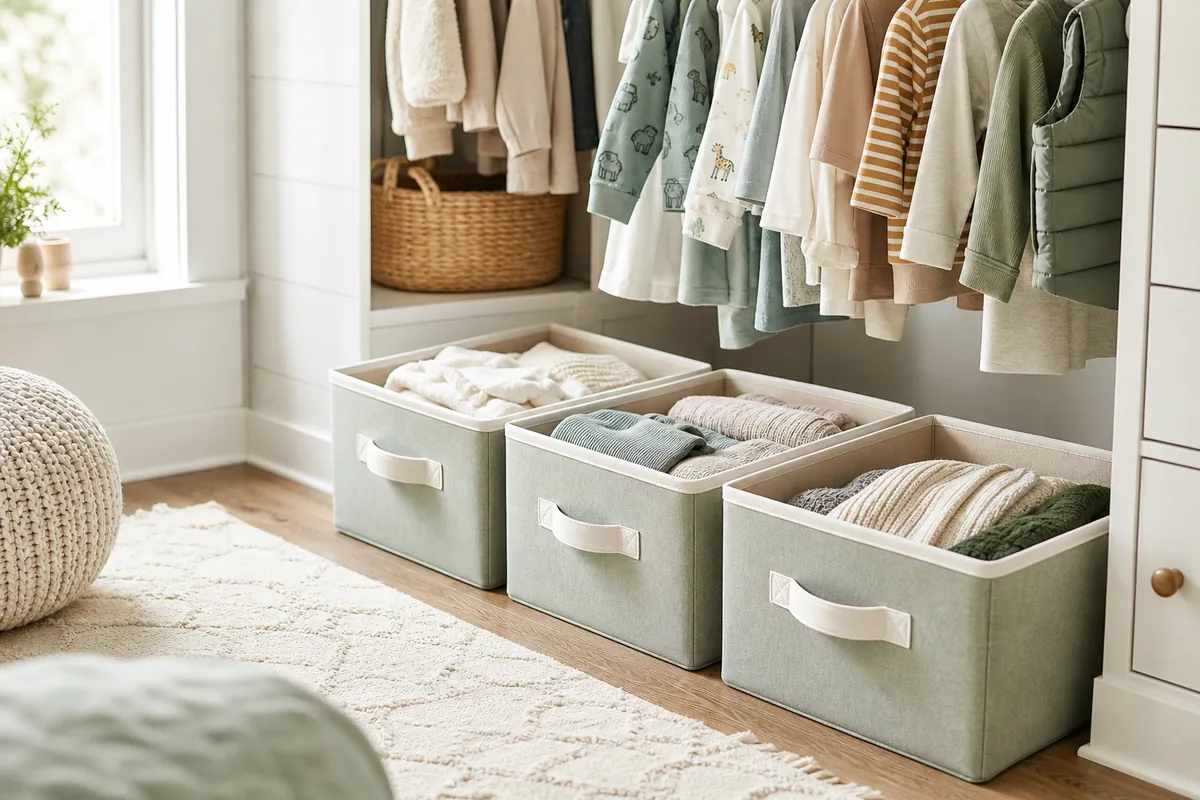
A lid is a small obstacle for an adult and a decisive one for a child. Anything that requires two actions to put away will not get put away.
Fabric storage cubes without lids sit on the closet floor or a low shelf and take an approximate throw. That tolerance is the feature. A system that only works when items are placed precisely is a system that works when you do it and fails when they do.
6. Label with pictures, not words
For a child who cannot read yet, a word label is decoration. A photograph or a simple drawing of what belongs in the bin is a genuine instruction.
Take a photo of the contents, print it small, and tape it to the front. It sounds fussy and it is the difference between a child who can tidy up independently and one who needs you present. Swap to words once they read, which also quietly teaches the words.
7. Keep one shelf deliberately out of reach
Not everything should be accessible. The top shelf is where the things you control live: spare bedding, the next size up, anything breakable or seasonal.
This is not just practical, it protects the rest of the system. If every shelf is a free-for-all, the closet gets rearranged daily. One adult shelf gives the closet a stable backbone.
8. Put shoes on the floor in a single open tray
Shoes are the most-used items in a child’s closet and the worst suited to any container with sides taller than the shoe.
A shallow open tray on the closet floor, or a low rack, keeps pairs together without demanding precision. The bar to clear is that a child can drop shoes in the right place while holding something else, which rules out anything requiring aim.
9. Store the growth pipeline outside the closet
Hand-me-downs and next-size clothes are the quiet reason small kids closets overflow, because they are technically needed but not for months.
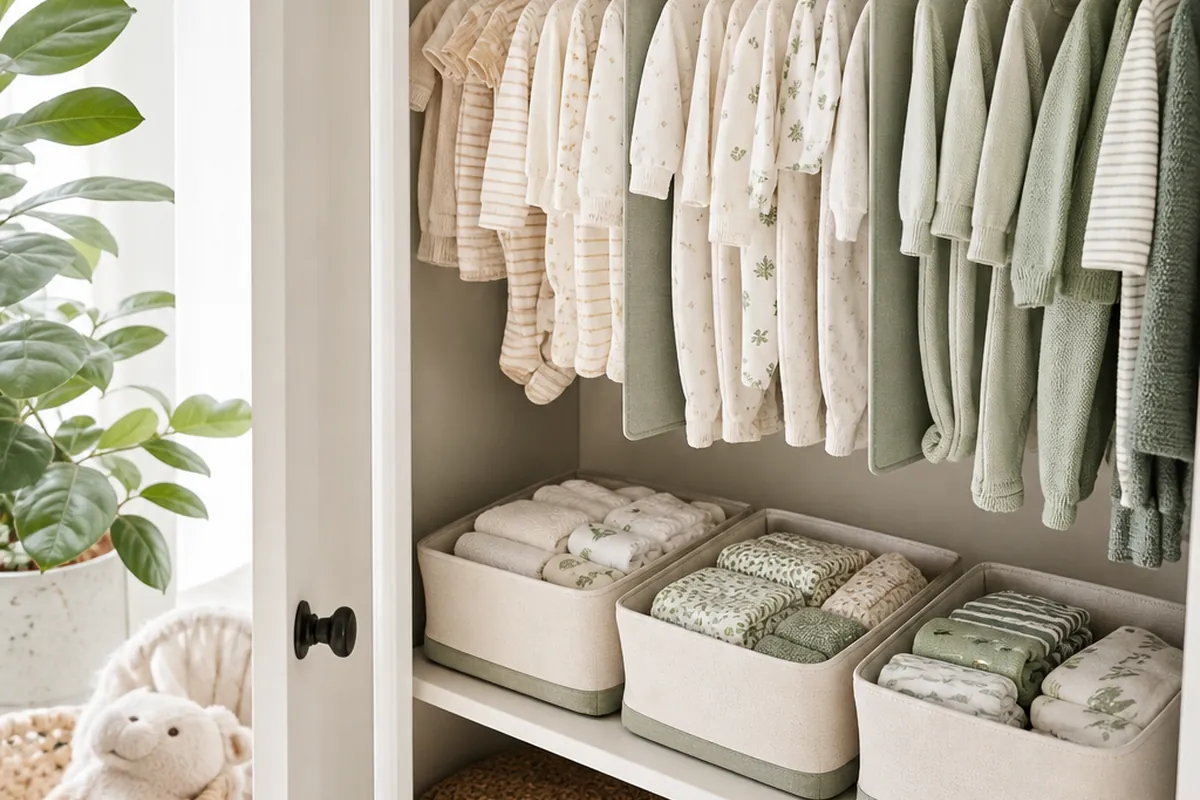
One labeled bin per upcoming size, stored under the bed or on top of an armoire, keeps them out of prime space. The same logic that makes under-bed storage for seasonal clothes work applies here, and a child’s closet is exactly the case where it pays off most.
If the child is still a baby, the pipeline moves fast enough to need its own system, and nursery closet organization for a small nursery sets one up from the first size onward.
10. Re-sort every season, and after every growth spurt
Children outgrow clothes faster than any system absorbs, so the maintenance is the sort rather than the containers.
Twice a year at minimum, and immediately after a spurt: pull anything that no longer fits, promote the next bin up, and reset the rail. It takes twenty minutes and prevents the slow silting that makes a closet unusable. If the whole room needs the same treatment, shared kids room organization covers the wider space.
Kids closet organization that a child can actually run
The order is: get the wrong sizes out, lower the rail, then add reachable storage. A 6-shelf hanging closet organizer turns dead vertical air into visible compartments, a kids hanging clothes organizer handles the small scattered things, and fabric storage cubes catch everything that needs to be thrown rather than placed.
Keep one shelf for yourself, label in pictures until they read, and re-sort every season. The measure of success is not how it looks the day you finish. It is whether a five-year-old can put a jumper away without asking you where it goes.