A 500-piece puzzle takes up more room assembled than it ever did in the box, and a small kids’ room rarely has a shelf built to hold a stack of them twenty deep. Half those boxes are missing a corner within a few months anyway, because the flip-top lid doesn’t latch and one good shake in a toy bin scatters pieces under the bed. The fix isn’t a bigger toy chest. It’s storage that matches how puzzles actually get used: some finished and shelved, some half-built on a tray, some down to loose pieces because the box gave out two moves ago.
1. Sort the collection by piece count before you buy anything
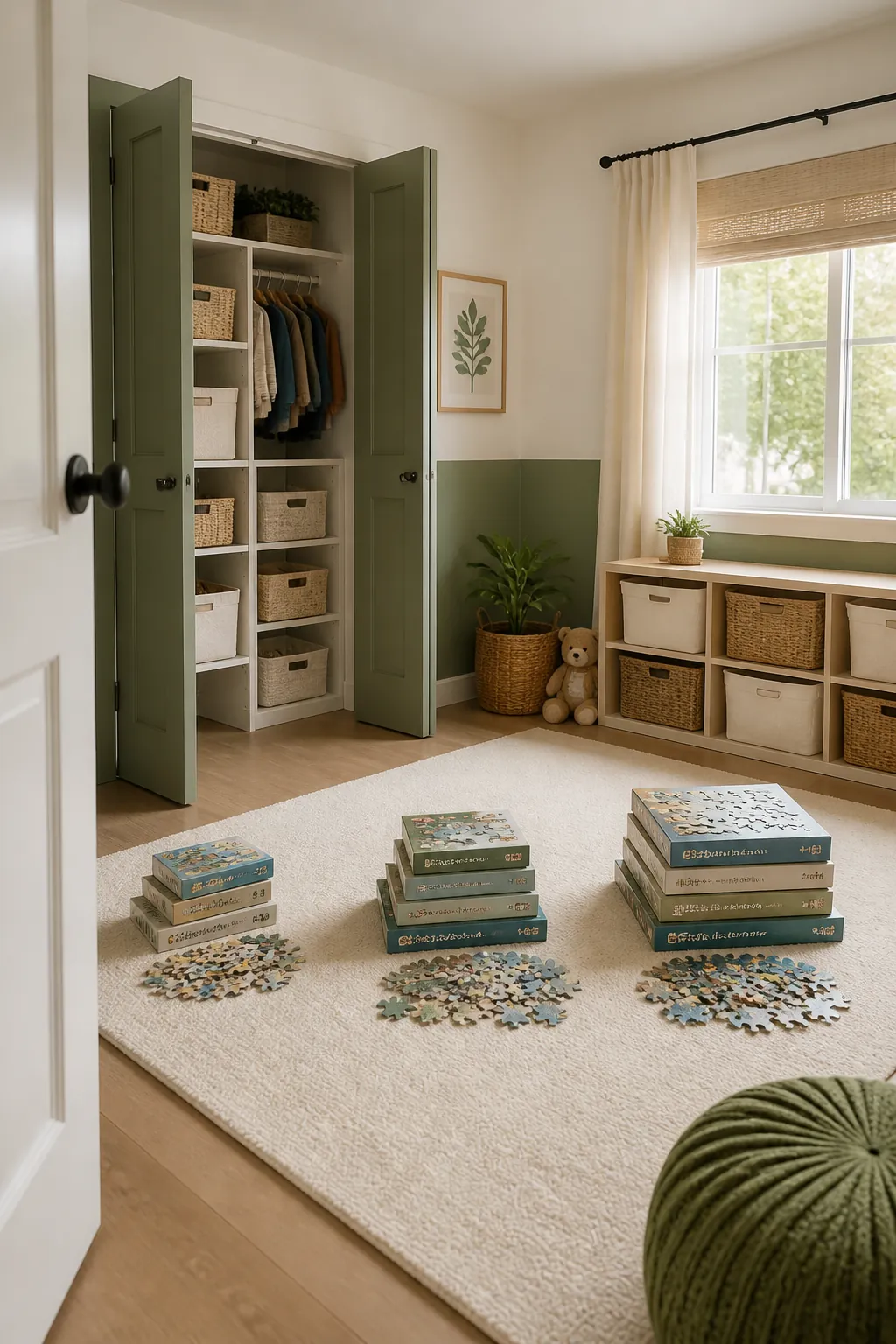
Pull every puzzle in the house into one pile and split it three ways: chunky wood or foam puzzles for toddlers, usually 4 to 12 pieces; the 24- to 100-piece range for preschool and early elementary kids; and anything from 300 pieces up, which is really a project piece more than a toy. Each tier needs a different container, and buying one bin size for all three wastes space on the small stuff and crushes the large stuff.
The piece count also tells you what a box can survive. A 24-piece box is roughly 8 by 8 by 1.5 inches and can take a fall. A 500-piece box, closer to 10 by 14 by 2.5 inches, is heavier and its corners are the first thing to crush when something else gets stacked on top. Sort by size now, and every step after this one gets easier.
2. Replace the cardboard box the moment a corner gives out
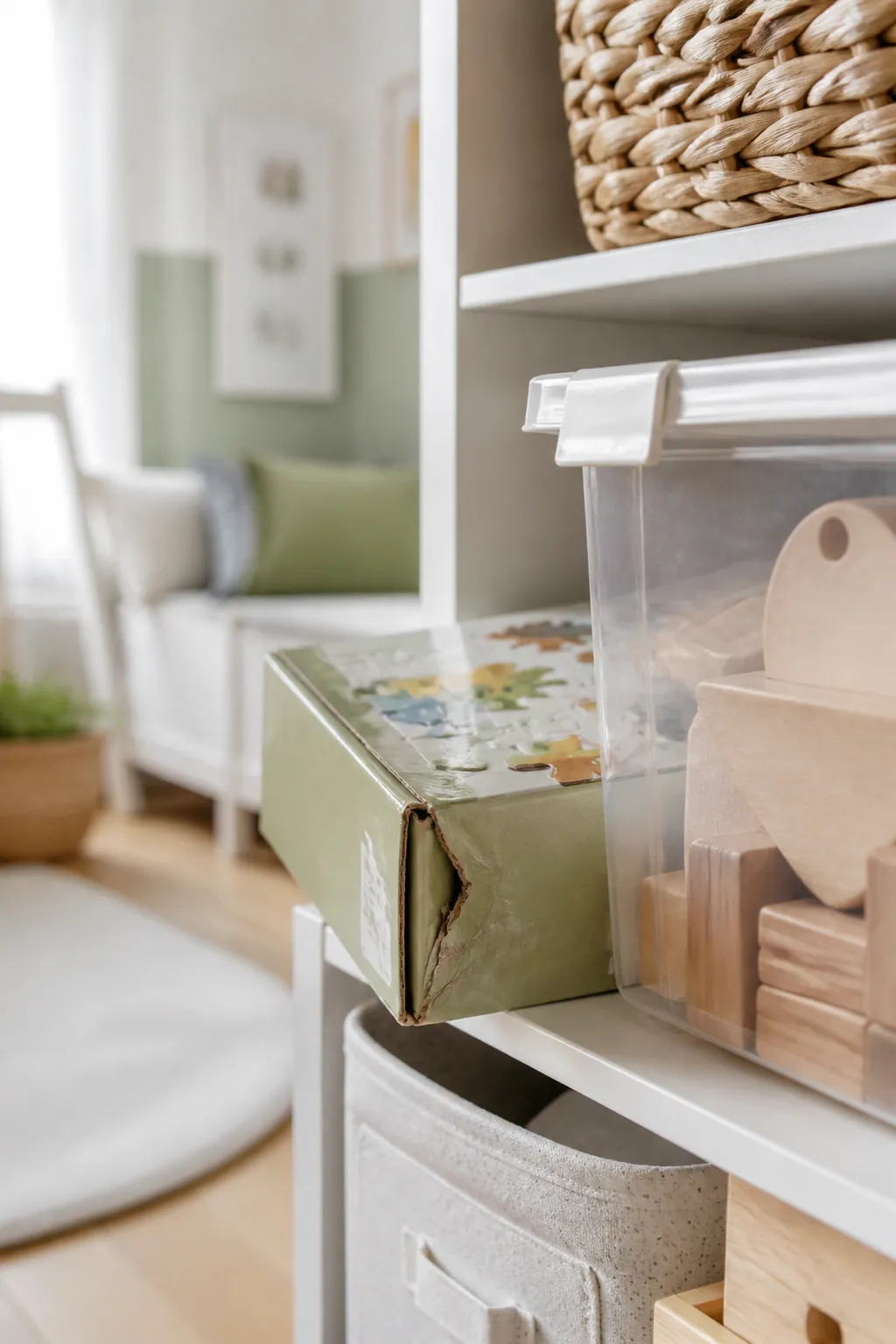
Cardboard puzzle boxes are built for a shelf in a store, not for years of kids pulling them out by the lid. The failure always starts at a corner, since that’s where the box takes the impact of being dropped or wedged back onto a shelf at an angle. Once one corner splits, the lid stops sitting flush, and a loose lid is how pieces work their way out during storage rather than during play.
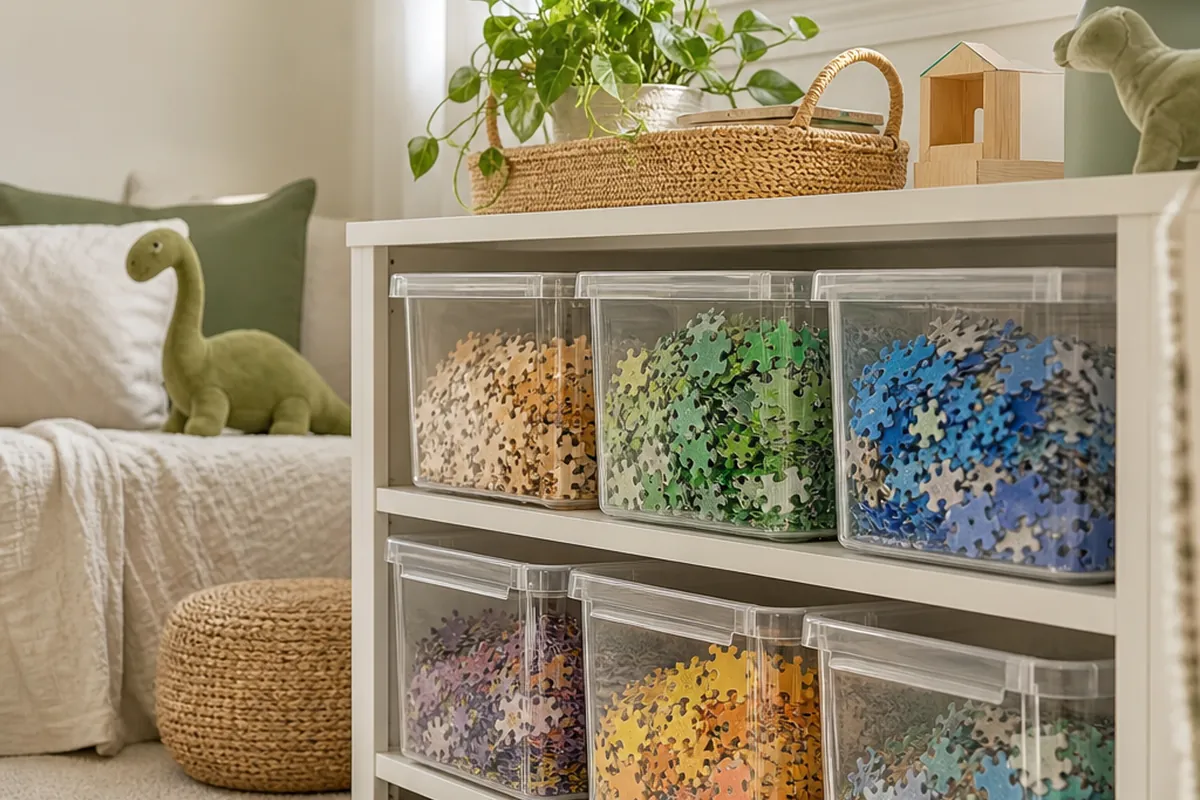
Clear stackable storage bins solve this permanently. Move the puzzle and its picture (cut from the box lid, taped inside) into a bin sized for that piece count, and it stops depending on cardboard that was never meant to last. Stack by tier: toddler puzzles in the smallest bins on the lowest, most reachable shelf, and 300-plus piece builds higher up where a kid needs help to reach them.
3. Sort stray and loose pieces with a labeled drawer organizer
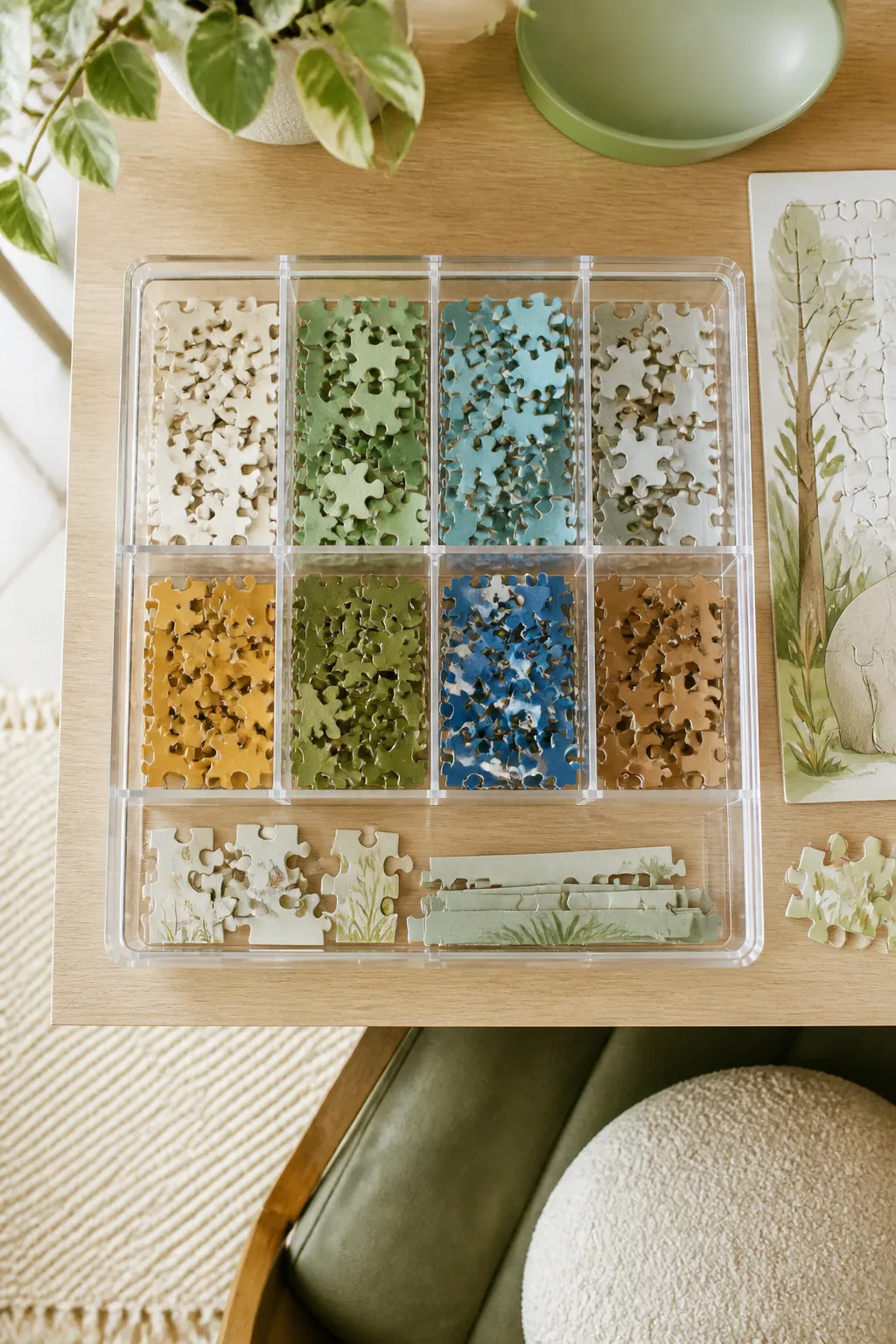
Every collection eventually has pieces with no home, orphans from a puzzle whose box disappeared years ago, or the handful that turn up behind the couch cushions after a move. Tossing them all into one bag just delays the sorting, since nobody wants to dig through two hundred mismatched pieces looking for the corner of a specific picture.
A clear drawer organizer set gives loose pieces a working sort, separated by color, by edge versus middle, or by which unsolved puzzle they probably belong to. It’s also the right tool mid-assembly: corner pieces in one tray, sky-colored pieces in another, so a kid can work a section without pawing through the whole pile every time.
4. Let an in-progress puzzle travel on a roll mat
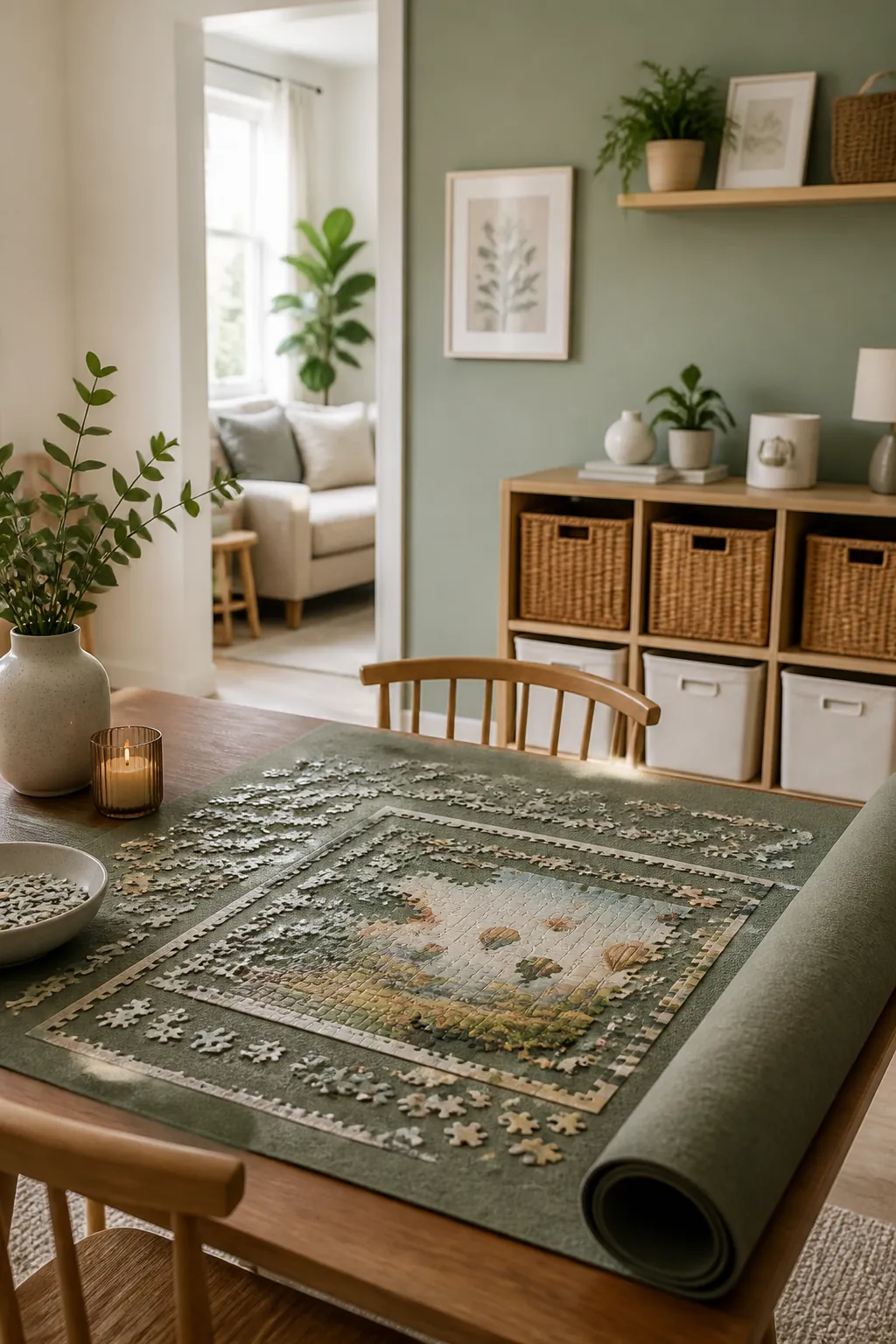
The puzzle that’s half-finished on the dining table is the one that causes the most friction in a small home, because the table has other jobs and the puzzle doesn’t want to move. A puzzle roll mat is built for exactly this: unroll it under a build of up to about 1,500 pieces, work on it in place, then roll the whole thing up, loose pieces and all, and tuck the tube into a closet corner or under a bed until the next session.
This product doesn’t currently have a verified retailer link on this site, so if you go looking for one, check the piece-count rating on the listing before buying; an oversized 1,000-piece build on a mat rated for 500 will bow at the fold lines and shift pieces out of place every time it’s rolled.
5. Store finished puzzles flat, not stacked on their edge
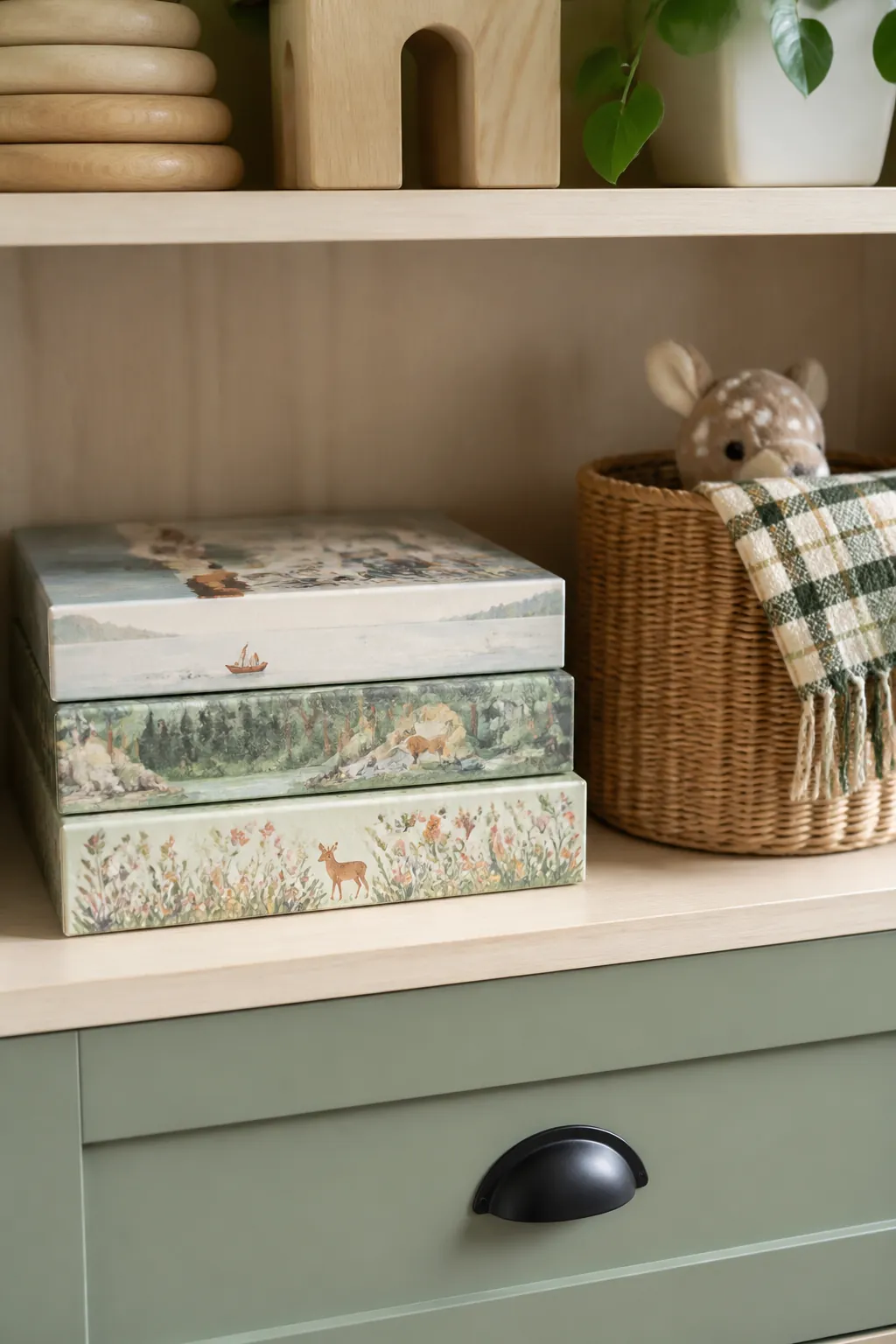
A finished puzzle that gets glued and framed can go on a wall, but most don’t get that treatment, and a completed puzzle boxed back up wants to lie flat, not stand on its spine on a shelf. Stood upright, gravity pulls on the loosest pieces at the bottom edge over weeks, and a cardboard box balanced on its narrow side slowly folds at whichever corner is bearing the weight.
Lay boxes flat and stack them, lightest and smallest on top, inside a bin or on a low shelf with enough clearance that nothing above presses down hard enough to crush the box beneath it. If a puzzle is genuinely finished and staying that way, taping the back into a few large sections before boxing it keeps a proud project intact even if the box eventually gets jostled.
6. Keep only the current rotation on a low shelf
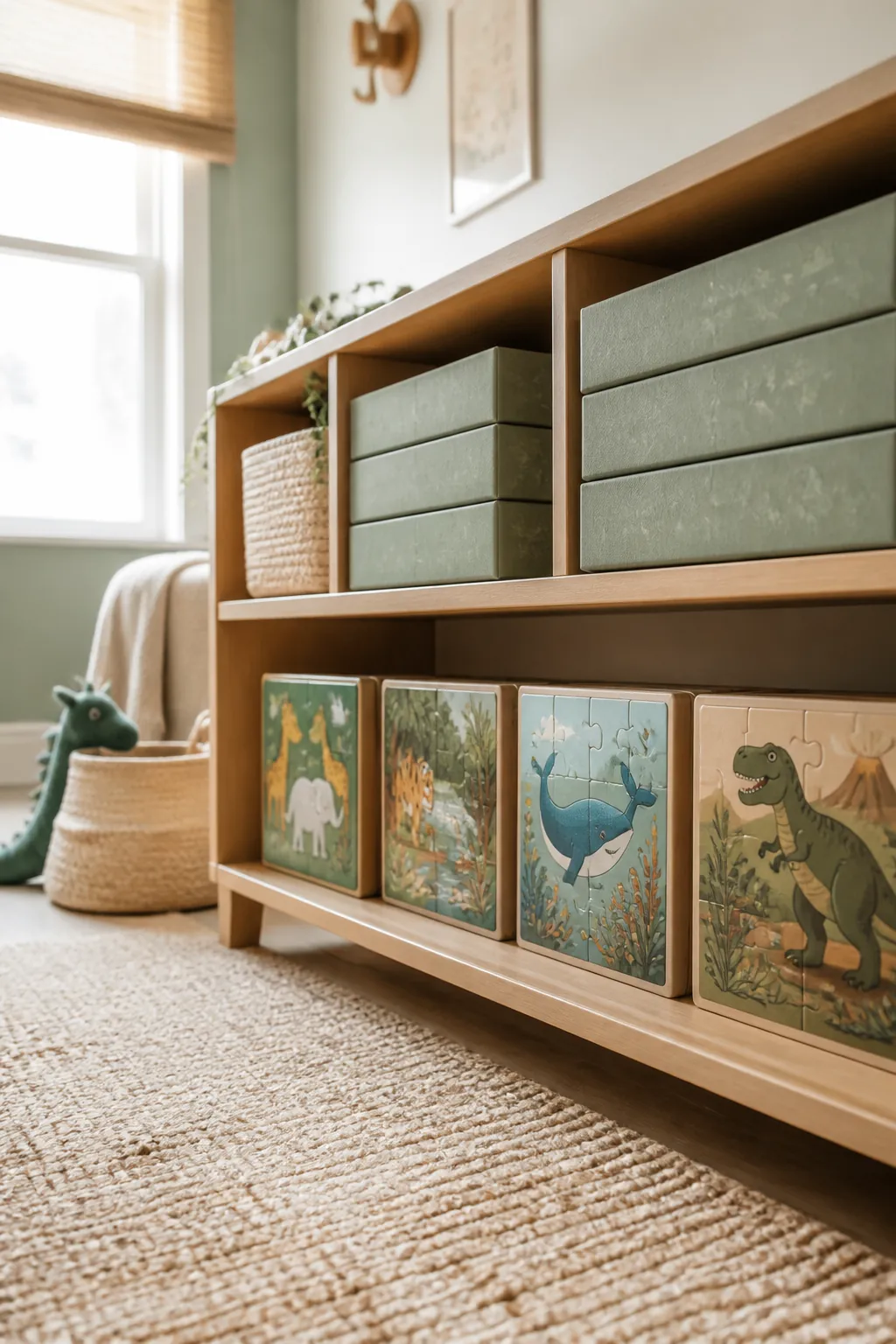
A shelf holding the household’s entire puzzle collection stops being useful the moment it holds more than a handful of boxes, because a kid can’t browse twenty near-identical boxes any better than an adult can. Pick three to five puzzles that match your kid’s current age and interest, put those at reachable height, and box the rest.
Swap the rotation every few weeks, or whenever a puzzle in play has been solved and reboxed. This does two things at once: it keeps the shelf genuinely browsable, and it means every puzzle gets a turn in the light instead of six of them permanently winning the front-row spot.
7. Give the current build a tray that slides out of the way
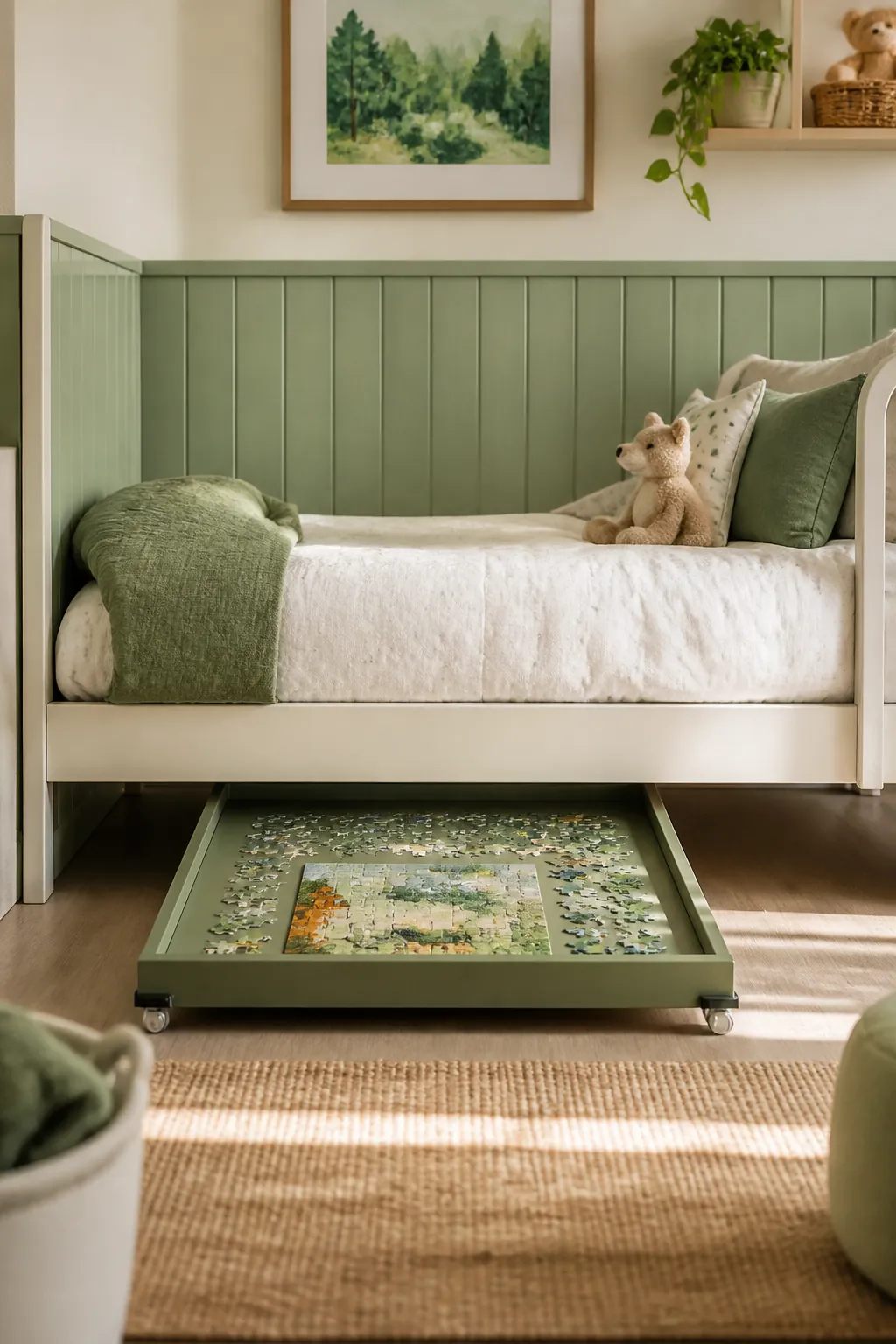
A shallow puzzle tray, roughly 27 by 20 inches for a 1,000-piece build, holds an in-progress puzzle without gluing it to the table. When playtime ends, the whole tray slides under a couch or a bed rather than getting shuffled onto a side table where a sleeve or a pet tail can wreck an afternoon’s sorting.
Measure the clearance before you buy: most trays need 3 to 4 inches to slide under furniture, but a bed frame with a low box spring or a couch with a skirt panel can close that gap down to nothing. Check under the specific bed or couch you’re planning to use, not a similar one down the hall, because clearance varies more between frames than people expect.
8. Label bins by piece count and age range, not by title
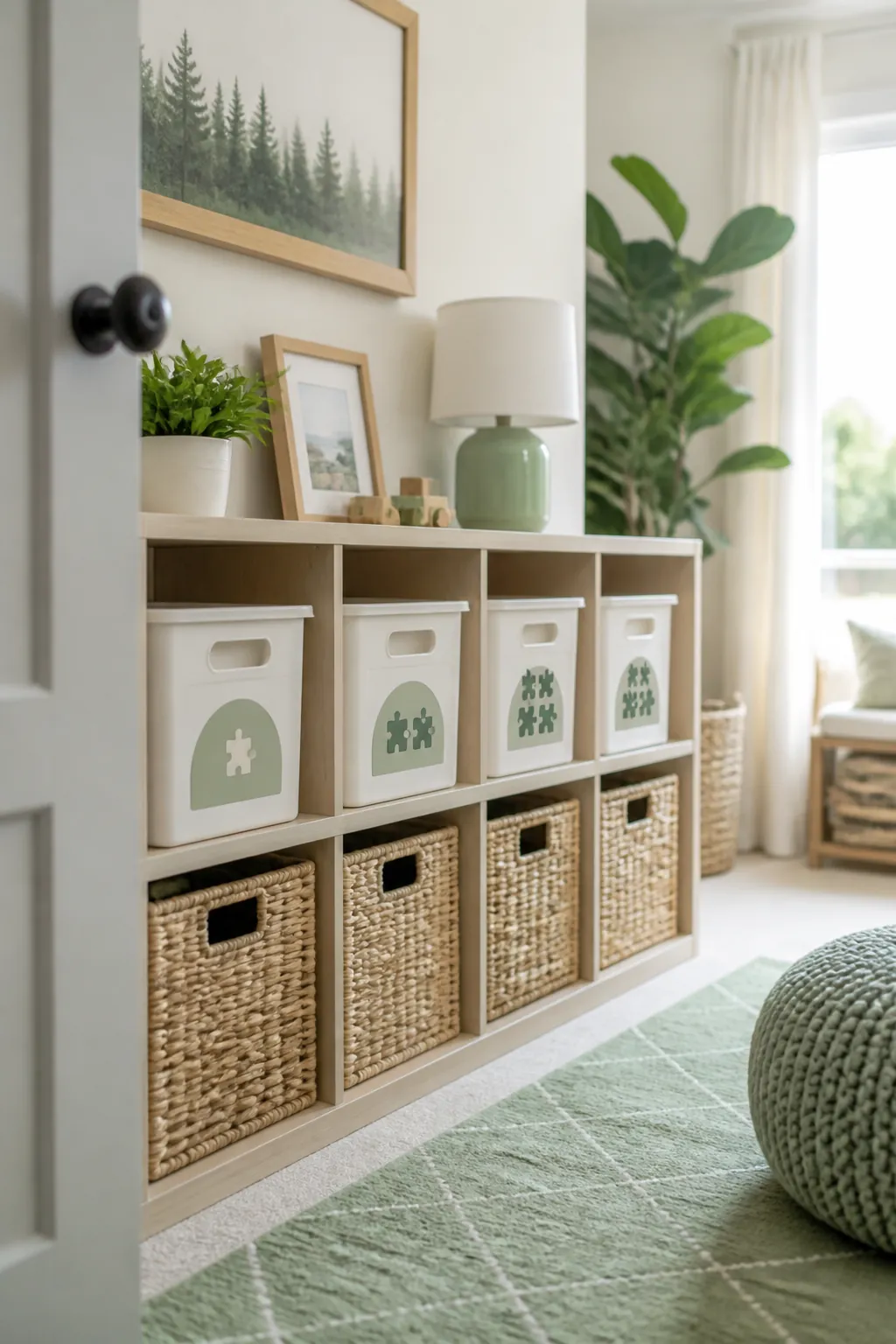
A bin labeled with the puzzle’s name means nothing to a kid who can’t read yet, and it means little more to one who can but doesn’t remember which box held which picture. Piece count and rough age range (24pc, ages 3 to 5; 300pc, ages 6 and up) tells a kid immediately whether a bin is worth opening, without needing to recall the artwork at all.
Use a picture of the completed puzzle taped to the bin front as a second cue for pre-readers. It costs one photo and a piece of tape, and it turns “which bin has the dinosaur one” into something a three-year-old can answer without help.
9. Move bulky floor puzzles and mats under the bed
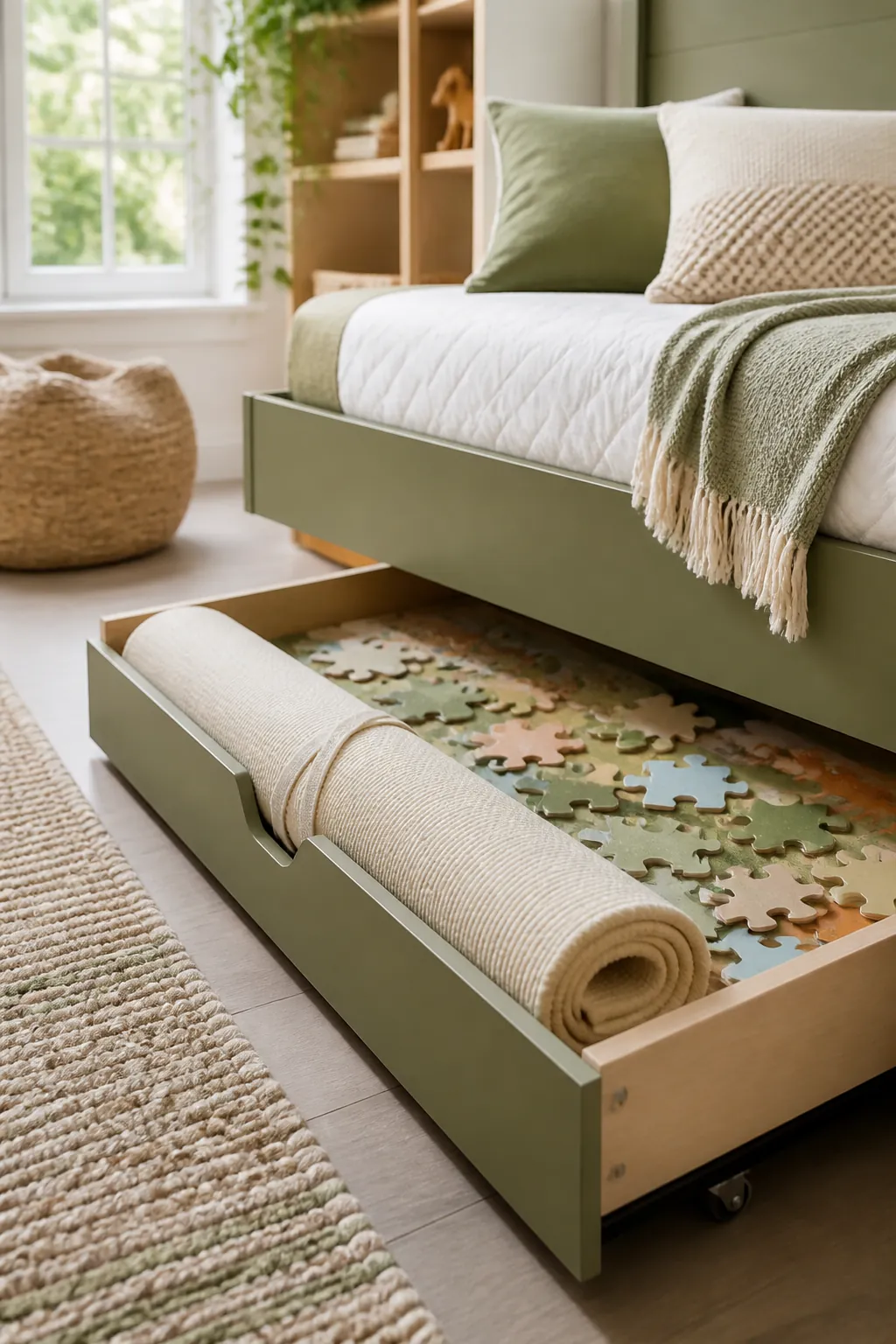
Giant floor puzzles, oversized shape puzzles, and any roll mats not currently in use are the bulkiest things in this whole category, and none of them belong on a shelf a small kid needs to reach. Under-bed storage bins with lids use the one stretch of floor space a kids’ room almost always wastes.
Measure the gap under the actual bed frame before buying, not the mattress height; a low platform bed can leave less than 4 inches of clearance, which rules out a standard bin no matter how well it would otherwise fit. A bed frame on risers or a bunk bed’s lower level usually has 7 to 9 inches to work with, which is enough for a bin holding several boxed puzzles stacked flat.
10. Set a swap-and-donate rule before the shelf fills again
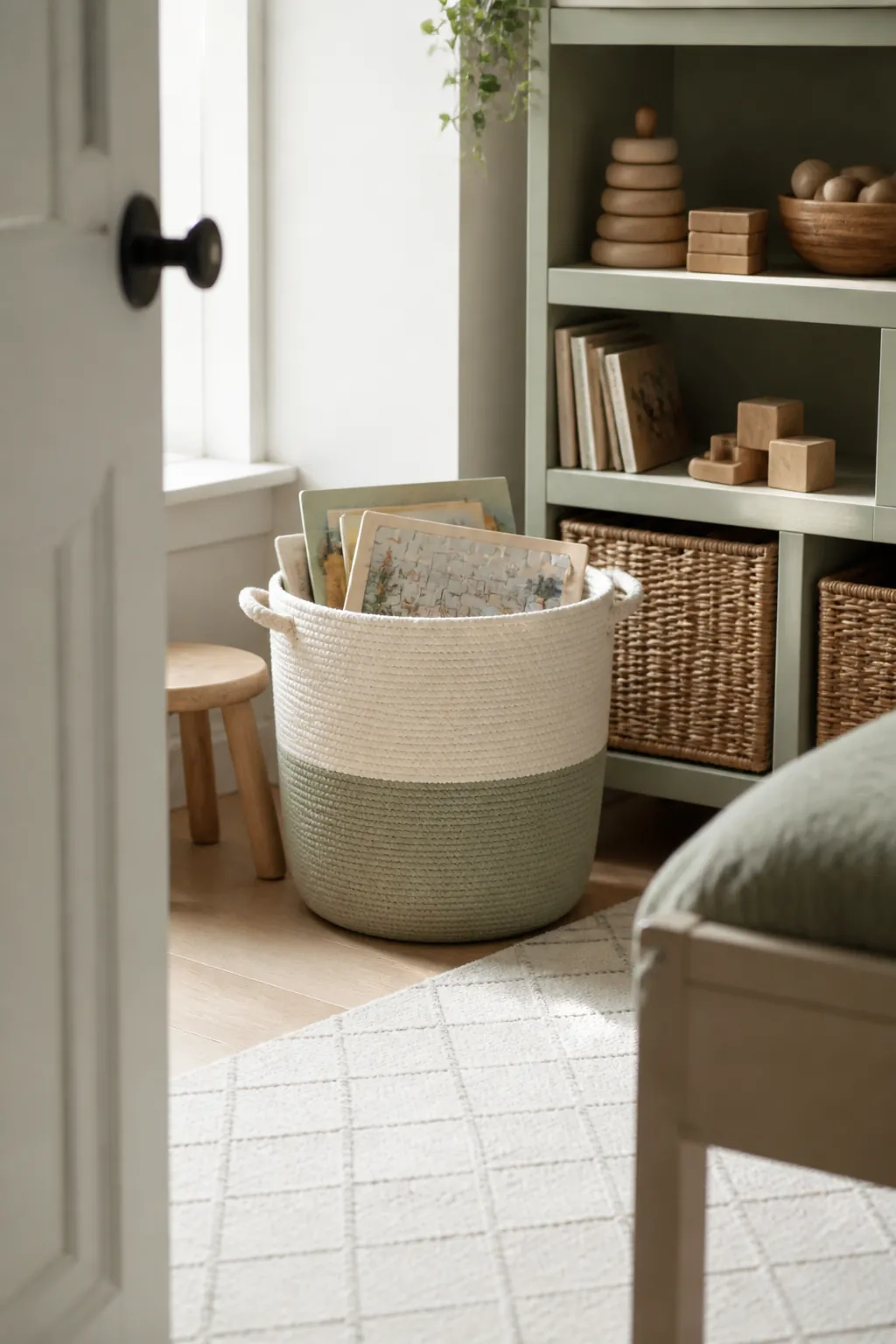
Puzzles arrive constantly, birthday gifts, hand-me-downs from an older cousin, the one grandma buys every visit, and without an exit point, every bin on this list eventually overflows no matter how well it started out. Before adding a new puzzle to the rotation, pull one out: either box it for storage if your kid still enjoys it, or donate it if they’ve clearly outgrown the piece count.
Tie the check to something that already happens on a schedule, a birthday, the start of a school term, or a library sale in your neighborhood. A puzzle missing even one piece isn’t worth keeping past that point either; donate the box for parts or recycle it, since a kid who dumps out a puzzle and finds a gap loses trust in the whole shelf.
Where to start
Sort what you already have by piece count first, since that single decision determines almost everything else on this list. Move anything in a failing box into a clear stackable bin sized for its tier, sort the orphaned pieces into a labeled drawer organizer, and keep only three to five puzzles out on a low shelf at a time.
None of this needs a dedicated game room. It needs each tier of the collection to have exactly one home, sized for the pieces it holds, so a finished puzzle goes back exactly as complete as it came out.