Count the plushies. Actually count them. A typical kid’s room holds a few dozen, and almost none of that collection has a real address, which is why stuffed animal storage collapses into a heap in the corner and a mountain on the bed. One giant bin won’t fix it. What works is giving the collection a shape that matches how your kid actually plays.
My bias, stated up front: vertical and visible beats deep and hidden. Plushies that sink into a toy chest get forgotten, then rediscovered, then dumped across the carpet during the search. Storage that keeps them in sight and off the floor is the only kind still working a month later.
Split the collection into three tiers first
Sort before you buy. Not into keep and toss (save that argument), but by how often each animal actually gets touched.
Tier one: the sleepers. Three to five animals that come to bed. These need to live within arm’s reach of the pillow, not across the room.
Tier two: the players. The ones carried around, tucked into doll beds, hauled to the couch. Ten to fifteen, usually. Open, grab-and-go storage at kid height.
Tier three: the collection. Carnival prizes, gifts from great-aunts, the giant unicorn from the fair. Loved in theory, never touched. Up high, or inside something.
Every idea below serves one of those tiers. Skip the sorting and you end up with three half-full systems and a floor that still looks the same.
Vertical stuffed animal storage for the tier-three pile
1. A corner hammock above the bed
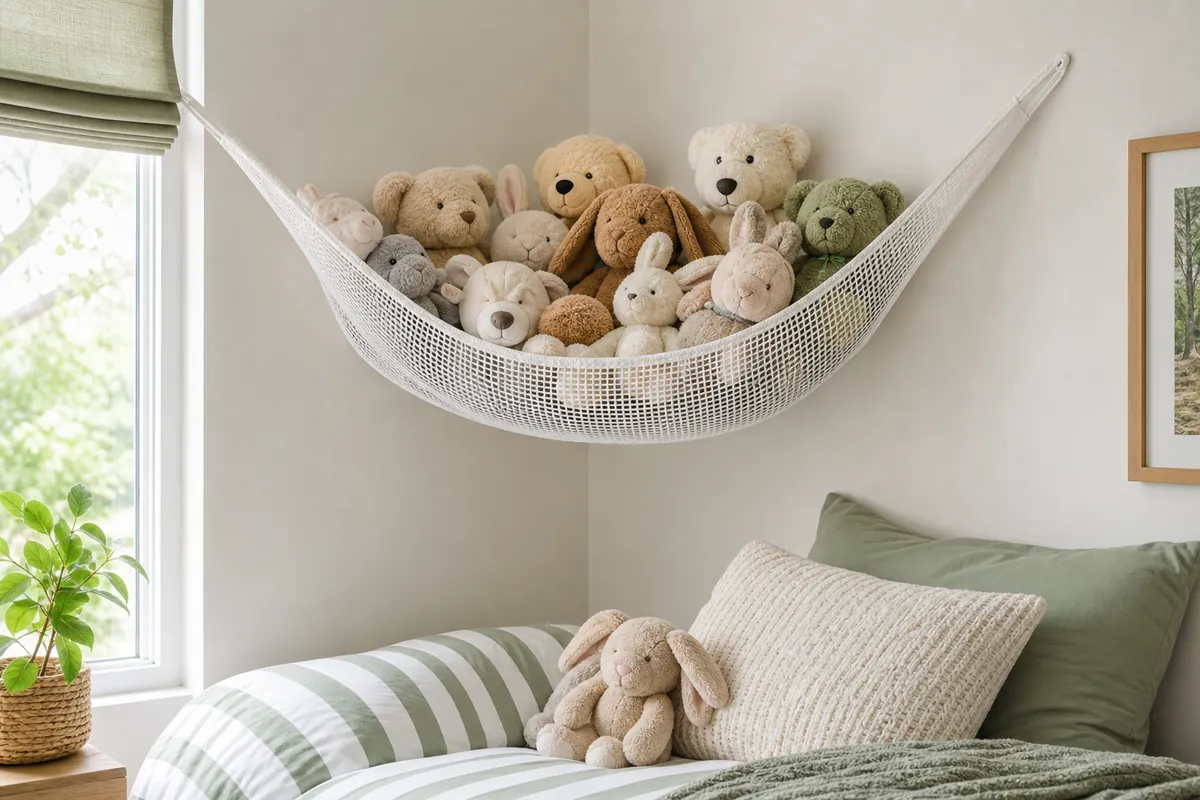
Highest-impact move in a small room, and the reason corner hammocks show up on every kids’ room list. It claims the one spot nothing else can use: the empty triangle of air where two walls meet, above furniture. Loaded up, it takes twenty-plus plushies out of circulation without costing you a square inch of floor.
Two placement notes matter more than which product you buy. Hang it high enough that a sitting-up kid can’t knock it (roughly a hand’s width above their head when they’re standing on the mattress), and avoid the corner directly over the pillow if you’ve got a wiggly sleeper. Over the foot of the bed or above a dresser is better. Mesh holds its shape when it’s full and sags sadly when it’s half empty, so load it generously.
Renters, take note: most mount with three small screws or hooks, and drywall anchors leave holes the width of a pencil tip that spackle closes in two minutes. Adhesive hooks are sold for this. I wouldn’t trust one with a mound of fleece suspended over a sleeping child.
2. A hanging net strung along one wall
Same idea, longer run. When a room has no usable corner, a net stretched across the top of one wall gives you a shelf made of air. It reads more like decor than storage, which some kids prefer. The tradeoff: nets sag at the midpoint, so the heavier animals slowly migrate there and pool.
3. Picture ledges for the display crowd
Narrow ledges, the kind sold for photo frames, hold small firm plushies in a row like a museum shelf. Beanie-style animals with weighted bottoms sit beautifully. Floppy ones slide off within a day. Reserve this for the animals your kid is proud of, not the ones they cuddle.
4. Clip hangers on a tension rod
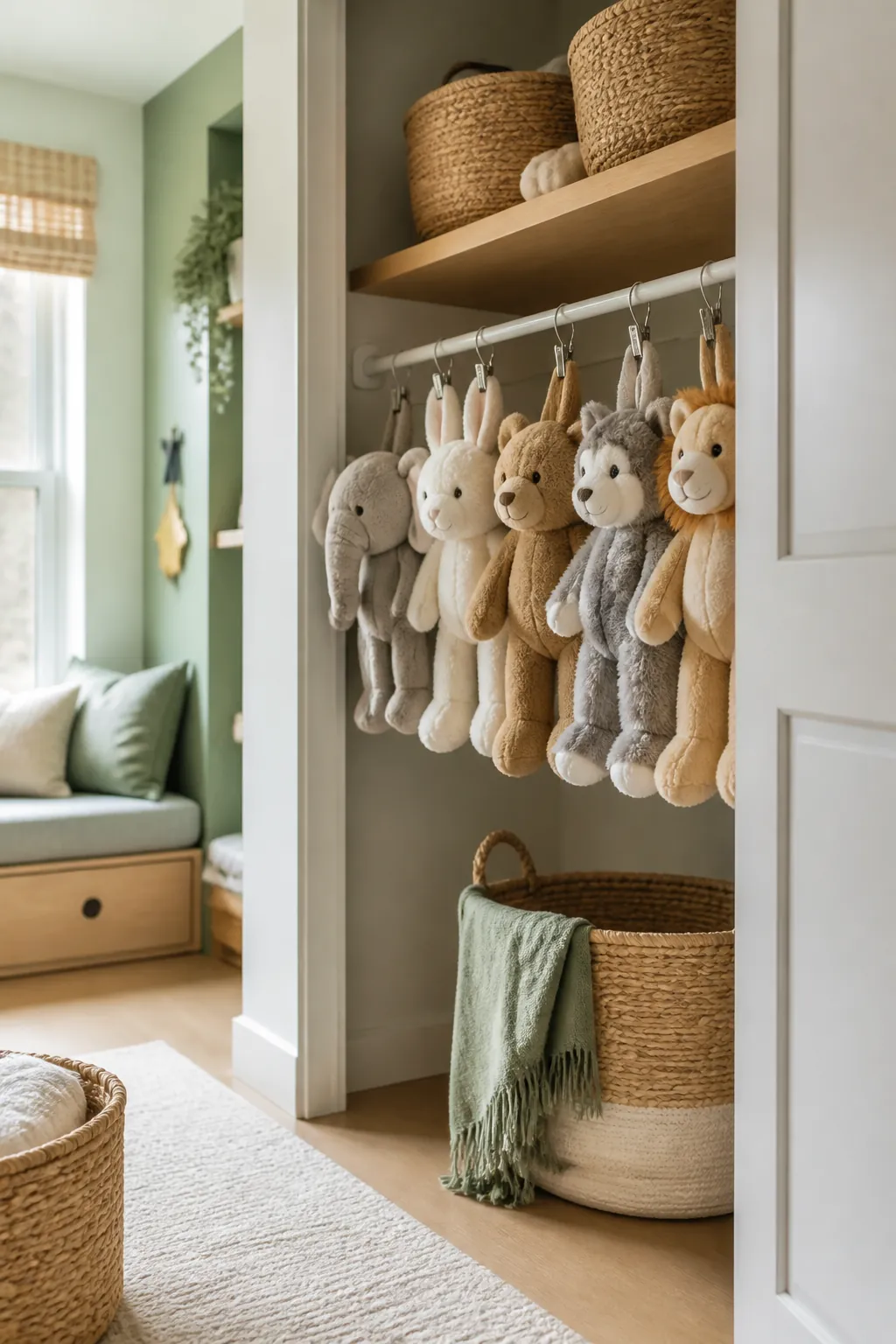
Cheap, slightly ridiculous, genuinely useful for awkward shapes. A tension rod inside a closet or across an alcove plus a row of clip hangers lets you hang plushies by an ear or a paw. It looks like a plushie laundry line, which most kids think is hilarious. Lightweight animals only, or the clips crush and slip.
Stuffed animal storage that doubles as furniture
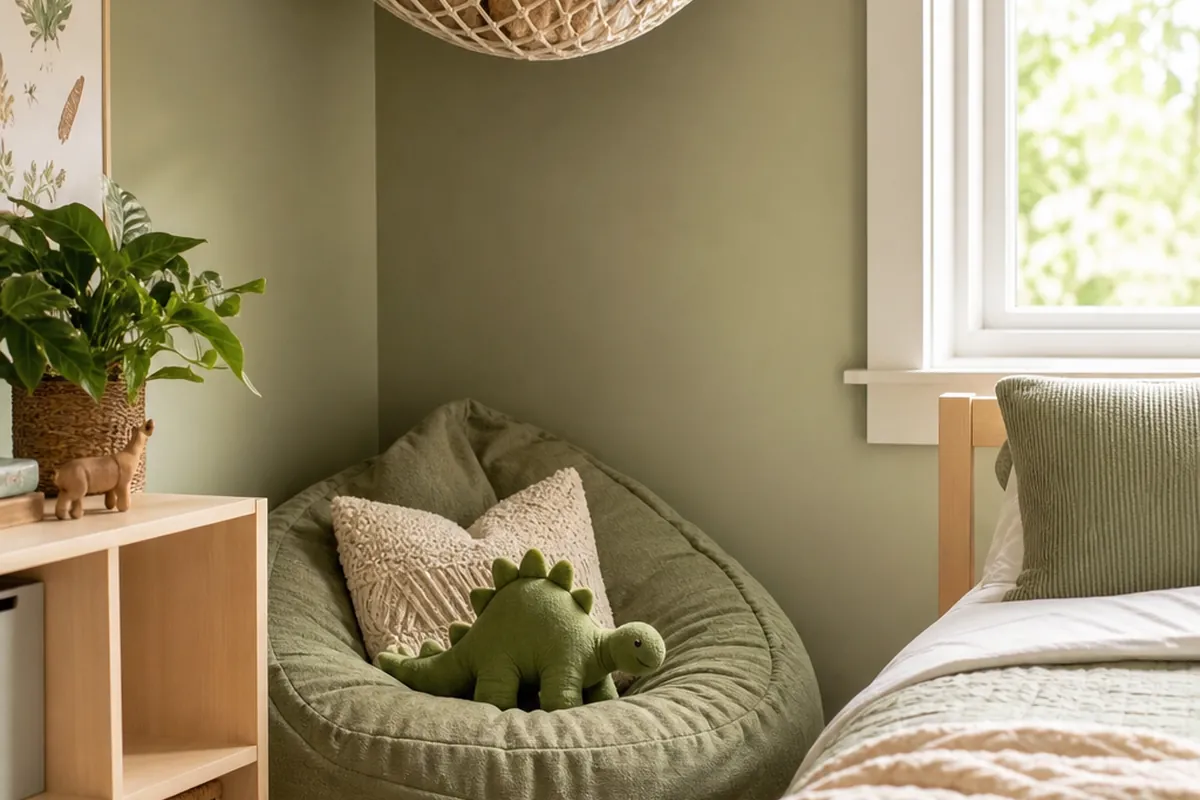
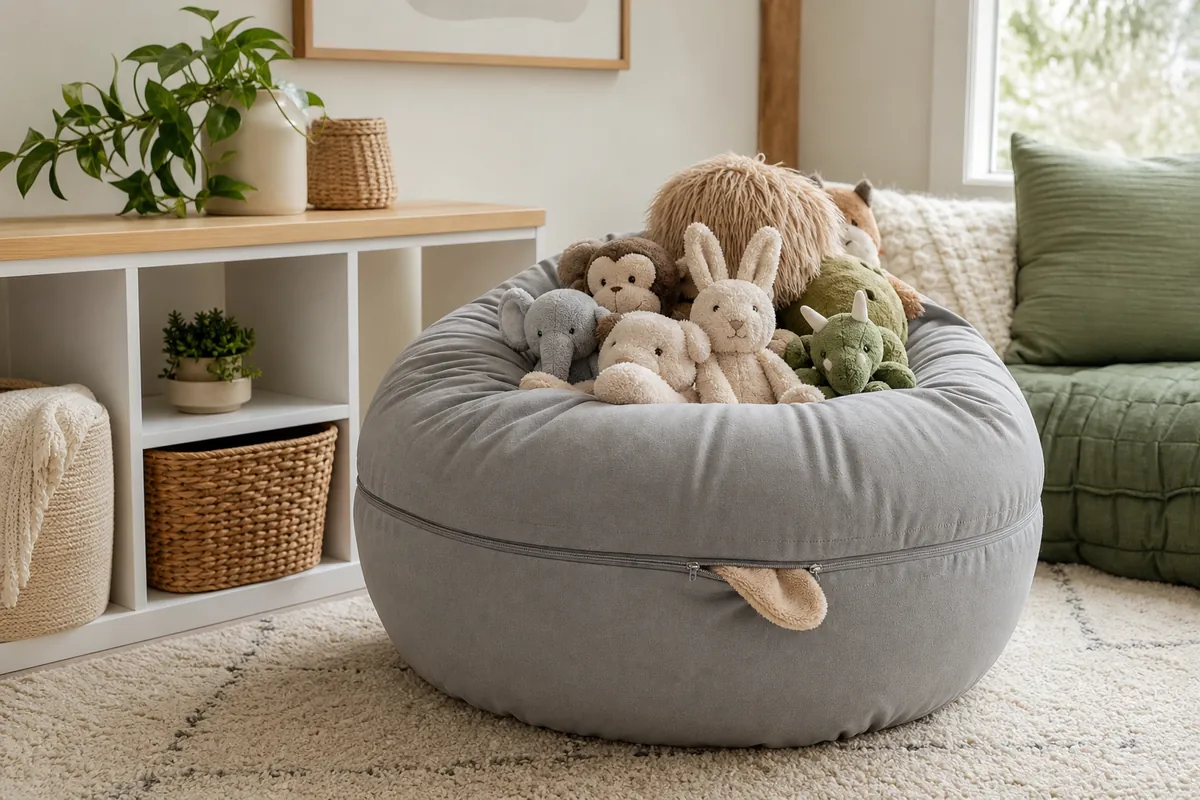
5. A bean bag cover stuffed with plushies
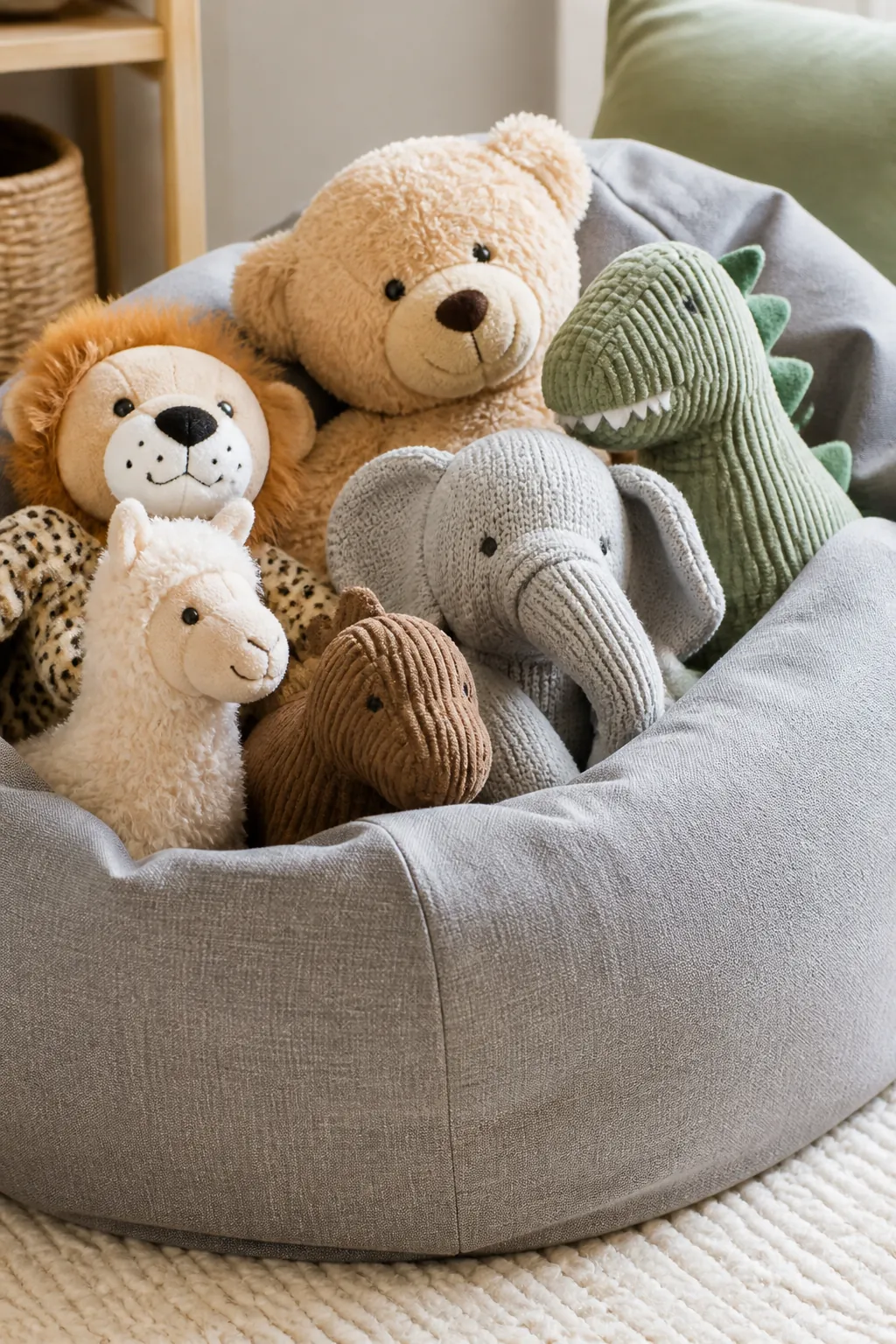
A stuffed animal bean bag chair cover answers the exact problem of too many animals and nowhere to put them. Unzip, cram in the tier-three collection, zip it shut, and the room gains a chair. Nothing gets thrown out and nothing sits on the floor.
Be honest about capacity, though. These want a serious volume of stuffing to feel like a seat instead of a slumped sack, so they shine when you’re drowning in medium and large animals. Thirty tiny ones give you a lumpy beanbag nobody sits on. Look for a sturdy double zipper and a fabric your kid will actually want against their legs, because the appeal dies the moment it feels like sitting on a mesh bag.
One parenting note: keep the favorites out. If the bedtime bunny lives inside the chair, you’re unzipping that chair every night at 7:45.
6. A bench or toy box you already own
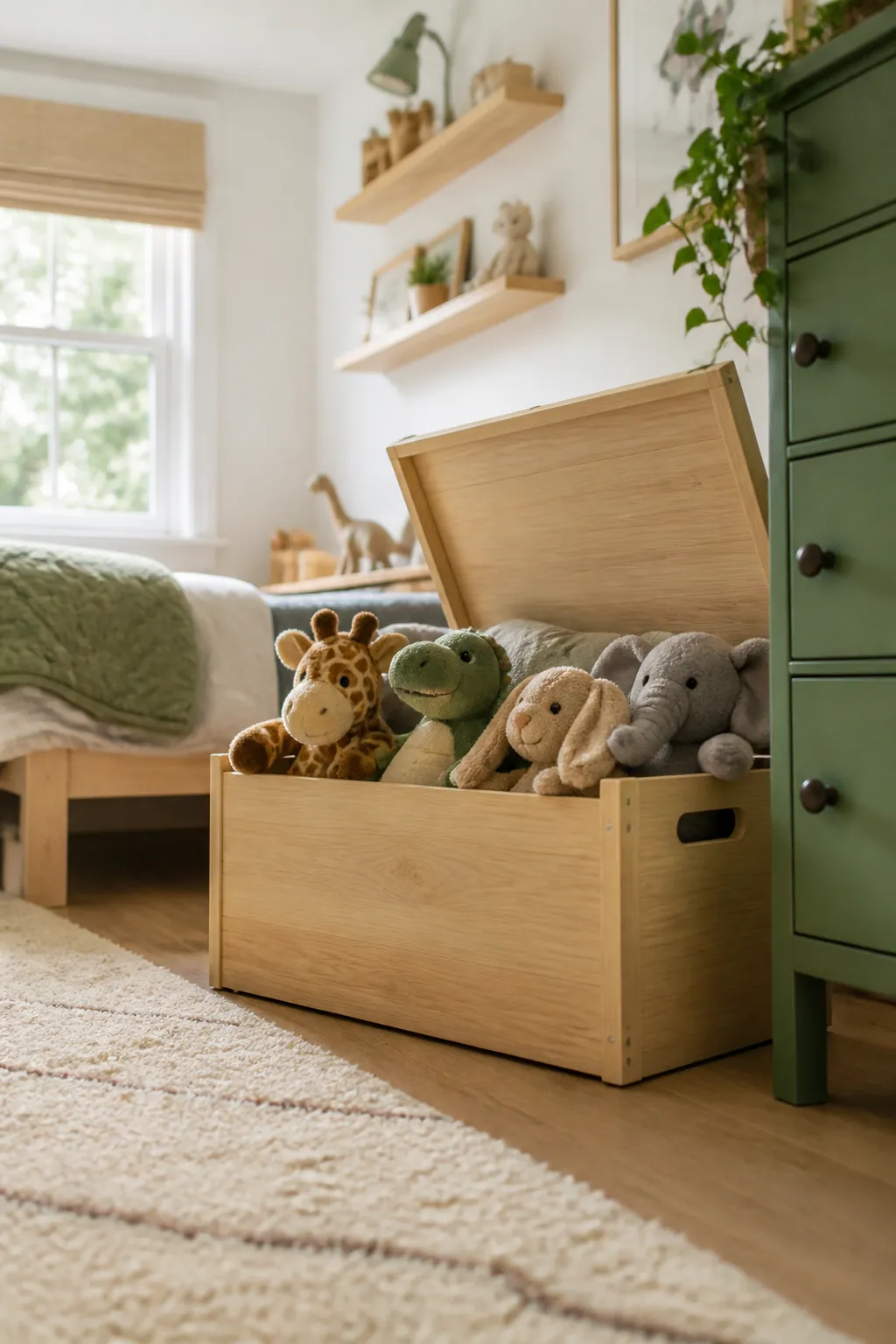
Reassign it rather than buying new. Deep boxes are terrible for small toys, where everything sinks past reach, but they’re fine for plushies since a jumble of soft things stays diggable. Line the inside with a fitted laundry bag and you can lift the whole load out in one motion when you need the bench for seating.
7. Under-bed bins for a seasonal rotation
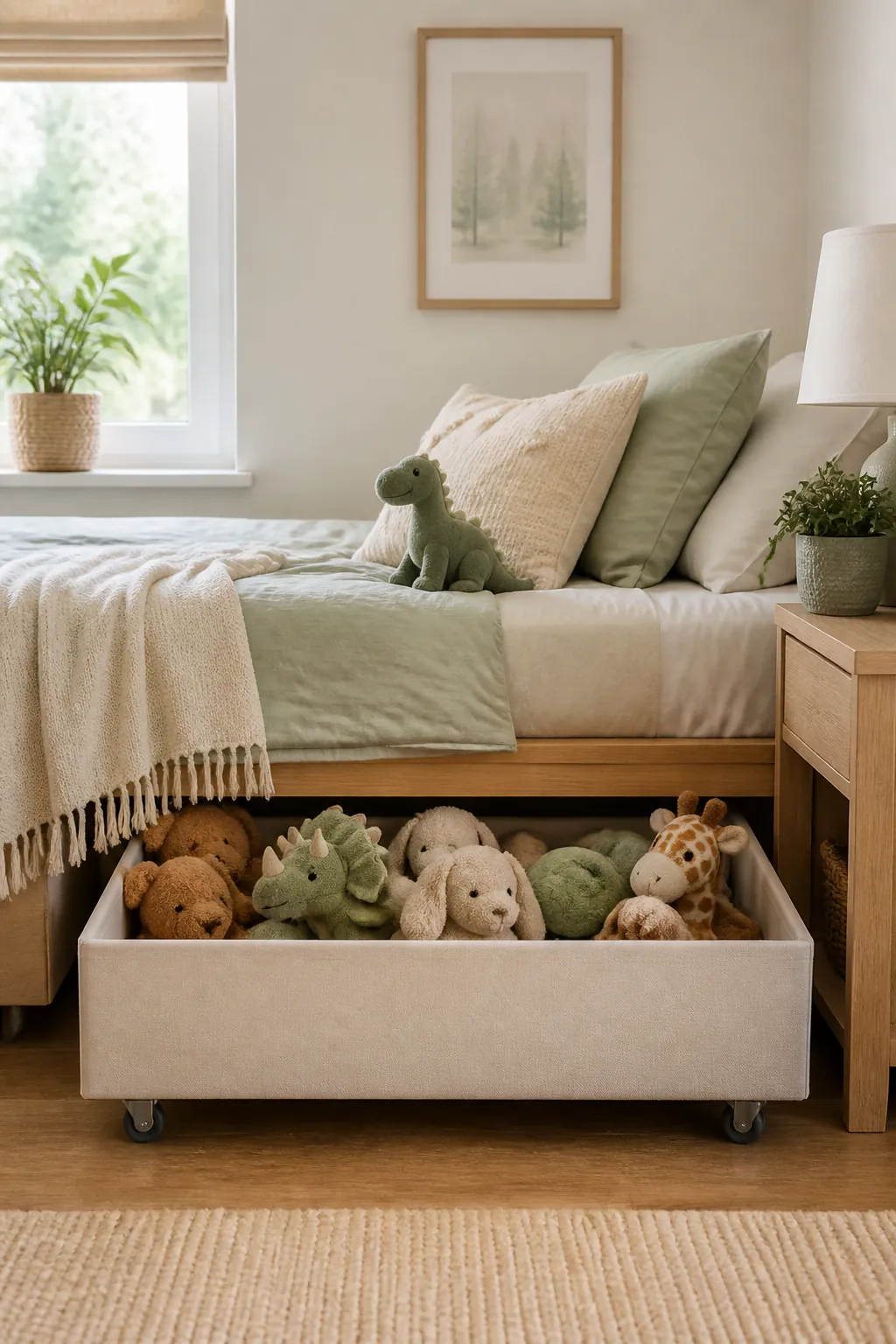
Rotation is the most underrated trick here. Pack half the collection into a low rolling bin, slide it under the bed, swap in three months. Kids greet the old favorites like Christmas morning, and the room lives at half capacity permanently. Label the bin, or you’ll forget it’s there until you move house.
Bins and baskets that don’t turn into black holes
8. Clear stackable bins with lids for overflow
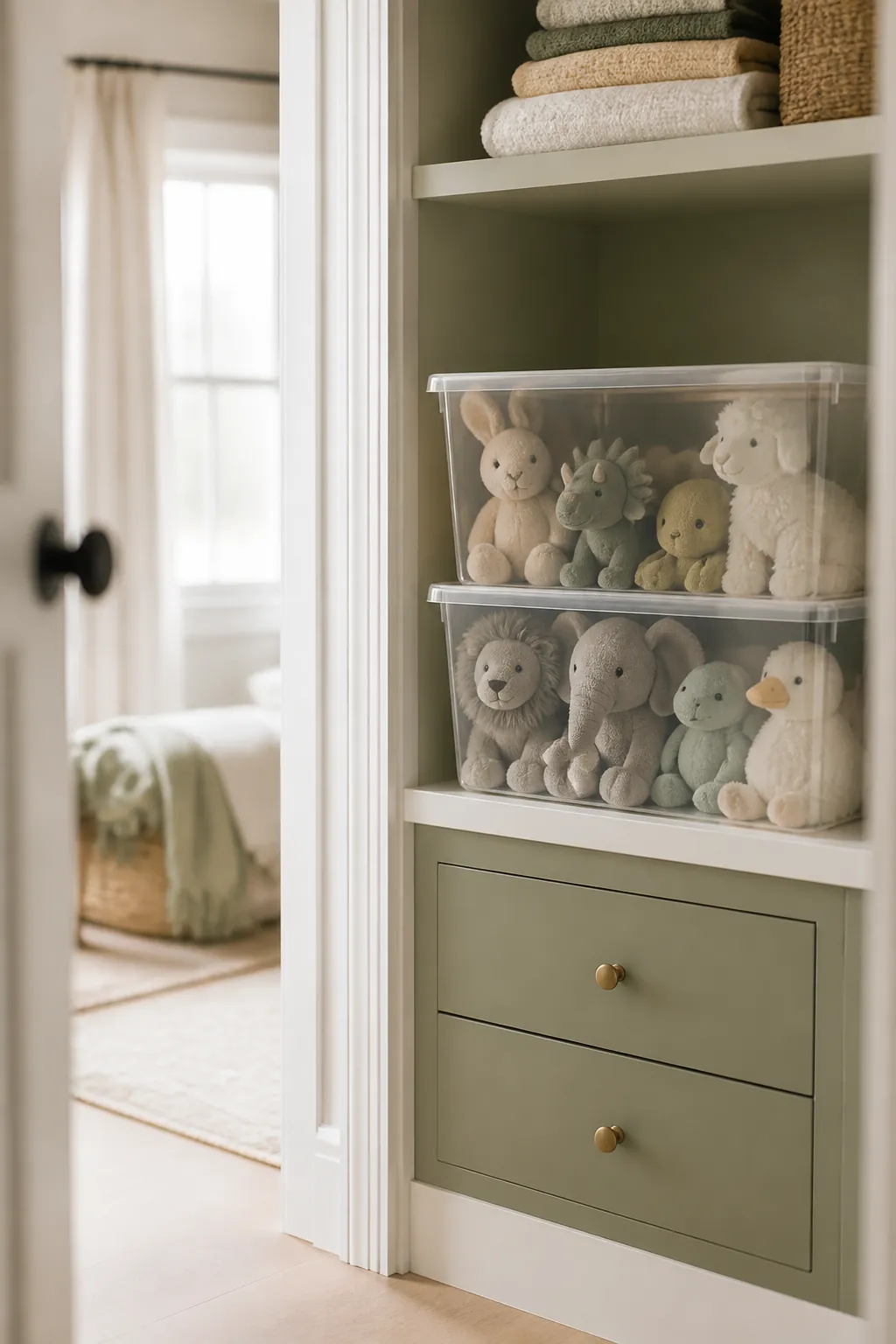
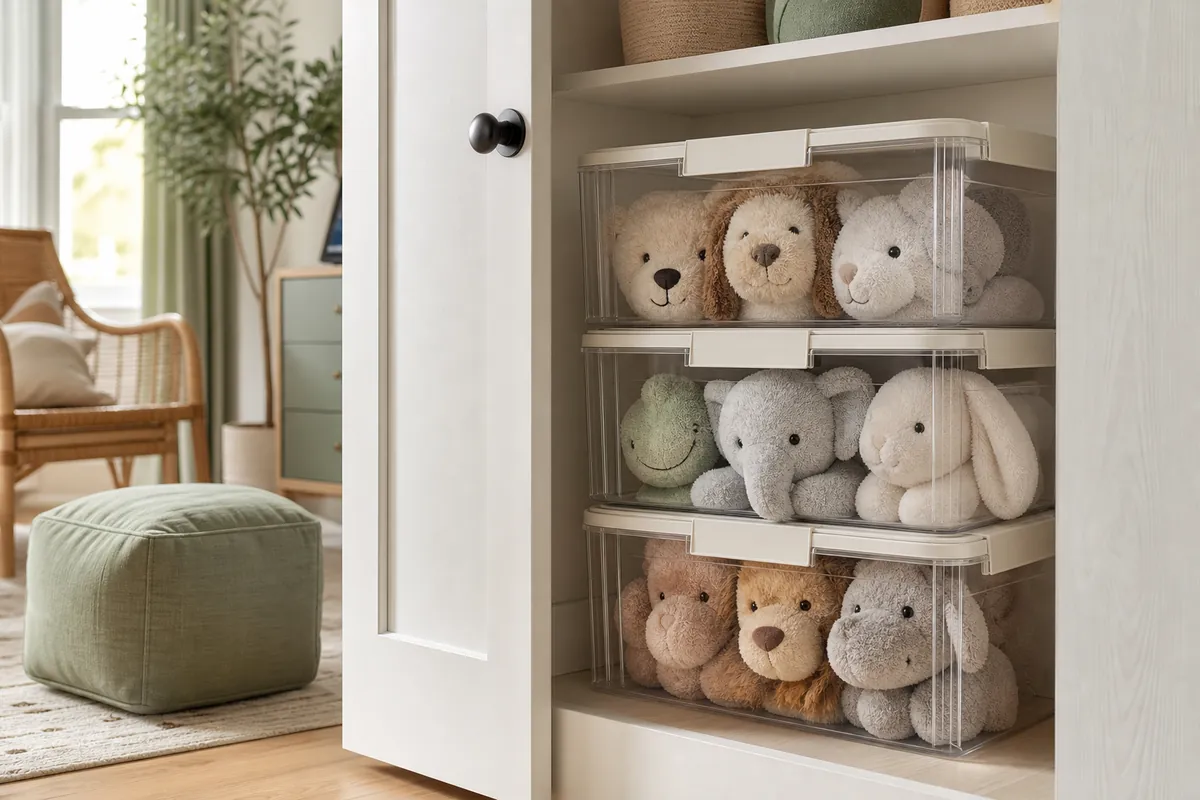
Opaque bins are where plushies go to die. Clear stackable toy bins with lids fix that by turning the contents into the label. A kid spots the dinosaur through the wall of the bin and asks for the dinosaur, instead of emptying three containers hunting for it.
Stack them two or three high in a closet, on the floor of a closet, or along a wall behind a door. Sort by theme rather than size, since dinosaurs-together and bears-together is how kids actually search. Latching lids earn their keep when you’re stacking, because friction-fit lids pop off the second the bottom bin gets yanked. Four medium bins beat two enormous ones too: a huge bin of plushies is bulky and awkward for small arms, even though it weighs almost nothing. If you’re sorting out a nursery closet at the same time, the bin logic in Nursery Organization on a Budget transfers straight over.
9. One open basket at kid height
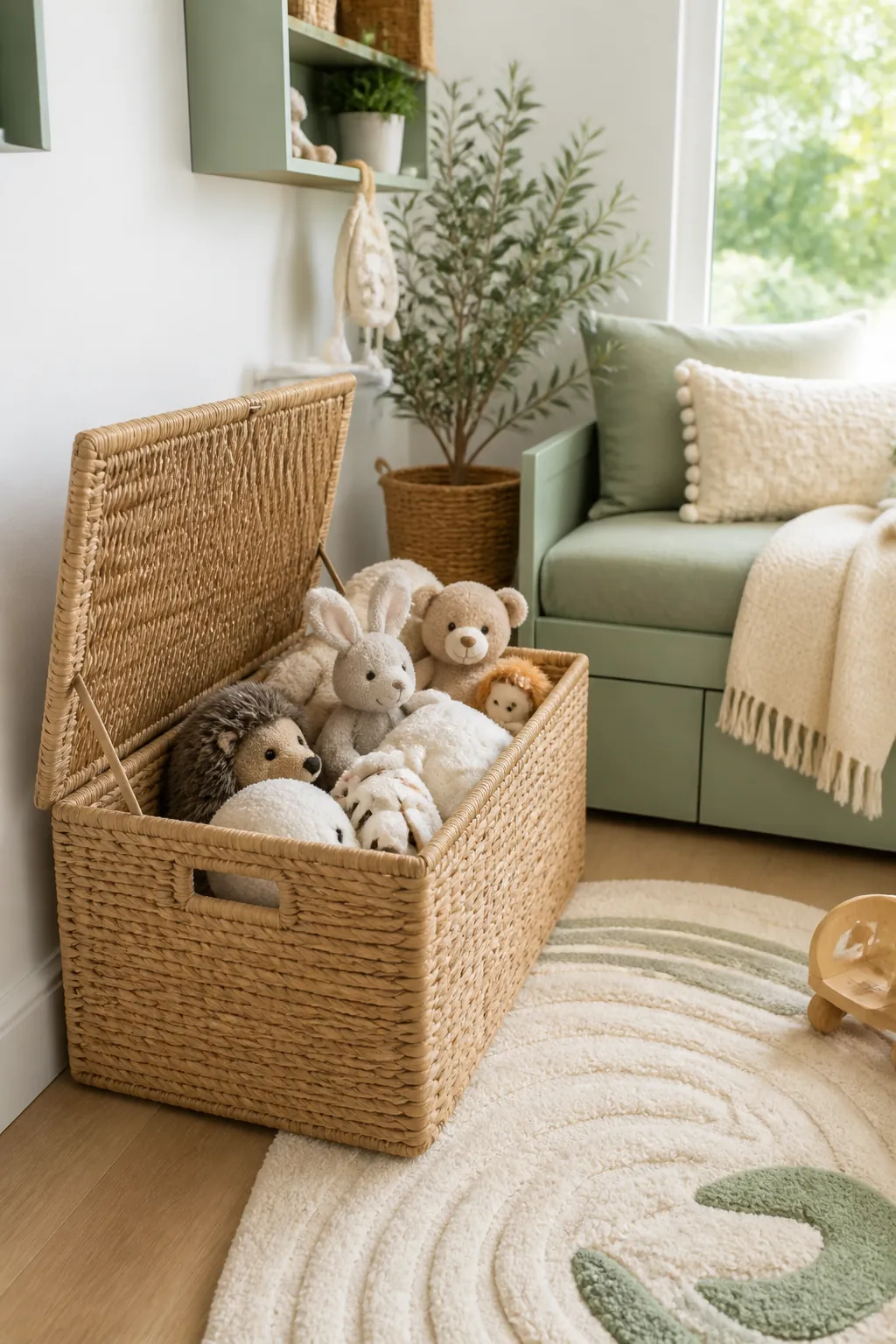
Every room needs exactly one no-lid, no-rules basket a kid can chuck animals into unassisted. Wicker, canvas, fabric, the material is irrelevant. What matters is placement: put it where the plushies already get abandoned, usually beside the bed or by the door, rather than where you wish they’d be abandoned. Cleanup happens when the container sits at the scene of the mess.
10. A hanging shoe organizer, repurposed
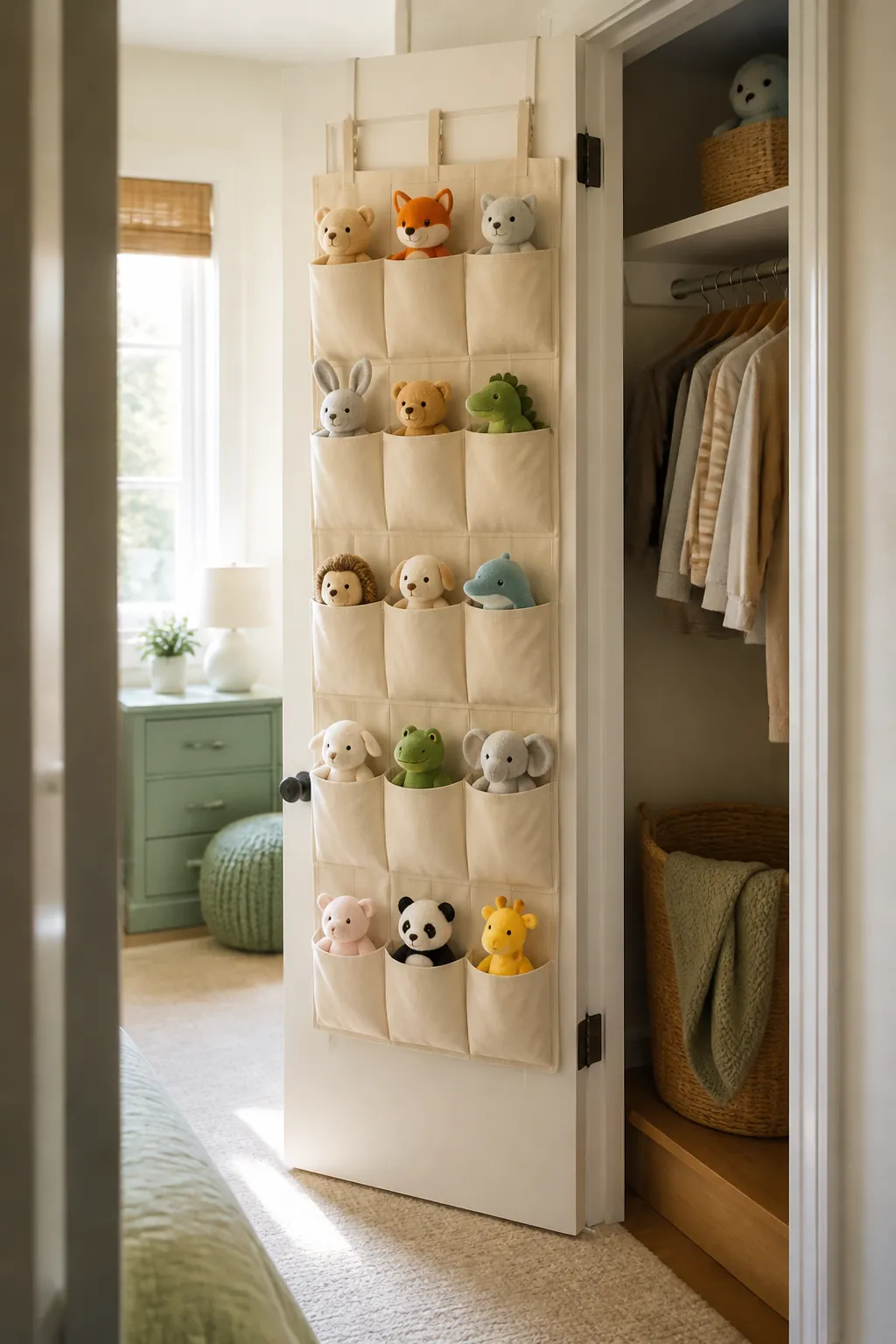
Those fabric shoe pockets fit small and medium plushies perfectly, one or two per pocket, faces out. Hang it inside a closet door or on the back of the bedroom door. Cheapest way I know to get twenty animals visible, reachable, and off the ground for zero floor space.
11. A pillowcase for the bedtime crew
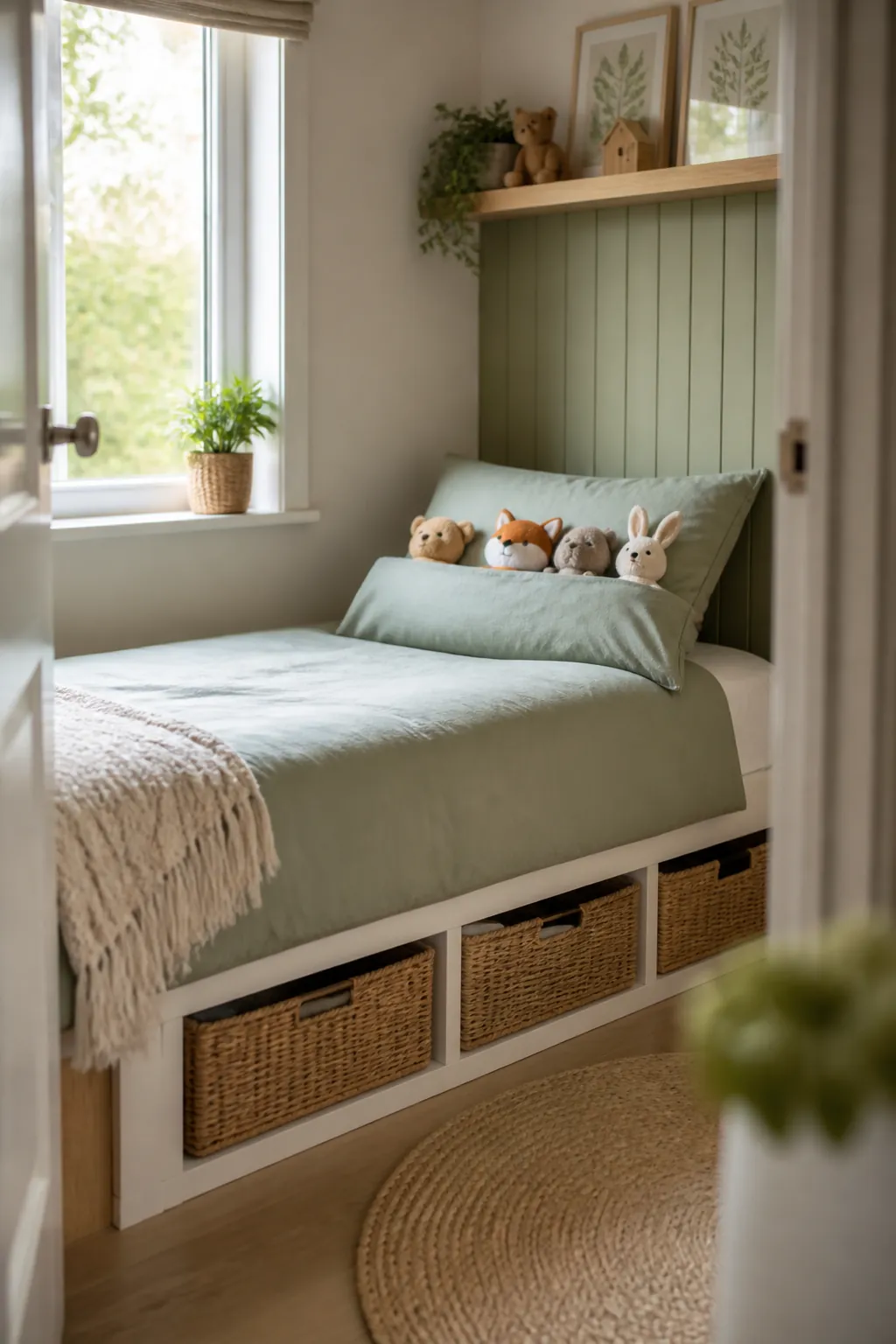
My favorite low-tech move. Tuck the tier-one animals into a pillowcase at the head of the bed. They stay put overnight, they’re instantly reachable, and the bed gets made without evicting five animals onto the rug. A euro-sized case swallows more than you’d guess.
Building blocks are the worst case for a deep bin, since the piece you need is always at the bottom. LEGO and building block storage ideas for a playroom covers the shallow, sorted alternatives.
Rules that keep the floor clear past week one
Storage without a limit just relocates the problem. Pick one boundary and hold it: the hammock is full when nothing new fits, the collection lives in exactly two bins, the bean bag has to zip closed. Physical limits do the arguing so you don’t have to.
Build an exit route as well. Keep a donate bag in the closet and add to it whenever a new animal arrives, which stops the collection from ratcheting up forever. Let your kid pick what goes. Away from pressure, they’re usually more ruthless than the adults.
Then give the reset a time slot. Two minutes before bath, everything soft goes home. If it takes longer than two minutes, either the storage is in the wrong place or there’s simply too much stuff. The same principle governs shared spaces, which I cover in Toy Storage for a Small Living Room and, for bunk beds and two-kid rooms, the shared kids room playbook.
What I’d buy, in what order
Starting from a floor covered in fleece? Buy the corner hammock first. It clears the most volume for the least money and no floor space, and the room looks deliberate within an hour. Second, the bean bag chair cover, but only if you truly have a heap of larger animals to fill it out. Third, clear stackable bins with lids for the closet, where the rotation stock and the sentimental keepsakes wait their turn.
Skip the giant lidded toy chest, and skip anything that asks a child to arrange plushies neatly. The systems that survive are the ones a distracted six-year-old can operate in ten seconds.