Crayons under the couch, a marker cap missing since Tuesday, and a stack of construction paper sliding off the table onto a chair already covered in yesterday’s drawings. Art supplies are the worst clutter in a small playroom because they’re small, loose, and they multiply, one box of 24 crayons becomes 60 loose ones the moment the box gets stepped on. The fix isn’t a bigger bin. It’s giving every category of supply its own spot so a kid can find what they want and put it back without your help.
1. Split supplies into daily-use and special-occasion piles
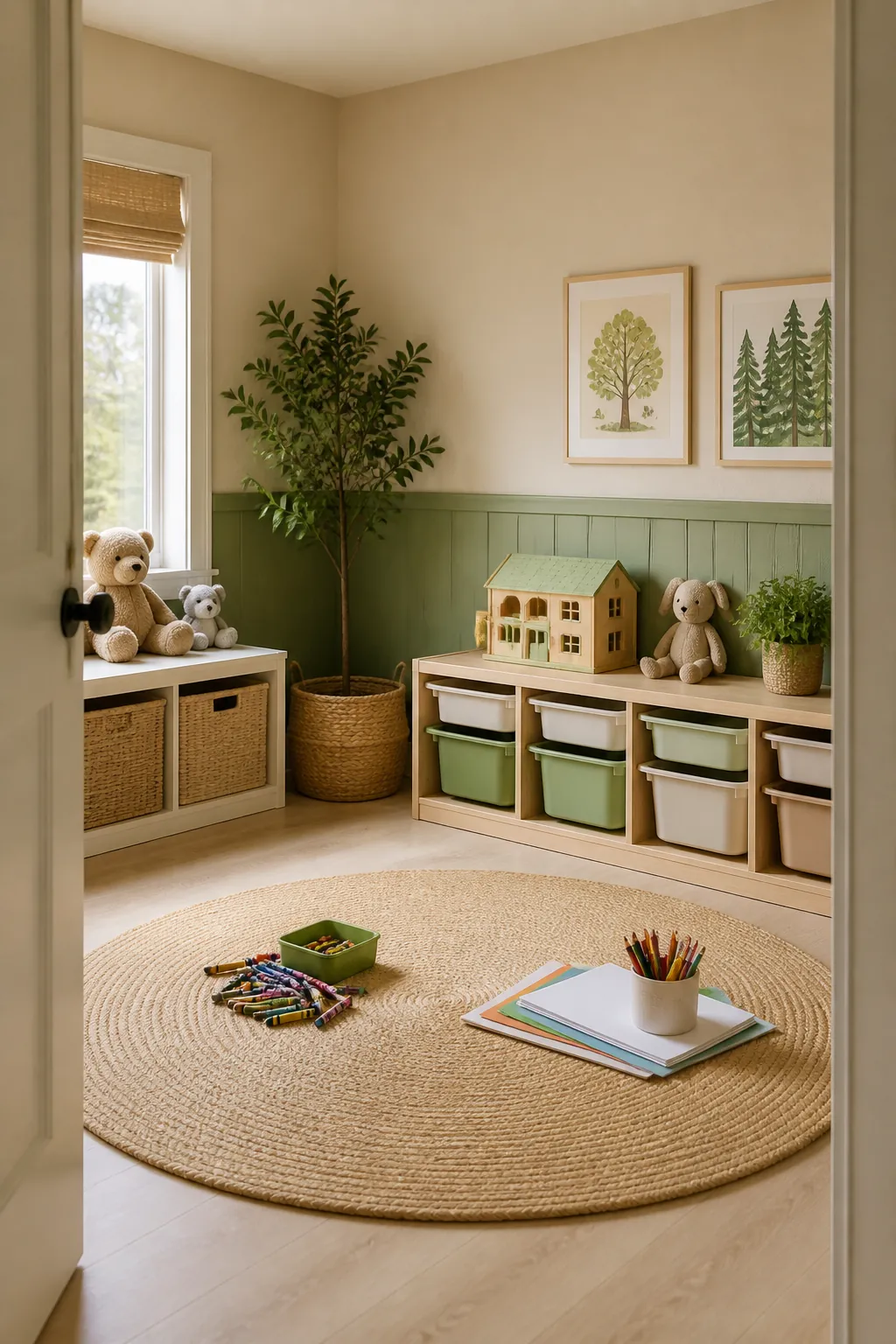
Before you buy anything, pull every art supply in the house into one place and sort it twice. First sort: what gets used most weeks (crayons, paper, washable markers) versus what comes out for a specific project (paint, glitter, glue sticks, the good scissors). Second sort within the daily pile: what your kid can access alone versus what needs you standing there.
This matters because storage that tries to hold both jobs fails at both. A cart easy for a four-year-old to dig through is also easy for them to dig glitter glue out of unsupervised. Daily-use, kid-accessible supplies get open, low storage. Everything messier or sharper gets a shelf they can’t reach without a step stool.
2. Make the rolling cart the daily-use station
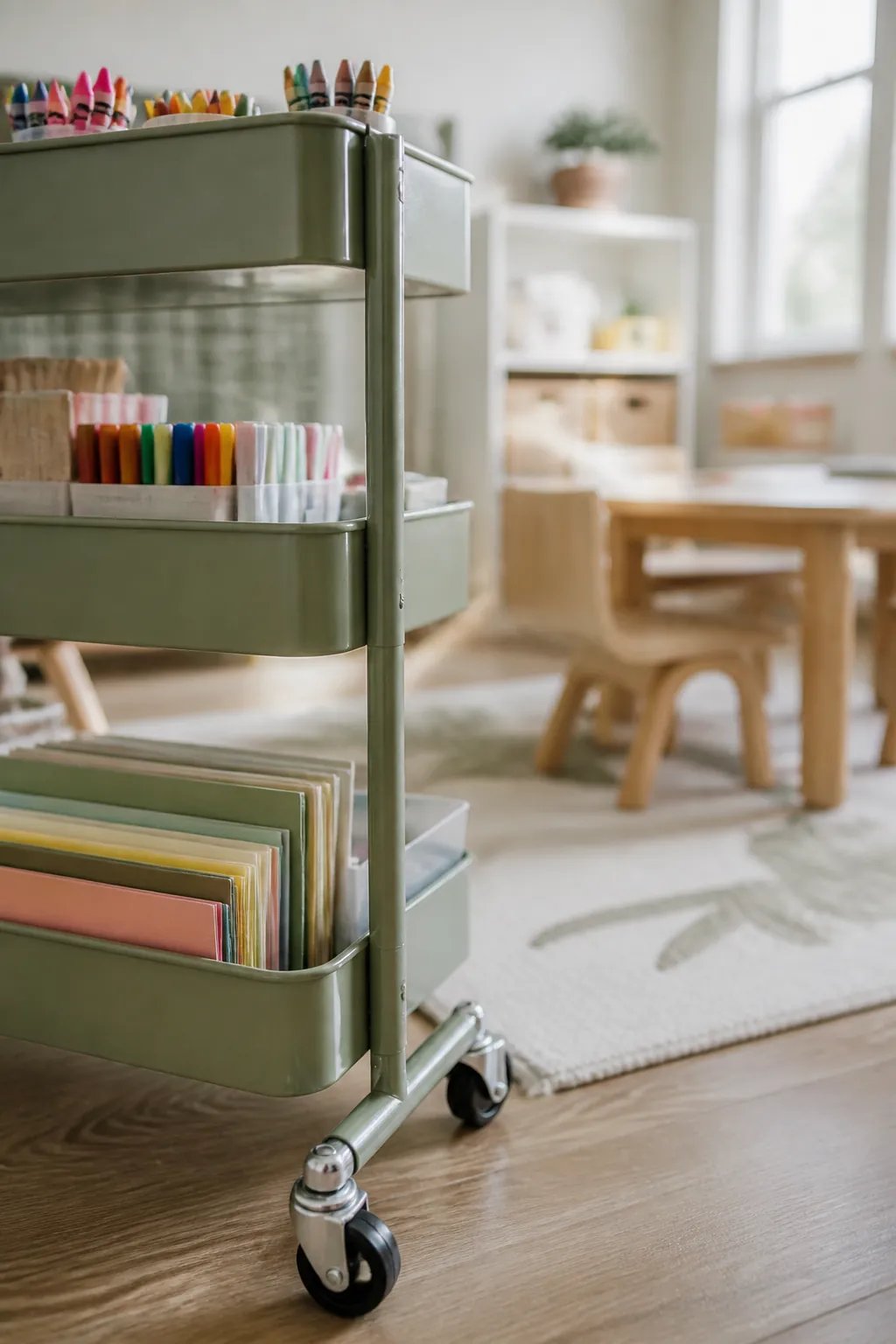
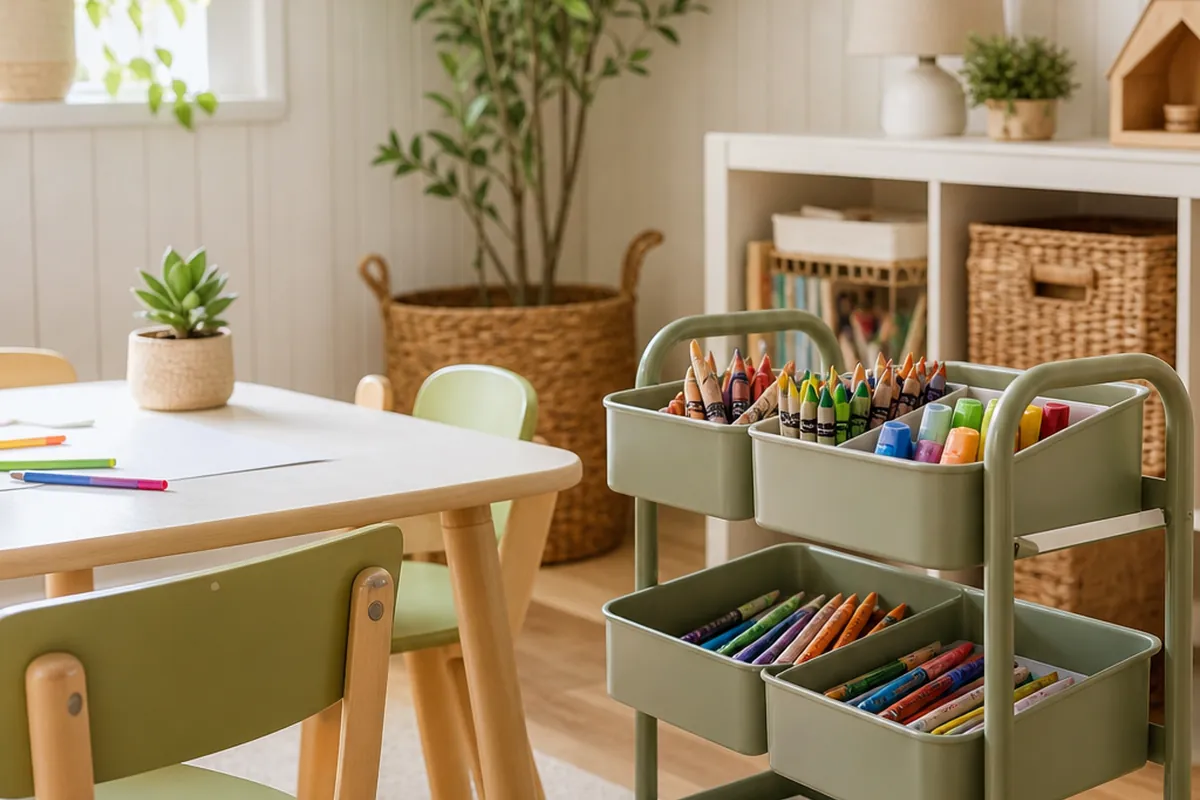
A 3-tier rolling craft cart solves the problem a fixed shelf can’t: small playrooms rarely have a permanent art table, so the storage has to travel to wherever the project is happening. Load the top tier with whatever’s in daily rotation, park it against the wall when it’s not in use, and wheel it to the kitchen table, the floor or a play desk on demand.
Keep the load light on top and heavier bins on the bottom tier. A three-tier cart is narrow and top-heavy by design, and a full bin of paper stacked above two empty ones is how it tips when a kid leans on it. Check the caster locks too; a cart that rolls away mid-project teaches nobody to put anything back.
3. Sort loose crayons and markers by type, not into one bin
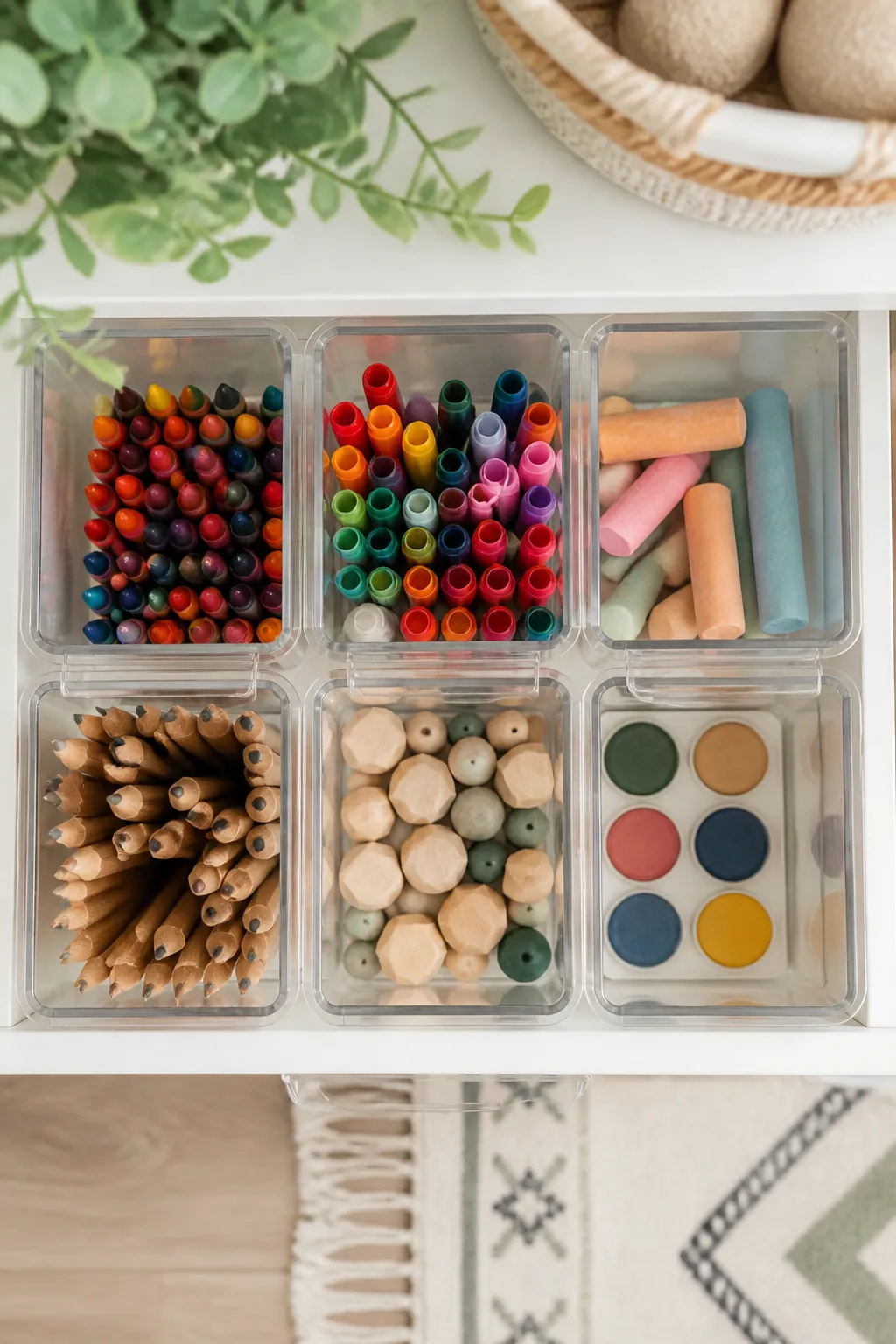
One bin holding crayons, markers, colored pencils and stray stickers together looks tidy for about a day. Then it becomes the bin nobody wants to dig through, because finding the blue marker means dumping all of it onto the floor.
Clear stackable storage bins, one type per bin, fix this without adding a single extra rule for your kid to remember. They can see what’s inside before opening it, so cleanup becomes matching a handful of crayons to the bin that’s already full of crayons. Label the front of each with a word or a picture for pre-readers, and keep the stack at or below your child’s shoulder height, or the top bin becomes something only you can reach.
4. Give paper its own flat, vertical slot
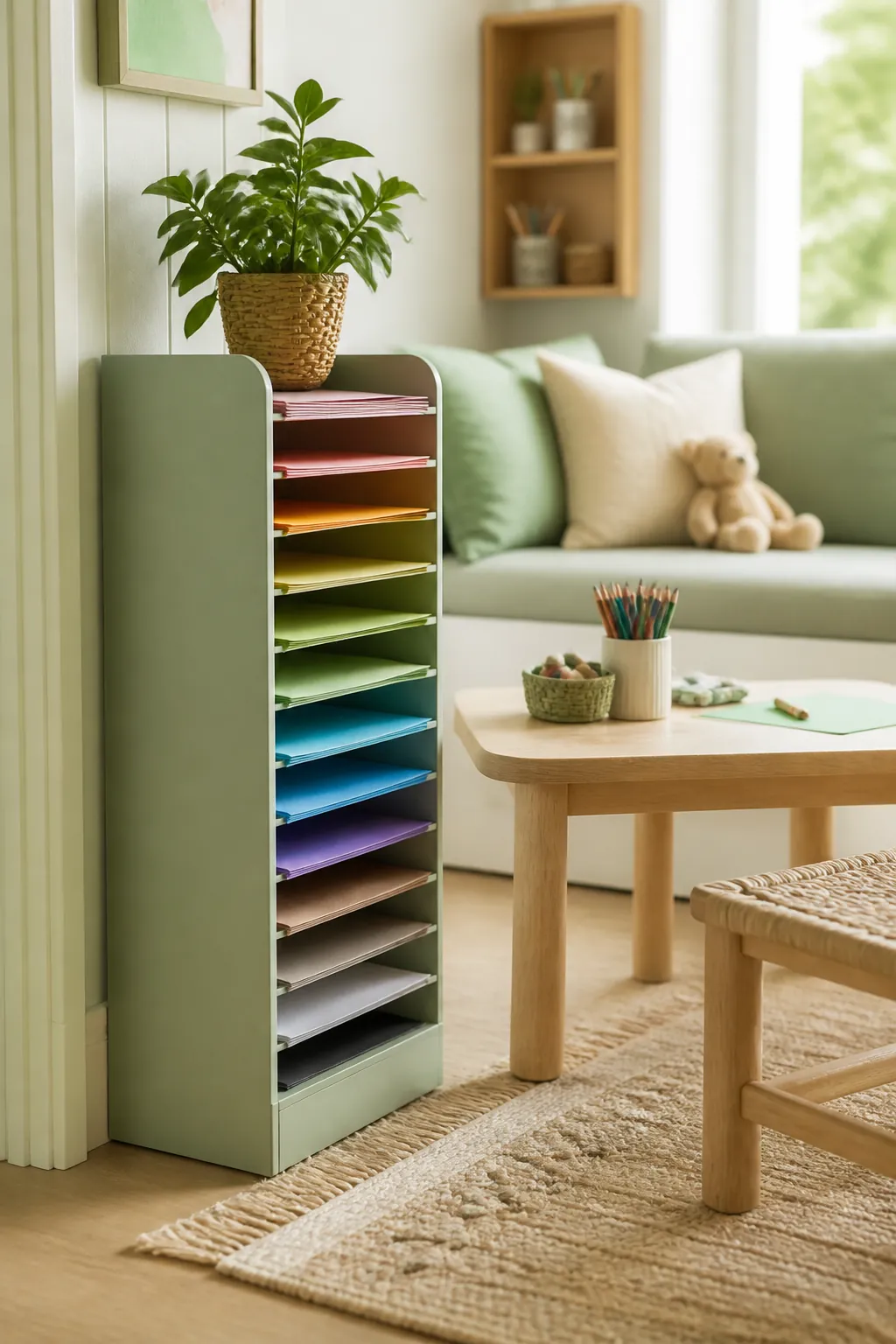
Paper is the supply that suffers most from being stored wrong. Stacked loose in a drawer, it curls at the corners and slides into whatever gap is nearby. The fix is a narrow vertical slot, a magazine file, a slim crate turned on its side, or the gap between a bookshelf and the wall, where sheets stand up like folders instead of lying flat under everything else.
Sort by size rather than by paper type: full sheets in one slot, half sheets and scraps in another. A kid reaching for “a piece of paper” grabs whatever’s in front regardless of size, so keeping the sizes apart is what actually saves you from a nine-year-old drawing a tiny doodle on an expensive full sheet because it was the one within reach.
5. Claim wall space above the table for markers and scissors
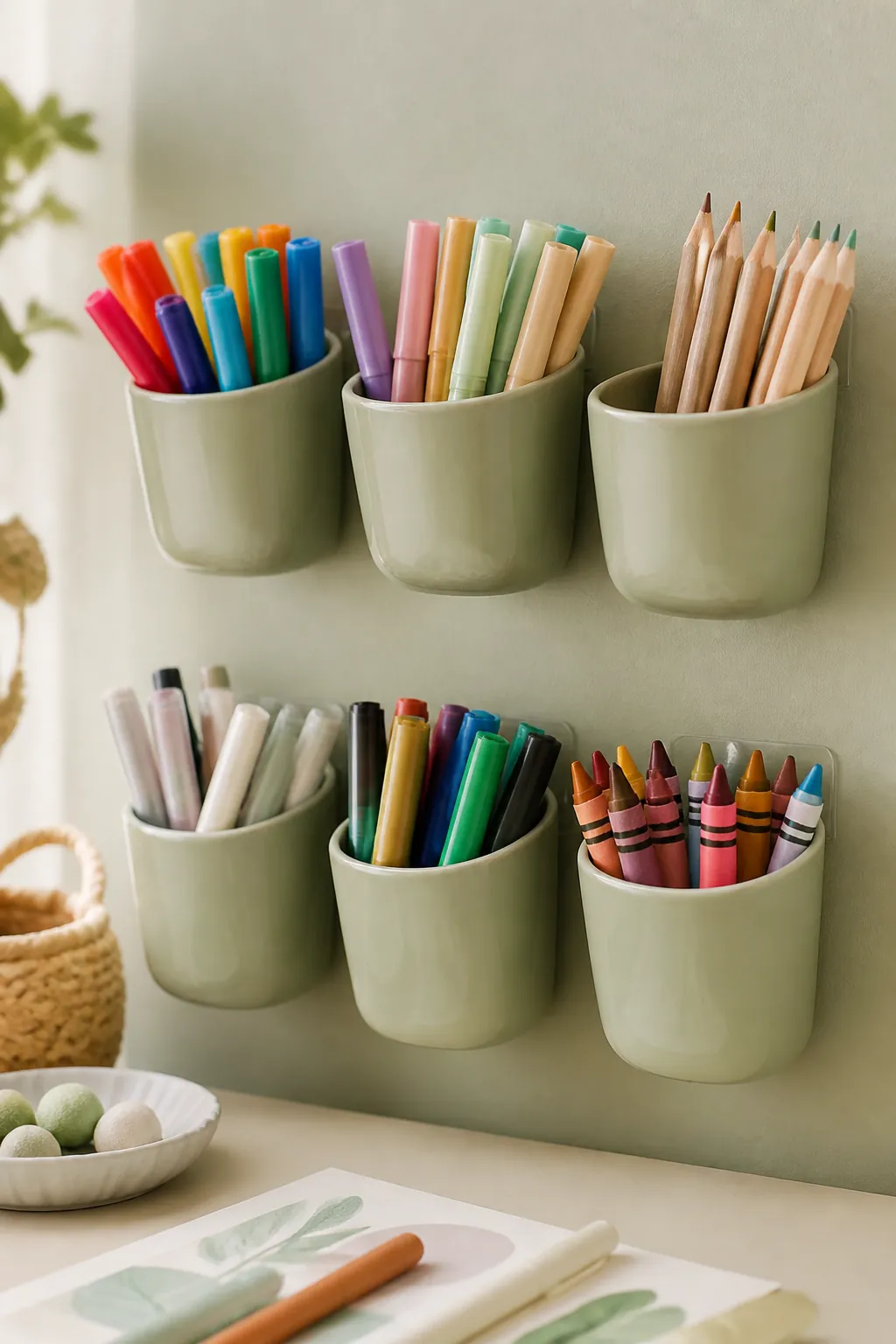
The wall directly above wherever your kid actually sits to draw is dead space in most playrooms, and it’s the shortest possible reach for the tools used every session. A cluster of adhesive wall storage cups holds pencils, safety scissors and a handful of markers upright, visible, and off the tabletop entirely, with no drilling and nothing left behind at move-out.
Mount the cups at a height your kid can reach without standing on the chair, roughly as high as their raised arm reaches while sitting. Test the adhesive on your actual wall surface first; textured paint and some rental-grade eggshell finishes hold weight less reliably than a smooth painted wall, so start with the lightest cup and add more once the first one has held for a few days.
6. Keep glitter and paint sealed and out of reach
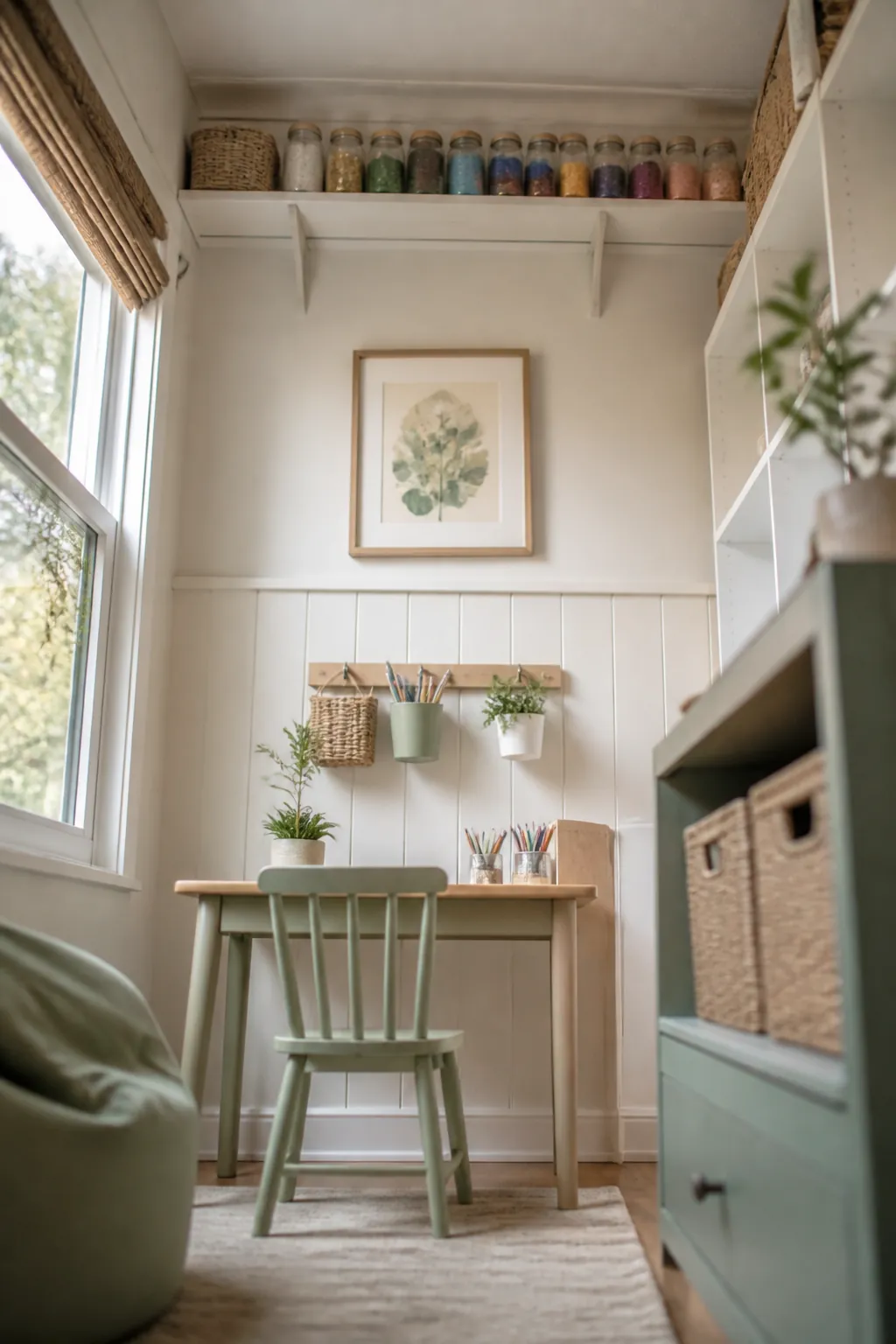
Glitter, paint and glue are the supplies that need a genuinely different storage rule than everything else on this list. They’re the messiest to clean up and, for the smallest kids, sometimes a choking risk in the case of pompoms and small beads. Put them in a bin with a snap lid, not the open bins from step three, and place that bin on a shelf your child needs help to reach.
The failure mode here isn’t losing the glitter. It’s a toddler finding an open jar on a low shelf during five unsupervised minutes, and glitter turns up in carpet fibers for months afterward. Bring the messy bin down only to supervise a project, then put it straight back rather than leaving it out “for next time.”
7. Set a one-project, one-bin rule at the table
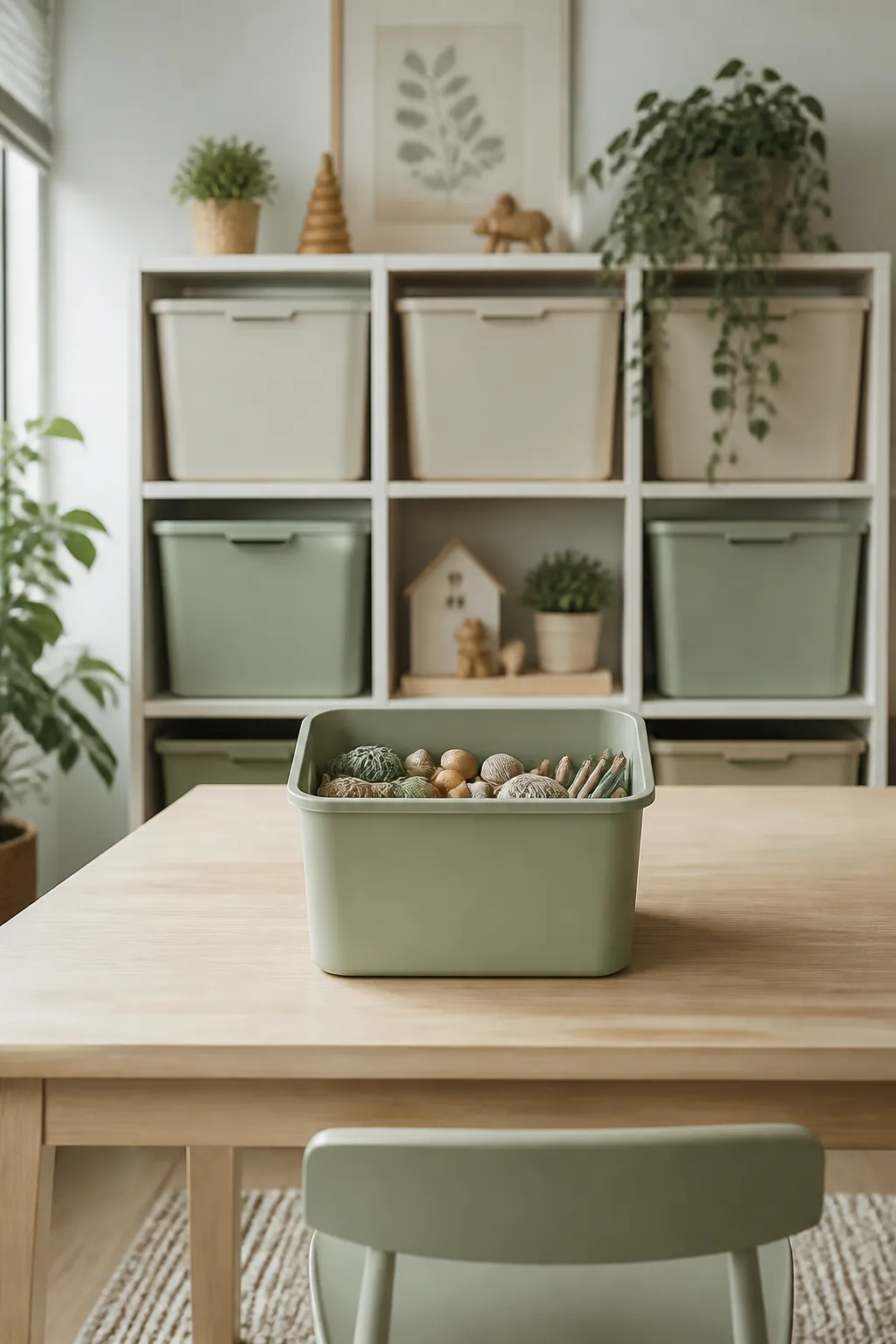
However good the storage system, a table covered in every supply at once looks the same as no system at all. Before a project starts, pick one bin, whichever matches what’s being made, and put everything else back on the shelf or cart first. Working from one open bin instead of a table covered in loose supplies means cleanup is closing one lid, not sorting a pile back into six different homes.
It’s also the rule that teaches kids to put things away as they go, since closed bins aren’t underfoot to trip over or knock a cup of water onto. It’s a habit, not a piece of furniture, and it costs nothing to start tonight.
8. Store finished art before it becomes a pile
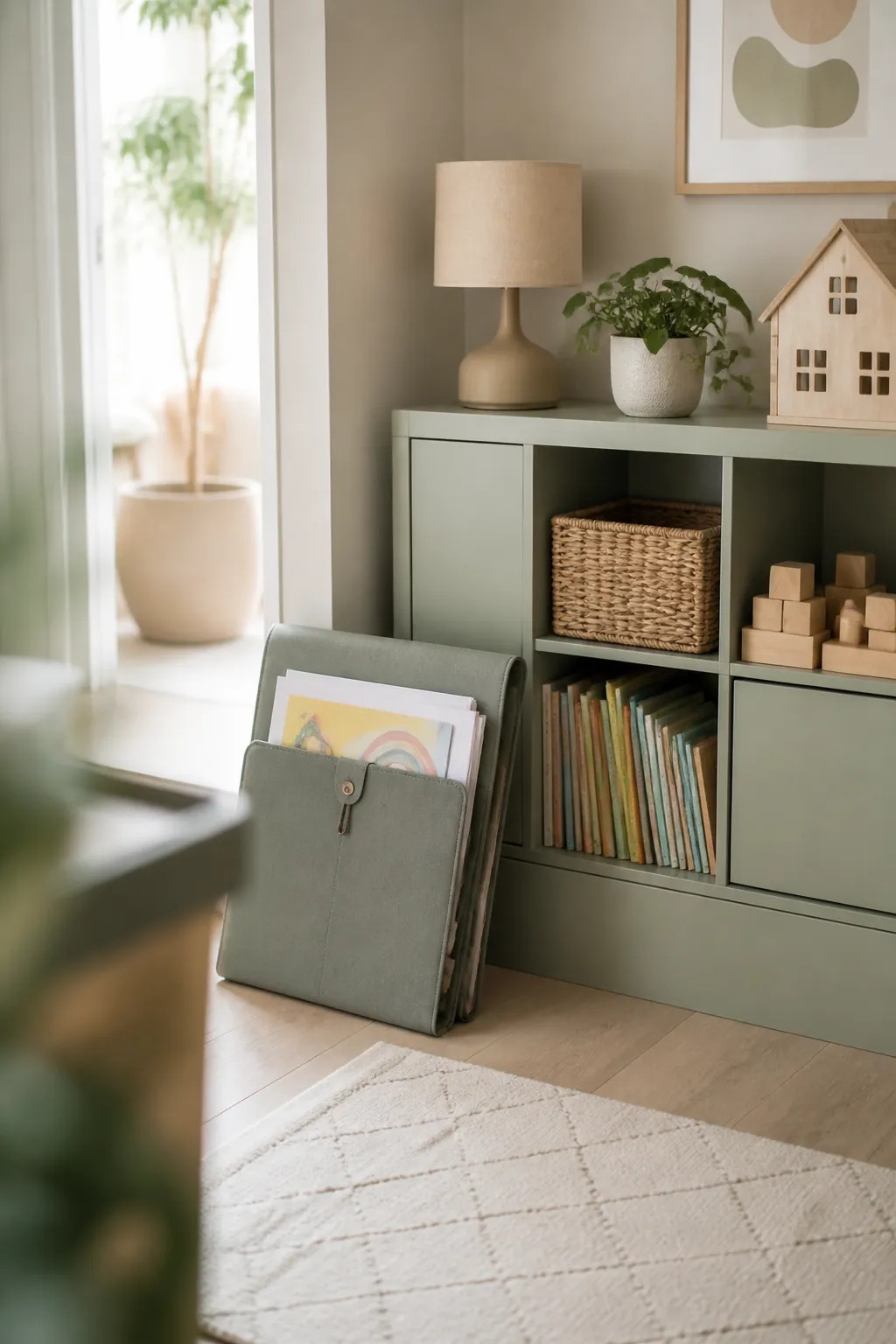
Every finished drawing becomes clutter the moment it’s set down “to deal with later.” A flat portfolio folder or a large clip mounted low on the wall gives a project a home the instant it’s done, before it has a chance to end up on the floor or under the couch.
Cap what stays out at a small number, six to ten pieces on rotation, and swap in new work as it’s made. Anything beyond that gets photographed and recycled, or filed flat in a portfolio kept elsewhere. A pile of paper that grows every week eventually eats the same floor space everything else on this list was meant to protect.
9. Use the space under the table for oversized paper and mats
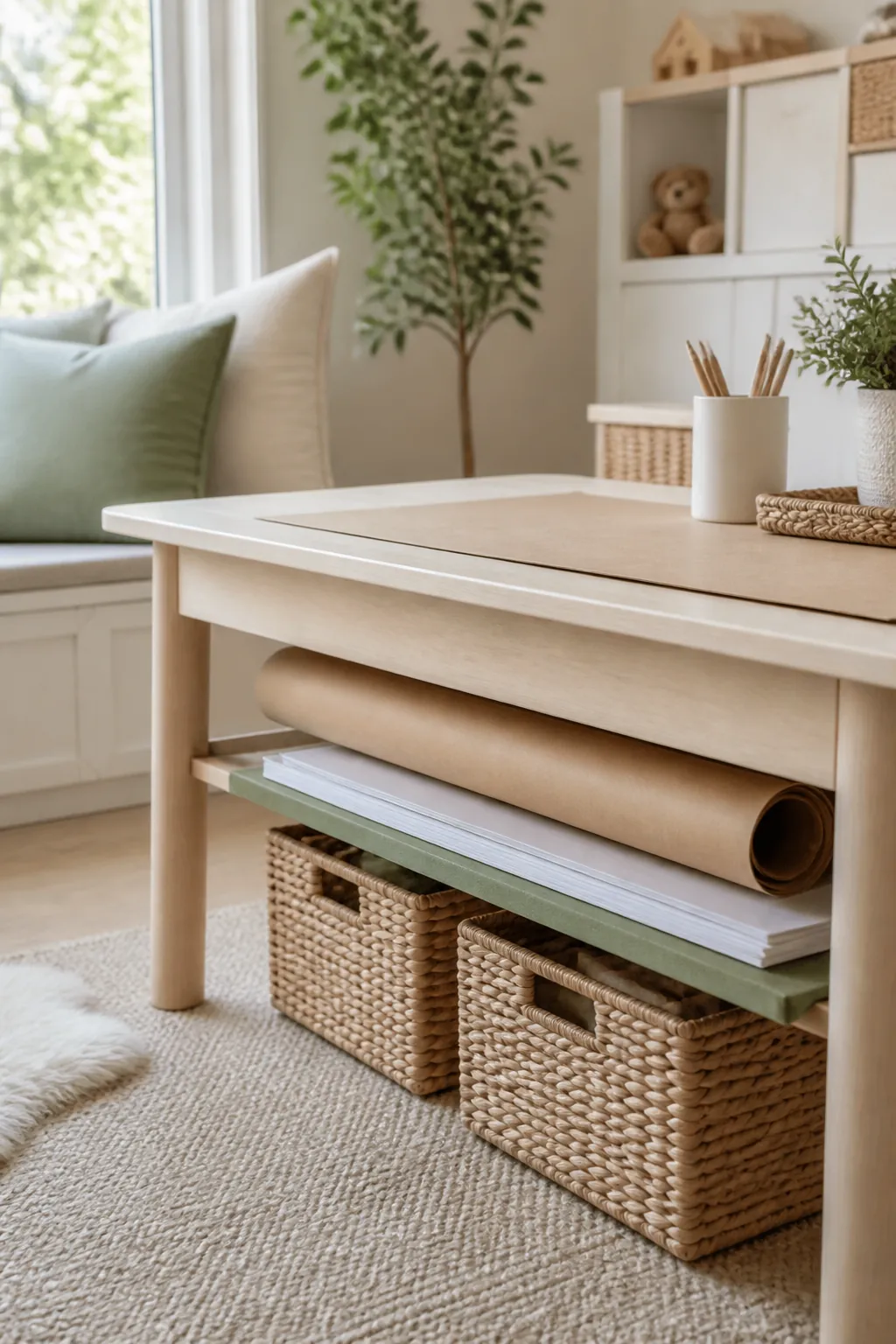
A roll of butcher paper or a full-size poster board doesn’t fit any bin on this list, and forcing it into one just bends the corners. The gap under a low kids table, or the last few inches of clearance under a bed, holds a flat under-bed tray sized for exactly that.
A wall-mounted paper roll holder is worth considering if your kid works with roll paper regularly, though check the hardware before buying: it needs a stud or a load-rated anchor to hold a full roll’s weight, not something a rental wall should take on lightly. If drilling is off the table, flat storage under furniture does the same job without touching the wall.
10. Build in a purge rule tied to the school calendar
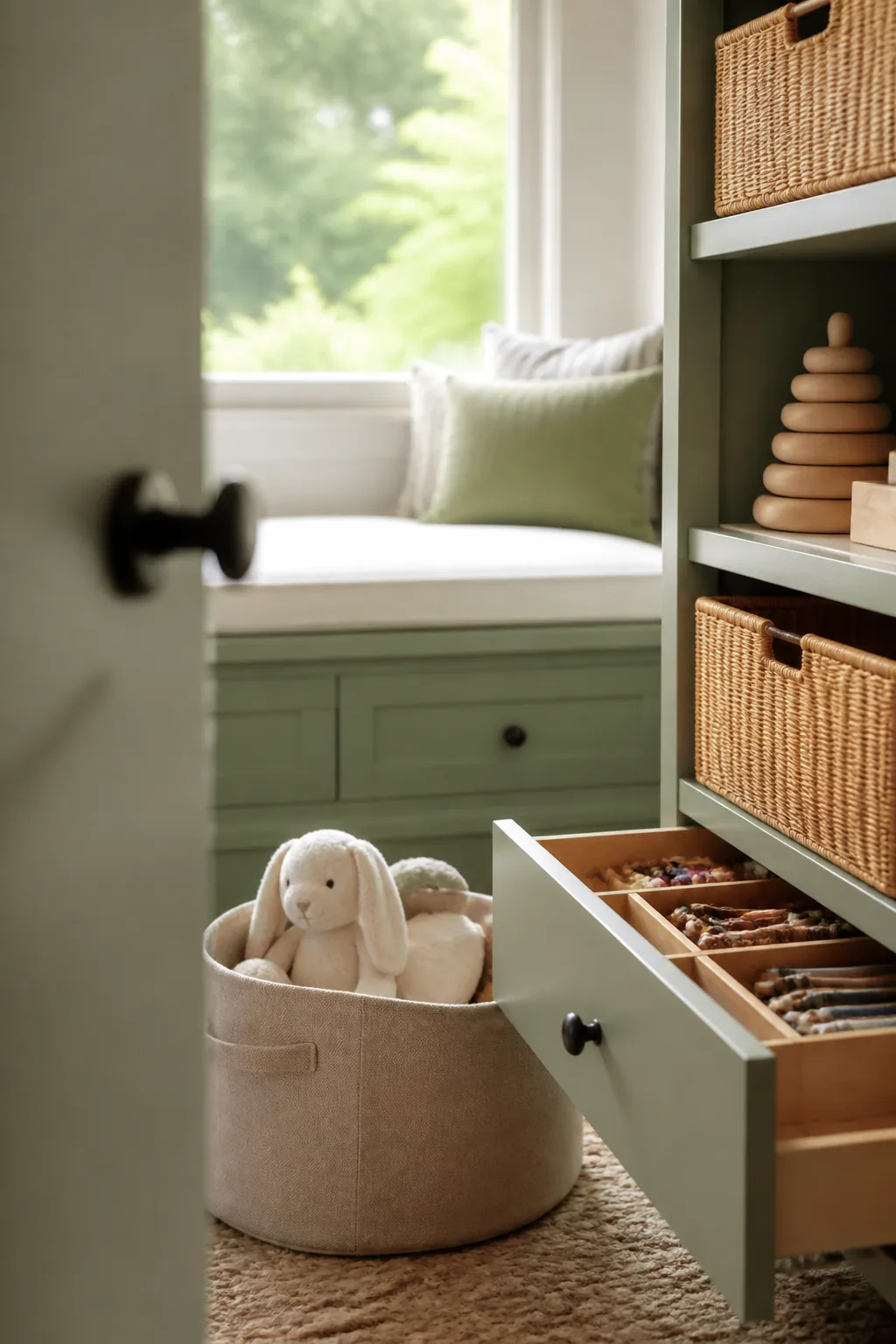
Art supplies arrive constantly, from school, from birthday goodie bags, from a well-meaning relative. Without an exit point, every bin on this list eventually overflows regardless of how well it was sorted.
Tie a purge to something that already happens on a schedule: the start of each school term, or the end of each season. Broken crayons, dried-out markers and paper scraps too small to draw on go straight in the recycling. Anything with life left gets donated instead of added to a bin that’s already full. The goal isn’t a bare shelf, it’s a system that stays the size it started at.
Where to start
Sort what you already have into daily-use and special-occasion first, since that single decision determines almost everything else on this list. Put the daily pile on a rolling cart with clear bins sorted by supply type, mount a few wall cups above the table for the tools used every session, and move the messy stuff to a lidded bin your kid can’t reach alone.
None of this needs a dedicated art room. It needs each type of supply to have exactly one home, low enough for a kid to use without help and clear enough that putting things away is as easy as pulling them out.