The wall behind your bed is barely earning its keep. It props up a pillow, maybe holds a picture frame, while the rest of the room fights over one nightstand and a closet that quit years ago. Headboard storage in a small bedroom drags real function into vertical space you’re already paying rent on, and almost none of it requires a saw, a contractor, or a conversation with your landlord.
Nine options follow, ranked loosely by how much they give you against what they cost you in floor space, drill holes, or headroom. A couple are semi-permanent installs. The rest come down in ten seconds on move-out day.
1. Swap the flat panel for a bookcase headboard
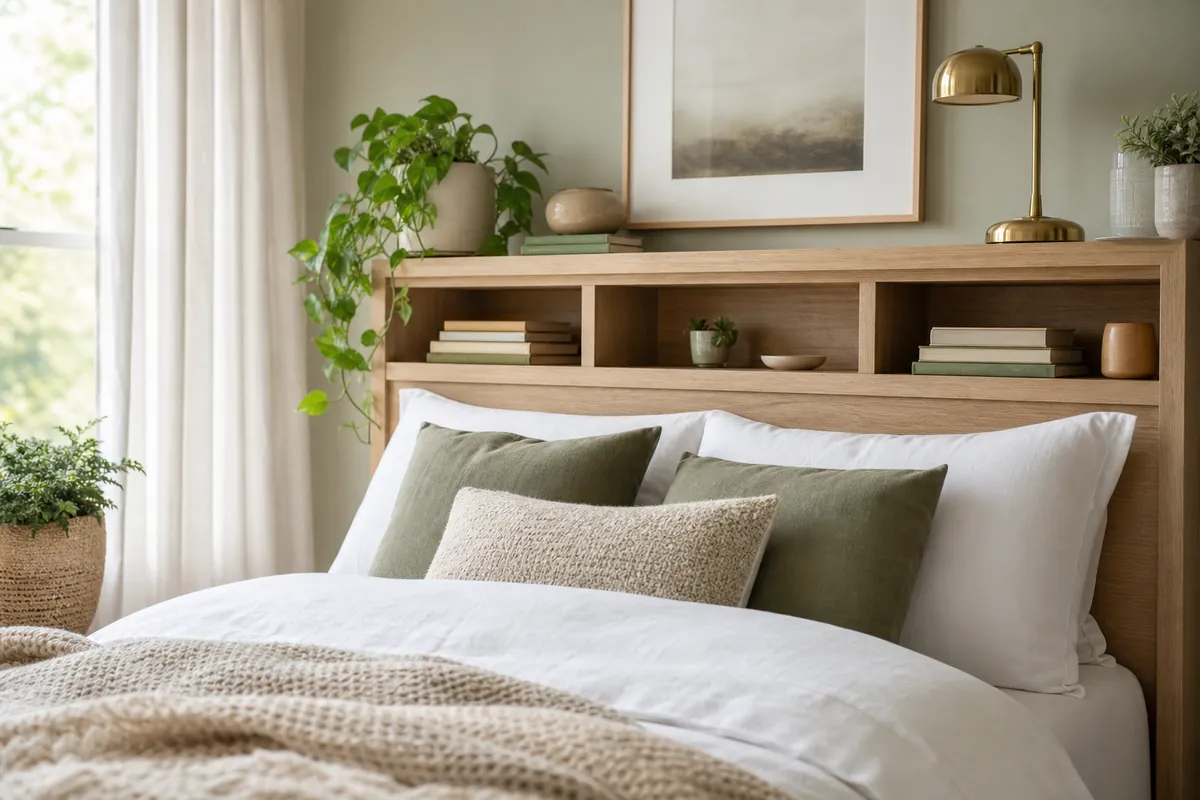
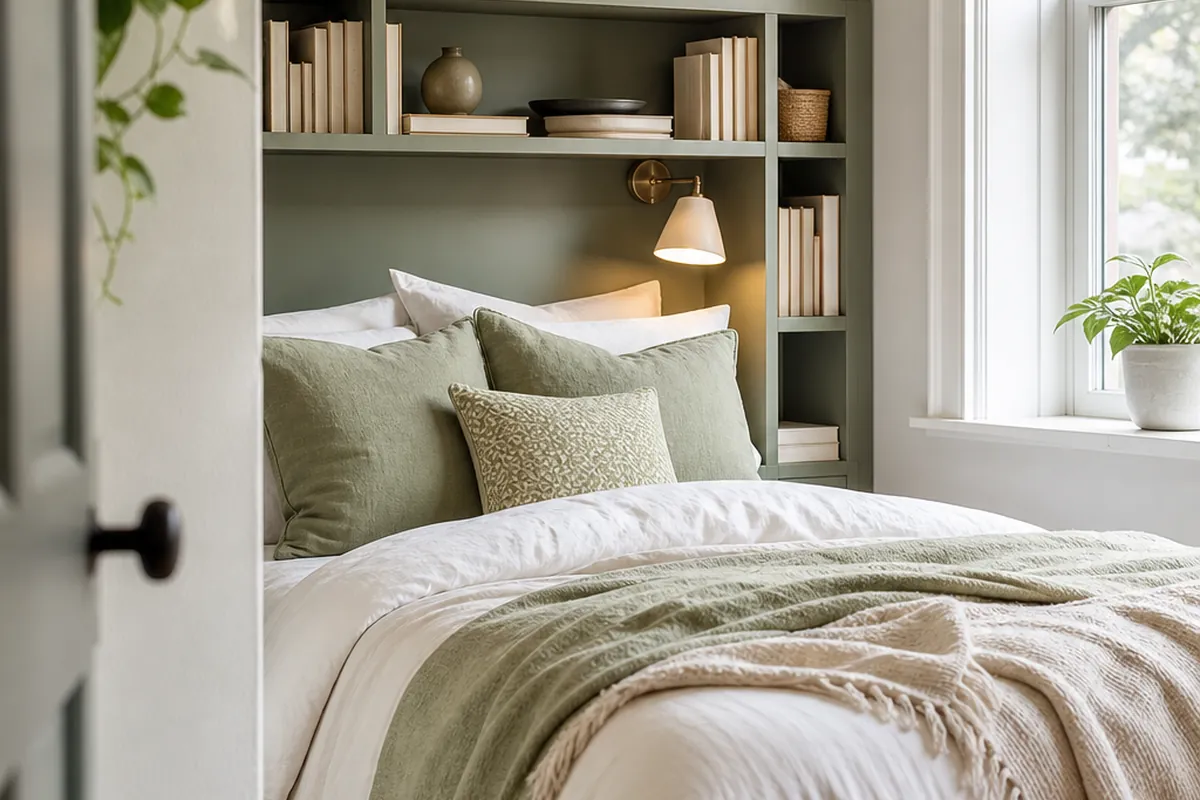
If you do exactly one thing from this list, do this. A bookcase storage headboard replaces the padded or slatted panel behind your pillows with open shelves and cubbies, so the bed’s footprint grows by roughly eight to twelve inches while your storage jumps by a full piece of furniture. In a room where a nightstand and a dresser can’t both fit, that’s a trade worth making.
What you put in it decides whether it works. The lower cubbies, the ones sitting near mattress height, should carry nightstand duty: book, glasses, charger, a water glass on a small tray so it can’t tip into the bedding. Reserve the upper shelves for weekly things instead of nightly ones, like spare paperbacks, a compact speaker, or a folded stack of pajamas.
One genuine drawback: sit up quickly and you’ll find the edge of a shelf with your head. Hunt for a version with a recessed or padded center panel, or park two flat pillows against the shelving as a permanent buffer. Check your bed frame too, because plenty of platform frames ship without headboard bolt holes, in which case you want a freestanding style that stands on its own legs and gets strapped to the wall.
Center it, don’t wedge it into a corner
A bookcase headboard reads as deliberate furniture when it’s centered on a wall and reads as a mistake when it’s jammed up against a closet door. If the bed has to live in a corner, turn the unit so its open side faces into the room and give the wall-side cubbies over to long-term storage you rarely reach for.
2. The cheapest headboard storage in a small bedroom: bedside pockets
A bedside pocket organizer costs less than a takeout dinner and solves the most irritating problem in a tight bedroom, which is the pile of small objects living on your mattress because they have nowhere else to go. The panel slides between the mattress and the base, or hooks over a headboard rail, and the pockets hang down within arm’s reach.
The layout worth buying has one deep pocket and two or three shallow ones. Deep pocket takes a tablet or a hardback. Shallow pockets swallow the remote, phone, lip balm, and the charging cable threaded up from the outlet. Realistically you’re storing a few pounds of small things, which sounds trivial right up until you notice it’s the exact few pounds currently sliding around your duvet.
Sleeping with a partner? Buy two and hang one per side, because fighting over a single caddy cancels out the benefit. Where there’s no nightstand at all, this pairs well with the other nightstand alternatives for a small bedroom that keep the floor clear.
3. Run one floating shelf above the bed instead of a headboard
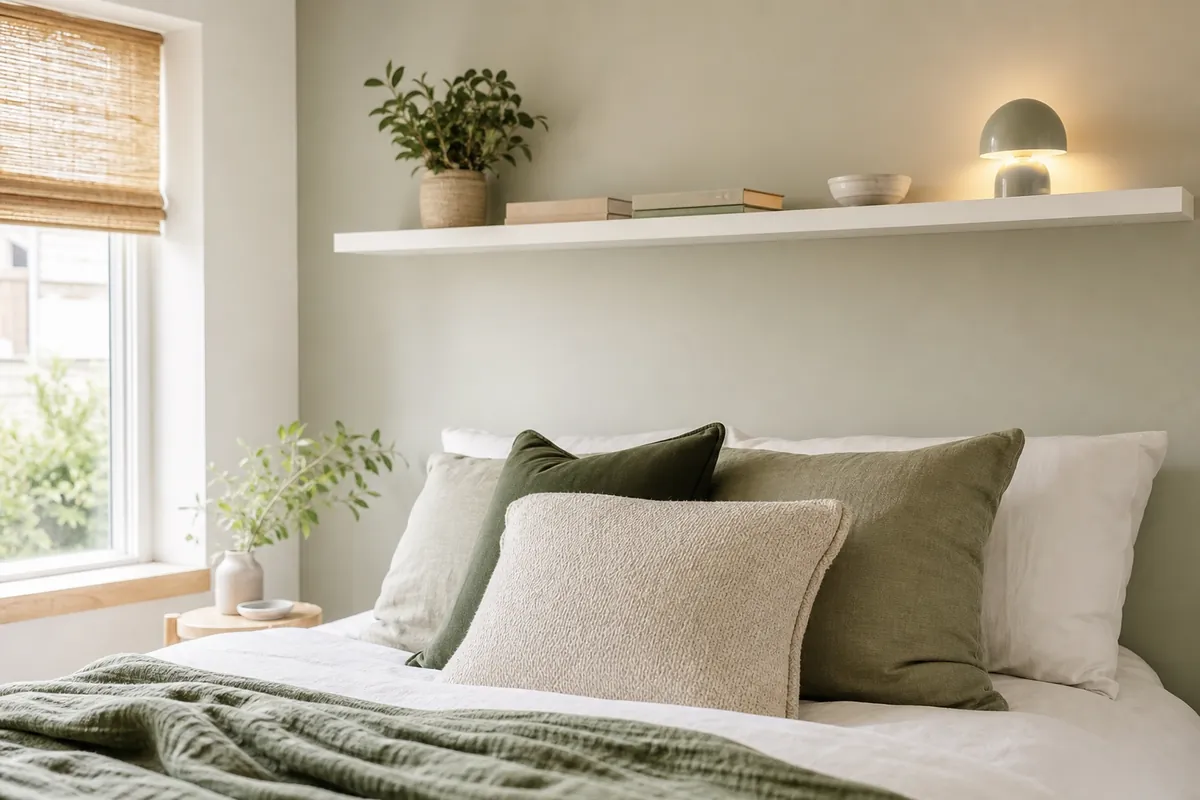
No headboard yet? Don’t buy one. A floating shelf mounted well clear of where your head lands does the visual work of a headboard while carrying books, a lamp, a plant, and a shallow dish for rings and earrings.
Mounting height is the entire job. Sit up in bed, rest a flat hand on top of your head, and mount above that line, which for most people lands somewhere between eighteen and twenty-four inches above the mattress top. Anchors matter more than the shelf does: use drywall toggles rated well past what you plan to store, not the flimsy plastic sleeves that came taped to the bracket card. Nothing heavy or breakable goes directly over the pillows, full stop.
A single long shelf looks calmer than two stubby ones fighting for symmetry. If the bed sits under a window, move the shelf to the wall on one side and let it read as a corner return rather than trying to float glass over your face.
4. Turn a low bookcase on its side for a fake headboard
Stand a short bookcase on its long edge behind the bed and you get a row of horizontal cubbies at almost exactly mattress height. It’s the DIY cousin of the bookcase storage headboard, and if the bookcase is already in the room it costs you nothing but an afternoon.
Fabric bins are non-negotiable here. Without them, every cubby broadcasts its contents across the room and the whole wall turns into visual static. Strap the unit to a stud as well: a bookcase on its side has a narrower base than one standing upright, and you’re sleeping directly against it.
5. Add a ledge shelf for the phone-and-water problem
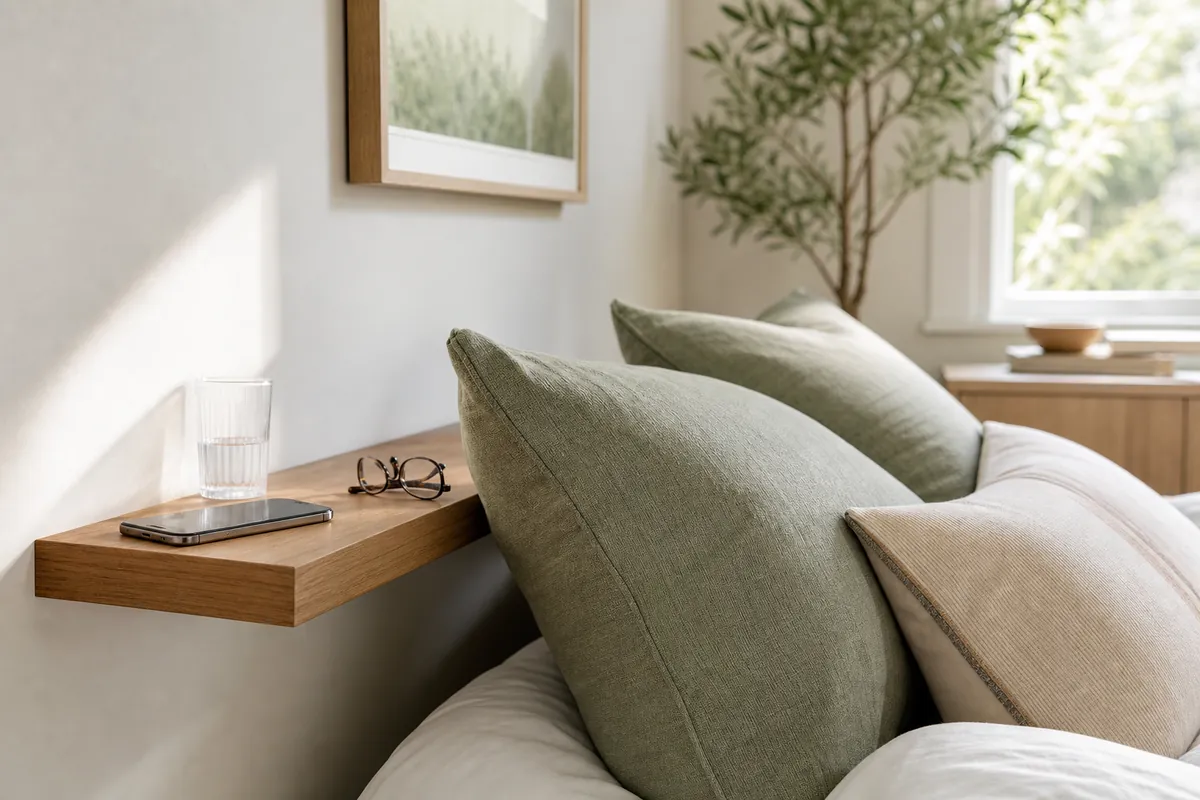
Plenty of people don’t need storage so much as a surface. A narrow picture-ledge shelf mounted just above mattress height, offset to one side of the pillows, holds a phone, a glass, and your glasses without claiming a square inch of floor. For a bed shoved into a corner where a nightstand physically will not fit, this is the highest-value move on the list.
Keep it under about five inches deep. Anything deeper and your shoulder will find it every time you roll over.
6. Mine the gap behind a freestanding headboard
When a headboard leans against the wall rather than bolting flush, there’s a two to four inch slot back there doing nothing. Flat objects vanish into it: a folding laptop desk, a tightly rolled yoga mat, gift wrap tubes, spare canvases, a crib mattress. Stand them upright and nobody will ever know.
Free storage, with one rule attached. Only seasonal or archival items go back there, because getting anything out means pulling the bed away from the wall.
7. Hang a slim rail or pegboard above the headboard
Wall storage over the bed doesn’t have to be a shelf. A slim rail with S-hooks, or a compact pegboard, handles the awkward category of things with no assigned home: headphones, a tote bag, a robe, yesterday’s hat. Evenly spaced hooks on one straight line look intentional, while scattered hooks look like damage, so commit to the row.
Renters, note the math. A rail needs two screws total, which is a smaller patch job than a shelf and far smaller than a wall cabinet. In a room with no closet whatsoever, this stacks neatly with the ideas in small bedroom storage with no closet.
8. Pick a headboard with hidden compartments
Upholstered headboards with lift-up lids or side-access doors are the right call when open shelving makes you twitchy. Linens, chargers, and paperwork live behind a soft front, so the wall stays quiet while the storage stays real.
Here’s the catch: hidden storage turns into forgotten storage within about a month. Give the compartment one job and one category only, so you actually remember what’s in there. Spare pillowcases and off-season blankets are ideal, since you need them a few times a year and never at 2 a.m.
9. Shallow up high, deep down low
The headboard wall performs best as half of a system. Shallow, light items belong up top (books, small dishes, hooks) while bulk goes underneath the bed in flat rolling containers. Most people instinctively do the reverse, loading heavy things overhead and leaving the under-bed void completely empty.
Use this test before you call it finished: stand in the doorway and count visible objects on the headboard wall. Past roughly eight and the room feels cluttered no matter how tidy the inside of each bin is. A closed bin counts as one object, which is precisely why a bookcase headboard fitted with fabric bins beats an open shelf loaded with loose stuff. For more on wringing capacity out of a room that’s already maxed out, see bedroom storage ideas for when the room is already full.
Headboard storage for a small bedroom you can’t drill into
Strict lease? You still have three real options. A bedside pocket organizer needs zero hardware because it’s held in place by the weight of the mattress. A freestanding bookcase headboard stands on its own legs, and a single anti-tip strap into one stud is a far easier patch than a mounted shelf. And the gap behind a leaning headboard is already there, waiting.
What I’d avoid: peel-and-stick ledges over a bed. Adhesive strips can handle a photo frame, not a lamp and a full water glass suspended above your head while you sleep.
What to buy first, and what to skip
Own no headboard and have depth to spare? The bookcase storage headboard delivers the most storage per dollar and per square foot, easily. If your current headboard is one you actually like, start with a bedside pocket organizer for the nightly clutter, then add a floating shelf or a ledge shelf for what you want visible. Those two together undercut the price of a nightstand and consume no floor at all.
Two things to leave alone: heavy objects mounted directly over your pillows, and purely decorative headboards in a room this tight. Before you buy anything with depth, measure from the wall to the foot of the bed, because ten inches of new shelving is a terrible deal if it means a dresser drawer no longer opens.