Most small bedrooms have exactly one corner left over once the bed, dresser, and closet claim their share, and a round wicker hamper is the worst possible thing to put in it. It wastes the two straight walls that make a corner useful in the first place, and it’s usually the first item you trip over getting dressed in the dark. Hamper storage in a small bedroom corner works when the hamper’s shape matches the space instead of fighting it, and when it doesn’t grow past the load you actually generate in a week.
Nine ideas follow, starting with what to put in the corner itself and moving out to what to do when there’s no real corner to spare at all.
1. Swap the standing hamper for a slim rolling laundry cart
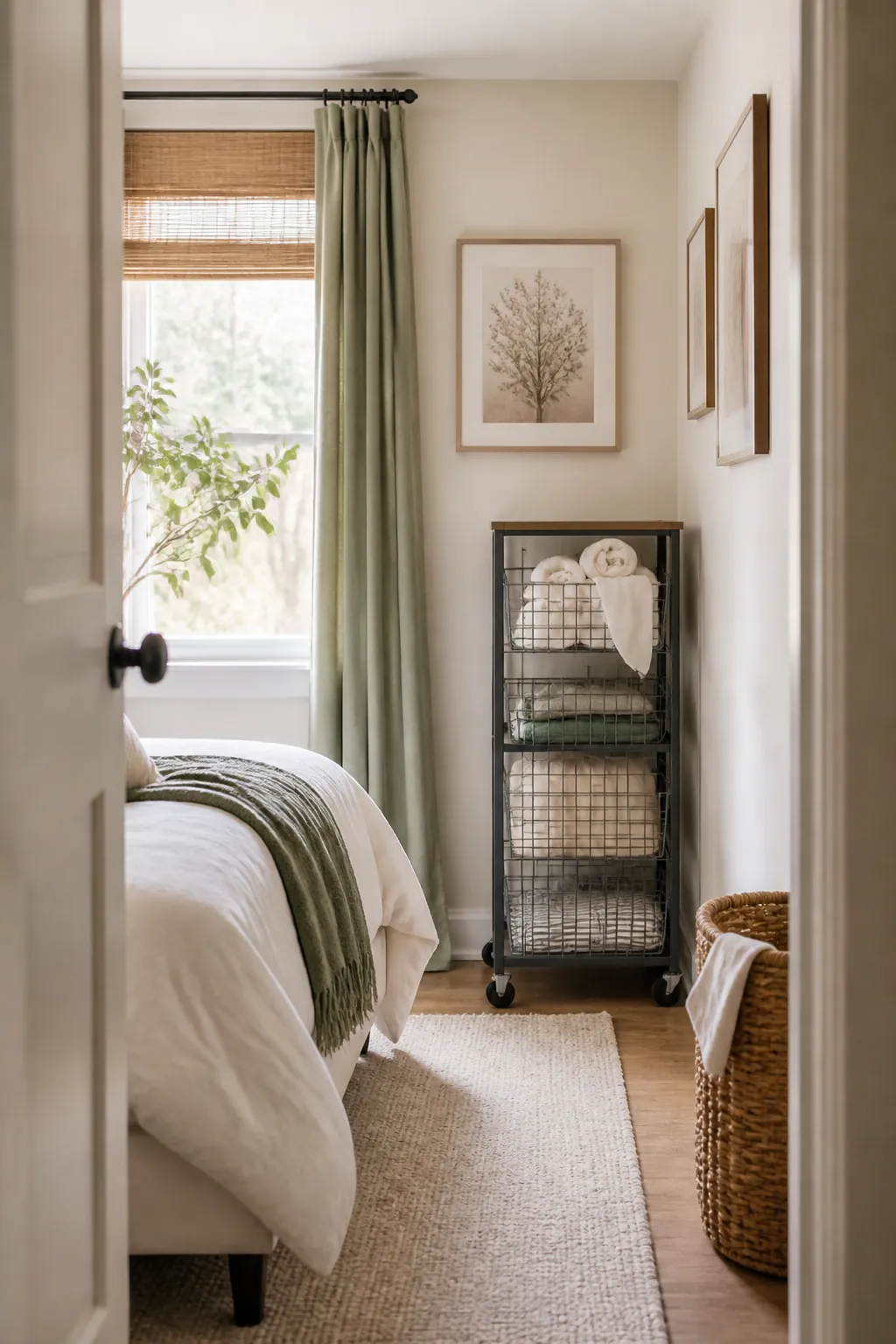
A round hamper in a square corner leaves triangles of dead space on both sides that nothing else can use either. A slim rolling laundry cart has straight sides that sit flush against both walls, so the corner’s full right angle actually gets used instead of half of it.
The wheels matter more than they sound like they should. On wash day, you roll the whole cart to the machine instead of upending a full hamper and carrying an armload of loose clothes down a hallway. Measure the corner’s clear width before you buy, wall to wall, not just a glance across the room. A cart even an inch too wide won’t sit flush, and an inch of gap on each side is exactly the wasted space you were trying to fix.
2. Sort as you fill it with a 3-section laundry sorter
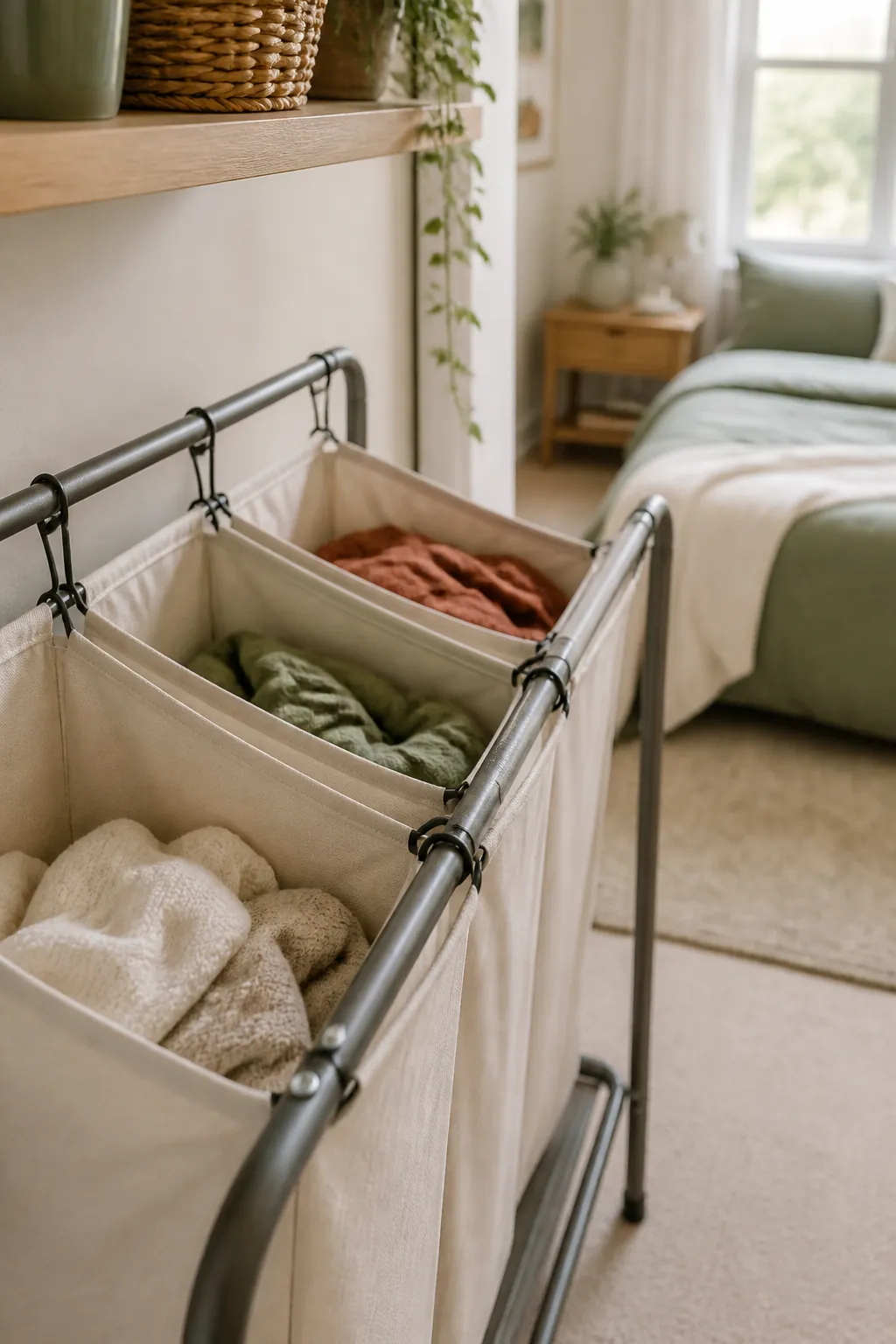
Sorting whites from darks the night before laundry day wastes ten minutes you’ll resent every single week. A 3-section laundry sorter takes roughly the same floor footprint as one standing hamper while splitting the load into three bags as clothes go in, so wash day starts with grabbing a bag instead of digging through a single pile.
Keep the frame under about 30 inches tall in a small room. Taller units read as a piece of furniture competing with the dresser, and in a corner with a window nearby, anything much taller starts blocking light. If the three bags don’t all fill at the same rate, which is normal for most households, that’s fine. An unevenly full sorter still beats hand-sorting a mixed pile every week.
3. Hide the hamper inside a collapsible storage cube
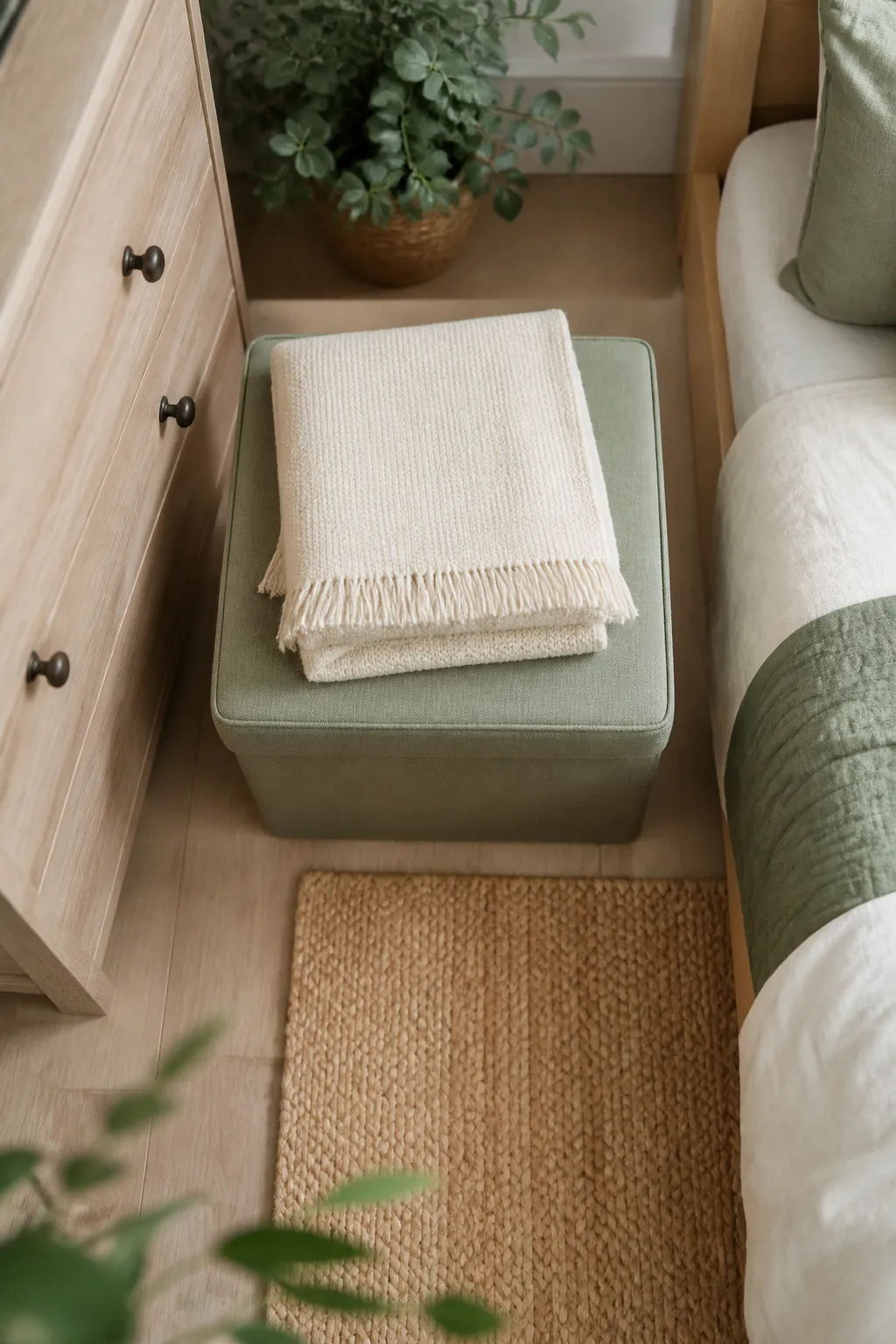
For a bedroom that reads as calm and put-together, an open hamper of any kind is the wrong visual note. A collapsible fabric storage cube with a flip-top lid does the same job while looking like a footstool or a side table when it’s closed, and it can double as extra seating in a room with no space for a chair.
Check the listing for an actual seat weight rating before you use it that way, not just a photo of someone sitting on one. A version with a rigid insert or wood frame underneath is built to take that load; a soft-sided one with no internal frame is built to hold clothes, not people, and the lid will buckle the first time someone sits down.
4. Hang a mesh bag from an over-the-door hook
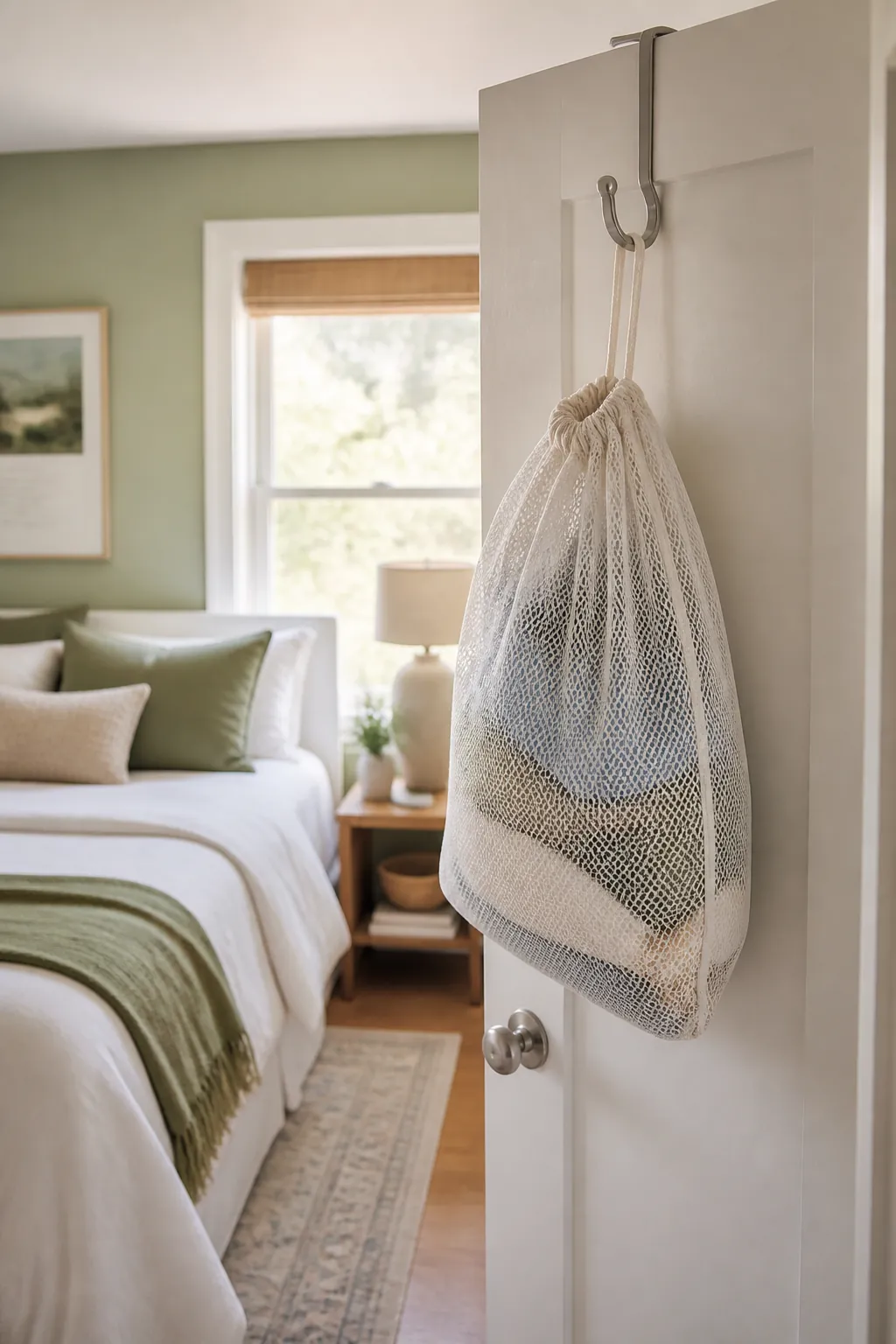
No corner to spare at all? Skip the floor entirely. An over-the-door hook hanger on the back of a bedroom door holds a mesh or canvas laundry bag at zero floor cost, which is the single biggest space saving on this list.
Two conditions decide whether this works. The door needs to swing a full 90 degrees so the bag clears the frame, and nothing else can already be living on the back of that door, since a robe hook and a laundry bag are fighting for the same six inches of hardware. This doesn’t work at all on closet bifolds or pocket doors, since there’s no swinging edge to hook onto. Most metal over-the-door hooks carry 20 to 30 pounds hung properly, which covers dry clothes comfortably but isn’t the right call for a load of wet towels straight out of the shower.
5. Mount a wall hook rack where there’s no door to use
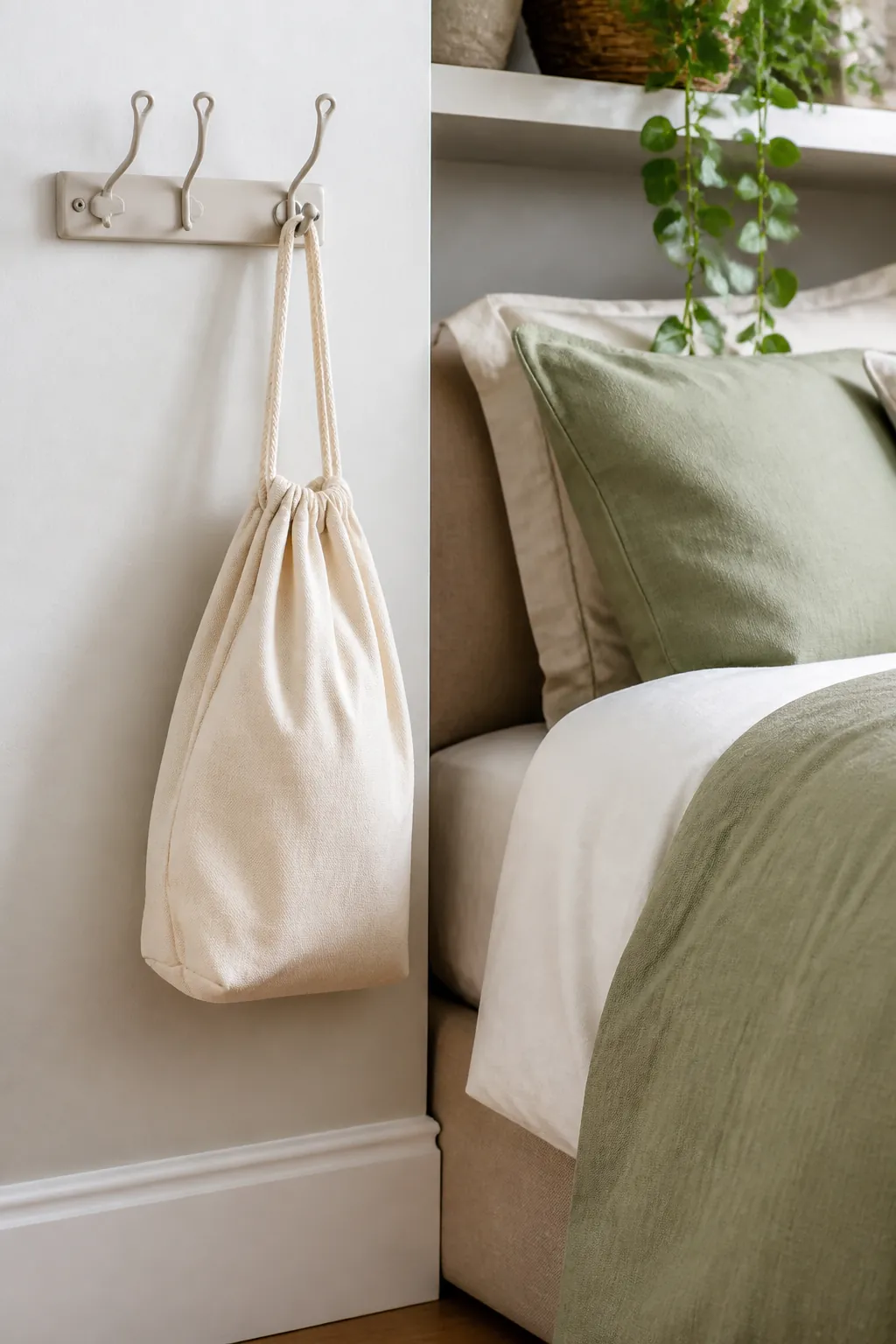
A bedroom with a doorless closet or a door that opens the wrong way still has walls. A hook rack mounted into a stud, holding a drawstring canvas bag by its grommet, gives you the same off-the-floor hamper with no door required.
Skip adhesive hooks for this one. A full bag of dry clothes runs 8 to 10 pounds, and a full bag of damp gym gear or towels can hit 15 to 20, both well past what a 5-pound adhesive strip is rated for. Two screws into a stud, or a drywall toggle rated for at least 25 pounds if you can’t hit a stud, is the difference between a bag on the wall and a bag on the floor with the hooks still attached to it.
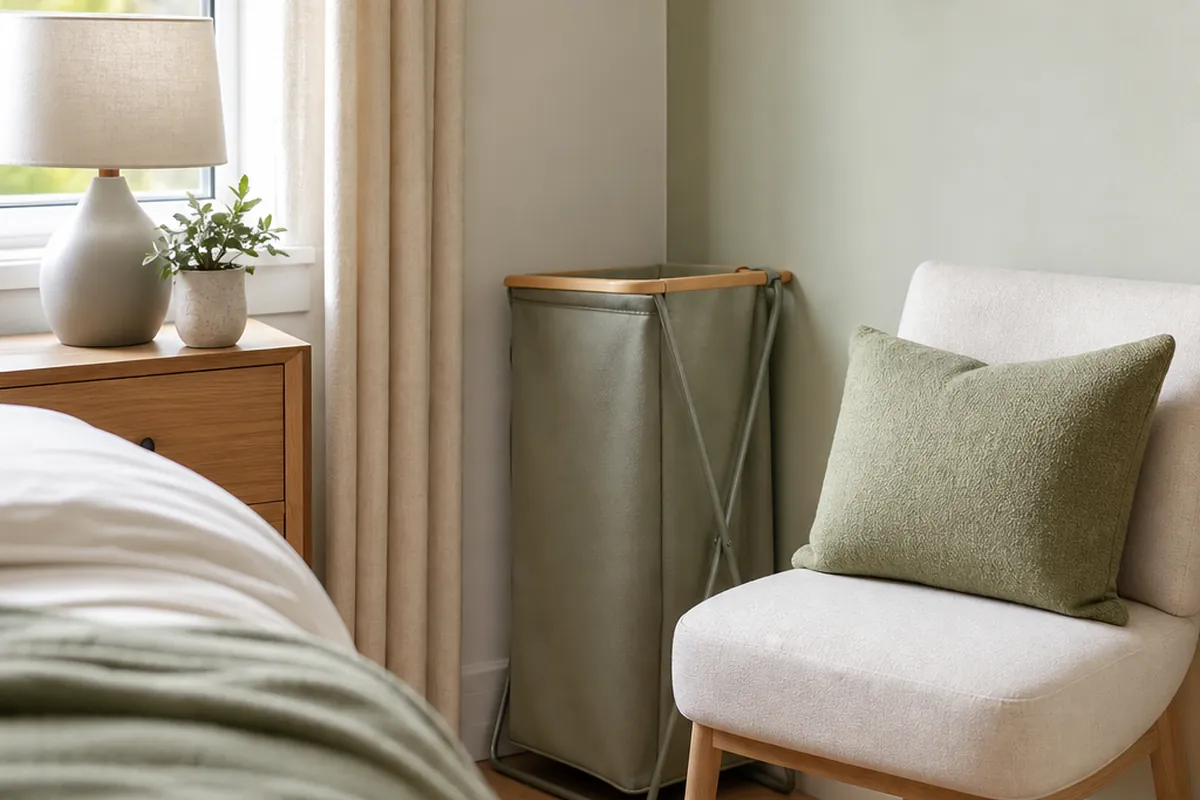
6. Choose a corner-cut hamper over a round one
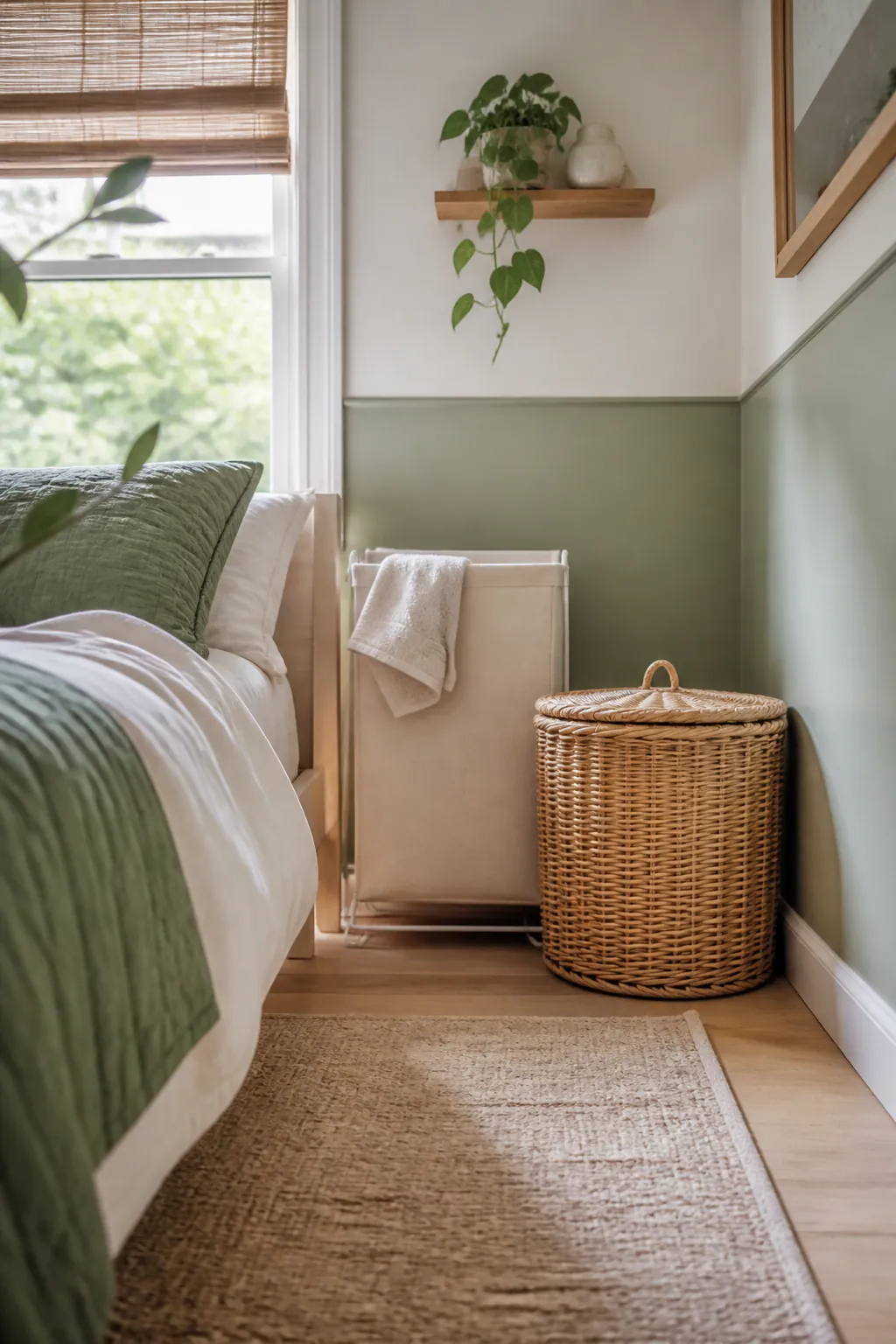
If a rolling cart or a cube isn’t the look you want, at minimum choose a hamper built with a flat back and two straight sides rather than a round or barrel shape. A corner-cut canvas hamper on a folding wire frame sits genuinely flush, where a round one leaves the same wasted triangles described in idea one.
The trade-off with this style is durability. The wire frame that holds the fabric open tends to sag after a year or two of daily use, and once it does, the hamper stops standing up straight on its own and slumps sideways into the room. Check for a version with a rigid base insert if you want it to still look sharp after the first year.
7. Turn an existing shelf bin into an open laundry catch
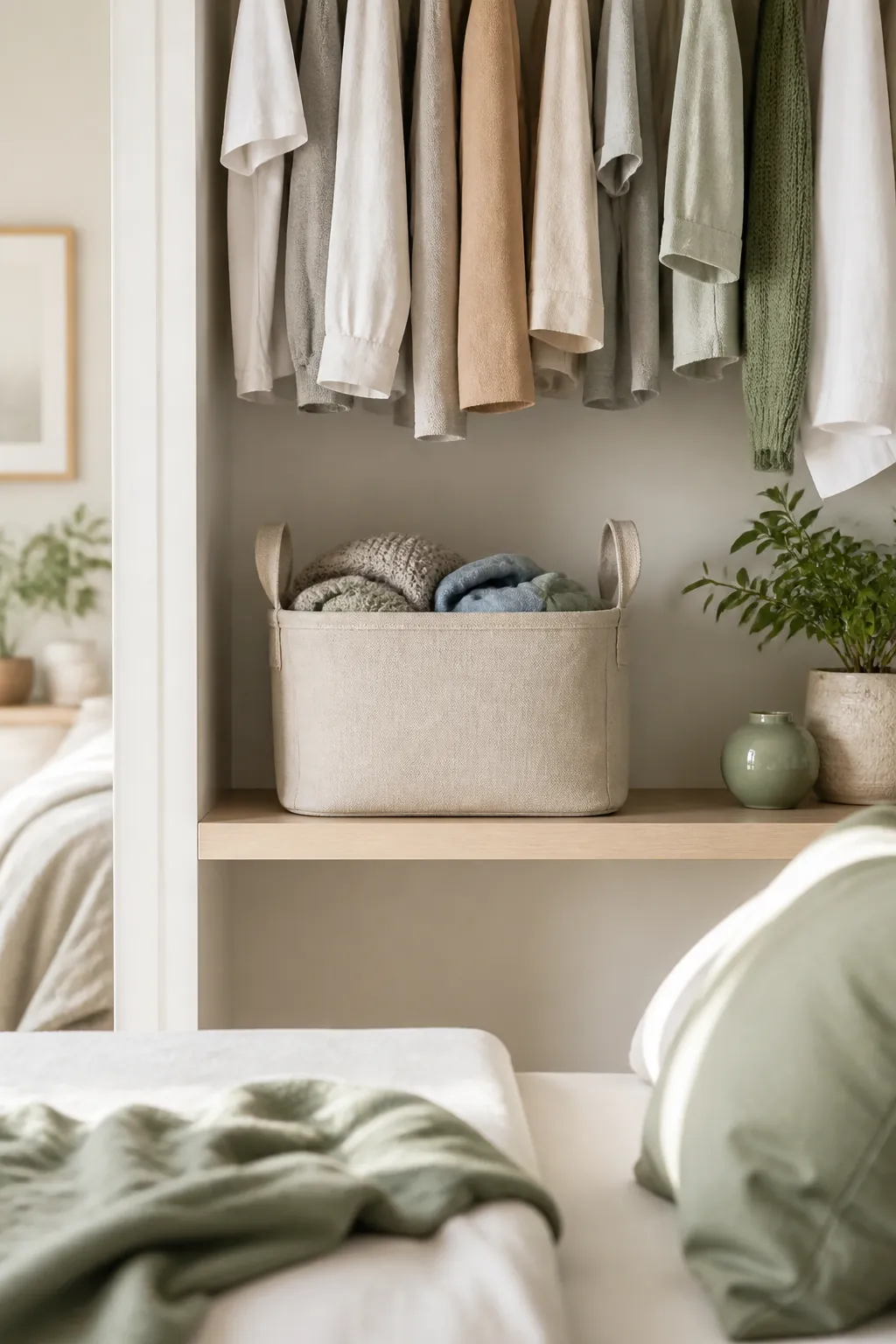
A bedroom with a closet shelf at roughly waist height already has a spot for this. An open fabric bin with side handles, sitting on the lowest reachable shelf, catches worn clothes without adding a single new object to the floor.
This only works for one person’s daily basics, not a household’s full laundry volume, since a shelf bin tops out well under half the capacity of a floor-standing hamper. It’s best paired with idea one or two for the bulk of the load, with the shelf bin handling just what gets tossed there between full hamper trips. Carry the bin straight to the machine rather than transferring its contents, since handles exist for exactly that.
8. Use the dead gap beside the dresser instead of the corner
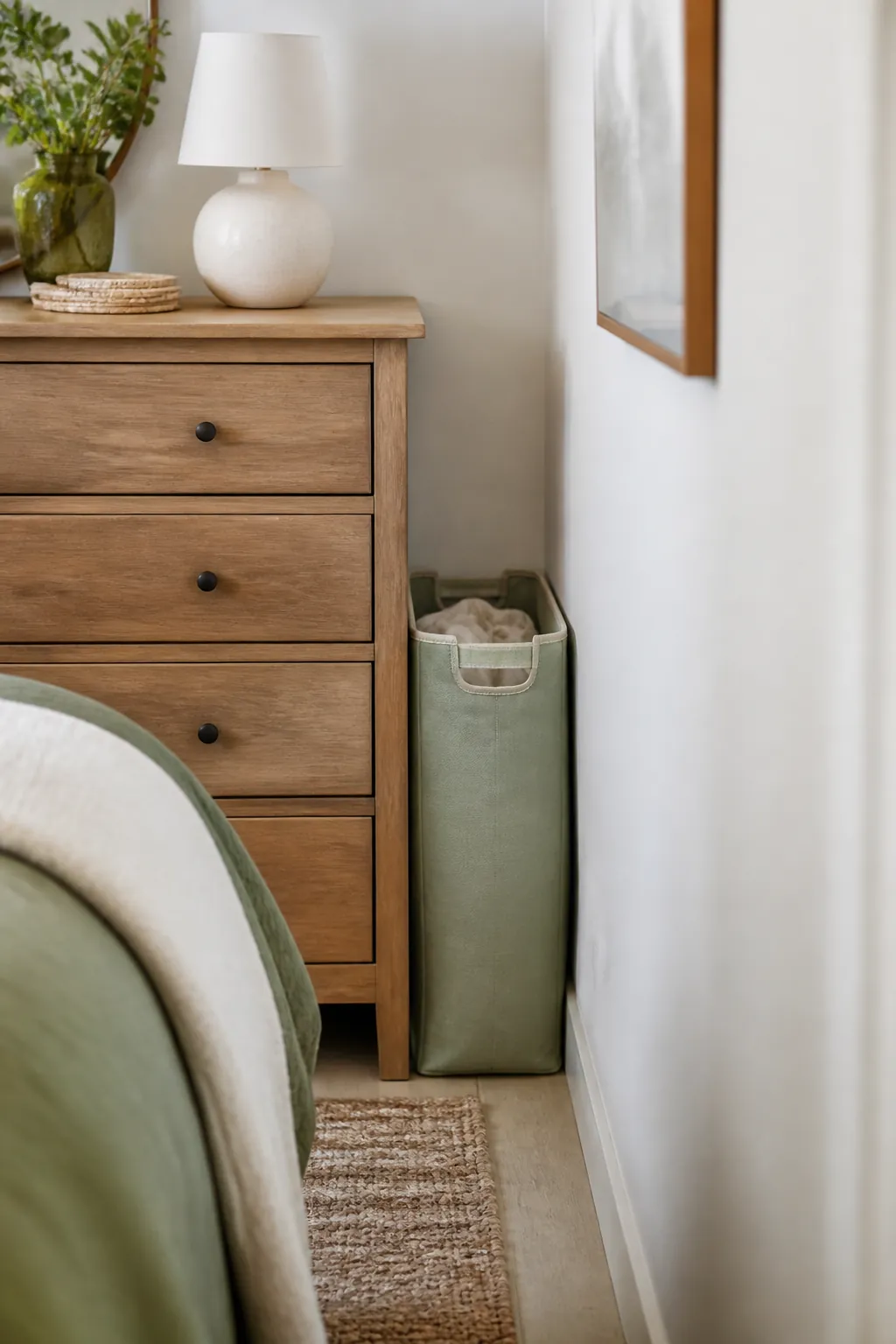
Not every small bedroom has a true 90-degree corner free. Plenty have a four to six inch gap between the dresser and the wall instead, space too narrow for almost anything except a hamper built specifically for it. A slim rolling cart or a narrow fabric bag fits that gap the same way it would fit a real corner.
Measure this gap at the floor and at the widest point of the dresser both, since dresser hardware or a slightly flared base can steal an inch you weren’t expecting. A hamper that’s flush at the floor but catches on a drawer pull four inches up won’t slide in at all.
9. Size the hamper to your laundry rhythm, not the room

The single most common mistake is buying the biggest hamper that fits the space rather than the one that matches how often you actually do laundry. One person washing weekly needs roughly 12 to 15 gallons of capacity, about one and a half standard loads. Buy bigger than that and clothes sit for two weeks before the hamper feels full enough to bother with, which is worse for the room than a smaller hamper you empty on schedule.
Two people sharing a room roughly doubles that number, but rarely doubles the available corner space, which is exactly why the sorter in idea two or a second small bag on a hook elsewhere in the room often beats one oversized bin trying to do the whole job alone.
Where to start
If you have a genuine 90-degree corner with clearance to spare, start with the slim rolling laundry cart. It’s the single best match for a corner’s actual shape, and the wheels save you the worst part of hamper ownership, which is carrying a full one anywhere.
No floor space at all, or a door that swings clear? The over-the-door hook and a mesh bag costs less than either floor option and needs nothing more than an existing door. What I’d skip: a round wicker hamper wedged into a square corner, since it wastes exactly the space you’re trying to reclaim, and any hamper sized for a household of four when you’re doing one person’s laundry a week.